
Understanding Cooler Insulation: What Keeps Your Food Cold on a Road Trip?
My first car camping cooler was a $20 soft-sided job from Target that held ice for about 4 hours. Shenandoah Valley, late August. The sun beat down, and by lunchtime, my lukewarm sandwiches were a sad, soggy mess. I learned fast that not all coolers are created equal, and the magic behind keeping things frosty isn't some dark art - it's just physics, plain and simple.
My first car camping cooler was a $20 soft-sided job from Target that held ice for about 4 hours. Shenandoah Valley, late August. The sun beat down, and by lunchtime, my lukewarm sandwiches were a sad, soggy mess. I learned fast that not all coolers are created equal, and the magic behind keeping things frosty isn't some dark art - it's just physics, plain and simple.
Understanding Cooler Bags and Their Insulation Technologies explains it well: thick insulation is your friend. It's the difference between a cool drink and a warm disappointment. My $20 mistake cost me more in ruined snacks than a decent cooler would have. It's all about how well that box keeps heat out and cold in. What's your go-to method for keeping food cold on multi-day trips? Mine involves ditching the cheap stuff.
This is the real move for any weekend warrior who doesn't want to eat tuna straight from the can every night.
The Core Answer
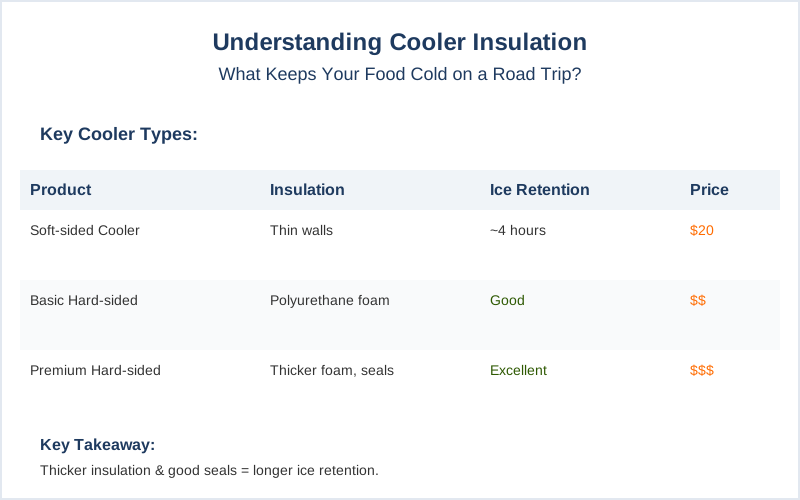
The real deal with cooler insulation is how well it stops heat transfer. Think of it like trying to keep your house warm in winter. You want thick walls and good seals. Coolers work the same way, just in reverse. The thicker the walls, the longer your ice lasts. Tips to Keep Your Food and Drinks Cold While Traveling spells it out: a thicker insulated cooler means longer ice retention. My first camping cooler was a joke because it had paper-thin walls. It was basically a glorified grocery bag. Brilliant engineering, that. 5 Tips for How to Pack Your Cooler to Keep It Colder, Longer shows that it's not just the cooler itself, but how you pack it. Most decent hard-sided coolers use polyurethane foam injected between the inner and outer plastic walls. This foam is a fantastic insulator. It creates a barrier that heat has to fight its way through. Soft-sided coolers, while convenient for short trips, usually have thinner foam or just reflective material, which isn't nearly as effective for multi-day car camping. I learned this the hard way on a 3-day trip to Assateague Island; my soft cooler was basically a puddle by day two. Understanding Cooler Bags and Their Insulation Technologies points out that hard-sided coolers can last 24 hours to multiple days, while soft-sided ones are usually good for 4-8 hours. That's a big difference when you're miles from the grocery store. It's also about what's called 'R-value,' though you won't see that number plastered on most cooler descriptions. Higher R-value means better insulation. The more dense and thick the insulating material, the higher the R-value. So, when you see a $400 cooler promising 5-day ice retention, it's not just marketing hype - it's usually because of that super-thick, high-density foam. My $50 version from Coleman definitely doesn't keep ice for 5 days, but it's light-years better than that first $20 soft bag. How Do You Keep Your Food Cold While Camping mentions that high-end models often have advanced insulation. That's the stuff that makes the difference. Another factor is the seal. A cooler with a good gasket around the lid, like a refrigerator door, is crucial. This stops cold air from escaping and warm air from getting in every time you open it. My first cooler had a floppy lid that just sat there; it was a rookie mistake to think that would work. 5 Tips for How to Pack Your Cooler to Keep It Colder, Longer emphasizes a tight seal. A cooler is only as good as its ability to keep that cold air locked in. You're fighting against the ambient temperature, and a good seal is your first line of defense. It's not rocket science, it's just basic thermodynamics.
Why This Matters for Your Setup
Making the Right Choice
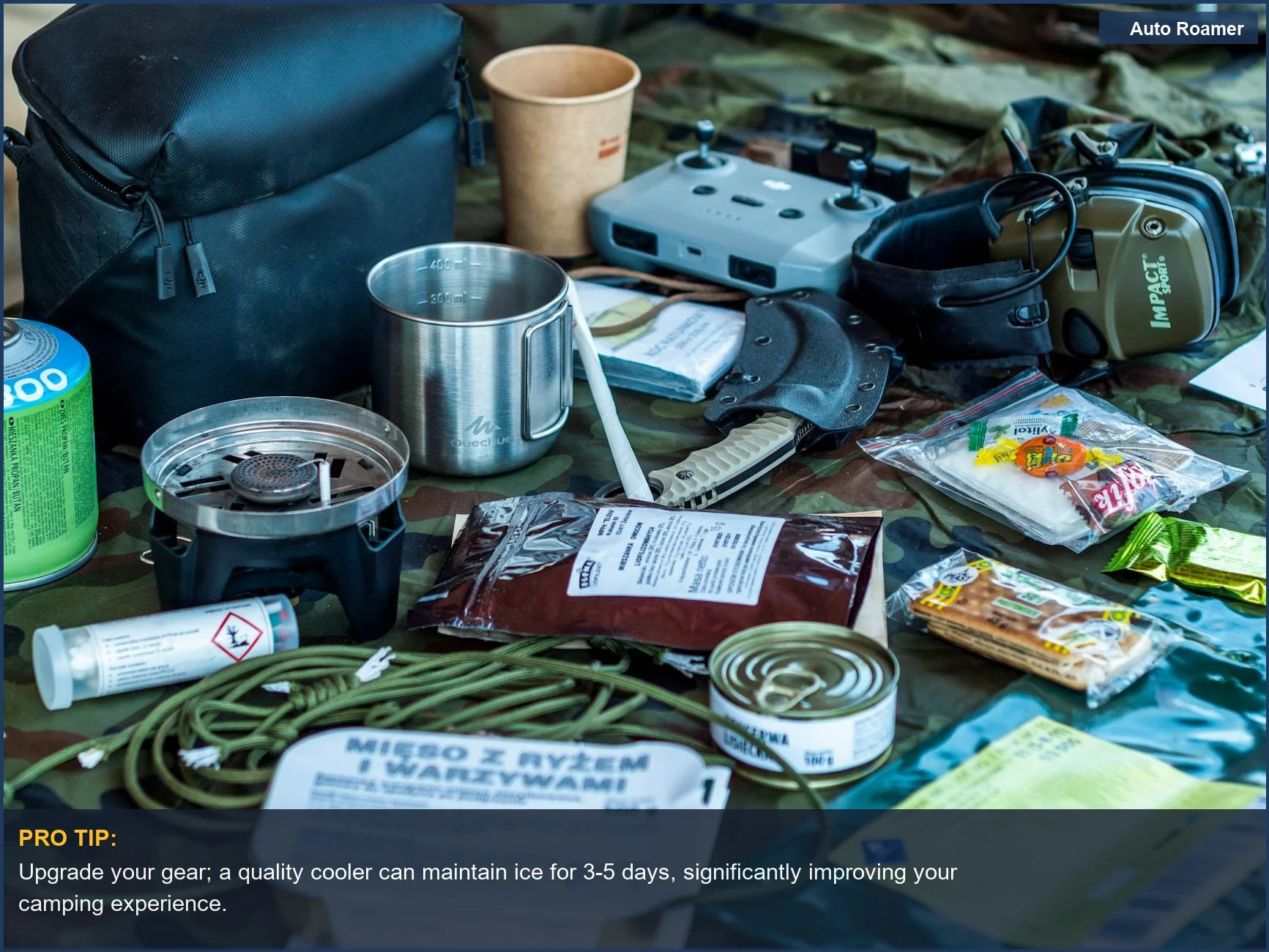
When you're starting out, don't overthink the cooler. My first $20 soft-sided cooler was a bust, but it taught me a valuable lesson: insulation matters. For car camping, a decent hard-sided cooler, even a $50 model, is a massive upgrade. How Do You Keep Your Food Cold While Camping highlights that hard coolers often provide the best insulation. You don't need to drop $400, but avoid the absolute cheapest options. Remember to pre-chill your cooler and pack it full. Frozen water bottles are a game-changer for ice retention and provide drinking water later. What's your go-to method for keeping food cold on multi-day trips? Mine involves a good cooler, frozen bottles, and strategic packing. It's about making smart choices that give you more comfortable trips and less spoiled food. The honest version is, a little bit of planning goes a long, long way. Cooler Hack for Car Camping to Keep Food Cold Longer shows that even simple additions can help. Invest in a cooler that's rated for at least 2-3 days of ice retention if you plan on multi-day trips. Your taste buds will thank you. My current $80 cooler keeps ice for about 3 days, which is perfect for most of my weekend adventures. It's not about having the fanciest gear, it's about having gear that actually works when you need it to. That's the real move.
Frequently Asked Questions
Okay, so I see these fancy roto-molded coolers online for $400, and my current Coleman is like $80. Is it really worth spending an extra $320 just on the cooler itself for a weekend trip?
Do I really need to freeze my own water bottles, or can I just buy a big bag of ice from the gas station?
What if I pack my cooler perfectly with frozen bottles and pre-chill it, but my ice still melts by the second day?
Can leaving a cooler in a hot car for a long time damage the insulation?
I heard you shouldn't put raw meat in a cooler with drinks because of bacteria. Is that true?
🏅 Looking for Gear Recommendations?
Check out our tested gear guides for products that work with this setup:
Sources
- Cooler Hack for Car Camping to Keep Food Cold Longer - Facebook
- Tips to Keep Your Food and Drinks Cold While Traveling - CPC
- 5 Tips for How to Pack Your Cooler to Keep It Colder, Longer
- What's your go-to method for keeping food cold on multi-day trips ...
- Understanding Cooler Bags and Their Insulation Technologies
- How to pack a cooler - pro tips - Alpinesavvy
- How Do You Keep Your Food Cold While Camping - Battlbox.com
- how-to-use-your-insulated-cooler-in-the-winter?srsltid=AfmBOopS9VXlO8JmBNyBOZXJ3hxn2kpQSMUQLpilYRwRK9tlD6KbIyb1