The Big Picture
The dealer wanted $350 to install a dash cam in my buddy's 2026 Volkswagen Camper Van, claiming 'special wiring requirements.' That's a 20-minute job with a $15 add-a-fuse kit and a few zip ties. They'll tell you it's for 'warranty integrity' or some other garbage. What they mean is 'we want your money.' Don't fall for it. I've seen these scams for years.
Your camper van is a mobile home, not just a car. That means more time parked, more potential for knuckleheads to ding it and disappear. A dash cam isn't just about accident proof; it's about parking lot surveillance. You need something that can handle thermal cycling from sitting in direct sun all day and still record when the van is off.
Standard dash cams are built for daily drivers, not for extended parking mode on a camper. That 12V constant draw for parking mode? It'll drain your starter battery in days if the low-voltage cutoff is set wrong or the battery's internal resistance is too high. You need a camera that won't leave you stranded in the middle of nowhere. It's about circuit integrity and not over-stressing your electrical system.
Cheap cameras use garbage capacitors that outgas and fail after a summer.
Quick Verdict
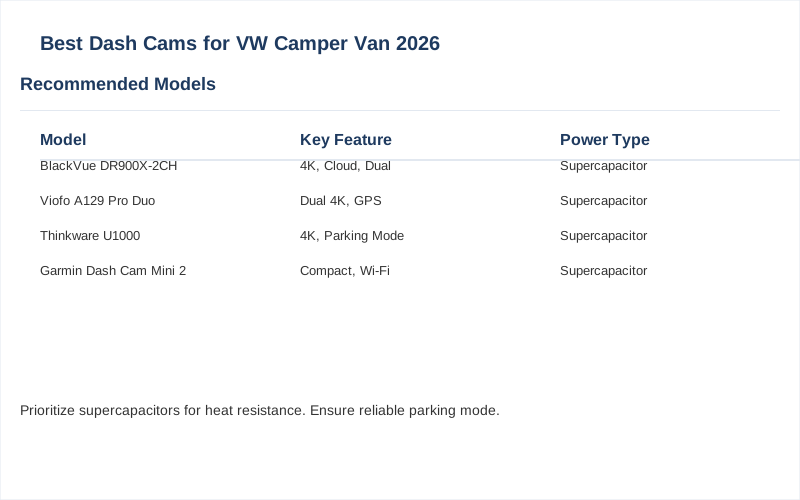
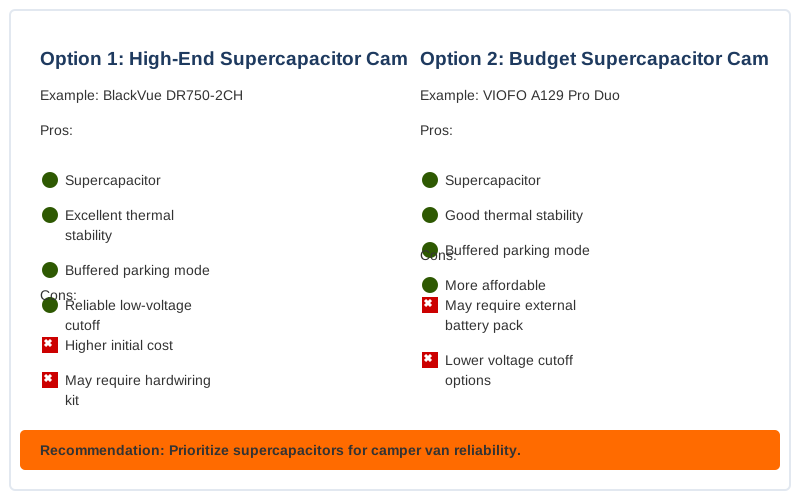
- Thermal Stability is Key: Forget anything with a lithium-ion battery if you live anywhere above 80 degrees F. Supercapacitors are the only way to go for long-term reliability in a camper van. Lithium cells swell, lose capacity, and become a fire hazard with constant thermal cycling.
- Parking Mode is Non-Negotiable: A camper sits more than it drives. You need buffered parking mode, meaning it records a few seconds before an impact.
- Resolution and Sensor Quality: 4K is nice for marketing, but a good 1440p camera with a Sony STARVIS 2 sensor will often outperform a cheap 4K unit at night.
- Wiring and Installation: Hardwire it, don't use the cigarette lighter. That 0.3mm of play in most 12V sockets will cause arcing and eventual fuse pops.
- Multiple Channels for Coverage: A front-only camera is a decent start, but a 2-channel (front/rear) or even 3-channel (front/rear/interior) setup gives better coverage for a vehicle that's often parked. Think about blind spots and interior security. I've seen vans get broken into with no interior footage.
This requires a constant 12V connection, so plan for proper low-voltage cutoff or a dedicated power bank to avoid a dead starter battery. Many forum horror stories confirm this.
License plate capture in low light is the gold standard for evidence, not just overall pixel count.
A hardwire kit ensures a stable connection and allows for proper parking mode.
What to Look For
| Feature | Why It Matters (Physics/Engineering) |
|---|---|
| Supercapacitor Power | Lithium-ion batteries degrade with thermal cycling, swelling and losing capacity. Supercapacitors handle 150 degrees F without outgassing or catastrophic failure, maintaining circuit integrity. This is critical for a vehicle baking in the sun. |
| Sony STARVIS 2 Sensor | These sensors offer superior low-light sensitivity. It's not about marketing 'night vision' but about capturing legible license plates in low photon flux.
Your evidence is useless if you can't read the plate. Wirecutter also notes this. |
| Buffered Parking Mode | Records 5-10 seconds before an impact. This requires constant 12V power. Without it, you only get the aftermath, not the cause. It's about capturing the kinetic energy transfer, not just the resulting dent. |
| Low-Voltage Cutoff (LVC) | Prevents your starter battery from draining below 12.0V, ensuring you can actually start your van.
Adjustable LVC (e.g., 12.0V, 12.2V) accommodates different battery chemistries and ambient temperatures. A cheap camera with a fixed 11.8V cutoff is asking for trouble. |
| Hardwire Kit (3-wire) | Provides constant 12V (for parking mode) and switched 12V (for driving mode). Bypasses the flimsy cigarette lighter socket, eliminating arc risk and ensuring stable power delivery. It's a direct, robust electrical connection. |
| High Bitrate Recording | Higher bitrate means more data per second, retaining fine details like license plate numbers even during high-speed motion. Compression artifacts turn crucial evidence into pixelated garbage. Look for at least 30Mbps for 1440p. |
| Wide Operating Temperature | Camper vans get hot. Really hot. A dash cam needs to function reliably from -4 degrees F to 170 degrees F. Check the spec sheet.
If it's only rated to 120 degrees F, it's a failure waiting to happen. |
Our Top Picks for Reliable Performance
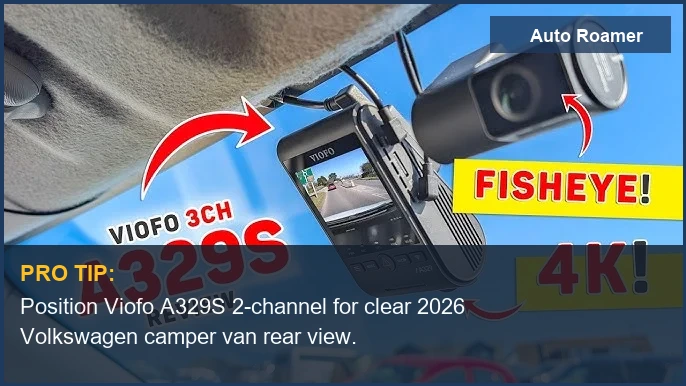
- Specs: Front 4K (Sony STARVIS 2 IMX678), Rear 2K (Sony STARVIS 2 IMX675), Supercapacitor, GPS, Buffered Parking Mode.
- Pros: Excellent low-light performance thanks to the STARVIS 2 sensors. Solid build quality with good thermal management. Reliable software. Wirecutter considers it a top pick.
- Cons: Display is small. Wiring for a 2-channel system can be a bit more involved for a camper van with a long run to the rear camera.
- Best For: Drivers prioritizing absolute video quality and reliability in a 2-channel setup, especially for capturing details in challenging light conditions.
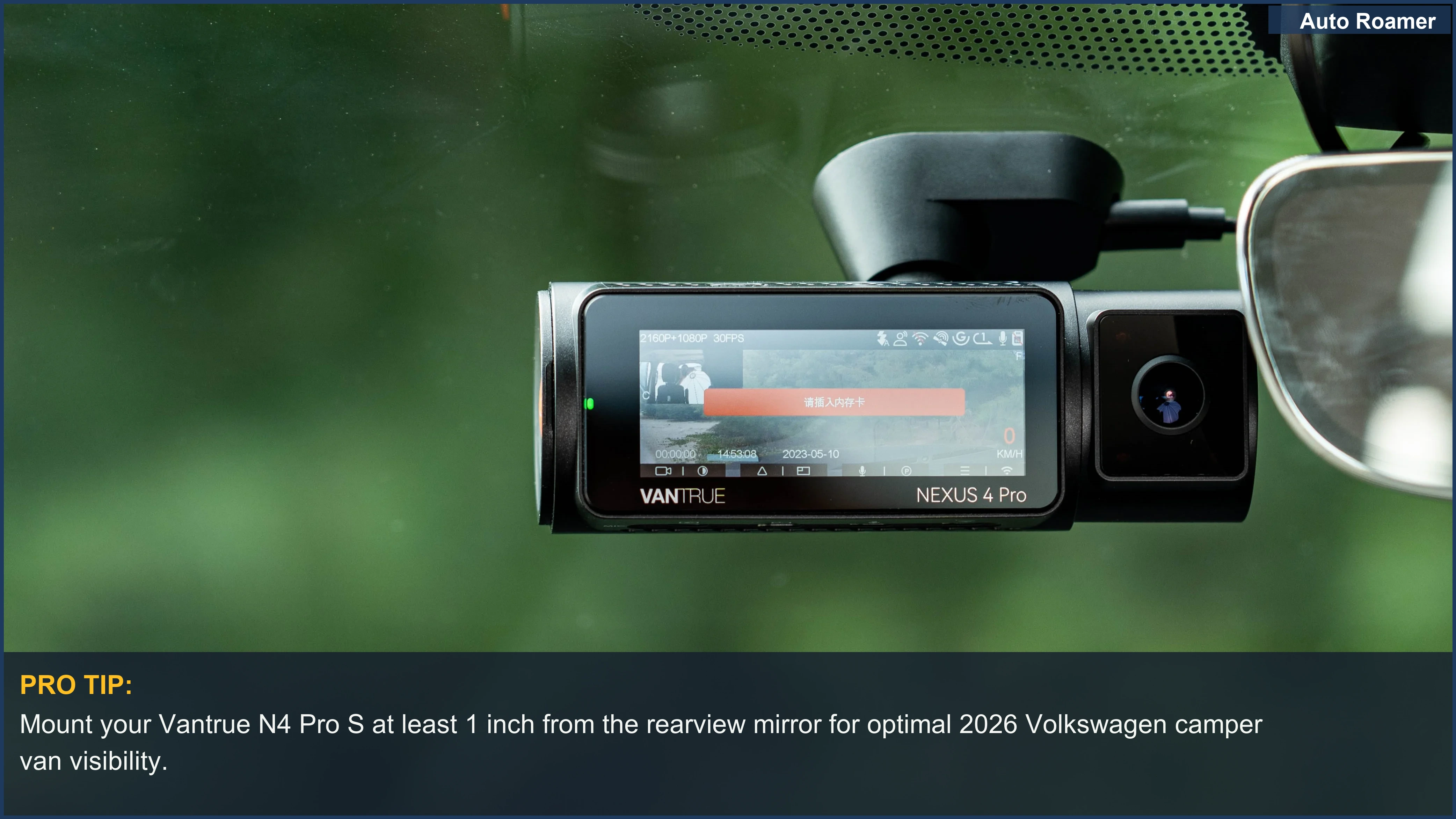
- Specs: Front 4K, Interior 1080p, Rear 1080p, Supercapacitor, GPS, Buffered Parking Mode.
- Pros: 3-channel coverage is ideal for a camper van, providing interior security. Good thermal stability. The N4 Pro S is built tough.
- Cons: Rear and interior cameras are 1080p, which is decent but not 2K. The interior camera might struggle in very dark conditions without IR.
- Best For: Camper van owners who need comprehensive coverage, including inside the cabin, for security and incident recording.
- Specs: Front 4K (Sony STARVIS 2), Rear 2.7K (Sony STARVIS 2), Supercapacitor, GPS.
- Pros: Excellent video quality from both channels, especially with the STARVIS 2 sensors. Known for stability and clear image capture. Julian23 on Dashcamtalk praises its stability.
- Cons: Similar to the A229 Pro, the rear camera run can be long. No interior camera option.
- Best For: Those who need top-tier 2-channel video quality and reliability without the added complexity of an interior camera.
- Specs: Front 4K, Rear 1080p, Supercapacitor, GPS, Parking Mode.
- Pros: Good value for a 2-channel 4K system. Decent image quality for the price point. Car and Driver considers it a respectable choice.
- Cons: Rear camera is only 1080p, which might lack detail compared to 2K. Software can sometimes be a bit clunky.
- Best For: Budget-conscious buyers who still want 4K front recording and a basic rear camera without breaking the bank.
- Specs: Front 4K, OEM-look, WiFi.
- Pros: Integrates seamlessly into the OEM plastic housing, looking factory installed. No dangling wires. directly from Amazon.
- Cons: Often lacks advanced parking modes and supercapacitor. Not a 2-channel system. The 'OEM look' often means compromises on core performance.
- Best For: Owners who prioritize aesthetics and a clean install over advanced features or multi-channel recording. It's a compromise on mechanical stress for visual appeal.
Head-to-Head Comparison
| Feature | Viofo A229 Pro | Vantrue N4 Pro S | 70mai T800 |
|---|---|---|---|
| Front Resolution | 4K | 4K | 4K |
| Rear Resolution | 2K | 1080p | 1080p |
| Interior Camera | No | Yes (1080p) | No |
| Sensor Type | Sony STARVIS 2 | Sony STARVIS (Front), others | Standard CMOS |
| Power Source | Supercapacitor | Supercapacitor | Supercapacitor |
| Buffered Parking Mode | Yes | Yes | Yes |
| Approx. Price | $280 | $300 | $180 |
| Key Advantage | Top-tier 2-channel video clarity, especially at night. The A229 Pro consistently gets top marks. | 3-channel coverage for full van security. | Best value for a 4K front cam with supercapacitor. |
When you're looking at these spec sheets, remember the numbers don't tell the whole story. A 4K camera with a garbage lens and sensor will look worse than a 2K camera with quality optics and a Sony STARVIS 2. It's about the photons hitting the sensor, not just the pixel count.
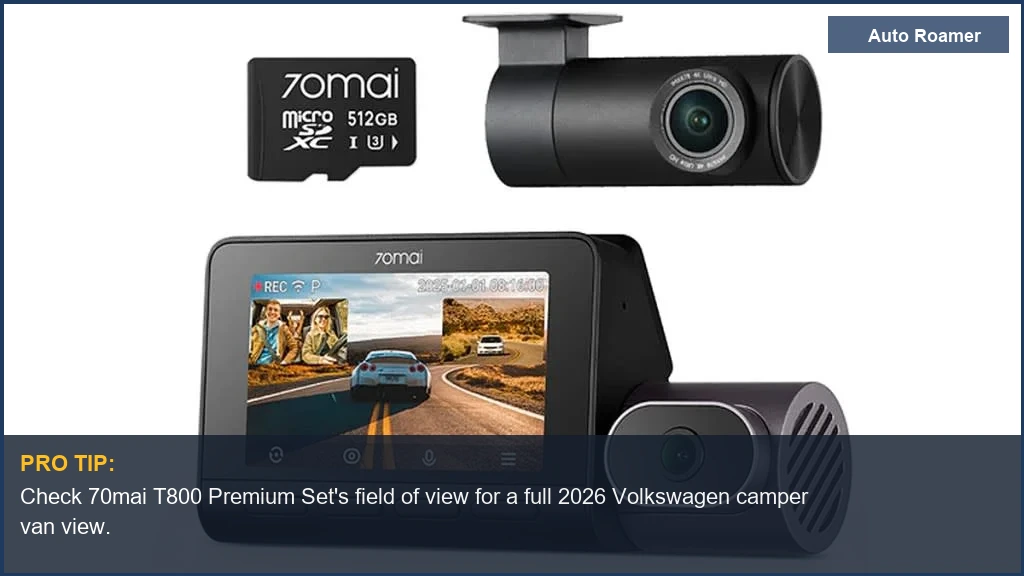
The Vantrue N4 Pro S adds that interior camera, which for a camper van, is a significant mechanical stress reducer for your peace of mind. It's another set of eyes on your gear when you're not there. The 70mai T800 cuts corners on the rear camera resolution, which means less useful evidence if someone rear-ends your van. It's a cost-per-fix equation.
Budget vs Premium: Where Your Money Actually Goes
| Feature | Budget Dash Cam (~$80-150) | Premium Dash Cam (~$250+) |
|---|---|---|
| Video Quality | 1080p or 'fake' 4K (upscaled); poor low-light. | True 4K with Sony STARVIS 2; excellent low-light. |
| Power Source | Lithium-ion battery (failure-rate high in heat). | Supercapacitor (tolerant to 170 degrees F). |
| Parking Mode | Basic motion detection; often misses initial impact. | Buffered parking mode; records pre-impact footage. |
| Build Quality | Thin plastic; poor thermal dissipation; short lifespan. | Robust casing; good heatsinking; designed for thermal cycling. |
| Wiring Kit | Often not included; cheap 12V adapter. | Included 3-wire hardwire kit with adjustable LVC. |
| Software/App | Buggy; slow WiFi; clunky interface. | Stable; fast 5GHz WiFi; intuitive app. |
| Warranty/Support | 6-12 months; difficult returns. | 1-2 years; responsive support. |
That $70 dash cam uses a lithium battery that will bloat and fail after six months of direct sun exposure. It's a matter of thermal expansion and chemical degradation. You're buying a ticking time bomb, not a reliable recording device. The plastic housing will warp, creating play in the lens assembly and degrading image quality. It's mechanical stress from day one. Autoweek notes the Nexar Beam as an entry-level option, but even that has limitations.
Premium cameras, on the other hand, invest in proper thermal management, using materials that can withstand the temperature swings inside a parked camper van. They have better heat sinks and more robust circuit boards. The higher price isn't just for 'features'; it's for durability and a lower failure-rate. It's about buying a tool that works when you need it, not just when you install it.
The Bottom Line
Don't get ripped off by a dealer charging $350 for a 20-minute dash cam install. The physics of a camper van-long idle times, high cabin temperatures-demand a specific type of dash cam. You need a supercapacitor for thermal stability, a high-quality sensor for legible evidence, and a robust parking mode to protect your investment.
- Prioritize Supercapacitors: This is non-negotiable for longevity in a camper van. Lithium batteries are a fire hazard and a reliability nightmare in direct sun.
- Hardwire with LVC: A 3-wire hardwire kit with an adjustable low-voltage cutoff prevents parasitic draw from killing your starter battery. Don't rely on the flimsy 12V socket; that's just asking for arc damage and intermittent power.
- Look for STARVIS 2 Sensors: Good low-light performance is critical for capturing details like license plates at night, which is when most parking incidents occur.
- Consider 2- or 3-Channel: For comprehensive coverage of your van, especially when parked, multiple cameras are a mechanical advantage.
- DIY the Install: A $15 add-a-fuse kit and some basic wiring knowledge saves you hundreds. The Vantrue N4 Pro S review covers these options, just like any other install.