What You Need to Know
Trying to pick a dash cam for your Tiguan? I've seen enough fried wiring harnesses and garbage video footage to know that most of what's out there is pure junk. You need something that records reliably, doesn't look like a glued-on wart, and won't brick your electrical system.
We're talking about a vehicle that costs 30,000 dollars, not some cheap toy.
The OEM-style cams, like the 4K Dash Cam for Tiguan, promise a clean install by tapping into the rain sensor power. Sounds great on paper. But you need to understand the current draw and the thermal envelope. Some of these things pull 280mA at rest. That's a parasitic draw that will kill your 60Ah lead-acid battery in about 12 days if it's always on.
Don't let a dash cam turn your fancy German engineering into a paperweight.
I've seen guys on forums complain about their Tiguan battery dying after a month with a cheap dash cam hardwired. They didn't check the parasitic draw or understand the thermal cycling on the internal battery of the cam itself. Most cheap cams use lithium-ion batteries that swell and leak when the cabin hits 140 degrees F in direct sunlight.
That's not a 'feature,' that's a ticking time bomb for your electronics. We're looking for robust engineering, not marketing fluff.
Quick Verdict
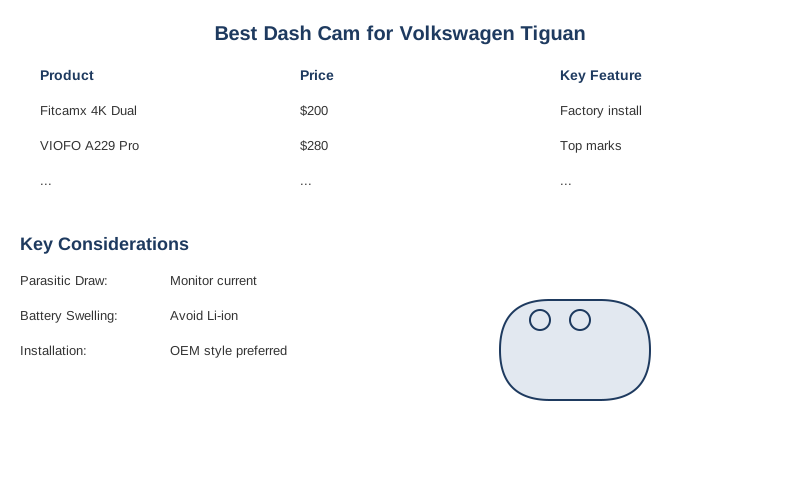
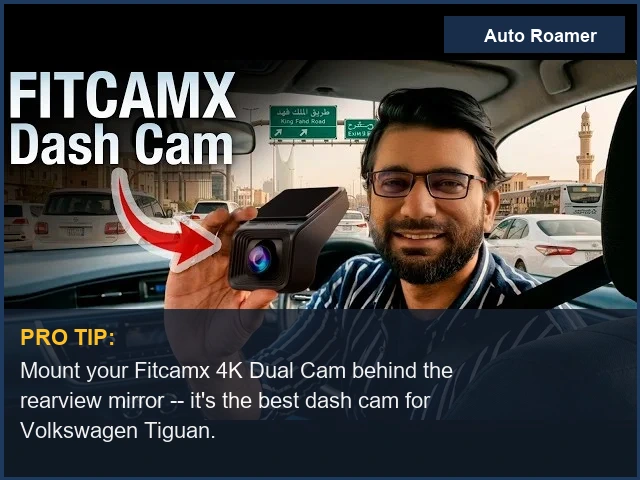
- Fitcamx 4K Dual Cam (~$200): If you want something that looks factory-installed and plugs directly into the rain sensor power, this is your huckleberry. No visible wires. The Fitcamx for Volkswagen Tiguan MK3 uses a plug-and-play method, avoiding the fuse box or cigarette lighter. Just make sure your rain sensor circuit can handle the current draw without tripping a fault code.
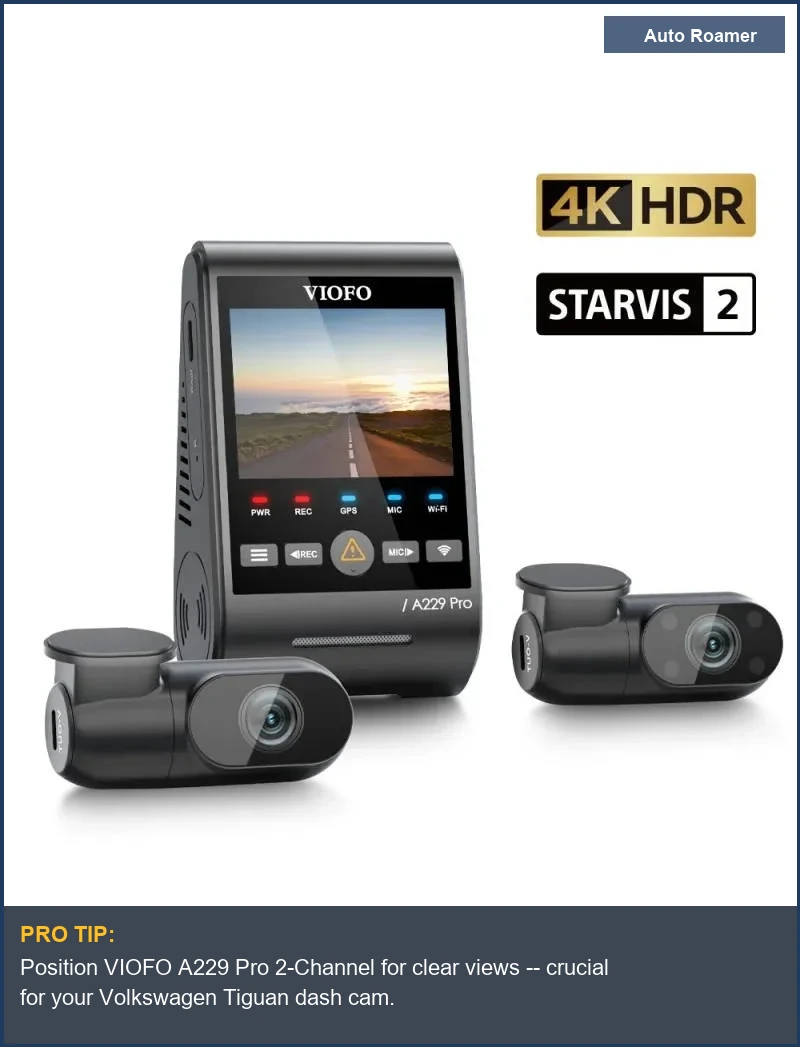
- VIOFO A229 Pro (~$280): This unit consistently gets top marks from Wirecutter for a reason. It uses Sony STARVIS 2 sensors, which means better low-light performance. It's not a stealth install, but the video quality for insurance claims is paramount. It prioritizes capturing detail in harsh conditions, like headlight glare or near-total darkness.
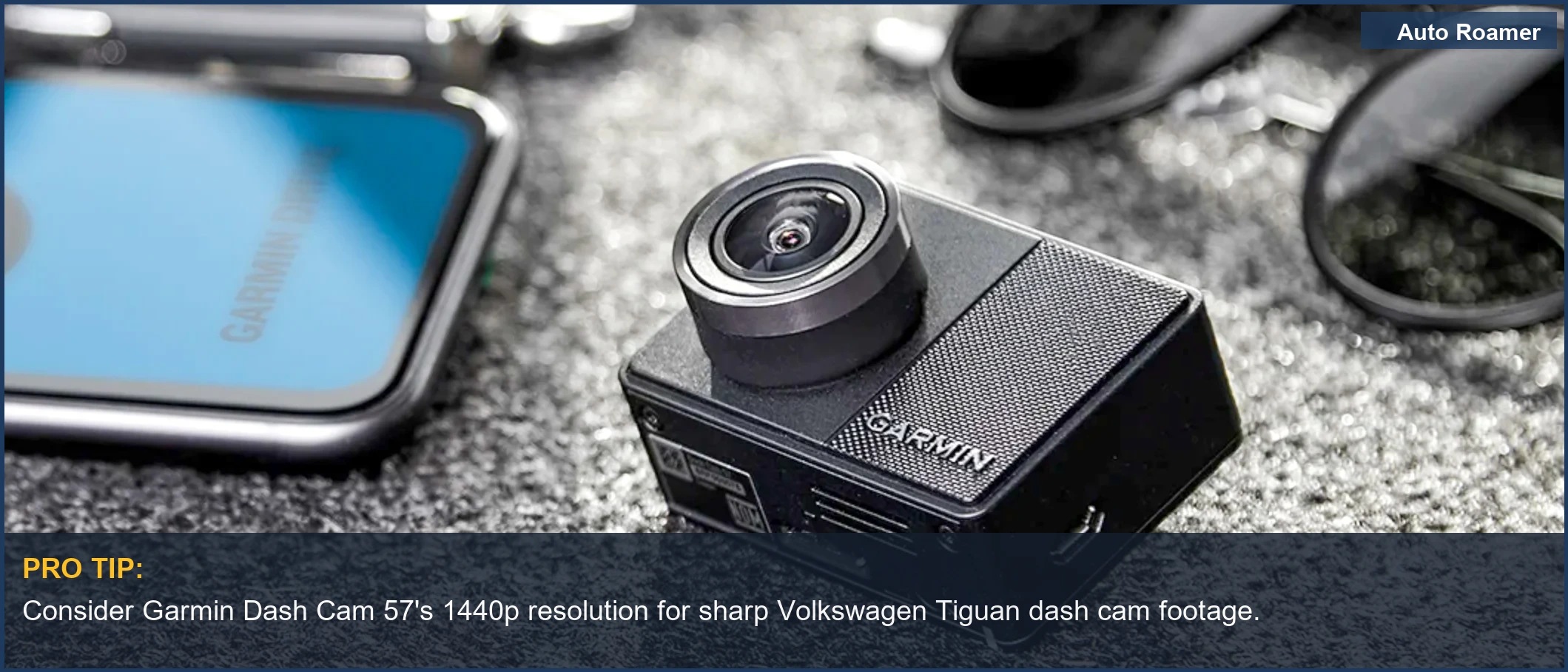
- Garmin Dash Cam 57 (~$200): Small footprint, decent video quality, and a reliable brand. Some Tiguan owners report clean installs with Garmin's hardwiring kit. Their parking mode is solid, but you'll need to run wires.
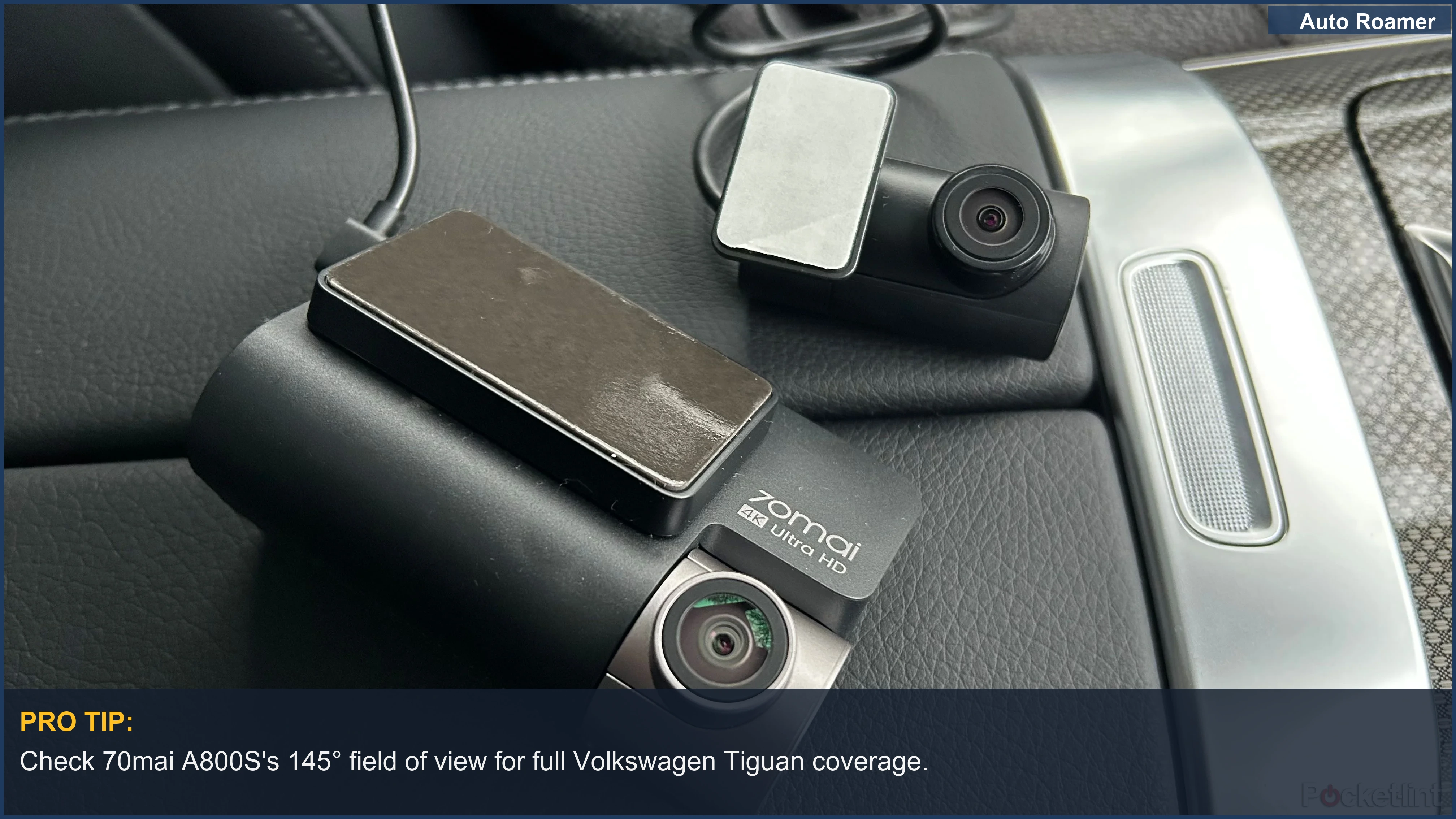
- 70mai A800S (~$140): Good budget option with 4K resolution. The image processing isn't quite VIOFO-level, but it's a significant step up from the no-name garbage on Amazon. Expect a more noticeable form factor.
- BlackVue DR970X-2CH (~$470): If you have money to burn and want the best parking mode with cloud connectivity, this is it. It's over-engineered for most, but the build quality and heat resistance are excellent. You'll pay for that robust design and features.
What to Look For
| Feature | Why it Matters (Dirtbag Engineer's Take) |
|---|---|
| Resolution (4K vs 1080P) | 4K isn't just a marketing gimmick for dash cams. It's about pixel density. More pixels mean you can actually read a license plate when the vehicle is moving or at a distance.
If you're trying to identify a hit-and-run driver, that detail is critical. 1080P is fine for general context, but 4K gives you actionable data. |
| Image Sensor Quality | Sony STARVIS 2 sensors, like those in VIOFO models, offer 2.5x wider dynamic range. This means the sensor can handle extreme light differences - bright sun and deep shadows - without blowing out highlights or crushing blacks. Less noise, more detail, especially at night or in tunnels.
Otherwise, you just get a blurry mess. |
| Capacitor vs. Battery Power | This is a hill I'll die on. Lithium-ion batteries degrade fast in high temperatures. Your car's interior can hit 140 degrees F in summer. Capacitors handle extreme thermal cycling without swelling or leaking. They're slightly more expensive, but they don't turn into a fire hazard or fail after six months, unlike cheap batteries. Prioritize reliability, not marginal cost savings. |
| Parking Mode Functionality | Not all parking modes are created equal.
Basic ones record on impact. Better ones, like VIOFO's 15-second pre-roll, buffer continuously and save footage before an impact. That context - who approached, from what direction - is gold for insurance adjusters. Without it, you just have a video of the aftermath. |
| Mounting and Aesthetics | OEM-style cams, like Fitcamx, integrate into the rearview mirror housing. This minimizes visual clutter and potential vibration from a suction cup mount.
Suction cups fail due to thermal cycling and UV degradation, leading to dropped cameras and skewed footage. A solid mechanical bond is always better. |
| Wiring and Power Source | Hardwiring provides a clean install. Tapping into the rain sensor is convenient, but verify the circuit's current capacity. Running power from the fuse box requires proper fuse taps and understanding switched vs. constant 12V lines. Improper wiring can introduce parasitic draws, blowing fuses, or even damage your vehicle's body control module.
Don't skimp on this. |
Our Top Picks for Reliable Performance
Fitcamx 4K Dual Cam (~$200)
Specs: 2160P (4K) front, 1080P rear, 160-degree front, 140-degree rear, f/1.6 aperture, built-in WiFi, G-sensor, loop recording.
Pros: OEM factory look, real plug-and-play installation into the rain sensor power. No visible wires, doesn't block line of sight. Video quality is solid for the price point, especially in daylight.
Cons: Uses a battery, not a supercapacitor, so expect reduced lifespan in extreme heat. Rear camera requires hardwiring, which takes away from the 'no wiring' claim. WiFi is 2.4Ghz only, so transfer speeds are not blazing. Facebook users praise the picture quality.
Best-for: Tiguan owners who prioritize a stealth, integrated look and minimal installation effort over long-term thermal durability or advanced parking features.
VIOFO A229 Pro 2-Channel (~$280)
Specs: Dual Sony STARVIS 2 sensors (4K front, 2K rear), f/1.6 front, f/1.8 rear, supercapacitors, buffered parking mode, GPS.
Pros: Industry-leading sensor technology for superior low-light performance and dynamic range. Supercapacitors ensure long-term thermal reliability. Buffered parking mode captures crucial pre-impact footage. Wirecutter named a VIOFO model their 'Best Overall' for a reason.
Cons: Not an OEM-style fit, so it's visible on the windshield. Installation requires hardwiring for full parking mode functionality. A bit pricier than budget options, but you get what you pay for in sensor quality and heat reliability.
Best-for: Anyone who wants rock-solid evidence capture, prioritizes thermal stability, and doesn't mind a traditional dash cam form factor.
Garmin Dash Cam 57 (~$200)
Specs: 1440P, 140-degree field of view, voice control, GPS, automatic incident detection.
Pros: Compact size, making it less obtrusive on the windshield. Garmin's ecosystem is user-friendly, and the voice control can be genuinely useful. Reliable brand with good support. Tiguan owners report clean hardwired installs.
Cons: Only 1440P, not 4K, which can mean less detail for license plates at speed. Parking mode is good but not as advanced as VIOFO's buffered pre-roll. Uses a battery, not a supercapacitor, though Garmin's thermal management is generally better than generic brands.
Best-for: Drivers who want a small, discreet dash cam from a reputable brand with good basic features and a simple interface.
70mai A800S 4K Dual Dash Cam (~$140)
Specs: 3840x2160P front, 1080P rear, f/1.8 aperture, built-in GPS, ADAS.
Pros: Excellent value for 4K front recording. Decent image quality for the price point, especially in well-lit conditions. Includes ADAS (Advanced Driver-Assistance Systems) features, though I wouldn't rely on them over your Tiguan's built-in systems. Car and Driver called the T800 a 'respectable choice'.
Cons: Image processing isn't as refined as VIOFO or BlackVue. Battery-powered, so thermal degradation is a concern over time. ADAS features can be more annoying than helpful, often triggering false positives. Bulkier form factor than the Garmin.
Best-for: Budget-conscious buyers who want 4K resolution and are willing to accept some compromises in low-light performance and thermal durability.
BlackVue DR970X-2CH (~$470)
Specs: 4K front, 1080P rear, Sony STARVIS 2, supercapacitors, cloud connectivity, integrated GPS, Wi-Fi.
Pros: Top-tier build quality and thermal management. Cloud connectivity for remote viewing and notifications (requires a separate data plan). Excellent parking mode with motion and impact detection. Uses supercapacitors for extreme temperature resilience. This is the over-engineered option.
Cons: Pricey. Cloud features add ongoing subscription costs. Installation can be complex, especially if you want to utilize all the advanced parking modes and hardwire it properly. The rear camera requires running a long cable through the headliner.
Best-for: Users who demand the absolute best in reliability, advanced features like cloud access, and are willing to pay a premium for it. If you park in sketchy areas and need constant monitoring, this is your unit.
Head-to-Head Comparison
| Feature | Fitcamx 4K Dual Cam | VIOFO A229 Pro 2-Channel | Garmin Dash Cam 57 | 70mai A800S 4K Dual | BlackVue DR970X-2CH |
|---|---|---|---|---|---|
| Front Resolution | 4K (2160P) | 4K (2160P) | 1440P | 4K (2160P) | 4K (2160P) |
| Rear Resolution | 1080P | 2K (1440P) | N/A (Front Only) | 1080P | 1080P |
| Image Sensor | Novatek Chip | Sony STARVIS 2 | Proprietary | Sony IMX415 | Sony STARVIS 2 |
| Power Source | Battery | Supercapacitor | Battery | Battery | Supercapacitor |
| Parking Mode | Impact-triggered | Buffered Pre-Roll | Impact-triggered | Impact-triggered | Buffered, Cloud |
| Installation Style | OEM Integrated | Traditional Mount | Compact Traditional | Traditional Mount | Sleek Traditional |
| Hardwiring Needed | Rear Cam Only | For Parking Mode | For Parking Mode | For Parking Mode | For Parking Mode/Cloud |
| Average Price (USD) | ~$200 | ~$280 | ~$200 | ~$140 | ~$470 |
The Fitcamx has that OEM look, no argument there. Tiguan owners on Facebook love its stealth factor.
But that internal battery is a mechanical stress point over time, especially with thermal cycling. You'll see capacity fade and potential swelling after a year or two in a hot climate.
VIOFO and BlackVue lean on supercapacitors for a reason. They don't care if your car sits in a parking lot at 110 degrees F ambient. No outgassing, no capacity loss, just reliable power delivery when you need it. That's a critical difference in long-term failure rate.
The initial cost might be higher, but the cost-per-fix is lower because it just keeps working.
Garmin and 70mai are decent mid-range options. The Garmin's small form factor is good for minimizing visual obstruction, and the 70mai gives you 4K on a budget. But remember, a cheap 4K sensor isn't the same as a Sony STARVIS 2. It's like comparing a budget drill to a Hilti - both spin, but one actually gets the job done without burning out.
Budget vs Premium: Where Your Money Actually Goes
| Feature | Budget (~$100-150) | Premium (~$250-500+) |
|---|---|---|
| Resolution & Sensor | Often 1080P or 'upscaled' 4K. Generic sensors with limited dynamic range. Night vision is usually grainy. | True 4K with high-quality sensors (e.g., Sony STARVIS 2). Excellent low-light performance and wide dynamic range. Readable license plates. |
| Power Source | Lithium-ion batteries. Prone to swelling, leakage, and premature failure due to thermal cycling in hot cars. | Supercapacitors. Immune to thermal degradation, providing consistent power and longer lifespan in extreme temperatures. |
| Build Quality & Materials | Cheaper plastics, often with more play in mounting mechanisms.
Less robust against vibration and impact. | High-grade plastics, precision-fit components. Designed for mechanical stress and vibration resistance. Better tactile feel. |
| Parking Mode | Basic impact detection. Starts recording after the hit. Often unreliable power management. | Buffered parking mode (records 15 seconds before impact). Advanced motion/impact detection. Dedicated hardwire kits with low-voltage cutoff. |
| Connectivity & Features | Basic Wi-Fi for file transfer. Limited app functionality. No cloud features. | Dual-band Wi-Fi, often with cloud connectivity (subscription required). GPS, ADAS, advanced app control. |
| Installation | Often DIY-friendly, but wiring can be messy.
Suction cup mounts are common, which degrade. | Can be more complex due to advanced hardwiring for parking modes. OEM-style options exist, or robust adhesive mounts. |
The biggest difference between a $100 dash cam and a $300 one isn't just the 'experience.' It's the underlying physics and engineering. A budget cam often uses a cheap lithium-ion battery. Your car's interior can hit 160 degrees F in summer, which rapidly degrades those batteries. They swell, leak acid, and eventually just die.
That's a material failure mode.
Premium cams, like a VIOFO, use supercapacitors. These things don't care about temperature swings. They're designed for high thermal cycling and deliver power reliably for years. VIOFO explicitly states this design choice. That's not a 'feature,' that's fundamental engineering for survivability in a harsh automotive environment. You're paying for that reliability and the higher quality sensors that actually capture usable footage when it matters most.
The Bottom Line
Getting a dash cam for your Tiguan isn't about bragging rights; it's about hard data when things go sideways. You want evidence, not blurry pixels or a dead battery. Don't fall for the cheap plastic junk that fails after three months.
- Prioritize Supercapacitors: Seriously, avoid lithium-ion batteries in dash cams unless you enjoy replacing them every year.
The thermal cycling in a car interior is brutal.
- Invest in Sensor Quality: A cheap 4K cam is still garbage if the sensor can't handle low light or high contrast. Sony STARVIS 2 is a proven performer for a reason.
- Consider the Install: An OEM-style like Fitcamx gives you a clean look, but verify the wiring won't introduce parasitic draw or trip fault codes.
Hardwiring a VIOFO is more work but often more robust.
- Understand Parking Mode: Buffered parking mode is superior to basic impact detection. That 15 seconds of pre-roll can be the difference between a successful insurance claim and getting screwed.
- Don't Overspend on Gimmicks: Cloud features are nice, but they come with ongoing costs and potential data plan headaches.
Focus on the core function: reliable video capture.
The dealer will charge you $300 to install a basic dash cam that you can hardwire yourself with a $15 add-a-fuse kit and a few zip ties. Know the failure modes, understand the physics, and pick something that won't leave you stranded or with useless footage. Your Tiguan deserves better than a cheap, leaky battery.