What You Need to Know
My first attempt at a backup camera setup involved a cheap $45 wireless unit from Amazon and a prayer. The goal was simple: see what was behind my aging minivan when I backed into my notoriously tight driveway in the suburbs of Chicago. The unit advertised a 150-degree wide angle, which sounded great for catching everything. What nobody tells beginners is that 'wide' also means 'distorted' and 'tiny details get lost'.
I spent 20 minutes at the store trying to find a decent one and ended up with the first one I saw. Rookie mistake number one.
The real move is understanding that 'wide' isn't always better, especially when you're trying to see if that stray cat is still sleeping under the bumper or if your kid left their scooter there. The honest version: you need to see clearly, not just see more blurry stuff.
The Core Answer
Seeing Clearly, Not Just Widely
When I started looking into backup cameras, every guide screamed 'wide angle!' and threw around degrees like they were going out of style. The problem is, nobody tells you what those degrees actually mean for your car.
I ended up with a 170-degree camera on my first go-round, thinking 'more is more.' Turns out, it made everything look like a funhouse mirror and I couldn't tell if the car behind me was 5 feet away or 50.
The honest version: a super wide angle, like 170 degrees or more, is often too much for a car. It warps the image so badly that depth perception goes out the window.
You get a huge view, sure, but good luck seeing a license plate or even gauging how close you are to that mailbox.
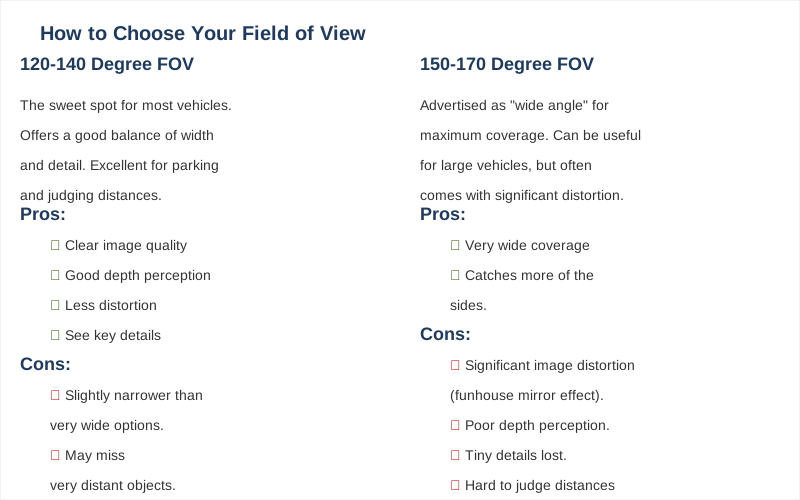
What nobody tells beginners is that you need a balance. Too narrow, and you've got massive blind spots. Too wide, and you can't see anything useful. For my minivan, after a few embarrassing scrapes with the garage wall, I learned that somewhere between 120 and 140 degrees is the sweet spot.
That 120-degree camera I eventually bought for $60?
It was a game-changer. I could finally see the lines in the parking lot clearly and judge distances properly. The $170 dealer-installed option was overkill and frankly, less useful.
Why This Matters for Your Setup
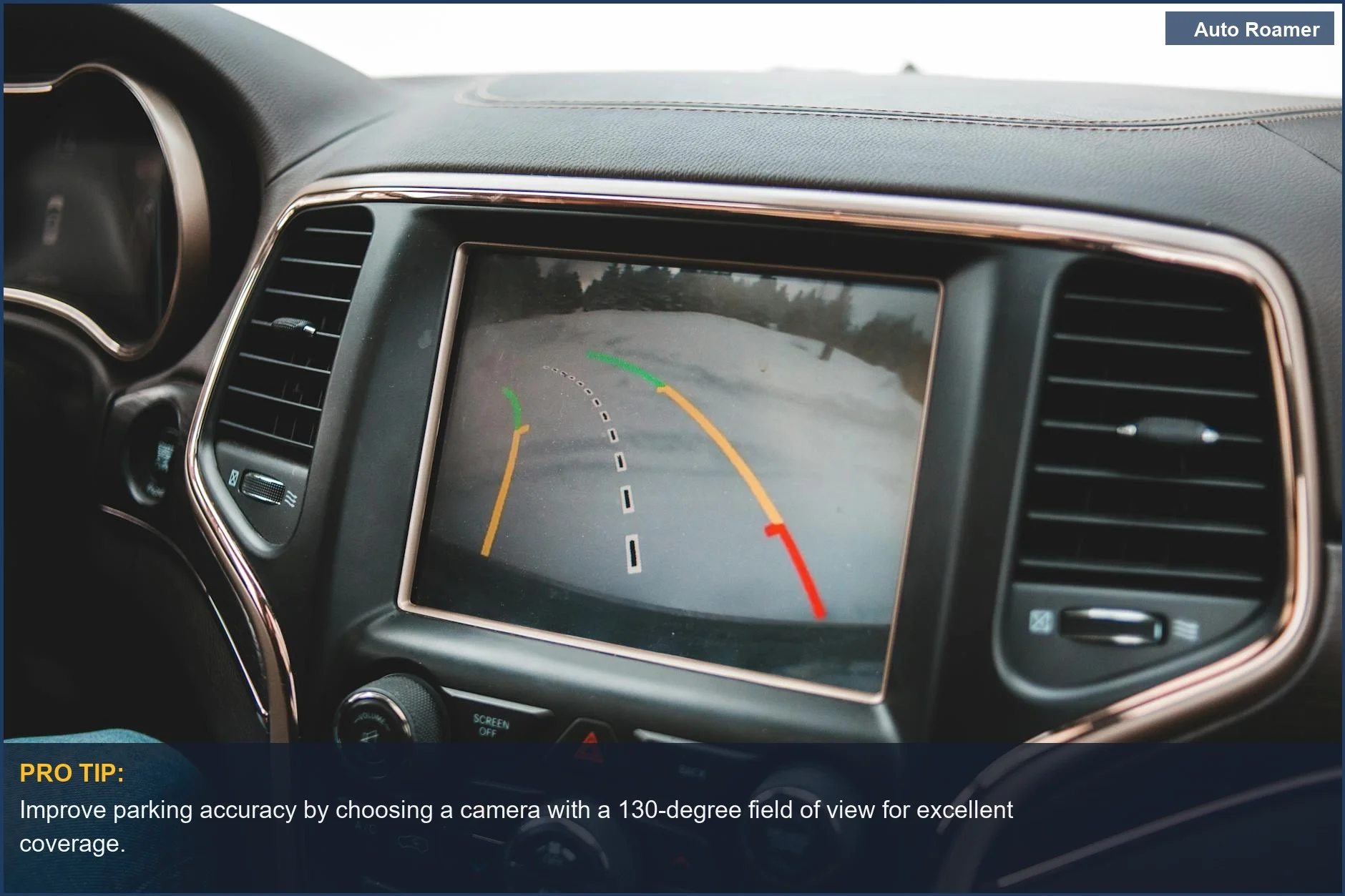
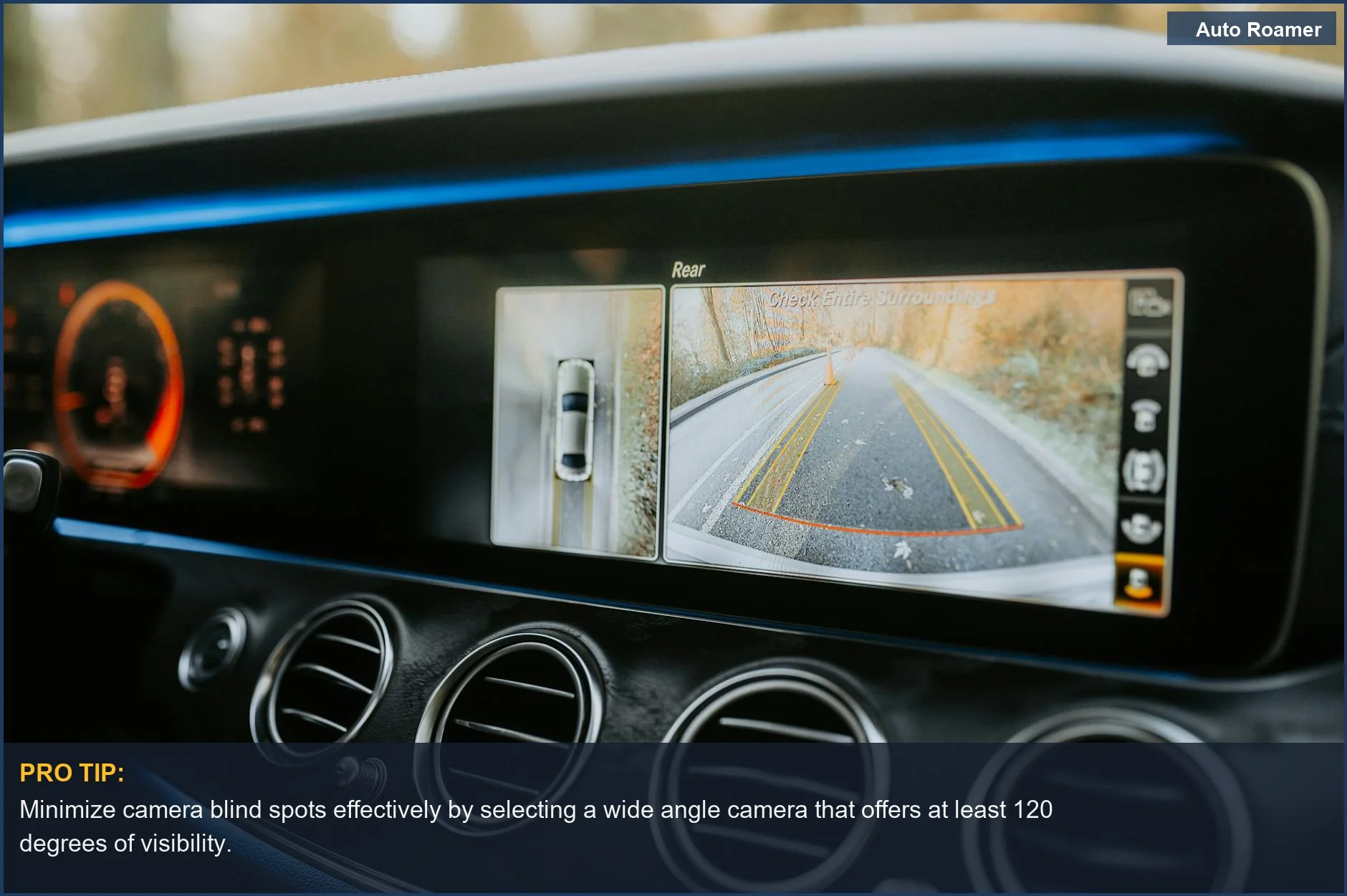
- Blind Spots are the Enemy: I learned this the hard way trying to back out of a campsite in Colorado. My first camera had such a narrow field of view I couldn't see the trailer hitch on my own vehicle, let alone anything else. I nearly took out a picnic table.
A good field of view, around 130 degrees, is key to avoiding these kinds of disasters.
- Details Matter: When I installed a camera with a 160-degree view, I thought I was set. But then I tried to read a parking meter. Couldn't do it. The image was too stretched. The real move is to find a camera that offers enough width to see your surroundings but keeps details like license plates legible.
Aim for that 120-140 degree range.
- The Cost of Correction: After buying a cheap, super-wide camera that was practically useless for anything beyond seeing the sky, I ended up buying a second one that actually worked for about $70. That's $115 down the drain for not knowing the field of view basics. Don't be like me. Do it right the first time.
Making the Right Choice
- Don't Chase the Biggest Number: That 170-degree claim? It sounds impressive, but it's often more distortion than useful vision for a car. Stick to the 120-140 degree range for the best balance of coverage and clarity.
My $60 camera with a 130-degree view was infinitely better than my first $45 attempt.
- Think About Your Vehicle: A huge truck might benefit from a slightly wider view than a compact car, but even then, you don't need extreme wide-angle lenses that make everything look warped. The goal is to see, not to get a fisheye effect.
- Test if You Can: If you're buying in person, try to see a demo. Online?
Read reviews specifically mentioning how well you can see details like license plates or how good the depth perception is. This is where field notes from other users are invaluable.