Quick Verdict
What if that breathtaking elk herd you spotted on your last backcountry trip could be replayed in crystal-clear detail, or that dicey moment navigating a washed-out trail was perfectly documented for bragging rights (or evidence)? For SUV campers who treat their vehicles as mobile basecamps, a dash cam isn't just an accessory – it's your eyes on the road, your memory keeper of the wild. Without one, those epic wildlife encounters and crucial safety records vanish with the passing miles. Don't let your off-road adventures become lost footage; let's find the dash cam that's built for your journey.
What to Look For
When you're out there, bouncing down a fire road or baking in the desert sun, your dash cam isn't just a gadget. It's your witness. Here's what actually matters, not the marketing fluff about 'AI-powered driving assists' that just drain your battery faster.
PCMag highlighted driver-assist features, but I'm looking at raw data integrity.
| Feature | Why it matters (Dirtbag Engineer's take) | Failure Mode to Avoid |
|---|---|---|
| Video Resolution (4K Front, 1080p Rear Minimum) | Higher pixel count means more data. More data means legible license plates and faces, not just blurry blobs. This is your evidence. Don't skimp. | Unreadable footage due to pixelation; inability to identify critical details post-incident. |
| Supercapacitor vs. Battery | Batteries swell and fail under repeated thermal cycling. A supercapacitor handles 150 degrees F internal temperatures without outgassing or losing capacity. This is non-negotiable for vehicles. | Swollen battery, case deformation, total power failure, fire risk. |
| Sony STARVIS 2 Sensor | This is the sensor for low-light performance. It pulls more usable light data, meaning clearer night footage. Without it, your nighttime video is just noise. Dashcamtalk emphasizes STARVIS 2 for night performance. | Motion blur, insufficient detail, unusable footage in dim conditions. |
| Parking Mode (Buffered) | Records pre-event footage, not just after impact. If some yahoo backs into your rig and drives off, you need those 5 seconds before the impact. Requires constant 12V power. | Missed critical moments, no pre-impact evidence, reduced insurance claim viability. |
| Hardwiring Kit (Low Voltage Cutoff) | Prevents parasitic draw from killing your starting battery. A good kit cuts power at 11.8V, leaving enough juice to crank your engine. Cheap ones will leave you stranded. | Dead battery, inability to start vehicle, repeated thermal cycling on battery terminals. |
| GPS Logging | Records speed and location data. Crucial for accident reconstruction and proving you weren't speeding. It's just more data for your defense. | Lack of verifiable speed/location data; 'he said, she said' arguments with insurance. |
| SD Card Endurance (High Endurance MicroSD) | Dash cams write constantly. Standard cards fail fast from write cycles. High-endurance cards are rated for tens of thousands of write cycles. Don't cheap out on the storage. | Corrupted files, sudden data loss, card failure, inability to record during critical events. |
| Mounting Mechanism (3M Tape vs. Suction Cup) | 3M VHB tape forms a strong, semi-permanent bond that resists vibration. Suction cups fail in heat, lose vacuum, and fall off. Mechanical stress wins. | Mount detachment, cam falling during driving, obscured view, impact damage to cam. |
Most readers grab one of these top-rated picks while reading:
Shop Top Picks on Amazon →Most readers grab one of these top-rated picks while reading:
Shop Top Picks on Amazon →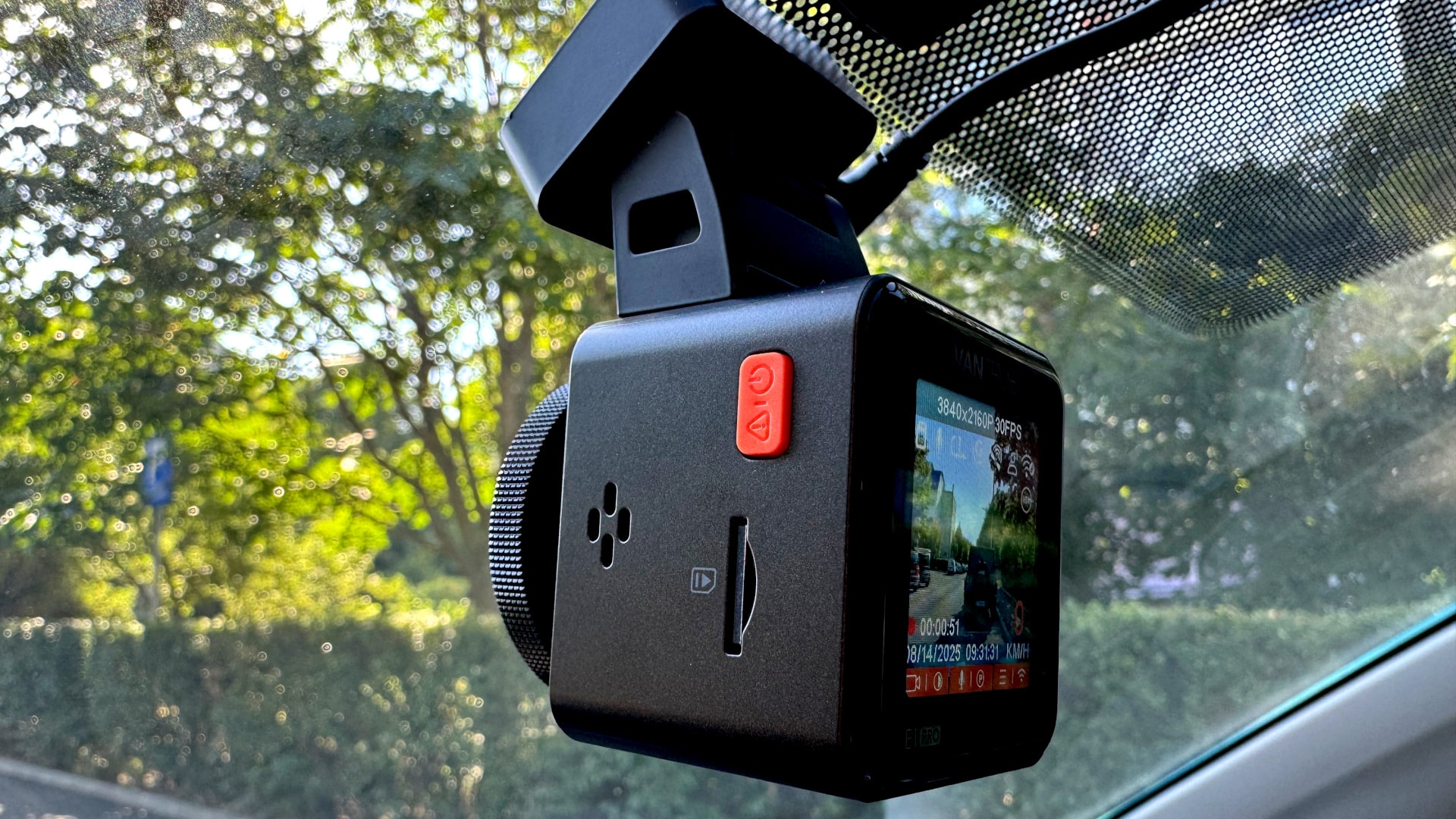
Our Top Picks for Reliable Performance
I've seen enough melted plastic and corrupted files to know what works and what's just marketing. These are the units that hold up to the mechanical stress and thermal cycling of SUV life, not some city commuter's joyride.
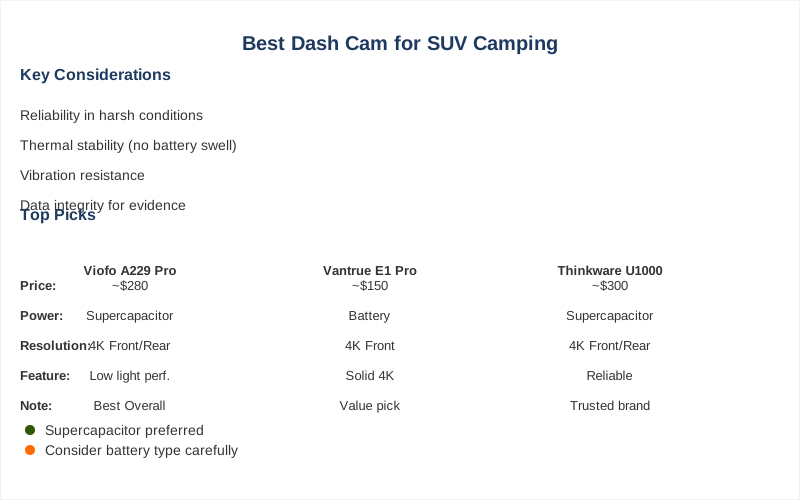
Viofo A229 Pro (~$280)
Capacity/Key Specs: Front 4K (Sony STARVIS 2 IMX678), Rear 2K (Sony STARVIS 2 IMX675), supercapacitor, GPS, 5GHz Wi-Fi.
Pros: Excellent video quality, especially at night. Supercapacitor design is bulletproof for temperature extremes. Supports up to 512GB SD cards.
Wirecutter praises its crisp, super-high-res footage.
Cons: Pricey. App can be a bit clunky. Hardwiring kit sold separately.
Best-for: Anyone who needs uncompromised video evidence and reliability in a dual-channel setup, especially in hot climates. This is your gold standard.
Vantrue E1 Pro (~$150)
Capacity/Key Specs: Front 4K (Sony STARVIS 2 IMX678), supercapacitor, compact design, optional LTE.
Pros: Great 4K image quality from the front camera for the price. Small footprint, so it doesn't obstruct your view. Good for covert installation.
Julian23 notes its top-tier 4K evidence.
Cons: Single channel only - no rear camera option. LTE requires a separate module and subscription.
Best-for: Solo adventurers who prioritize front-facing 4K clarity and a discreet installation without needing rear coverage.
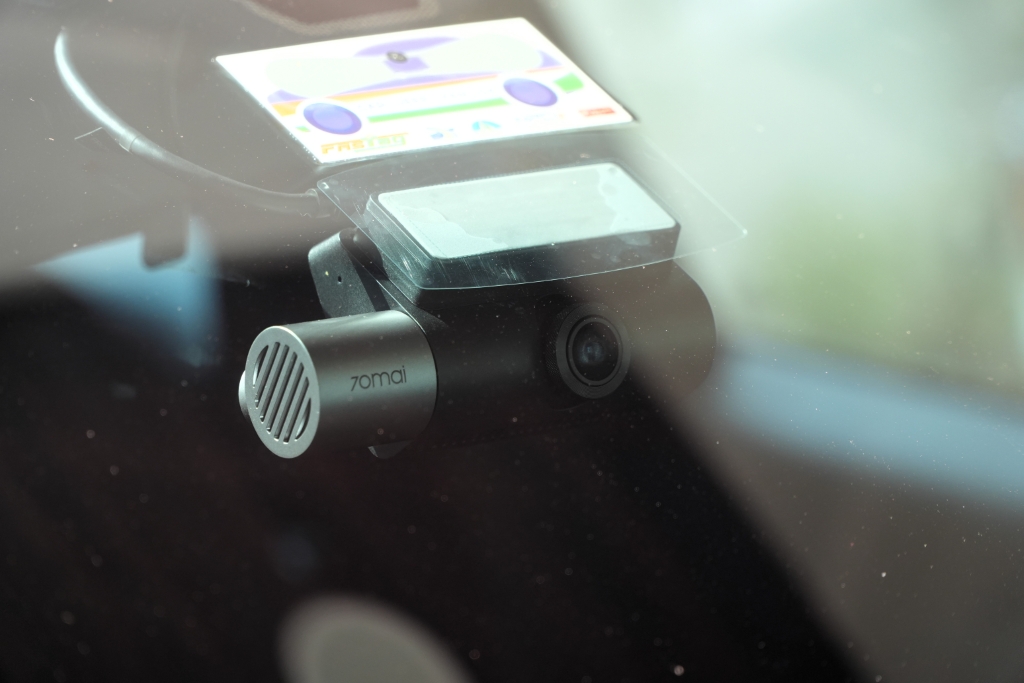
70mai T800 Premium Set (~$220)
Capacity/Key Specs: Front 4K, Rear 1080p, supercapacitor, parking mode.
Pros: Decent overall performance for a dual-channel setup at a mid-range price. Includes a rear camera. Fairly easy to install.
Cons: Night vision isn't as good as STARVIS 2 sensors.
App can be finicky. I've seen some users complain about mounting adhesive failure after prolonged heat exposure.
Best-for: Those who want front and rear coverage on a tighter budget, but don't expect top-tier low-light performance.
Viofo A329S (~$250)
Capacity/Key Specs: Front 4K (Sony STARVIS 2), Rear 2.7K (Sony STARVIS 2), supercapacitor, GPS.
Pros: Excellent image quality on both channels, even the rear. Great build quality and thermal stability. Similar to the A229 Pro but often slightly cheaper.
Car and Driver rated this as their best overall.
Cons: Still a premium price. Requires careful routing of the rear camera cable to avoid EMF interference with other electronics.
Best-for: SUV campers who need robust, high-resolution front and rear coverage with proven reliability. A solid alternative to the A229 Pro.
Garmin Dash Cam Mini 3 (~$130)
Capacity/Key Specs: 1080p, compact, app-controlled, supercapacitor.
Pros: Incredibly small - vanishes behind your rearview mirror. Supercapacitor for thermal resilience. Simple to operate once set up.
Cnet described its Lilliputian chassis.
Cons: No screen, entirely app-dependent. 1080p is good, but not 4K. No rear camera option. Hard to aim precisely without the app.
Best-for: Minimalists who want a discreet, reliable front camera for basic incident recording and don't care about a screen or 4K resolution.
RedTiger F7N (~$120)
Capacity/Key Specs: Front 4K, Rear 1080p, parking monitor, G-sensor.
Pros: Good value for a front/rear 4K setup. Decent daytime video.
Often comes with a full install kit.
Cons: Night vision is average at best. Internal battery, not a supercapacitor, so thermal stability is a concern for prolonged exposure. I've heard too many stories about these batteries swelling.
Best-for: Budget-conscious buyers who need dual-channel coverage and are willing to accept the thermal risks of a battery, or live in cooler climates.
View on Amazon — Viofo A229 Pro
View on Amazon — Vantrue E1 Pro
View on Amazon — 70mai T800 Premium Set
- Best Dash Cam for Kia Soul Camping
- Best Dash Cam for Camping Trailer
- Garmin Mini 2 Dash Cam Camping Mount