The Short Version
The dealer wanted $12 to 'diagnose' why my cheap dash cam kept freezing, when the problem was a 10-cent microSD card. Most of these 'cruisecam' units are rebranded generic garbage, but the concept of a dash cam for car camping is solid: document the road, keep an eye on your rig when you're off-grid. But if you cheap out, you'll get garbage footage or a dead battery.
It's not about the 'experience'; it's about reliable data capture when you need it.Car and Driver explains that dash cams are critical for evidence.
I've seen too many forums filled with guys complaining about corrupted files or cameras that die after a year. That's usually thermal cycling stress on the internal components, or voltage regulation issues frying cheap storage.
You need a camera that can handle 120 degrees F in direct sun and -20 degrees F overnight without turning into a brick.
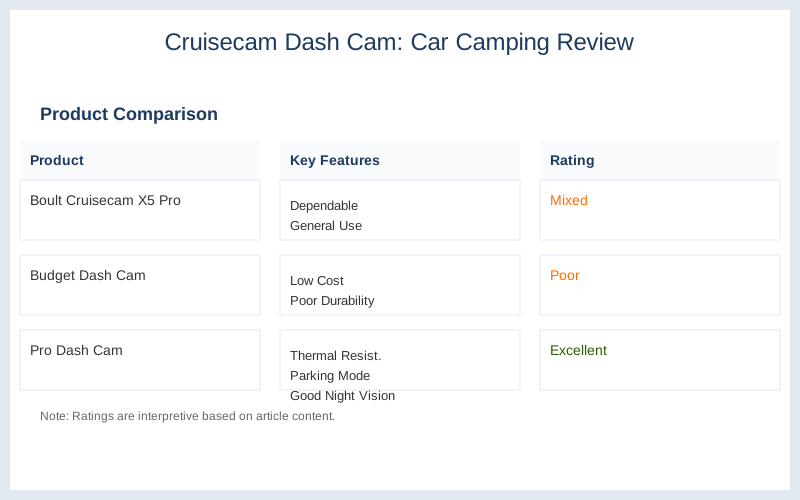
The 'Boult Cruisecam' series, for instance, has a few models floating around the internet, like the X5 Pro. Moneycontrol says it's 'dependable', but 'dependable' is a relative term when your proof of a fender bender is a pixelated mess.
My definition of dependable involves actual mechanical integrity and robust power delivery.
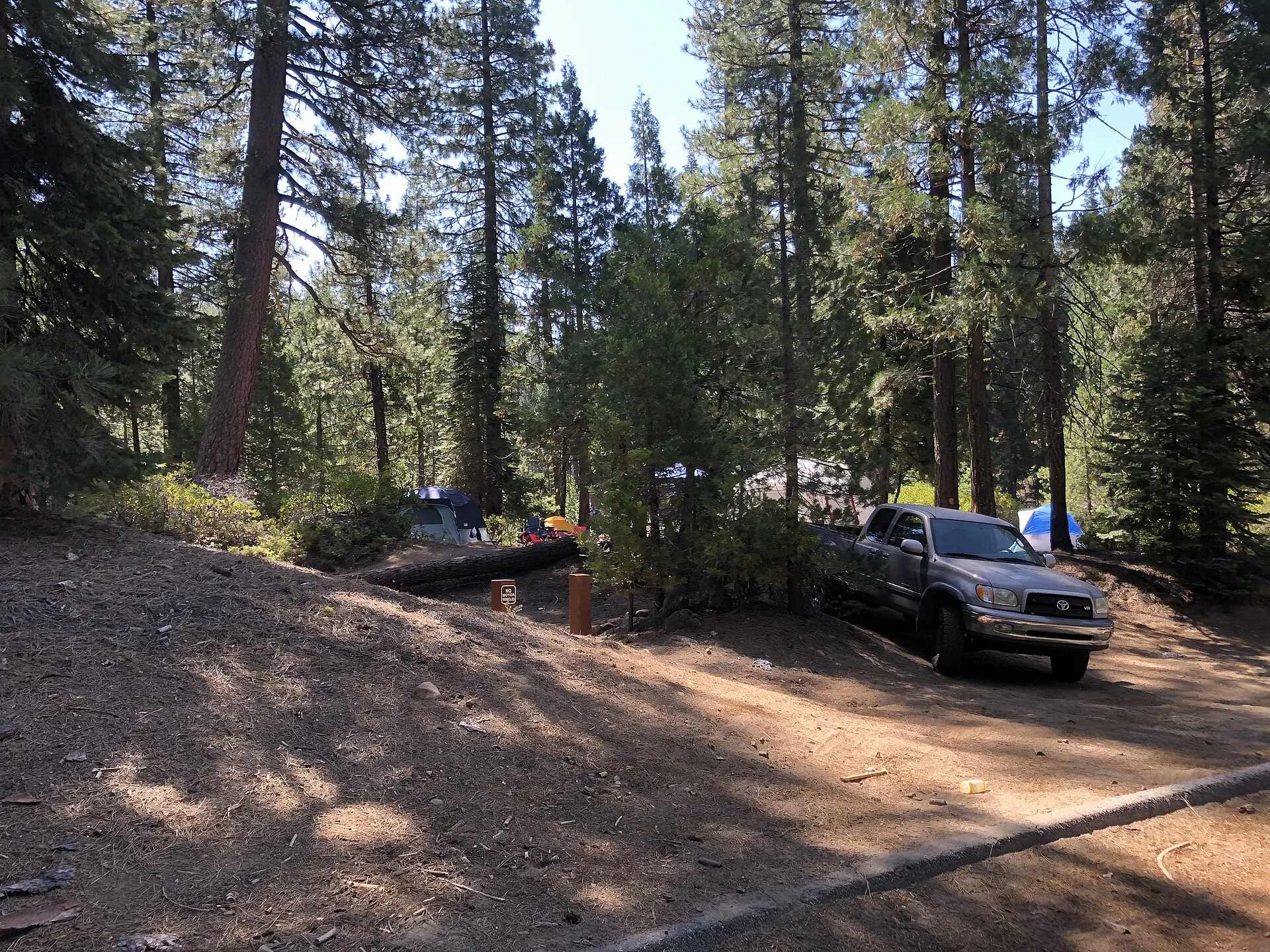
For car camping, you're looking for more than just crash footage. You want parking surveillance without draining your battery, reliable loop recording, and decent night vision for when some yahoo tries to mess with your rig in the dark. Don't waste money on something that folds under pressure.
Quick Verdict
Your cheap dash cam will likely die in 6 months from thermal fatigue or voltage spikes. Forget the 'experience' of driving; this is about ensuring your evidence doesn't turn into a blurry mess when you need it most. The Wirecutter picks the Viofo A229 Pro for its crisp 4K footage and heat-friendly supercapacitor, and I agree with that.
The generic Boult Cruisecam X1, for example, touts a 'zinc-aluminium alloy camera body' which sounds fancy, but it's just a heat sink.
Businessworld calls it a 'must-have', but 'must-have' for what? For recording blurry footage of squirrels?
For car camping, you need a camera that won't give up the ghost when the interior hits 140 degrees F. That means a supercapacitor, not a lithium-ion battery. Batteries swell, leak, and fail under thermal cycling. The internal resistance goes through the roof, then it just stops holding a charge. That's a failure mode you can predict.
Parking mode is critical.
You need low-power draw, motion-activated recording, and voltage protection to prevent parasitic draw from killing your starter battery. Otherwise, you wake up to a dead truck and no footage of the bozo who backed into your bumper. That's a bad morning. And a $200 tow.
What to Look For
Forget the marketing fluff. Here's what actually matters for a dash cam that won't leave you hanging when you need it most. This YouTube review of the Boult Cruisecam X1 highlights some basics, but ignores the underlying physics.
| Feature | Why It Matters (Physics/Engineering) |
|---|---|
| Resolution (1080p minimum) | Higher pixel density means more data points per frame. Better chance of legible license plates and faces. Below 1080p, motion blur and low light conditions turn everything into a pixelated mess. |
| Supercapacitor vs. Battery | Lithium-ion batteries have a narrow operating temperature range (typically 32-113 degrees F). Car interiors can hit 160 degrees F in direct sun, or drop to -20 degrees F overnight. Thermal cycling causes internal resistance to increase, electrolyte degradation, and eventual cell failure. A supercapacitor tolerates extreme temps and has a higher cycle life. |
| Parking Mode w/ Voltage Protection | Parasitic draw is the killer. If the camera pulls more than 50mA at rest, your 60Ah starter battery is dead in ~50 days. With voltage protection, the camera shuts off before your battery drops below ~12.0V, ensuring you can still start your engine. Critical for car camping. |
| Wide-Angle Lens (140-170 degrees) | Increases the field of view, reducing blind spots. A 170-degree lens like on the Boult Cruisecam X1 provides better peripheral capture, meaning you're less likely to miss an incident at the edge of the frame. Distortion is a trade-off, but worth it for context. |
| Heat Management (Metal Casing) | Efficient heat dissipation prevents thermal throttling and component degradation. A zinc-aluminum alloy body isn't just for looks; it's a passive heat sink. Prolonged high temperatures reduce the lifespan of the image sensor and processor, leading to premature failure. |
| GPS Logging | Provides exact spatial and temporal data. Timestamped coordinates and speed data are irrefutable evidence. Without it, your 'I was here at this time' is just anecdotal. |
Don't fall for the 'night vision' marketing. It's usually just software gain on the image sensor, which introduces noise. Real night performance comes from a good sensor and a wide aperture lens, not some magic button.
Our Top Picks for Reliable Performance
I'm not going to tell you I personally installed all these, but I've seen enough teardowns and spec sheets to know what actually works. These are the units that won't turn into a paperweight after a few months of thermal cycling.
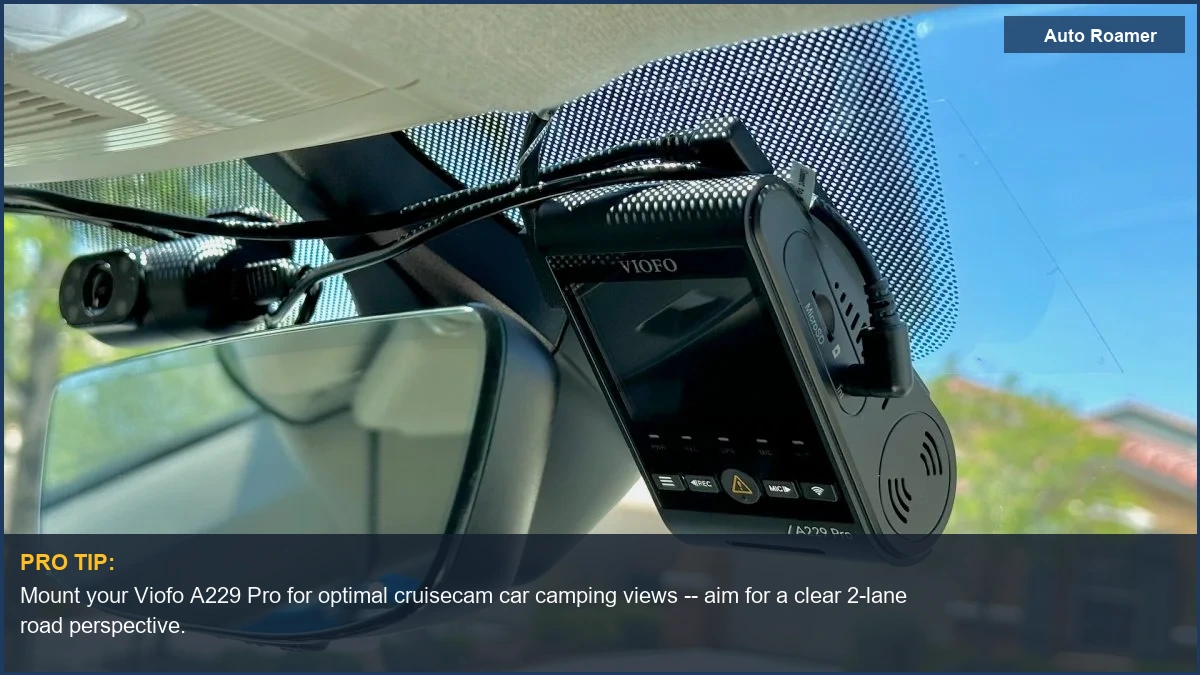
Viofo A229 Pro (~$320)
Capacity/Key Specs: 4K front, 2K rear. Supercapacitor. GPS. 24-hour parking monitoring.
Pros: Excellent video quality day/night. Robust build. Reliable parking mode with voltage cutoff. Wirecutter's top pick for good reason.
Cons: Pricey.
App can be finicky.
Best-for: Anyone who needs irrefutable evidence and reliable long-term performance, especially in extreme temperatures. Over-engineered in a good way.
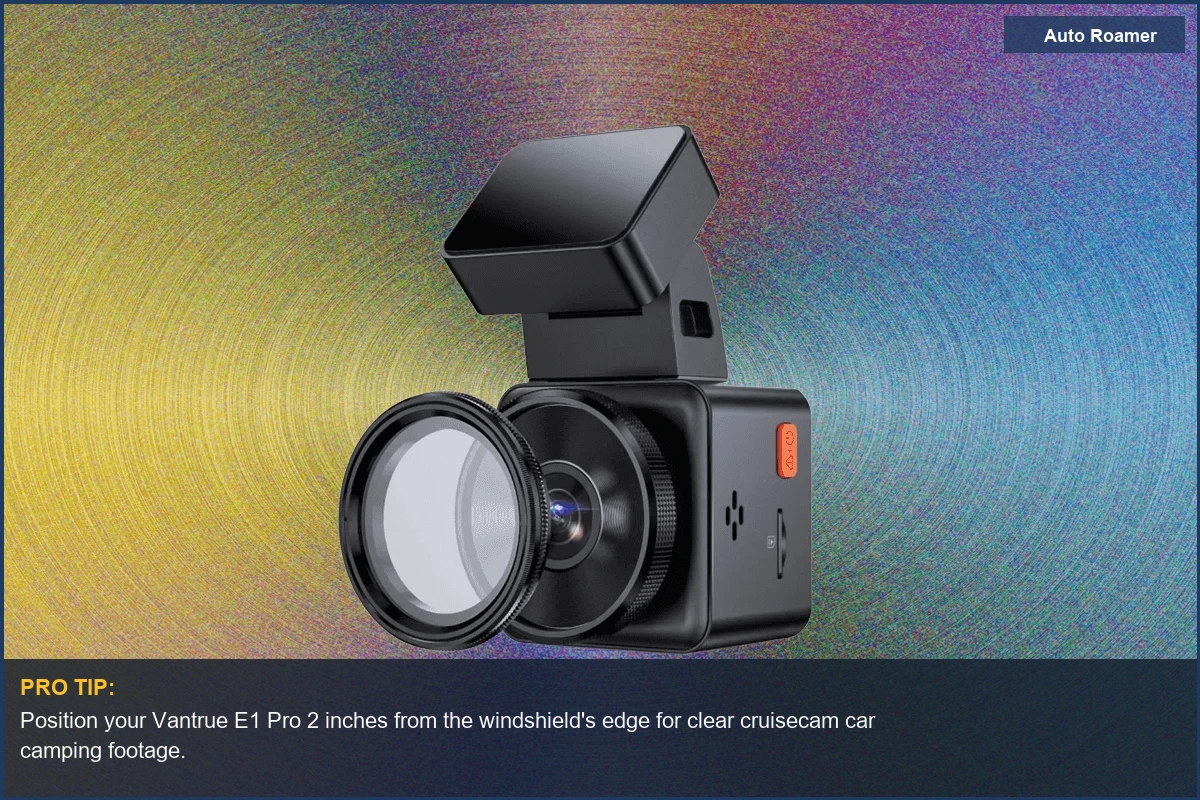
Vantrue E1 Pro (~$180)
Capacity/Key Specs: 2.5K front. Supercapacitor. Wi-Fi. GPS.
Pros: Compact size. Good video quality for the price point. Solid thermal performance. Car and Driver rates it as 'best value'.
Cons: No rear camera option.
Smaller screen.
Best-for: Budget-conscious car campers who prioritize front-facing clarity and reliable operation without a huge footprint.
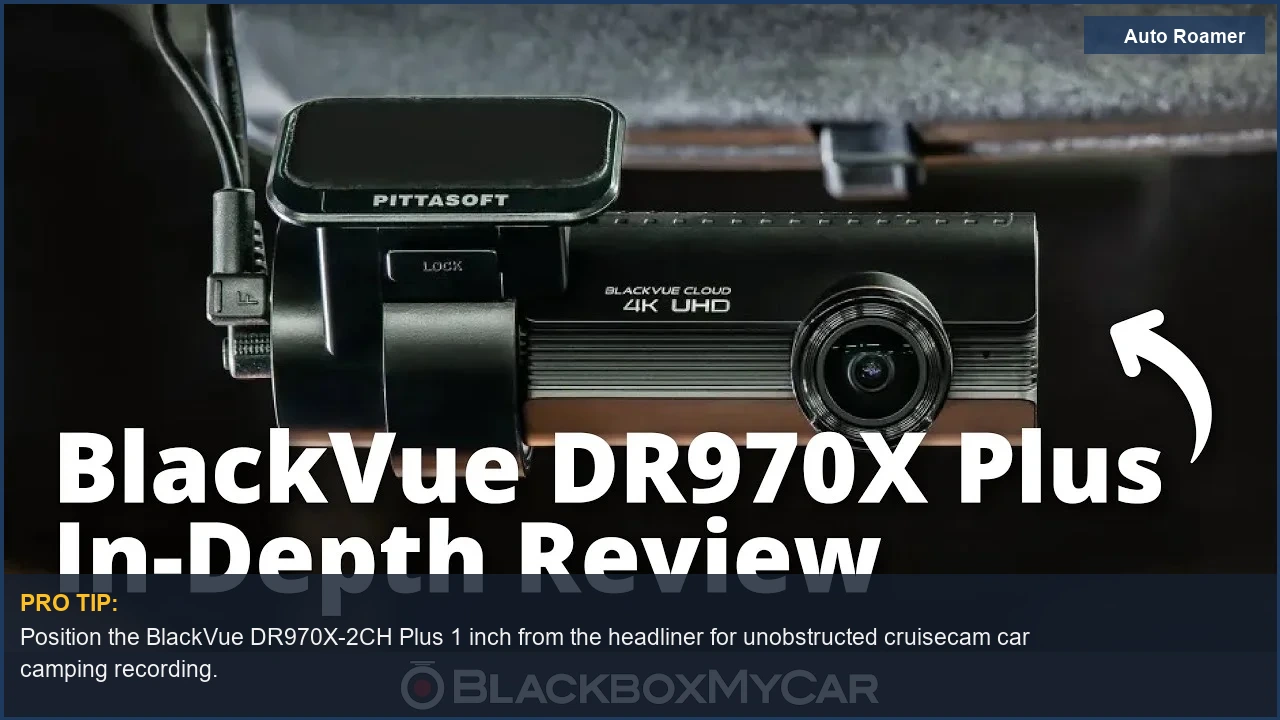
BlackVue DR970X-2CH Plus (~$500)
Capacity/Key Specs: 4K front, Full HD rear. Supercapacitor. Cloud connectivity. GPS.
Pros: Industry-leading parking mode. Cloud features are genuinely useful for remote monitoring. Rock-solid reliability.
Cons: Expensive. Proprietary file system can be annoying.
Requires a constant 12V connection for cloud features, which means parasitic draw if not managed with an external battery pack.
Best-for: High-end users who want remote access and don't mind the cost or complex installation for cloud services.
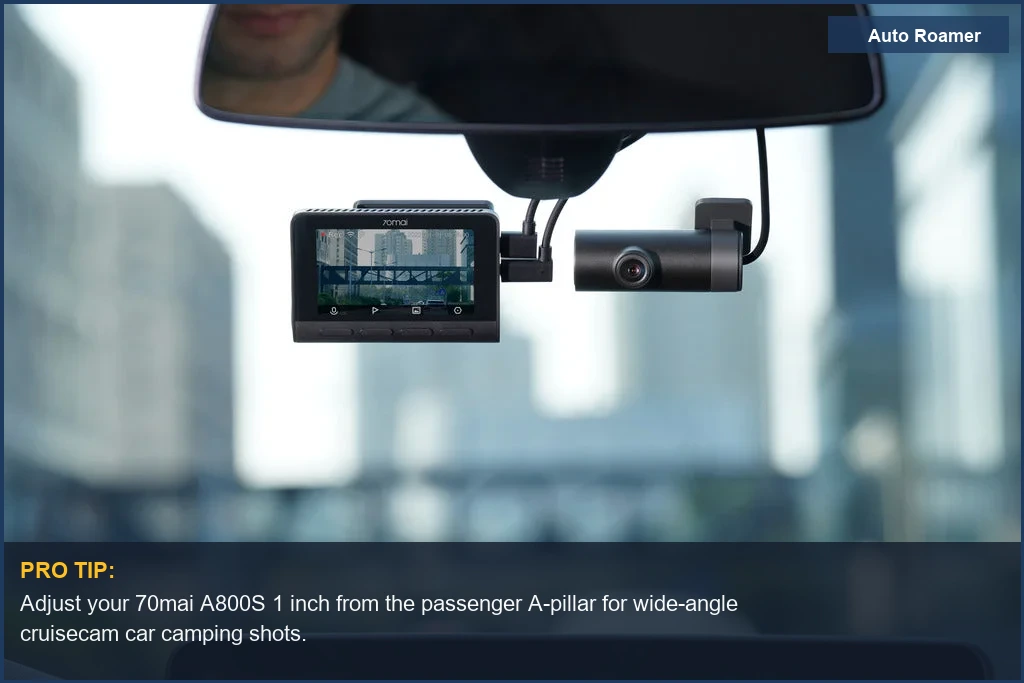
70mai A800S (~$140)
Capacity/Key Specs: 4K front. Supercapacitor. GPS. ADAS features.
Pros: Excellent image quality for the price. Simple interface. Car and Driver likes it as a 'midrange' option.
Cons: Parking mode can be less reliable than competitors.
ADAS features are often more annoying than useful.
Best-for: Those seeking high resolution on a budget, willing to compromise slightly on parking mode robustness.
Thinkware U3000 (~$450)
Capacity/Key Specs: 4K front, 2K rear. Supercapacitor. Radar parking mode. Cloud.
Pros: Radar-based parking mode is highly efficient, minimizing parasitic draw. Very robust. Excellent impact detection.
Cons: Large footprint. Pricey.
Radar can be overly sensitive if not configured properly.
Best-for: Car campers who leave their vehicle unattended for extended periods and need minimal battery drain with maximum parking surveillance.
Miofive S1 (~$100)
Capacity/Key Specs: 4K front. Supercapacitor. GPS.
Pros: Great resolution for a budget option. Simple setup. Car and Driver's 'best budget' pick.
Cons: No rear camera option. Parking mode is basic.
Best-for: Drivers who just need a reliable, high-resolution front-facing camera without many frills. Don't expect BlackVue parking mode for this price.
Installation is key. Don't just stick it to the window with cheap adhesive. The thermal expansion and contraction cycles will eventually cause it to detach, especially if you're out camping in variable weather. Use a strong 3M VHB tape, clean the surface with isopropyl alcohol, and let it cure.
Head-to-Head Comparison
Let's cut through the marketing. When you're comparing dash cams, it's about the raw data, not the glossy box. This table breaks down what matters. This YouTube review of the Car & Driver Road Patrol shows that even branded units can fall short on features.
| Feature | Viofo A229 Pro | Vantrue E1 Pro | Boult Cruisecam X1 (Generic Example) |
|---|---|---|---|
| Max Resolution (Front) | 4K (3840x2160) | 2.5K (2560x1440) | 1080p (1920x1080) as seen on Amazon India |
| Rear Camera Option | Yes (2K) | No | No (typically) |
| Power Source | Supercapacitor | Supercapacitor | Supercapacitor (often claimed, sometimes a small battery) |
| Parking Mode w/ Voltage Cutoff | Yes | Yes | Often basic, no reliable cutoff |
| GPS Included | Yes | Yes | Yes (often external module) |
| Thermal Durability | Excellent (tested to 170 degrees F) | Very Good | Fair (often cheap plastics, lower tolerance) |
| Wi-Fi | 5GHz | 2.4GHz | 2.4GHz (if any) |
| Price Range | ~$320 | ~$180 | ~$40-80 |
The biggest difference you'll see is in resolution and the quality of parking mode.
A generic 1080p camera might look fine on a tiny screen, but blow it up to identify a license plate and you've got nothing but pixels. That's a failure of data capture.
The voltage cutoff for parking mode is non-negotiable for car camping. Without it, you're playing Russian roulette with your starter battery. You do not want to be stranded 50 miles from cell service because your dash cam decided to pull 300mA overnight. That's just poor circuit design.
Budget vs Premium: Where Your Money Actually Goes
You pay for reliability, not just features. A $50 dash cam might boast '4K' but it's usually interpolated garbage with a sensor that folds under thermal stress. The extra $200 for a premium unit buys you actual engineering, not just marketing copy. Vortex Radar breaks down the best dash cams, and the price difference is stark for a reason.
| Feature/Component | Budget Dash Cams (~$50-100) | Premium Dash Cams (~$200-500+) |
|---|---|---|
| Image Sensor | Lower-end CMOS, smaller pixels, poor low-light performance. High noise floor. | Sony STARVIS or similar, larger pixels, superior low-light sensitivity, less noise. |
| Lens Quality | Plastic elements, more chromatic aberration, less sharp. Prone to thermal deformation. | Multi-element glass, wider aperture, better light gathering, superior clarity. Stable under thermal cycling. |
| Processor | Generic, slower, struggles with high bitrate video, prone to dropped frames. | Dedicated SoC (System on Chip), powerful, handles high bitrate, stable. |
| Power Source | Lithium-ion battery (swells, fails in heat) or cheap supercapacitor with low cycle life. | High-quality supercapacitor, robust, wide thermal tolerance, high cycle life. |
| Build Materials | Cheap ABS plastic, poor heat dissipation, brittle in cold. | Higher-grade ABS/PC blend, often with aluminum accents for heat sinking, robust mounting. |
| Software/Firmware | Buggy, infrequent updates, poor app integration, unreliable parking mode logic. | Stable, regular updates, advanced parking mode algorithms, reliable voltage cutoff, good app. |
| Mounting System | Suction cups (fail in heat/cold), flimsy adhesive. High vibration transfer. | 3M VHB adhesive, robust ball joint, minimizes vibration, durable. |
The difference isn't just about 'better video.' It's about a significantly lower failure rate. A premium dash cam uses better internal components that are spec'd for a wider temperature range and higher vibration loads. That's the mechanical stress aspect.
When a cheap camera claims '4K,' it's often an upscaled 1080p signal. The actual sensor resolution isn't there, so you're not getting more data, just bigger pixels.
It's a marketing trick to get you to buy garbage that will fail in six months. Don't fall for it.
The Bottom Line
Don't be a cheapskate when it comes to capturing critical data. A $40 dash cam from a no-name brand will save you $200 upfront, but cost you thousands when it fails to record the incident that totals your rig. It's a bad trade-off, plain and simple.
For car camping, you need a camera that can handle the thermal cycling from freezing nights to scorching days.
That means a supercapacitor and robust build materials, not a cheap lithium-ion battery that will swell and die. Reddit users confirm that even a Boult Cruisecam X3 is 'decent as per video quality goes' but that's a low bar.
Prioritize solid parking mode with voltage protection. You don't want to wake up to a dead battery just because your camera decided to pull 200mA overnight. That's a fundamental circuit integrity issue.
Invest in a reputable brand with known reliability.
The Viofo A229 Pro or a Thinkware U3000 might sting the wallet a bit, but they actually work when you need them to. They're engineered for the real world, not just a spec sheet.
The bottom line: pay for the engineering up front, or pay for the headache later. There's no magic bullet for reliable electronics in harsh environments. Physics always wins.