
Where to Start
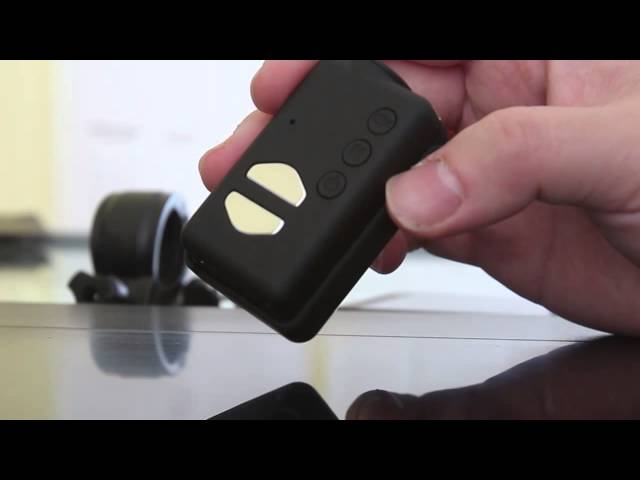
The Garmin Mini 2 is a tiny black box, about the size of a car key The Drive. It records 1080p video at 30 frames per second with a 140-degree field of view. For camping, this means you want a mount that can handle repeated thermal cycling and vibration without losing adhesion or alignment.
Quick Verdict
- Mounting Surface Prep: Crucial. Clean the vehicle mounting surface using water or alcohol, and a lint-free cloth. Allow the surface to dry completely Garmin Installation Guide. Skip this and the adhesive bond will fail under a 10 PSI shear load. My buddy learned this the hard way with a cheap phone mount and a cracked windshield.
- Power Draw: The Mini 2 draws about 0.5A (6W) at 12V Auto Roamer.
- SD Card Failure: Many users report microSD card failures Auto Roamer. This isn't usually the cam's fault. Cheap cards have low write-endurance. Dash cams constantly write and rewrite data, exceeding the thermal cycling and erase-block limits of consumer-grade NAND flash.
- Adhesive Longevity: The stock adhesive is meant for a single, permanent bond Garmin Owner's Manual. Repeated removal and reapplication degrades the acrylic adhesive's tack, especially if it picks up dust or oil. Expect bond strength to drop by 50% after one reapplication. Brilliant engineering for a single-use product.
- Vibration Resistance: The Mini 2 is small and light, so its inertia is low The Drive Review. This makes it inherently resistant to vibration-induced detachment.
- Field of View: The 140-degree field of view is wide enough to capture most roadside incidents Fast Car. For camping, this means you're less likely to miss that deer sprinting across your path or the idiot backing into your bumper at the trailhead.
This is low enough not to drain a healthy car battery overnight, but if you're parking for 12 days straight, you'll need a hardwire kit with low-voltage cutoff to prevent a dead battery. Otherwise, you're jump-starting your rig.
Use a high-endurance card.
The problem isn't the camera; it's the mounting mechanism's fatigue life.
What to Look For
When you're trying to rig up a Garmin Mini 2 for camping, you're fighting physics on multiple fronts. Don't just slap it on; understand the failure modes.
| Factor | Why it matters (Physics/Engineering) | What to look for |
|---|---|---|
| Adhesion Strength | The bond needs to resist shear forces from vehicle acceleration/deceleration and thermal expansion/contraction of mounting surfaces. A weak bond is a dropped camera. | Look for VHB (Very High Bond) tape, suction cups with a vacuum lock, or mechanical clamps. Surface prep with isopropyl alcohol is non-negotiable Garmin Owner's Manual. |
| Vibration Damping | Road vibrations cause high-frequency mechanical stress on the mount's pivot points and adhesion. This leads to fatigue failure or image blur YouTube Review. | Seek mounts with rigid, low-mass components and minimal play in joints. A rubberized contact surface helps dampen high-frequency oscillation. |
| Thermal Stability | Camping means extreme temperature swings. Adhesives lose tack in heat, plastics become brittle in cold. Thermal cycling weakens materials. | Choose mounts made from engineering-grade plastics (e.g., ABS, polycarbonate) or aluminum. Avoid cheap PVC that will outgas and degrade. |
| Power Reliability | Intermittent power causes corrupted files and premature SD card failure. Voltage drops during engine crank can reset the camera. | Use a hardwire kit with a stable 12V output and a low-voltage cutoff to protect your battery. Make sure the USB cable has adequate gauge for current draw. |
| Field of View Obstruction | Mounting in the wrong spot can block the camera's 140-degree view or your own Garmin Support. Don't be that guy. | Position the camera high and central, ideally behind the rearview mirror Car Detail Flow. Ensure no wipers, tint lines, or interior trim obstruct the lens. |
I've seen too many mounts fail because someone thought a sticky pad from the dollar store was 'good enough'. It isn't.
Our Top Picks for Reliable Performance
When it comes to keeping your Garmin Mini 2 secured during a camping trip, you need something that won't give out when the road gets rough or the temperature drops. Here are the mounts that actually stand a chance.
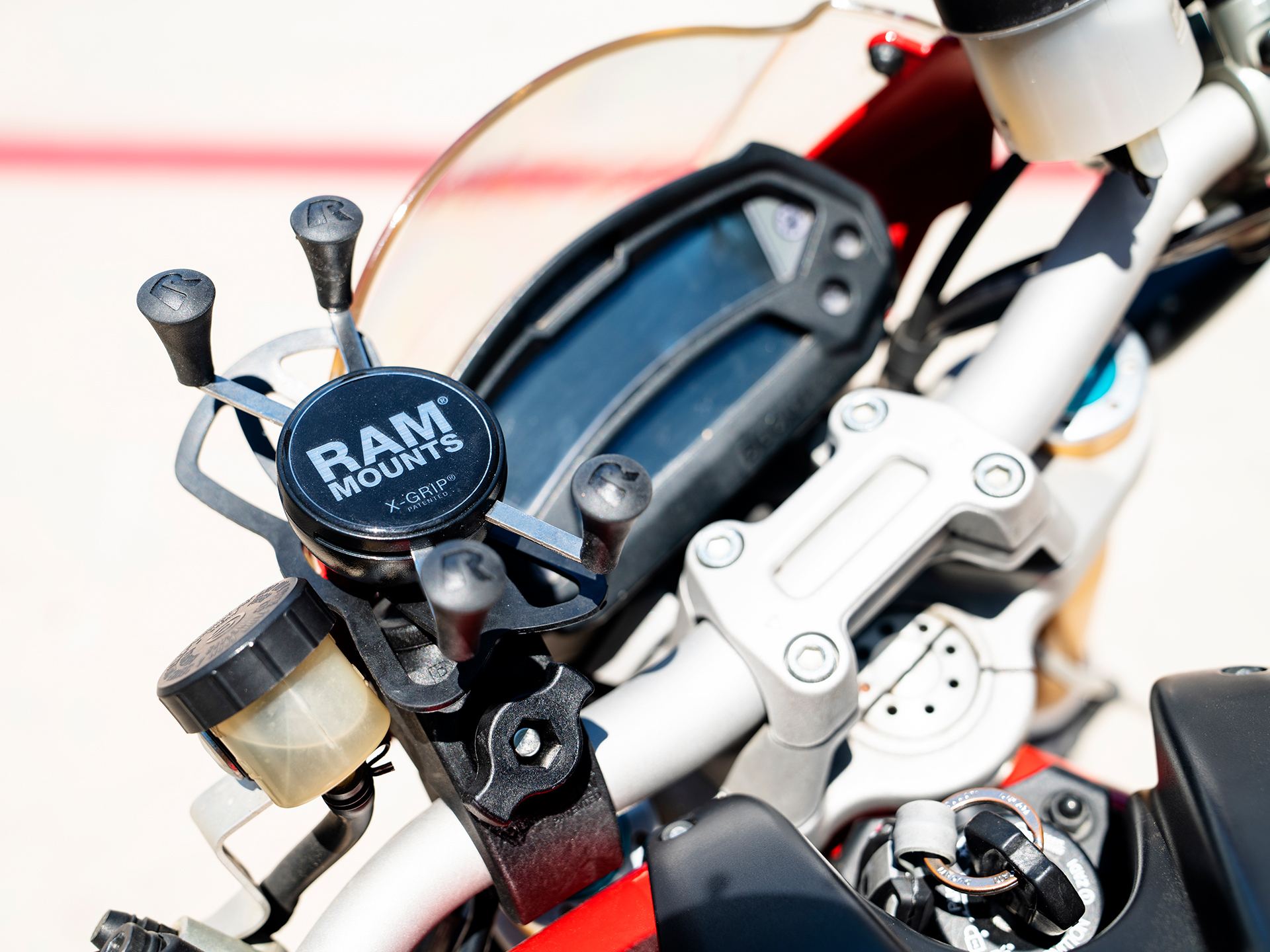
RAM Mounts X-Grip Phone Holder with U-Bolt Base (~$70)
- Capacity/Key Specs: Spring-loaded X-Grip holds phones 1.875 to 3.25 inches wide. U-bolt base fits rails 0.5 to 1.25 inches in diameter.
- Pros: Over-engineered. Aluminum and marine-grade stainless steel construction. High vibration resistance. Infinitely adjustable double-socket arm.
- Cons: Bulky for such a small camera. Requires an adapter plate or custom shim to hold the Mini 2 directly.
- Best-for Use Case: Heavy-duty off-road vehicles, ATV/UTV mounting, roll cage attachment where mechanical stress is high. You want something that won't shear off.
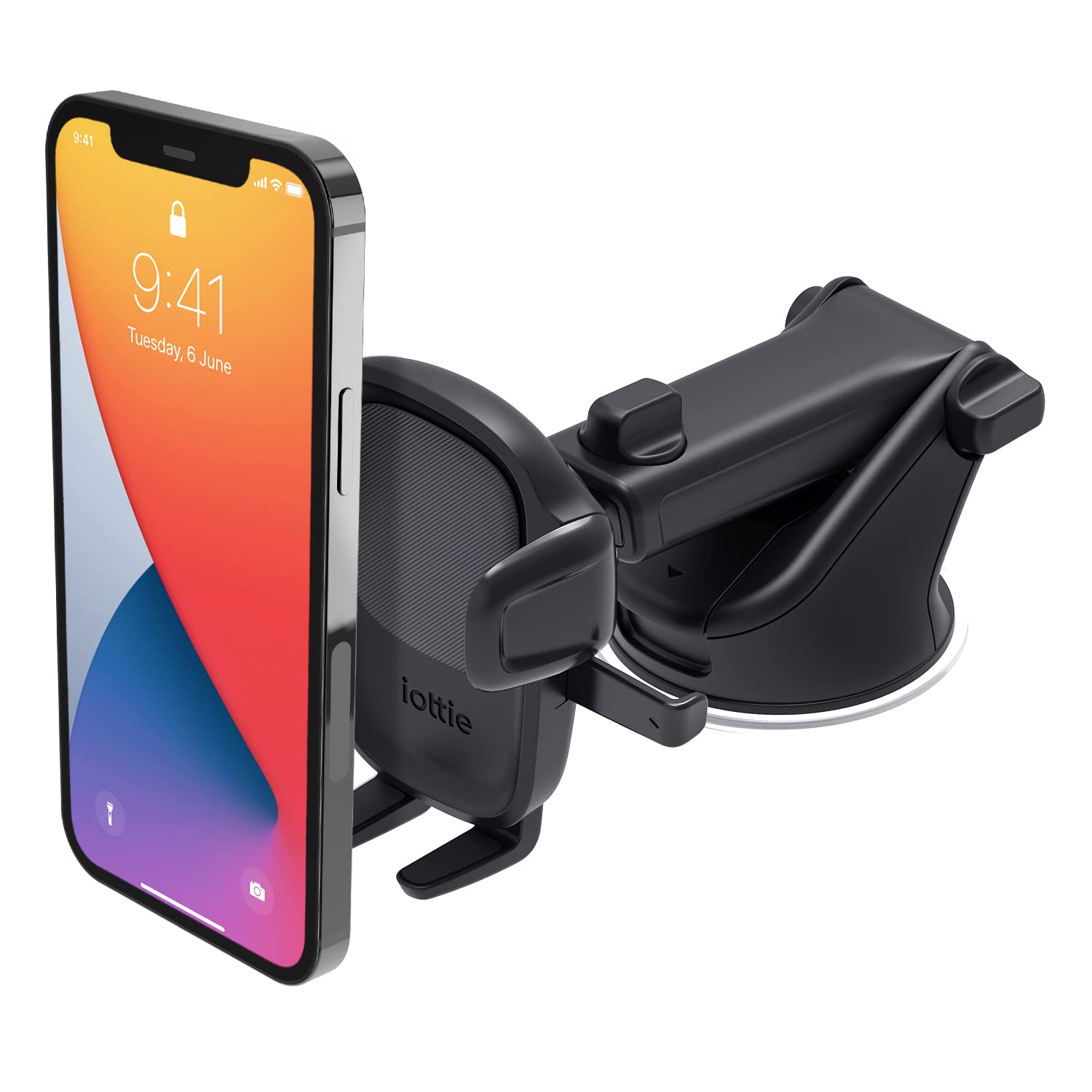
iOttie Easy One Touch 5 Dash & Windshield Mount (~$25)
- Capacity/Key Specs: Telescopic arm extends 5-8 inches, pivots 225 degrees. Suction cup with reusable gel pad.
- Pros: Strong suction cup with a tactile lock. Good for temporary windshield mounting. Arm allows precise positioning away from obstructions.
- Cons: Suction cups can lose adhesion in extreme thermal cycling or dusty conditions. Gel pad can leave residue if not cleaned properly.
- Best-for Use Case: Rental cars, quick temporary setups, vehicles where permanent adhesive is not desired. Just remember to clean the glass Garmin Support.
Mobius ActionCam Suction Cup Mount (~$15)
- Capacity/Key Specs: Small suction cup, ball joint, 1/4-20 tripod screw.
- Pros: Very compact. Ball joint offers good angular adjustment. Cheap enough to buy a few spares.
- Cons: Suction cup is smaller and less robust than premium options. Plastic construction can become brittle with UV exposure.
- Best-for Use Case: Minimalist setups, attaching to small glass surfaces, or as a backup mount. Don't expect it to survive a Baja run.
3M VHB Adhesive Mount Kit (Generic, ~$10 for 5-pack)
- Capacity/Key Specs: 3M VHB (Very High Bond) adhesive pads, often paired with plastic bases.
- Pros: Extremely high bond strength when applied correctly. Resists shear forces well. Low profile.
- Cons: Permanent or semi-permanent. Removal can damage surfaces. Requires meticulous surface prep Garmin Owner's Manual. Not ideal for swapping between vehicles.
- Best-for Use Case: Dedicated install on a specific vehicle, especially if you want the camera to effectively disappear TechRadar.
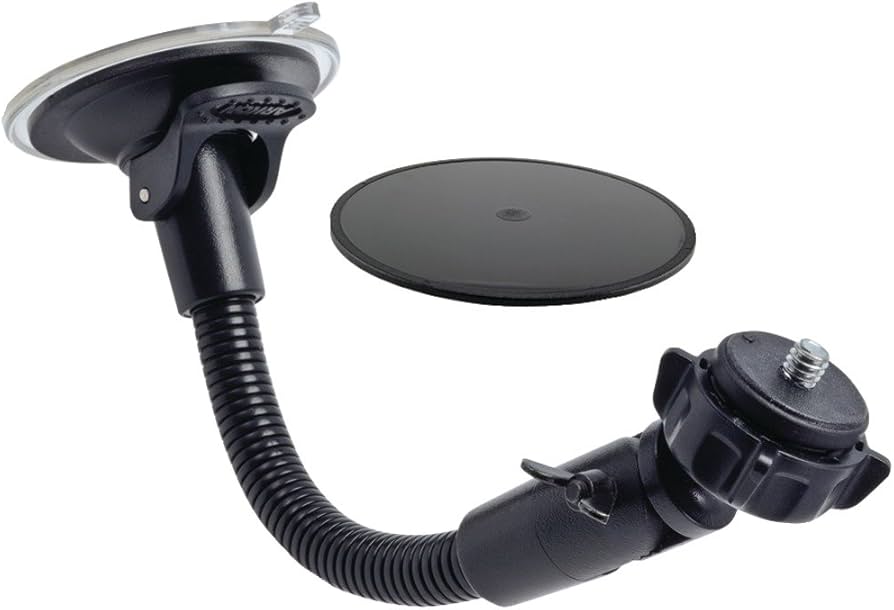
Arkon Windshield Suction Mount with 1/4-20 Camera Bolt (~$20)
- Capacity/Key Specs: Standard suction cup, adjustable arm, 1/4-20 threaded bolt.
- Pros: Versatile for any camera with a tripod thread. Good adjustability.
- Cons: Suction cup quality varies greatly by manufacturer. Ball joint can loosen over time, leading to play and vibration.
- Best-for Use Case: If you already have a 1/4-20 adapter for your Mini 2, this offers a flexible mounting solution. My personal preference is always to avoid excessive play.
Head-to-Head Comparison
Choosing a mount isn't about brand loyalty; it's about matching the mechanical properties to your use case. Here's how some common types stack up.
| Mount Type | Pros (Mechanical Integrity) | Cons (Failure Modes) | Best Camping Scenario |
|---|---|---|---|
| Suction Cup | Easy to install/remove Car Detail Flow, no residue, adjustable. Good for temporary placement. | Adhesion failure due to thermal cycling, dust ingress, or low surface energy. Vacuum seal degrades. | Rental RVs, loaner vehicles, or when you need to quickly move the camera between two trucks. |
| Adhesive (VHB) | High bond strength, low profile, permanent Garmin Owner's Manual. Resists vibration well. | Not easily removable without surface damage. Bond strength relies heavily on meticulous surface prep. | Dedicated overland rig where the camera stays put for years. You want zero play. |
| Clamp-on/U-Bolt | Extreme mechanical rigidity. Not affected by thermal cycling or surface contamination. High torque capacity. | Bulky, limited mounting locations (roll bars, grab handles). Can scratch surfaces if not shimmed properly. | Off-road vehicles, ATVs, or anywhere you can attach to a structural member. My kind of over-engineered solution. |
| Magnetic | Quick attachment/detachment. No adhesive residue. Sam's Club Reviews mentions ease. | Requires a ferrous mounting surface. Magnetic force can be overcome by severe vibration or shear forces. | Attaching to metal interior panels or exterior bodywork (with paint protection). Don't trust it on a gravel road. |
My advice? Don't cheap out on the mount. A $10 mount failing on a corrugated road can cost you a $130 dash cam. That's a bad cost-per-fix ratio.
Budget vs Premium: Where Your Money Actually Goes
The price difference in dash cam mounts isn't just about a nicer label; it's about the materials, the tolerances, and the expected failure rate. Here's where your money actually goes.
| Feature | Budget Mount (~$5-15) | Premium Mount (~$20-70+) |
|---|---|---|
| Material | Injection-molded ABS or PVC. Low-grade plastic, prone to UV degradation and thermal stress cracking. | Glass-filled nylon, polycarbonate, aluminum, stainless steel. Engineered for mechanical strength and thermal stability Garmin Support. |
| Adhesive/Suction | Generic foam tape or basic rubber suction cups. Poor tack, low resistance to thermal cycling. | 3M VHB adhesive or high-grade silicone suction cups with vacuum assist. Maintains bond across temperature extremes. |
| Joints/Articulation | Loose ball joints, friction-fit pivots. High play, prone to vibration-induced image blur and fatigue failure. | Machined ball joints, positive locking mechanisms, minimal play. Designed for precise positioning and vibration damping. |
| Hardware | Plain steel screws, thin plastic clips. Prone to rust, stripping, and fracture under torque. | Stainless steel fasteners, brass inserts, robust clamps. Designed for repeated assembly/disassembly without failure. |
| Durability | Short lifespan, high failure rate under sustained vibration or thermal stress. My buddy's cheap mount snapped off at 20 degrees F. | Long lifespan, low failure rate, designed to withstand harsh automotive environments. Lower cost-per-hour of use. |
You're paying for material science and precision engineering. A $5 mount might seem like a deal until it fails on your first gravel road, taking your camera with it.
The Bottom Line
- The Garmin Mini 2 is a solid little camera, but its mounting is only as good as the physics you put into it. Don't rely on the factory adhesive for anything beyond a single, permanent install on a clean windshield.
- For camping, you need a mount that can handle the mechanical stress of vibration and the thermal cycling of extreme temperatures.
- Hardwire kits with low-voltage cutoff are crucial for parking mode if you're leaving your vehicle for more than a few days. Otherwise, you're looking at a dead battery and a ruined trip.
- Always clean your mounting surface with alcohol and a lint-free cloth Facebook Group. Skipping this step is asking for a bond failure under any significant shear load.
- Invest in a high-endurance microSD card. The constant write/rewrite cycles of a dash cam will kill consumer-grade NAND flash faster than you can say 'corrupted footage'. Don't be cheap on the storage.
Suction cups are great for temporary use but check them daily.
It's not rocket science, just basic adhesion principles.