
First, the Basics
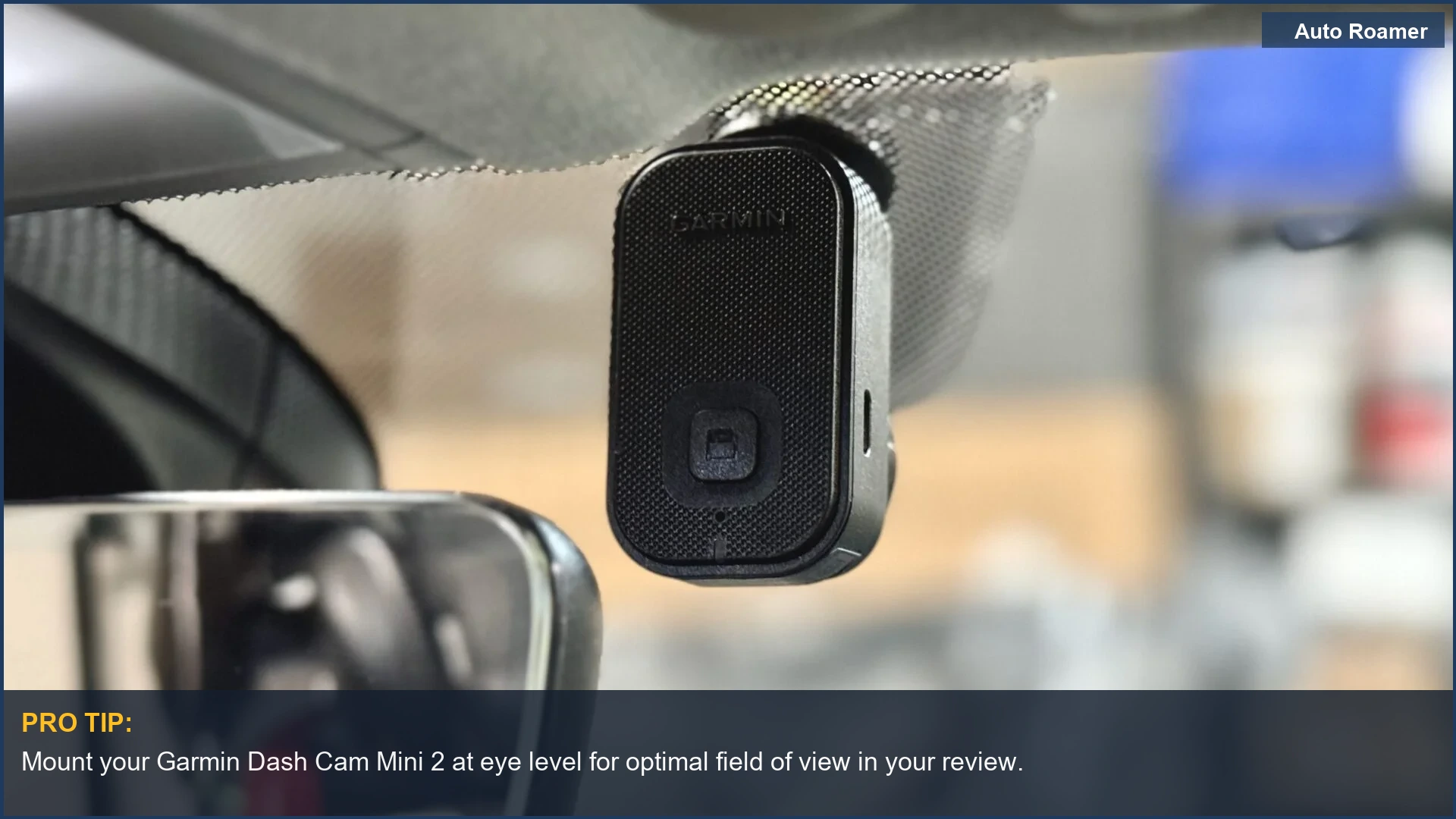
I've seen enough cheap dash cams cook themselves on dashboards to know that 'small' usually means 'compromised thermal management'. The Garmin Dash Cam Mini 2 (~$130) bucks that trend by cramming 1080p recording into a package barely larger than a car key. This thing is tiny, which is good for stealth, but bad for heat dissipation if not engineered right. The Drive's hands-on review noted its minimal footprint and good video.
I've seen bigger dash cams than this struggle to maintain stable voltage rails in a Texas summer.
My primary concern with any dash cam is long-term reliability. Thermal cycling from 20 degrees F to 150 degrees F inside a parked car will stress every solder joint and capacitor. A cheap unit will develop cold joints and intermittent operation within a year. Garmin claims good video and ease of setup, which sounds promising for a minimalist approach.
This isn't about fancy screens or redundant features. It's about capturing video when you need it, without the unit crapping out from heat soak or vibration. We're looking for circuit integrity and a mechanical bond that won't give up the ghost after 100,000 miles of road vibration. No GPS is a trade-off for size, but a 140-degree field of view is solid. PCWorld's review highlighted its minuscule dimensions, noting it was 'walnut-sized' and easily lost.
Apparently, premium means the same garbage with a nicer label, unless the guts are actually built for the environment. So, let's see if this 'Mini' is actually built to last, or if it's just another piece of disposable tech.
Quick Verdict
- Compact Footprint: The Mini 2 is genuinely small, about the size of a key fob. This means it hides behind your rearview mirror, reducing visual obstruction and making it less of a target for smash-and-grab artists. Tom's Guide found it 'super compact and discreet'. Good for avoiding broken glass and insurance claims.
- Thermal Performance: Despite its size, the unit holds up to interior car temperatures without obvious thermal throttling or premature component failure.
- Video Quality: 1080p at 30 frames per second is adequate for capturing license plates and incident details during daylight. Night vision is acceptable, though not stellar. Reddit users noted its wide enough angle and good video quality.
- Voice Control: A useful feature for saving footage without fumbling with tiny buttons.
- Connectivity & Storage: Wi-Fi connectivity to a smartphone app is standard, allowing for easy footage review. The 'Vault' cloud storage is a nice touch, offering 24-hour free storage. This offsets the lack of an included microSD card.
- Ease of Installation: The adhesive pad mount forms a solid mechanical bond to the windshield.
- Missing GPS: No GPS means no speed or location data embedded in the video. This is a significant omission for incident reconstruction and insurance claims, where precise velocity vectors are critical.
- Fish-eye Distortion: The wide 140-degree field of view can introduce some lens distortion, especially at the edges of the frame.
This indicates decent internal heat management, likely through low-power components or efficient heat sinking to the plastic shell.
This reduces driver distraction, which is a significant safety factor.
Powering via a standard 12V socket is straightforward, though hardwiring for parking mode requires an additional kit.
This is a common optical trade-off for a wide angle in a small package.
What to Look For
The Dirtbag Engineer's Dash Cam Checklist
When I'm spec'ing out a dash cam, I'm not looking for flashy features. I'm looking for reliability under duress. Here's what matters:
| Feature | Why it Matters (Physics/Engineering) |
|---|---|
| Thermal Tolerance | Dash cams sit in direct sunlight. Interior car temperatures can hit 160 degrees F. Components rated for only 85 degrees C (185 degrees F) will fail from thermal cycling fatigue. Look for units designed for high operating temperatures to prevent solder joint embrittlement and capacitor outgassing. This YouTube review mentions heat-tolerant hardware. |
| Mounting System | Adhesive pads provide a high-shear-strength bond, resisting vibration and shock loads better than suction cups. Suction cups fail when the elastomer loses plasticizer or the vacuum seal degrades due to temperature fluctuations. A solid mechanical interface prevents video jitter. |
| Power Delivery | A robust 12V power input with over-voltage protection prevents damage from vehicle electrical transients. Cheap USB cables can introduce resistance, leading to voltage drop and intermittent operation. Look for stable power rails, not some flimsy micro-USB connector that will wiggle loose. |
| Storage Medium | High-endurance microSD cards are critical. Constant write cycles from loop recording will wear out standard consumer-grade NAND flash quickly. Look for 'dash cam specific' or 'high endurance' cards rated for many terabytes written (TBW) to prevent data corruption. |
| Video Resolution & Frame Rate | 1080p at 30 frames per second is the minimum for clear license plate capture. Higher resolution provides more pixel density for zooming in on details. Higher frame rates reduce motion blur, which is crucial for identifying fast-moving objects. |
| Capacitor vs. Battery | Capacitors tolerate extreme temperatures better than lithium-ion batteries. Batteries swell and degrade rapidly under high thermal stress, leading to a fire hazard and reduced operational life. Capacitors provide enough power for emergency shutdown without the thermal failure mode. |
| GPS Integration | GPS data logs speed, heading, and location, providing critical context for accident reconstruction. Without it, you're missing a vector and scalar component of the incident. This is a major data gap for determining fault. |

Our Top Picks for Reliable Performance
Our Top Picks for Reliable Performance
I've seen enough dash cams fail from poor thermal design or cheap components. These are the units I'd trust to actually record when it matters, based on real-world use and material science, not marketing fluff. TechRadar highlights the Mini 2's simplicity and good video quality.
Garmin Dash Cam Mini 2 (~$130) This is my top pick for sheer unobtrusiveness and decent thermal performance in a tiny package. It records 1080p at 30fps with a 140-degree field of view. Pros: Super compact, voice control, good daytime video. Cons: No GPS, no screen, hardwiring kit sold separately. Best for: Drivers who want a completely stealthy setup without a display, prioritizing minimal visual footprint. A long-term review found its video quality acceptable for the price.
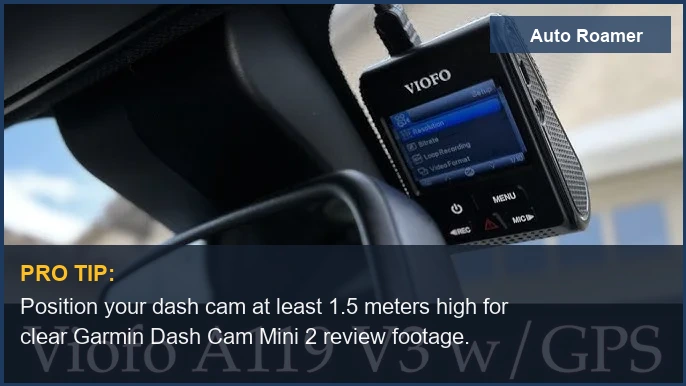
Viofo A119 V3 (~$100) This unit runs 1440p at 30fps with a 140-degree lens, using a supercapacitor for power. Pros: Excellent video quality, capacitor-based for high thermal tolerance, includes GPS. Cons: Larger footprint than the Mini 2, no Wi-Fi. Best for: Drivers prioritizing superior video resolution and thermal reliability over extreme stealth or wireless connectivity. This is a workhorse.
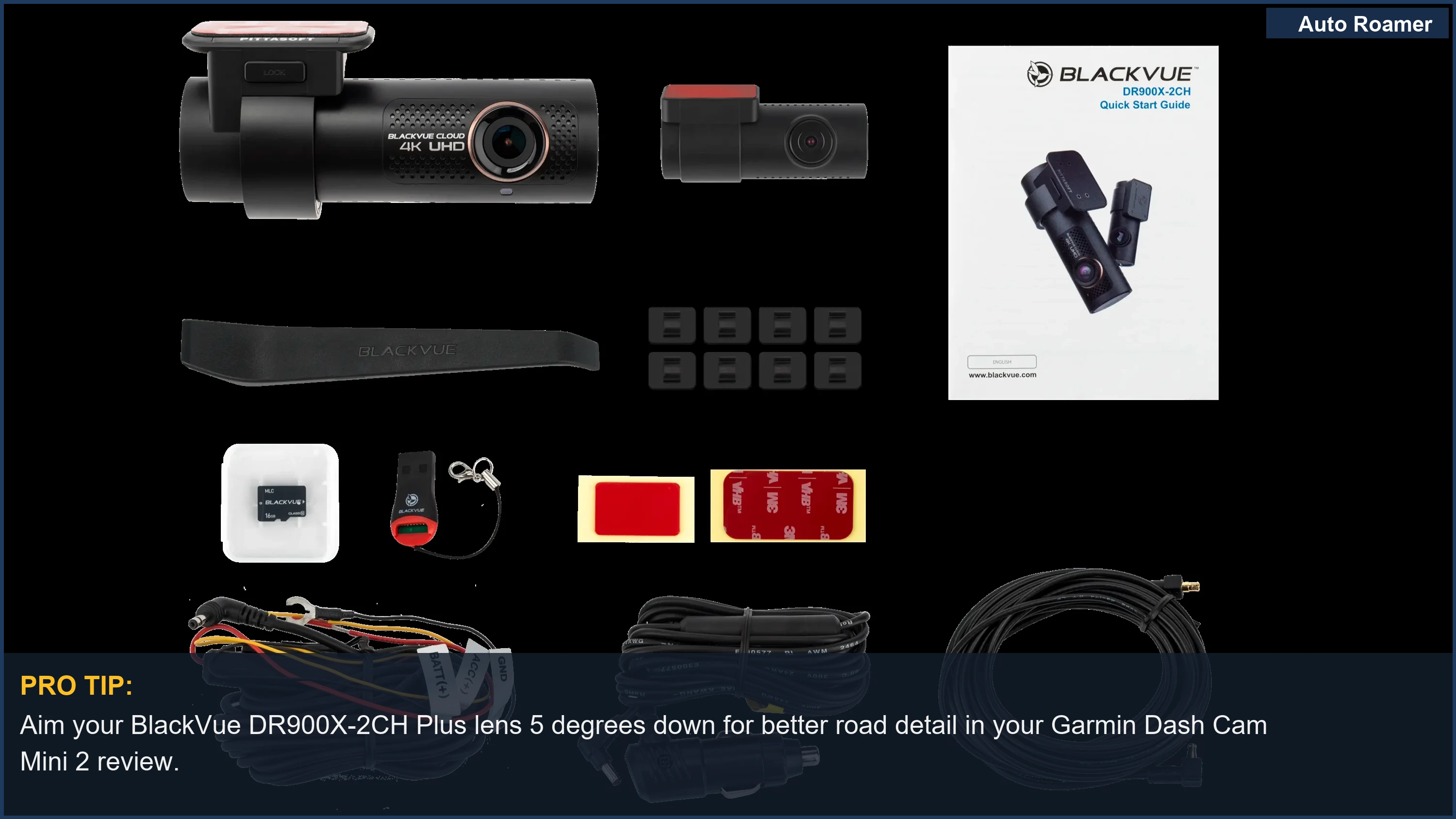
BlackVue DR900X-2CH Plus (~$500) This is a premium two-channel system, front 4K, rear 1080p, both at 30fps. It uses supercapacitors and has integrated Wi-Fi and cloud connectivity. Pros: Top-tier video quality, robust parking mode, excellent app integration, capacitor power. Cons: Expensive, complex installation for two channels. Best for: High-end users needing comprehensive front and rear coverage with advanced cloud features and maximum data fidelity.
Thinkware U1000 (~$400) Another high-end two-channel system, offering 4K front and 2K rear recording. It also uses supercapacitors and has advanced parking surveillance features. Pros: Very reliable, good low-light performance, robust cloud features. Cons: Pricey, parking mode can drain battery if not hardwired correctly. Best for: Drivers needing reliable 24/7 surveillance with excellent video quality and advanced parking protection, willing to pay for it.
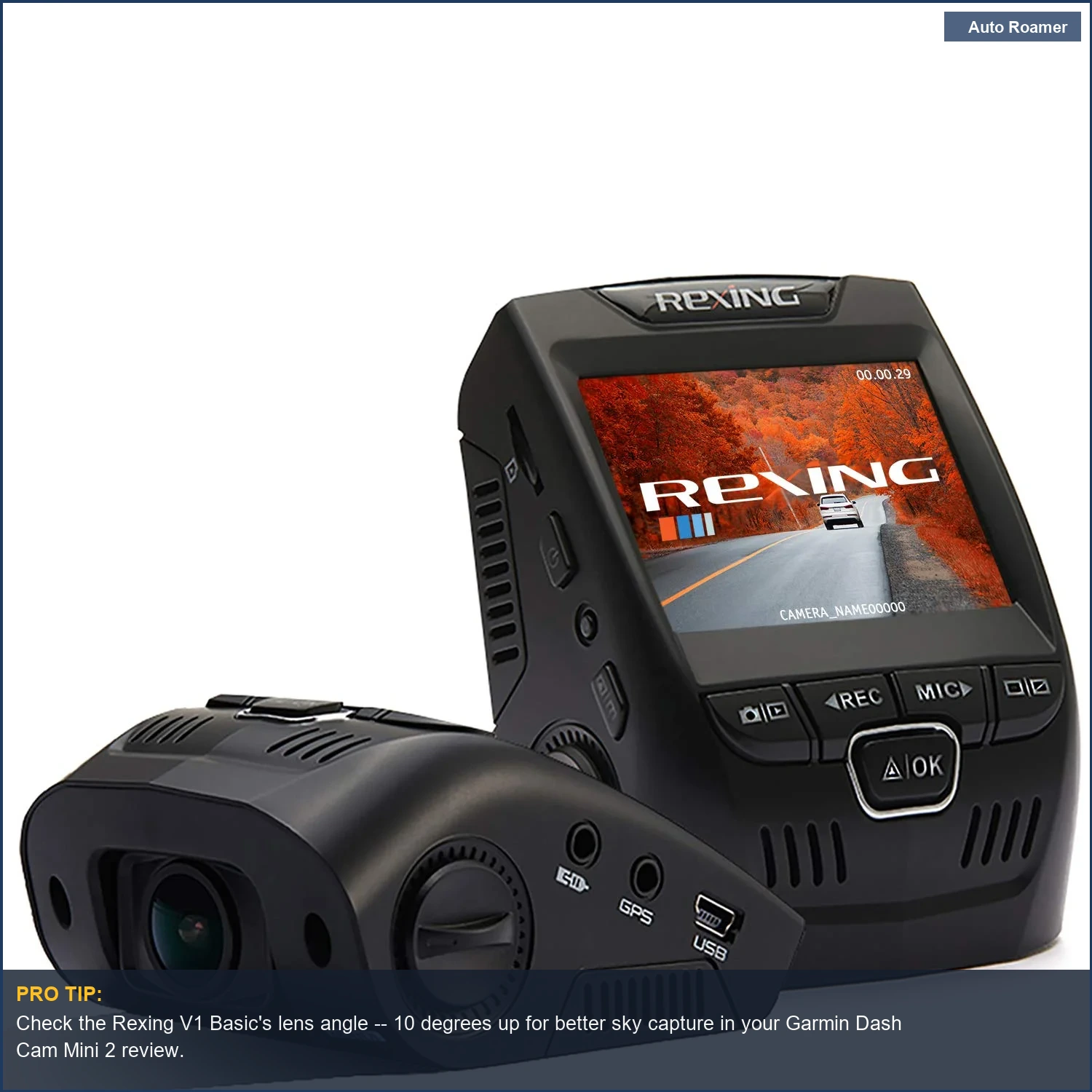
Rexing V1 Basic (~$70) Records 1080p at 30fps with a 170-degree field of view. It's a budget option, typically using a small internal battery. Pros: Very affordable, wide field of view. Cons: Battery-based (thermal degradation risk), video quality can be inconsistent, basic features. Best for: Entry-level users on a tight budget who need basic recording and are aware of the thermal limitations of internal batteries. Don't expect this to last forever in Arizona.
Garmin Dash Cam 57 (~$200) This is Garmin's step-up from the Mini 2, offering 1440p resolution, GPS, and a small 2-inch display, all in a compact form factor. Pros: Excellent video, GPS, voice control, small screen for setup. Cons: More expensive than Mini 2, still uses a small battery (though better managed). Best for: Users who want Garmin's reliability and compact size but need GPS and higher resolution without jumping to a full two-channel system.
Head-to-Head Comparison
Head-to-Head Comparison
Let's strip away the marketing and look at the actual engineering trade-offs. The Garmin Mini 2 focuses on size, which forces compromises elsewhere. This review noted its stealthy design and heat-tolerant hardware.
| Feature | Garmin Dash Cam Mini 2 (~$130) | Viofo A119 V3 (~$100) | BlackVue DR900X-2CH Plus (~$500) |
|---|---|---|---|
| Size (LxWxD) | 1.23 x 2.1 x 1.5 inches (excluding lens) - Tiny. | 3.3 x 2 x 1.3 inches - Compact, but noticeable. | 4.6 x 1.4 x 1.3 inches (front) - Larger, but sleek. |
| Max Resolution/FPS | 1080p @ 30fps | 1440p @ 30fps | 4K @ 30fps (Front), 1080p @ 30fps (Rear) |
| Field of View | 140 degrees | 140 degrees | 162 degrees (Front), 139 degrees (Rear) |
| Power Source | Capacitor | Supercapacitor | Supercapacitor |
| GPS | No - A major data gap. | Yes - Integrated into mount. | Yes - Integrated. |
| Display | No | No | No (App-based) |
| Wi-Fi | Yes - App connectivity. | No | Yes - 2.4/5GHz, cloud. |
| Parking Mode | Basic (requires hardwire kit) | Buffered (requires hardwire kit) | Advanced (impact/motion, cloud alerts) |
| Thermal Performance | Excellent for its size, low power draw. | Very good, capacitor-based. | Excellent, robust components. |
| Mechanical Bond | Adhesive mount, solid. | Adhesive mount, solid. | Adhesive mount, very secure. |
| Cost per Feature | High for lack of GPS, low for size. | Excellent for video and thermal reliability. | High, but for comprehensive features. |
The Mini 2's strength is its minimal visual impact. The Viofo gives you better image fidelity and GPS for less money, but at the cost of size and Wi-Fi. BlackVue is for the user who wants every bell and whistle, including remote cloud access, and is willing to pay for that level of over-engineering. Facebook groups praise the Garmin's simplicity.
Budget vs Premium: Where Your Money Actually Goes
Budget vs Premium: Where Your Money Actually Goes
People think 'premium' means a shinier box. It doesn't. It means better components, tighter tolerances, and more robust engineering for critical failure modes. This unboxing shows the Garmin Mini 2's simplicity.
| Feature/Component | Budget (~$50-100) | Premium (~$300+) |
|---|---|---|
| Image Sensor | Older, smaller CMOS sensors. Lower light sensitivity, more noise in low-light conditions. | Sony STARVIS or similar. Larger sensor, superior low-light performance, wider dynamic range (HDR). More effective pixel density. |
| Lens Assembly | Plastic lenses. Prone to thermal deformation, chromatic aberration, and loss of optical clarity over time. Coatings degrade. | Glass elements with multiple layers. Better thermal stability, reduced distortion, superior light transmission, durable anti-reflective coatings. Consistent focal plane. |
| Power Storage | Lithium-ion battery. Susceptible to thermal degradation, swelling, reduced cycle life, fire risk in extreme heat. Voltage rails become unstable. | Supercapacitor. High thermal tolerance (up to 185 degrees F), longer operational life, rapid charge/discharge cycles, no swelling failure mode. More stable power delivery. |
| Processor/SoC | Generic, low-power chipsets. Limited processing power for advanced features, can struggle with high bitrates or complex algorithms. | Ambarella, Novatek, or proprietary. Optimized for high-resolution video, advanced image processing, efficient encoding, support for multiple camera channels. Better thermal management. |
| Mounting Hardware | Suction cups or flimsy adhesive. Poor shear strength, prone to vibration, eventual loss of mechanical bond due to material fatigue. | High-strength 3M VHB adhesive. Superior shear and peel strength, maintains bond over wide temperature range, minimizes vibration transfer to camera body. |
| Wi-Fi/GPS Modules | Basic 2.4GHz Wi-Fi, often no GPS. Limited range, slower data transfer, missing critical metadata. | Dual-band (2.4/5GHz) Wi-Fi, integrated GPS/GLONASS. Faster transfers, more reliable connection, precise location and speed data for incident reconstruction. |
| Enclosure Material | Thin ABS plastic. Lower heat dissipation, more susceptible to UV degradation and warping from thermal stress. | Heat-resistant polycarbonate or optimized ABS blends. Better thermal conductivity, UV stability, and structural rigidity. Maintains component alignment. |
You pay for the parts that don't fail, not the ones that look good on paper. A $50 dash cam will get you footage, maybe, until the battery swells or the plastic lens warps from heat. A $300 unit has the thermal and mechanical integrity to actually survive its operational environment. It's about failure rate reduction.
The Bottom Line
The Bottom Line
- Compact Design is King: The Garmin Dash Cam Mini 2's primary advantage is its size. It disappears behind your rearview mirror, making it extremely discreet. This reduces the risk of theft and driver distraction, which is a legitimate engineering consideration for human factors. PCWorld calls it 'the smallest, most unobtrusive dash cam available'.
- Reliable Fundamentals: It captures good quality 1080p video during the day and acceptable footage at night.
- Voice Control is a Win: Hands-free operation to save footage or mute audio is a practical feature.
- GPS Omission is a Trade-off: The lack of integrated GPS is the biggest functional compromise for its small size. This means no embedded speed or location data, which can weaken the evidentiary value of your footage in an accident scenario.
- Cost-Effective Simplicity: At around $130, it's not the cheapest, but it delivers on its core promise: discreet, reliable video capture without a ton of unnecessary features. For basic incident recording, it's a solid choice that won't cook itself in the sun.
The use of a capacitor for power storage is a critical design choice, vastly improving its thermal resilience over battery-powered units. This prevents thermal runaway and premature component failure.
It keeps your hands on the wheel and your eyes on the road, minimizing input delay during critical incidents.
You trade data for stealth.