
Garmin vs Nextbase iQ: a dash cam or a subscription you keep paying for?
On paper the Garmin Dash Cam 67W and the Nextbase iQ are rivals. In practice they answer two different questions. One is a small, self-contained camera you buy once and forget. The other is a connected security platform that keeps watching your vehicle from anywhere — for a monthly fee. Choosing between them is less about megapixels and more about whether you want to own a recorder or subscribe to a service.
That distinction matters even more for a road-tripper or car camper, where you are often far from cell coverage and even further from a wall outlet. A feature that is brilliant in a driveway in town can be useless — or a battery drain — at a campsite. So this comparison walks the real cost and the real usefulness of each, not the spec sheet.
Here is the short version before the detail:
- Garmin Dash Cam 67W — tiny, reliable, records to its own card, no subscription needed to do its core job.
- Nextbase iQ — a built-in-LTE connected camera with live view, cabin coverage and emergency alerts, whose best features require an ongoing data plan.
What each one actually is: a recorder versus a connected service
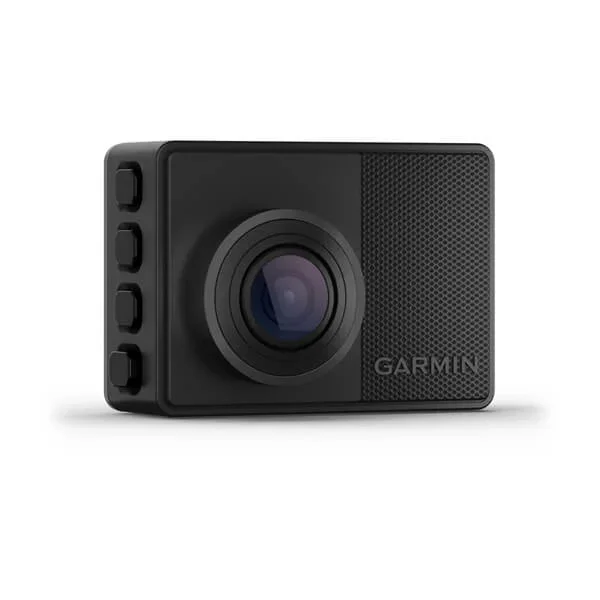
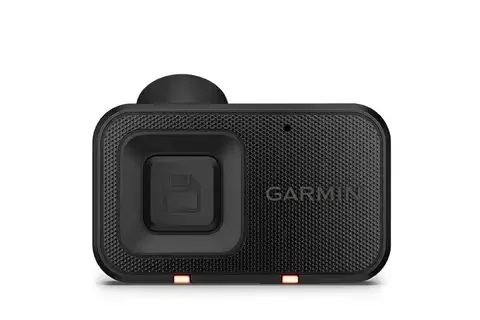
The Garmin 67W is a classic dash cam done well. It is barely larger than a matchbox, shoots a wide 180-degree field at up to 1440p, mounts with a low-profile magnetic ball, and does everything a dash cam is supposed to do entirely on its own: it loops footage to a microSD card and saves clips automatically when its sensors detect an incident. Voice control (“OK Garmin, save video”) means you never fumble for a button. There is an optional cloud service (Garmin Vault), but the camera's fundamental purpose — capture and protect footage — needs no account and no fee.
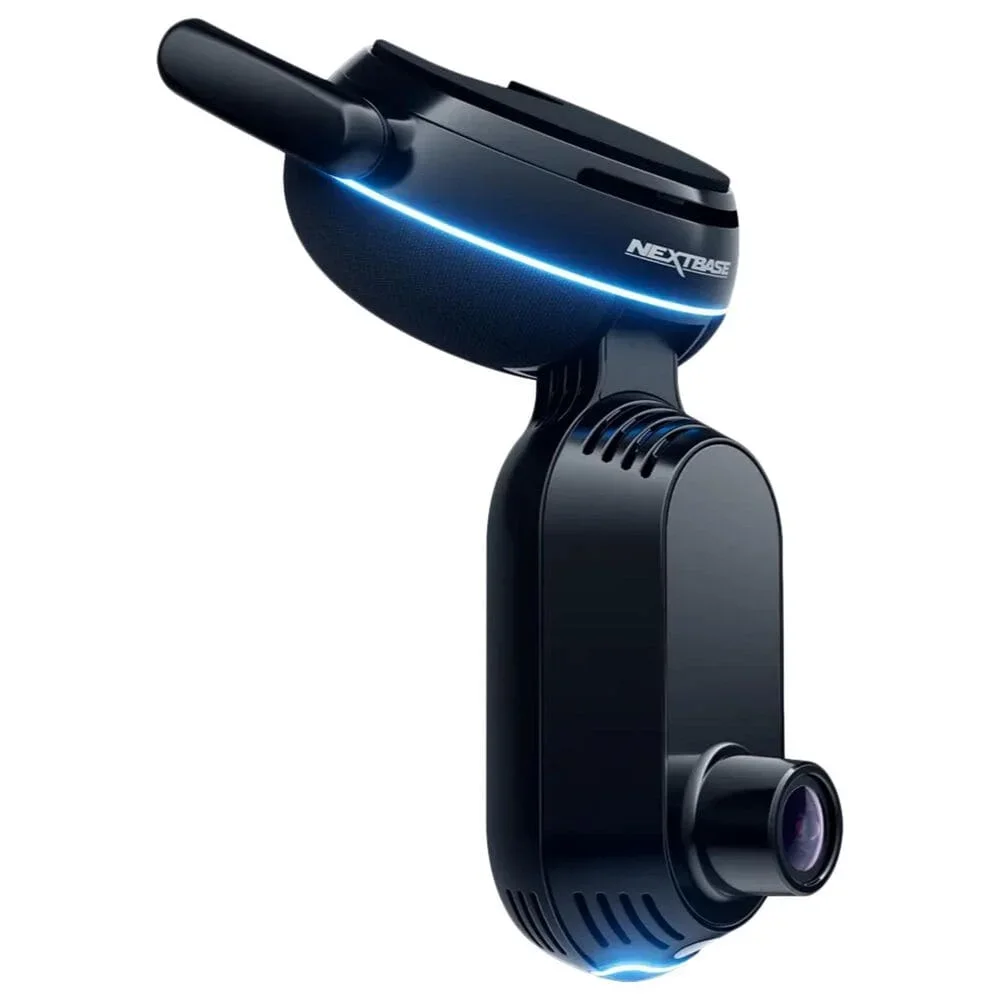
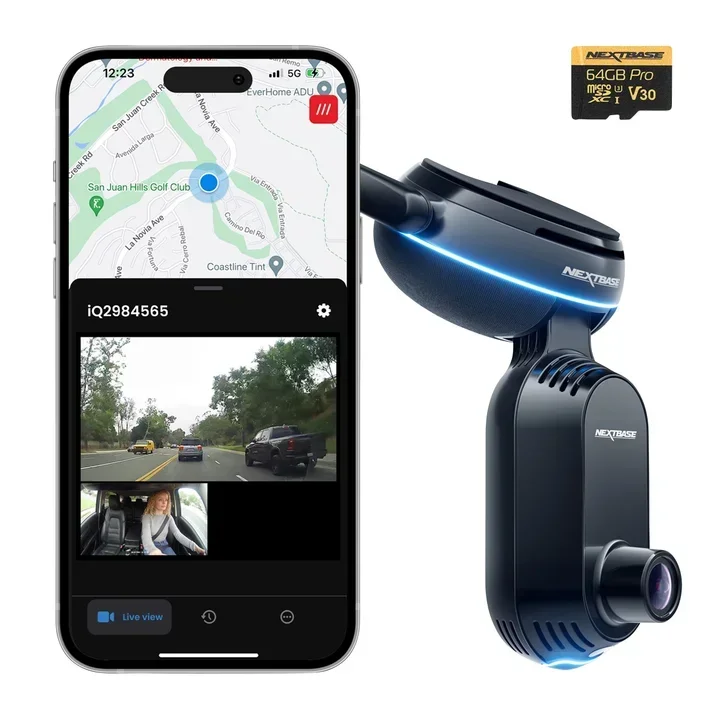
The Nextbase iQ is a different animal. It has an LTE modem, GPS, a built-in cabin-facing camera option, and it is designed to stay connected to your phone even when you are nowhere near the car. It can stream a live view of your vehicle, send you an alert if something bumps it while parked, place an automatic Emergency SOS call if it detects a serious crash, and record everyone inside during a “Guardian” trip. It is less a dash cam than a security system that happens to live on your windshield.
That difference shapes everything downstream — installation, running cost, and how each behaves when you walk away from the car. The Garmin is happy hardwired or run off the 12-volt socket and then ignored; its intelligence is entirely local. The iQ genuinely wants a permanent hardwire and a live account behind it to be the product Nextbase advertises. Neither approach is wrong, but they are aimed at different owners: one at the person who wants a witness on the glass, the other at the person who wants a guard on the whole vehicle, reporting in from anywhere.
The subscription math nobody adds up before buying
This is where the two truly part ways. The Garmin's sticker price is essentially the whole price. Buy the camera, buy a decent high-endurance microSD card once, and your ongoing cost is zero. Over three years you spend what you spent on day one.
The Nextbase iQ's sticker price is the start of the cost. Its headline features — live view, remote parking alerts pushed to your phone, cloud clip storage, Emergency SOS — depend on an active connectivity plan, and the more capable tiers renew monthly or yearly. Without a plan, the iQ still records to its card like a normal dash cam, but you have paid a premium for connected hardware and switched off the very thing that justified it. Before you buy the iQ, add three years of your intended plan tier to its price and compare that number to the Garmin. It is often a different conversation than the shelf tags suggest.
There is a subtler cost too: dependence. A subscription camera is only as good as the account behind it. If the plan lapses, if the company changes tiers, or if the service is ever retired, the connected half of what you bought can quietly stop working — while the Garmin you bought years earlier keeps looping footage to its card exactly as it did on day one. Buying hardware outright means the tool answers to you; renting a service means part of your camera answers to someone else's roadmap.
To compare honestly, tally the iQ's three-year cost as:
- The camera itself, up front.
- Thirty-six months of your chosen connectivity tier.
- A high-endurance microSD card (both cameras need one).
Then set that total beside the Garmin's one-and-done price. The gap is the true premium you are paying for connectivity — decide if the remote features earn it.
LTE, live view, and cloud: what the connection actually buys you
If you decide the subscription is worth it, what do you get? Genuine peace of mind in the right situations. You can open an app in a restaurant and watch your truck in the parking lot in real time. If a shopping cart rolls into your door, you get a notification and a clip pushed to the cloud where a thief can't rip out the SD card to hide it. In a bad crash the iQ can call for help and share your location even if you can't. For a vehicle that is also your daily driver in a city, that is real value. In practice the connection buys you:
- Live view — see the car in real time from the app.
- Cloud clips — footage a thief can't delete by pulling the card.
- Parking alerts — a push notification when the car is bumped.
- Emergency SOS — an automatic call for help after a serious crash.
The Garmin can approach some of this only in a limited way and only with its own optional cloud add-on, and it has no LTE of its own — it leans on your phone's connection when paired and nearby. It was never designed to be your eyes on the car from across town. If remote awareness is the point of buying a camera at all, the iQ is built for it and the Garmin is not.
For a camper parked off-grid, connection is a double-edged sword
Here is the twist that matters to anyone who sleeps in or beside their vehicle. Every connected feature the iQ sells you depends on two things a campsite often lacks: cellular signal and power. Deep in a national forest there is no LTE, so live view and cloud alerts simply go dark — you are back to a plain recorder, but one that is still hunting for signal and drawing power to do it. A connected camera left in continuous parking mode is a known way to wake up to a weaker battery, which is the last thing you want miles from a jump start.
The Garmin's simplicity becomes a virtue off-grid. It records what is in front of it, saves incidents to its card, sips very little power, and asks nothing of a network that isn't there. If your camera's main job is to document the drive and guard the windshield view while you are parked in the backcountry, the self-contained camera is the more dependable tool. Pair either one with a proper external battery for parking mode rather than trusting the car's starter battery overnight.
Which one belongs on your windshield
Buy the Garmin if you want a camera. Buy the Nextbase iQ if you want a service — and you'll actually keep paying for it.
Choose the Garmin Dash Cam 67W if you value a buy-once tool, spend a lot of time beyond cell coverage, or simply don't want another monthly bill. It is the smarter pick for most car campers and road-trippers precisely because it does one job well without a tether.
Choose the Nextbase iQ if your vehicle lives in the city, theft and door-dings are your real worry, and watching the car from your phone is worth a recurring fee to you. Just go in clear-eyed that the subscription is the product, and budget for it. For a broader field, our 2025 dash cam buyer's guide puts both in context.