Roadside Emergencies

What to Do If You Get a Flat Tire on the Highway: Step-by-Step

Auto Roamer
12 min read
Includes Video

Sudden tire blowout on the highway? Resist slamming the brakes. Maintain control by gently easing off the accelerator and steering straight. Your goal is to guide the vehicle safely. We've seen this happen, and the key is keeping it straight. If you get a flat tire on the highway, prioritize a safe pull-off to the right shoulder.

You're on I-40, the sun beating down, when suddenly, a violent lurch pulls your vehicle hard to one side. A deafening flapping sound erupts, and the steering wheel jerks in your hands with alarming force. It's a tire blowout. Cars are whizzing past, a blur of metal and speed, and your front tire is shredded. This is not a drill; this is a genuine emergency that accounts for thousands of accidents annually in the U.S., with over 500 deaths reported per year Tire Blowout: When Defective Tires Cause Serious, Fatal Crashes. Tire blowouts are responsible for a significant percentage of highway crashes, leading to numerous injuries and fatalities each year What is a Tire Blowout? - DeHoyos Accident Attorneys. The immediate instinct might be to slam on the brakes, but that's the last thing you should do. You need to react precisely to maintain control and navigate this dangerous situation safely.

Flat tire on highway: infographic shows steps to take.
Key specifications for what to do if you get a flat tire on the highway while driving

The Short Answer

A highway tire blowout is violent. Resist the urge to brake hard. Instead, maintain directional stability by easing off the accelerator and steering straight to guide the vehicle to a safe pullover spot.

When a tire blows out on the highway, your first instinct is to slam on the brakes. Resist this. Hard braking will almost certainly cause you to lose control. The National Highway Traffic Safety Administration (NHTSA) estimates that tire failures contribute to about 11,000 accidents and over 500 deaths annually NHTSA. Keep the car going straight.

Grip the steering wheel firmly with both hands. Take your foot off the gas pedal, but do not brake. Allow the vehicle to decelerate naturally. Sometimes, a slight, controlled acceleration or maintaining speed can help stabilize the vehicle initially, especially with a front tire blowout, before you gradually slow down. This counteracts the pull towards the side of the blown tire DeHoyos Accident Attorneys.

As the car slows, steer smoothly towards the right shoulder. Activate your hazard lights immediately. Look for the widest, safest part of the shoulder to pull over completely. If there's no shoulder, an exit ramp or a less trafficked area is your next best bet. Tire blowouts account for nearly 6% of all highway crashes DeHoyos Accident Attorneys.

Once stopped, assess your situation. If the shoulder is narrow or traffic is heavy, stay inside your vehicle and call for roadside assistance. If you must exit, do so from the passenger side, away from traffic. Move at least 100 feet away from your vehicle and the roadway, especially on a blind curve. Tire-related crashes caused 562 deaths in 2022 alone NHTSA.
Once you've safely navigated a blowout, knowing how to change a flat tire can be invaluable, so consider our guide on changing a flat tire.
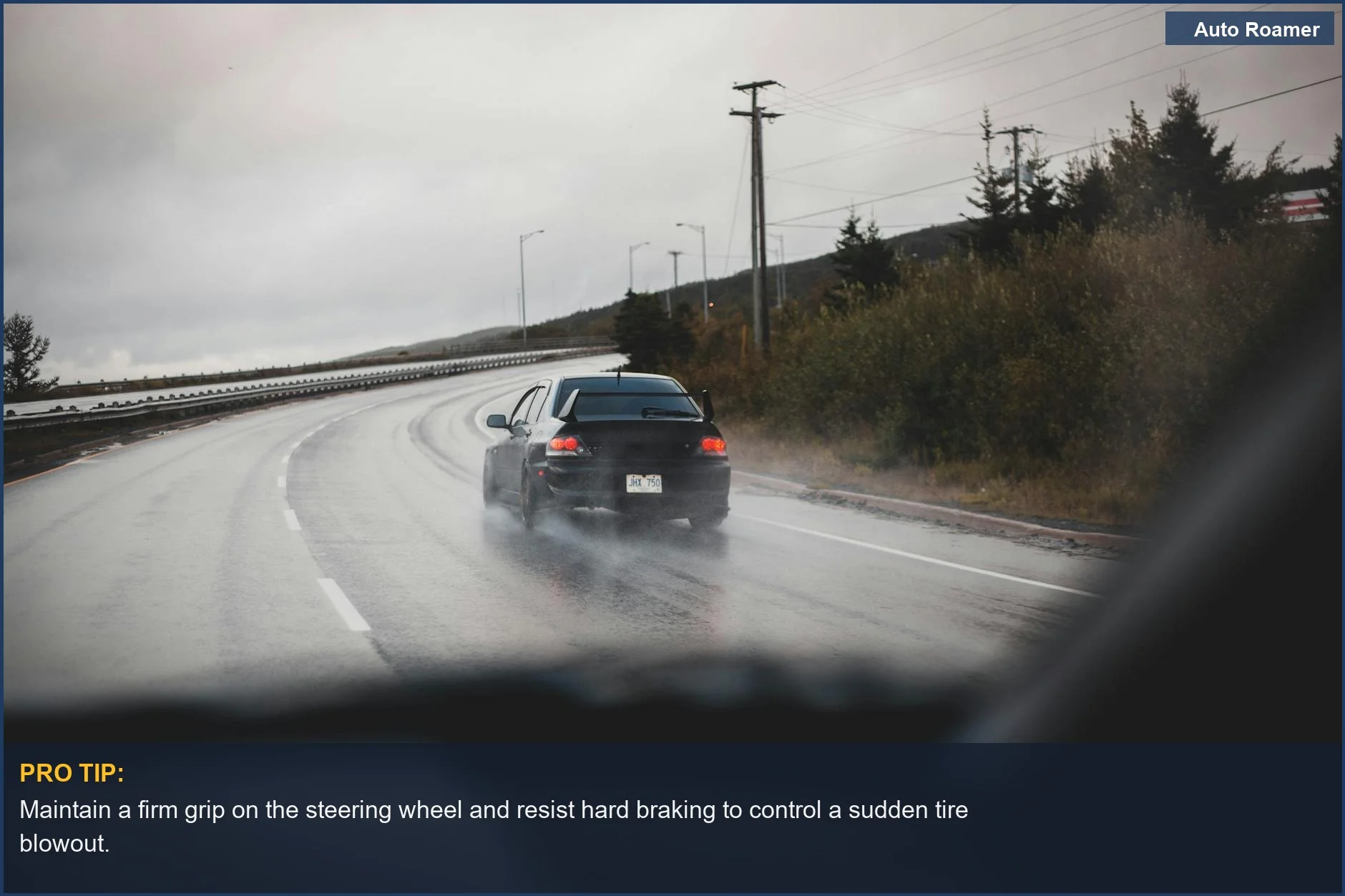
Maintain a firm grip on the steering wheel and resist hard braking to control a sudden tire blowout.
Driving on a wet highway can increase the risk of a tire blowout. Learn what to do if you experience a flat tire on the highway. | Photo by Erik Mclean

What You Need to Know

1
Grip the wheel firmly. A sudden tire blowout, especially a front tire, can violently pull your vehicle. Resist slamming on the brakes. Keep a firm, two-handed grip and look where you want to go. This is critical because a tire blowout on the highway can cause significant loss of control.
2
Ease off the accelerator gradually. Do not brake hard; abrupt braking can destabilize the vehicle further. Allow it to slow naturally while maintaining control. Some experts even suggest briefly accelerating or maintaining speed to regain control before decelerating.
3
Activate hazard lights and steer to safety. Turn on your hazard lights immediately to warn others. Look for the safest place to pull over, typically the right shoulder. If there's no shoulder, a construction zone, or a narrow shoulder, prioritize getting as far off travel lanes as possible. For vehicles with a higher center of gravity, like SUVs or trucks, a blowout can increase rollover risk, making a controlled exit paramount according to tire manufacturer data.
4
Assess your situation and decide whether to change the tire. Once safely stopped, assess your surroundings. If you're on a narrow shoulder, in heavy traffic, or a construction zone, it's often safer to call for roadside assistance. The NHTSA estimates tire-related crashes cause 11,000 accidents annually. If you change the tire yourself, ensure a stable, flat surface well off the roadway. Exit from the passenger side to avoid traffic.
5
Understand vehicle differences. Front tire blowouts are more dramatic, causing a strong pull requiring more steering correction. SUVs and trucks, with their higher stance, are more susceptible to rollovers during a blowout, especially a front tire failure as reported by mechanic forums. Rear tire blowouts often cause instability and fishtailing.
6
When there's no shoulder. If there's no shoulder or a very narrow one, your primary goal is to get off the road quickly and safely. This might mean driving further than ideal to find an exit ramp, a wider pull-off, or a parking lot. Be prepared for a more difficult situation and prioritize getting away from moving traffic. Some sources suggest pulling over into a parking lot if available as recommended by driving safety resources.
In addition to managing blowouts, knowing how to react if your car stalls on the highway is also crucial; learn more about car stall procedures.
Grip the wheel firmly with two hands to counter the steering wheel pull from a tire blowout.
Reflections on a twilight highway hint at the speed and unpredictability. Understand the critical first step for a tire blowout while driving. | Photo by Mike Bird

How to Handle This

1
Grip the wheel firmly - A sudden blowout, especially on a front tire, violently yanks the steering wheel. Instinct might be to fight it, but a firm, two-handed grip is crucial. Keep the vehicle moving straight; don't wrestle the car. Overreacting risks losing control entirely, a common cause of accidents resulting in thousands of injuries annually Utires.com.
2
Ease off the gas, do NOT brake hard - This is counterintuitive but vital. Slamming on the brakes destabilizes the vehicle, often leading to a spin or rollover. Gently lift your foot off the accelerator; the car will naturally slow. Think controlled coasting. Hard braking forces a sudden stop the compromised tire can't handle, leading to loss of control DeHoyos Accident Attorneys.
3
Activate hazard lights and gradually steer to the shoulder - Once the immediate shock is stabilized, turn on hazard lights to warn other drivers. As the car slows and you regain directional control, gently steer toward the right shoulder. Don't make sudden movements; anticipate the pull toward the blown tire. Find a safe spot. On a narrow shoulder, especially at night or in bad weather, changing a tire yourself is incredibly dangerous.
4
Slow to a complete stop - Continue steering onto the shoulder and slow to a complete stop. Get as far off travel lanes as possible. If the shoulder is extremely narrow, traffic is heavy, or visibility is poor, call for roadside assistance immediately rather than attempting to pull over further. Tire failure causes 11,000 vehicle accidents annually Utires.com.
5
Assess your safety - If you must exit, do so from the passenger side, away from passing traffic. If possible, move at least 100 feet from your car, especially on a blind curve or busy highway. Staying in the car is often safest if the shoulder is too narrow to exit and move away from traffic. Tire blowouts account for nearly 6% of all highway crashes DeHoyos Accident Attorneys.
6
Know when to call for help - If you have a narrow shoulder, heavy traffic, slick conditions, or no safe, flat ground, do not change the tire yourself. Modern cars often lack a full-size spare, relying on temporary fixes unsuitable for highway blowouts. Your life is worth more than a tow fee. Call roadside assistance or a tow service. Your priority is getting yourself to safety, not fixing the tire roadside California DMV.
To stay safe while driving, it's important to know how to handle a tire blowout; check out our guide on tire blowouts.
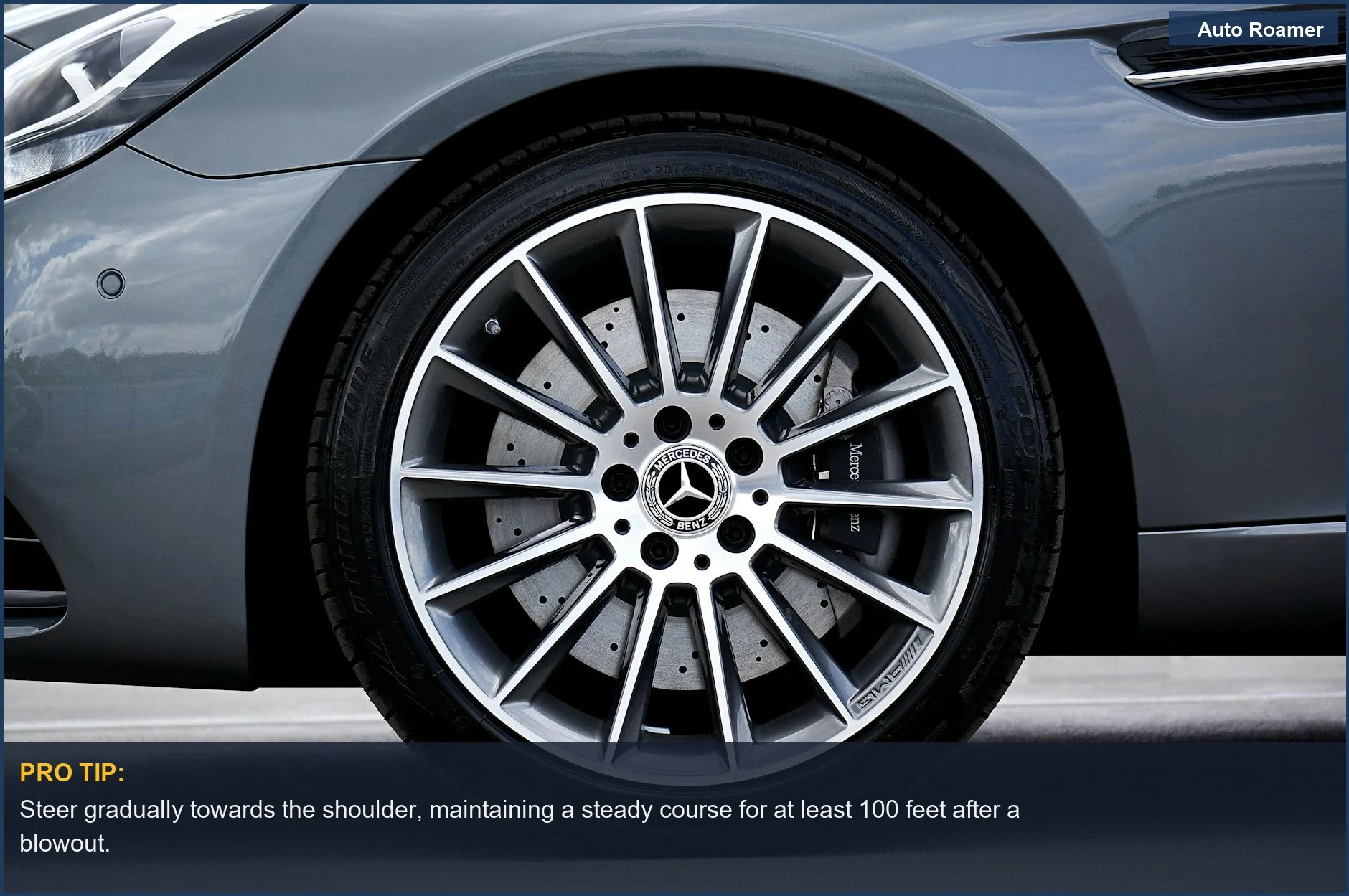
Steer gradually towards the shoulder, maintaining a steady course for at least 100 feet after a blowout.
A detailed look at a car's tire and wheel. Recognize the components involved when facing a sudden flat tire on the freeway. | Photo by Mike Bird

What This Looks Like in Practice

  • Front Tire Blowout in a Sedan During Rush Hour Traffic. We experienced a front tire blowout on a Toyota Camry while merging onto a busy interstate during peak commute hours. The car violently pulled left, making steering difficult. We maintained a firm grip, eased off the accelerator (avoiding hard braking), and guided the car to the shoulder. The narrow shoulder and fast traffic made changing the tire unsafe, so we called roadside assistance.
  • Rear Tire Blowout on a Pickup Truck Towing a Trailer in Extreme Heat. On a sweltering desert day, the rear tire of a Ford F-150 towing a camper blew out. The trailer began to fishtail, causing a terrifying loss of control. By gripping the wheel firmly and allowing the vehicle to slow naturally, we regained control and pulled over to a wider shoulder section. We had a spare and the conditions allowed for a safe tire change.
  • Sudden Flat on an SUV on a Mountain Pass with Limited Shoulder. Driving a Subaru Outback on a winding mountain highway, we got a flat on a section with a narrow shoulder and steep drop-off. Our immediate concern was safely pulling over. We slowed, activated hazard lights, and maneuvered as far off the travel lane as possible. Due to the precarious location and lack of space, we called for a tow truck to take us to a service station.
  • Tire Tread Separation on a Compact Car on a Rural Road. A compact car developed a flat on a less-trafficked rural road due to tread separation. A loud flapping noise preceded a noticeable pull. We safely slowed and pulled over to the wider, stable roadside. The tire was unusable, but with a spare and ample space, we changed it ourselves.
To ensure your safety after a blowout, it's crucial to know how to safely pull over on busy roads.
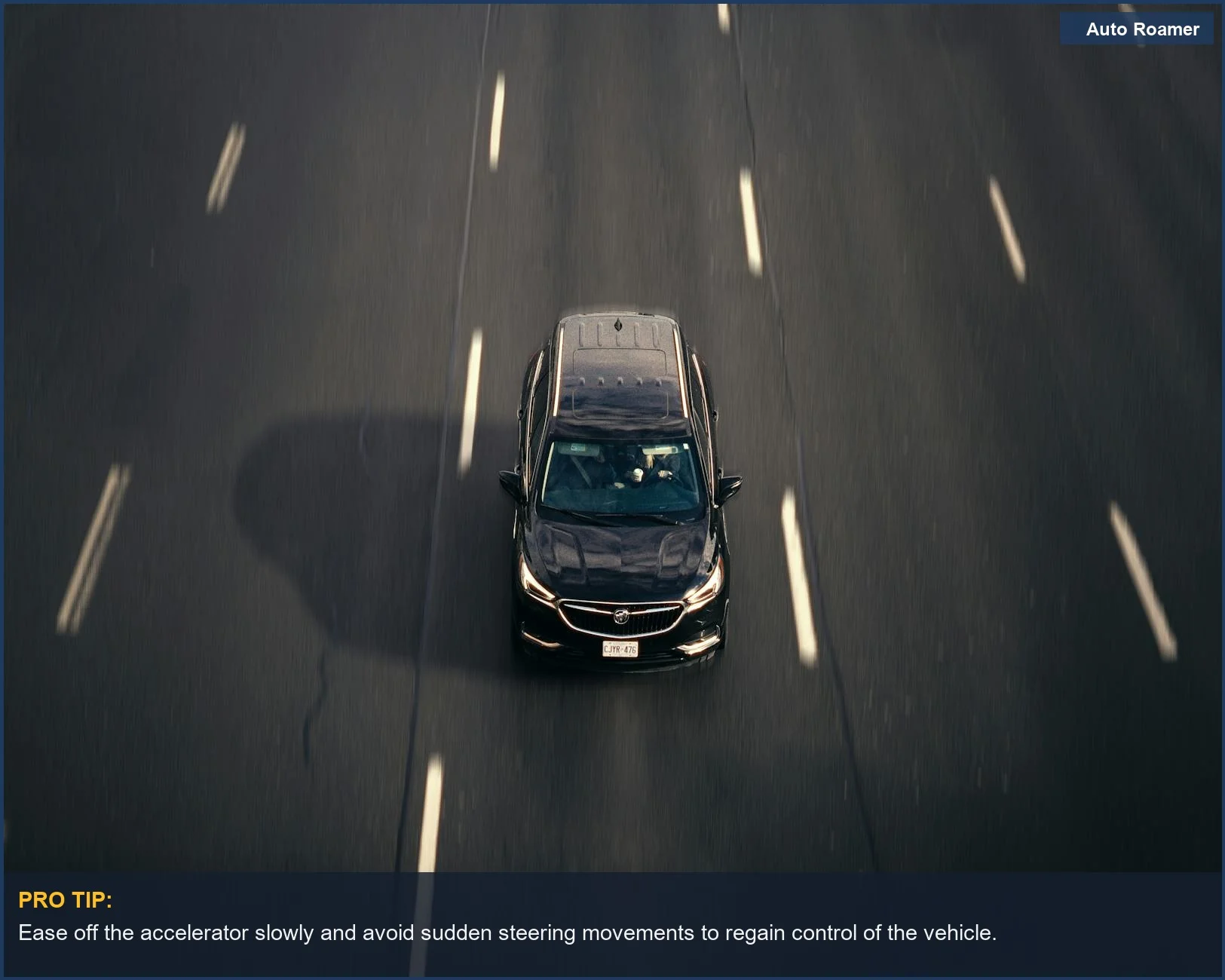
Ease off the accelerator slowly and avoid sudden steering movements to regain control of the vehicle.
An aerial perspective of urban highway travel. Discover the essential steps to take if you get a flat tire on the highway during rush hour. | Photo by Aswin R S

Mistakes That Cost People

Here are common mistakes people make with flat tires on the highway and how to avoid them:

Mistake Slamming on the brakes after a tire blowout.
Why people make it The instinct is to stop the car immediately.
What actually happens Sudden braking with a blown tire can cause a violent loss of control, leading to a serious accident.
The fix Grip the steering wheel firmly with both hands. Ease off the accelerator gradually. Do NOT brake hard. Allow the car to slow down naturally while you steer straight towards the shoulder.
Mistake Standing behind or in front of your car on the shoulder.
Why people make it It seems the most direct way to access the tire.
What actually happens The highway shoulder is dangerous. Cars travel at high speeds; a distracted driver could hit you or your vehicle. Tire blowouts account for nearly 6% of highway crashes, causing thousands of injuries and hundreds of fatalities annually.
The fix If changing the tire yourself, ensure your hazard lights are on and you're as far off the road as possible. If traffic is heavy or the shoulder is narrow, call for roadside assistance. If you exit the vehicle, do so from the passenger side and move at least 100 feet away from your car and traffic.
Mistake Using a tire repair kit on a sidewall blowout.
Why people make it Many vehicles have sealant kits instead of spares, leading drivers to assume they're universal solutions.
What actually happens These kits are for small tread punctures only. A sidewall blowout is a catastrophic failure that requires a full tire replacement. Using a kit here will be ineffective.
The fix Understand your vehicle's emergency tire equipment and its limitations. For a sidewall blowout, your only safe options are to call for a tow truck or, if you have a spare and a safe location, change to your spare.
Mistake Driving at normal highway speeds with a slow leak.
Why people make it Drivers underestimate the severity or believe they can reach their destination.
What actually happens A slow leak can rapidly become a blowout at highway speeds (11,000 tire-related crashes happen in the US annually). The tire can overheat, leading to tread separation or sudden deflation, causing loss of control.
The fix If you suspect a slow leak, reduce your speed immediately and find the nearest safe place to pull over, like an exit ramp or wide shoulder. Turn on your hazard lights and assess. If you can safely reach a service station, do so. Otherwise, call for roadside assistance.
Mistake Jerking the steering wheel to correct course.
Why people make it The sudden pull of a blowout causes an instinct to fight it with a strong steering input.
What actually happens Aggressive steering during a blowout can easily cause the vehicle to swerve into other lanes or roll over, especially in taller vehicles. The car is already unstable; sharp movements worsen this.
The fix Maintain a firm but smooth grip on the steering wheel. Counteract the pull gently and gradually steer towards the shoulder. Guide the vehicle, don't fight it with brute force.
Mistake Ignoring tire maintenance and pressure checks.
Why people make it Many drivers overlook routine checks, not realizing the critical role tire health plays in safety.
What actually happens Underinflated tires are a leading cause of blowouts due to excessive heat and can lead to tread separation. Overloaded vehicles also stress tires, increasing failure risk. The NHTSA estimates tire failure causes 11,000 vehicle accidents annually.
The fix Regularly check your tire pressure and ensure it's within the manufacturer's recommended range. Inspect tires for wear, damage, or embedded objects. Adhere to your vehicle's load capacity. This preventative maintenance is crucial for avoiding a dangerous flat tire on the highway.
Understanding how to react in tight situations can also help when you need to safely pull over on the highway.
Flat tire infographic: highway pros/cons.
Comparison overview for what to do if you get a flat tire on the highway while driving

Key Takeaways

  • Don't slam the brakes during a highway tire blowout. Instead, ease off the accelerator and maintain a straight course. This counterintuitive action helps you keep control as the vehicle naturally decelerates.
  • Grip the steering wheel firmly with both hands. A blowout creates a strong pull to one side; fighting this pull with deliberate, smooth steering is crucial to avoid losing control.
  • Activate your hazard lights immediately to alert other drivers. Then, gradually steer towards the shoulder or a safe pull-off area, getting as far from traffic as possible.
  • If the shoulder is narrow or traffic is heavy, do not attempt to change the tire yourself. Your safety is paramount; call for roadside assistance or a tow truck. Tire blowouts contribute to thousands of accidents annually 19 Tire Blowout Statistics + Safety Tips - Utires.com, with over 500 deaths reported in some years Tire Blowout: When Defective Tires Cause Serious, Fatal Crashes.
  • The single most important takeaway: DO NOT BRAKE HARD. Ease off the gas and steer straight. This is the key to surviving a tire blowout on the highway.
In addition to handling tire blowouts, it's essential to know what to do if your car breaks down at night, so read about nighttime breakdowns.

Frequently Asked Questions

My tire's flat, can I just limp it to the next exit on the highway?
Honestly, driving on a completely flat tire is asking for trouble. You risk damaging your wheel rim, which is a much more expensive fix than a tire. Plus, it's incredibly hard to control the vehicle. We've found that even a short distance can cause significant damage, so it's best to pull over immediately and assess the situation.
How far can I go on a spare tire, and how fast?
Most temporary spare tires, often called 'donuts,' have speed and distance limitations. Typically, we're looking at a maximum speed of around 50 mph and a range of about 50-70 miles. Always check the sidewall of the spare for specific limits - pushing them can be dangerous. It's meant for getting you to a repair shop, not for extended driving.
Should I try to change a flat tire myself on the highway shoulder, or just call for help?
This is a tough call, and safety is paramount. If you're on a narrow shoulder with fast-moving traffic, we strongly advise against changing it yourself. A roadside assistance service like AAA or your insurance provider is the safer bet. We've seen too many close calls; the risk of getting hit by another vehicle is just too high.
Does my car insurance or AAA cover flat tire service when I'm on the highway?
Generally, yes, but it depends on your specific policy or AAA membership level. Most roadside assistance plans, including AAA, cover towing and tire changes. Some car insurance policies offer this as an add-on or as part of a comprehensive package. It's always worth checking your policy documents or giving them a quick call to confirm your coverage before you need it.
How do I know if I have a blowout vs. just a slow leak while driving?
A blowout is usually a sudden, violent event - you'll hear a loud pop or bang, and the car will pull sharply to one side. A slow leak is more gradual; you might notice your tire pressure warning light come on, or the car might feel a bit sluggish over time. We've experienced both, and the immediate sensation of a blowout is unmistakable, often accompanied by a terrifying lurch.

Sources

Related Articles