
The Short Version
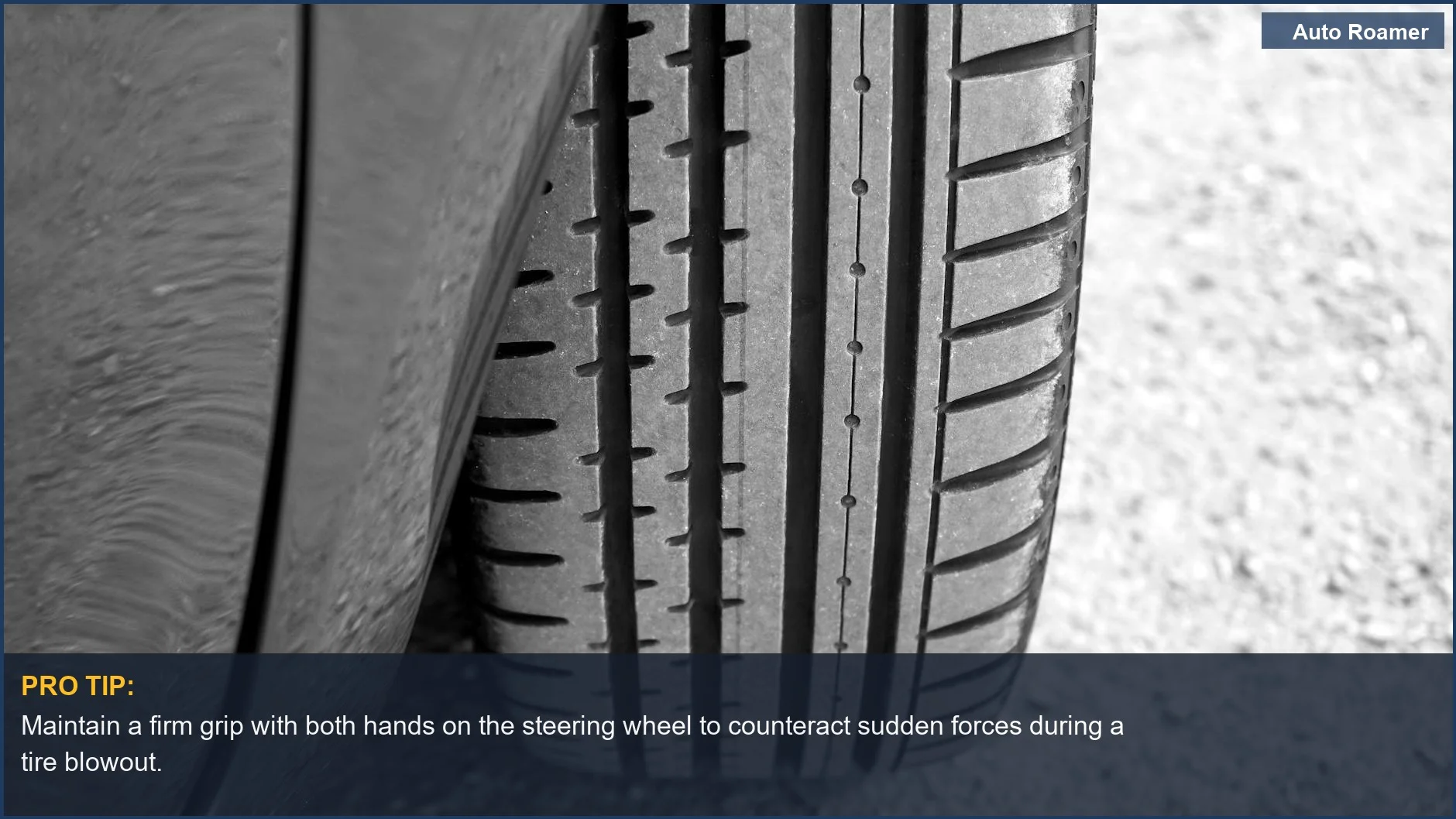
A blown tire at 70 MPH feels like the car just got punched in the gut. The loud BANG from a 35 PSI radial tire rupturing is enough to make anyone clamp down on the steering wheel like it owes them money. Your vehicle instantly starts pulling hard, a direct consequence of the sudden loss of rolling resistance on one corner. That initial shock?
It's the mechanical system fighting for equilibrium, and your job is to help it out, not hinder it. Prime Time's Guide for 2026 mentions the critical first seconds.
The Short Answer
Too many people panic-brake. That's the worst thing you can do. You're trading a controllable, though scary, drift for an uncontrolled skid. The tire's internal structure fails, rapidly depressurizing. This isn't just a flat; it's a sudden, violent change in the vehicle's dynamic behavior, causing an immediate torque imbalance at the axle. Michelin emphasizes staying calm.
The goal is to maintain the vehicle's vector. The intact tires are still fighting for traction, but the blown tire is creating a massive parasitic drag. Think of it like a boat with a broken rudder; you need to compensate with subtle, continuous adjustments. The initial loud noise is the internal air pressure, sometimes up to 45 PSI, rapidly escaping the compromised carcass, often with a secondary impact sound from the rim hitting the road.
Reddit users discuss maintaining control.
Your vehicle's stability control system (ESC) might try to intervene, but it's reacting to an input it wasn't designed for - a sudden, massive change in rotational velocity and effective wheel radius. This system can sometimes fight against your corrective steering if you're too aggressive. You're trying to re-establish a predictable coefficient of friction.
The vehicle's natural tendency will be to yaw towards the blown tire due to the increased drag on that side. This is especially pronounced with a front tire blowout where you'll feel the steering wheel try to rip itself from your hands. Rear blowouts cause the tail to feel loose, like a boat in a crosscurrent. Both require steady hands and gentle inputs. Zutobi Drivers Ed advises against aggressive steering.
The Reality Check
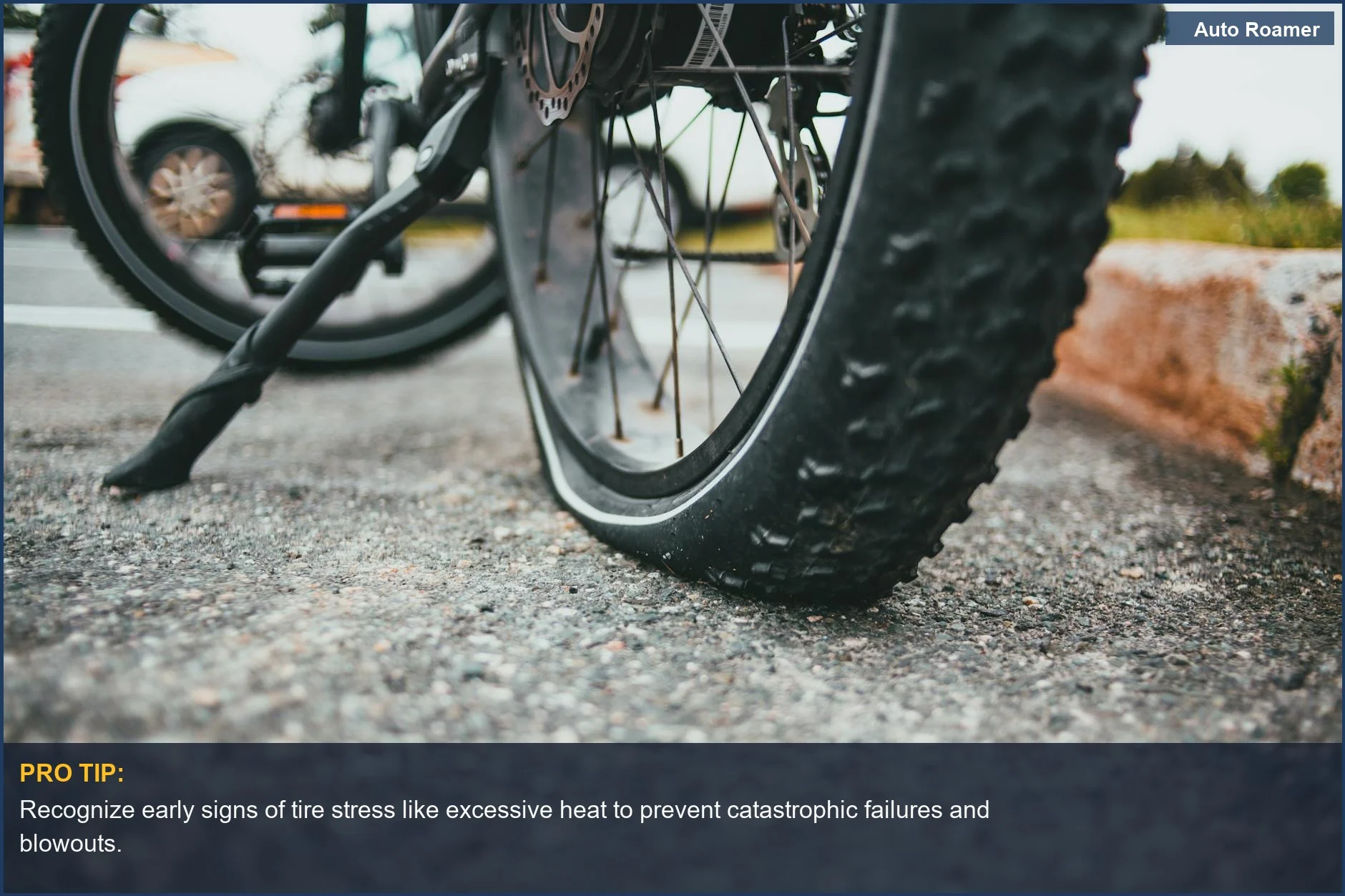
A tire blowout isn't just a random event; it's usually a failure mode stemming from a specific mechanical or thermal stress. Underinflation, for example, causes excessive sidewall flex, which generates heat. That heat degrades the rubber's polymer chains, reducing its shear strength until it can't contain the 30-40 PSI internal pressure anymore. Patriot Express Auto explains common causes.
Overloading a vehicle pushes the tire beyond its load index rating. This means the internal cord plies are under tension beyond their design limit. A quick impact from a pothole, which a correctly loaded tire would absorb, becomes a point of catastrophic failure. The force exceeds the material's yield strength, resulting in a rupture. Tires can delaminate from prolonged overloading, the tread just peeling off.
Old tires are another common culprit. Rubber compounds outgas over time, losing plasticizers and becoming brittle. UV exposure and thermal cycling from driving accelerate this. The sidewalls develop micro-cracks, reducing the fatigue life of the cord plies. A sudden stress, like hitting a small curb, can propagate these cracks into a full blowout. Age, not just tread depth, matters. Travelers notes age as a factor.
| Component | How It Fails | Symptoms | Fix Cost |
|---|---|---|---|
| Tire Sidewall | Fatigue from underinflation; impact from road debris; dry rot | Loud 'BANG'; immediate vehicle pull; flapping noise | $100-$400 (new tire) |
| Tire Tread | Separation from overheating; impact damage; deep puncture | Sudden vibration; 'whooshing' air loss; loss of traction | $100-$400 (new tire) |
| Valve Stem | Rubber degradation; impact damage; corrosion | Slow leak; eventual rapid deflation (less common for full blowout) | $5-$30 (replacement) |
| Wheel Rim | Impact damage (pothole); corrosion; structural fatigue | Air leak at bead; bent rim; tire bead separation | $150-$600 (repair/replacement) |
After the initial failure, the deflated tire acts like a brake, grinding against the road surface. This generates significant friction and heat, sometimes chewing through the tire in a matter of seconds. The flapping sound you hear is the shredded rubber impacting the wheel well and road, which can cause secondary damage to the fender liner or brake lines. That's a repair that costs more than just a new tire.
How to Handle This
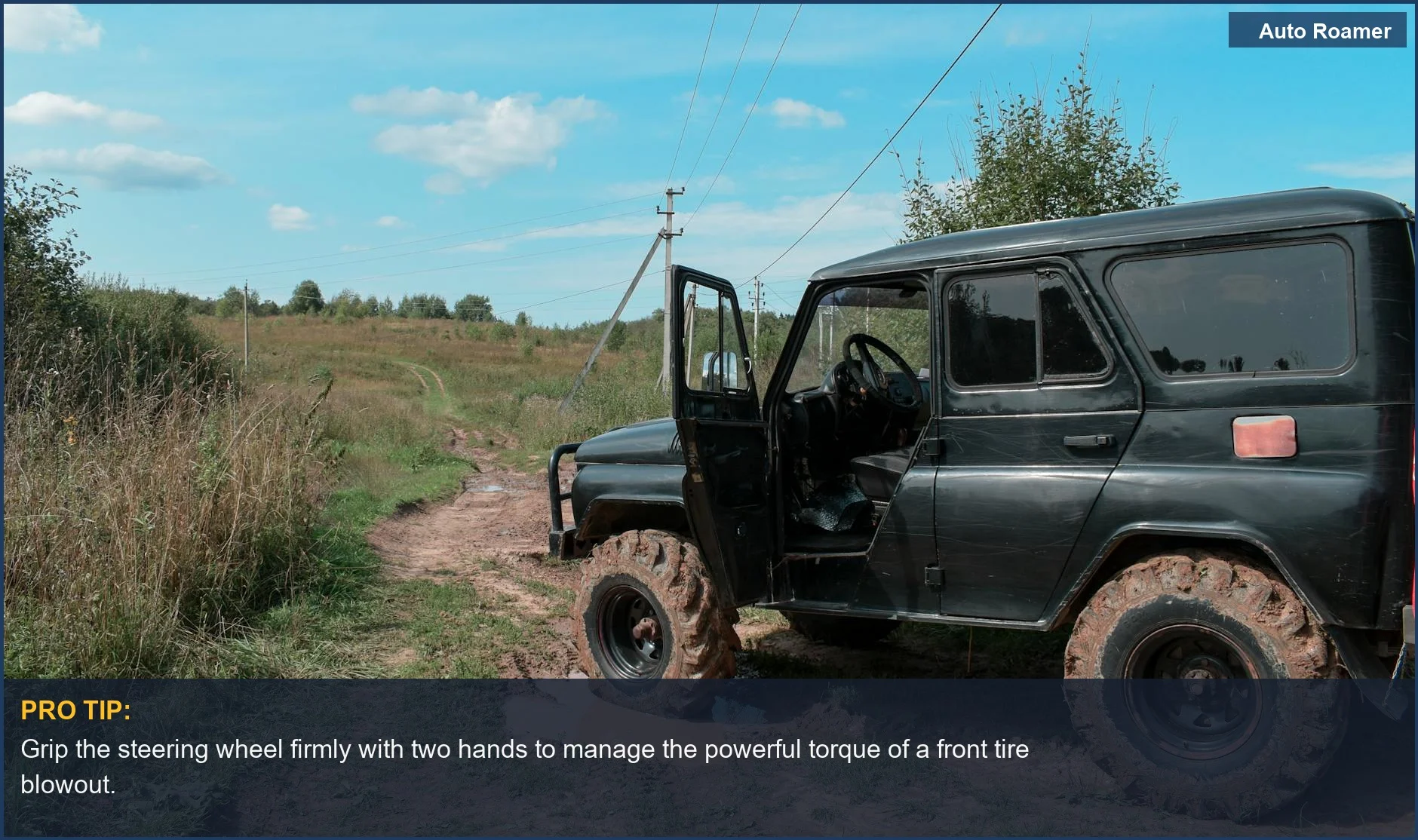
- Grip the wheel like it's trying to escape. Two hands. Always. A front tire blowout can yank the steering wheel with enough torque to break a thumb if you're not ready. Your grip needs to be firm, but not white-knuckle tight, allowing for subtle corrective movements. Truity Credit Union advises this.
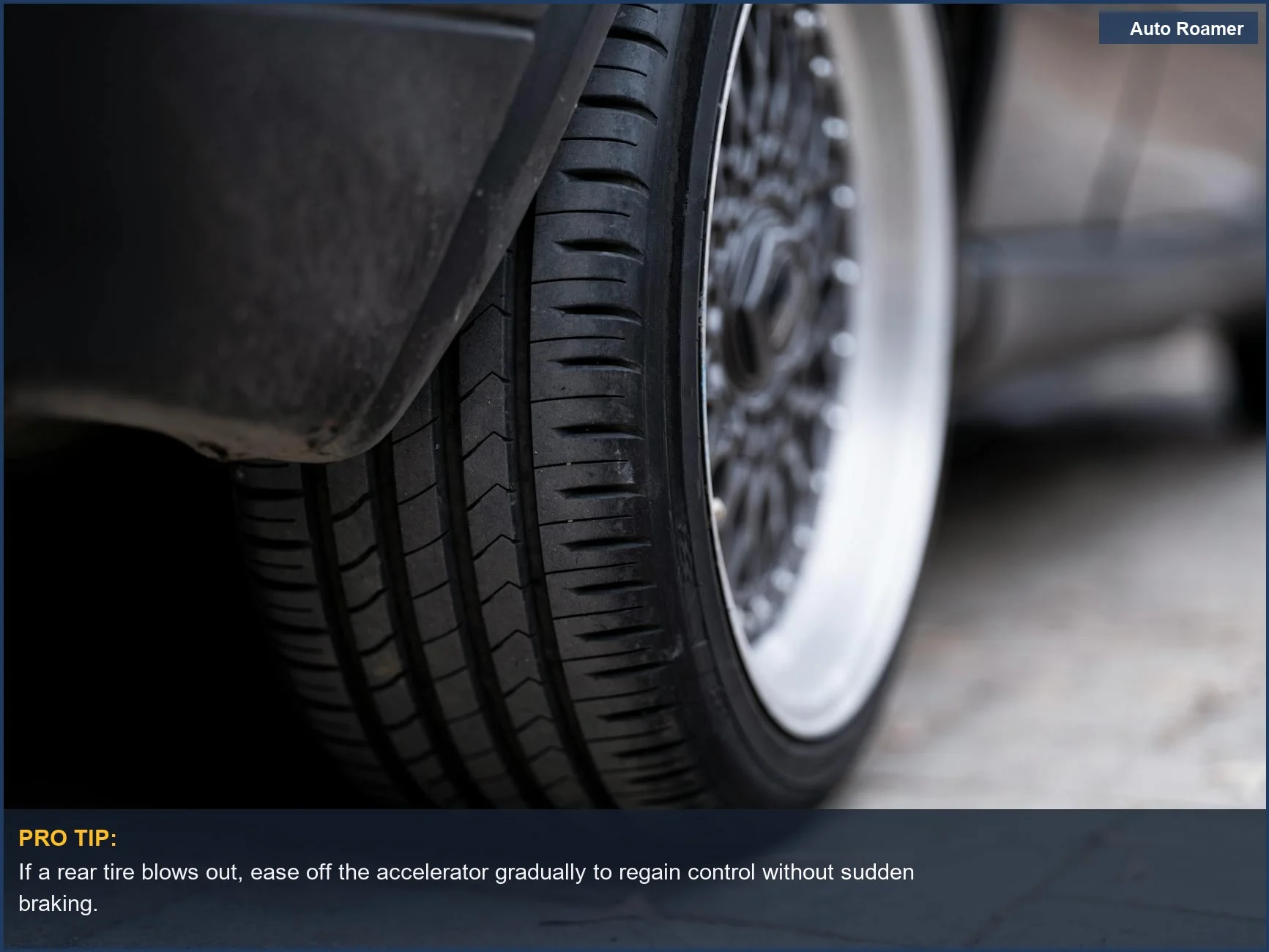
- Ease off the accelerator, but don't lift your foot entirely. You need engine braking, not a sudden deceleration. Maintaining some forward momentum, even slight, helps the vehicle track straight. A rapid lift-off can shift weight too abruptly and exacerbate the yaw. It's a delicate balance of reducing speed without inducing instability. Gordon's blog agrees on easing off.
- Resist the urge to slam the brakes. This is critical. Hard braking will transfer weight to the front, which means less grip for the rear tires, and a greater chance of losing directional control. If a front tire blew, it'll make the steering even worse. Apply gentle, progressive brake pressure only after you've regained some control and the vehicle has slowed significantly. The goal is a controlled deceleration, not an emergency stop. Honest Wrenches warns against slamming brakes.
- Steer into the pull, gently. If the front left tire blew, the car will pull left. You need to apply gentle right steering input to keep it tracking straight. Overcorrecting is just as bad as not correcting at all. Small, continuous adjustments are key to maintaining the vehicle's vector. The steering wheel will feel heavy and unresponsive initially, but keep feeding in those small corrections.
- Look for a safe spot to pull over. Once you've got the vehicle somewhat stabilized and slowed, start looking for a wide, flat shoulder or an exit. Signal your intentions early. Don't stop in a traffic lane. The slower you go, the easier it is to control the vehicle, even with a shredded tire. You're aiming for a controlled glide to safety.
- Once stopped, engage the parking brake and activate hazard lights. The immediate danger is over. Now you need a tow. This is where a good roadside plan pays for itself. Check for secondary damage to brake lines or suspension components. A chewed-up fender liner is common. I always carry an extra set of gloves for this kind of grimy inspection. Cost-per-fix goes up fast if you ignore secondary damage.
What This Looks Like in Practice
Driving a loaded F-150 at 65 MPH, rear passenger tire blows. The truck's tail immediately feels loose, like it's trying to wag. The load in the bed shifts, amplifying the sensation. Your hands should be at 10 and 2; you'll feel the steering wheel lighten as the rear axle loses stability. Ease off the gas, applying just enough opposite lock to keep the truck from crabbing sideways.
The vehicle will drift toward the blown tire, so keep it pointed straight for a few hundred feet before gently easing it to the shoulder.
Commuting in a Honda Civic on the interstate, 75 MPH, front driver's side tire explodes. The steering wheel tries to rip clockwise out of your hands, an immediate, aggressive pull to the left. Your arms lock, fighting the wheel's rotation. Keep steady pressure on the throttle for a few seconds to maintain forward momentum, then slowly lift off.
The car decelerates, the pull lessens, and I can start guiding it to the right shoulder, the shredded rubber slapping against the wheel well. BFGoodrich has a video showing this.
On a two-lane rural road, 50 MPH, front passenger tire fails on a Subaru Outback. The car veers sharply right, towards the ditch. My immediate reaction is to counter-steer left, a quick, firm input, while maintaining a light throttle. This prevents the vehicle from digging into the soft shoulder. Use the engine's residual power to keep the car from decelerating too fast, guiding it back to the pavement before slowing down and pulling over. No sudden braking, just control.
Honest Wrenches discusses preventing blowouts.
Highway cruising in a minivan, 80 MPH, rear driver's side tire. Not a violent bang, but a rapid, loud 'whoosh' followed by a rhythmic thumping. The van starts to feel squishy, like driving on jelly. This is a slower deflation, not an explosive rupture. I don't feel the immediate hard pull, but the vehicle starts to wallow.
I maintain speed for a moment, then slowly feather off the gas, allowing the vehicle to coast down while I find a safe exit. The controlled deceleration minimizes the risk of a secondary failure.
Mistakes That Cost People
| Mistake | Why It Fails | Consequence |
|---|---|---|
| Slamming Brakes | Rapid weight transfer to front axle; loss of rear traction | Loss of directional control; spin-out; collision |
| Jerking Steering Wheel | Overcorrection induces vehicle oscillation; amplifies yaw | Vehicle fishtails; loss of control; secondary collision |
| Removing Foot Completely from Gas | Abrupt engine braking; sudden weight shift; loss of forward momentum | Loss of stability; vehicle hard to steer; increased drag |
| Not Gripping Steering Wheel Firmly | Lack of counter-torque against tire's sudden drag | Steering wheel ripped from hands; vehicle veers wildly |
| Stopping in a Lane of Traffic | Creates a stationary hazard; high risk of rear-end collision | Increased danger to self and others; severe secondary impact |
| Ignoring TPMS Light | Underinflation leads to excessive heat, delamination | Blowout due to fatigue failure; increased fuel consumption |
Slamming the brakes is probably the most common mistake I see. You're trying to stop a 4,000-pound projectile that just lost a critical component, and you're doing it by inducing maximum instability. Brilliant. The weight transfers to the front axle, taking load off the rear, which means less grip back there. AAA Club Alliance lists this as a key error.
Jerking the steering wheel is another classic. Your vehicle is already unstable; you don't need to add more sudden, high-frequency inputs. This just creates an oscillation that the chassis can't dampen, leading to a loss of control. Think of it like trying to balance a broom on your hand; small, constant adjustments work, not violent jerks.
Completely lifting off the gas is a close third. You lose the stabilizing effect of engine power delivery. The vehicle decelerates too quickly, making it harder to steer and control. A gradual release is key. You're trying to manage the vehicle's kinetic energy, not dump it all at once.
And for the love of all that's holy, don't stop in the middle of a freeway lane. A blown tire is bad. Getting rear-ended by a semi because you stopped in its path is significantly worse. Get to the shoulder, even if it means shredding the rim. That's a cheaper fix than a totaled car and a trip to the hospital.
Key Takeaways
When a tire blows, remember these core principles:
- Maintain Grip: Two hands, firm hold on the steering wheel, ready for the immediate torque reaction. Your hands are the primary interface for mechanical stress feedback. This YouTube video reinforces the grip.
- No Panic Braking: Gradually release the accelerator. Let engine braking and aerodynamic drag do the work. Slamming the brakes upsets the vehicle's weight balance and compromises stability.
- Steer Gently: Counteract the pull with small, continuous inputs. Overcorrection is a fast track to a spin.
You're re-establishing directional stability, not wrestling a bear.
- Prioritize Safety: Get the vehicle to a safe, off-road location. A damaged rim is cheaper than a collision. Don't add a secondary crash to your list of problems.
- Regular Maintenance: Check tire pressure weekly. Inspect sidewalls for cracks or bulges. Rotate tires every 5,000-7,500 miles. A $5 tire gauge and 5 minutes can prevent a $400 tire blowout and a much larger headache.