
How to Choose the Right Air Compressor PSI for Off-Road Tires
My first off-road trip was a disaster of over-inflated tires. I was at Big Bend Ranch State Park, Texas, in late spring. The sun was brutal, and I was running my 33-inch Falkens at the recommended 39 PSI. Every rut felt like a sledgehammer to my kidneys.
My first off-road trip was a disaster of over-inflated tires. I was at Big Bend Ranch State Park, Texas, in late spring. The sun was brutal, and I was running my 33-inch Falkens at the recommended 39 PSI. Every rut felt like a sledgehammer to my kidneys. I thought I just needed better shocks. Turns out, the real move is to let some air out.
Nobody tells you this on the dealership lot when they hand you the keys. They're happy to sell you fancy shocks, but deflating your tires? That's on you to figure out. It's the $50 version of an expensive upgrade.
This isn't about extreme rock crawling; this is about making your rig comfortable and capable on actual trails, not just pavement. The PSI number is your friend, once you know how to use it. And trust me, I learned the hard way.
The Core Answer
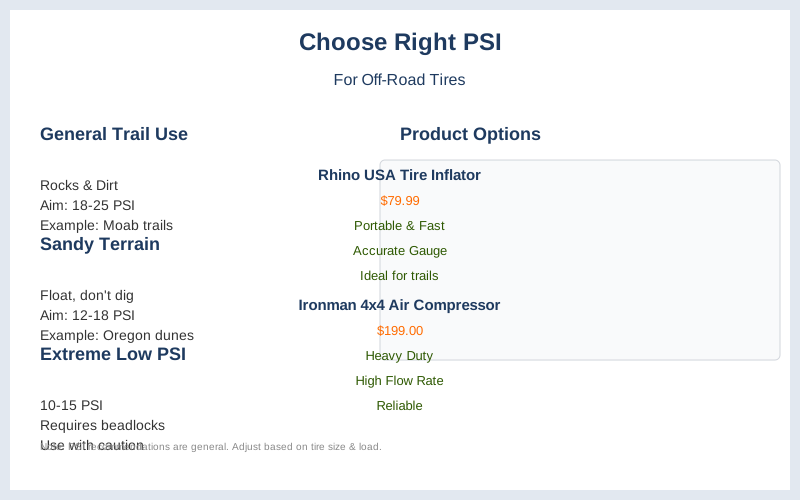
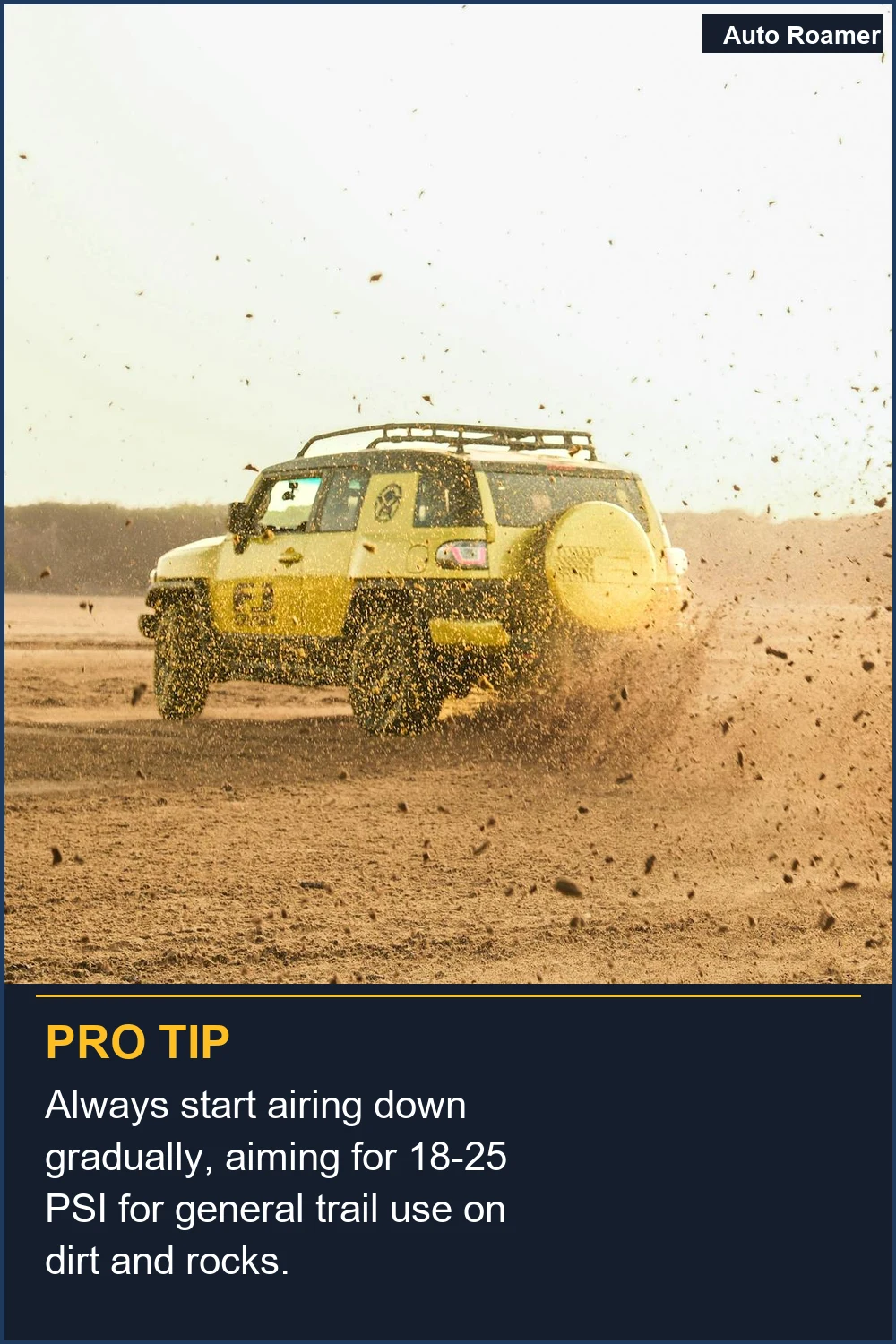
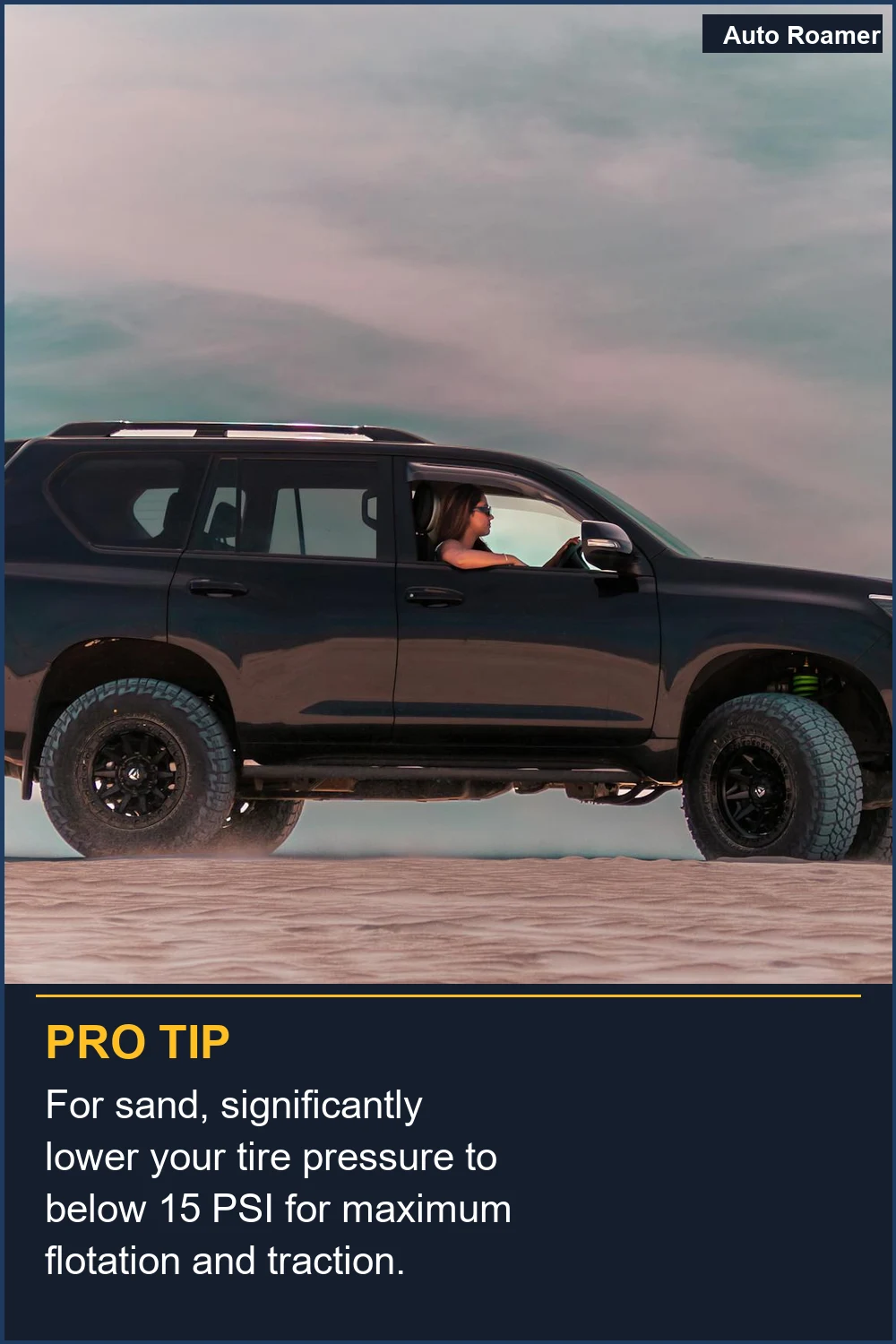
The magic PSI number for airing down your off-road tires isn't a single digit. It's a range, and it depends on what you're driving on. Think of it like this: you wouldn't wear hiking boots to the beach, right? For general trail use, rocks, and dirt, most folks aim for between 18 and 25 PSI. I run my 33-inch Wranglers around 20 PSI on most trails in Moab, Utah, and it makes a world of difference. That's a solid starting point if you're not sure. Ironman 4x4 suggests this general range for non-beadlock wheels. When you hit sand, you want to float, not dig. That means going lower, often between 12 and 18 PSI. On a trip to the Oregon dunes, I dropped my tires to 15 PSI and suddenly I wasn't getting stuck every 50 feet. It felt like driving on pillows. Rhino USA backs this up for sand. Now, the really low stuff: 10 to 15 PSI. This is where things get dicey if you don't have beadlock wheels. Beadlocks are fancy rims that clamp the tire bead to the wheel, preventing it from popping off. If you're running standard wheels, going below 15 PSI is a rookie mistake waiting to happen. I learned this at an off-road park in Colorado; I dropped to 12 PSI on rocks and spent 30 minutes wrestling a tire back onto the rim. OK4WD warns about this risk. Your tire size and sidewall strength matter too. A massive 37-inch tire can handle lower pressures than a smaller 28-inch tire before risking a bead unseating. Think of it like carrying a heavier load - you need to distribute the pressure differently. Facebook users discuss this variation. So, the honest version? Start higher, like 20-25 PSI, and air down from there. Use a reliable tire pressure gauge. You don't need a fancy digital one, but make sure it's accurate. My first gauge was a cheap dollar-store thing that was off by 5 PSI. Brilliant engineering. Remember, you'll need an air compressor to air back up when you hit pavement. Don't be that person crawling home at 15 PSI. It's bad for your tires and your rig. RBP Tires reminds you to air back up. Ultimately, it's about finding the sweet spot for your specific vehicle, tires, and the terrain. Experimentation is key, but always keep that risk of de-beading in mind. Nobody wants to be stranded because their tire decided to take a vacation from the rim. The Bronco Nation has folks running as low as 10 PSI with beadlocks, but that's a different ballgame.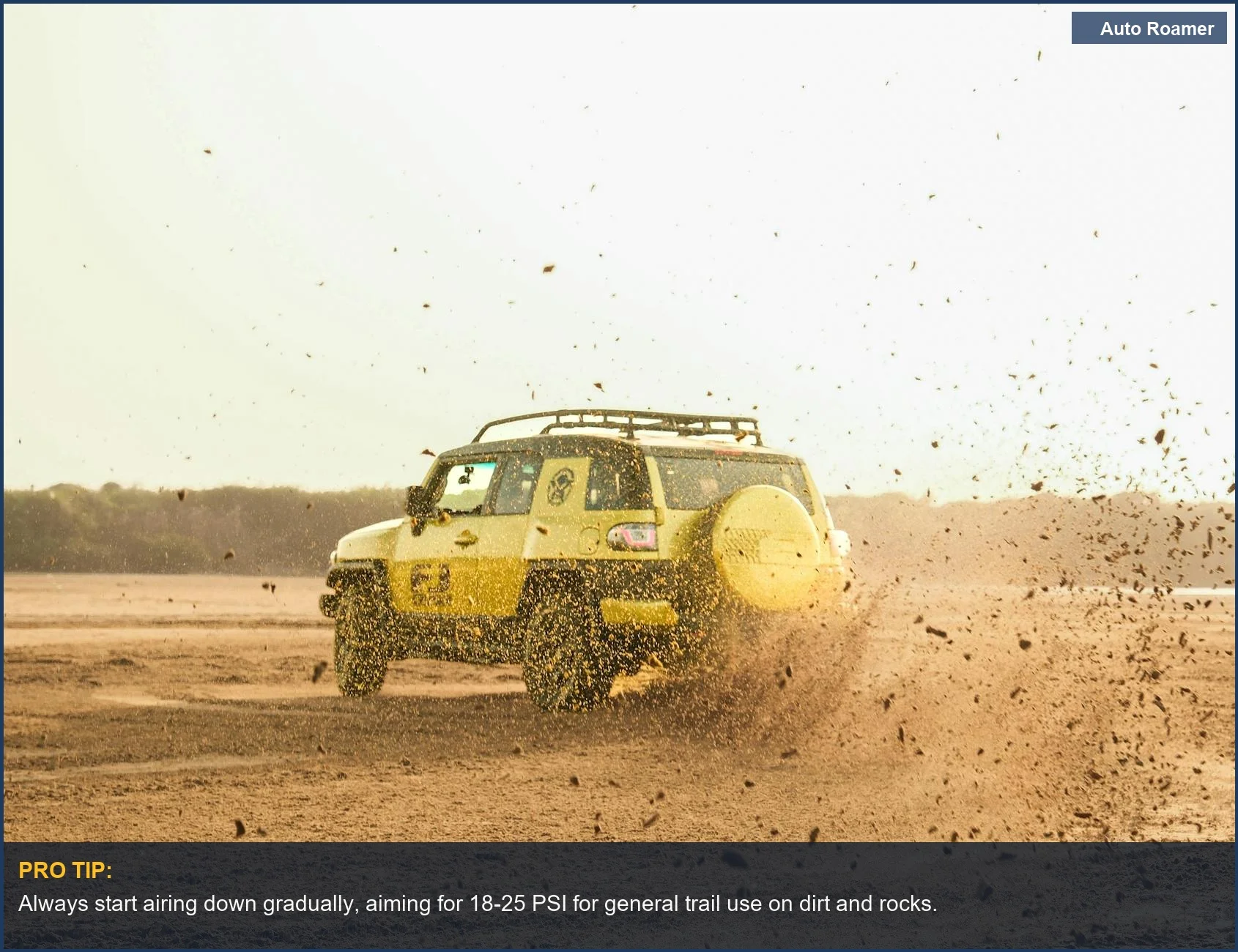
Why This Matters for Your Setup
Making the Right Choice
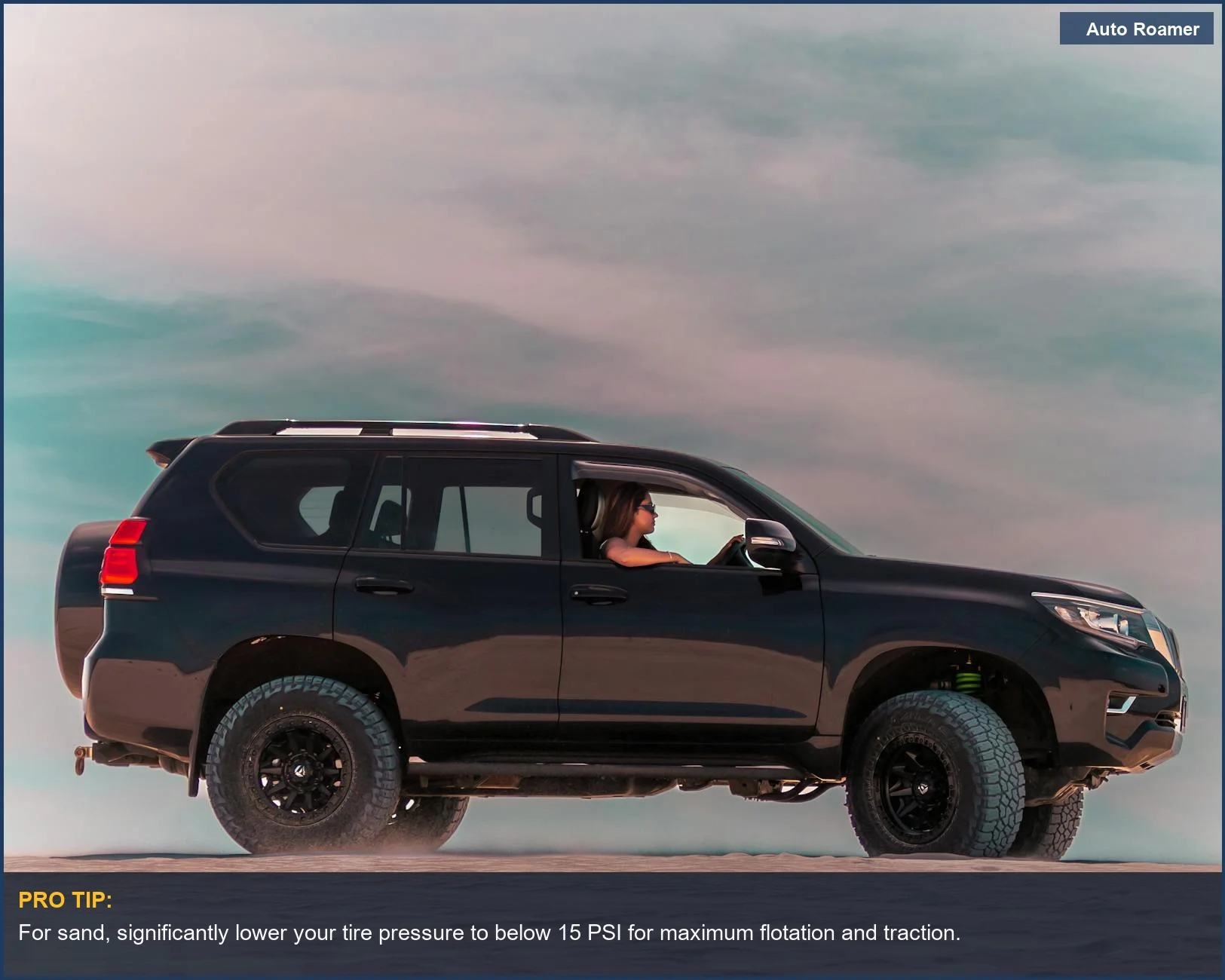
Choosing the right PSI for your off-road tires is less about a magic number and more about understanding your terrain and your rig. Start by knowing your tire size and whether you have beadlock wheels. If you don't, staying above 15 PSI is generally the safest bet to avoid a de-bead. Ironman 4x4 offers solid general guidelines. For most trails, dirt, and rocks, 18-25 PSI is a good starting point. If you're venturing into deep sand, don't be afraid to drop to 12-18 PSI for better flotation. Rhino USA provides specific PSI recommendations for different terrains. Always have a reliable tire pressure gauge and a way to air back up. A portable air compressor is essential gear. I use a $70 ARB single-compressor that's been with me for three years and still kicks butt. Ledmircy has tips on choosing one. Don't overthink it. The real move is to get out there and try it. You'll quickly learn what feels right for your setup. Happy trails, and don't forget to air back up!
Frequently Asked Questions
I saw a buddy's mechanic charge him $100 to air up all four tires after an off-road trip. Can I just buy a decent portable compressor for that price and do it myself?
Do I really need a fancy tire deflator tool, or can I just use a rock to push in the valve stem?
What if I air down to 15 PSI and my tires still feel too hard on the rocks?
Can airing down my tires too low damage my TPMS sensors?
I heard you're supposed to air down to the same pressure for mud as you do for sand. Is that true?
🏅 Looking for Gear Recommendations?
Check out our tested gear guides for products that work with this setup:
Sources
- Tires....what psi do you use? Do you let out air off roading?
- The Best Air Pressure For Off-Roading - Ironman 4x4
- When airing down to do some light off-roading, what PSI ... - Facebook
- Off-Road Tire Pressure Management Guide | RBP Tires
- Tire Pressure and Air Solutions for Offroading - OK4WD
- How Low To Air Down When Off-Roading - Rhino USA
- How to Choose the Best Air Compressor for Off-Road Adventures