First, the Basics
Solar powered dash cams promise constant surveillance without draining your car's battery, but how well do they actually hold up when the weather turns sour? The idea is simple: a small panel on your dash or windshield soaks up sun to keep the camera running, even when the engine's off. This sounds like a dream for anyone who's ever worried about parking lot pranks or hit-and-runs.
But the real world, especially with Mother Nature throwing curveballs, is rarely that straightforward. People have been trying to make this work for a while, and the results are... mixed. It's not just about having sun; it's about how much sun, and what else is happening around that little panel.
The Core Answer
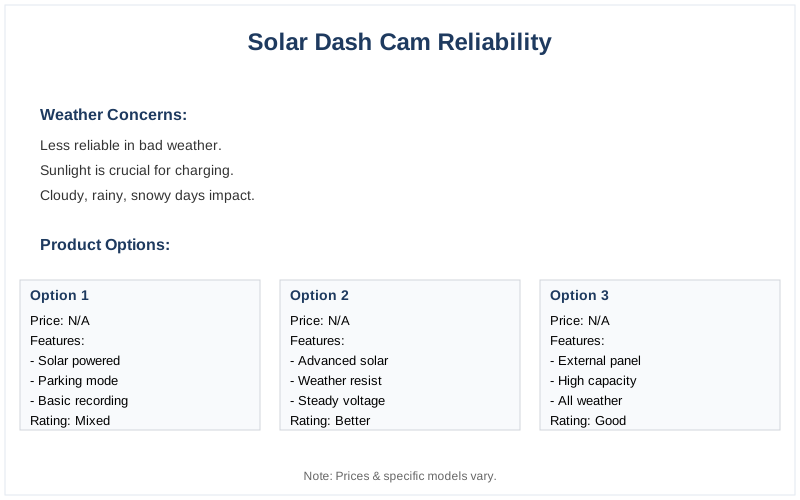
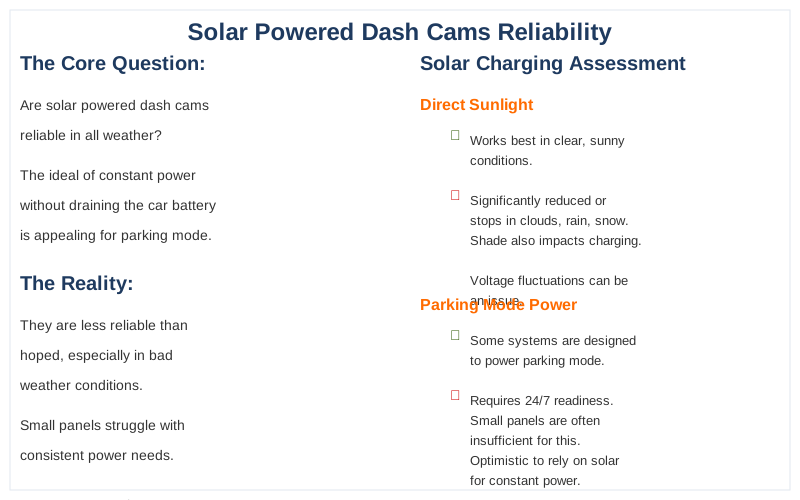
The core answer is: they're less reliable than you hope, especially in bad weather. My first attempt at a 24/7 parking mode setup with a portable solar panel only worked during peak daylight hours, and even then, voltage fluctuations were a headache. The idea that a small panel on your dash can consistently power a dash cam, particularly in parking mode which needs to be ready 24/7, is optimistic at best.
The reality is, solar charging is highly dependent on direct sunlight. Cloudy days, rain, snow, or even just parking in the shade for a few hours can significantly reduce or stop the charging altogether. Think about it: your phone's solar charger barely keeps it topped up when you're outside. A dash cam, even a low-power one, needs a steady stream of juice.
Some systems are designed to power parking mode for a couple of weeks, but that assumes optimal charging conditions. If you live somewhere like Seattle or have a garage that blocks sun, that two-week window shrinks fast. Then there's the heat. Direct sunlight on your dashboard can turn your car into an oven. Lithium batteries, which most of these cameras use, hate high temperatures.
I've seen forum posts about dash cams overheating and shutting down, or worse, the battery swelling up like a balloon. The solar panel itself, designed to absorb heat, can exacerbate this. So, while a solar panel might help keep the battery from dying completely on a sunny day, it's not a magic bullet for all-weather, 24/7 operation.
Most manufacturers specify an upper limit of around 60 degrees Celsius for operation, and a dash in direct sun can easily exceed that. The honest version? For reliable parking mode, especially in varied climates, you're probably still looking at hardwiring to your car's battery, perhaps with a voltage cutoff to protect it. The solar is more of a supplement than a primary power source.
Why This Matters for Your Setup
Why does this matter for your setup? Because assuming solar power means constant recording is a rookie mistake that can leave you without evidence when you need it most. I once spent an entire weekend trying to get a portable solar panel to charge a dash cam battery pack, and the most I ever got was enough to record maybe 3 hours of footage. Not exactly 24/7 coverage.
Here's the real move:
- Understand your climate: If you live in a desert and park in direct sun all day, you might get decent charging. If you live in a rainforest or park under a carport, forget it.
- Consider battery health: Extreme heat from solar radiation on the dash can degrade a lithium battery faster than you'd think.
- Parking mode needs: If you absolutely need 24/7 recording, especially for security, rely on a system designed for it.
- The $50 version vs. the $200 version: Cheaper solar dash cams often have smaller panels and less efficient batteries, making them even more susceptible to weather issues.
This is why people sometimes remove their dash cams in hot weather.
This usually means hardwiring with a battery pack or a proper power magic module that cuts off before draining your car battery.
Making the Right Choice
Making the right choice for your dash cam power source comes down to managing expectations and understanding the real-world limitations. That dashboard heat is no joke, and solar panels just add to it. Here's the honest version:
- Solar is a bonus, not a guarantee: Think of it as extending the life of your parking mode battery, not powering it indefinitely.
- Cloudy days are the enemy: Don't expect much juice when the sun is hiding.
- Hardwiring is still king for 24/7: For true peace of mind when parked, a hardwired setup with a battery pack or smart power module is the most reliable path.
- Check temperature ratings: Always look at the operating temperature range. If it's lower than your typical summer car interior, you're asking for trouble.
Long-term reliability in varied weather is still a question mark for many.