First, the Basics
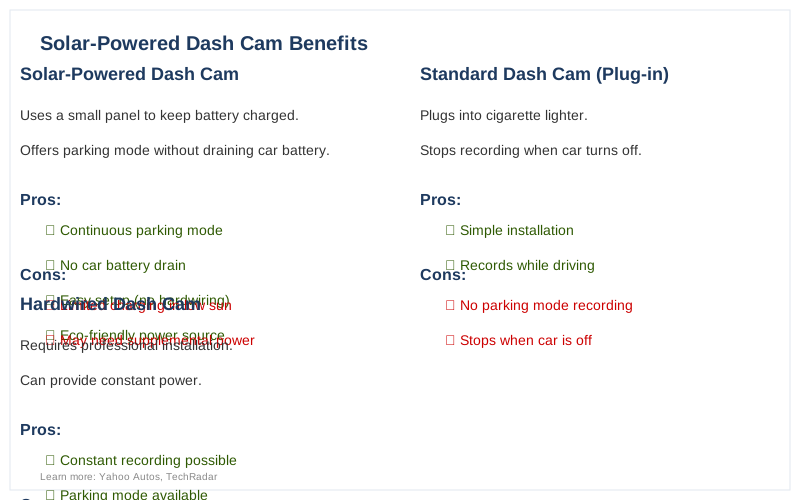
A solar-powered dash cam uses a small panel to keep its internal battery charged, which is a pretty neat trick. Most dash cams just plug into your cigarette lighter and die when you turn the car off, meaning no protection while you're parked. Others need to be hardwired, which is a pain in the backside and can drain your car battery if you're not careful.
This solar thing aims to solve that problem without making you feel like you need an electrical engineering degree. It's about keeping an eye on your ride when you're not in it, using the sun to do the heavy lifting. My first attempt at a parking mode involved a battery pack that died after 8 hours in a chilly Colorado night. Brilliant engineering, that.
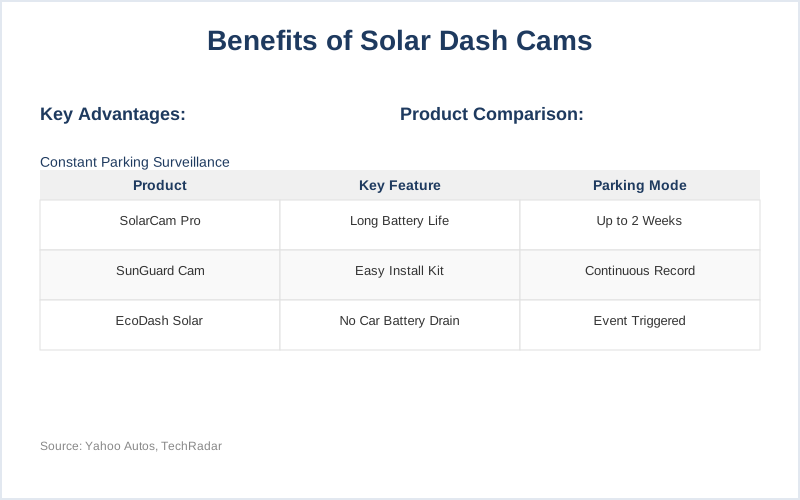
Yahoo Autos reports that the solar panel charges an onboard lithium battery, keeping the camera powered for about two weeks.
The Core Answer
The main benefit of a solar-powered dash cam is its ability to keep recording even when your car is off, without constantly draining your vehicle's main battery. Think of it like this: your regular dash cam is a sleepy guard dog that only wakes up when the engine is running. A hardwired one is like a guard dog that never sleeps, but might chew through your house's wiring if you're not careful.
The solar version is more like a guard dog with a solar-powered chew toy - it stays alert and active using the sun's power, especially for parking mode. TechRadar mentions that the solar panel isn't for constant driving recording, but for parking mode.
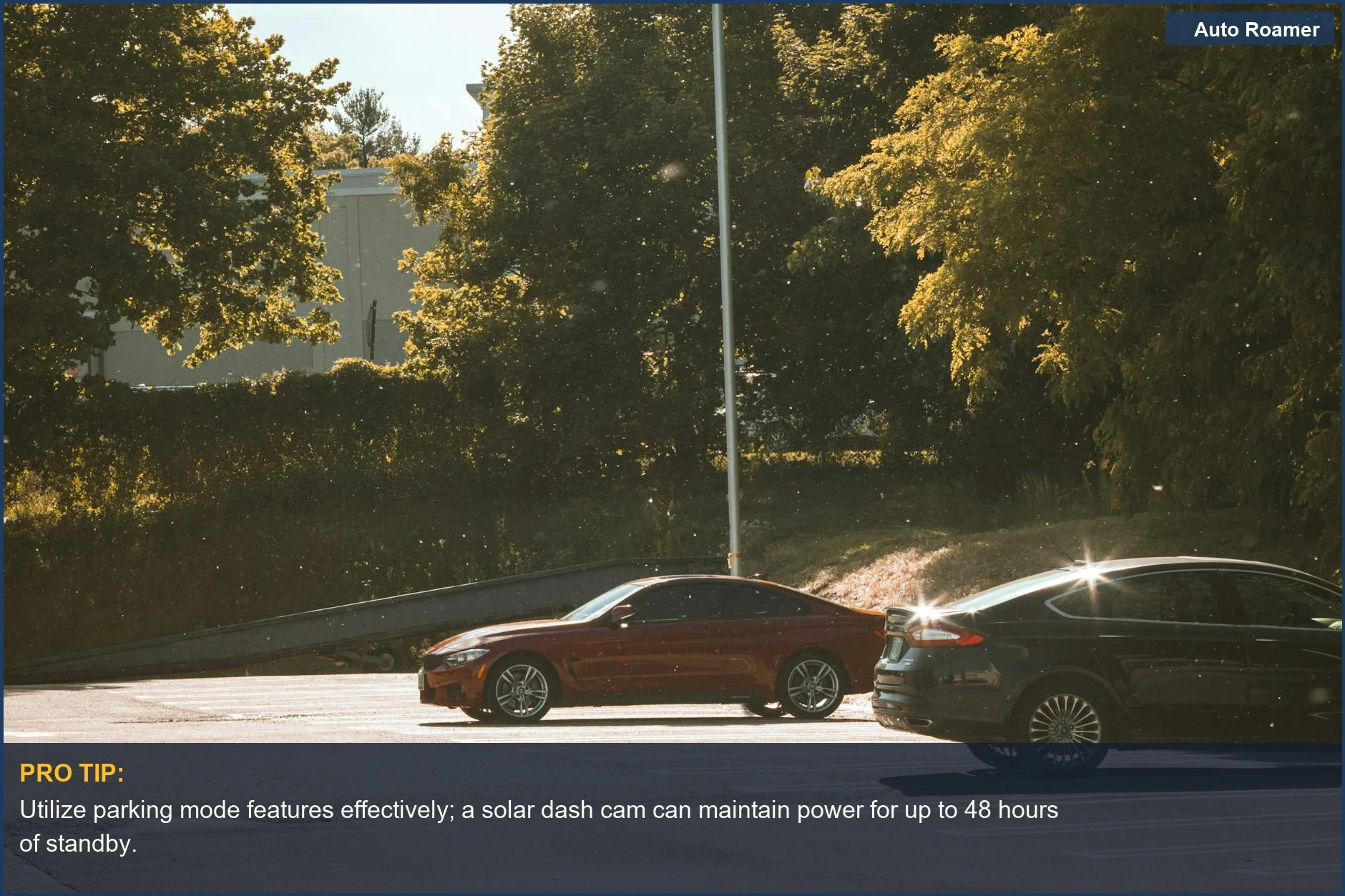
This parking mode is crucial. If someone bumps your car in a parking lot or tries to break in, the dash cam can capture it. Without this feature, your dash cam is useless when parked. I learned this the hard way at a Walmart parking lot in Ohio. Came back to a dent and zero witnesses because my plug-in dash cam was dead. The honest version: that parking mode is the real deal.
Car and Driver highlights that this setup allows for hardwire-free parking surveillance.
The solar panel itself isn't going to power your entire rig 24/7 while driving. You still need an internal battery for that. But the solar charging capability means that battery stays topped up longer, especially when the car is sitting in the sun. This reduces the need for complex wiring that goes straight into your car's fuse box, a job I once attempted and ended up with a dashboard full of error lights.
I swear, some of those instructions are written in ancient hieroglyphics. YouTube has plenty of videos showing just how fiddly that can be.
It's about convenience and peace of mind. You get the protection of a dash cam without the headache of installation or the worry of a dead car battery. The real move is to not have to worry about your dash cam at all. Another YouTube source discusses using solar panels to power dash cams for parking recording.
Why This Matters for Your Setup
Why does this matter for your setup? Because most of us aren't mechanics. We just want the gadget to work.
- No More Battery Drain Worries: Forget the anxiety of coming back to a dead car after it sat overnight. The solar panel keeps the parking mode battery replenished, so you're covered. I once left my car parked for three days and came back to a dead battery thanks to a poorly chosen parking mode setup. Rookie mistake.
- Simpler Installation: Hardwiring a dash cam involves tapping into your car's fuse box.
This can be intimidating and, frankly, a bit dangerous if you don't know what you're doing. Solar makes it almost plug-and-play. Car and Driver calls this the installation headache it solves.
- Eco-Friendly Boost: While it's not going to power your entire life, using the sun's energy is a small step towards being a little greener. It's a nice bonus on top of the safety features.
My camping trips have taught me a lot about the power of the sun, and seeing it used here is cool. TechRadar points out the innovative solar aspect.
- Consistent Recording: The goal is to have footage when you need it. Solar power ensures the camera stays charged and ready, even during extended parking periods. Yahoo Autos mentions the camera staying powered for roughly two weeks.
Making the Right Choice
So, what's the takeaway? Solar-powered dash cams offer a smart way to get continuous protection for your vehicle.
- Convenience is Key: If you value an easy setup and don't want to mess with car wiring, this is a strong contender. My trunk was once so full of unnecessary camping gear I couldn't see out the back window; I apply that same 'less is more' philosophy here. TechRadar notes the ease of setup.
- Parking Mode Power: This is the primary advantage.
It ensures your camera is ready to record incidents while your car is parked, unlike basic plug-in models. Yahoo Autos emphasizes this continuous power for parking.
- Consider Your Sunlight: The effectiveness of the solar charging depends on how much sun your car gets. If your car lives in a dark garage 24/7, it might be less beneficial.
Radar Detector Forum discusses how polycrystalline panels struggle in less ideal sun conditions.
- It's Not Magic: Remember, the solar panel is mostly for topping up the battery for parking mode, not for powering the camera non-stop while you're driving. You still need the internal battery for that continuous on-road recording. YouTube has more on the solar vs. battery debate.