Gear

How Does a Solar Powered Dash Cam Work?

Casey - The Weekend Warrior
5 min read
Includes Video

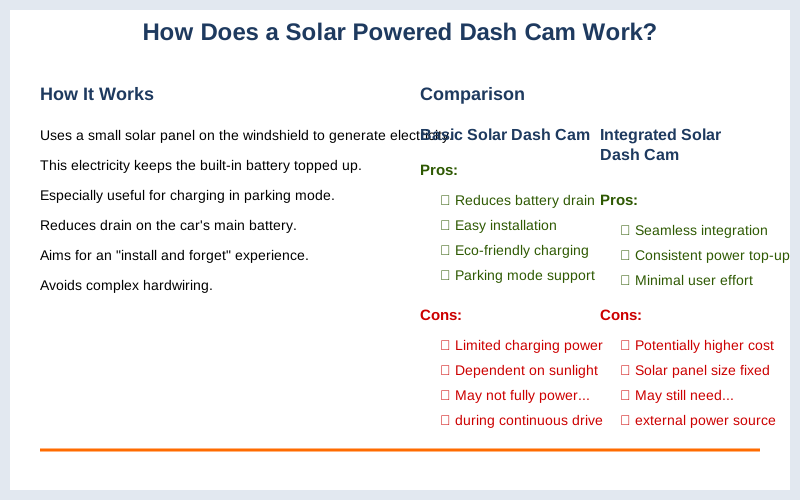
A solar-powered dash cam uses a small solar panel to keep itself charged, especially useful when your car is parked. Think of it like a tiny, dedicated power source for that little camera watching your car. This technology aims to solve the common problem of dash cams draining your car's main battery when they're on parking mode, which is typically a big headache for anyone who's tried to hardwire one themselves.

A solar-powered dash cam uses a small solar panel to keep itself charged, especially useful when your car is parked. Think of it like a tiny, dedicated power source for that little camera watching your car. This technology aims to solve the common problem of dash cams draining your car's main battery when they're on parking mode, which is typically a big headache for anyone who's tried to hardwire one themselves.

It's an attempt to make dash cams less of a hassle and more of an 'install it and forget it' kind of deal, leveraging that free sunshine hitting your windshield every day. TechRadar talks about how this could mean no more awkward hardwiring. My first attempt at hardwiring a dash cam involved a lot of sparks and a mild panic attack, so anything that promises to skip that step is a win in my book.

I Tried using Solar panel to Power a Dash cam & Charge a car battery shows some of the real-world testing involved. It's about finding a smarter way to keep the evidence rolling, without making you feel like you need an electrical engineering degree.

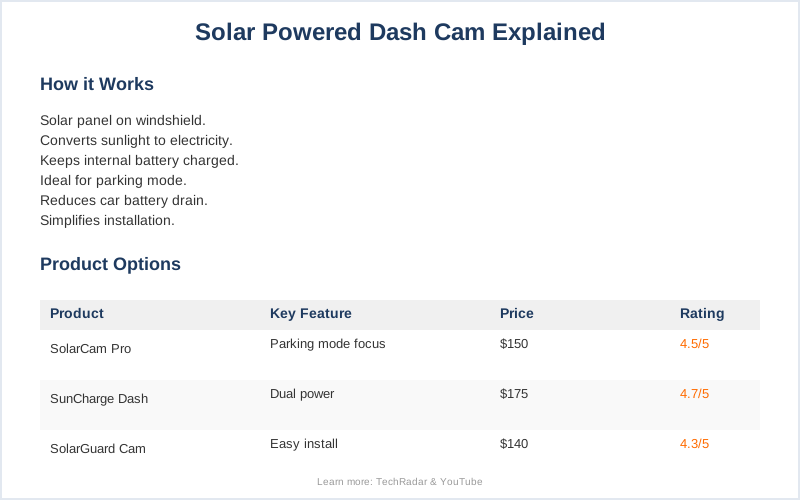
How Does a Solar Powered Dash Cam Work? — Key Specifications Compared
Key specifications for How Does a Solar Powered Dash Cam Work?

The Core Answer

The core idea behind a solar-powered dash cam is pretty straightforward: it uses a small solar panel, usually stuck to your windshield, to capture sunlight and convert it into electricity. This solar panel isn't usually enough to power the camera for constant recording while you're driving; that's where a built-in battery comes in. The real game-changer is how that solar panel helps keep the battery topped up, especially when the camera is in parking mode. Parking mode is that feature where the dash cam wakes up to record if it detects motion or a bump while your car is off. Solar energy powers the parking mode, reducing the strain on your car's main battery. This is a big deal because leaving a standard dash cam in parking mode for days can leave you with a dead car battery. Think of it like this: your car battery is a big, powerful jug of water. Your dash cam is a small cup. Normally, you'd be refilling that cup from the jug, potentially emptying it. The solar panel is like a small, constant trickle of rain refilling the cup, so you're not draining the jug as fast. VIOFO A129 Plus Duo + Solar power for Parking mode shows how this can work in practice. The panel itself is typically made of photovoltaic cells that absorb sunlight and generate a DC current. This current then charges an internal battery within the dash cam system. Some people use separate solar power banks, which is kind of the same principle but requires an extra device. The whole point is to use that free energy from the sun to keep your recording device alive without constantly asking your car for more juice. It's a clever way to use an often-wasted resource - all that daylight hitting your windshield. The dashcam automatically switches on when connected to power, and the solar setup helps maintain that power flow. It's not magic, just good old-fashioned physics applied to a common problem. My first dash cam was a nightmare of tangled wires and battery anxiety; this solar approach feels like a step towards sanity. Baseus VD1 Pro Solar Dash Cam Review highlights the convenience. It's about making sure the camera is ready to record that hit-and-run when you're not around, without leaving you stranded.
Understanding how solar-powered dash cams operate can help you appreciate their many advantages, like those outlined in the benefits of using one.
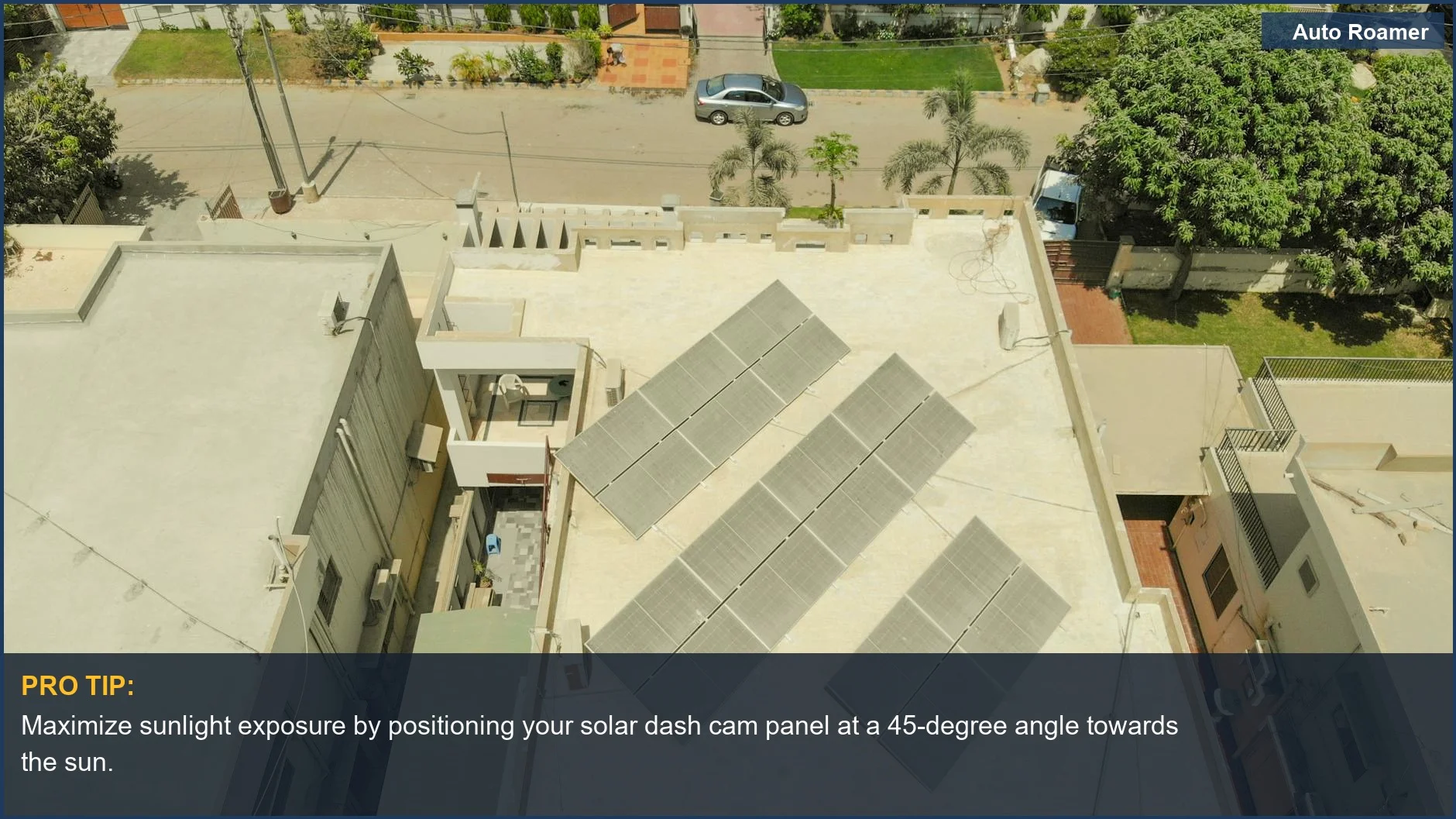
Maximize sunlight exposure by positioning your solar dash cam panel at a 45-degree angle towards the sun.
Renewable energy solutions like these rooftop solar panels power the concept behind how solar dash cams function, harnessing sunlight for electricity generation. | Photo by contact me +923323219715

Why This Matters for Your Setup

Why does this matter to you, the person who just wants a dash cam that works? Well, it means potentially ditching the complicated wiring. I spent 3 hours once trying to tap into my fuse box in the freezing cold, and let's just say my knuckles were not happy. This innovative solar-powered dash cam could do away with awkward hardwiring. It's about simplifying the setup so you don't need to be a certified mechanic. You get peace of mind knowing your camera is likely to capture footage even if your car battery is low. That's huge if you park on the street or in a lot where your car might be a target. No more 'did it record?' anxiety after a fender bender. Baseus VD1 Pro Solar Dash Cam Review shows how much simpler the installation can be. It's the $50 version of not worrying about your car battery dying. The real move is having a device that helps itself stay powered. Solar energy powers the parking mode, reducing dependency on your vehicle's battery. This is crucial for anyone who parks their car for extended periods, like when you're on vacation or working a long shift. It means the camera can keep an eye on your vehicle without you having to constantly check its power levels or worry about starting your car the next day.
To ensure your solar powered dash cam performs optimally, it's important to understand its reliability in different climates, which you can explore in our article about weather reliability.
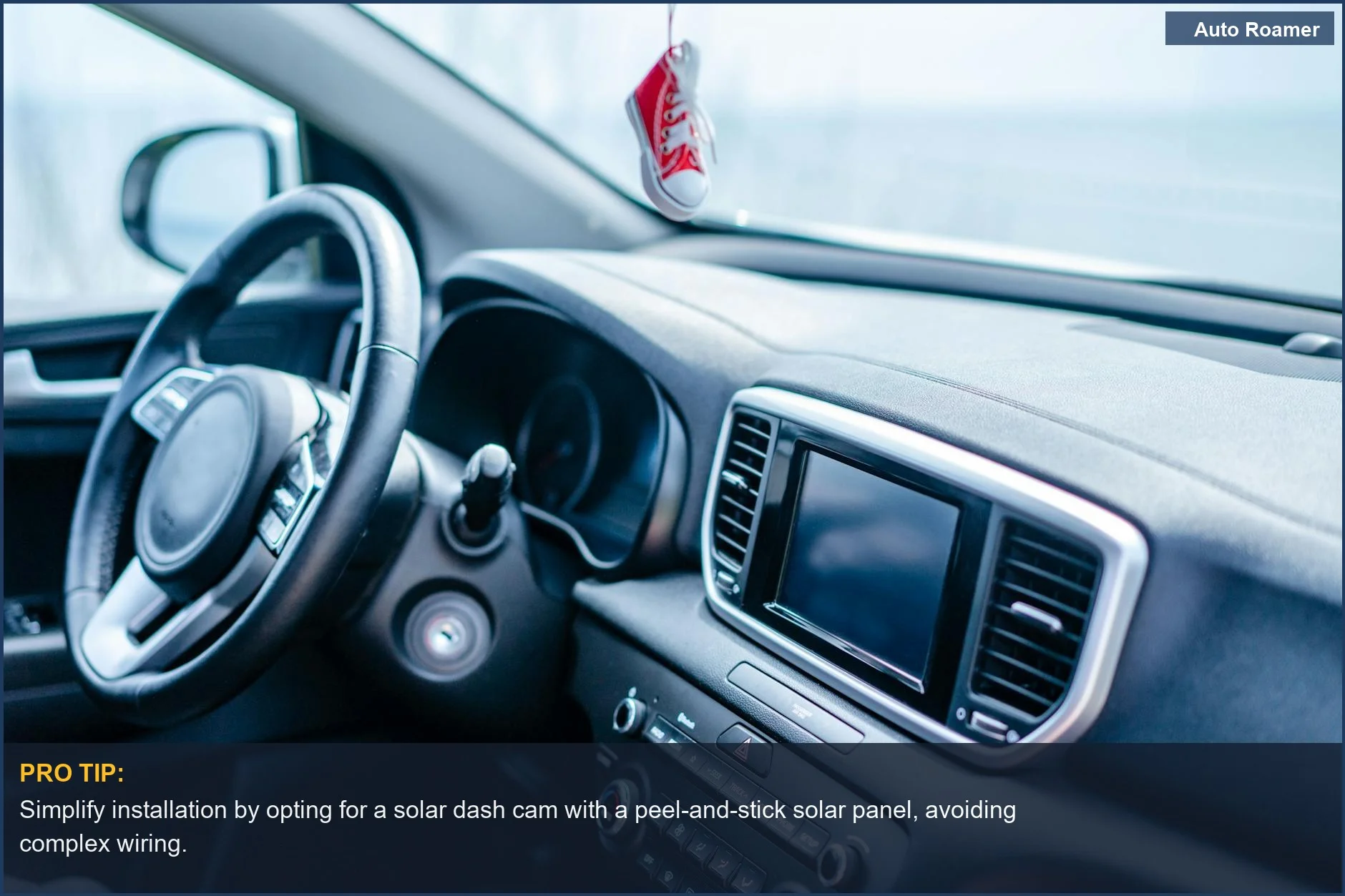
Simplify installation by opting for a solar dash cam with a peel-and-stick solar panel, avoiding complex wiring.
A tidy car interior is ideal for a dash cam; a solar powered dash cam explained means less fuss with dashboard wiring for a seamless setup. | Photo by Atlantic Ambience

Making the Right Choice

So, when you're looking at dash cams, this solar-assisted parking mode is a feature worth considering. It's not about replacing your car's main power source, but supplementing it smartly. Think of it as an eco-friendly boost for your dash cam's brains. Solar to power dashcam? shows people are already thinking about this. It offers a way to potentially extend your parking recording time without the usual battery drain worries. Best Solar Powered Dash Cam That Everyone's Talking About discusses options. It's about making dash cams more user-friendly and less of a technical hurdle. If you've ever fumbled with wires or worried about a dead battery, this technology offers a bit of relief. It's the honest version of dash cam convenience. This innovative solar-powered dash cam could do away with awkward hardwiring.
To ensure optimal performance, it's essential to understand dash cam power sources and their longevity.
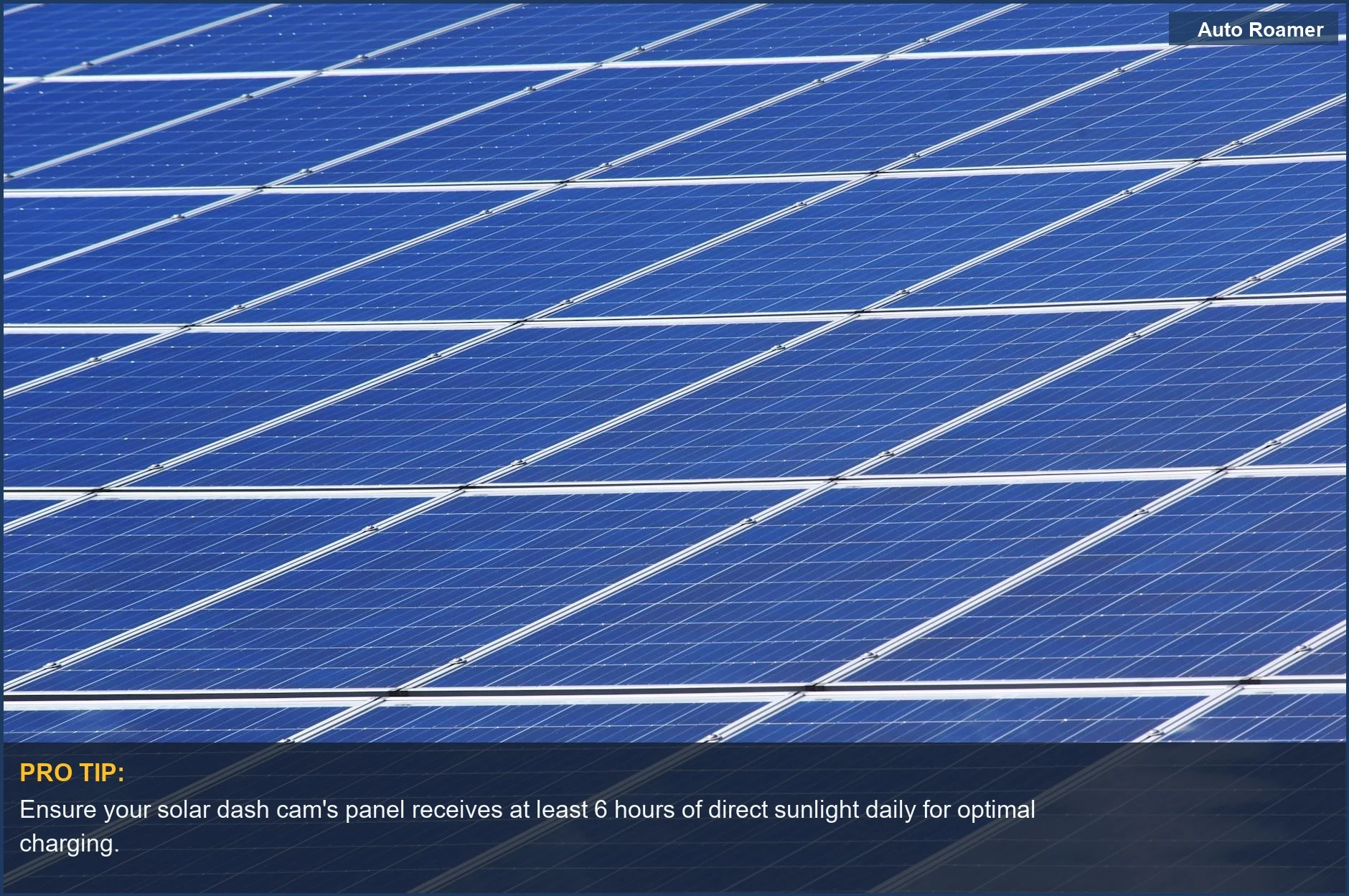
Ensure your solar dash cam's panel receives at least 6 hours of direct sunlight daily for optimal charging.
These efficient outdoor solar panels demonstrate how a dash cam solar panel explained can supplement power, offering smart, eco-friendly parking mode capabilities. | Photo by Pixabay

Frequently Asked Questions

What if I just stick a cheap solar panel from Amazon on my regular dash cam? Will that save me money compared to a dedicated solar dash cam?
Look, you *could* try to DIY a solar setup with a separate panel and a USB power bank, like some folks on Reddit tinker with. But honestly, the dedicated solar dash cams are designed to integrate the panel and battery management seamlessly. Trying to cobble together a solution might cost you $50-$75 in random parts, and you'll likely end up with a mess of wires and a system that doesn't reliably charge. My first $47 Walmart foam pad camping trip taught me that sometimes paying a little more upfront for something built for the job saves you a lot of headaches. A proper solar dash cam setup is engineered to work, not just 'kind of work'.
Do I really need a special tool to measure the voltage from the solar panel to see if it's working?
You do not need a multimeter to figure out if your solar dash cam is getting juice. The real move is to check the dash cam's own display or app. Most will show a little battery icon or a charging indicator. If you see that, congratulations, the sun is doing its thing. My first camping trip, I brought a compass and a protractor. Turns out, I just needed to look at the sky. Save your money and your brain cells; trust the dash cam's own feedback.
What if my solar dash cam still drains my car battery, even with the solar panel?
If your solar dash cam is still draining your car battery, it's likely a rookie mistake in how it's set up or a faulty unit. Maybe the solar panel isn't getting enough direct sunlight – remember, clouds are the enemy of solar power. Or, the camera's parking mode settings are too aggressive, constantly recording. You might need to adjust the sensitivity or duration. I once forgot to turn off my dome light overnight and woke up to a dead car battery. Sometimes the simplest things cause the biggest problems. Baseus VD1 Pro Solar Dash Cam Review shows how to check those settings.
Can leaving a solar dash cam plugged in all the time permanently damage my car's battery?
No, a properly functioning solar dash cam should not permanently damage your car's battery. The whole point is to *reduce* the drain on your car's battery. Think of it like trickle charging; it's designed to maintain power, not overcharge or deplete. My $12 fleece liner for my sleeping bag didn't damage my bag; it just made it warmer. The solar panel's job is to keep its own battery topped up, so it's not constantly pulling hard from your car's main power source. Solar energy powers the parking mode, which is the key.
Isn't it true that solar panels only work when it's super sunny, so they're useless on cloudy days?
That's a common misconception. While direct sunlight is best, solar panels can still generate some power from indirect or diffused light on cloudy days. It won't be as much as a sunny day, but it's enough to keep the internal battery topped up for parking mode. It's not like flipping a switch; it's more like a dim, steady flow. This innovative solar-powered dash cam could do away with awkward hardwiring by using whatever light is available. Don't expect peak performance in a blizzard, but it's not completely useless when the sun hides.

🏅 Looking for Gear Recommendations?

Check out our tested gear guides for products that work with this setup:

C

Casey - The Weekend Warrior

Weekend car camper and road trip enthusiast. Focuses on practical, budget-friendly solutions for families and first-time campers.

Sources

Related Articles