

Road Trip Gear

Aerodynamics and Fuel Efficiency: What to Know About Rooftop Cargo Boxes

Casey - The Weekend Warrior
4 min read
Includes Video

Rooftop cargo boxes are like adding a giant brick to the top of your car. They look cool, sure, and they hold a ton of gear for that epic camping trip. But they also mess with how your car cuts through the air, which means you're burning more gas than you need to.

Rooftop cargo boxes are like adding a giant brick to the top of your car. They look cool, sure, and they hold a ton of gear for that epic camping trip. But they also mess with how your car cuts through the air, which means you're burning more gas than you need to. I learned this the hard way on a road trip to the Outer Banks, watching my gas gauge plummet faster than a dropped frisbee.

It's not just about how much stuff you can haul; it's about what that haul does to your wallet at the pump. car and driver tested this and saw a big MPG drop. It's a trade-off, and understanding it is key to not hating your car by mile 500.

Aerodynamics and Fuel Efficiency: What to Know About Rooftop Cargo Boxes — Key Specifications Compar
Key specifications for Aerodynamics and Fuel Efficiency: What to Know About Rooftop Cargo Boxes

The Core Answer

The main issue with rooftop cargo boxes is they create a ton of aerodynamic drag. Think about sticking your hand out a car window at highway speeds; that resistance? That's drag. A smooth car is designed to minimize that. A box on top is like adding a sail. consumer reports says these pods significantly impact fuel economy. Even the sleek, "aerodynamically styled" ones aren't magic. They break up the smooth airflow over your car, forcing the engine to work harder to push through the air. This means more fuel burned for the same distance traveled. My first trip with a box, I swore my car's MPG meter was broken. It wasn't; it was just the box.

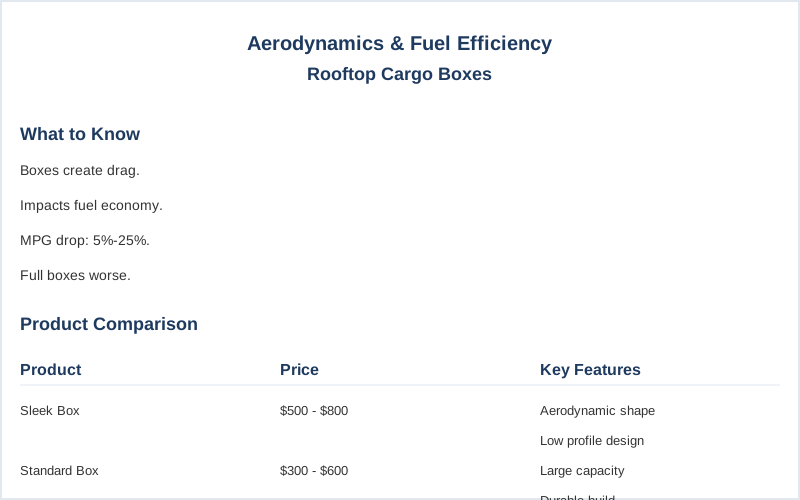
Studies have shown that this can knock off anywhere from 5% to 25% of your fuel economy, depending on the box shape, size, and how full it is. A full box is generally worse than an empty one, but even an empty box changes the airflow. lets go aero references studies showing up to a 25% reduction. That's a lot of extra cash spent on gas. For example, if your car normally gets 30 mpg, a 25% hit means you're suddenly only getting 22.5 mpg. That adds up on a long road trip. It's a rookie mistake to think you can just slap it on and forget about it. The honest version is that efficiency takes a hit. The real move is to consider if you absolutely need that extra space. My friend Dave learned this when he drove his SUV from Chicago to Denver with a fully loaded box and spent a fortune on gas. He said he could have practically flown there for the cost of fuel. The physics don't lie; more drag means more fuel. It's not rocket science, but it is science.
To maximize your road trip experience, consider exploring the best options for rooftop cargo boxes that balance capacity and fit.
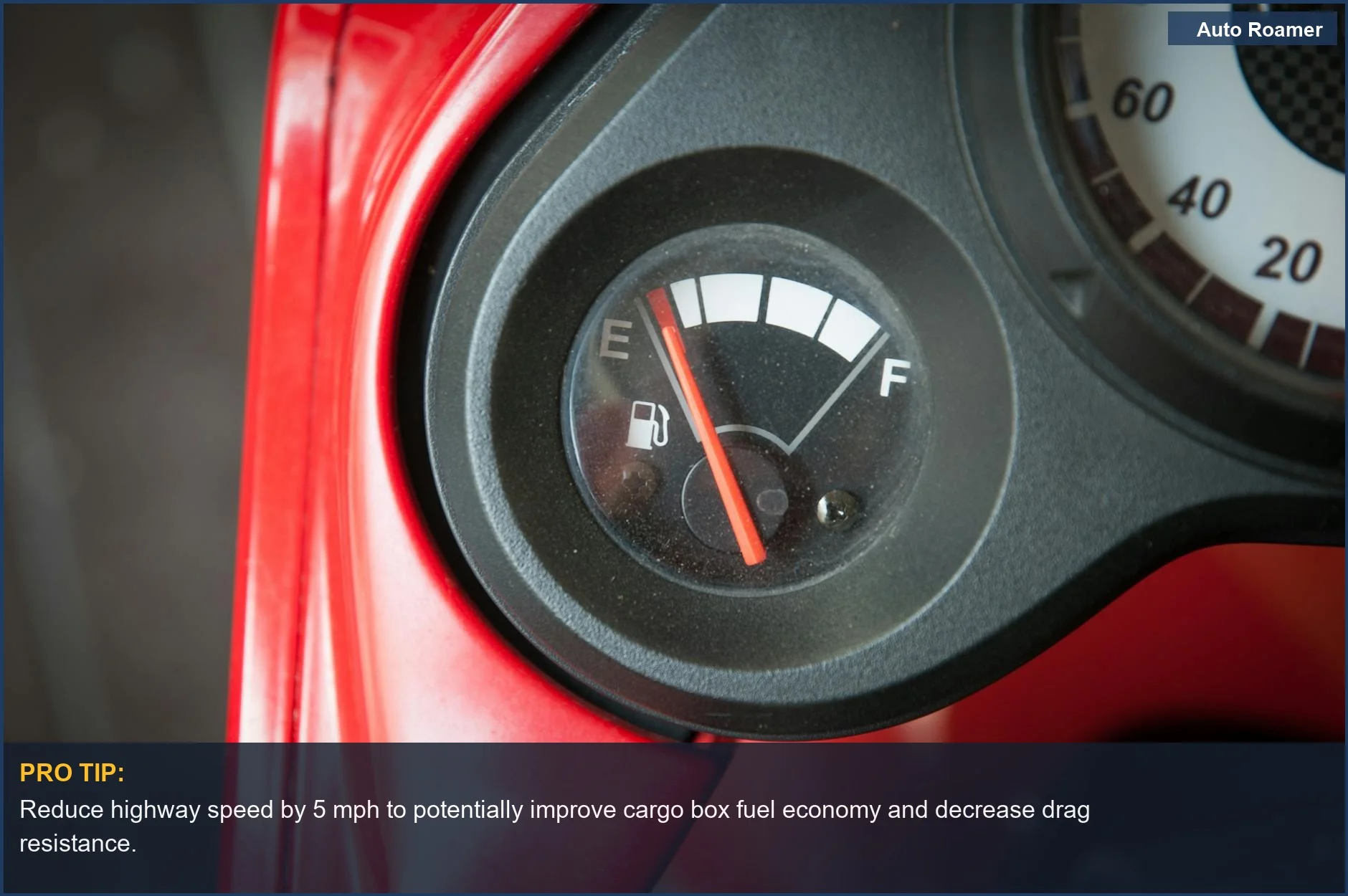
Monitor your fuel gauge closely; a 10% drop might indicate significant aerodynamic drag from your rooftop cargo box.
Observe your car's dashboard; a fluctuating fuel gauge can be an early sign of how rooftop box drag affects your MPG. | Photo by Jonathan Cooper

Why This Matters for Your Setup

So, why does this matter when you're packing for your weekend adventure? Because that extra space comes at a cost, literally. If you're doing a lot of highway driving, that impact on your MPG can really add up. jegs mentions a 15-35% drop. That's a significant chunk of change.

Think about it: if your car gets 20 mpg, and a box drops you to 15 mpg, that's a 5 mpg difference. Over 500 miles, that's an extra 33 gallons of gas. At $4 a gallon, that's an extra $132 just for the privilege of having that box on top.

It's a classic trade-off. You gain cargo space, but you lose fuel efficiency. For shorter trips, it might not be a big deal. But for longer road trips, it's something to seriously consider. My buddy Kevin always packs his rooftop box to the brim for his family's annual camping trip. He complains about the gas prices every single year, but he still won't leave the box at home. Brilliant engineering, right?

The weight of the box itself, plus the gear inside, contributes to the drag. It's a two-pronged attack on your fuel economy. The more stuff you cram in, the more resistance you create. rooftop overland notes that even empty baskets reduce efficiency. It's not just about the box; it's about what you put in it and how it changes your car's shape.

To maximize your space, consider what kind of gear you can pack in a roof rack cargo box, like our tips on what to pack.
Reduce highway speed by 5 mph to potentially improve cargo box fuel economy and decrease drag resistance.
When your fuel gauge reads low, remember that rooftop cargo boxes can significantly decrease your car's fuel economy on long drives. | Photo by Srattha Nualsate

Making the Right Choice

When you're deciding whether to strap that cargo box to your roof, weigh the benefits against the costs. The space is great for bulky items, but the hit to your fuel economy is undeniable. youtube has videos showing the MPG difference.

If you're planning a long haul, consider alternatives like hitch-mounted carriers or even a good old-fashioned roof rack with straps if the gear isn't too bulky. These can sometimes offer a better balance between carrying capacity and aerodynamic impact.

My first few trips were all about maximizing space, and I paid for it at the pump. Now, I'm more strategic. I ask myself if I *really* need that extra cargo capacity for every trip. It's about making informed decisions, not just throwing everything on the roof because you can. The honest version is that it's a compromise. You either sacrifice some fuel economy for space, or you sacrifice some space for fuel economy.

Think about your typical trips. If it's mostly short drives, the MPG hit is minimal. If it's cross-country adventures, every mile per gallon counts. It's the $50 version of this problem: do you spend $50 on a hitch extender, or $200 on extra gas over a trip?
To maximize your roof space, consider pairing your rack with a properly sized roof rack cargo box.
Choose aerodynamic cargo box designs; they can reduce drag by up to 15% compared to boxy alternatives.
Even on an electric car, the aerodynamics of a rooftop box matter. Minimize drag for better overall energy efficiency. | Photo by Cedé Joey

Frequently Asked Questions

I saw a used cargo box for $150, but a new one is $500. Is it worth it to save money and get the used one, or is there a hidden cost?
A used box is a great way to save cash, especially if you're just trying it out. The main hidden cost isn't financial, it's making sure it's still structurally sound and doesn't have cracks that let water in. A cheap, leaky box is worse than no box at all. I'd check the latches and seals carefully; if they're degraded, you might spend more on waterproofing it than you saved.
Do I really need a special torque wrench to install my rooftop cargo box, or can I just tighten the bolts until they feel snug?
Look, I've installed more than my fair share of gear, and 'snug' is a dangerous word. For a rooftop box, you absolutely need to follow the manufacturer's torque specs. Overtightening can crack the plastic or strip the threads, which is a rookie mistake. Undertightening means that box could literally fly off your car at 70 mph. That's not a joke, and it's definitely not the $50 version of safety.
What if I install a cargo box and my car still feels sluggish and my MPG tanks, even though I didn't pack it that full?
Even an empty box creates drag. If your car's MPG is still bad, you might have a box that's just not very aerodynamic, or perhaps your crossbars themselves are creating a ton of noise and turbulence. Sometimes, the weight of the box itself is enough to make a difference on smaller engines. The honest version is that some boxes are just worse than others, and physics doesn't care how lightly you pack.
Can driving with a rooftop cargo box for a long time permanently damage my car's roof or paint?
If the box and its mounting system are installed correctly and regularly checked, it's unlikely to cause permanent damage. The real risk comes from dirt and grit getting trapped between the box, the mounts, and your roof, which can cause scratches over time. Also, if the mounts aren't properly padded, they can dent your roof over many miles. My buddy's Civic got some nasty paint scuffs from a poorly secured box after a long trip.
Is it true that if I just leave my rooftop cargo box on my car all the time, it's basically the same as having a permanent roof rack, and the MPG hit is constant?
That's pretty much the real move, yeah. Leaving a box on your roof all the time means you're constantly fighting drag, even when you don't need the extra space. It's like wearing a winter coat on a summer day. A bare roof rack still creates some drag, but a full box is significantly worse. The MPG hit is definitely there, day in and day out, and it adds up faster than you think.

🏅 Looking for Gear Recommendations?

Check out our tested gear guides for products that work with this setup:

C

Casey - The Weekend Warrior

Weekend car camper and road trip enthusiast. Focuses on practical, budget-friendly solutions for families and first-time campers.

Sources

Related Articles