Start here: do you actually want a basket, or a box?
As an Amazon Associate we earn from qualifying purchases.
The first rooftop-cargo decision isn’t which basket — it’s whether a basket is even the right tool for how you pack. Based on published specs and what owner reviews consistently report, an open metal cargo basket and an enclosed cargo box solve different problems, and buying the wrong one is the mistake people regret first.
An open basket is cheap, hauls awkward, dirty, or oversized gear a box can’t close around, and lets you stack tall loads or strap on a spare cooler. A box is sealed, quiet, and aerodynamic but costs more and caps how tall your load can be. For car camping — muddy boots, a folded tent, a gas can, a bag of firewood — the basket’s open, hose-it-out flexibility is often the point.
Everything below is drawn from manufacturer specs and the patterns across owner reviews and tested gear roundups, not from any personal field test. We’ll go in the order the decision actually runs: basket vs box, then construction, then how it mounts to your roof, then the load math, then keeping your gear dry. If a sealed, weatherproof load is what you really need, our rooftop cargo box guide is the better starting point.
Open basket vs enclosed box: pick the right tool
This is the fork that decides everything after it, and it’s a genuine trade-off rather than a winner. Owner reviews and gear roundups line up consistently on what each gives up.
An open cargo basket wins on versatility and price. It carries odd shapes, tall or dirty loads, and gear you’d never want inside a sealed box — a fuel can, a wet tent, recovery boards — and you can lash a cooler or duffel on top of an already-full basket. It’s also easy to load, easy to hose out, and far cheaper. The costs: it protects nothing from rain or road grit on its own, it’s noisier, and the exposed load drags more and hurts fuel economy.
An enclosed cargo box wins on protection and aerodynamics: a sealed, lockable, weatherproof shell that’s quieter and slipperier through the air. The costs are the price, the limited interior height (no stacking tall gear), and the bulk to store when it’s off the car. The honest rule: choose a basket when your camping gear is bulky, dirty, irregular, or occasionally oversized; choose a box when you’re hauling clothes, bedding, and dry goods that need to stay clean and locked.
Steel vs aluminum: strength, rust, and weight
Once you’ve settled on a basket, construction is the next real choice, and it’s almost entirely steel versus aluminum. Each is a different set of compromises owners report living with.
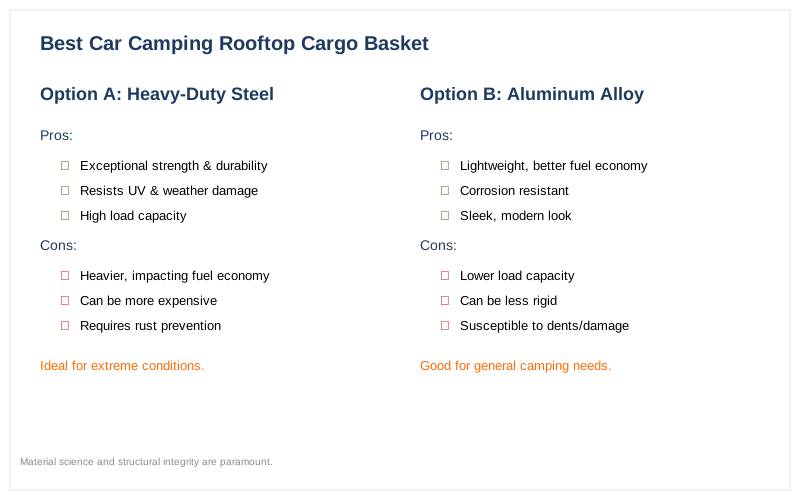
- Steel baskets are stronger for the money and shrug off abuse, which is why they dominate the budget end. The catch is weight (heavier baskets eat into your roof-load budget before you pack a thing) and rust — a powder-coat finish is what stands between steel and corrosion, so inspect welds and coating, and touch up any chips before they spread.
- Aluminum baskets are markedly lighter and don’t rust, which leaves more of your dynamic load for actual gear and survives wet, salty conditions better. The trade is a higher price and, on cheaper extrusions, less ultimate strength — fine for normal camping loads, less ideal for heavy abuse.
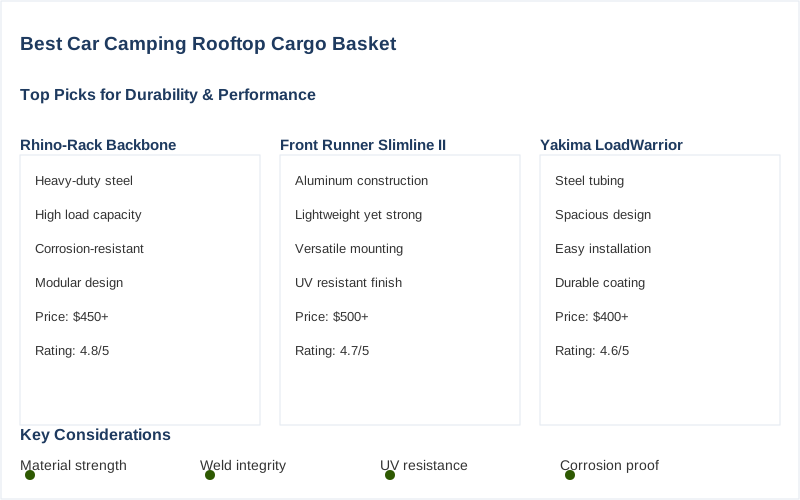
Look past the metal to the joinery: fully welded baskets are stiffer and more durable than bolt-together ones, which can loosen and rattle over washboard roads. Whatever the material, the finish quality and the welds tell you more about how it’ll age than the headline weight rating does.
How it mounts: the fit check most buyers skip
A basket is only as good as its attachment to your roof, and mounting fit is where owners most often find their new basket doesn’t actually work with their car. Three things have to line up.
- Crossbar-mount vs direct-to-rail. Most baskets clamp to a pair of crossbars, so you need crossbars first — bare factory side rails alone usually aren’t enough. Confirm whether your vehicle has crossbars or just rails, and budget for bars if not.
- Bar profile and clamp fit. Basket clamps are made for specific bar shapes (round, square, aero, or T-slot). Match the basket’s hardware to your bars or plan on adapters — a mismatch is the most common return reason in reviews.
- Footprint and overhang. The basket should sit within your bar spread and roofline, not hang past the windshield or off the sides where it whistles and stresses the mounts. Measure your roof and bar spacing before you buy.
If you don’t have a solid crossbar setup yet, that’s the real first purchase. Our roof rack for camping gear guide covers matching bars to the load a basket will carry.
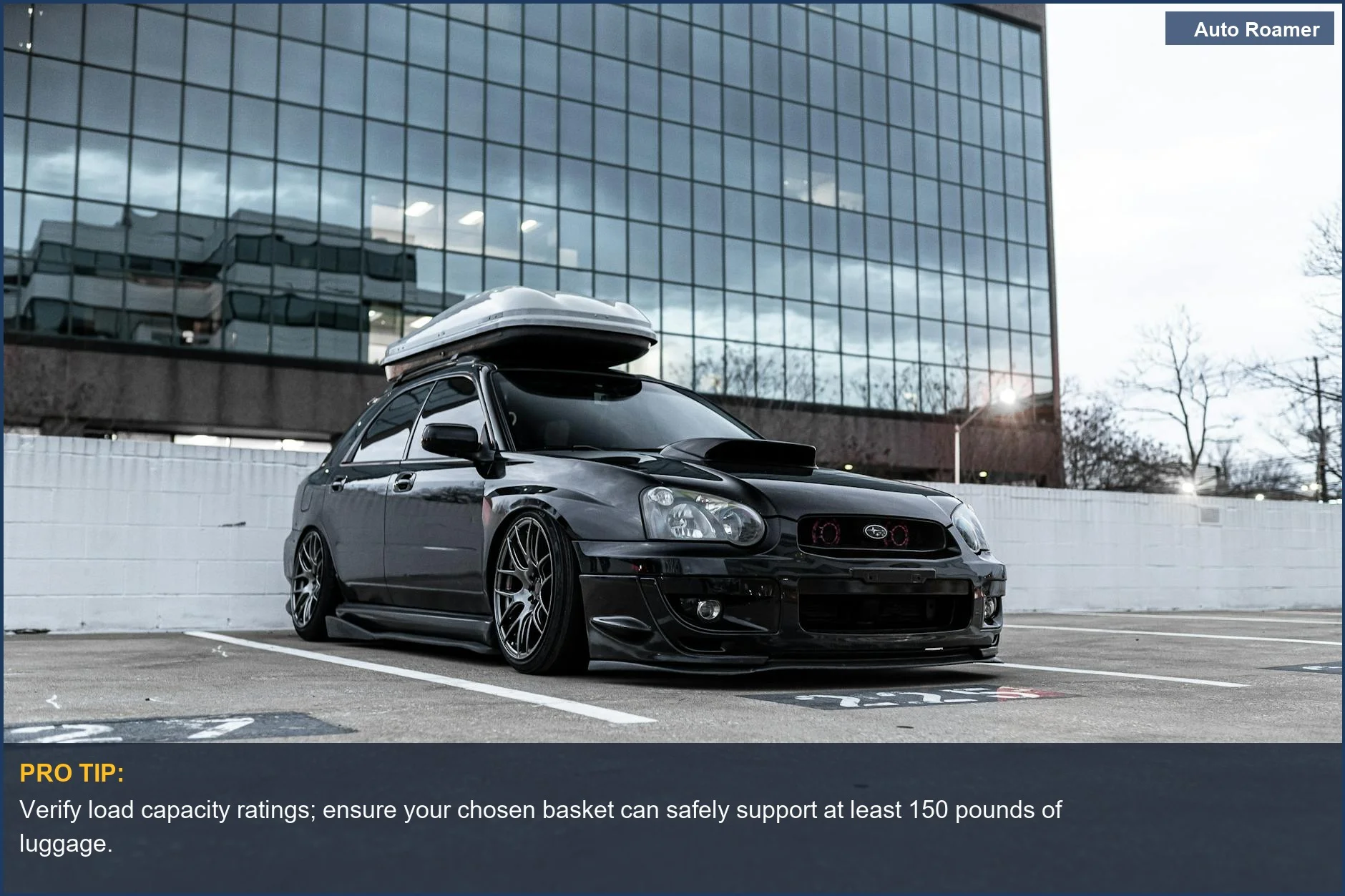
The load budget: basket weight plus gear, against the dynamic limit
Here’s the number that quietly governs the whole setup, and it’s the one buyers skip. Your roof’s dynamic load rating — the safe limit while driving — is often only around 75 kg (~165 lb) on passenger cars and crossovers, and it has to cover the crossbars, the basket itself, and everything you pile in.
A heavy steel basket can claim 30–40 of those pounds before you load a single bag, which is exactly why a lighter aluminum basket buys you more usable capacity on a car near the limit. Add up bars + basket + gear and keep it comfortably under the dynamic rating — not at it.
The static rating (parked) is much higher, but it’s the driving number that matters because washboard roads and highway bumps multiply the forces. Find both figures in your owner’s manual or on the maker’s site, weigh your gear honestly, and remember that an overloaded roof raises your center of gravity and hurts handling long before it ever fails. When the math is tight, the fix is less weight up top — lighter basket, lighter load, or moving heavy items inside the cabin — not hoping the rating has slack.
Keeping gear dry: a basket protects nothing on its own
This is the open basket’s one real weakness, and it’s entirely solvable with two cheap accessories owners treat as mandatory rather than optional.
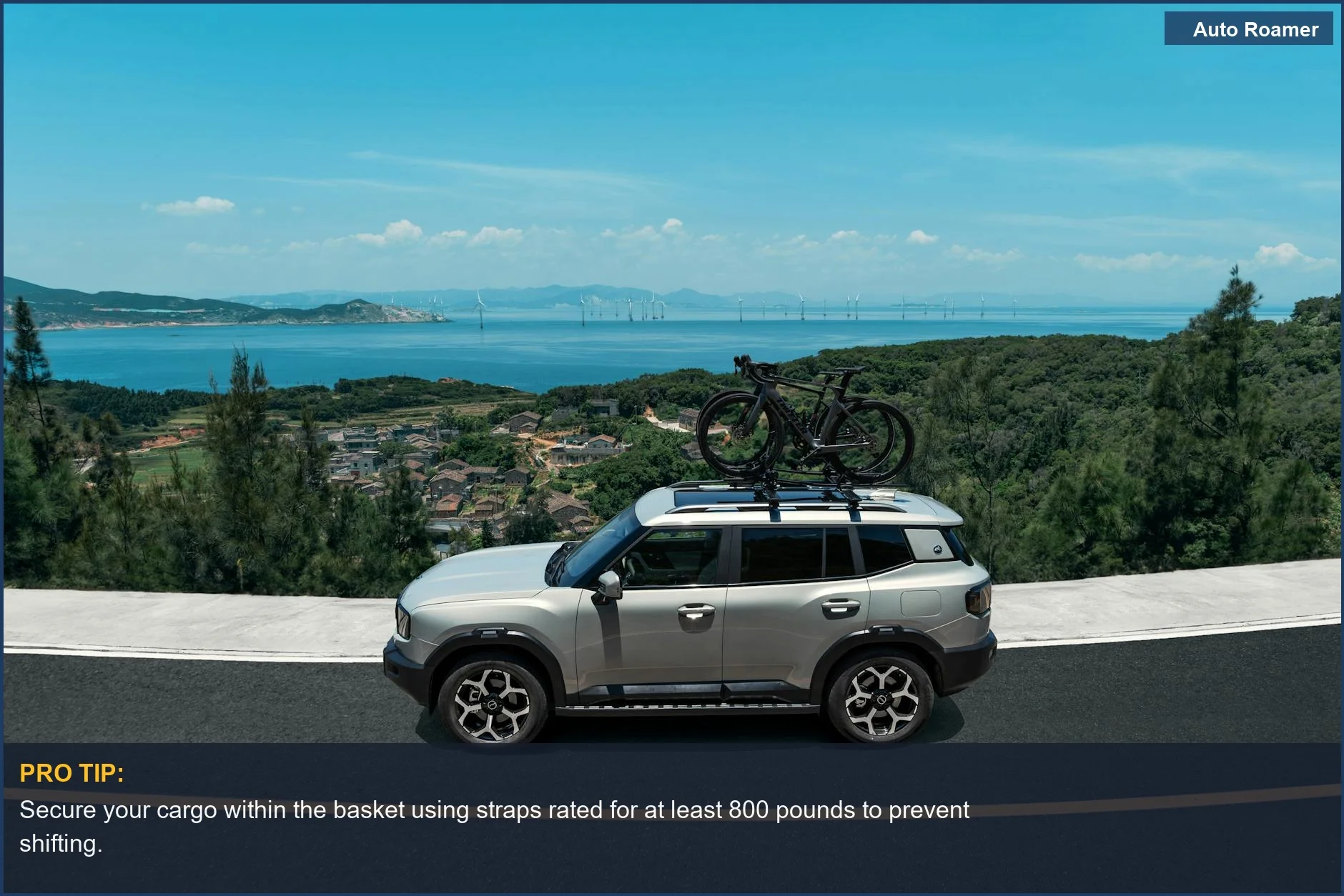
First, a cargo net or ratchet straps to actually secure the load. An open basket holds nothing in by itself; a stretch net over the top, plus straps for anything heavy, is what keeps gear from shifting or launching at highway speed. Treat it as part of the basket, not an upsell.
Second, a waterproof cargo bag that sits inside the basket. Because the basket is open to rain, road spray, and grit, a sealed duffel-style bag is how your sleeping bags and clothes stay dry — the basket carries the bulk, the bag does the weatherproofing a box would otherwise provide. Many campers pair a basket with a bag precisely to get a box’s dryness without a box’s height limit or price. Budget for the net and a waterproof bag alongside the basket itself, and a good cargo net turns the open basket from a liability in weather into the more flexible choice.
Decision snapshot: basket or box, steel or aluminum
The trade-offs at a glance, drawn from published specs and the consensus across owner reviews and tested gear roundups — read it as a decision table, not a ranking.
| Factor | Open basket | Enclosed box |
|---|---|---|
| Best for | bulky, dirty, oversized, odd-shaped gear | clean, dry, lockable loads |
| Weather protection | none alone (needs net + waterproof bag) | sealed and weatherproof |
| Noise / aero | noisier, more drag | quieter, slipperier |
| Load height | stack tall; strap extras on top | capped by the lid |
| Price | lower | higher |
| Material (basket) | steel = strong/heavy/can rust; aluminum = light/no-rust/pricier | — |
Run it top-down: pick basket or box for how you pack, then (for a basket) steel or aluminum for your weight budget, then confirm the mount fits your bars, then add the net and bag. A well-reviewed cargo basket sized to your roof and bars beats a bigger one your car can’t carry.
The bottom line: a basket is the flexible, hose-it-out choice
The best car-camping rooftop cargo basket is the one that fits how you actually pack, mounts securely to the bars you have, and stays within your roof’s dynamic load with room to spare. Decide basket-or-box first, because no feature matters if a sealed box was what you needed all along.
If your gear is bulky, dirty, or oddly shaped — the reality of car camping — an open basket is the right tool: cheaper, more versatile, and easy to clean. Go aluminum if your roof is near its load limit, steel if you want maximum strength for the money and you’ll keep the coating intact.
Then make the open design work for you: confirm the clamps match your bar profile, add a cargo net and a waterproof bag so weather stops being the basket’s weakness, and keep bars-plus-basket-plus-gear comfortably under the dynamic rating. Decide in that order — basket vs box, material, fit, weatherproofing — and the ‘best’ basket is simply the well-reviewed one that matches your vehicle and your gear. If a sealed, lockable load is what you’re really after, our rooftop cargo box guide covers that side of the choice.