First, the Basics
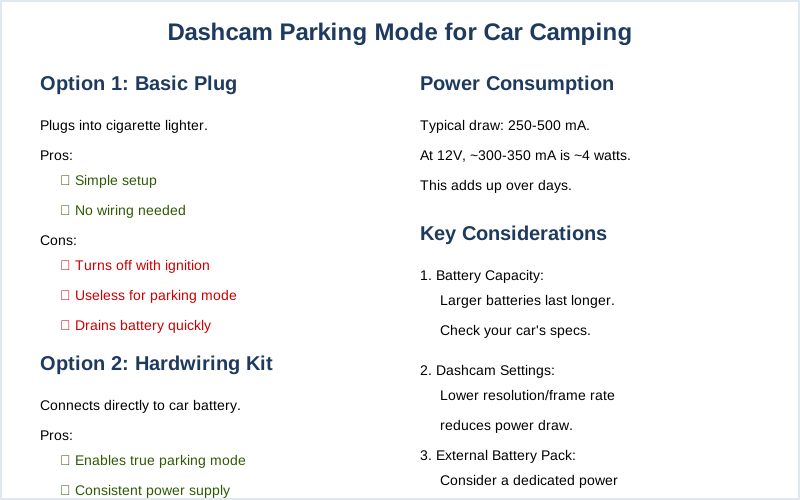
Parking mode on a dashcam is that feature that keeps it recording even when your car's engine is off. It sounds simple, but understanding its power draw is crucial for anyone planning an extended car camping trip. You don't want to wake up to a dead car battery because your camera was being a little too vigilant. Dashcam parking mode is a feature that lets your camera keep recording even when your car's engine is off.
This means it can capture events like vandalism or hit-and-runs while you're away from your vehicle. It essentially turns your dashcam into a constant surveillance system for your car. Most dash cameras on the market draw between 250 to 500 milliamps of current from the vehicle's battery while parked. This can quickly drain the battery if the car remains unused for days.
My first attempt at this left my Civic completely dead after just two nights at Ricketts Glen State Park in Pennsylvania, in late spring. Brilliant engineering. The fix wasn't fancy, just understanding the real power needs.
The Core Answer
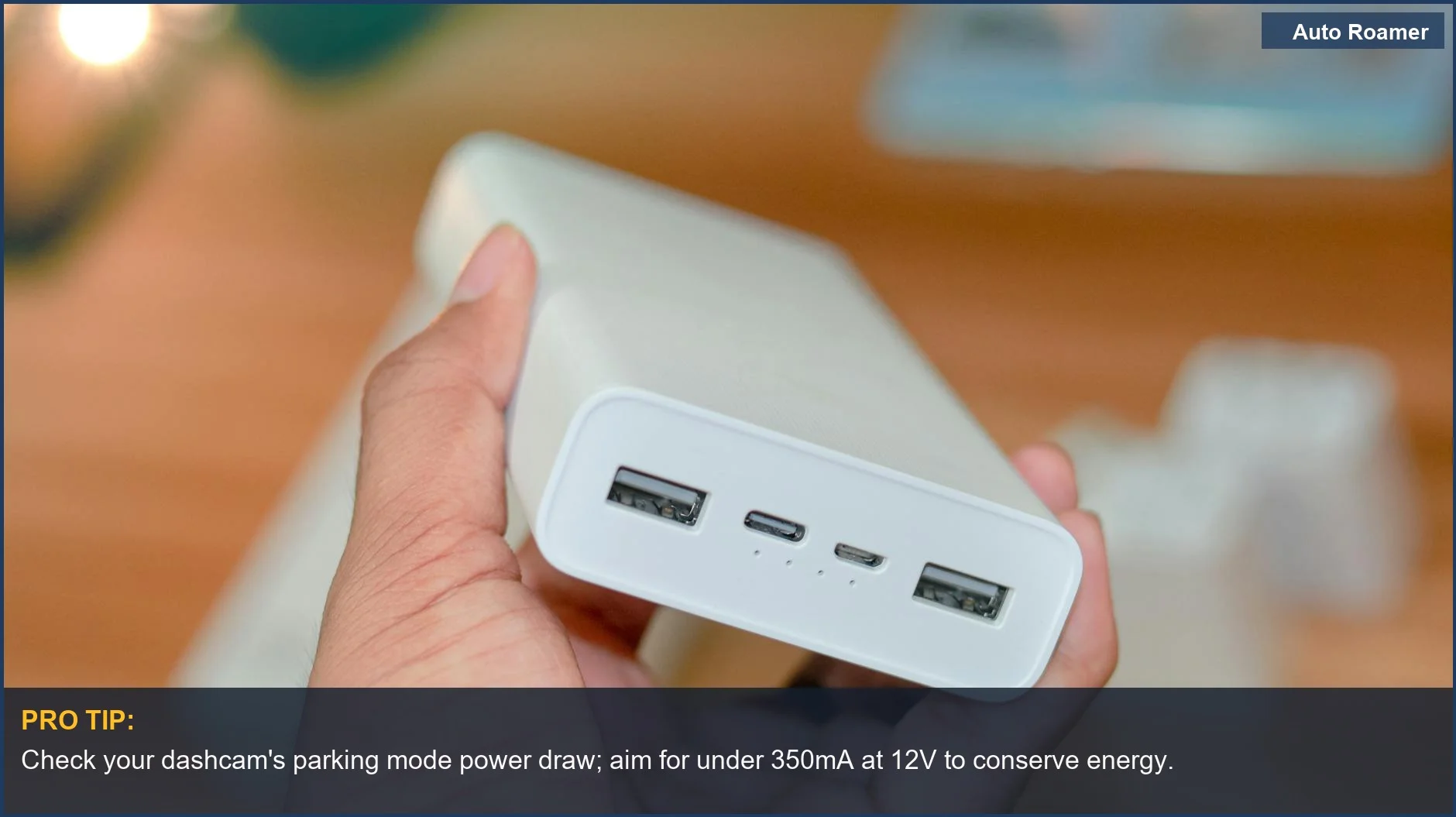
The core answer to keeping your dashcam running in parking mode without killing your car battery is understanding its power consumption and having a plan. Most dashcams, when actively recording in parking mode, can draw somewhere around 300 to 350 milliamps (mA) at 12 volts. That translates to roughly 4 watts of power per hour. This isn't a huge amount for a short period, but over a few days, it adds up.
My first car camping trip, I used a basic setup that just plugged into the cigarette lighter. Turns out, that port turns off with the ignition, rendering parking mode useless. Rookie mistake. The honest version is you need a way to bypass that. Hardwiring kits are the most common way to do this. These kits tap directly into your car's fuse box, providing constant power. You do NOT want your dashcam to turn off just because you're sleeping.
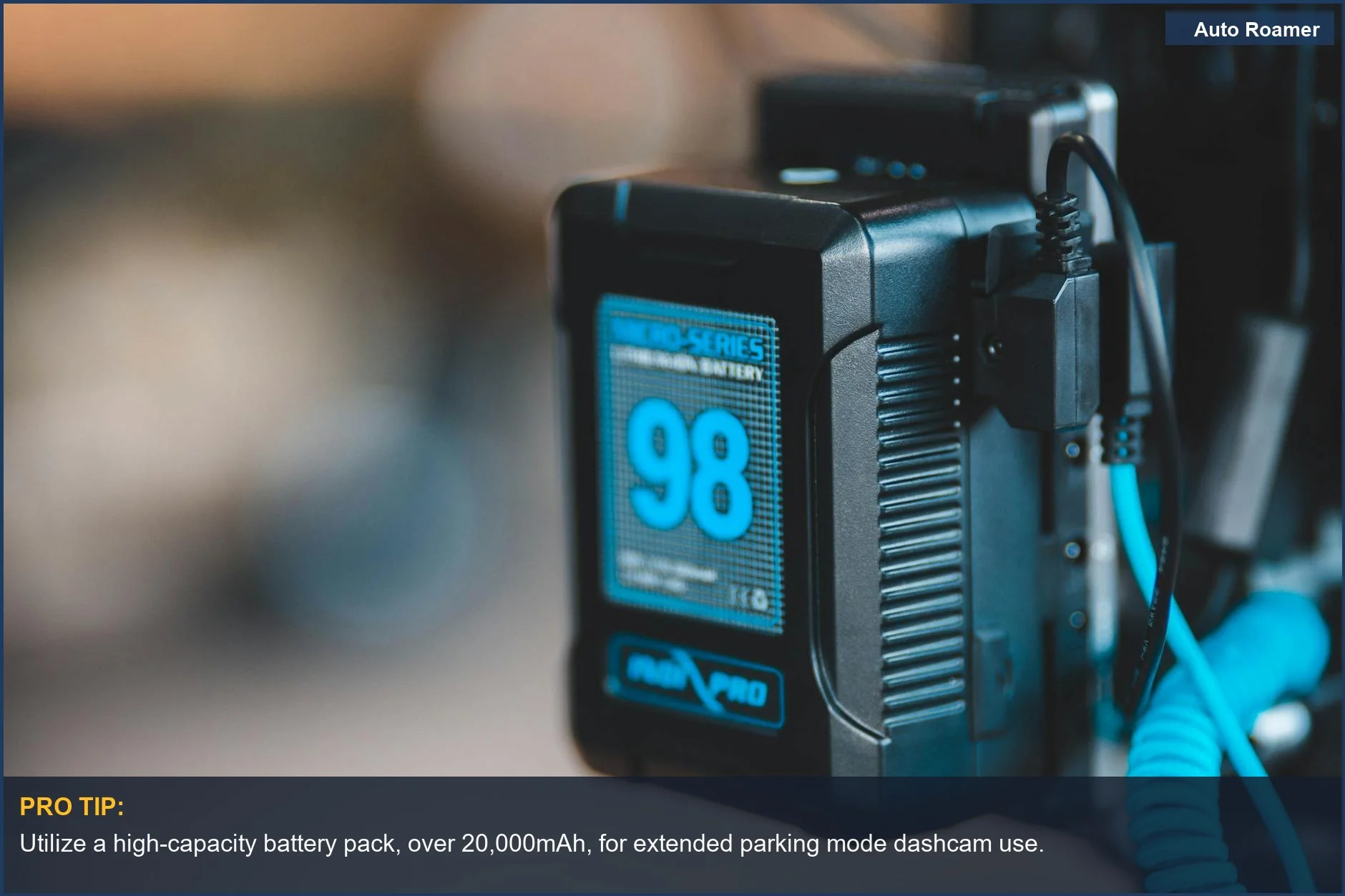
That's the whole point of parking mode. I learned this the hard way when someone dinged my door in a grocery store parking lot and my camera was off. The real move is a dedicated power source. Some cameras have built-in batteries, but those are usually only good for a few hours. For extended trips, you're looking at a dashcam battery pack or a more robust hardwiring solution that includes a voltage cutoff.
This prevents the dashcam from draining your car battery completely. Without a cutoff, you'll be calling roadside assistance. I had a friend who forgot this on a weekend trip and his Subaru Outback wouldn't start on Monday morning. That's a $50 tow truck ride versus a $30 power management device. You do the math.
Why This Matters for Your Setup
Why this matters for your setup is pretty straightforward: you don't want to be stranded. Here's the breakdown:
- Battery Drain is Real: Even a small draw adds up. Over 24 hours, a dashcam using 4 watts can drain a significant chunk of your car's battery capacity. My first car camping trip, I thought I'd be fine for two nights at Shenandoah National Park. I was wrong. The car wouldn't even turn over on the third morning.
- Parking Mode Needs Constant Power: If your dashcam is plugged into a port that turns off with the ignition, parking mode is essentially useless. You need a constant connection to the battery, either through a hardwire kit or a dedicated battery pack. This is the $50 version of peace of mind, as opposed to a $150 tow.
- Voltage Cutoff is Your Friend: For extended trips, a dashcam battery pack or a hardwire kit with a built-in voltage cutoff is non-negotiable. This feature stops the dashcam from draining your car battery below a certain point, usually around 12 volts. Prevent battery drain by ensuring your dashcam parking mode's cutoff voltage is set above 12V. My friend learned this the hard way after his battery died on a camping trip in the Rockies.
- Know Your Needs: A quick overnight trip might be fine with a basic setup, but anything longer requires more serious power management. Think about how long you'll be parked without running the engine. For a long weekend, a dedicated battery pack is usually the way to go. My second trip involved a three-day stay at Assateague Island, and my battery pack held up perfectly.
Making the Right Choice
Making the right choice here boils down to how long you'll be car camping and your risk tolerance.
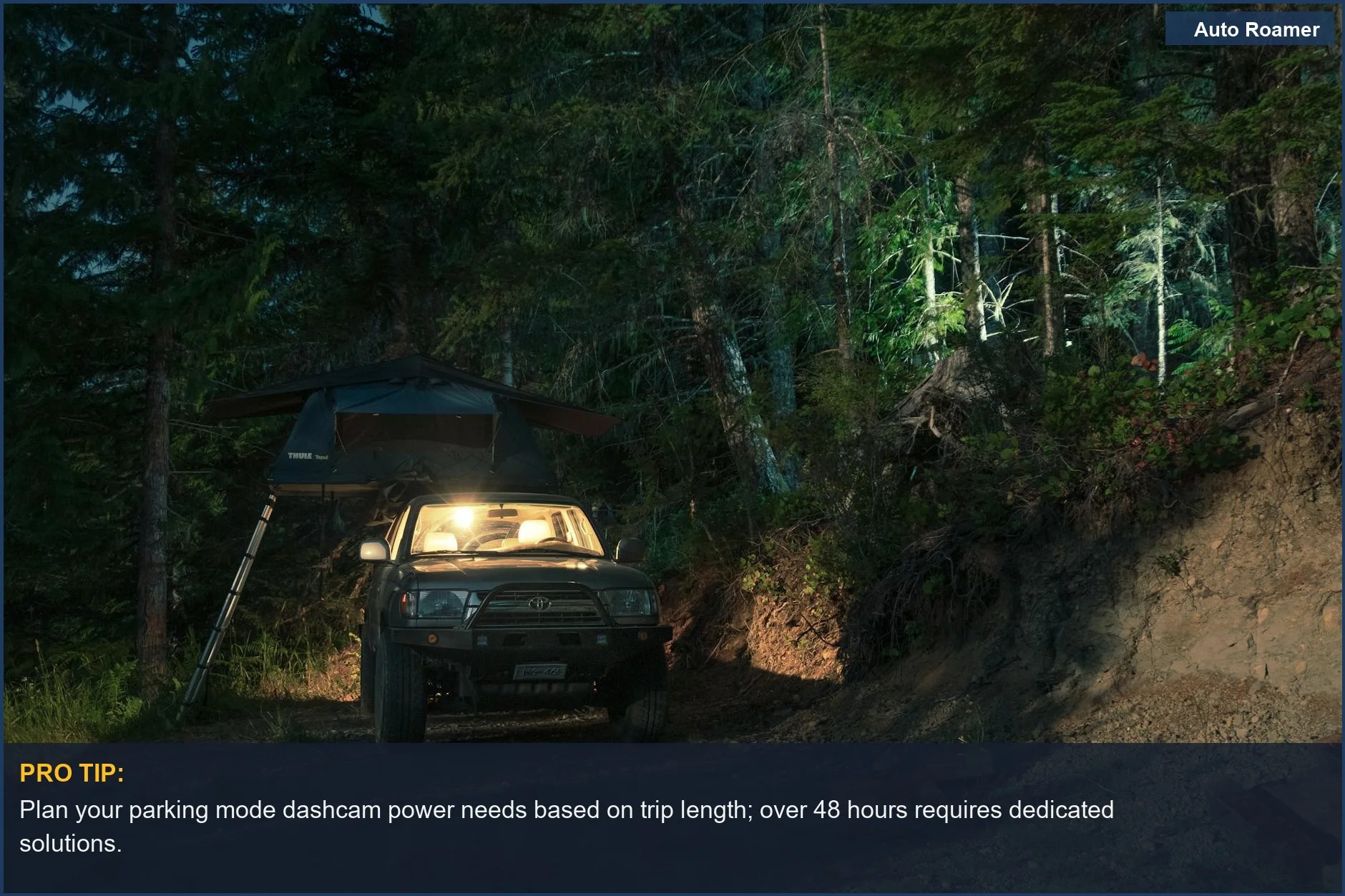
- Assess Your Trip Length: For a single overnight, you might get away with a standard dashcam and a prayer, though I wouldn't risk it. For anything longer than 48 hours, you absolutely need a plan. My first attempt at a 3-day trip was a disaster. They don't use much power at all, but parking mode can draw down a car's battery if the car is sitting for a long time.
- Consider a Dashcam Battery Pack: These are often the easiest solution for beginners. They charge while you drive and then power the dashcam for hours when the engine is off. My battery pack got me through a full weekend at the Outer Banks without a hitch.
- Hardwiring for the Dedicated: If you're comfortable with a little DIY, a hardwiring kit with a voltage cutoff is a solid, permanent solution. It's a bit more involved than just plugging into a USB, but it's reliable. The dealer wanted $280 to install mine, but I did it myself for $15 in parts. The dealer wanted $280 to install a hardwire kit for my dashcam's parking mode.
That's a 30-minute job with a $15 add-a-fuse and a $10 ground ring terminal.
- Low Power Mode is King: If you're buying a new dashcam, look for models that explicitly mention low power consumption in parking mode. Some brands are significantly more efficient. The Vueroid D20 Q2 installed here draws a mere 2 milliamps of current when in parking mode. That's a huge difference. It's not about having the fanciest camera, it's about having one that won't leave you stranded in the middle of nowhere.