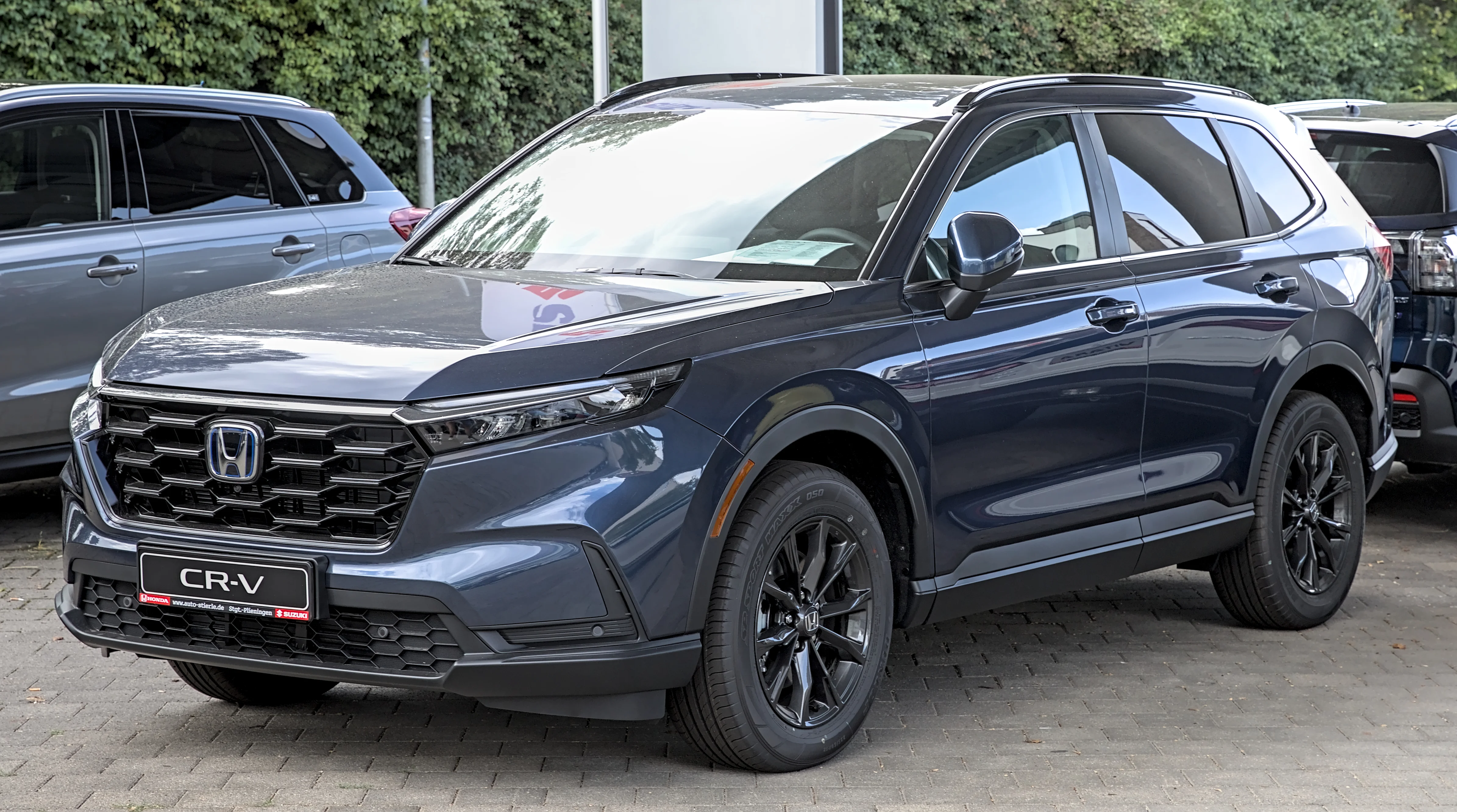
The CR-V's power, in one honest sentence
Plan the Honda CR-V as a vehicle with zero overnight power: every 12V socket dies when you pull the key, there is no household outlet in any trim, and the useful budget while the ignition's on is 180 watts.
I've mapped a lot of rigs for sleeping in, and the CR-V is one of the cleaner stories to tell precisely because it doesn't pretend to be a power station. It gives you a couple of 12V sockets, a good USB setup, and a device ceiling of 180 watts - and then it shuts all of it off the moment the car is truly off. That's not a flaw; it's just the design, and once you know it, you build around it and never get surprised at 2 a.m.
This page walks the CR-V's actual sockets, the fuses behind them with their amp ratings, the two persistent myths worth killing (a constant socket, and a 110-volt outlet - neither exists on the CR-V), and the overnight plan that a switched-power car forces you into. Where a number is aggregator-sourced rather than straight from Honda, I say so, because a wrong fuse number is worse than no number when you're wiring a fridge a long way from a parts store.
Worth setting expectations up front: a good number of crossovers in this class lean on a marketing line about power; the CR-V simply skips that. There's no 1,500-watt inverter badge, no 'camp mode', no dedicated bed outlet - just honest 12-volt plumbing that Honda spec-sheets plainly. That's easier to plan against than a headline feature you have to read the fine print on. Treat the sections below as a checklist you can walk with a multimeter and a flashlight: sockets first, then the watt ceiling, then the switching behavior, then the fuse slots, then the two myths, and finally the sleep plan that all of it adds up to. Nothing here needs a wiring harness to make sense.
Two live sockets, and a cargo circuit that may not be yours
Honda keeps the CR-V's 12V layout simple, with a catch on the third socket. On the current 6th-generation car, you get a front accessory socket in the center-console area, plus a USB pair up front. There's also a dedicated cargo-socket circuit - Honda's fuse tables list a 'CARGO ACC SOCKET' - but whether your specific US car actually has the physical outlet back there is genuinely ambiguous: aggregators flag it as if-equipped and note it's standard on some Canadian builds.
- Front accessory socket: the one everyone uses, in the console area, on every trim.
- Cargo socket: a real circuit in Honda's fuse list, but confirm the physical outlet exists in your cargo bay before you plan a fridge back there.
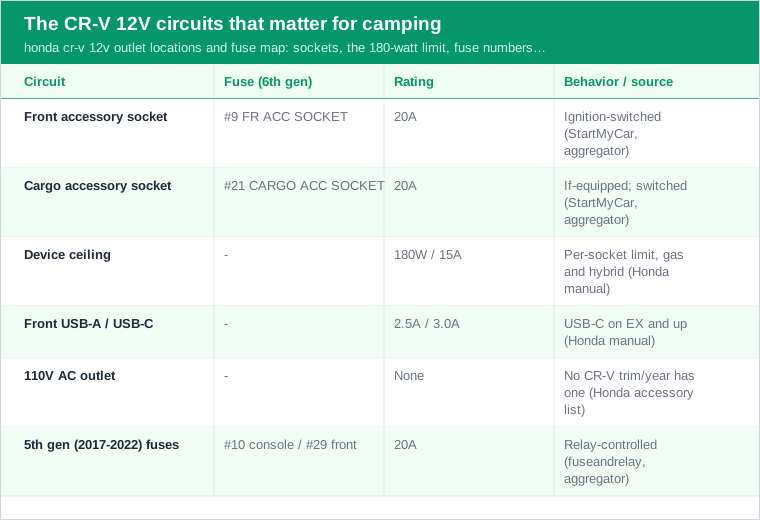
- USB: a front USB-A at 2.5 amps on all trims and a USB-C at 3.0 amps on EX and up, per Honda's manual - fine for devices, useless for a compressor.
The overlander's habit here: don't trust a wiring diagram for the outlet you're going to depend on. Open the cargo trim, look for the socket, and meter it. On a trip, the socket you assumed was there is the one that isn't.
The US/Canada wrinkle is worth dwelling on, because it's the single most confusing thing about this car's power. Honda's fuse tables are shared across markets, so the 'CARGO ACC SOCKET' slot shows up in the diagram even on cars that never got the physical outlet molded into the cargo panel. Aggregator listings describe it as if-equipped in the States and closer to standard on Canadian trims, and owner threads bounce between 'mine has it' and 'mine's a blank cap' - a pattern that reads as build-sheet variance, not a documentation slip. I've seen that exact split lead a camper to plan a rear fridge around an outlet that turned out to be a molded plastic plug.
The number to build around: 180 watts
Honda rates the CR-V's accessory sockets at 180 watts, 15 amps, and that figure holds across gas and hybrid on the current cars. It's the device limit, and it's a genuinely useful one - more headroom than the 120-watt compacts - so long as you respect it and don't read the 20-amp fuse as permission for more.
The 20-amp fuse protects Honda's wiring; the 180-watt rating protects your gear. Build to 180 and the CR-V's electrical system never becomes the thing that ends your night.
What 180 watts covers, all at once and comfortably: a 45-watt 12V compressor fridge, a fan, lights, and charging. What it won't do is run a heating element - a 12V kettle or a resistance blanket pulling hard is exactly the load that trips it. One honesty note on the older cars: a 2006-2011 CR-V was a 120-watt/10-amp system, so don't cross-apply an old forum number to a current car. If your CR-V is a 2017-or-newer, 180 watts is your line.
It helps to translate 180 watts into the loads you'll actually plug in, because the number stays abstract until you do:
- A 12V compressor fridge (40-60W running): comfortable, with headroom left for a fan and phone charging alongside.
- A laptop charger on a small inverter (65-90W): fine by itself, tight if the fridge kicks on at the same moment.
- A 12V electric mug warmer or kettle (150-200W and up): the load that blows past the ceiling - resistance heat is the one category these sockets simply won't serve.
The mental model: 180 watts runs cooling, lighting and charging together through the night, but it will not make heat. Anything with a glowing element belongs on a power station's high-output port, never on a Honda 12-volt socket.
Every socket dies with the key
This is the CR-V's defining power trait, and the one that decides your whole setup: none of its 12V sockets are constant. Honda's manual is explicit that the sockets operate only in the accessory or on position, and the guidance is to use them with the engine running to avoid draining the battery. No source I could find documents a factory always-on socket on any CR-V; the 5th-gen sockets are relay-controlled, consistent with switched. Pull the key, and the power's gone.
Why that matters more to a camper than a commuter: a switched socket can't run a fridge overnight without slowly killing the battery you need to leave in the morning. Most of the segment behaves exactly like the CR-V here - every factory socket switched - which is why our Toyota 4Runner 12V and fuse-map guide reaches the same overnight conclusion. The CR-V gives you none, so you carry your own power or you wire a fused direct-to-battery line. There's no third option that doesn't end in a dead start.
The failure mode deserves spelling out in slow motion, because it doesn't announce itself. Leave the CR-V in accessory to keep a socket live overnight and the fridge hums along happily for a few hours while the 12-volt starter battery quietly sags. By dawn the compressor may still be running, but the battery no longer has the cranking amps to turn the engine over - and a modern CR-V, electronic everything, is not a car anyone push-starts. The switched design is really Honda sparing you that scenario by default: no key, no draw. The downside is that the same rule offers zero help for the one job a camper wants, which is holding a cooler cold while nobody is behind the wheel.
The fuse map: front #9, cargo #21, and a generation caveat
Here's where to look when a socket goes dead, with an honesty flag up front: Honda's own techinfo site failed to load cleanly, so these fuse numbers are aggregator-sourced, not read off Honda's diagram. Verify against the label on your own fuse-box lid before pulling anything.
- 6th gen (2023+): #9 FR ACC SOCKET, 20A (front), and #21 CARGO ACC SOCKET, 20A - both in the interior box on the driver's side; the engine bay has no outlet fuse (StartMyCar).
- 5th gen (2017-2022): #10 for the console socket and #29 for the front socket, both 20A and relay-controlled, plus a cargo slot (fuseandrelay and StartMyCar agree).
One thing I won't do is hand you a number I couldn't corroborate: a floating claim of 6th-gen fuses '#12/#27' didn't match the fetched StartMyCar data and I've left it out. Which physical socket a fuse feeds is inferred from the labels, not spelled out by Honda. Treat this table as a strong starting point and confirm it on the lid - that's the difference between a five-minute fix and a chased gremlin.
The generational split is the part people get wrong most often, so it's worth separating cleanly. The 6th-gen car (2023 on) moved to a straightforward interior box where the socket circuits sit as their own labeled slots - #9 and #21 in the aggregator data - with no outlet fuse living under the hood. The 5th-gen car (2017-2022) routed its console and front sockets through relays, which is why you'll see relay-controlled noted beside #10 and #29: the fuse guards the circuit, but a relay decides when it's energized. Cross-applying a 5th-gen number to a 6th-gen box, or the reverse, is the classic way to burn twenty minutes on a fuse that has nothing to do with the socket that died.
One practical note on reaching the fuses at all: the interior fuse box sits behind a pull-off panel low on the dashboard's driver end, and Honda stows a small fuse puller inside the under-hood box rather than the cabin one. Grab that puller first, then hold the lid's printed legend against the slot numbers before pulling anything - the legend molded into the car always outranks a table read online, this one included.
The 110-volt outlet that was never there
Kill this myth before it costs you a heater plan: no Honda CR-V trim or model year, gas or hybrid, has ever come with a factory 110-volt household outlet. Honda's accessory sections list 12V sockets and USB, full stop. Owners who want AC add an aftermarket inverter. The recycled blog line that 'higher trims may get a 110V outlet' is unsupported - that's an Odyssey, Pilot and Ridgeline feature, not a CR-V one.
What to do instead if you need AC in a CR-V:
- Small loads: a compact inverter on the 12V socket runs a laptop charger, but stay under the 180-watt socket ceiling.
- Anything real: carry a power station with its own AC outlet - it's cleaner than an inverter and doesn't lean on the car at all.
The hybrid deserves its own sentence, because the badge fools people: the CR-V Hybrid's traction battery drives the wheels, it does not feed a household outlet. Hybrid or not, plan your AC power as if the car provides none, because it doesn't.
Where does the myth even start? Two places, mostly. First, cross-shopping: a buyer reads a CR-V review right after a Pilot or Ridgeline review, and the 110-volt outlet from the bigger Hondas bleeds across in memory. Second, the hybrid halo - people assume anything with a large battery must offer wall power, the way a handful of plug-in rivals genuinely do. Neither holds here. The CR-V Hybrid spends its pack purely on propulsion; there's no vehicle-to-load tap, no exportable AC, nothing on the spec sheet that turns those electrons into a socket. If a listing or forum post insists a top trim hides an AC outlet, read it as a copy-paste error and check Honda's own accessory catalog - the outlet isn't in it.
If a compact inverter is the route, size it honestly against that 180-watt socket ceiling rather than the inverter's own rating. A unit sold as '300-watt' will cheerfully try to pull more than the CR-V's circuit allows and pop the fuse under a real load, so a 150-watt continuous inverter is the saner match for laptop-and-camera duty. For a fridge or anything with a motor in it, skip the inverter idea entirely and go straight to a self-contained power station.
What survives an overlander's night: the power plan
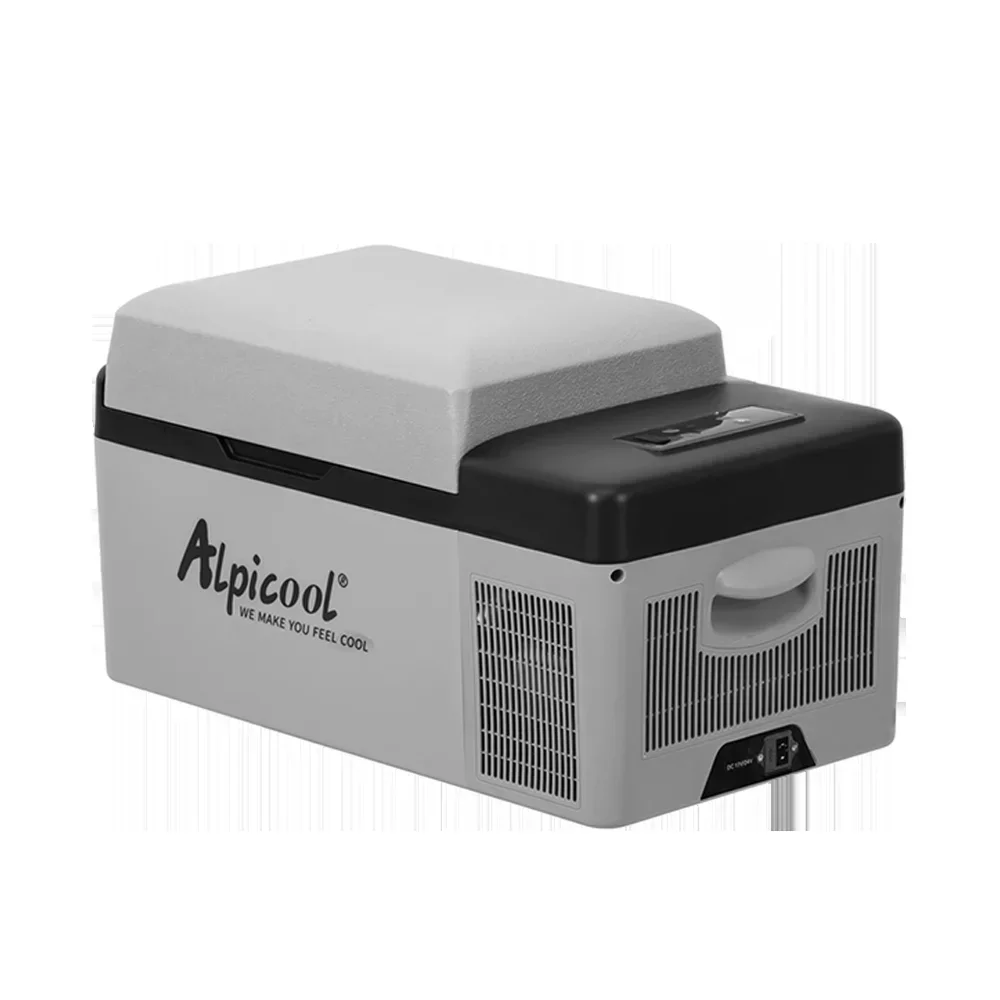
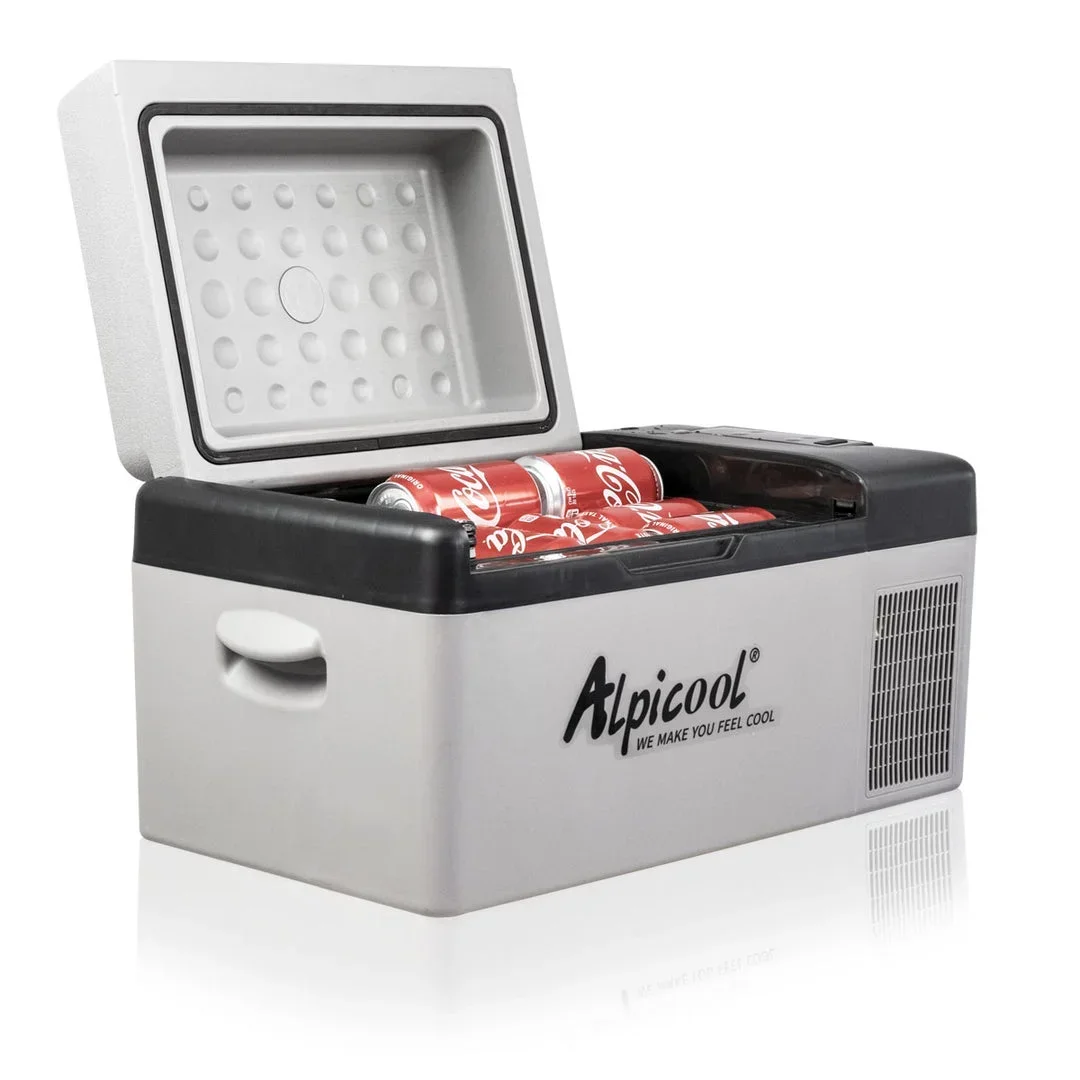
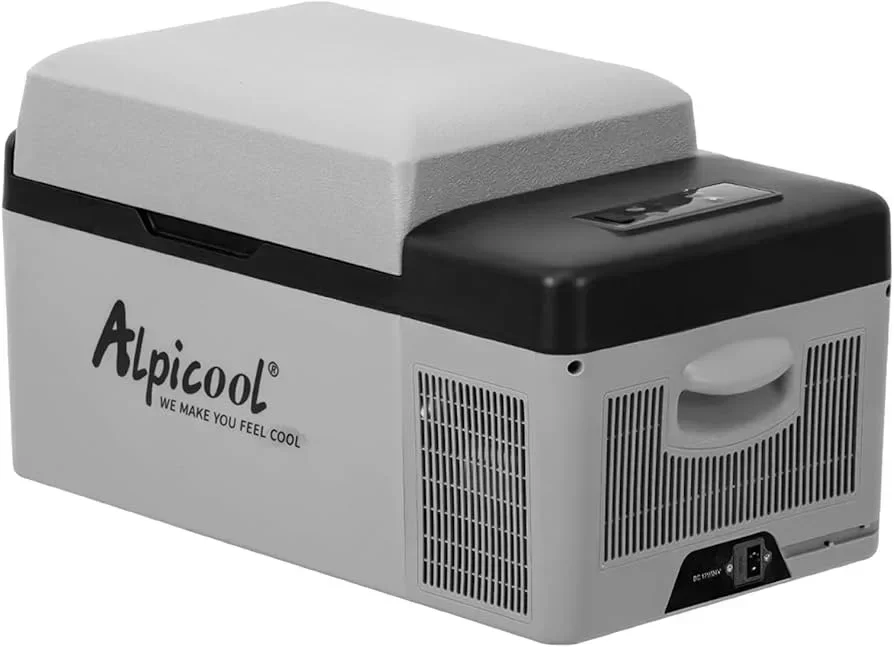
Put it together and the CR-V's switched, no-AC layout points to one reliable setup. Because the sockets die with the key, the thing you never want to do is run a Alpicool C20 fridge straight off a CR-V socket overnight - it either quits when the car's off or, if you leave accessory power on, drains the start battery. Two hundred miles from the nearest parts store, that's the failure mode that strands you.
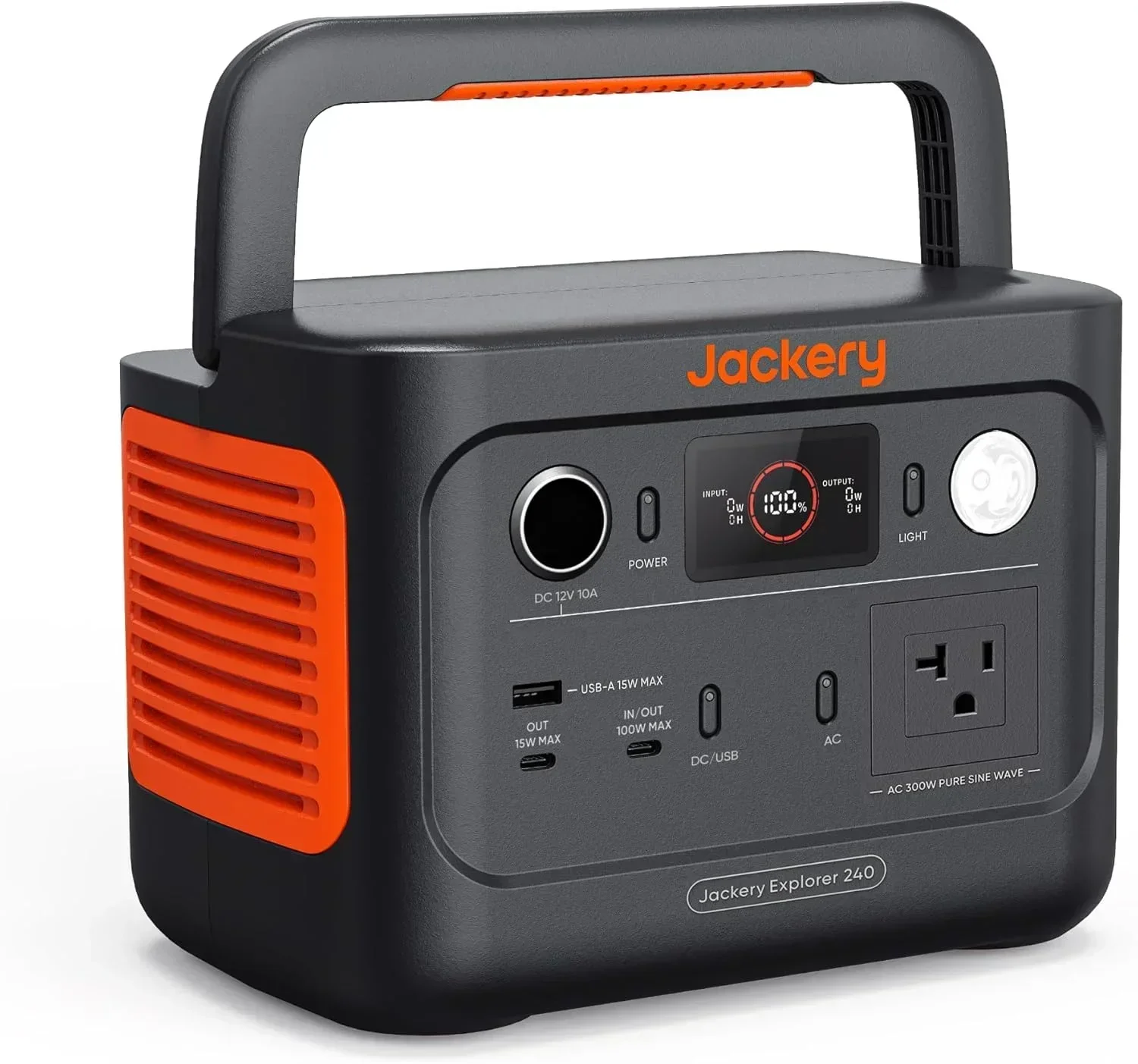
The plan I'd run: a Jackery Explorer 240 v2 power station carries the fridge, a fan and a night of charging off its own 256 watt-hours, then recharges from the 12V socket while you drive to the next camp - the car's battery never gets touched. If you camp often enough to justify it, a fused direct-to-battery lead with a low-voltage cutoff does the same job hardwired. Either way, the principle is the same: on a CR-V, the house power is something you bring. The full build lives in our sleeping in a CR-V guide.
A little planning math makes the case concrete. A well-insulated 20-liter compressor fridge sips somewhere near 30 to 40 watt-hours an hour in mild weather, so a ten-hour overnight stretch is roughly 300 to 400 watt-hours of cooling - already beyond what the Explorer 240 v2's 256 watt-hours covers on its own in real heat. That's not a knock on the power station; it's the reason the recharge-while-driving loop earns its keep. Top the unit back up on every leg between camps and the fridge leans on a battery that refills daily, while the CR-V's starter battery stays a starter battery. For longer stationary stays - two or three nights parked in one spot - size up to a larger-capacity station or add a folding solar panel, because no amount of clever wiring beats simply having more stored energy on hand.
The verdict on CR-V camp power
The Honda CR-V is a straightforward camping-power platform once you accept its terms. You get 180 watts of usable 12V budget, a front socket on fuse #9 and a cargo circuit on #21, a solid USB setup, and nothing that survives the key coming out. No constant socket, no 110-volt outlet, no exceptions for the hybrid. That's a clean, honest spec - it just means the overnight power is on you.
Bring your own battery to a CR-V. A power station on the recharge-while-driving plan turns 'no key-off power' from a problem into a non-issue, and it goes to the picnic table too.
Confirm your cargo socket actually exists, keep every load under 180 watts, and carry your house power, and the CR-V handles a weekend cleanly. If you cross-shopped it against the CX-5 hoping for an always-on socket - the CR-V doesn't have one, and that's the honest reason a fridge needs a plan here that it doesn't need there.
Stack it against the class and the CR-V lands as a known quantity rather than a letdown. It won't wow anyone with a marquee power feature, but it also won't hide a switched socket you assumed was constant or an inverter that only lives while the engine idles. Everything it offers is printed on the label: 180 watts, two 12-volt circuits, USB up front, and a hard stop the instant the key leaves the barrel. For a weekend camper who brings a power station, that really is all it takes - the car moves you and your battery handles the housekeeping. The people who fight a CR-V are the ones who expected it to do a job it never advertised; match the gear to the honest spec and that frustration never arrives.
Related on Auto Roamer: best CR-V car mats; CR-V cargo dimensions for sleeping.