
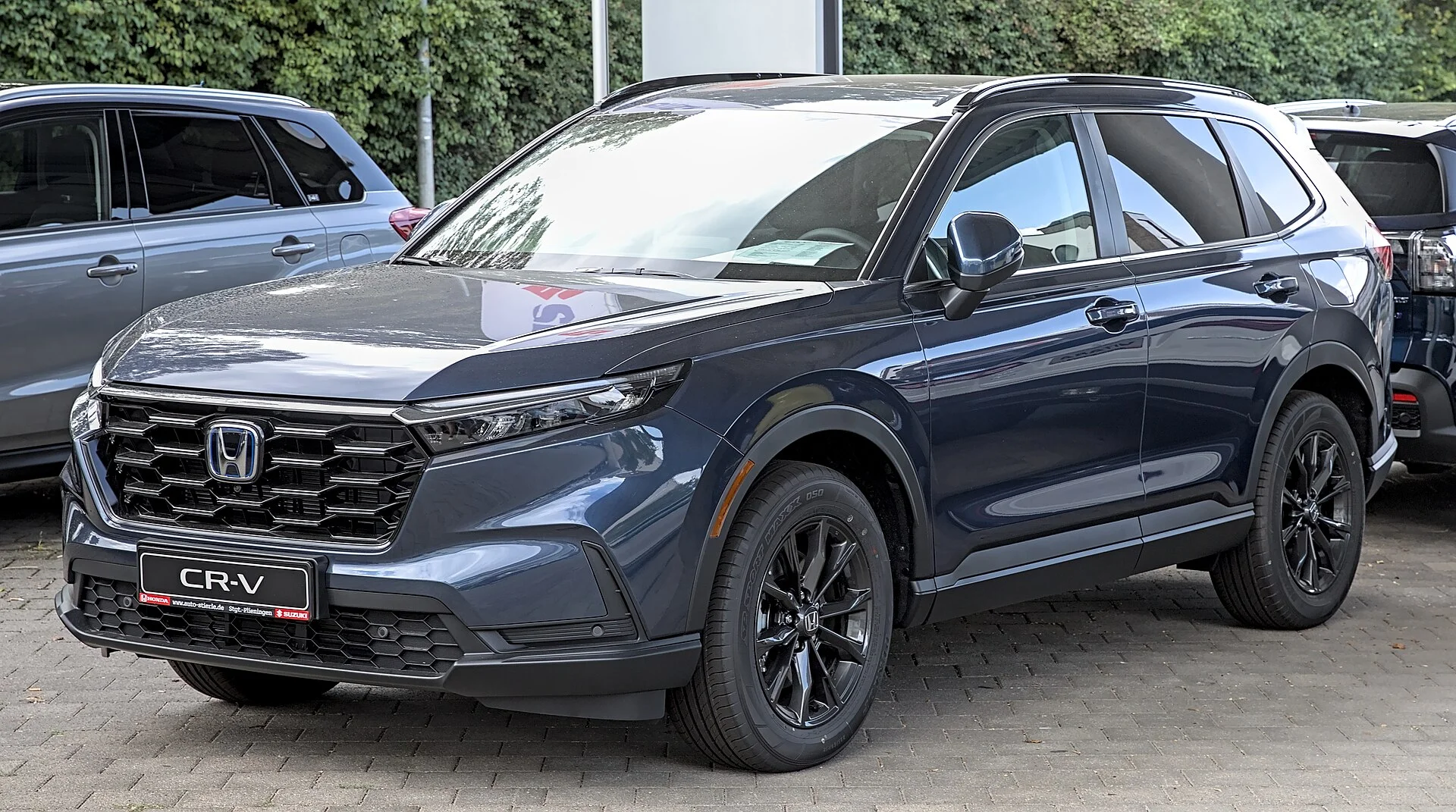
The one number Honda prints, and the three it doesn't
Here's what the reps won't tell you about sleeping in a Honda CR-V: Honda publishes exactly one cargo number, and it's the one that matters least when you lie down. The Honda Info Center lists 76.5 cubic feet of cargo space with the rear seats folded - a class-leading figure for a compact SUV, and a genuinely useful one for hauling. But volume doesn't sleep. Length, width, and height do, and Honda doesn't print any of them in inches.
So this page does two honest things. It gives you the one official number, 76.5 cu ft folded, and then it gives you the three that decide a flat night - length, width, and height - as owners have actually measured them, labeled as owner-measured every time so you know exactly what's a Honda spec and what's a tape measure in a driveway. The short version: a cargo floor close to 73 inches long, roughly 44 inches wide, and about 36 inches tall, per measurements collected at CRVGuide. Read those like a mechanic, not a shopper, and you'll know whether the CR-V fits you before you spend a dime on a mattress. There's also one CR-V-specific trick - a two-position load floor - that decides half of it, and most owners never touch it.
Length: an owner-measured 73 inches, and who actually fits
Length is the make-or-break dimension for sleeping, and it's the one Honda leaves you to find out yourself. Owners measuring the folded CR-V cargo floor - from the tailgate to the front seatbacks - land around 73 inches, per figures collected at CRVGuide. That's about 6 feet 1 inch, which is why the CR-V has a reputation as one of the few compact SUVs a six-footer can stretch out in. I'll treat that as owner-measured, not gospel, because it shifts a couple inches with the front seats slid forward and with which floor position you run.
What roughly 73 inches means for real bodies:
- Up to about 5 foot 10: you lie flat with the front seats in a normal position and room to spare.
- 5 foot 10 to 6 foot 2: you fit by sliding the front seats forward and running the floor in its low position; measure once before you trust it.
- Over 6 foot 2: you sleep diagonally, or build a platform that runs up over the folded seatbacks to buy the last few inches.
The lesson: the CR-V is long for its class, but 73 inches is an owner's tape measure, not a Honda promise. Confirm your own flat length before you buy a pad, because a bed that runs two inches short at the feet is a bed you fight all night.
One more length wrinkle worth knowing: how far you can slide the front seats forward changes your usable floor by a real margin. In a CR-V, walking the front seats all the way up can buy a tall sleeper the last few inches without any platform at all - but it also cramps the driving position you'll want back in the morning. If you sleep solo, the passenger seat slides forward and reclines out of your way entirely, which is the trick most people miss for squeezing a genuinely flat 74-plus inches out of the bay.
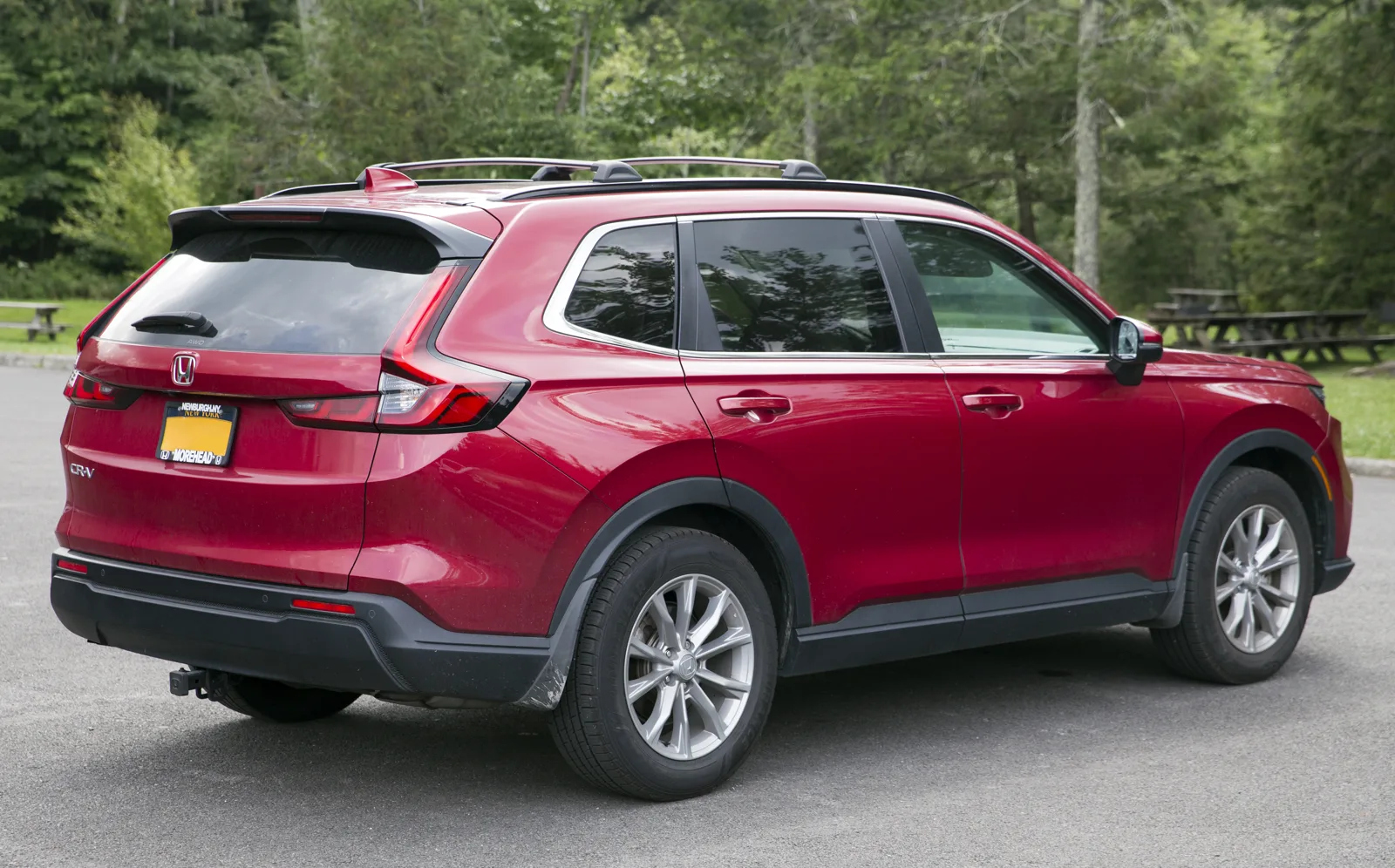
The two-position floor: the split gas and hybrid buyers miss
This is the CR-V detail that decides whether your floor is flat or humped, and it splits the lineup in half. On the gas EX and EX-L, the cargo floor is adjustable to two heights, per Edmunds - and you want it in the low position for sleeping, because that drops the load floor to sit closer to level with the folded seatbacks and adds usable depth. On the hybrid trims, that lower position is gone: the hybrid battery lives under the cargo floor, so the floor sits fixed and higher, and Honda's own behind-seat numbers show it - 39.3 cu ft on the gas versus 36.3 on the hybrid, dropping to 34.7 on the Sport Touring hybrid.
If you're cross-shopping a CR-V specifically to sleep in it, the gas EX or EX-L with the floor dropped low is the flatter, deeper bed. The hybrid is the better daily driver but the worse camper by exactly the height of that battery.
Here's what breaks first if you don't know this: a hybrid owner reads 'CR-V sleeps flat,' buys a thick pad, and finds the higher fixed floor plus the pad eats their sitting height and leaves a step at the seatbacks the low position would have closed. Know which floor you have before you plan the build, not after.
There's a genuine upside to the hybrid floor, though, and fair is fair: because the battery lifts the load floor, the hybrid's cargo surface sits closer to level with the folded seatbacks straight out of the box, so some hybrid owners find they need less fill to bridge the seatback step even if the whole bed rides higher. The gas trim wins on outright flatness and depth; the hybrid trades a little of both for a shorter step and a much better fuel bill on the drive to the trailhead. Neither is wrong - you just build for the one you own.
Width: about 44 inches, and the two-person wall
Width is where the CR-V quietly answers one sleeper or two. Owners measure roughly 44 inches across the usable cargo floor, per CRVGuide - wide for a compact, but the number to respect is the pinch between the wheel wells, which is narrower than the widest point back by the tailgate.
Two adults side by side want about 48 inches of usable width. The CR-V's roughly 44 inches falls just short, which makes it an excellent one-person bed and a real squeeze for two average adults.
How to work with the width you have:
- Solo: 44 inches is wider than any single sleeping pad, so you have margin to spread out.
- Two people: plan narrow pads, no gear beside you, and accept that shoulders will touch - or that one of you sleeps better.
- Kids or a dog: one adult plus a small second sleeper is the comfortable ceiling here, not two full-size adults.
The width also decides which way you should orient a wider pad. Because the useful 44 inches sits between the wheel wells and the bay narrows and widens along its length, a rectangular pad wants to run straight down the middle where the walls are most parallel - shove it to one side and you'll feel the wheel-well intrusion in your shoulder every time you roll over. It's a small thing that separates owners who call the CR-V 'plenty wide' from the ones who call it 'coffin-like': same 44 inches, different pad placement.
Height and sitting up: roughly 36 inches of headroom
Height decides whether the bay feels like a tent or a box, and the CR-V's owner-measured 36 inches or so of cargo-area height is middling-good for the class. That's about 3 feet at the tallest - enough to sit up on an elbow, change a shirt seated, and not feel buried, but not enough to kneel fully upright.
Two things eat that number, and both are on you:
- Pad thickness: every inch of mattress is an inch of sitting height gone. A 3-inch pad turns 36 into 33 - still workable, but run the math before you buy.
- Floor position: on the gas trims the low floor buys back a little headroom the high position spends; on the hybrids you're stuck with the taller fixed floor.
The CR-V's tall glass keeps it from feeling like a cave, which is more than the raw inches suggest. But if sitting fully upright every morning is non-negotiable for your back, that's a signal to shop taller boxes - no pad choice buys back a roofline. One workaround that helps: getting changed and organized on the tailgate with the hatch up turns the whole sky into headroom, so you reserve the 36 inches inside for lying down and sleeping, not for the awkward business of pulling on pants at dawn.
Power: 12 volts and nothing more
Don't count on the CR-V for camp power, because Honda doesn't build it in. There is no 120-volt household AC outlet on any CR-V trim, gas or hybrid - just 12-volt sockets in the front and cargo area, and those run only while accessory power is on. That's the spec that matters, and it's the same across the lineup.
What that means for an overnight:
- Never run gear off the 12V socket parked-and-off - it needs accessory mode, which drains the starting battery you need to leave in the morning.
- The hybrid's battery is for driving, not camping - it won't feed a household outlet, so don't let the word 'hybrid' fool you into skipping a power station.
It's a quiet omission, but a real one: a portable station is the reliable answer at any CR-V trim, and it goes to the picnic table too.
Condensation and climate: the CR-V's big glass
Here's a number the brochure never prints but every CR-V sleeper learns the hard way: two people breathing overnight put off close to a pint of water vapor, and the CR-V's generous glass area is exactly where it condenses into a cold morning drip. The same tall windows that keep the bay from feeling like a cave are a liability at 4 a.m. if you seal yourself in.
What actually controls it, from someone who's chased the drips:
- Crack two windows about an inch on opposite sides for cross-flow - this is the single biggest fix, and it costs you nothing.
- Keep wet gear out of the bay - boots and a damp jacket dump moisture all night; stash them in the footwells up front.
- Skip the propane heater indoors - combustion heaters add water and carbon monoxide; a warmer bag beats a wetter, riskier cabin.
The CR-V's climate reality is the same as any compact: it holds heat reasonably for its size, but ventilation is non-negotiable. Plan the airflow before your first cold night and you wake up dry; skip it and you'll blame the car for water that came from your own lungs. This is also where the gas-versus-hybrid choice quietly matters again - a hybrid's higher floor puts you closer to that condensing glass, so the ventilation discipline matters a touch more.
How the CR-V stacks up against the compacts people cross-shop
Numbers only mean something in context, so here's where the CR-V lands against the SUVs buyers weigh against it for sleeping. On raw volume its 76.5 cu ft folded is class-leading - it beats the RAV4's roughly 69.8 and clears most of the segment. On flat length, the owner-measured 73 inches is genuinely strong for a compact.
The honest positioning:
- Versus the RAV4: the CR-V carries more volume and a longer flat floor, and the gas trim's two-position floor is a real advantage; our RAV4 vs CR-V for car camping matchup runs it head to head.
- Versus the Outback: the wagon lies a touch flatter with less work, but the CR-V answers with more height and volume; our Outback vs CR-V breakdown weighs the two.
- Versus mid-size SUVs: a bigger rig wins outright on two-person width, at the cost of fuel and size.
The CR-V's case isn't that it's biggest; it's that it packs a class-leading, long, sleepable bay into a compact that's cheap to run - if you buy the right floor.
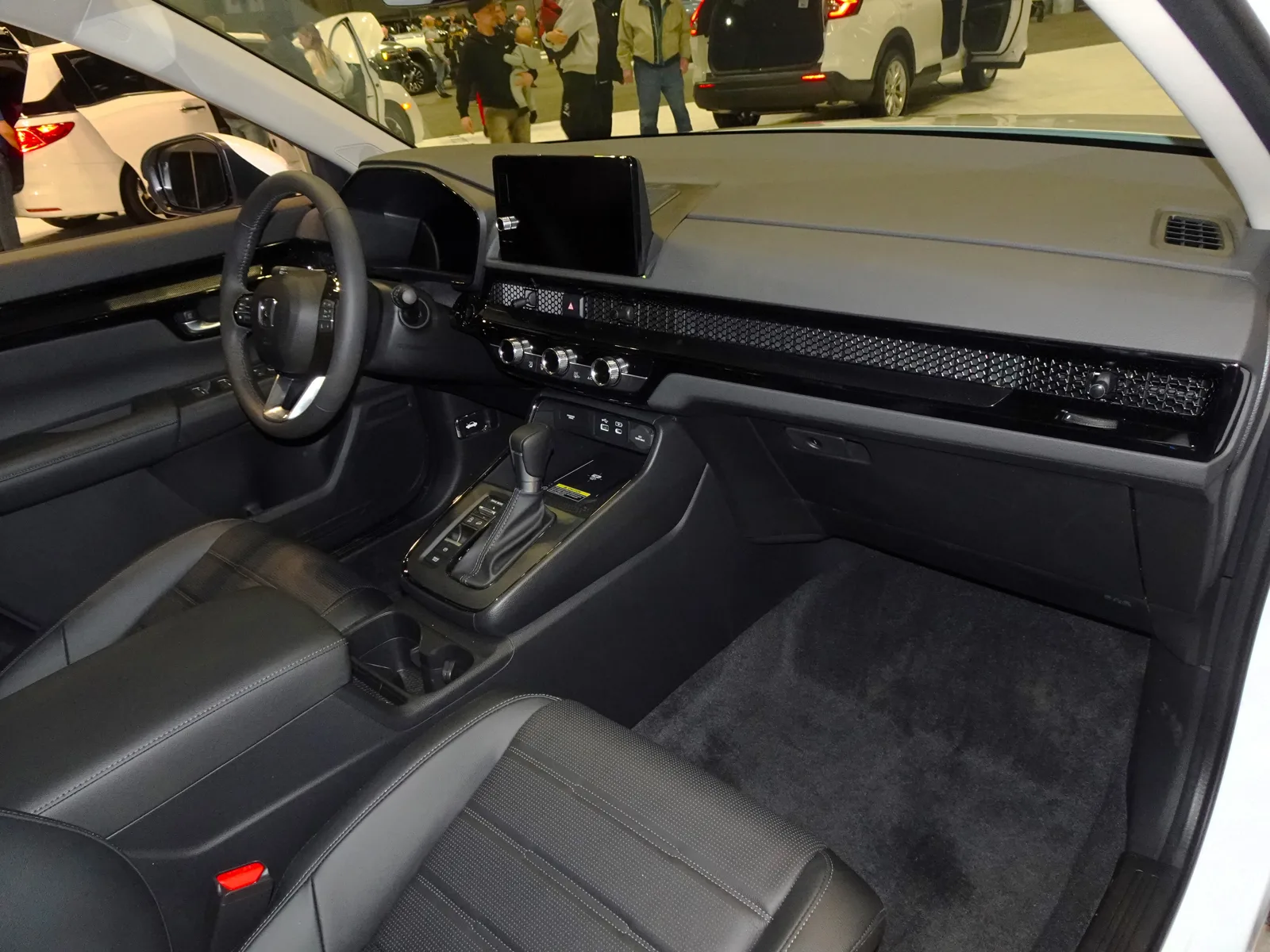
Turning the numbers into a bed: the CR-V fit checklist
Specs are trivia until they're a setup, so here's the checklist I run turning the CR-V's dimensions into a flat, comfortable bed. Do them in order and the numbers above start earning their keep.
- Confirm your trim's floor - gas EX/EX-L get the low position; drop it. Hybrids are fixed high; plan around it.
- Measure your own flat length against the ~73-inch owner figure; if you're over 5 foot 10, slide the front seats forward.
- Check sitting height with the pad in place - subtract its thickness from the ~36-inch max and make sure you can still sit up.
- Bring your own power - the CR-V has none overnight.
- Sort the where and the whether - a level, legal spot matters as much as a level floor; our guide to sleeping in your car safely and legally covers the rules before your first night, and the full build lives in our sleeping in a CR-V guide.
The verdict: a class-leading compact sleeper, if you buy the right floor
The Honda CR-V's cargo dimensions make it one of the best compact SUVs to sleep in - as long as you read the numbers honestly and pick the right trim. You get 76.5 cubic feet folded from Honda, and an owner-measured cargo floor near 73 inches long, about 44 inches wide, and roughly 36 inches tall. Those are strong one-person-bed numbers with a longer floor than most rivals.
The CR-V sleeps one person flat and well, especially on a gas EX or EX-L with the floor dropped low. For two adults, the roughly 44-inch width is the wall the numbers won't move - plan narrow, or size up.
Buy the gas trim for the two-position floor, measure your own bay before you shop pads, and bring your own power, and the CR-V turns a class-leading volume into a genuinely comfortable bed. And if these numbers ruled it out for you - too narrow for two, wrong floor on the hybrid - that's the page doing its job, at the tape measure instead of at a trailhead at midnight.