

Two very good crossovers that camp completely differently
Here are the four numbers this whole choice hangs on: the Subaru Outback's folded floor runs about 80 inches with 8.7 inches of clearance and 3,500 pounds of towing; the Honda CR-V counters with 39.3 cubic feet of seats-up cargo in a body 7 inches shorter. Both sit on every 'best crossover' list, and both will get you to a campsite. But they solve the camping problem in opposite directions, and people often buy the wrong one because they compared the wrong number. So this isn't a single verdict - it's a fork. Answer one question about how you actually camp, and the winner falls out.
The core split is this: the Outback is longer, taller-riding, and built like a station-wagon-turned-adventure-rig, so it sleeps better and goes rougher. The CR-V is shorter, tidier, and carries more with the seats UP, so it's the better daily errand-runner that camps on weekends. Neither is wrong; they're aimed at different owners.
Below are the four forks that decide it - the tall sleeper, the city dweller, the rough-road camper, and the hauler. Find yourself in one of them and you have your answer, with the number that drives it. This is how a seasoned mechanic would sort it for a customer, not how a brochure would.
Fork 1 - You're tall, or you sleep two: Outback
If the vehicle is your bed, length is everything, and this is the Outback's biggest win. With the rear seats folded, the Outback's cargo area runs about 80 inches long with a beltline width around 45.2 inches, per owner measurements and a dedicated Outback cargo-dimensions guide. Eighty inches is six-foot-eight of flat floor - even a tall adult stretches out straight without the diagonal trick. The CR-V's folded floor is shorter, landing in the low-70-inch class, which forces taller sleepers to angle across.
The number that matters is flat-floor length against your own height plus a few inches. At ~80 inches the Outback clears almost anyone lying straight; the CR-V is fine up to average height and tight above it.
Why the Outback's floor sleeps better:
- Length (~80 in): a six-footer lies flat with room; the low-slung wagon body keeps the floor long and usable.
- Folded volume (80.5 vs 76.5 cu ft): more total bay for a sleeper plus gear, per Edmunds and dealer specs.
- Flat load floor: the Outback's near-flat fold is a car-camping favorite for a reason.
Tall, or sleeping two? Take the Outback - this fork isn't close. And a sizing note either way: measure YOURSELF before you trust any floor. Lie on the pad you'll actually use, add 3 inches for the sleeping bag's loft at your feet, and compare that total to the folded floor at floor level - not at window height, where every bay looks longer than it sleeps. Five minutes with a tape measure beats every spec sheet in this article.
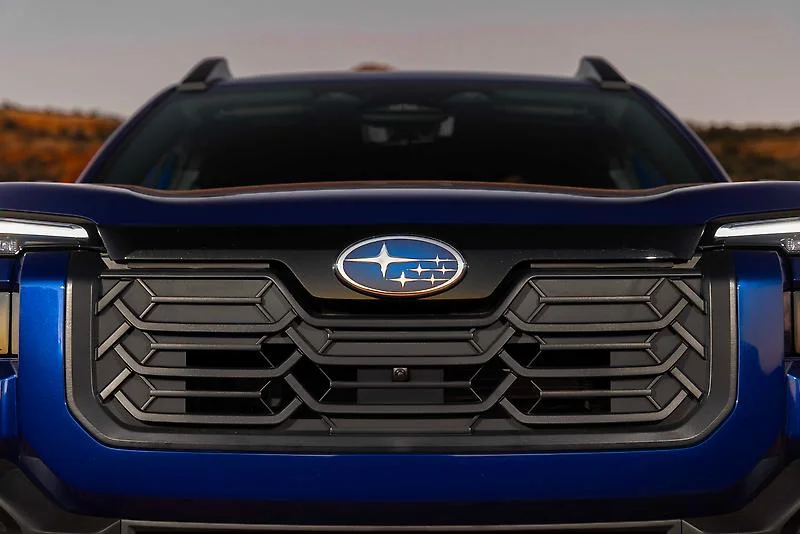
Fork 2 - It's your daily driver first: CR-V
Now the honest counter-fork, because most people drive their crossover far more than they camp in it. With the seats UP, the CR-V carries more - 39.3 cubic feet versus the Outback's 34.6, per Edmunds and dealer specs - and it's a shorter, tidier vehicle (184.8 inches long versus 191.7). For the daily grind of groceries, kids, and parking garages, the CR-V is the easier, roomier-behind-the-seats companion.
Where the CR-V earns the daily-driver nod:
- Seats-up cargo (39.3 cu ft): the bigger everyday trunk - it hauls the week's load without folding anything.
- Footprint (184.8 in): nearly seven inches shorter overall, so it parks and maneuvers more easily in town.
- Efficiency: Honda's hybrid CR-V is a strong commuter that still car-camps competently on the weekend.
If the SUV lives in a city and camps occasionally, the CR-V's everyday practicality is worth giving up some sleeping length. A dedicated can you sleep in a CR-V guide shows how to make its shorter floor work.
The honest framing for this fork: you're not buying a worse camper, you're buying a better Tuesday. The CR-V camps at 85 percent of the Outback's comfort and commutes at 115 percent of it - and only you know which number your year is made of.
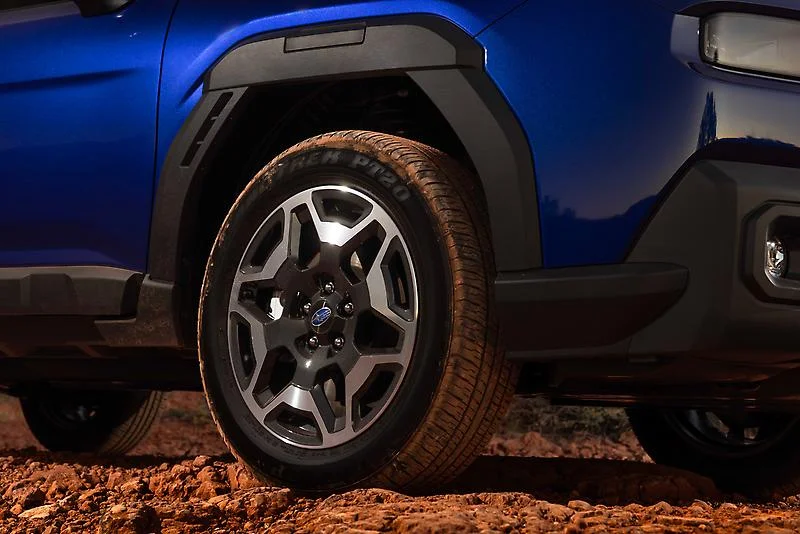
Fork 3 - You camp down rough roads: Outback
The road to a good dispersed site is rarely paved, and here the Outback's extra ride height matters. It offers 8.7 inches of ground clearance versus the CR-V's 7.8 to 8.2, per dealer specs, and it pairs that with Subaru's standard symmetrical all-wheel drive on every trim. That combination is exactly what gets you past the washout and the high-centering rock the CR-V would scrape.
What the clearance buys on a real approach:
- 8.7 in of clearance: the margin to clear ruts and rocks on forest-service roads without a scrape.
- Standard AWD: baked-in traction for mud, gravel, and shoulder-season snow - no option box to check.
- The catch: if you only reach paved or graded campgrounds, this fork is a wash - the CR-V's AWD handles that just fine.
For campers who leave the pavement, the Outback's clearance and standard AWD are a genuine, repeatable advantage - and it's worth naming what that advantage is NOT. Neither of these is an off-road vehicle; both run street-biased tires and neither carries skid protection for real rocks. The Outback's win is the graded-but-neglected forest road, the washboard approach, the shallow washout - the 90 percent of 'rough' that dispersed campers actually meet. If your sites need more than that, neither fork applies and you're shopping body-on-frame SUVs instead. Within the crossover class, take the Subaru.
Fork 4 - You tow a trailer or haul big: Outback
Last fork, and it's the most lopsided number in the whole matchup. The Outback tows 3,500 pounds; the CR-V tows 1,500, per dealer specs. That's more than double. If any part of your camping involves a small trailer, a couple of jet skis, a teardrop, or a utility trailer of gear, the CR-V simply can't do it and the Outback can.
Towing capacity is a hard ceiling, not a preference. If you need 3,500 pounds, the CR-V's 1,500 rules it out before any other number matters - this fork ends the conversation for trailer campers.
The practical scope:
- Outback (3,500 lb): pulls a teardrop trailer or a loaded utility trailer to basecamp.
- CR-V (1,500 lb): fine for a tiny cargo trailer or a couple of bikes on a hitch rack, and no more.
Two practical notes if the towing fork is yours. First, the 3,500-pound rating assumes proper equipment - a factory-appropriate hitch, trailer brakes where the load requires them, and honest math on tongue weight with the cargo bay loaded for camp. Second, towing reshapes the rest of the trip: fuel range drops, mountain grades slow down, and the campsite needs trailer room - factor the whole system, not just the rating. Tow anything meaningful and the Outback is the only answer; haul nothing and this fork doesn't apply to you.
Fork 5 - You camp in snow country: Outback, with a caveat
Shoulder-season and winter campers get their own fork, because cold changes the job description. The Outback brings standard all-wheel drive on every trim, 8.7 inches of clearance for rutted snow, and a wagon body that's easy to load wearing gloves; the CR-V offers all-wheel drive as an option and rides lower. For plowed roads to a winter trailhead, both with AWD are competent - but the margin cases (the unplowed last mile, the icy campground loop, the spring slush that's really mud) all favor the Subaru's clearance and standard traction.
The caveat is honest and applies to both: no crossover badge keeps you warm. Winter vehicle-camping is won by insulation and airflow discipline, not drivetrain - a thick pad under you, a bag rated for the real overnight low, and cracked, screened windows so breath moisture leaves instead of freezing on the glass. The vehicle's job is to arrive and to block the wind; yours is the sleep system.
So: snow-country campers take the Outback fork for the arriving part, and then spend their savings on the sleeping part. A CR-V with AWD and a serious pad out-sleeps an Outback with a summer bag every night of February - the fork picks the truck, not the outcome.
The mile-300 kit: what either one needs before the first night
The rest of the kit is identical for both, and cheap:
- Power: a small power station for the overnight loads - never the starter battery. Charge it off the 12V socket between camps.
- Mesh screens: two cracked, screened openings beat one every time - cross-flow is what keeps the glass dry.
- Window covers: reflective panels for privacy and insulation, cut once to your glass and reused for years.
Total spend is a rounding error against the vehicle price, and it converts either crossover from 'a car you can technically sleep in' to a genuinely comfortable one-person camper. Do it before mile one.
What the forks don't capture: the feel of each at camp
Numbers picked your vehicle; the feel is what you live with, and these two feel different the moment you park. The Outback is a station wagon at heart - long, low, and easy to load at hip height. You slide gear in rather than lift it, the roof rails sit low enough to actually reach, and the long flat bay makes the bed setup a two-minute roll-out. At a trailhead it reads as the vehicle of someone who does this every weekend, because that's exactly who Subaru builds it for.
The CR-V feels like what it is: a brilliantly-packaged commuter doing a weekend job. The load floor sits a touch higher, the bay is shorter, and the setup asks a little more arranging - but the cabin tech, the ride home, and the fuel stops all favor the Honda. Neither feel is wrong; they're the same split the forks found, expressed in muscle memory instead of cubic feet.
A useful test: imagine it's raining at 9 p.m. and you're setting up alone. In the Outback you open the hatch, roll out the pad, done. In the CR-V you're moving a duffel to the front seat first. Thirty seconds of difference - every single night.
If those thirty seconds sound trivial, you're a CR-V buyer and you'll be happy. If you just winced, you already own an Outback in your head - go get the physical one.
The mechanic's reliability read on both
The good news first: there is no lemon in this comparison. Both nameplates run deep into six-figure mileage with ordinary care, and both brands have earned their reliability reputations honestly. But a mechanic sees the small print, so here it is - plain, not alarming.
Subaru's boxer engine and standard all-wheel drive are the Outback's personality and its maintenance profile in one. The flat engine sits low (good for handling), and the full-time AWD means tires must be replaced in matched sets and rotated on schedule - skip that and the drivetrain pays for it. Honda's four-cylinder CR-V is about as low-drama as modern engines get; its maintenance sheet is shorter, and a front-drive example is the simplest possible configuration to keep healthy for 15 years.
What that means for a camper: the CR-V is the lower-maintenance ownership experience, and the Outback's slightly higher care requirements are the price of the capability you bought it for. Budget the tire discipline and the Subaru will out-adventure the Honda for a decade; neglect it and no badge saves you. Either way, the vehicle outlasts the question - which is exactly what you want from a rig that sleeps a hundred nights in the dirt.
Outback for the camper, CR-V for the commuter
Add up the forks and the pattern is unmistakable: three of the four camping-decisive forks - sleeping length, rough-road clearance, and towing - go to the Subaru Outback, and the fourth, everyday seats-up practicality, goes to the Honda CR-V. So the answer really is a question about your life, not the cars.
Buy the Outback if you sleep in it, camp down rough roads, or tow - it's the better CAMPER by every measure that decides a night out. Buy the CR-V if it's your daily driver first and your campsite second - more everyday cargo, easier size, strong efficiency, and it still car-camps fine at established sites.
The same advice holds for any buyer: if you're reading a car-CAMPING comparison because you actually plan to sleep in the thing, the Outback is built for you and the numbers prove it. If you're mostly commuting and want the option to camp, the CR-V won't let you down. Match the winner to your fork, and either one is a good truck to own.
And if you're still torn after four forks, use the shop tiebreaker: count your nights. Under ten camping nights a year, buy the CR-V and rent nothing - its everyday wins compound 355 days a year and the camping compromise is small. Over twenty nights, buy the Outback and never think about it again - the 80-inch floor, the clearance, and the towing ceiling are exactly the capabilities those nights keep cashing in. In between? Whichever one made you look back over your shoulder in the parking lot. And that's no joke - at this level of quality, wanting to drive the thing is a spec too.