The 4Runner has real 120V power - and a safety catch
A power feature sounds reassuring right up until you read the conditions on it. The fifth-generation Toyota 4Runner has the best factory power layout on this list: three 12-volt sockets and, on equipped trims, two genuine 120-volt AC household outlets rated up to 400 watts, per Toyota's owner's manual. That's real household power in a mid-size SUV - more than almost anything here.
Here's the catch the brochure won't put in bold: those 120-volt outlets require the engine running to deliver their full output, and running an engine while you sleep is a carbon-monoxide hazard, not a power strategy. So this page does two jobs. It maps everything the 4Runner offers - the three 12V sockets, the two 120V outlets and their exact wattage conditions, and the fuses that feed them all - and it draws the safety line clearly: what you can run while driving or parked-and-idling briefly, and what has to move to a silent battery for overnight. The 4Runner's power is a real asset. Used the wrong way, it's a real risk.
The 12V outlets: front, glove box, cargo
Start with the simple, safe part: the 12-volt sockets. Per Toyota's owner's manual, the 4Runner has 12V DC outlets in the front center panel, the glove box, and the cargo/luggage compartment, each for accessories under about 10 amps (roughly 120 watts).
- Front panel outlet: ahead of the shifter - the spot for a dash cam or a front charger.
- Glove box outlet: tidy, hidden power for a small always-charging device.
- Cargo outlet: in the rear - the camping one, right by a fridge or a light.
Note the cargo 12V outlet and the cargo 120V outlet are two different things in the same area, which trips people up: the 12V socket runs on accessory power like any cigarette-lighter port, while the 120V household outlet beside it is the engine-only inverter feed. For overnight camping you want the 12V cargo socket for driving-hours loads and you leave the 120V one alone unless the engine's running. Confusing the two is how someone ends up either wondering why their fridge died at midnight or, worse, idling to keep a household outlet alive - so learn which is which before your first night, not during it.
All three are ignition-switched, working only in accessory or on per the manual, so like every socket in this class they don't run overnight without draining the battery. Three sockets is generous placement, and the 120-watt budget handles real camp accessories while you drive. The caution here is the same switched-only rule - it's the 120V outlets, next, where the safety question gets sharper.
The glove-box outlet is the quiet standout of the three for a camper. Tucked inside a closed compartment, it's the tidiest place to keep a device topping up out of sight and out of the weather while you drive, and it keeps the cargo socket free for the fridge. It's a small design touch, but it's the kind of thing that reveals Toyota expected people to actually live out of this truck - three sockets in three genuinely useful places, not one token outlet under the dash.
The 120V AC outlets: 400 watts, with conditions
This is the 4Runner's headline feature, and the conditions on it are exactly what you need to read. Per Toyota's owner's manual, equipped 4Runners have two 120-volt AC outlets - one inside the center console box and one in the cargo area - and their output depends on what the truck is doing.
- Up to 400 watts when stationary with the shift lever in Park or Neutral - enough for a laptop, a small appliance, or charging a power station.
- Only 100 watts while driving or in other shift positions - a real step down, so don't plan a big load for the road.
- Engine running, always: the inverter draws from the powertrain, so the AC outlets are dead with the engine off.
The rating is the ceiling, not a promise: 400 watts is a Park-and-running number. Read it as 'up to 400W, engine on,' and you'll never be surprised by the 100W driving limit.
It's worth being precise about what 400 watts actually covers, because the number sounds bigger than it lives. Four hundred watts runs a laptop charger, a small fan, device charging, or - the genuinely useful camp job - a fast recharge of a portable power station. It does not run a microwave, a kettle, a space heater, or an induction burner, all of which want a thousand watts or more; plug one in and the inverter simply protests or shuts down. So the honest framing is that the 4Runner's 120V is a charging and light-duty outlet, not a kitchen. Size your expectations to that and it's a real asset; expect a household kitchen circuit and it disappoints on day one.
The safety catch: the engine must run for 120V
Here's the line I care most about drawing, because it's where a convenience becomes a hazard. The 4Runner's 120V outlets need the engine running. That's fine for a few minutes in a parking lot to top up a device. It is not fine as an overnight power plan, because a running engine produces carbon monoxide - a colorless, odorless gas that is a documented and potentially fatal risk when you sleep near a running vehicle.
What the safety picture actually demands:
- Never idle to power your camp overnight - not with the exhaust near a tent, a cracked window, or an enclosed space. This is the one non-negotiable.
- Brief, attended, well-ventilated use only for the 120V outlets - charge a battery for a few minutes, engine on, then shut down.
- The rating tempts misuse: 400 watts sounds like a camp solution, which is exactly why the engine-on condition has to be said out loud.
The 4Runner's inverter is a genuinely useful daytime tool. Treat it as anything more than that overnight and you've traded a power problem for a safety one.
It's worth understanding why this outlet tempts misuse more than a simple 12V socket does. A 400-watt household outlet feels like a real solution - you can plug in an actual appliance, so the mind leaps to 'I'll just leave it running.' A 12V socket never creates that illusion because it obviously can't power much. The 4Runner's capability is real, which is exactly what makes the engine-on condition so easy to rationalize away at 2 a.m. when the fridge is warming. The standard of care here isn't complicated, but it is absolute: the more capable the outlet, the more firmly the 'engine off while sleeping' rule has to hold.
The fuse map: #30 P/OUTLET and #19 400W INV
When an outlet dies, here's the map, per fuse-box.info for the N280 4Runner. The 12V and 120V circuits live in different boxes, so knowing which is which saves you real time.
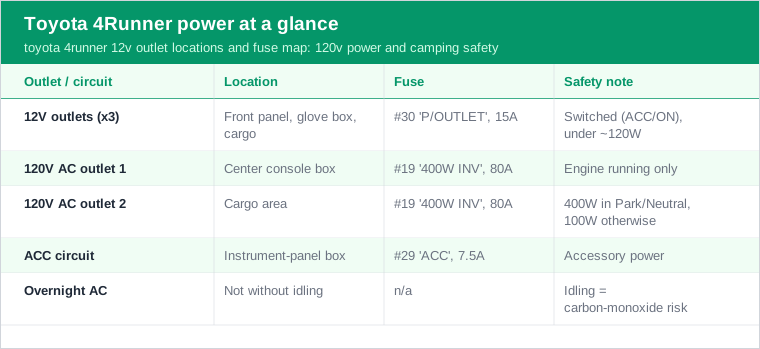
- Fuse #30, 'P/OUTLET', 15A: the 12V power outlets, in the instrument-panel (passenger-compartment) box under the dash on the driver's side.
- Fuse #29, 'ACC', 7.5A: the accessory circuit, same instrument-panel box.
- Fuse #19, '400W INV', 80A: the AC inverter that feeds the 120V outlets - a big 80-amp fuse in the engine-compartment box on the left side.
The 80-amp '400W INV' fuse is your tell that the AC outlets are a high-current system tied to the engine - not a small always-on tap. If the 120V outlets go dead, that engine-bay fuse is the place to look, not the cabin box. Carry a 15A spare for the 12V circuit; the 80A inverter fuse is not something you casually swap trailside.
That 80-amp rating is itself a safety data point worth reading correctly. A fuse that large exists because the inverter can pull serious current from the electrical system when it's making its full 400 watts - which is precisely why the design requires the engine running to feed it. It's not an oversight that you can't use the AC outlets on battery alone; it's the engineering telling you this circuit was never meant to run unattended off stored charge. When a manufacturer protects a feature with an 80-amp fuse and an engine-on interlock, it's drawing the same line I'm drawing: this is a supervised, engine-running tool, not a set-and-forget overnight source.
The overnight rule: switched 12V and engine-only AC mean a battery
Put the two limits together and the overnight rule writes itself. The 12V sockets are ignition-switched, and the 120V outlets need the engine running - so the 4Runner, for all its power, offers nothing you can safely run all night off the vehicle itself. That's not a knock; it's just the line between a driving-hours resource and an overnight one.
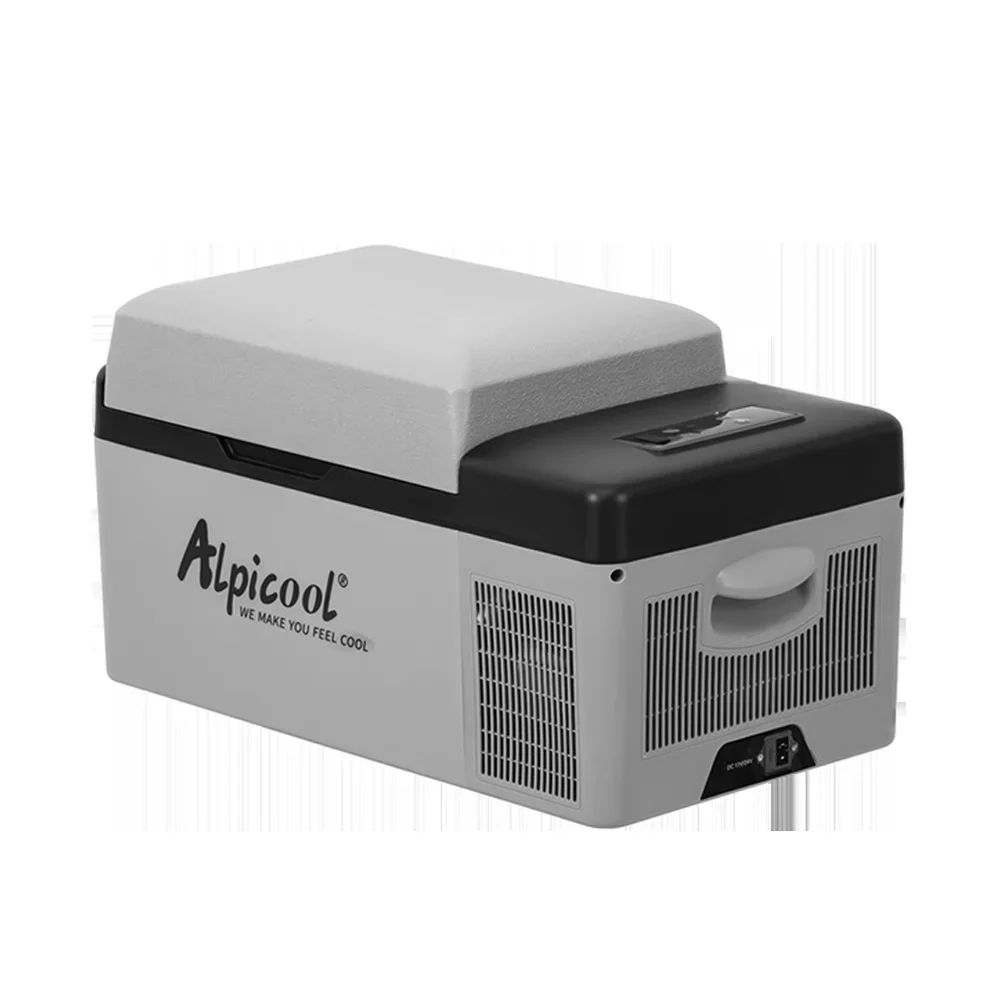
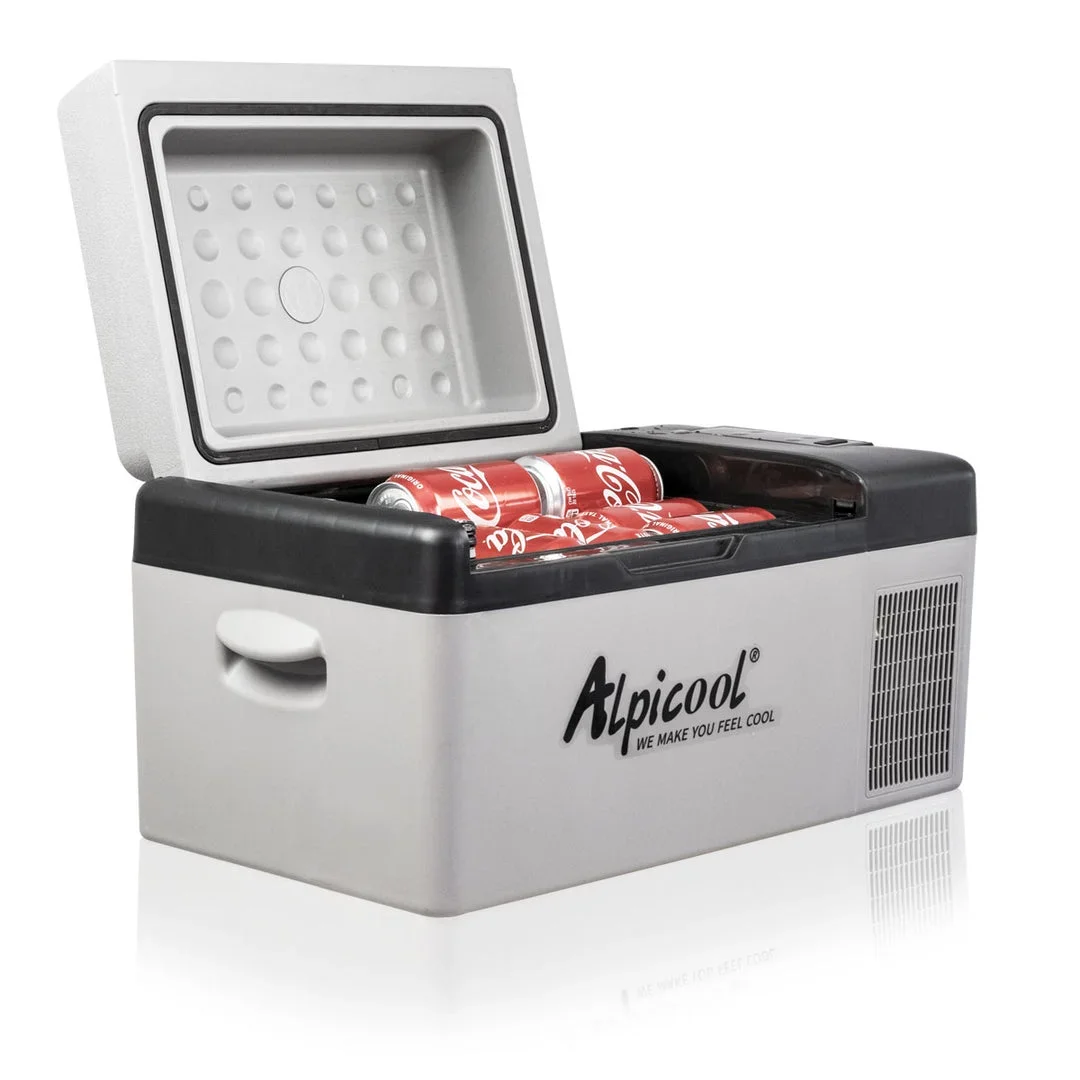
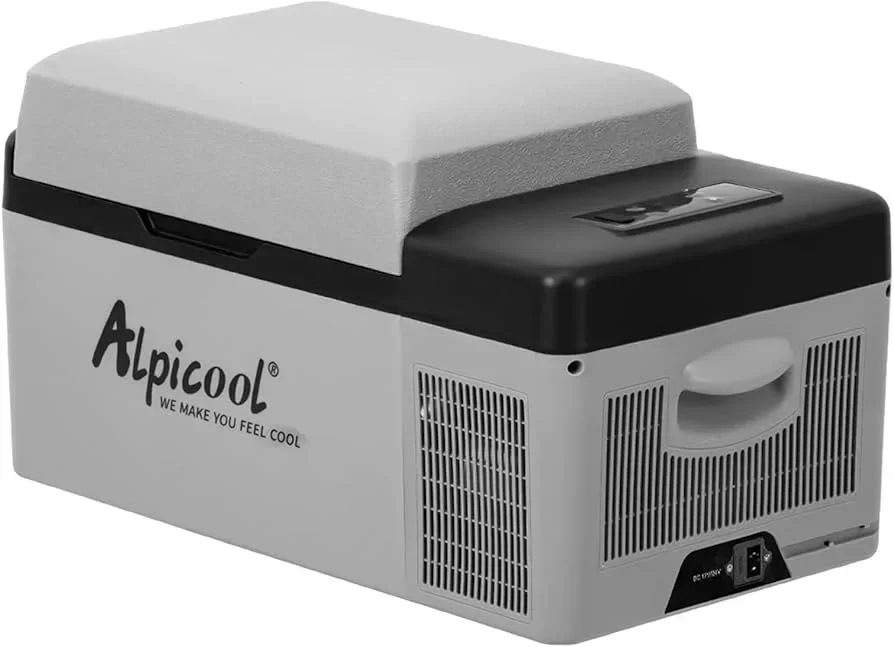
- Driving hours: run and pre-chill a Alpicool C20 portable 12V fridge off the cargo socket, and top up a battery off the 120V outlet in Park.
- Overnight: everything moves to a silent battery - no socket, no idling.
- The safety payoff: a battery means you never face the temptation to leave the engine on for power, which is the whole point.
The 4Runner gives you more ways to charge that battery than any other vehicle here. It just shouldn't be the thing running your fridge while you sleep.
Running your camp safely off a portable battery
The safe alternative is simple, and the 4Runner actually makes it easier than most, because it can recharge a station two ways. A portable power station is the standard-of-care answer for overnight camp power - silent, always-on, and no exhaust anywhere near where you sleep.
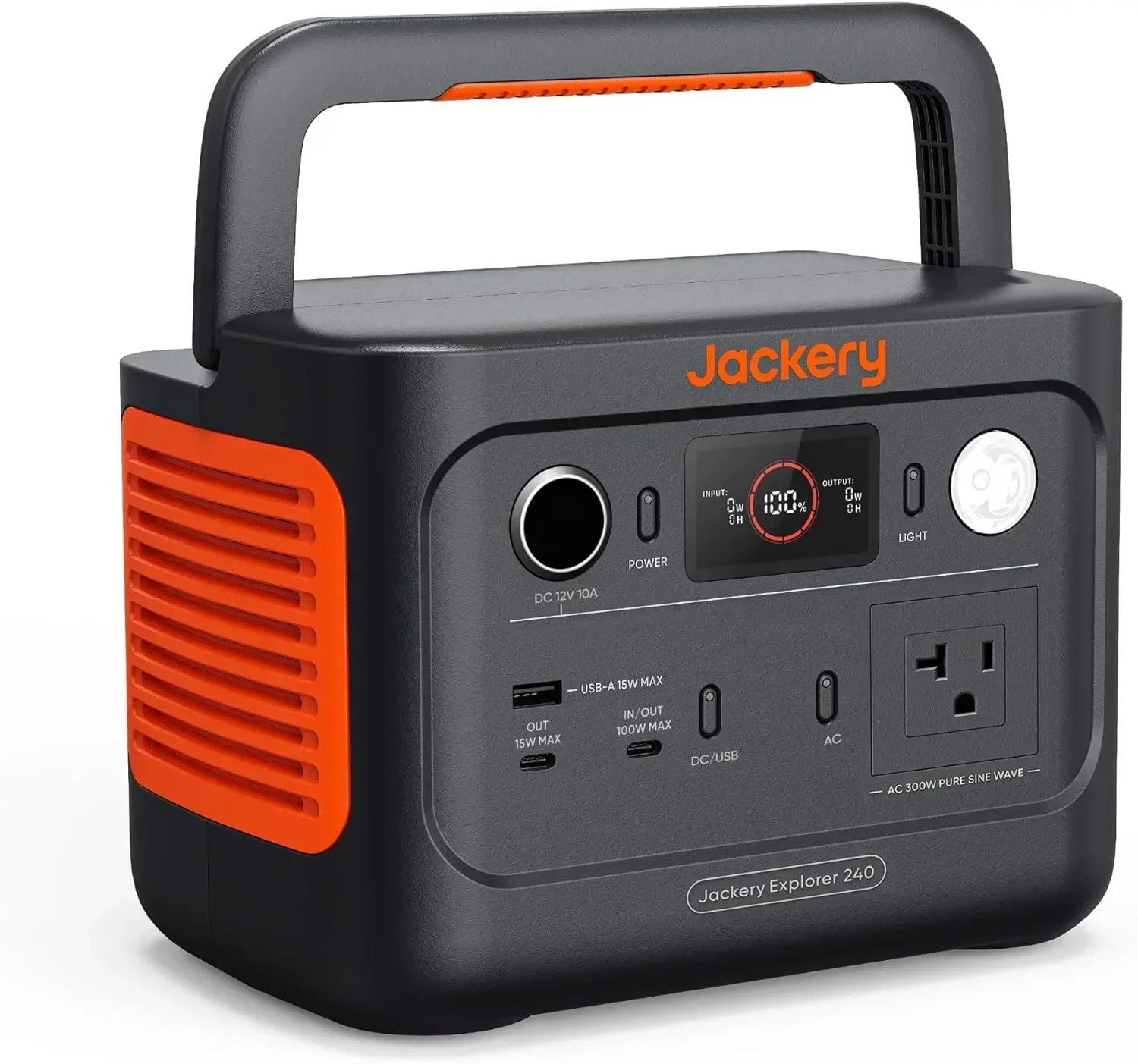
- Run overnight loads off the station: a Jackery Explorer 240 v2 power station covers a low-draw fridge plus charging for a night from its 256Wh, with its own always-on AC outlet.
- Recharge two ways: off the 12V cargo socket while you drive, or briefly off the 120V outlet in Park with the engine on and the area ventilated.
- Right-size it: a weekend fridge doesn't need a huge battery - match capacity to the load so you're not hauling weight you won't use.
That's the whole safe system: the 4Runner charges, the battery carries the night, and the engine stays off while you sleep. Capability and safety, both intact.
There's a real elegance to pairing an inverter-equipped 4Runner with a modest power station, and it's why I recommend it even though the truck already has AC outlets. The 400-watt inverter, used briefly in Park, refills the station fast when you have no sun and no wall - so the 4Runner becomes a generator you already own, and the station becomes the silent, safe delivery system that carries that energy into the night. Neither piece does the whole job alone: the truck can't run safely overnight, and the station can't refill itself off-grid. Together they cover every case without ever asking you to sleep next to a running engine, which is the only outcome I actually care about here.
If you do idle briefly: ventilation and a CO detector
Let me be precise about the narrow case where running the engine for the 120V outlets is defensible, because 'never' without nuance just gets ignored. Topping up a power station for a few minutes, engine on, in an open area, attended, with the exhaust clear - that's a reasonable daytime use. The hazard isn't the engine itself; it's the combination of a running engine, an enclosed or sheltered space, and a person who isn't paying attention.
The safeguards that turn a risk into a managed one:
- Never idle enclosed or sheltered: not in a garage, not tucked against a snowbank, not with the tailgate tent zipped to the exhaust - carbon monoxide pools where air doesn't move.
- Carry a battery-powered CO detector in the sleeping area. It's a cheap, standard safeguard, and it's the one instrument that actually warns you before a colorless, odorless gas becomes a medical emergency.
- Attended and brief only: idle to charge, stay with the vehicle, then shut it down - never walk away or fall asleep with it running.
The rating on the 4Runner's inverter is a floor for what it can do, not a ceiling on the caution it requires. Used briefly and ventilated by day, with a detector as backup, the engine-on 120V outlets are a genuine tool. The line I won't cross - and neither should you - is trusting them, or the engine, to run while anyone sleeps.
The 4Runner power safety checklist
Here's the checklist I'd run before trusting the 4Runner's power at camp, safety first.
- Map your outlets - three 12V (front, glove box, cargo) and, if equipped, two 120V (console box, cargo).
- Know the 120V conditions - up to 400W in Park, 100W driving, engine running always.
- Never idle overnight for power - carbon monoxide is the reason this rule has no exceptions.
- Carry a 15A spare for the #30 'P/OUTLET' 12V circuit.
- Move overnight loads to a battery and recharge it off the sockets by day.
- Cross-reference: our Jeep Wrangler 12V outlet guide shows the same logic on another rig, and our guide to sleeping in your car safely and legally covers the broader overnight safety.
The verdict: the best factory outlets here, used safely
The Toyota 4Runner's power system is the most capable on this list, and the safest way to use it is the whole point of understanding it. You get three 12V sockets (fuse #30 'P/OUTLET', 15A), two real 120V AC outlets in the console box and cargo area (up to 400W in Park, 100W driving, fuse #19 '400W INV', 80A), all requiring either accessory power or the engine running.
The 4Runner's 120V outlets are a genuine daytime asset and an overnight trap: 400 watts, engine on. Never idle to power your camp - move the night loads to a silent battery, and you keep the capability without the carbon-monoxide risk.
Use the sockets and the inverter to charge by day, keep the engine off while you sleep, and run your overnight camp off a portable station, and the 4Runner delivers the best power on this list safely. For the sleeping side of the build, our Toyota 4Runner car camping setup guide covers the bed and the rest.