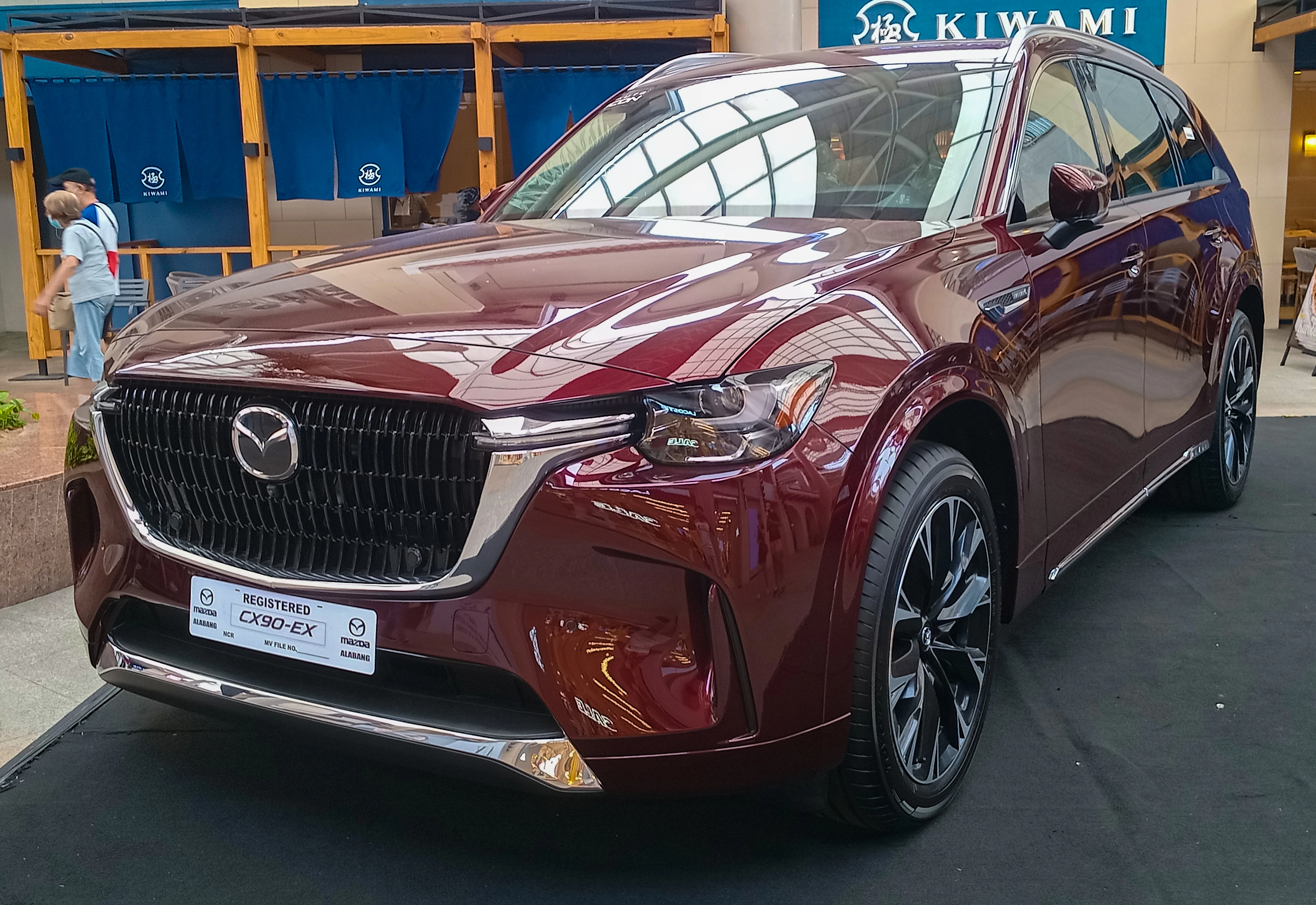
Which CX-90 are you actually asking about?
Does the Mazda CX-90 have a good outlet for camping? The brochure-friendly answer is yes - but run the spec sheet and the real answer is: it depends entirely on which CX-90 you bought, and the gap is enormous. The gas inline-six model's AC outlet is rated 150 watts. The plug-in hybrid's is rated 1500 watts. That's a tenfold difference hiding behind one badge, and most listings never make you pick.
First, get the vehicle straight, because people confuse it: the CX-90 is Mazda's new-for-2024 three-row flagship, not the older CX-9 it replaced. It comes as a mild-hybrid inline-six or a plug-in hybrid, and that powertrain choice decides your camping power more than any trim line does. This page checks each claim against Mazda's actual manuals: the 12V socket and its real limit, the 150-versus-1500-watt outlet split, the USB ratings, and the one thing the spec sheet flatly won't give you - a fuse map. I'll say plainly where the number exists and where it doesn't.
Why does this even need saying? Because the badge on the tailgate reads 'CX-90' either way, and a used listing rarely tells you whether you're looking at the mild-hybrid inline-six or the plug-in. Mazda calls the six a mild hybrid, which sounds electrified enough that shoppers assume the big battery-fed outlet comes with it. It doesn't. The mild-hybrid system is a small starter-generator that smooths the gas engine; it is not the high-voltage drive battery that powers the 1500-watt outlet. Read the window sticker or the VIN, not the marketing adjective, before you count on any outlet figure.
What does the 12V socket really give you?
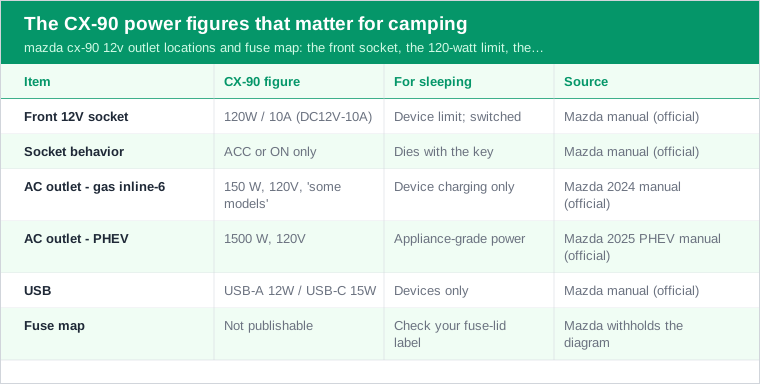
Start with the socket everyone actually uses, and read the number against the marketing. Mazda's manual rates the CX-90's front accessory socket at a maximum of 120 watts - the exact wording is 120 W, DC12V at 10 amps. That's your real device ceiling, no matter how many gadgets you try to daisy-chain onto it.
Marketing sells a three-row flagship full of power. The spec sheet is quieter: 120 watts at the 12V socket. Build to that, not to the impression the badge gives you.
What 120 watts covers, in plain loads:
- A 12V compressor fridge (40-60W): comfortable, with room for a fan and charging.
- A laptop on a small inverter (65-90W): fine alone, tight if the fridge cycles on simultaneously.
- Resistance heat (150W+): over the line - a kettle or a hard-drawing blanket is exactly what these sockets won't serve.
Mazda's manual confirms sockets 'front and rear' but never enumerates how many or names a cargo outlet cleanly - the online manual is mostly stubs - so don't assume a luggage-area socket exists on your CX-90 until you find it. On socket count, I won't state a number the manual doesn't.
One more thing the 120-watt ceiling quietly settles: inverter shopping. People buy a 300- or 400-watt inverter, plug it into the socket, and wonder why it trips or the plug gets warm. The socket doesn't care what the inverter is rated for - it caps the whole circuit at 120 watts, 10 amps. Size the inverter to the socket, not the other way around, and leave headroom so a fridge compressor's start-up surge doesn't push you over. If a load genuinely needs more than 120 watts continuously, the socket was never the right feed for it.
Do the sockets stay live overnight?
Here's the question that decides your whole setup, and the answer isn't the flattering one: no. Mazda's manual has the front socket working only in the accessory or on position, so it dies when the vehicle powers down. No always-on socket is documented, and I won't claim a constant tap the manual doesn't describe.
Why a buyer should care more than a spec-shopper:
- A switched socket can't hold a fridge cold overnight without draining the battery you need to start in the morning.
- Leaving it in accessory to cheat that just moves the drain onto the 12V battery - a modern CX-90 is electronic everything, and nobody push-starts one.
- The mild-hybrid and PHEV systems don't change this for the 12V sockets - the accessory outlets still switch off with the vehicle.
So whatever the CX-90's headline power, the 12V sockets give you nothing while you sleep. That points the overnight job at a battery you bring - the same conclusion as every switched-socket rival, PHEV badge or not.
And don't let the hybrid batteries tempt you into a workaround here. It feels reasonable to think a plug-in with a big traction battery should trickle-hold a fridge overnight through the 12V socket - but the manual routes the accessory socket off the same switched supply on either powertrain, so the drive battery never enters the picture at the 12V outlet. Leaving the car in accessory to keep the socket live drains the small 12V starter battery, not the fun one. That's the battery that runs the electronics and cranks the car, and there's no manual override to start a dead one.
Is the CX-90's household outlet 150 watts or 1500?
This is the claim worth dismantling carefully, because both numbers are real and they belong to different cars. Per Mazda's own manuals, the CX-90's 120-volt AC outlet is 150 watts on the gas inline-six ('some models') and 1500 watts on the plug-in hybrid, fed from the high-voltage drive battery. That's not a typo or a trim upgrade - it's two entirely different power systems.
The brochure claim is bold; the spec sheet is specific. A 150-watt outlet charges your laptop. A 1500-watt outlet runs an actual appliance. Which one you have depends on whether you bought the gas six or the plug-in - so read the powertrain, not the price.
What each actually does:
- Gas inline-six (150W): device outlet - laptop, chargers, a CPAP on many models. Not a fridge, nothing with a heating element. And it's 'some models,' so confirm yours has it at all.
- PHEV (1500W): genuine appliance-grade power off the traction battery - the best camping outlet of any vehicle in this comparison, working when the vehicle is on and the hybrid system isn't running.
The buyer takeaway: if the big outlet is why you want a CX-90, you want the PHEV specifically. Cross-applying the plug-in's 1500 watts to a gas CX-90 is a tenfold mistake, and it's the exact error a glossy listing invites.
Watch how the confusion gets manufactured, too. A dealer listing pulls a generic CX-90 feature blurb, the blurb quotes the headline 1500-watt figure because it's the more impressive one, and the specific gas car on the lot only has the 150-watt outlet - or none, since it's 'some models.' Nobody lied outright; they just quoted the flattering number and let you assume it applies. The check is simple and yours to make: if the seller can't tell you whether the AC outlet is 150 or 1500 watts, they can't tell you which CX-90 you're buying. Make them look at the actual car.
Why can't anyone give you a straight fuse map?
Here's where I have to be honest instead of confident: there is no CX-90 fuse map I'd stake my name on. Mazda reportedly withholds the CX-90 fuse diagram from the owner's manual, and won't release the service-manual version to owners - and the aggregator tables that claim to have it look auto-templated and internally contradictory, mixing left- and right-hand-drive entries. A wrong fuse number is worse than no number, so I won't hand you one.
When a maker hides the diagram and the aggregators are guessing, the honest move is to say so - not to print a fuse number you can't stand behind. The label on your own fuse-box lid outranks anything online here.
What you can actually do:
- Read your fuse-lid legend: the CX-90 follows the standard Mazda layout - an interior panel plus an engine-bay box near the battery - and the lid names the slots.
- Ask a dealer for the socket circuit if a socket goes dead and the lid isn't clear - they have the diagram you can't get.
- Distrust confident online CX-90 fuse tables: several appear to carry over CX-9 data or guess outright.
That's the unusual honest answer for this vehicle: the fuse map is the one spec I can't verify, so I'm telling you to check the lid rather than trust the internet - this page included.
It's worth sitting with why the aggregator tables fail so badly, because it tells you how much to trust them elsewhere. Those sites template a fuse layout from whatever data they can scrape, and when the maker gives them nothing, the page fills in from the nearest match - often the CX-9 it replaced - or simply guesses. You can spot it: a table that lists both left- and right-hand-drive positions for a car sold one way in your market, or amp ratings that contradict each other row to row, is auto-generated, not verified. When the manufacturer itself withholds the diagram, no third party magically has it. Treat confidence as a red flag, not reassurance.
What about the USB ports?
The USB ratings, at least, Mazda publishes cleanly. The CX-90's Type-A ports are rated 12 watts (5 volts, 2.4 amps) and the Type-C ports 15 watts (5 volts, 3 amps), with USB-C in the second and third rows plus front ports per Mazda's summary.
- Fine for devices: phones, a tablet, a headlamp battery - the USB-C's 15 watts charges a phone quickly.
- Useless for real loads: a fridge or a fan wants the 12V socket or a power station, not USB.
- Per-trim counts vary and aren't cleanly published, so confirm how many your CX-90 has if that matters to your layout.
So the USB is honest, modest, and exactly what it says - which, after the 150-versus-1500 outlet confusion, is a refreshing spec to be able to quote without an asterisk.
Set your expectations to match those ratings, though. Fifteen watts on the USB-C is fine for a phone, but it is not the 60- or 100-watt fast charging a modern laptop wants, so don't plan to run a work machine off the port and skip the inverter. And because the per-trim port counts aren't cleanly published, the safe move if your layout depends on charging four devices at once is to physically count the ports in the exact car you're buying rather than trust a spec summary. The ratings are honest; the quantities are where the ambiguity hides.
So what's the overnight plan?
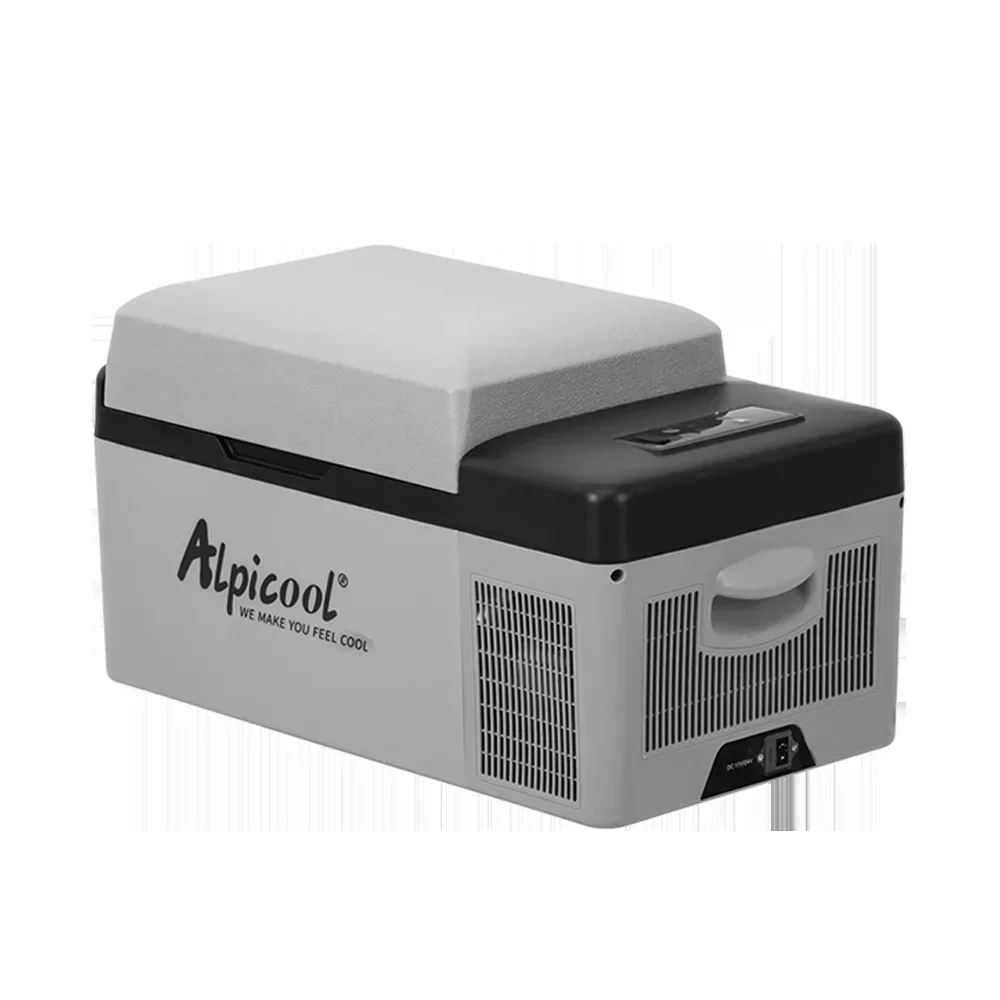
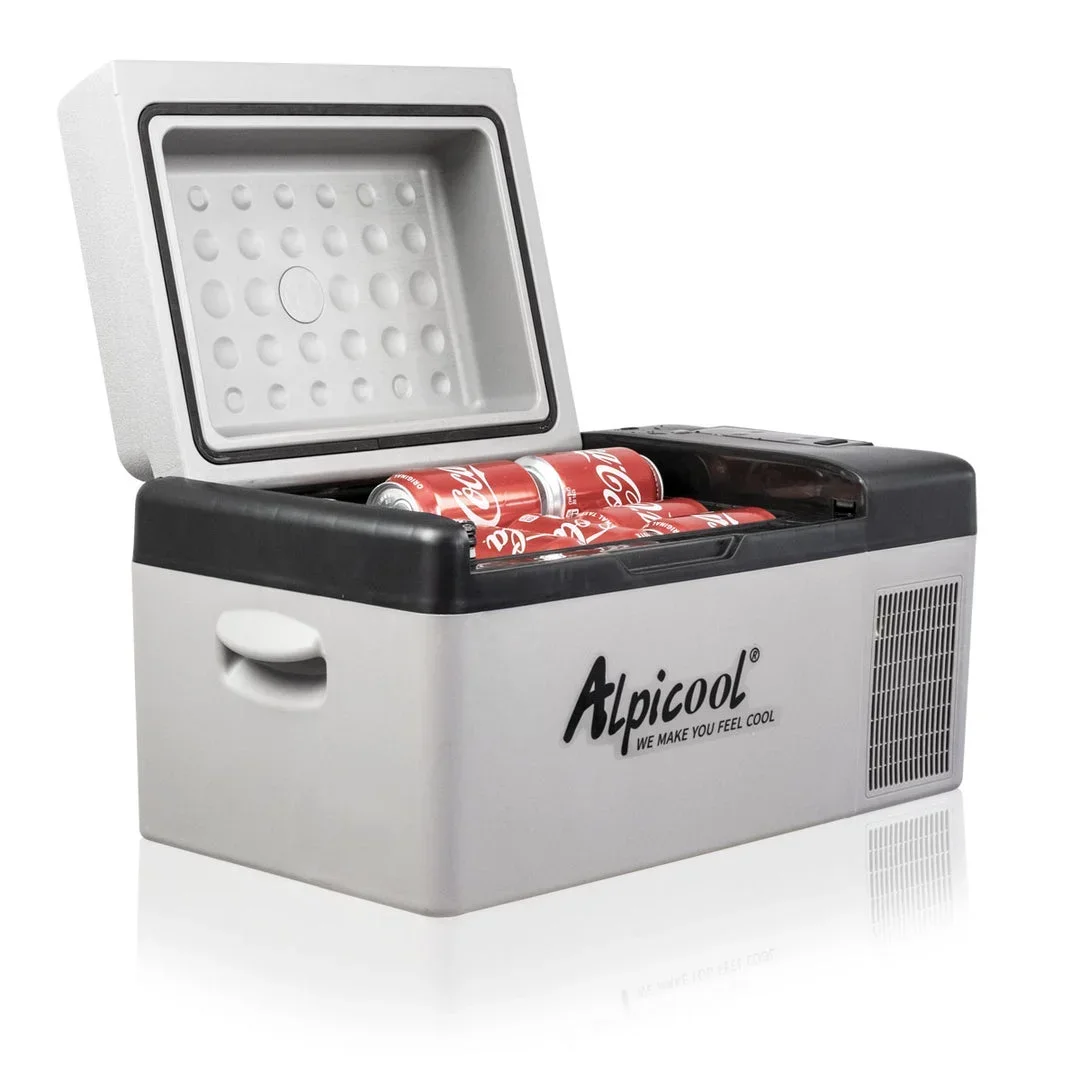
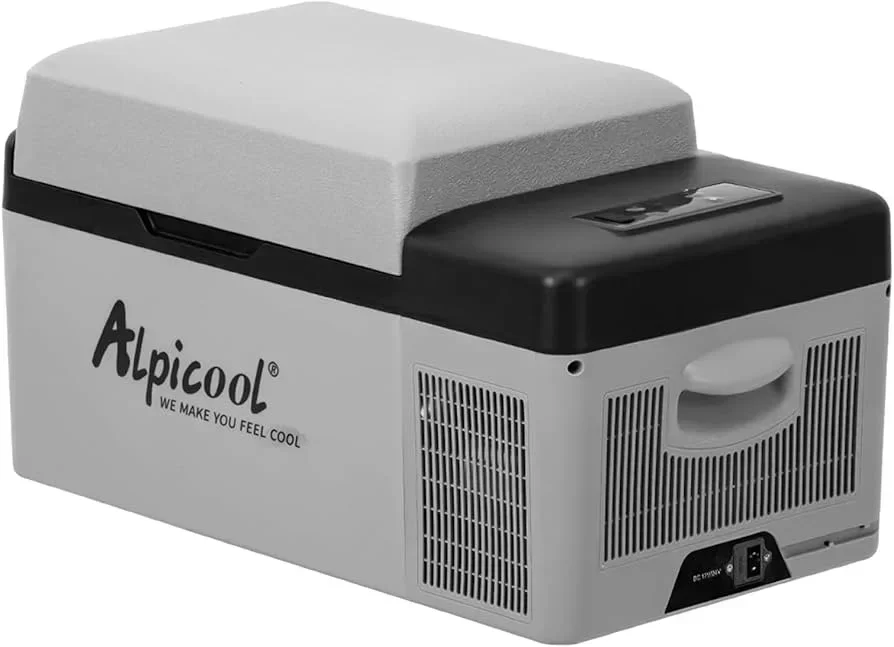
Reason it from what's verified and one setup falls out. The 12V sockets die with the key, the gas outlet is a modest 150 watts and engine-adjacent, and even the PHEV's 1500-watt outlet works with the vehicle on, not left unattended overnight. So the thing you never want is to run an Alpicool C20 fridge straight off a CX-90 socket while you sleep - it quits with the car, or drains the battery if you leave power on.
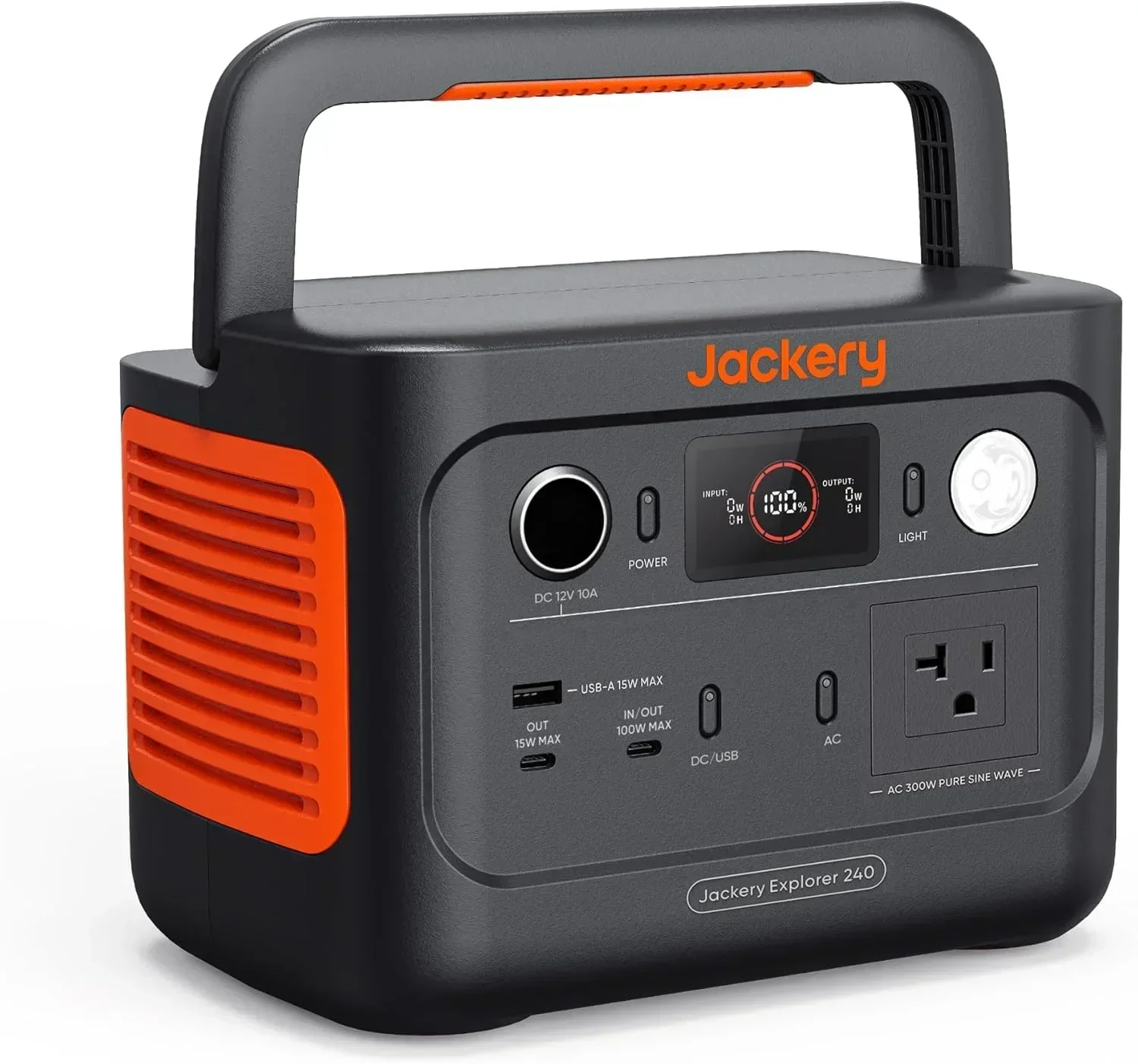
The setup that survives the night: a Jackery Explorer 240 v2 power station carries the fridge, a fan and a night of charging off its own 256 watt-hours, then recharges from the 12V socket as you drive - the CX-90's battery never gets touched. PHEV owners get a bonus: the 1500-watt outlet can top a power station fast while you're set up and the vehicle's on.
- Gas CX-90: plan exactly like any switched-socket SUV - power station for anything overnight.
- PHEV CX-90: the 1500-watt outlet is a real daytime advantage; still bring a battery for unattended overnight loads.
The camping build that pairs with either is in our Mazda CX-90 camping guide - but the power principle holds: bring your own reserve.
Think about sizing rather than just gear, too. A fridge pulling 45 watts on and off averages well under its rated draw over a night, so a 256 watt-hour power station realistically covers a compressor fridge plus a fan and phone charging through a single night, then tops back up on the drive to the next site. If you camp two nights without driving between them, that's when you either step up to a larger power station or lean on the PHEV's 1500-watt outlet during a mid-day engine-on session. The rule doesn't change: the car powers things while it's running, and your own battery covers the hours it isn't.
How does the CX-90 stack up on power?
Does it actually beat its rivals on power? For the PHEV, genuinely yes; for the gas six, it's middle of the pack. Run it against the others and the split shows.
- PHEV CX-90 (1500W outlet): the strongest onboard AC in this whole comparison - more than the Pilot's 150W or even the Tahoe's 400W.
- Gas CX-90 (150W outlet, 120W sockets): comparable to a Pilot - modest, switched, fine with a power station.
- The catch either way: no always-on 12V socket and a fuse map you can't verify - so it's not the effortless choice its price suggests.
So the honest ranking depends entirely on the powertrain: the plug-in is a power standout, the gas six is ordinary, and neither gives you key-off 12V. Buy the PHEV for the outlet, or plan the gas car like any other switched SUV.
One caveat on those cross-comparisons: an onboard AC outlet and a portable power station aren't the same tool, so don't let the 1500-watt figure flatter the PHEV past what it does. The car's outlet only works with the vehicle on; it doesn't sit in your tent holding a charge. What the PHEV really buys you is a fast, high-wattage way to refill a power station during a daytime setup - genuinely useful, but still a supplement to a battery you carry, not a replacement for it. Rank it as the strongest complement in the class, not as a reason to leave the reserve at home.
The verdict on CX-90 camp power
The Mazda CX-90's camping power comes down to one question the badge won't answer for you: gas or plug-in? The gas inline-six gives a 150-watt outlet and 120-watt 12V sockets, all switched - ordinary. The PHEV gives a 1500-watt outlet that's the best in this class. Both die at the 12V socket when the key's out, and neither comes with a fuse map you can trust online.
Bring your own battery to a CX-90 either way. If the big outlet matters, buy the PHEV specifically - the 1500-watt figure is a plug-in-only spec, not a trim you can add to the gas car.
Read the powertrain before the price, keep 12V loads under 120 watts, check your own fuse-lid legend because the internet's CX-90 numbers are guesses, and carry your overnight power. Do that and the CX-90 is a capable camp vehicle - the PHEV an unusually powerful one. Just don't let a listing sell you the 1500-watt outlet on a car that has the 150.
If I'm handing you one decision rule, it's this: let the outlet decide the powertrain, not the other way around. Shoppers pick the gas six for price or the smoother drive, then discover the camping power they pictured lived on the plug-in the whole time - and 1500 watts is not an option box you tick later. So sequence it correctly. Decide first whether appliance-grade AC matters to how you camp; if it does, the PHEV isn't a nice-to-have, it's the requirement. If it doesn't, save the money on the gas car and plan around a power station like you would for any switched-socket SUV. Either path is fine - just walk in knowing which one you actually bought.
Related on Auto Roamer: Mazda CX-5 12V and fuse-map guide; best portable power stations for car camping; how to power a 12V fridge camping.