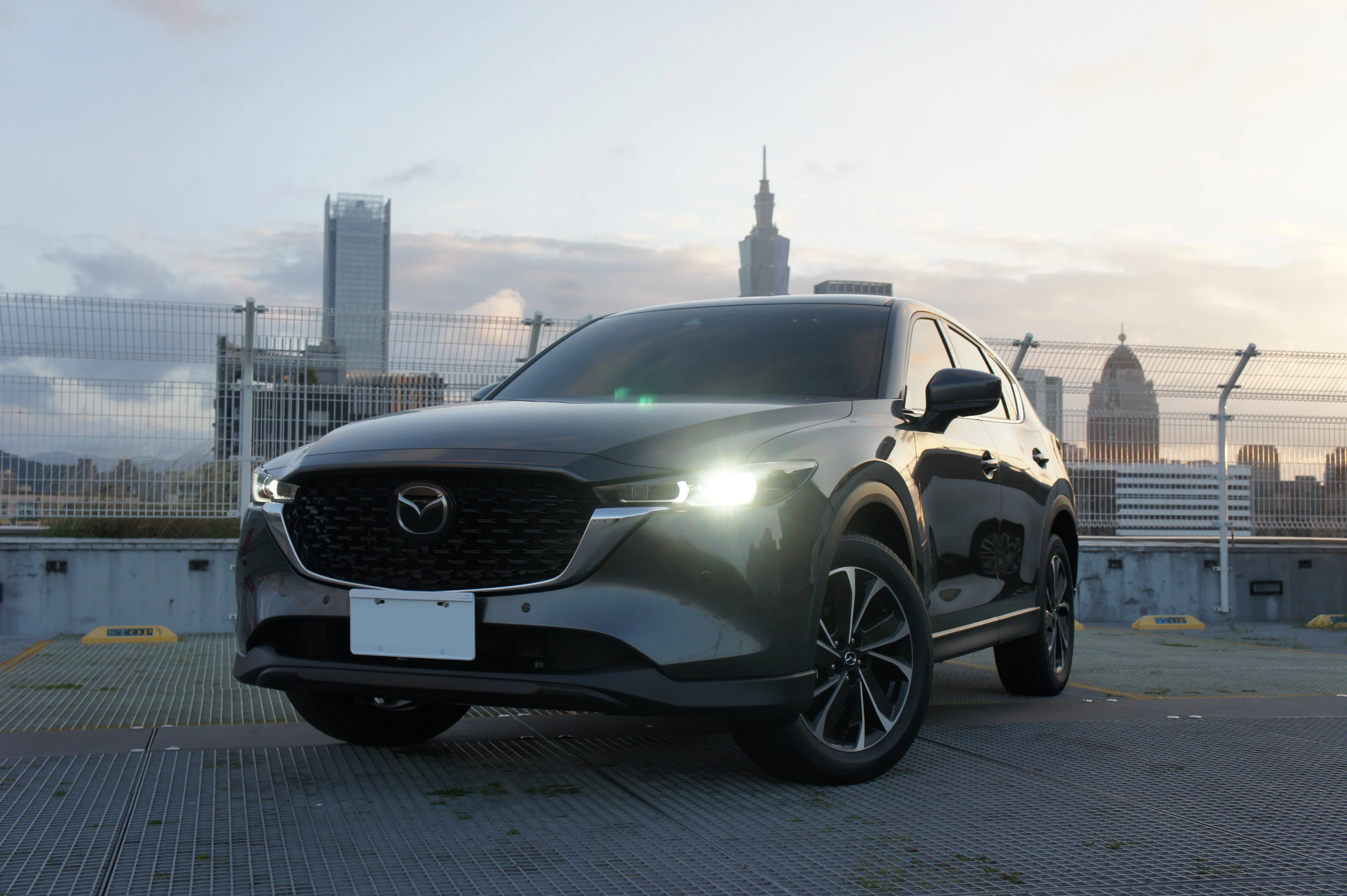
The CX-5 hides one socket that stays alive with the key out
Here's what the reps won't tell you about powering a camp out of a Mazda CX-5: most of its 12V sockets die the second you pull the key, but one of them - the console/rear outlet on Some Models - is listed in Mazda's own manual as live regardless of whether the ignition is on or off. That single line is the difference between a fridge that runs all night and a fridge that quits when you shut the car down. It's also the detail nobody prints on the window sticker.
So this page does the mechanic's version of a walk-around. It maps every 12V socket in the CX-5, gives you the one number that actually caps your gear (120 watts), lists the fuses that protect each circuit with their amp ratings, and then flags the one thing that keeps this from being simple - an owner who metered a 2023 car and found every socket switched. Read it before you wire anything, because the CX-5 gives you a genuinely useful always-on circuit, but only if yours is wired the way the book says.
One more thing worth setting straight up front: the 120-watt cap Mazda prints (120 W, DC 12V, 10A, per the owner's manual) is a per-socket device rating, not a whole-car budget. That distinction bites the moment you stack a fridge, a fan and a charger on one outlet, and I'll come back to it once the sockets are mapped.
Where the power sits, front to console
Mazda puts 12V power in two or three places in the CX-5 depending on your trim, and knowing which is which decides where your gear lives.
- Front, lower center dash: the main accessory socket, on every trim, right below the climate stack (Mazda USA manual). This is the one everyone finds; it's also the one that dies with the key.
- Center console / rear socket: listed as 'Some Models' in Mazda's manual - trim-dependent, and the important one for camping because the manual describes it as always-on.
- Cargo-area socket: not documented for standard US trims. If yours has one back there, treat it as a bonus and meter it before you plan around it.
There's also a USB port in the armrest console box - 5 volts, 2.1 amps, charging only, and always powered per the manual. That's fine for a phone, useless for a fridge. The takeaway a shopper misses: the CX-5's power story isn't 'how many sockets,' it's 'which socket keeps working when the engine is off,' and that's a console/trim question, not a count.
Physically, the front socket sits low on the center stack where a cable reaches the cupholders, while the console socket - when your trim carries it - lives at the back of the console bin or on the rear face for second-row riders (Mazda manual). That placement is a quiet gift for camping: a fridge in the cargo area reaches a rear-console outlet with a short lead, no cord snaking the length of the cabin.
The real ceiling is 120 watts, not the fuse rating
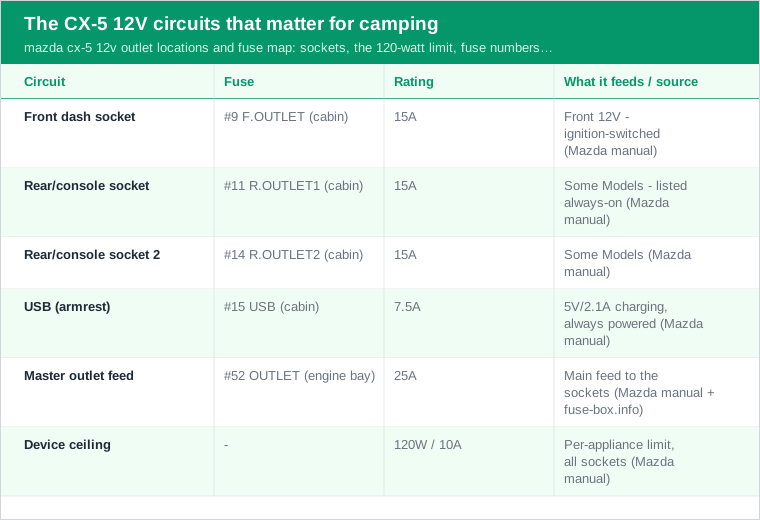
The number that decides what you can plug in is the one campers ignore: Mazda specifies 'no greater than 120 W (DC 12V, 10A)' for the CX-5 accessory sockets. That's the device limit, and it's the one that matters. The 15-amp fuse behind the socket protects the wiring, not your gear - blow past 120 watts and you're cooking a circuit the fuse was never sized to save you from.
Read the wattage, not the fuse. A 15-amp fuse looks like it allows 180 watts; Mazda rates the socket at 120. The fuse is the wire's insurance policy, not your appliance's permission slip.
What 120 watts buys you in practice: a 45-watt 12V compressor fridge with headroom, a fan, LED lights, and phone charging - all at once, comfortably. What it doesn't buy you: anything with a heating element. A 12V kettle, a hair dryer off an inverter, a resistance blanket that pulls real current - those are the loads that trip the socket. Size your camp around the 120-watt line and the CX-5's electrical system never becomes the story.
Run the arithmetic and the cap turns concrete. Mazda's 120 watts at 12 volts works out to 10 amps of draw - 120 divided by 12 - which is why the manual prints both figures together. A 45-watt compressor fridge, the Alpicool's rated pull, sits near 3.75 amps, so it spends roughly a third of the socket's rated budget and leaves about 75 watts for lights and charging. The armrest USB is a rounding error beside that: 5 volts at 2.1 amps is close to 10.5 watts (Mazda manual), which is why it never elbows the socket circuit for headroom.
Which outlet survives the key coming out
This is the whole ballgame for overnight power, and the CX-5 splits its sockets in two. Per Mazda's manual, the front dash socket is ignition-switched - it only has power in ACC or ON, so it goes dead when you pull the key and shut the car down. The console/rear socket on Some Models is described the opposite way: usable 'regardless of whether the ignition is on or off.' That constant socket is the one you want a fridge on.
Why it matters more here than in most rivals: I mapped the Subaru Outback, the Honda CR-V and others for camping, and on those every factory socket is switched - they all die with the key. Our companion Subaru Outback 12V and fuse-map breakdown walks that all-switched layout in detail. The CX-5 documenting a genuine always-on outlet is a real, unusual advantage for a car camper - if your specific car actually has it wired that way, which is exactly the catch in the next section.
The mechanism behind the split is ordinary relay logic. The front socket hangs off the accessory bus the ignition switch de-energizes in OFF, while the constant socket taps a permanently hot feed (Mazda manual). Nothing exotic about it - it's the same wiring idea behind a courtesy light that stays live - but Mazda is one of the few in the compact class to run a passenger socket that way and put it in writing.
The CX-5 fuse map: five outlet fuses and one master feed
Here's the fuse layout for the power circuits, straight off Mazda's diagram, so you can find the right one when a socket goes dead. The outlet fuses live in the interior box in the driver's-side kick panel; the master feed is under the hood.
- #9 F.OUTLET, 15A - the front dash socket (Mazda manual).
- #11 R.OUTLET1, 15A and #14 R.OUTLET2, 15A - the rear/console sockets on Some Models (Mazda manual).
- #15 USB, 7.5A - the armrest USB port (Mazda manual).
- #52 OUTLET, 25A - the master feed under the hood that supplies the socket circuits (Mazda manual and fuse-box.info agree).
One honesty flag, because a wrong fuse number is worse than none: the fuse table above is verified against the 2017 KF manual, and aggregators claim the layout carries forward to the current cars, but I could not confirm a per-year 2021-2024 official table. A fuse-box.info listing adds an '#3 R.OUTLET3' that isn't in the manual I read - treat that one as aggregator-only. Which physical socket maps to R.OUTLET1 versus R.OUTLET2 is inferred, not spelled out. Bottom line: match these to the printed diagram on your own fuse-box lid before you pull anything.
One more thing on how the two boxes relate, because it saves a wrong pull. The cabin fuses - #9, #11, #14 and #15 - each guard a single socket branch, while #52 under the hood is the 25-amp trunk feeding the whole outlet group (Mazda manual, echoed by fuse-box.info). Dead sockets across the board point at #52 first; a single dead socket points at its matching cabin fuse. The engine-bay box sits beside the battery, and its lid carries its own legend - trust that stamped diagram over any web table.
The always-on socket that one owner says isn't
Now the catch, and it's the reason the meter matters. Mazda's manual describes the console/rear socket as always-on. Several owners across 2017, 2020, 2022 and 2024 cars confirm exactly that - a rear socket that stays hot with the key out. But a 2023 owner reported on the Mazdas247 forum that on their car, every socket including the rear one died with the ignition. That's not a typo in the manual; it reads like a market- or build-specific wiring difference.
Never trust a spec sheet with your starting battery. The CX-5 manual says the rear socket is always-on; one owner's meter said otherwise. A two-dollar test light settles it for your VIN in ten seconds.
The fix costs nothing but a minute. With the engine off and the key out of the car, put a multimeter or a cheap test light across the rear socket. Twelve-plus volts means you have the always-on circuit and can run a fridge there. Dead means yours is switched like the front, and you need the direct-to-battery plan below. Do this before your first trip, not on night two when the food's already warm.
Weigh the evidence honestly while you're at it. The manual is the official word and it says constant; owners of 2017, 2020, 2022 and 2024 cars echo that on the Mazdas247 threads; the lone 2023 counter-report is a single owner's finding, not a recall or a manual revision. A regional or build-level wiring variance explains it far better than a defect would - but 'probably' stops being good enough when a flattened starting battery is the downside, and that is the entire reason the ten-second check pays for itself.
There is no 120-volt outlet, so plan the inverter
Don't go looking for a household plug in a CX-5 - Mazda doesn't build one into any trim or year. Owners who want 120-volt AC add an aftermarket inverter; the factory gives you 12V sockets and USB, full stop. That's the spec, and it's worth stating plainly because recycled SEO blogs sometimes imply higher trims get an AC outlet. They don't.
What that means for your kit:
- Small AC loads: a compact inverter on the 12V socket handles a laptop charger, but respect the 120-watt socket ceiling - a 300-watt inverter pulling hard will trip it.
- Anything real: skip the inverter entirely and carry a power station with its own AC outlet. It's cleaner, quieter, and it doesn't lean on the car at all.
The engineering point: an inverter converts the same limited 12V budget into AC and adds losses. For camping, a standalone battery you recharge while driving beats squeezing AC out of a socket Mazda capped at 120 watts.
Size any inverter to the socket, not to the appliance sticker. A laptop brick labeled 90 watts pulls that plus the inverter's own conversion losses, so it edges toward the 120-watt ceiling (Mazda manual) faster than the label hints. The same trap hides in a 300-watt unit: its rating is what it can deliver, not what the CX-5 will allow, and the 10-amp socket fuse decides the real limit long before the inverter reaches its own.
What the CX-5 runs overnight without a dead start
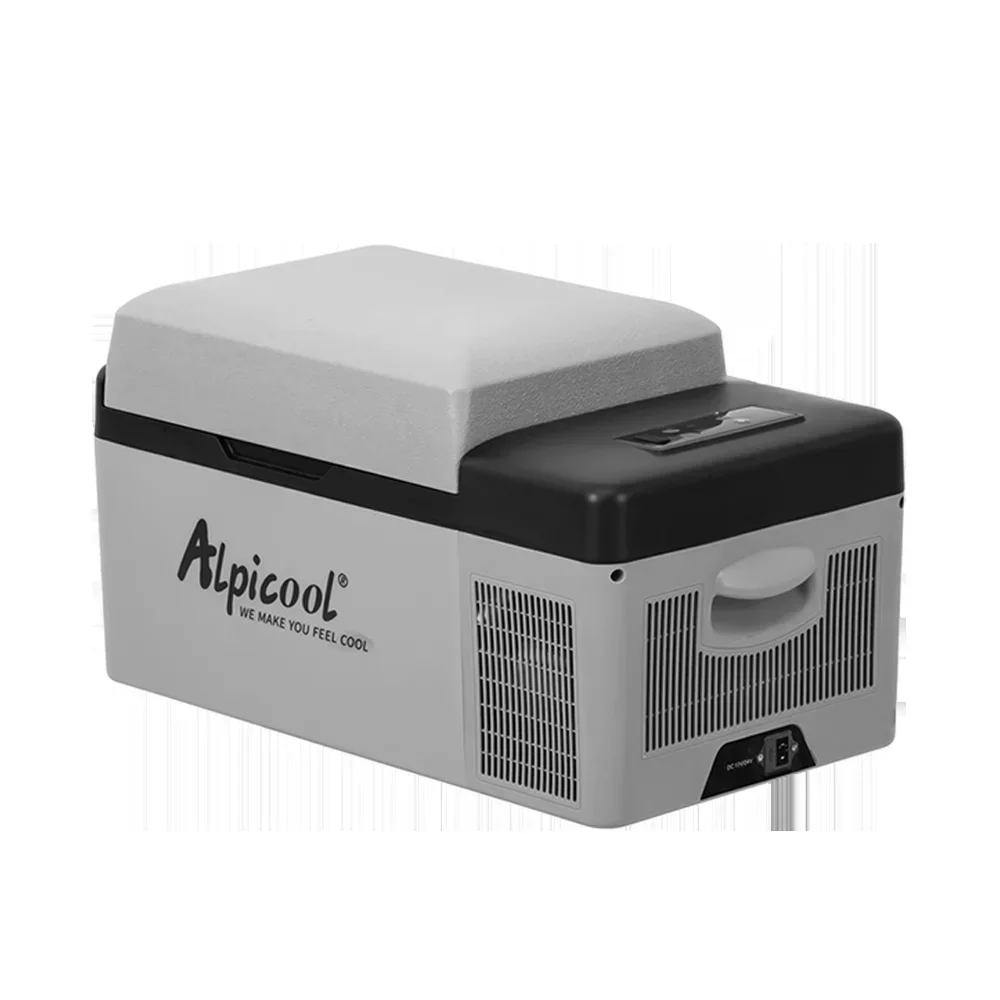
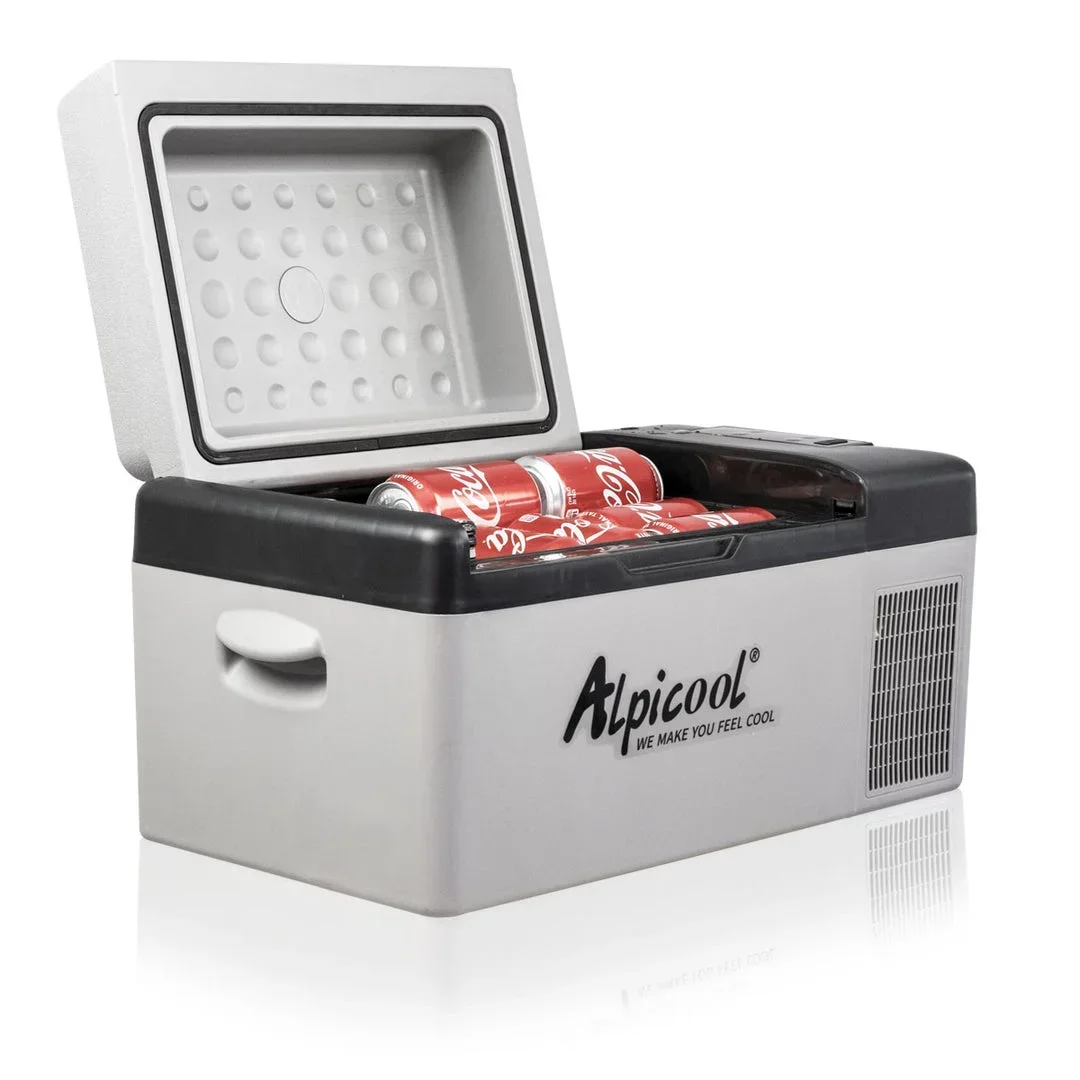
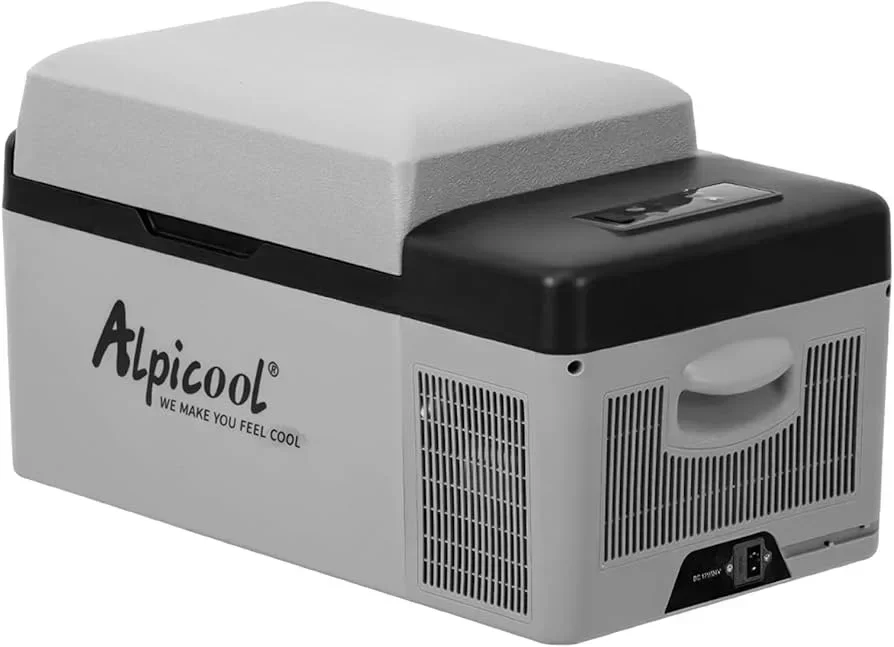
Put the pieces together and here's the honest overnight picture. If your CX-5 has the documented always-on rear socket, it will run a modern 12V compressor fridge through the night - a Alpicool C20 pulls around 45 watts when the compressor cycles, well inside the 120-watt cap, and it's the classic socket load for exactly this car. If your socket is switched, that same fridge drains your starting battery instead, and you wake up to a click.
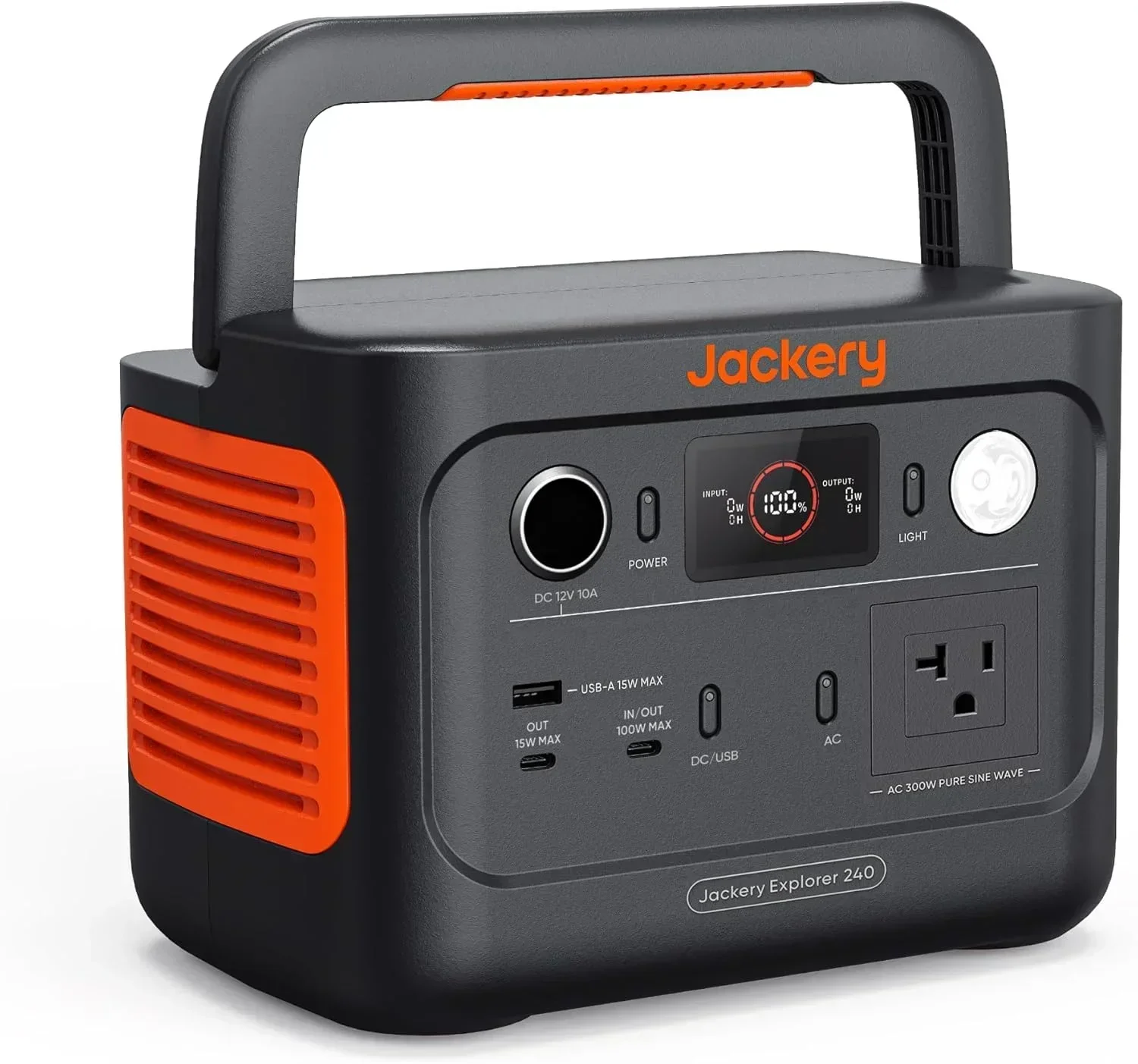
The reliable answer either way is to stop asking the car to be a battery. A Jackery Explorer 240 v2 power station runs the fridge, a fan and a night of charging off its own 256 watt-hours, then tops back up from the 12V socket while you drive to the next spot. That's the setup I'd run in a CX-5 regardless of how the rear socket is wired: fridge on the station, station recharged on the move, the car's own battery untouched and ready to start in the morning. The full build lives in our sleeping in a CX-5 guide.
Put rough numbers on it using only the rated figures. The station's rated 256 watt-hours against the fridge's roughly 45-watt compressor pencils out near 5.7 hours if that compressor never cycled off - and it always does, holding temperature maybe half the time on a cool night, so those same 256 watt-hours realistically cover a full night with margin left for a fan. Then the drive to the next site refills the station through the 12V socket, and the loop repeats with the CX-5's own battery never once in the math.
Running a fridge off a direct-to-battery lead
If you'd rather wire it in than carry a station, the CX-5's switched sockets push you to a direct-to-battery lead - and it's a fine solution done right. You run a fused wire from the battery to the cargo area with an inline fuse sized to your load, ideally through a low-voltage cutoff so the fridge shuts off before it drains the start battery too far.
- Fuse it at the battery. An inline fuse within a few inches of the positive terminal protects the whole run - this is the step people skip and the reason a chafed wire becomes a fire.
- Add a voltage cutoff. A cheap battery guard kills the fridge at a set voltage so you always have enough left to crank in the morning.
- Or tap the confirmed always-on socket instead. If your meter showed the rear socket is live with the key out, you may not need to wire anything - just respect the 120-watt cap.
- Match the wire to the distance, not the fridge. A cargo-area fridge sits a long cable-run from the battery, and voltage drop over that length is real; err toward heavier-gauge wire so the compressor sees close to a full 12 volts instead of straining on a sagging feed.
Honest scope: a direct lead is the right call for someone who camps often and wants set-and-forget power. For everyone else, the power station is less work and does more. Pick the one that matches how often you actually sleep in the car.
The bottom line on Mazda CX-5 camp power
The Mazda CX-5 is a better camping power platform than its size suggests, for one specific reason: it's the rare compact that documents an always-on 12V socket, so a fridge can run overnight without a single wire added - if your car is wired the way the book says. Everything else is ordinary in the good way. Sockets capped at 120 watts, fuses at #9, #11 and #14 in the cabin plus a 25-amp master under the hood, no factory 120-volt outlet, and a USB port that charges a phone.
Meter the rear socket before your first trip. Always-on means a fridge runs itself; switched means you carry a power station or wire a fused lead. Ten seconds with a test light tells you which CX-5 you own.
Do that one check, keep every load under 120 watts, and the CX-5 handles a weekend of camp power cleanly. And if your socket comes back switched - most of the segment is - a power station on the recharge-while-driving plan makes the whole question moot.
Ranked against the compact crowd I've mapped, the CX-5 lands a notch ahead on exactly one axis - that documented constant socket - and dead average on everything else, which is an honest place to sit. The 120-watt cap, the #9/#11/#14 cabin fuses and the #52 master under the hood (Mazda manual) are the same shape of system you meet across the class. The always-on socket is the edge; the meter is what turns that edge from a brochure line into power you can actually sleep on.
Related on Auto Roamer: CX-5 vs RAV4 for camping; CX-5 cargo dimensions.