
Chevy Colorado Bed Dimensions for Camping: The Direct Answer
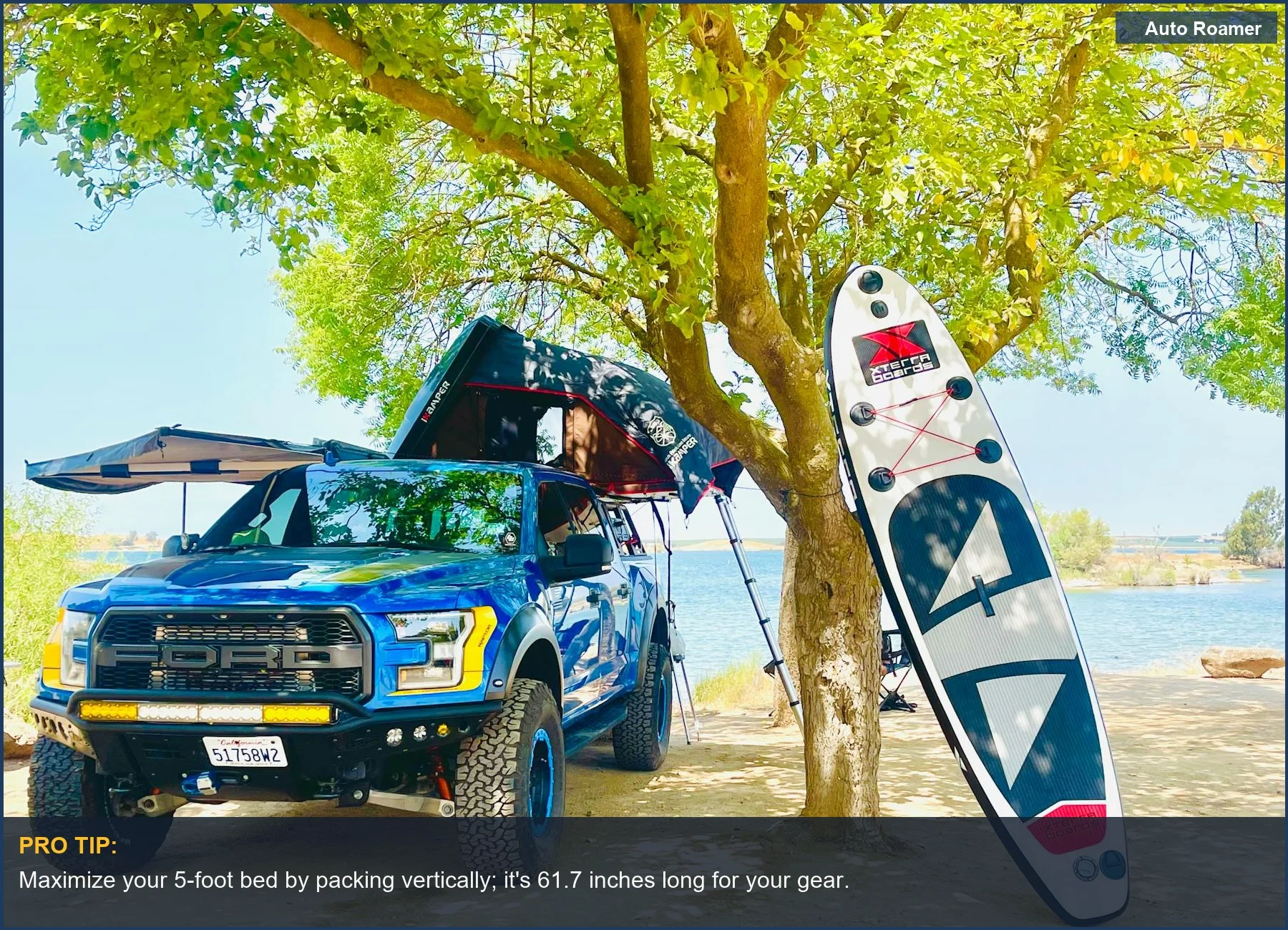
The Chevrolet Colorado comes in two bed lengths, and which one you have decides whether you can sleep flat inside. The short bed (roughly 5'2") measures about 61.7 inches long at the floor, and the long bed (roughly 6'2") measures about 74 inches long — an extra 12-plus inches that matters a lot when you lie down. Both share the same width: about 58.8 inches across the floor but only about 44.5–45.5 inches between the wheel wells, which is the real constraint on how wide a mattress or platform can sit flat on the bed floor. Bed depth is roughly 20 inches (Chevrolet).
Can a six-foot adult sleep flat? Not in the short bed with the tailgate up — 61.7 inches is about 5'1.7", so a 6-foot (72-inch) person comes up roughly 10 inches short and has to bend, sleep diagonally, or drop the tailgate. Drop the tailgate and the short bed gains roughly 18–20 more inches of open length, putting it near 80 inches — enough for a tall adult to stretch out, though the tailgate gap needs filling. The long bed at 74 inches already clears 6 feet with the tailgate up, which is why it's the easier platform for sleeping inside.
Quick rule of thumb: long bed = sleep flat inside, tailgate up. Short bed = sleep flat only with the tailgate down (and the gap bridged) or by going diagonal. Either bed is too narrow between the wheel wells (about 45 inches) for two adults to lie side by side at floor level without building up over the wheel humps.
Everything below is the detailed version of those numbers: how each config measures up for sleeping, how to use the tailgate and a bed extender, whether a tent, topper, or platform suits you, what mattress size actually fits, and the weatherproofing, security, and power details that turn a truck bed into a place you can actually rest. All dimensions here are published manufacturer and dealer figures, attributed inline — not something we measured ourselves.
Bed Dimensions by Configuration (Published Specs)
Chevrolet offers the Colorado with two cargo-box lengths, and the numbers that matter for camping are length, the two widths (floor versus between the wheel wells), and depth. Here is how the published figures break down:
- Short bed (5'2" / about 61.7 in long): the standard box on most crew-cab Colorados, with roughly 41.9 cubic feet of cargo volume (Rudolph Chevrolet). Compact, but workable for one sleeper or for gear plus a rooftop or bed tent.
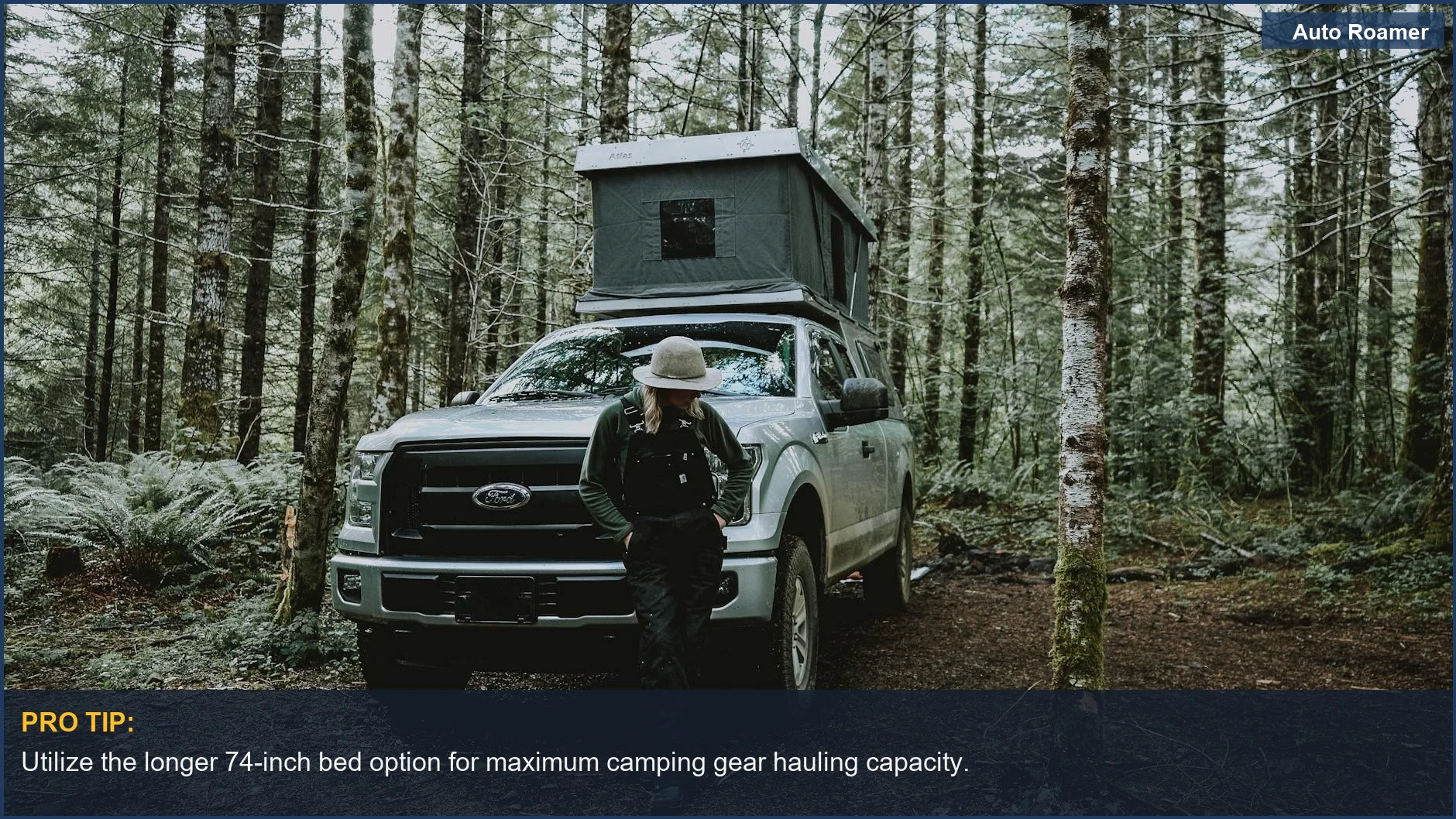
- Long bed (6'2" / about 74 in long): adds roughly 12 inches of length and pushes cargo volume to nearly 49.9 cubic feet (Queen Dimensions). The extra foot is the difference between feet-hanging-out and stretching flat.
- Width at the floor: about 58.8 inches side to side at the bed floor on both lengths (Offroad Tents).
- Width between the wheel wells: the pinch point, about 44.5–45.5 inches (Rudolph Chevrolet). Anything wider than this has to ride on top of the wheel humps, not down on the floor.
- Depth: roughly 20–21 inches of sidewall height (Queen Dimensions) — enough to contain a mattress and bedding below the rail line.
Two practical takeaways fall out of those numbers. First, the floor is wide (about 59 in) but the usable-flat width is narrow (about 45 in) because the wheel wells intrude — so a full-width sleeping surface almost always means a platform built level with or above the wheel humps. Second, length, not width, is the deciding spec for a single tall sleeper: the long bed's 74 inches clears six feet, while the short bed's 61.7 needs the tailgate down to get there.
A note on year-to-year consistency: these figures are stable across recent Colorado generations and closely match the mechanically related GMC Canyon, but Chevrolet lists official cargo-box dimensions on the vehicle's specs page, and that — or your own tape measure on the actual truck — is the final word before you cut foam or build a frame.
Can You Sleep Flat? Tailgate Down and Bed Extenders
The single most-asked question is whether a normal-height adult can lie down flat, and the honest answer depends entirely on your bed length and whether the tailgate is up or down.
- Long bed, tailgate up (about 74 in): a 6-foot adult fits with a couple of inches to spare. This is the cleanest sleeping setup — a sealed, enclosed box if you add a topper or tent, no gap to bridge.
- Short bed, tailgate up (about 61.7 in): too short for anyone much over about 5'1" to lie straight. Workable for a child, a shorter adult, or anyone willing to sleep with knees bent or diagonally — a diagonal line across a 59-by-62-inch floor buys several extra inches of effective length.
- Short bed, tailgate down: dropping the tailgate adds roughly 18–20 inches of open length, taking the sleeping run to around 80 inches — comfortably past six feet. The catch is that the tailgate sits a step lower than the bed floor and the tailgate itself is a separate, slightly angled surface, so you need to bridge that gap.
Bridging the tailgate gap is what a truck bed extender is for. These are the U- or T-shaped aluminum frames that fold out over a dropped tailgate to create a continuous, supported platform from the bed floor out to the end of the tailgate. With an extender in place and a mattress or platform spanning it, a short-bed Colorado becomes a genuine flat bed long enough for a tall sleeper. Without one, you're relying on the tailgate and a thick mattress to span the step, which works but leaves a soft, lower section under your legs.
If you'd rather not deal with the gap at all, the two alternatives are to build a platform sized to the bed (covered next) or to sleep on a diagonal in the short bed and accept a snugger fit. For width, remember the constraint is the wheel wells: a single sleeper has plenty of room on the roughly 45-inch flat floor, but two adults lying side by side need a surface built up level with the wheel humps to use the full 59-inch floor width — the same principle behind a DIY car camping sleeping platform.
Truck Bed Tent vs. Topper vs. Sleeping Platform
Once you know the dimensions, the next decision is what structure turns the open bed into a weatherproof sleeping space. There are three common approaches, and they suit different budgets and travel styles rather than one being strictly better.
- Truck bed tent: a fabric tent that pitches inside the bed walls, sized to the 5- or 6-foot box. Cheapest and lightest, packs away when you need the bed for hauling, and gives you standing-free but sheltered sleeping. The trade-offs are weather sealing (it's still a tent) and that you're setting it up and tearing it down each trip. Bed tents are sold in model-specific sizes, so match it to your exact bed length.
- Topper / canopy (camper shell): a hard or pop-up shell that bolts over the bed, turning it into an enclosed, lockable, weatherproof box. This is the most comfortable and secure option for regular use — rain-tight, private, and you can leave a mattress set up inside — but it's the most expensive, adds permanent height and weight, and keeps the bed semi-committed to camping duty.
- Sleeping platform: a raised wood or aluminum deck built to the bed's dimensions, creating a flat sleeping surface on top with gear storage in the drawers or cavity underneath. It solves the wheel-well width problem (the deck spans level above the humps) and the tailgate step, and it pairs with either a bed tent or a topper for shelter. It's a build project, but it's the setup most serious truck campers settle on.
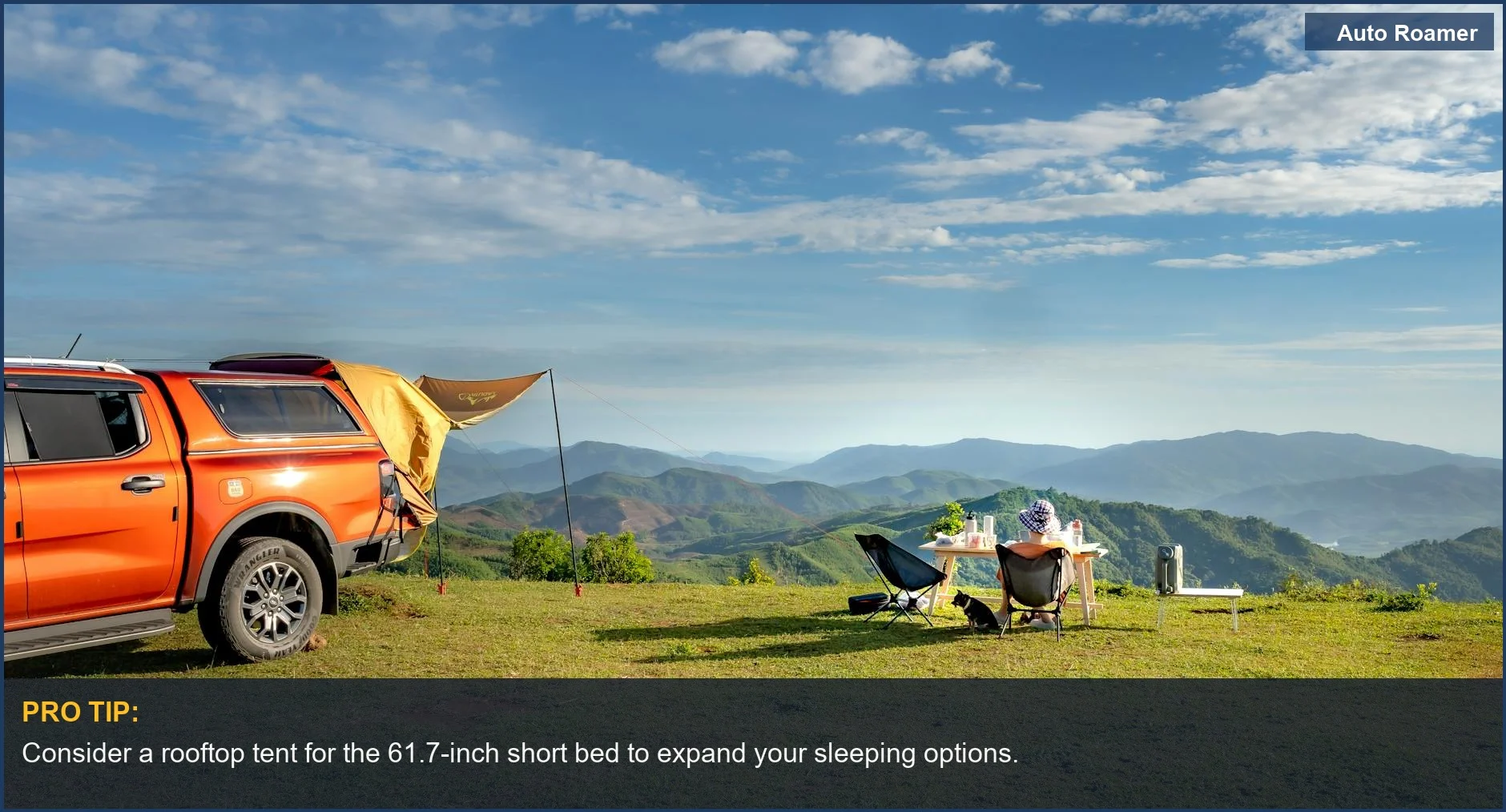
A fourth option sits above the bed entirely: a rooftop tent mounted on a bed rack. That leaves the bed itself free for gear and gives you a tent-style sleeping platform off the ground, at the cost of height, weight, and a bigger up-front spend.
The quick way to choose: occasional trips and a tight budget point to a bed tent; frequent or year-round use points to a topper; wanting a permanent flat bed with under-deck storage points to a platform. Many owners combine them — a platform for the flat surface and a topper or tent for shelter.
Whichever route you take, the dimensions above are what you size it to. A bed tent must match your 5- or 6-foot box; a platform's deck width is set by the 58.8-inch floor and the height of the wheel wells; and a topper is chosen by bed length and the truck's bed-rail profile.
Mattress Sizing for a Colorado Truck Bed
Picking a mattress is really a matter of matching it to those two width numbers — about 45 inches between the wheel wells and about 59 inches across the full floor — and to your bed length. Standard mattress sizes map onto the Colorado like this:
- Twin (about 38 x 75 in): the natural fit for the floor between the wheel wells. At about 38 inches wide it slots into the roughly 45-inch flat channel with room to spare, and at 75 inches long it needs the long bed or the tailgate down on a short bed. A great one-person setup.
- Full / Double (about 54 x 75 in): at 54 inches it is wider than the wheel-well gap, so it only lies flat if you build a platform level with the humps or accept it riding up over them. On a platform spanning the full floor it works well for one larger sleeper or a snug two.
- Queen (about 60 x 80 in): 60 inches is right at the 59-inch floor width — it'll fit edge-to-edge on a flat platform but never down between the 45-inch wheel wells — and at 80 inches long it demands the long bed plus the tailgate down or an extender. Doable, but it is the maximum the bed will take.
- Truck-bed-specific air mattresses: mid-size-truck air mattresses are cut to wrap around the wheel wells, filling the floor and the humps as one surface. For most people this is the simplest way to get a full-width bed without building a platform — just match it to a mid-size (Colorado/Canyon/Tacoma/Ranger) bed, not a full-size one.
The general principle — measure your bed's three numbers and work backward to a size that fits both width and length — applies to any vehicle; we cover it in depth in choosing a car camping mattress by vehicle and how to choose an air mattress size. For the Colorado specifically, the takeaway is that length is set by your bed choice and tailgate, while width forces a decision: stay narrow (twin) on the floor, or go wide on a platform that spans the wheel wells.
Weatherproofing and Security in the Bed
Sleeping in an open truck bed leaves you exposed to weather and to anyone walking by, so the shelter you chose above is doing double duty: keeping water out and keeping the space private and lockable. A few specifics are worth planning for.
Weather. A camper-shell topper is the only option that is genuinely rain-tight and sealable; a bed tent sheds rain like any tent but can leak at the bed-rail seam in hard weather, and an open bed under a rooftop tent leaves your gear in the bed exposed unless you add a tonneau cover. Whatever you use, the same condensation physics apply as in any vehicle — warm breath against cold surfaces — so cross-ventilation matters even in a sealed topper. The general fix (crack two openings for airflow, manage moisture, never seal yourself in completely) is the same one that applies to blocking windows for privacy without trapping moisture.
Security and privacy. An open bed offers neither, which is the strongest practical argument for a lockable topper if you camp in populated areas. A topper lets you lock the tailgate and shell, keeps gear out of sight, and gives you a private space to change and sleep. A bed tent zips closed but isn't lockable, and a platform with under-deck drawers can be locked even on an open bed to protect valuables. If you stealth-camp in towns, the topper-plus-window-covers combination is the most discreet.
Insulation and temperature. A metal truck bed and single-layer shell swing hot and cold with the outside air, so plan for it: a closed-cell foam pad or platform deck under your mattress cuts the cold rising from the metal floor, and reflective covers on a topper's windows help on both hot and cold nights. There's no built-in climate control in a bed, so warmth comes from your sleep system, not from sealing the space or — never — idling the engine.
One more weatherproofing detail is specific to the truck-bed layout: water and wind both attack the seams. A bed tent or topper meets the bed rail along a long horizontal joint, and that joint is where drips and drafts get in, so favor designs that clamp or seal to the rail rather than just resting on it. Drainage matters too — an open bed under a tonneau cover can pool water in a heavy storm, so park slightly nose-up or use a cover that sheds toward the tailgate. None of this is exotic; it's the same attention to seams and runoff that keeps any tent dry, applied to the particular geometry of a pickup box.
Power: Outlets and Keeping Devices Charged
Modern Colorados carry useful onboard power for camping, but it's worth being precise about what's available and what you should bring. Chevrolet equips the truck with USB ports in the cab and offers bed-mounted power outlets on higher trims and option packages — the kind of 120-volt household-style outlet that can run small appliances or charge larger electronics from the bed (Chevrolet). Availability and wattage vary by trim and model year, so confirm what your specific truck has rather than assuming.
For overnight camping, the important caution is the same on any vehicle: running accessories off the truck's battery while the engine is off can flatten it. Cab 12V sockets and some outlets stay live with the ignition off, so a fan, lights, or a fridge drawing through the night can leave you unable to start in the morning. That risk is exactly why most car campers bring an independent power source instead:
- A portable power station isolates your camp loads from the starter battery and runs a fridge, fan, lights, and device charging for a night or more — see our picks for a portable power station for car camping under $500.
- A 12V fridge or cooler pairs naturally with that station; the same setup keeps a portable fridge for car camping running without touching the truck battery.
- USB-rechargeable lights and fans sidestep the wiring entirely — charge them by day, run them by night.
The honest summary on power: the Colorado's onboard outlets are a convenience for charging and short runs, not a substitute for a dedicated camp battery. Treat the truck's bed outlet as a bonus, keep an eye on the starter battery, and carry independent power for anything you need to run all night.
Who the Colorado Bed Fits (and Who Should Look Elsewhere)
Pulling the specs together, here's an honest read on who the Colorado's bed serves well for camping and who will find it tight — based on the published dimensions, not on a test we ran.
It fits well for:
- Solo campers — either bed length sleeps one person comfortably, the long bed with the tailgate up and the short bed with the tailgate down or on a diagonal. The roughly 45-inch flat floor is plenty wide for one.
- Couples willing to build up — a platform level with the wheel wells uses the full 58.8-inch floor width, enough for two snug sleepers on a full or queen surface, best in the long bed.
- Gear-plus-shelter setups — with 42 to 50 cubic feet of volume and a rooftop or bed tent, the Colorado carries a lot of kit and still sleeps a person.
It's tight for:
- Two adults who want to sleep side by side at floor level — the 45-inch wheel-well gap rules that out without a platform.
- Tall sleepers with only the short bed and no extender — 61.7 inches simply isn't six feet; you'll be dropping the tailgate or going diagonal every night.
- Anyone wanting a full-size-truck experience — the Colorado is a mid-size, so its bed is shorter and narrower than a half-ton's. If you routinely need a flat 6.5- or 8-foot bed, a full-size truck is the better base.
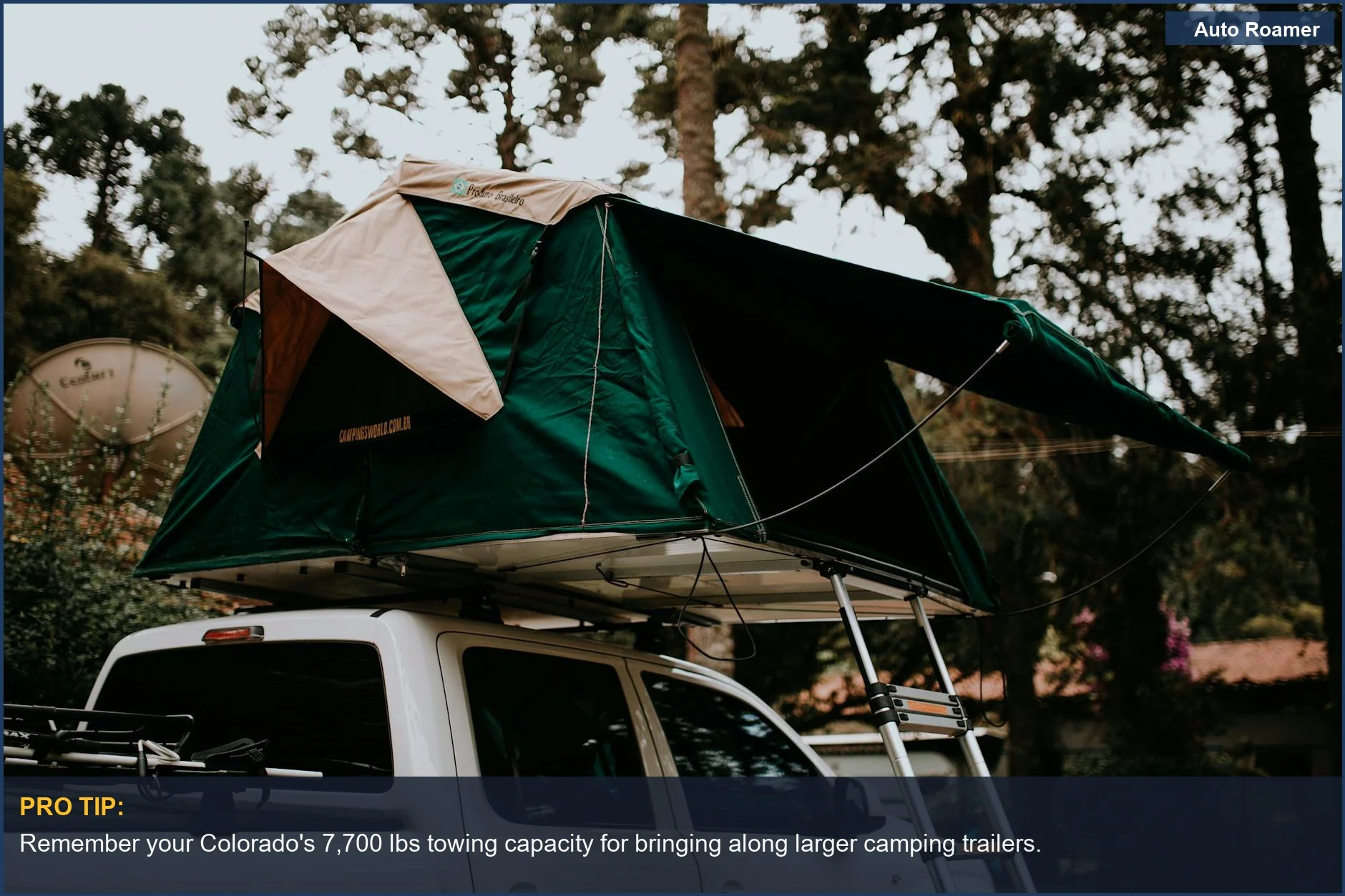
For comparison shoppers, the mid-size and full-size alternatives are worth a look: the similarly sized Ford Ranger trades blow-for-blow on bed dimensions, the larger Ram 1500 crew cab offers a roomier full-size bed, and for an enclosed alternative entirely, a Chevy Suburban camping setup sleeps inside the cabin instead of an open bed. If towing a trailer is part of your plan, the Colorado's roughly 7,700-lb max tow rating is competitive for the class (Chevrolet) — in the same league as rivals like the Toyota Tacoma.
The honest bottom line on the Colorado as a camping base is that it rewards a little planning. Its bed is genuinely usable for sleeping — more so than most car cargo areas — but only once you've matched the right config and setup to your body and how you travel. Decide first whether you can live with the short bed's length or need the long bed; then decide whether you'll sleep on the floor (narrow, twin-width) or build up over the wheel wells for full width; then choose the shelter that fits your budget and frequency. Get those three choices right against the published dimensions above and the Colorado is a capable, comfortable platform for one and a workable one for two; get them wrong and you'll spend every night fighting the bed instead of resting in it.