The Tacoma bed decision that decides your sleep
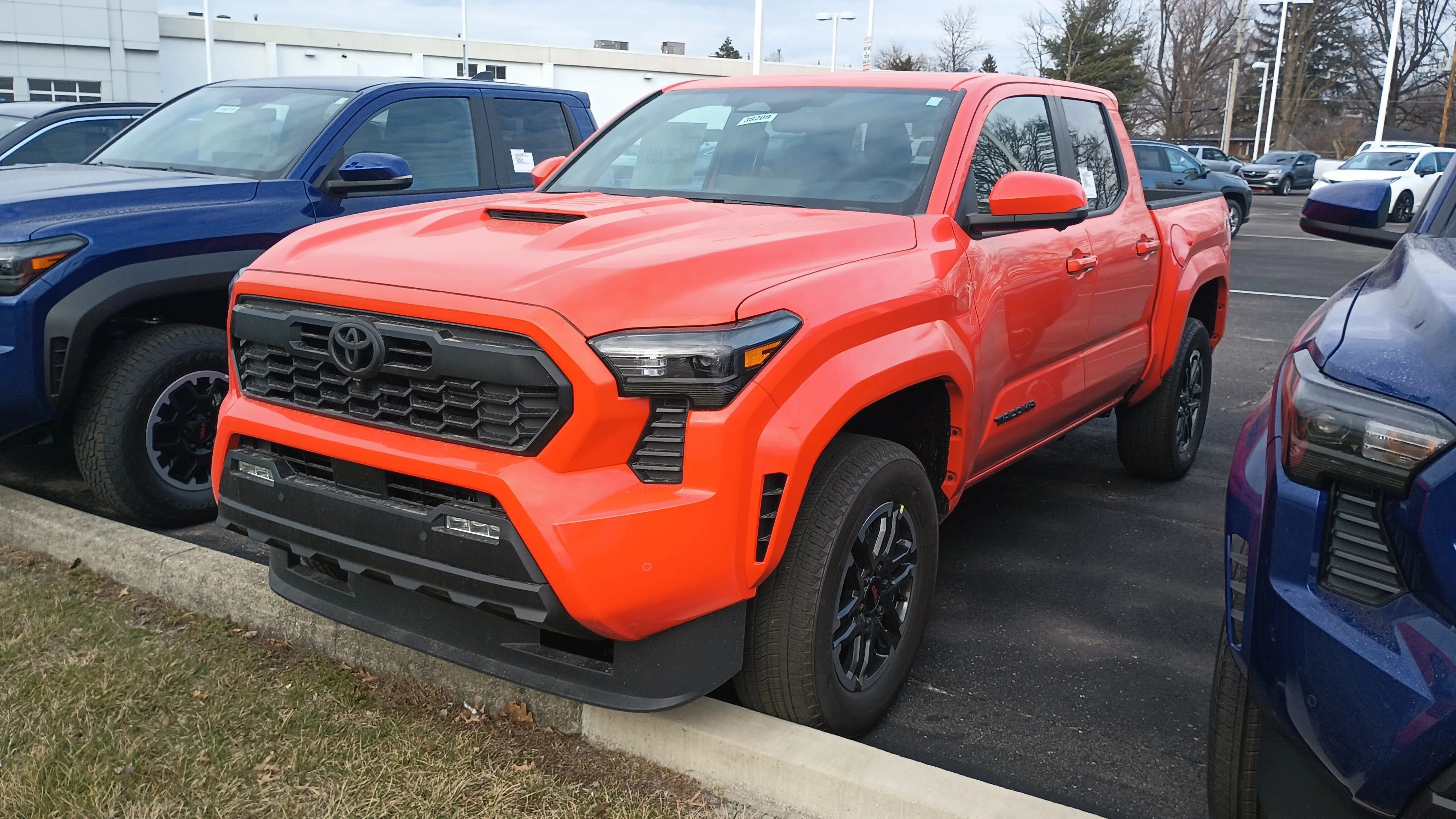
Engineer a truck-bed sleeping setup like a system and the Tacoma's single most important variable isn't a mattress or a tent - it's which bed you bought. The 4th-generation Tacoma comes with a 5-foot bed or a 6-foot bed, and the gap between them, 60.3 inches versus 73.5 inches of floor, is exactly the line between 'sleeps flat with the tailgate closed' and 'needs the tailgate down and a plan.' Get that decision right and the rest is easy; get it wrong and you're building around a bed that's too short for your body.
This page reasons through the Tacoma bed as a sleeping platform from the real numbers: both bed lengths, the width between the wheel wells that caps your mattress, the depth of the walls, and the one number Toyota doesn't publish (tailgate-down length). Then it covers the Tacoma's genuine camp-power trump card - the i-FORCE MAX hybrid's 2400-watt inverter - and how to keep weather and cold off you in an open bed. No fabricated test here, just the trade-offs the spec sheet implies once you read it like an engineer.
The two bed lengths: 60.3 and 73.5 inches
Start with the number that everything hinges on. Per Toyota's dealer spec sheets, the Tacoma's 5-foot bed has a floor length of 60.3 inches and the 6-foot bed measures 73.5 inches - a figure owners have confirmed by tape. Both beds share the same cross-section; only the length differs.
- 60.3 inches (5-foot bed): five feet of floor. Shorter than most adults are tall, so a flat sleep means the tailgate comes down.
- 73.5 inches (6-foot bed): just over six feet of floor - long enough that a six-foot adult lies flat with the tailgate closed and the whole thing sealed up.
The engineering takeaway is blunt: if sleeping in the bed is a real priority and you're an average-or-taller adult, the 6-foot bed is worth ordering over the 5-foot. It's the one spec that changes your whole build, and it's decided at the dealer, not in the campground. Everything below applies to both beds; the length is what separates them. The 13.2-inch delta between the two floors is more than a foot of body room, and it lands right at the shoulders-to-feet span that decides whether a taller adult clears the closed walls or spills out over the gate.
Only the 6-foot bed sleeps you flat with the gate up
Let me make the length concrete, because it's the crux. A typical adult is 66 to 72 inches tall. The 6-foot bed's 73.5-inch floor clears that - you stretch out fully inside a closed, weatherproof box. The 5-foot bed's 60.3 inches does not; five feet is a bed for a child or a very short adult unless you extend it.
The 6-foot Tacoma bed is the only configuration here that sleeps a full-size adult flat with the tailgate closed. The 5-foot bed is a tailgate-down build, full stop - plan for it or size up.
That doesn't rule out the 5-foot bed - plenty of people sleep in one - but it changes the engineering. A 5-foot bed sleeper drops the tailgate and bridges the gap with a bed extender or a platform that cantilevers over the open gate, which means your feet are outside the sealed box and exposed to weather. The 6-foot bed keeps you inside. Know which problem you're solving before you buy a topper or a tent.
Between the wheel wells: 44.7 inches
The second number that shapes your build is the width between the wheel wells, and Toyota publishes it: 44.7 inches, confirmed by owners at 44.5 to 44.75 inches. That's the pinch on the floor, and it's the real constraint on a mattress that sits down between the wells.
- 44.7 inches on the floor takes a standard twin pad (about 38 inches) easily, with room to spare, but not a full-size mattress (53-54 inches) at floor level.
- Nobody sleeps crosswise here - at 44.7 inches between the wells and even 56.4 at the rail, a truck bed this size is a lie-lengthwise proposition.
- Want the full width? Build a platform level with the wheel-well tops and you reclaim the wider 56.4-inch dimension above them (next section).
The system logic: the floor is 44.7 inches wide, the space above the wells is wider, and a platform is the lever that trades a few inches of height for the full width. For one sleeper on a pad, 44.7 inches is plenty; for a wide setup or two, you build up. Do the subtraction and the two wheel housings together eat about 11.7 inches off the 56.4-inch rail span - roughly six inches a side - which is the whole reason a floor pad and a platform pad are two different sizes on the same truck.
The widths that matter: rail, tailgate, floor
Truck beds have three widths, and confusing them is how people order the wrong mattress. For the Tacoma, Toyota gives you all three: about 56.4 inches at the deck rail (the widest usable point, up at the top of the walls), 53 inches at the tailgate opening, and the 44.7 inches between the wheel wells down on the floor.
- 56.4 in at the rail: what a platform built level with the wheel-well tops can use for its full width.
- 53 in at the tailgate: the opening you slide gear and a mattress through.
- 44.7 in on the floor: the working width if you sleep straight on the bed floor.
Read as a system: sleep on the floor and you're living in the 44.7-inch world; build a platform and you move up to the 56.4-inch world. The Tacoma gives you both options because it publishes both numbers - which is more than a lot of trucks do, and exactly the data an honest build needs.
Bed depth: 21.2 inches of wall
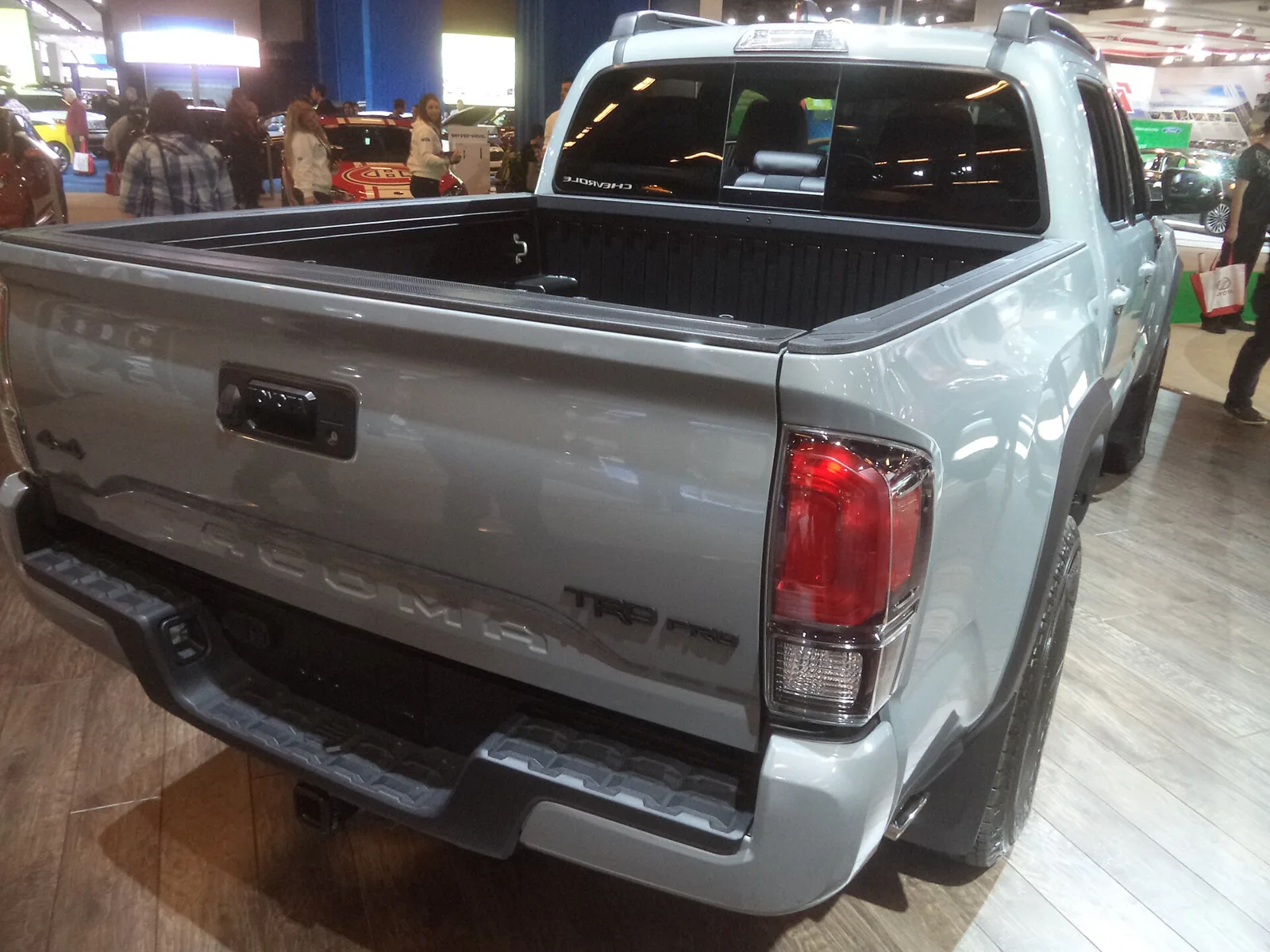
Depth is the number that decides how sheltered you are and how tall a platform you can hide. Toyota lists the Tacoma bed at 21.2 inches deep (owners measure about 19.5 inches from the bed ribs to the rail). That's a genuinely deep bed, and for a sleeper it's mostly good news.
- Weather shelter: 21 inches of steel wall blocks wind and blowing rain far better than lying in the open - the deep bed is a windbreak.
- Platform storage: deep walls mean a platform can sit high enough to stash gear underneath and still leave sitting room.
- Privacy and security: you sit below the rail line, out of sight, which matters for stealth and for your gear.
The trade-off an engineer notes: a deeper bed is a taller lift-in and a higher wall to climb over, but for sleeping, deep is a feature. The Tacoma's 21.2 inches gives you a sheltered box, not a shallow tray.
The tailgate-down length nobody publishes
Here's the honest gap, and it's the one that matters most for the 5-foot bed. Toyota does not publish how much length you gain with the tailgate down, and I couldn't find a clean owner figure either. For a 5-foot-bed sleeper who has to drop the gate, that missing number is exactly the one you need - so I won't invent it.
Tailgate-down length is the truck world's missing spec. On a 5-foot Tacoma you'll be sleeping partly over the open gate, so measure your own extended length with a tailgate mat or extender in place - don't trust an estimate.
What you can plan on: dropping the tailgate adds roughly the tailgate's own length, and a bed extender squares off the gap so a pad doesn't sag into it. But the exact usable extended length depends on your extender and how you bridge the gate, so it's a measure-your-own. The 6-foot bed sidesteps the whole question by fitting you inside the closed box - another point in its favor if you're tall.
Building a platform over the wheel wells
The classic Tacoma sleep build is a platform level with the wheel-well tops, and the engineering is simple once you have the numbers. You frame a flat deck at wheel-well height so the sleeping surface spans the full 56.4-inch rail width instead of the pinched 44.7-inch floor, with storage in the wells and floor space underneath.
- Height: set the deck at the wheel-well top; that's the natural flat plane, and it leaves you the depth above it for sitting room.
- Tie-down: the Tacoma's deck-rail cleat system anchors a frame or a mattress without drilling - use it.
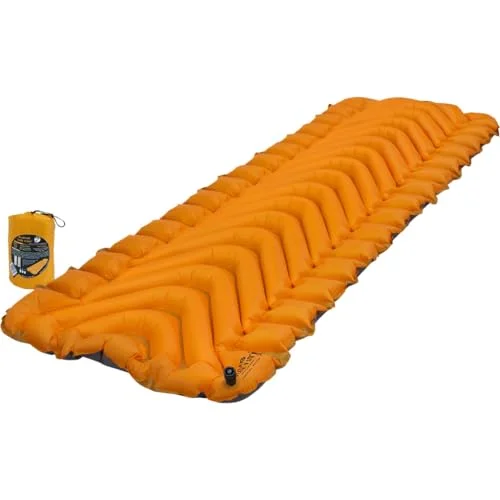
- Soften it: a rigid deck needs a real pad on top. An Klymit Insulated Static V Lite pad levels the hard surface and, because it's insulated, stops the cold that radiates up through a metal bed on a clear night.
The Tacoma doesn't have a multi-position tailgate to help here, so the platform is the move for full width. Build it to your measured numbers, anchor it to the cleats, and pad it - that's the whole system. The math on height is friendly too: the wheel-well top sits partway up the 21.2-inch wall, so a deck at that plane still leaves you well over a foot of clearance overhead for sitting up, and the volume it caps off underneath is real storage rather than dead air.
Power: the 400-watt outlet and the 2400-watt engine
Here's where the Tacoma pulls ahead of every other truck in this class, and it's worth understanding the two tiers. The gas i-FORCE trims offer an available 400-watt AC bed outlet - fine for charging and small loads. The i-FORCE MAX hybrid is a different animal: a 2400-watt AC inverter, standard, with a 120-volt outlet in the bed.
Twenty-four hundred watts from the truck itself is camp power no tent camper and few other trucks can match. On an i-FORCE MAX Tacoma the bed is a 120-volt worksite - kettle, induction burner, tools, a fridge, all of it.
The engineering honesty: the 2400-watt inverter is the hybrid, so confirm the powertrain - a gas Tacoma gets the 400-watt outlet, not the big one. And any vehicle inverter draws on the truck's system, so it's a run-it-sensibly feature, not free infinite power. But if camp power is a priority and you're choosing a midsize truck, the i-FORCE MAX Tacoma is the standout, full stop. Framed in circuit terms, 2400 watts is about 20 amps at 120 volts - a full household branch circuit riding in the bed - where the gas trim's 400 watts is barely three amps, enough for a laptop brick and a phone and not much past it.
What the hybrid inverter runs that a tent camper envies
Let me put the 2400 watts in practical terms, because the number only matters if you know what it unlocks in a bed camp.
- Real cooking: an induction burner or an electric kettle - the heating-element loads that trip a 400-watt outlet run fine here.
- A fridge plus everything: a 12V fridge on AC, lights, a fan, and device charging all at once, with headroom.
- Backup and tools: a 2400-watt bed outlet is genuine home-backup and jobsite capability, not a camping novelty.
For a gas Tacoma or when you want power independent of the truck, a portable station still earns its place, but the i-FORCE MAX largely removes the need. That's the rare case where the vehicle's own spec sheet, not an accessory, is the camp-power answer - and it's the strongest single reason to sleep in a Tacoma bed over a rival's.
Weather and security: sleeping in an open bed
An open truck bed is a great bed until the weather turns, so engineer for it. The Tacoma's 21-inch walls block wind well, but the top is open to rain and dew unless you cover it, and an open bed is exposed to eyes and hands at a trailhead.
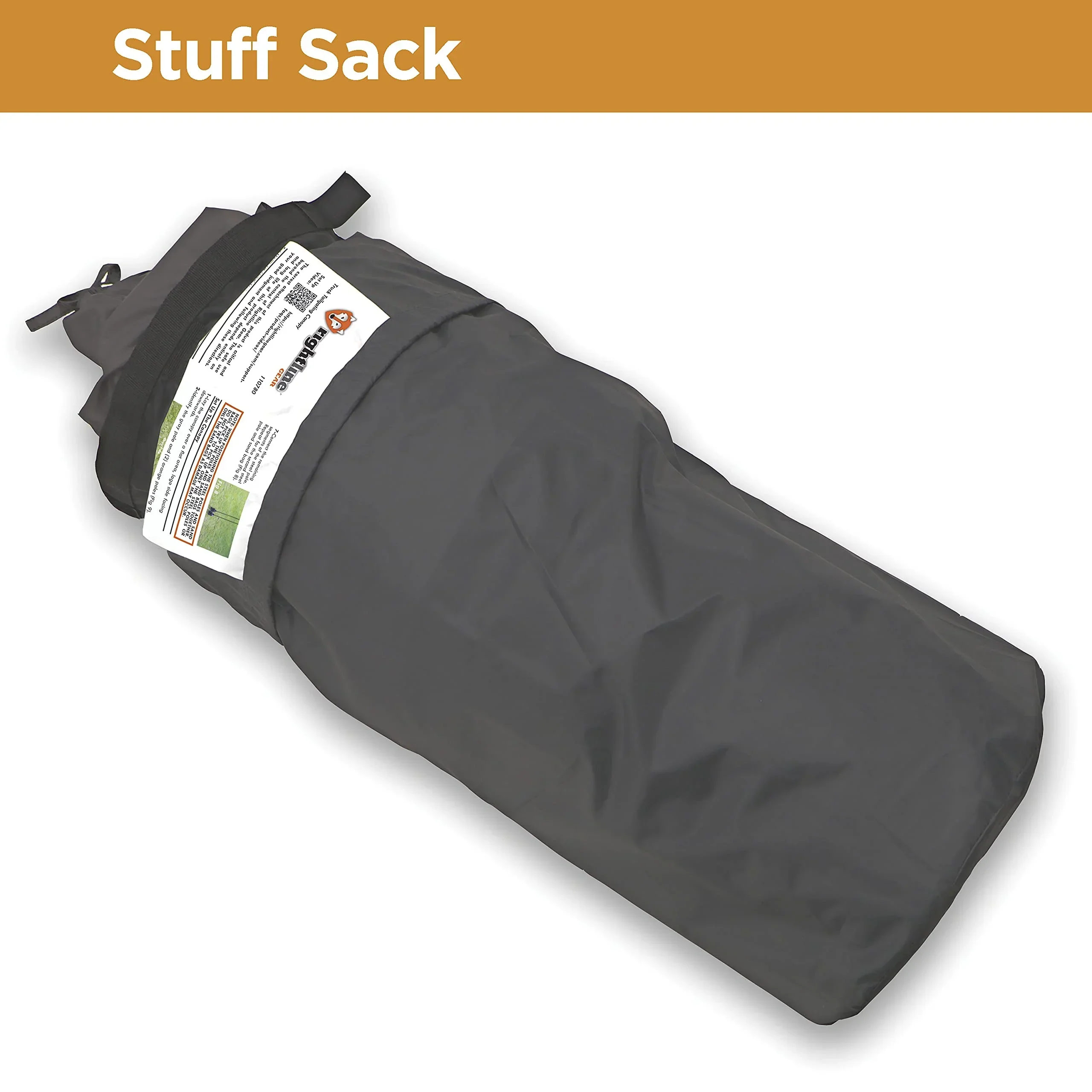
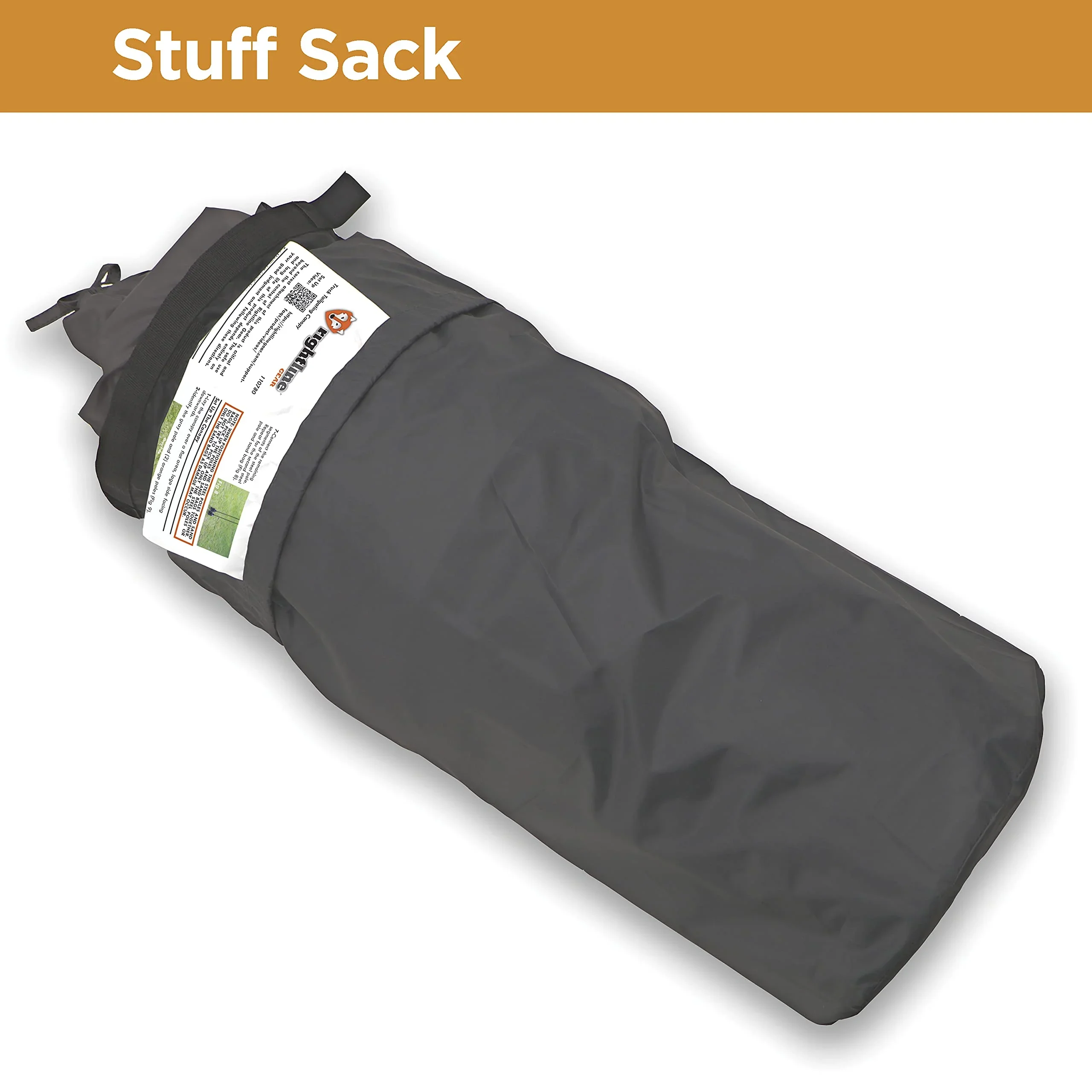
- Cover the top: a Rightline Gear tailgate canopy clamps over the bed to keep rain and dew off a tailgate-down or open-bed sleeper without committing to a full hard topper.
- Or go topper/tent: a bed topper or a bed tent turns the open box into a sealed room - more money, more shelter.
- Security: sitting below the 21-inch rail line keeps you and your gear out of sight; a cover adds a real barrier.
The trade-off ladder: a canopy is the cheap weather fix, a topper is the permanent one, and the deep bed gives you a head start on both by being a windbreak already. Match the shelter to how often you sleep out and in what weather.
Mattress sizing: what fits a Tacoma bed
Sizing a pad to a Tacoma bed comes straight out of the numbers above, so here's the cheat sheet an engineer would write.
- On the floor: you're in the 44.7-inch-wide world - a twin or narrower pad fits between the wells; a full-size won't sit flat down there.
- On a platform: level with the wheel wells you get up to 56.4 inches, enough for a wider pad or a snug two-person setup.
- Length: the 6-foot bed takes a full-length pad inside the closed box; the 5-foot bed needs the tailgate down and a pad that bridges the gate.
- Insulation first: a metal bed pulls heat out of you - an insulated pad isn't optional in cold, it's the difference between sleeping and shivering.
Buy the pad to the world you'll sleep in - floor or platform - and to the bed length you ordered. That's the whole sizing decision, and it falls out of the 44.7, 56.4, 60.3 and 73.5-inch numbers cleanly. And because bare steel conducts heat straight out of your back on a cold clear night, the pad's R-value carries as much weight as its footprint - a thin uninsulated roll fits fine and still leaves you cold.
The verdict on the Tacoma as a truck-bed sleeper
The Toyota Tacoma is one of the best midsize trucks to sleep in, and the engineering comes down to two decisions. Order the 6-foot bed (73.5 inches) and you sleep flat inside a closed, weatherproof box; the 5-foot bed (60.3 inches) is a tailgate-down build. Both run 44.7 inches between the wheel wells and 21.2 inches deep, so a platform over the wells buys the full 56.4-inch width when you want it.
Buy the 6-foot bed if you're tall and the i-FORCE MAX hybrid if you want power - its 2400-watt inverter is the class's best camp electricity by a mile. Pad the metal floor, cover the top, and the Tacoma bed is a sheltered, powered bedroom.
Pick the bed length for your body, insulate the hard floor, cover the open top, and lean on the hybrid inverter if you bought it, and the Tacoma turns a truck bed into a genuinely comfortable, well-powered camp. The full setup lives in our Toyota Tacoma camping guide, and for a same-size rival's bed numbers see our Chevy Colorado truck bed dimensions.
Related on Auto Roamer: Tacoma vs Jeep Gladiator for camping; Tacoma vs Ford Maverick for camping.