
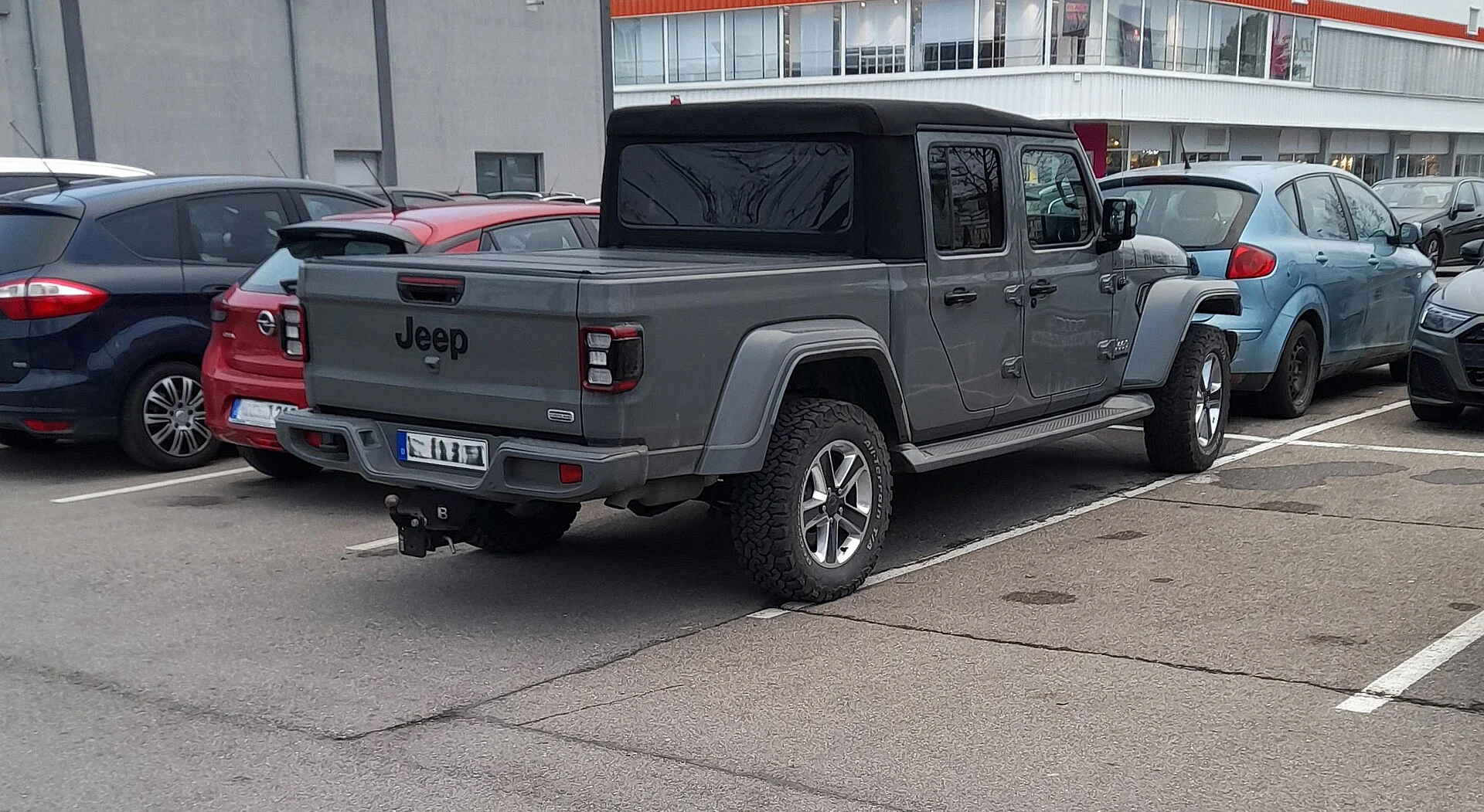
The honest verdict: capability twins that camp very differently
The Toyota Tacoma and Jeep Gladiator are the two default answers when someone wants a midsize truck they can camp out of, and on paper they look like twins: both body-on-frame, both available with serious four-wheel drive, both with beds a hair over five feet. But they deliver the experience in almost opposite ways, and that difference — not a spec-sheet win — should decide your purchase.
The short version: choose the Gladiator for open-air character and maximum trail access; choose the Tacoma for on-road refinement, the longer available bed, and everyday livability. Neither bed sleeps you flat without a tent or topper.
The Gladiator's party trick is that it disappears. Remove the roof, drop the doors, and fold the windshield, and you are camping in the only mainstream truck that becomes genuinely open-air. Pair that with Rubicon-grade trail hardware and the Gladiator reaches — and sleeps at — campsites that stop most vehicles. The Tacoma counters with a smoother ride, an available 6-foot bed that is the longest here, and Toyota's durability reputation.
What follows is the detail behind that call: the bed numbers, how each one sleeps, the trail-and-highway trade-off, the power and weather realities of an overnight, and a plain buy recommendation — all grounded in published specs rather than a single drive.
Bed dimensions and the sleeping footprint
The Gladiator keeps it simple: one 5-foot box, about 60.3 inches long, for roughly 35.5 cubic feet. It is a well-shaped, durable bed with available spray-in liner and tie-downs, but at just over five feet it is a foot-plus short of a tall adult lying flat. You sleep with the tailgate down and a mattress that overhangs, or in a bed tent that uses that gap for length.
The Tacoma gives you a choice the Gladiator doesn't:
- Tacoma 5-foot bed (~60.5 in): matches the Gladiator almost exactly — same tailgate-down or bed-tent approach.
- Tacoma 6-foot bed (~73.7 in): long enough that, with the tailgate down, a six-footer can genuinely lie flat.
- Gladiator (~60.3 in, one length only): no long-bed option, so it always leans on the tailgate or a tent for sleeping length.
If in-bed sleeping length is a priority and you can live with the XtraCab that carries the long bed, the long-bed Tacoma is the clear winner on this one metric. For either truck the build is the same idea — a low platform with storage underneath, or a thick pad and the tailgate down — and sizing the surface to the wheel-well width is where people go wrong, so it is worth reading how to choose a car camping mattress size first.
Sleeping in the Gladiator: open to the sky, deep into the trail
No other truck camps like a Gladiator, because no other truck opens up like one. On a warm, clear night you can pull the roof panels, drop the doors, and fall asleep to an unobstructed sky — an experience closer to a convertible campsite than a pickup. Even with the top on, the Gladiator's upright, boxy cab and flat glass make it easy to seal and shade, and the Jeep aftermarket sells bed tents, bed racks, and rooftop tents engineered specifically for it.
Capability is the other half of the story. A Rubicon rolls off the lot with locking differentials, a disconnecting sway bar, and clearance that lets it reach dispersed sites deep past where a crossover turns around. For campers whose ideal night is at the end of a rough trail no one else bothered with, the Gladiator is the truck that gets you there and becomes the basecamp once you arrive.
The honest costs are ride and refinement. The solid front axle and short, tall body make the Gladiator busier and louder on the highway than the Tacoma, and its removable panels mean more wind noise and more to manage when weather turns. It is a character-first truck; you accept the rough edges because the open-air, go-anywhere payoff is genuinely unique in this class.
Sleeping in the Tacoma: the refined, longer-bed basecamp
The Tacoma makes its case with livability. On the drive to the trailhead — often the longest part of any trip — its more settled ride, quieter cabin, and available 6-foot bed make it the easier truck to live with day to day and mile after mile. That refinement matters more than enthusiasts admit: you sleep better after a relaxed four-hour drive than a jittery one.
In camp, the long-bed Tacoma is the closest thing here to a true in-bed bedroom. The 73.7-inch box plus a dropped tailgate lets a tall adult lie flat on a platform, and Toyota's own deep accessory ecosystem — bed racks, canopies, wedge campers, drawer systems — rivals the Jeep world for building it out. You give up the open-air roof, but you gain a longer, more usable sleeping deck and a rig that is calmer to drive home.
The Tacoma will not out-crawl a Rubicon on the gnarliest obstacles, and that is fine for most campers, whose limit is a rutted forest road rather than a rock garden. If your camping is reached by dirt and gravel rather than technical rock, the Tacoma has all the clearance you need and a nicer time getting there.
Getting to camp: trail hardware vs highway manners
Both trucks can leave the pavement, but they are tuned for different ends of it. The Gladiator, especially as a Rubicon, is a factory rock crawler: locking front and rear differentials, an electronic sway-bar disconnect for articulation, big approach and departure angles, and a following of owners who take it places a Tacoma driver would photograph rather than attempt. For genuinely technical trails, nothing else in the midsize class matches it.
The Tacoma is very capable too — its off-road trims have lockers, disconnects, and real underbody protection — but its bigger advantage is the drive between trailheads. It is quieter, steers with less wander, and rides with less bounce, so the long interstate slogs that bookend a camping trip are simply more pleasant. Both drink fuel at roughly the same modest low-to-mid-20s rate, so efficiency isn't a tiebreaker.
Decide by your terrain. If your camping regularly involves rock, ledges, and deep ruts, the Gladiator's hardware is the point and the busy highway ride is the tax you pay. If it involves dirt roads, gravel, and a lot of pavement in between, the Tacoma gives you plenty of capability and a far more relaxing journey.
Power and electrical: keeping camp running
As with any vehicle, neither truck should be used to run heat or air conditioning all night, so the electrical story is about accessories: lights, a fan, charging, maybe a fridge. Both offer 12-volt sources throughout and available 115/120-volt outlets on higher trims, enough for the basics. Both are also easy platforms for a house battery, which is where committed campers end up.
The Gladiator's ecosystem includes plenty of Jeep-specific power add-ons — auxiliary switch panels, bed-mounted outlets, and battery kits — that integrate cleanly, and its boxy bed makes mounting a power station or dual-battery box straightforward. The Tacoma offers similar options through its own vast aftermarket, plus factory 120-volt outlets on the camping-oriented trims.
For anything past charging and a fan — a 12-volt fridge, a CPAP, several nights of a heated blanket — the smart move in either truck is a dedicated portable power station rather than leaning on the vehicle. Size it to your overnight draw, recharge it on the drive, and your camp power no longer depends on which badge is on the tailgate.
Weather and overnight comfort: cold, heat, and condensation
Both trucks put you in an open bed under a tent, so they share weather behavior: better airflow than a sealed SUV, but more exposure to the outside temperature. The Gladiator's removable-panel design can actually help ventilation on a warm night, while in a downpour the Tacoma's fixed roof and simpler sealing are less fuss to manage.
For cold, the fix in both is your sleep system, not the truck: a season-rated bag, an insulated pad with real R-value, and in the cold a 12V heated blanket for car camping. Cold from below is the usual culprit, so invest in the pad first. On a humid night a bed tent can still fog, and the venting habits in our guide on how to reduce condensation when sleeping in a car apply to both trucks equally.
In summer the open bed is an advantage — a breathable tent plus a battery fan beats a closed cabin, and the shade-and-airflow tactics for staying cool sleeping in a car carry straight over. Neither Toyota nor Jeep gives you a meaningful overnight climate edge, so put the budget into bedding and a fan and both sleep comfortably in the conditions you actually camp in.
Two people and gear: how each truck packs a trip
For a couple plus a weekend of gear, both trucks work, but with different rhythms. The long-bed Tacoma gives two adults the best chance of lying flat side by side under a bed tent, and a topper or bed rack keeps gear organized around the sleeping area. Its quieter cab also makes the shared drive more pleasant, which is not nothing on a long weekend.
The Gladiator sleeps two the same way but leans harder on its accessories to do it: a bed tent or, very popularly, a rooftop tent mounted on a bed rack, which frees the box entirely for gear. Here is the practical split:
- Solo adventurer: either truck; pick on trail vs. ride preference.
- Couple sleeping in the bed: the long-bed Tacoma is the most livable.
- Couple with a rooftop tent: the Gladiator's rack ecosystem and open-air option make it a favorite.
Both have finite payload, so a heavy rooftop tent plus two people plus water and gear adds up — check the door-jamb sticker before you build, in either truck.
Which truck should you buy?
Buy the Gladiator if the open-air experience and maximum trail access are what camping means to you. The removable top and doors make it unique, the Rubicon hardware reaches sites the Tacoma would turn back from, and the Jeep camping aftermarket is vast. You accept a busier highway ride and a little more weather management in exchange for genuine character.
Buy the Tacoma if you want the more refined all-rounder. The available 6-foot bed is the best in-bed sleeping length in this pair, the ride is calmer on the long hauls, and the durability reputation plus deep accessory ecosystem make it easy to build and easy to keep. For camping reached by dirt roads rather than rock crawls, it is the more livable choice.
Still deciding how you want to sleep at all? Whether you go with a bed setup or a rooftop tent versus a ground tent shapes the experience as much as the truck does — both of these trucks support all three approaches, so settle that question alongside the badge.
Spec snapshot: the camping numbers at a glance
Keep these attributed figures handy when you plan a bed, a tent, or a rack:
- Gladiator bed: one 5-foot box, ~60.3 in long, ~35.5 cu ft; no long-bed option.
- Tacoma bed: ~60.5 in (5-foot) or ~73.7 in (6-foot) — the only flat-lie-down length in this pair.
- Open-air: Gladiator's roof, doors, and windshield all remove; the Tacoma is a fixed cab.
- Trail hardware: Gladiator Rubicon = factory lockers + sway-bar disconnect; Tacoma off-road trims also offer lockers and disconnects.
- Fuel economy: both modest, roughly low-to-mid-20s mpg combined — neither is an efficiency pick.
The decisive contrasts are the Tacoma's optional 73.7-inch bed, which lets a tall adult sleep flat with the tailgate down, and the Gladiator's removable panels, which no other truck here offers. If open-air nights and the hardest trails define your camping, the Gladiator's spec sheet is the exciting one; if bed length and a calmer highway ride matter more, the Tacoma's is. Both back a vast accessory ecosystem, so either one grows with you.
Five setup mistakes that ruin the first night
Whichever midsize 4x4 you choose, the same handful of errors spoil a first night. Avoid them and the truck does its job:
- No tent or topper plan. Both beds are shorter than an adult; sort the bed tent, topper, or rooftop tent before you leave.
- Under-insulating from below. A steel bed pulls heat out of you — use a thick, high-R pad, especially at altitude.
- Ignoring the payload sticker. A rooftop tent plus two people plus water adds up fast; check the door-jamb limit first.
- Camping on a slant. Level the truck with blocks so you're not sliding to one corner all night.
- Sealing up tight. Vent the tent to shed breath moisture and keep the glass and gear dry.
These fundamentals matter more than the badge. A Gladiator or a Tacoma with a vented tent, a thick pad, a level park, and a payload you respect both deliver a comfortable night — leaving the real decision where it belongs: open-air trail character versus refined, longer-bed livability.
The bottom line
The Gladiator and the Tacoma are both excellent camping trucks, and the right one depends on what you value when the pavement ends. The Gladiator is the open-air, trail-crushing character truck — buy it for the sky overhead and the sites only it can reach. The Tacoma is the refined, longer-bed all-rounder — buy it for the calmer ride, the best in-bed sleeping length here, and a rig that is a pleasure to build and to live with.
Neither will disappoint a camper who matches it to their style, and both need the same finishing piece: a bed tent, topper, or rooftop tent to turn that five-or-six-foot box into a real bed. Choose for how you like to reach and experience a campsite, and let the shared truth — that a tent or platform makes the bed — guide your gear budget.