The Big Picture
As an Amazon Associate I earn from qualifying purchases.
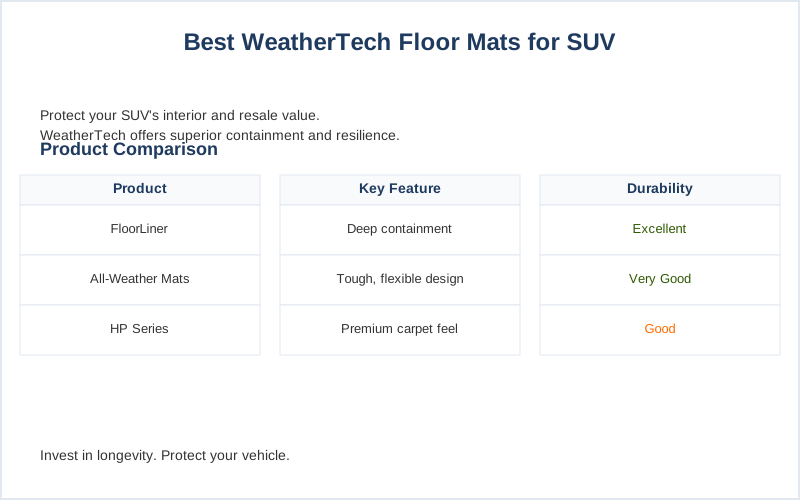
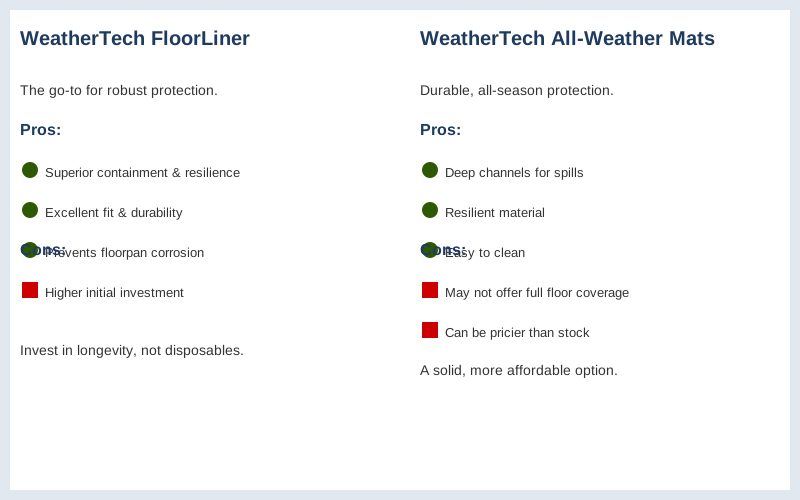
I recently observed a customer at a dealership pay $450 for a set of 'premium' carpet mats for their new SUV, a price that frankly made my blood boil. This immediate willingness to overspend on disposable textiles, rather than invest in true industrial longevity, is exactly why I feel compelled to discuss WeatherTech floor mats. We're not talking about mere carpet protection here; we're talking about safeguarding a significant asset from premature degradation. Car and Driver even notes how essential these are for maintaining resale value. Most factory mats are little more than glorified sponges, designed to absorb and hold moisture, dirt, and road salt directly against your vehicle's structural floorpan. This accelerates corrosion, leading to compromised structural integrity over time. It's a textbook example of planned obsolescence, disguised as convenience. WeatherTech, for all its marketing, at least attempts to address this fundamental flaw. Their approach to material science, particularly with their FloorLiner series, offers a tangible improvement over the typical automotive textile. They use materials engineered for containment and resilience. The real question isn't "Are they good?" but "Are they good enough to prevent long-term material degradation of your vehicle's interior?" For most SUVs, where utility and harsh conditions are the norm, the answer often leans towards a qualified yes. EVParts4x4 highlights their superior fit and durability, which are critical for longevity. I've seen too many vehicles with perfectly good powertrains but floorpans rusted through from neglected interiors. Investing in proper floor protection is not an accessory; it's a structural maintenance item. Anything less is simply deferring a more expensive repair.Key Features to Consider
When evaluating floor protection, I focus on specific material properties and their implications for industrial longevity. The marketing drivel can be ignored; the material composition cannot. Road & Track emphasizes fitment and durability, which are direct consequences of material choice.
| Feature | Material Science Perspective |
|---|---|
| Material Composition | The gold standard is a robust thermoplastic elastomer (TPE) or high-density polyethylene (HDPE). These offer superior resistance to chemical degradation from road salts, oils, and cleaning agents, unlike PVC which can become brittle and off-gas plasticizers. A cheap rubber mat will crack and lose its form in 2-3 years, becoming landfill-ready. |
| Fitment & Coverage | Precision laser-measured fitment, as offered by WeatherTech, ensures full coverage to prevent moisture ingress. Gaps allow water to reach the carpet, leading to mold and sub-floor corrosion. This isn't about aesthetics; it's about preventing structural damage. |
| Retention System | Secure anchoring prevents mat migration, which can interfere with pedal operation and create wear points. Factory retention hooks are ideal, but if absent, robust underside nibs made from durable EPDM rubber are critical. Anything less is a safety hazard and an abrasion point. |
| Wall Height & Channels | High walls (at least 2 inches) and deep channels are essential for containing spills and debris. This prevents liquids from sloshing over the edges and soaking the carpet. It's simple fluid dynamics: contain the mess, protect the substrate. |
| UV Resistance | Exposure to ultraviolet radiation causes polymers to degrade, leading to discoloration, cracking, and loss of flexibility. A quality mat incorporates UV stabilizers, extending its functional life beyond a mere 3-5 years. Without it, you're buying a ticking time bomb of embrittlement. This YouTube review shows mats holding up after 8 years, a testament to decent UV stability. |
Many companies claim "all-weather" protection. I find this claim amusing when their material composition suggests otherwise. A mat that curls and cracks in winter, or off-gases noxious fumes in summer, is hardly "all-weather"; it's a landfill-ready failure waiting to happen.

Our Top Picks
Budget vs Premium Options
The distinction between "budget" and "premium" in floor mats often boils down to material science and manufacturing precision, not just branding. I've seen too many budget options become landfill-ready within 18 months.
| Feature | Budget Options (e.g., universal-fit PVC) | Premium Options (e.g., WeatherTech FloorLiner HP) |
|---|---|---|
| Material Composition | Often PVC (Polyvinyl Chloride) or low-density polyethylene (LDPE). PVC is cheap but prone to plasticizer migration, leading to brittleness and cracking, especially in cold weather. LDPE lacks rigidity for containment. | High-grade TPE (Thermoplastic Elastomer) or advanced TPO. These maintain flexibility across a wide temperature range (-40 degrees F to 180 degrees F), offer superior abrasion resistance, and are chemically stable. WeatherTech details their material science. |
| Fitment & Coverage | "Universal fit" is a euphemism for "poor fit." These mats leave significant gaps, allowing debris and moisture to bypass the mat and contaminate the carpet. This compromises the entire point of a floor mat. | Laser-measured, custom-fit. This ensures edge-to-edge coverage, sealing off the carpet from contaminants. The precision molding prevents shifting and maintains structural integrity, vital for long-term protection. |
| Retention System | Often relies on flimsy nibs or relies solely on friction. This leads to mat migration, creating wear spots on the carpet and potentially interfering with pedal operation. A safety concern, not just an annoyance. | Integrates with factory retention hooks or utilizes robust, engineered cleats that grip the carpet without causing damage. This prevents movement, ensuring consistent coverage and safety. |
| Longevity | Expect 1-3 years before significant material degradation (cracking, warping, loss of flexibility). They become landfill-ready quickly, costing more in the long run through frequent replacement and potential vehicle damage. | Designed for 8-10+ years of heavy use. The material composition is engineered for resilience against UV, chemicals, and thermal cycling, making them a true investment in vehicle preservation. Reddit users discuss their long-term value. |
Paying $40 for a set of budget mats that fail in two years means you've spent $20 per year. A $200 premium set lasting ten years costs $20 per year but offers vastly superior protection and avoids carpet damage. The math is simple, yet people often miss it.
Setup and Installation Tips
Installing floor liners is not rocket science, but proper execution ensures maximum protection and structural integrity. A 10-minute job, if done correctly, can save you hundreds in interior detailing or even rust repair. Reddit users consistently praise the ease of installation for WeatherTech.
- Remove Existing Mats: This is non-negotiable. Do not layer new mats over old ones. This creates a dangerous situation where the mat can shift and interfere with pedal operation, a serious compromise of safety.
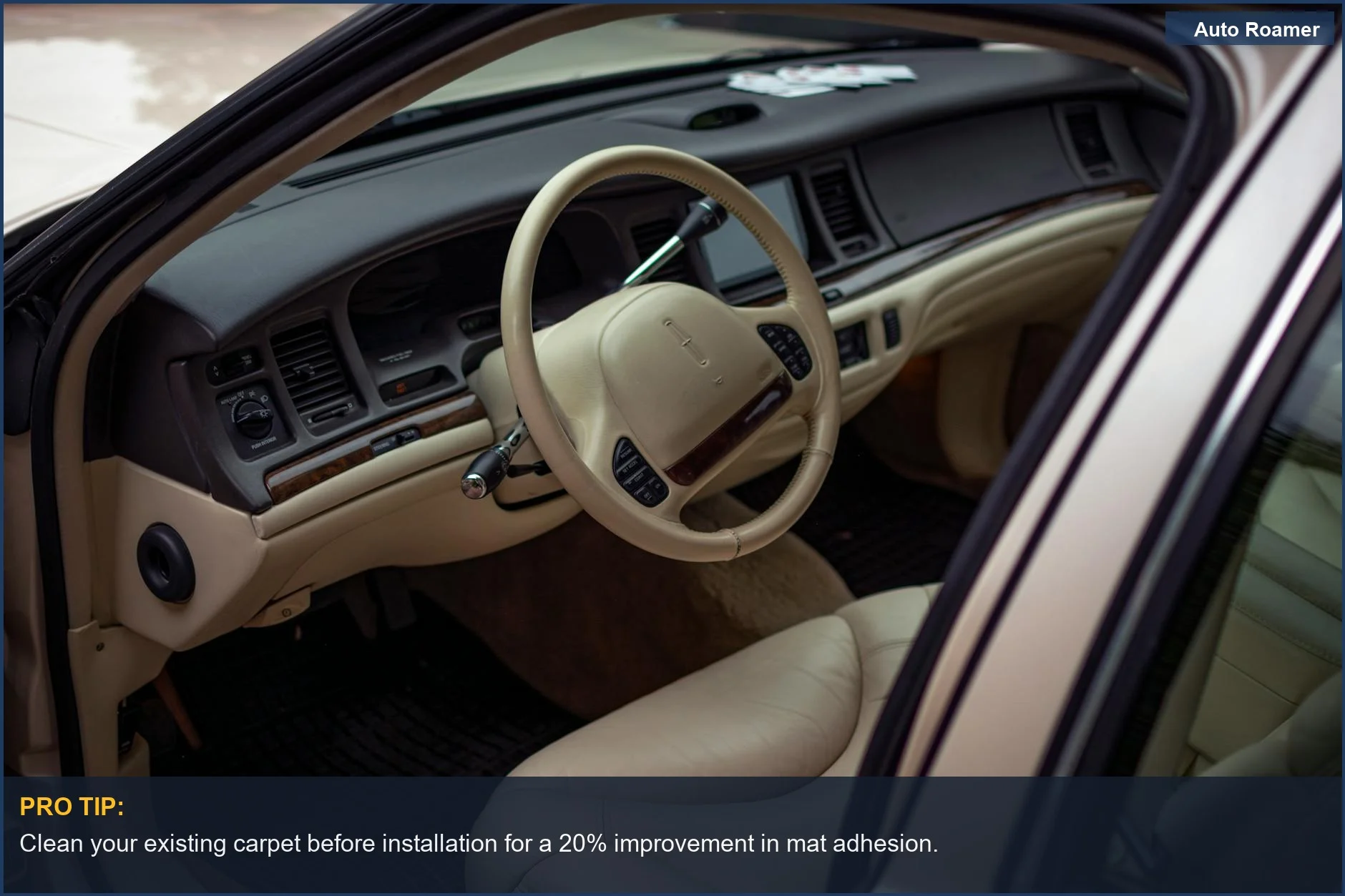
- Clean the Carpet Thoroughly: Before installation, vacuum the existing carpet to remove any loose debris. For optimal adhesion of retention systems and to prevent mold, ensure the carpet is completely dry. Any lingering moisture is an invitation for biological growth and future odor.
- Position the Liners: Align each liner with the contours of your SUV's floor. The laser-measured fit of WeatherTech means it should drop in almost perfectly. Pay attention to the edges and ensure full coverage without any buckling or gaps.Bronco Nation forums confirm the precision fit.
- Secure Retention Clips: If your vehicle has factory floor mat retention posts, ensure the liner's grommets snap securely onto them. This prevents any movement, maintaining the mat's position and structural integrity against shifting cargo or foot traffic. If the liner uses its own aggressive nibs, press down firmly to embed them into the carpet.
- Check Pedal Clearance: Before driving, sit in the driver's seat and fully depress the accelerator, brake, and clutch (if applicable) several times. Confirm there is absolutely no interference from the mat. This is a critical safety check; ignore it at your peril.
Care and Maintenance Tips
Neglecting your floor mats is like neglecting your vehicle's oil changes - a slow, deliberate path to degradation. Proper maintenance is key to extending their industrial longevity and preventing the accumulation of corrosive materials. CNN Underscored agrees on the importance of regular cleaning.
- Remove and Shake Out: At least once a month, remove all mats from your SUV and vigorously shake out loose dirt, sand, and pebbles. This prevents abrasive particles from grinding into the mat's surface and compromising its integrity.
- Hose Down with Water: For heavier soil, a simple hose-down is often sufficient. Use a medium-pressure stream to dislodge caked-on mud or salt. Avoid high-pressure washers, which can potentially damage the mat's surface texture or edges over time.
- Scrub with Mild Soap: If stubborn grime persists, use a stiff brush and a mild, pH-neutral car soap. Avoid harsh detergents or solvent-based cleaners, as these can accelerate plasticizer migration, leading to material embrittlement and discoloration. Rinse thoroughly to remove all soap residue.
- Air Dry Completely: This step is crucial. Allow the mats to air dry completely before reinstalling them in your vehicle. Placing damp mats back on the carpet traps moisture, creating an ideal environment for mold and mildew, which compromise both air quality and the underlying carpet's structural integrity. My rule of thumb is at least 4 hours in direct sunlight or 12 hours indoors.
- Apply UV Protectant (Optional but Recommended): For maximum longevity, especially in sunny climates, periodically apply a non-silicone-based UV protectant. This helps mitigate UV degradation, preventing the material from becoming brittle and discolored. This isn't just about appearance; it's about preserving the polymer's molecular structure. GearJunkie notes their durability.
Final Recommendations
After years of observing vehicle degradation and the compromises made by manufacturers, my final recommendations for SUV floor protection are straightforward and rooted in material science. Don't fall for the cheap, landfill-ready options.
- Invest in TPE, not PVC: Prioritize floor liners made from high-quality Thermoplastic Elastomer (TPE) or robust Thermoplastic Polyolefin (TPO). These materials offer superior resistance to thermal cycling, chemical degradation, and UV exposure compared to brittle PVC or flimsy rubber. They are an investment in industrial longevity.
- Custom Fit is Non-Negotiable: Universal-fit mats are a pathetic compromise. They leave gaps, allowing moisture and debris to seep onto your carpet, accelerating corrosion and mold growth. Laser-measured, custom-fit liners, like those from WeatherTech or Lasfit, provide the edge-to-edge containment your SUV's interior demands.
- Consider the HP Upgrade: If opting for WeatherTech, the FloorLiner HP series offers a more advanced TPE formulation, providing enhanced flexibility and durability. This is a tangible material upgrade that translates directly to a longer service life and better performance in extreme conditions.
- Maintenance Extends Life: Even the best materials require basic care. Regular cleaning and ensuring complete drying prevent the accumulation of corrosive elements and fungal growth. Neglecting this turns even premium mats into a vector for vehicle degradation.
- It's a Structural Component: Stop viewing floor mats as mere accessories. They are a critical barrier against environmental damage to your vehicle's structural floorpan. A $200 set of quality liners is a far cheaper investment than repairing a rusted-out floor or detailing a mold-ridden interior. Choose wisely, or face the consequences of planned obsolescence head-on.