What You Need to Know
The dealer wanted $220 for a new battery on my buddy's 2017 Tacoma last month. Turns out, the battery was perfectly fine. What was dead was his 10-year-old lead-acid jump starter, which had a 0.5V surface charge and zero internal resistance remaining. He thought it was the truck. This happens constantly. Car and Driver found plenty of 'bricked' batteries to test their units on.
Your battery is a chemical reaction in a box, and cold weather turns that reaction into a lazy pile of garbage. Meanwhile your engine oil turns to honey. Less power available, more power needed. Physics doesn't care about your commute. A dead battery isn't a mechanical failure, it's a chemical one - specifically, the electrolyte solution's ionic mobility drops, increasing internal resistance and dropping terminal voltage below what the starter motor needs to hit its minimum RPM.
It just won't crank.
Trying to crank a dead battery repeatedly just dumps more current through the starter motor. This heats up the windings. Thermal cycling like that degrades insulation, especially on older motors. You risk shortening the starter's life, or even burning it out completely if the thermal load gets too high. Not worth it.
I've seen guys try to jump a diesel with a gas-engine jump starter. Pure comedy. The cranking amps needed for a high-compression diesel are double or triple that of a small gas engine. The jump starter's internal resistance just goes through the roof, it heats up, and you get nothing but a click. You'll flatten the jump starter faster than you'll start the truck. CAR Magazine confirms the 'minefield' of options out there.
So, you need a portable jump starter. Not some flimsy thing that barely puts out 300A, but something with enough grunt to actually spin a cold engine. This isn't about 'convenience;' it's about minimizing thermal stress on your starter and not getting stranded because a cheap capacitor can't hold a charge. Let's talk physics, not marketing hype.
Key Features to Consider
Key Specs That Matter
Forget the glossy ads. Most of the 'features' are just fluff. I care about three things: peak amperage, battery chemistry, and cable gauge. Everything else is a bonus. Road & Track agrees that separating 'rescuers from paperweights' is key.
| Feature | Why it Matters (Dirtbag Engineer's View) | Target Spec |
|---|---|---|
| Peak Amperage (A) | This is the instantaneous current available to overcome the starter motor's initial rotational inertia. Too low, and your engine won't even twitch. A 1.5L gas engine needs about 400A; a 6.0L diesel needs 1500A+. | 1000A - 2500A |
| Battery Chemistry | Lithium-ion (LiFePO4, LiPo) offers higher energy density and a flatter discharge curve than lead-acid. Lead-acid units are heavier, suffer from voltage sag, and have a higher self-discharge rate. They're basically a brick. | Lithium (LiFePO4) |
| Cable Gauge | Thicker cables (lower gauge number) mean less electrical resistance. Less resistance means less voltage drop across the cable, ensuring more power reaches your starter. Thin cables heat up and lose power. I've seen 10-gauge on cheap units; that's asking for a fire. | 4 AWG or lower |
| Internal Resistance | A lower internal resistance means less energy is wasted as heat within the jump starter itself during high current discharge. This is critical for delivering sustained power without thermal runaway. | As low as possible (rarely advertised) |
| Thermal Protection | Overcurrent and over-temperature protection circuitry prevents damage to the unit and your vehicle's electronics. Without it, you're risking component outgassing or even a thermal event. | Integrated BMS (Battery Management System) |
| Charge Retention | How long the unit holds a charge. A good lithium unit should hold 80% charge for 6-12 months. A lead-acid unit will be flat in 3 months of sitting. | 6-12 months |
That 1000A rating on a cheap unit? It might be for 10 milliseconds. You need sustained current to overcome the mechanical friction of a cold engine and the viscosity of cold oil. Car Magazine highlights the Noco Boost X GBX45 as a top pick for good reason.
My old lead-acid unit would drop below 10V after 5 seconds of cranking. That's voltage sag. The starter motor current draw spikes, the jump starter can't maintain voltage, and the engine just groans. Pointless. Spend the money on lithium. Your starter motor will thank you for the less thermal cycling. Apparently, premium means the same garbage with a nicer label, sometimes.
Our Top Picks
Solid Choices That Won't Leave You Stranded
I've seen enough dead batteries and cheap jump starters to know what works. Here are some units that actually deliver the amps when you need them, without turning into a paperweight after two uses. These are for real-world scenarios, not just bench tests. CARKU emphasizes compact design and real-world cranking power. NOCO Boost X GBX155 (~$300)Budget vs Premium Options
The Price of Reliability: Cheap vs. Quality
There's a reason a $50 jump starter isn't going to save your bacon like a $200 one. It's not just the label. It's the internal components, the battery chemistry, and the sheer lack of engineering rigor. This YouTube video explains how prices for units like the NOCO Boost 155 stack up.
| Feature | Budget Option (e.g., $50-100) | Premium Option (e.g., $150-300+) |
|---|---|---|
| Battery Type | Often cheaper LiPo or older lead-acid. Higher self-discharge rate, shorter cycle life. More prone to thermal runaway if abused. | High-quality LiFePO4 or advanced AGM. Lower self-discharge, longer cycle life, superior thermal stability. |
| Peak Amperage Claim | Inflated numbers. Might hit 800A for 5ms. Voltage sags heavily under load, delivering minimal sustained cranking power. | Realistic, tested numbers. Delivers sustained high current for 5-10 seconds, maintaining voltage above 10V. |
| Cable Gauge & Clamps | Thin 8-10 AWG cables, stamped steel clamps with weak spring tension. High resistance, poor mechanical bond to terminals. | Thick 4-6 AWG cables, copper core clamps with strong spring tension. Low resistance, excellent electrical and mechanical connection. |
| Safety Features | Minimal or unreliable overcurrent/reverse polarity protection. Prone to shorting, internal fuse failure, or thermal events. | Advanced BMS with multiple layers of protection: overcharge, over-discharge, overcurrent, reverse polarity, short circuit. |
| Build Quality | Thin plastic housing, poor sealing. Susceptible to impact damage, dust, and moisture ingress (low IP rating). | Durable, impact-resistant housing. IP65+ rating for dust and splash resistance. Better strain relief on cable connections. |
| Longevity | 1-2 years of intermittent use. Battery capacity degrades quickly due to poor cell balancing and thermal cycling. | 3-5+ years of reliable use. Cells are balanced, robust construction handles environmental stress. |
A cheap unit might claim 1200A, but with 10 AWG cables, half that power is lost as heat before it even reaches your battery terminals. The voltage drop across those thin wires means your starter motor sees 8V instead of 12V. It'll just click. What Car? recommends the Clarke JSM1200 as a 'Best overall', showing that quality often comes with a higher price tag for good reason. You're paying for lower internal resistance and better thermal management.
Setup and Installation Tips
Get It Ready: Pre-Use Prep and Connections
Don't just yank it out of the box and expect it to work. That's how you fry things. First, read the damn manual for specific model instructions. Then, let's talk about the physics of getting power where it needs to go. Autoweek emphasizes real-world testing, and that starts with proper setup.
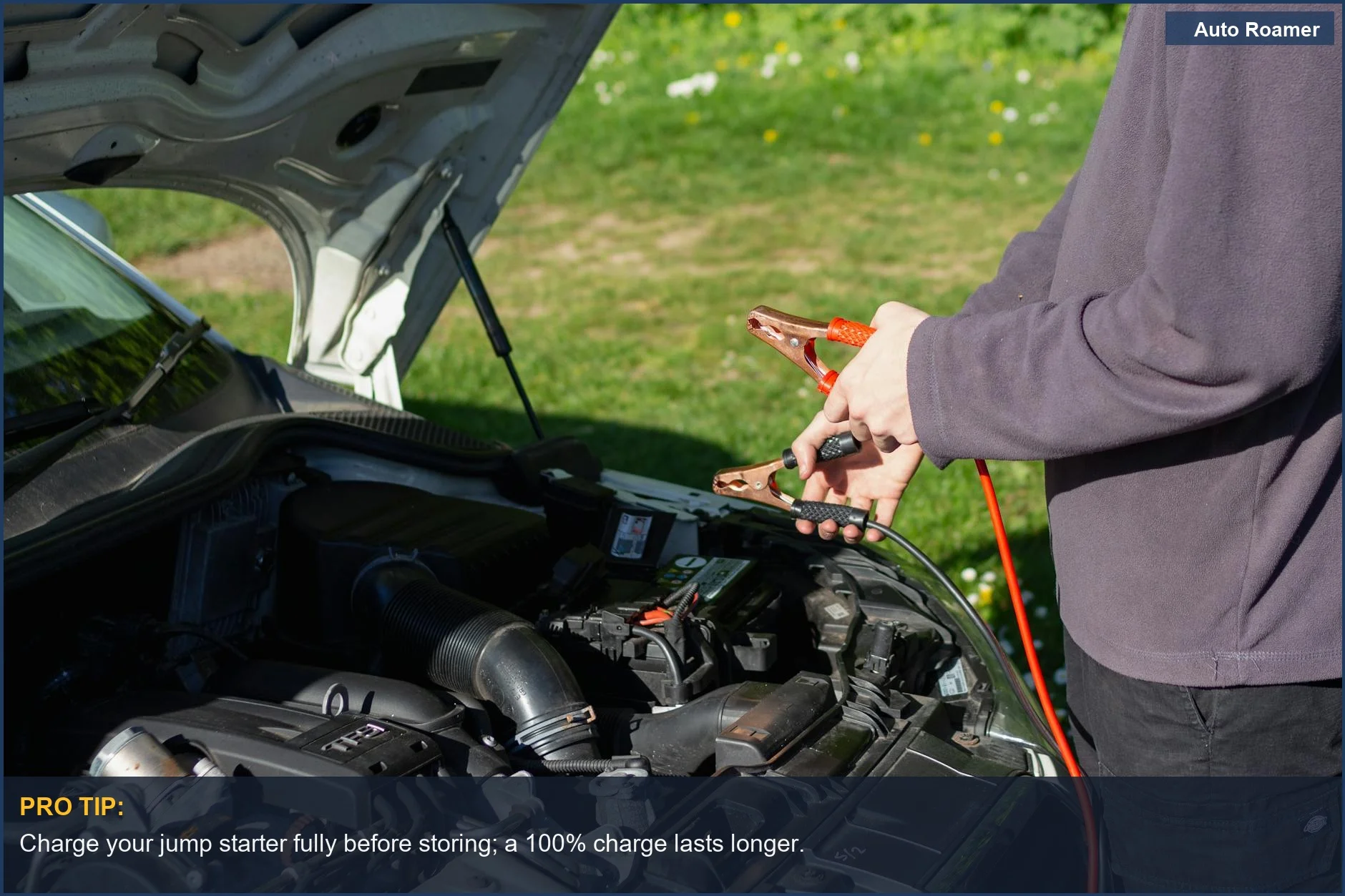
- Charge it Fully (2-4 hours): Your new jump starter probably has a partial charge. Before its first use, plug it in until the 'full' indicator lights up. Lithium batteries prefer to be stored at 50-80% charge, but for emergency readiness, 100% is fine. A half-charged unit is a paperweight when you need 12.6V.
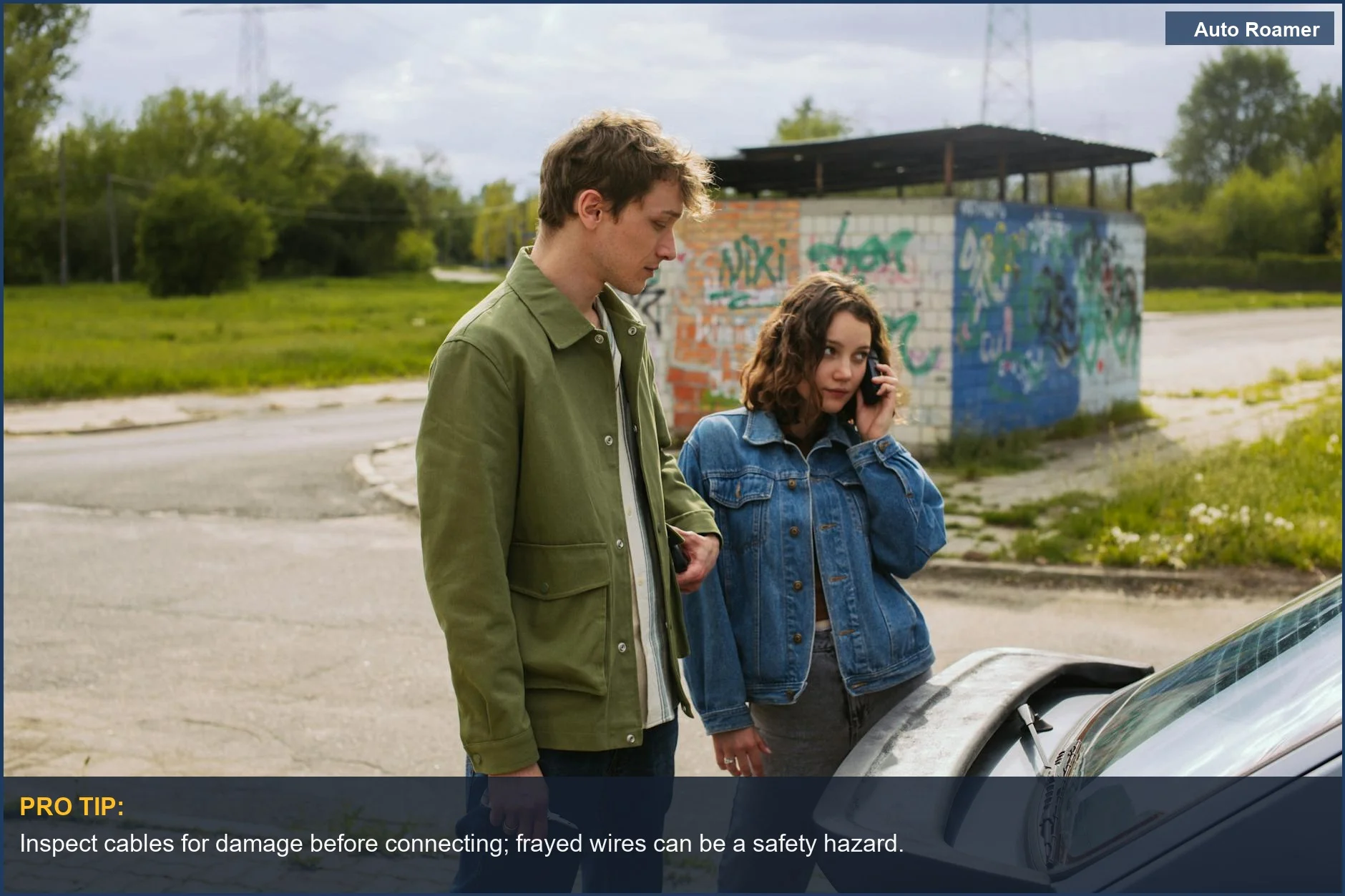
- Inspect Cables and Clamps (30 seconds): Check for frayed wires, cracked insulation, or corrosion on the clamps. A compromised cable means higher resistance, leading to voltage drop and potential thermal hotspots. Ensure the spring tension on the clamps is strong; a weak mechanical bond means a poor electrical connection and arcing.
- Identify Battery Terminals (15 seconds): Positive (+) is red, negative (-) is black. Don't be a hero and guess. Reversing polarity can instantly fry your vehicle's sensitive electronics, like the body control module or ECU. This is not a 'maybe' situation; it's a 'definitely' situation.
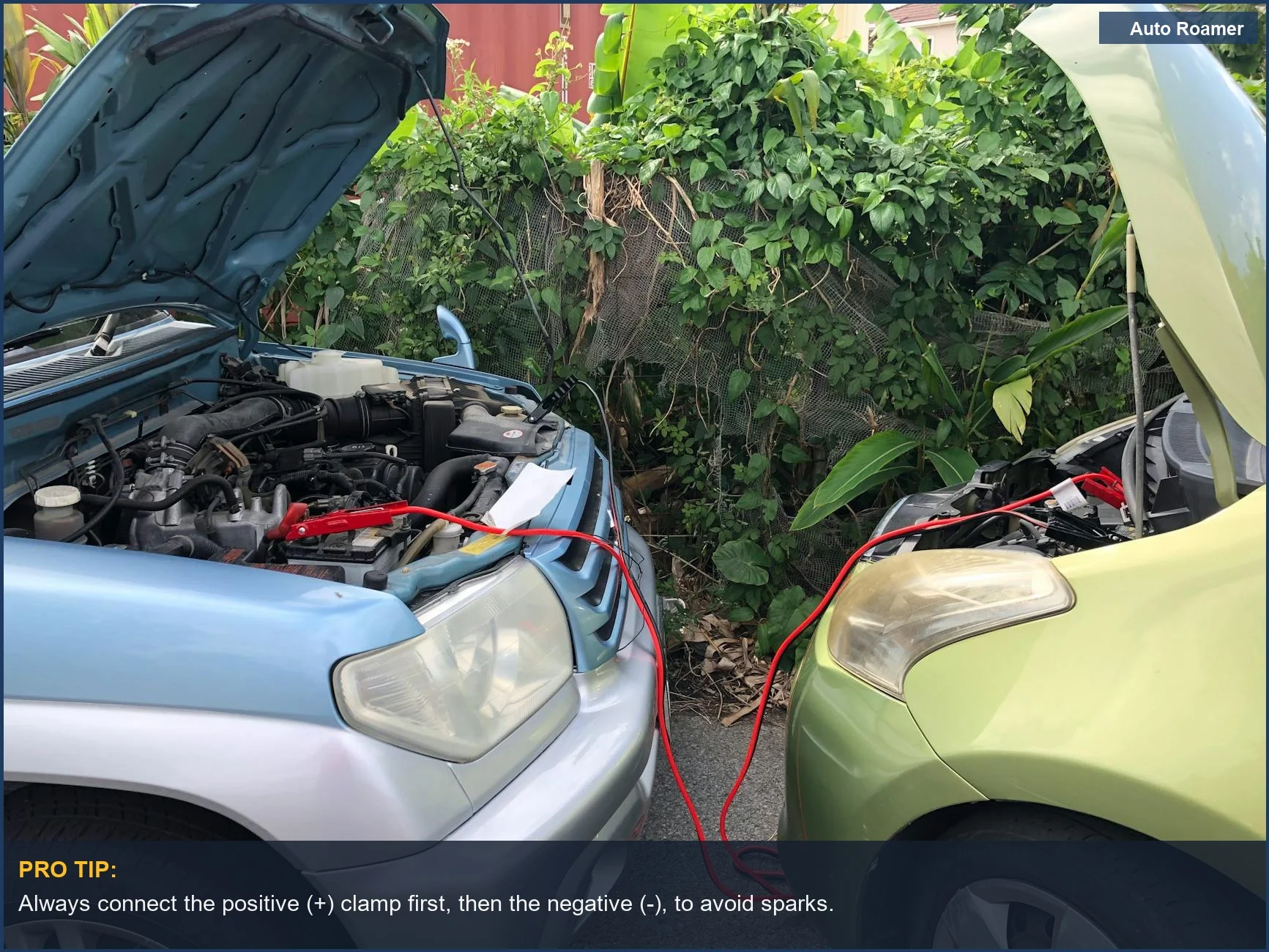
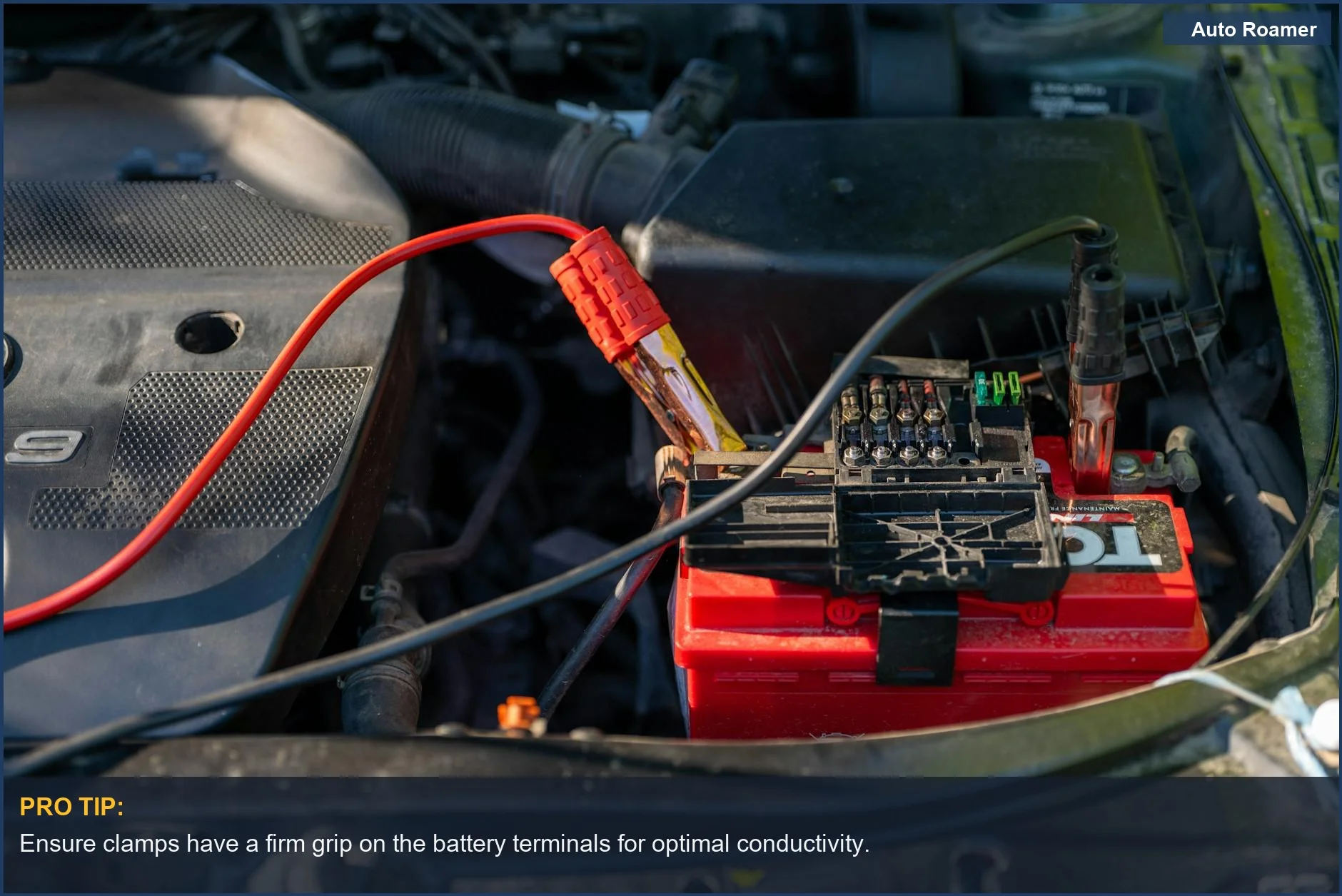
- Connect Positive First (5 seconds): Attach the red (+) clamp to your vehicle's positive battery terminal. Ensure a clean, secure mechanical bond. Wiggle it to make sure it's not loose. A shim or two might be needed if the terminal posts are corroded or worn.
- Connect Negative to Chassis Ground (5 seconds): Attach the black (-) clamp to a solid, unpainted metal part of the engine block or chassis, away from the battery. This minimizes the risk of igniting hydrogen gas that might be outgassing from a heavily discharged lead-acid battery. Never connect directly to the negative terminal unless specifically instructed by the jump starter's manual for certain modern vehicles with battery sensors.
- Initiate Jump (10 seconds): Turn on the jump starter. Wait a few seconds for its internal circuitry to stabilize. Then, try to start your vehicle. If it cranks weakly, let the jump starter sit connected for 30-60 seconds to pre-charge your battery slightly. This reduces the initial current spike required from the jump starter, minimizing thermal stress.
- Remove Negative First (5 seconds): Once the engine is running, disconnect the black (-) clamp from the chassis ground. Then, disconnect the red (+) clamp from the battery terminal. This sequence prevents accidental short circuits if a clamp touches metal while still connected to the live jump starter. Leave the engine running for at least 15-20 minutes to let the alternator put some charge back into the battery. Don't immediately shut it off.
Care and Maintenance Tips
Keep It Alive: Care and Feeding for Longevity
These aren't set-and-forget devices. Neglect it, and your jump starter will be just as dead as your car battery when you need it most. It's about maintaining the electrochemical system and preventing material degradation. AutoGuide reminds us that even the 'best' units need care.
- Recharge Every 3-6 Months (30 minutes): Even lithium-ion batteries have a self-discharge rate. Check the charge level indicator every few months. Recharge it to 80-100% to ensure it's ready. Letting it sit completely drained causes irreversible damage to the battery cells, reducing overall capacity and cycle life.
- Store in Moderate Temperatures (Ambient): Extreme heat (over 100 degrees F) accelerates battery degradation and can lead to outgassing or even thermal runaway. Extreme cold (below 0 degrees F) reduces the battery's available power output and can permanently damage cells if charged while frozen. Keep it in the trunk, not on the dash in direct sunlight.
- Clean Clamps and Cables (1 minute): After each use, wipe down the clamps to remove any battery acid residue or dirt. Corrosion increases electrical resistance, leading to voltage drop and reduced performance. Inspect cables for nicks or cuts in the insulation; exposed wires are a short circuit waiting to happen.
- Avoid Deep Discharges (Always): Don't use your jump starter as a primary power bank for extended periods, especially if it's rated for jump starting. Deep discharges put excessive stress on the battery cells, shortening their lifespan. Use it for its intended purpose: short, high-current bursts.
- Check for Swelling (Monthly): For lithium-ion units, periodically inspect the casing for any signs of swelling or deformation. This indicates internal cell damage or outgassing, which can be a precursor to a thermal event. If you see swelling, dispose of it properly - don't risk it.
- Secure Storage (Anytime): Keep the jump starter secured in your vehicle. Loose gear can become a projectile during a sudden stop or collision, causing mechanical stress to the unit or vehicle occupants. A simple bungee cord or a dedicated storage spot in the trunk is enough.
Final Recommendations
Final Recommendations: Don't Skimp on Amps
Look, a dead battery is a failure mode for your vehicle's electrical system, plain and simple. It's not a 'might happen,' it's a 'when it happens.' Your battery's internal resistance increases with age and thermal cycling, eventually dropping below the cranking voltage threshold. You need a jump starter that can overcome that. Popular Mechanics notes sales on these units are common, so snag one.
- Prioritize Peak Amperage: For anything more than a tiny 4-cylinder, aim for 1000A minimum. For V8s or diesels, you're looking at 2000A+. Don't fall for marketing fluff; check the actual cold cranking amp (CCA) equivalent if available. That's the real number.
- Go Lithium, Not Lead: The lower weight, higher energy density, and flatter discharge curve of lithium-ion (especially LiFePO4) are worth the extra cost. Less voltage sag, less thermal stress on your components.
Lead-acid is basically a boat anchor.
- Check Cable Gauge: Thicker cables (lower AWG number) mean less resistance and more power delivered to your starter. Anything thinner than 6 AWG for a 1000A unit is a red flag. That's just poor circuit integrity.
- Don't Forget the Backup Plan: A jump starter is great, but what if it fails, or you have a different problem? Roadside assistance is cheap insurance. AAA basic starts around $60/year.
It covers towing, tire changes, and fuel delivery. They'll even bring you a new battery, though it'll be at dealer prices.
- Read the Fine Print: Some roadside plans have mileage limits for towing (e.g., 5 miles free, then $5/mile). Others might exclude certain vehicle types or older cars. Call them. Ask about battery delivery options and if they charge for the battery itself or just the service. Don't be caught with a dead battery and a useless membership.
That's double failure.