How to Pick a Portable Car Vacuum
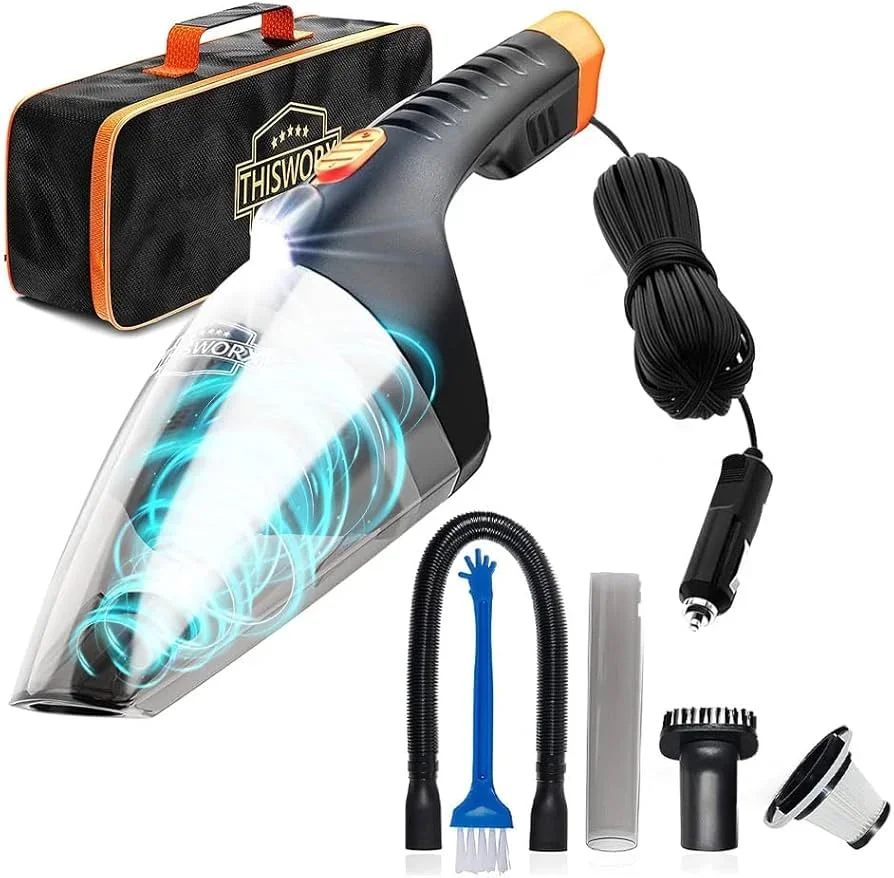
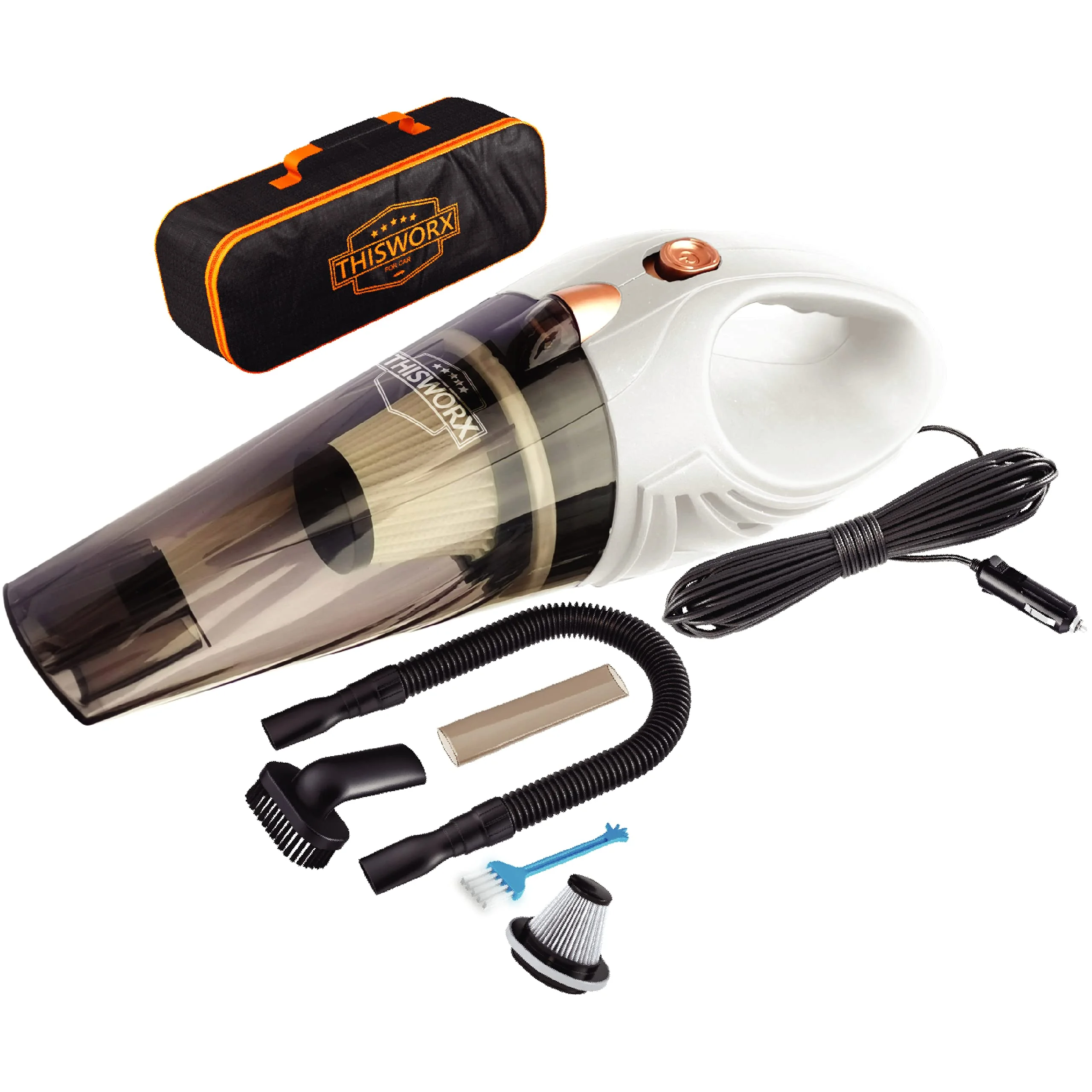
A portable car vacuum lives or dies on three numbers: suction (measured in Pa or kPa), power source, and dust-bin capacity. Cabin messes are mostly fine grit, sand, crumbs, and pet hair, so raw airflow matters more than the wattage printed on the box. Most handhelds worth owning land between 4,000 and 9,000 Pa. The THISWORX Car Vacuum Cleaner sits at the top of that band, while corded 12V units that run off the car's accessory socket trade a little convenience for steady, never-fading suction.
Before comparing models, decide what you are actually solving for:
- Power source: corded 12V plugs into your outlet and never dies mid-clean; cordless gives you reach but caps you at one battery charge.
- Suction (Pa/kPa): higher Pa lifts embedded grit and pet hair from carpet, not just loose crumbs.
- Wet/dry capability: only some units safely handle spilled coffee or melted ice.
- Bin and filter: a washable HEPA-style filter and a bin you can empty one-handed save real frustration.
Once you've nailed those four, secondary factors break ties: weight (under three pounds is comfortable overhead), noise level, cord length or battery rating, and the attachment set. None of those override suction and power source, but they decide which of two otherwise-similar vacuums you'll actually enjoy using week after week. The rest of this guide walks through each factor in order, then translates it into specific picks by use case.
Corded 12V vs. Cordless: The Real Trade-Off
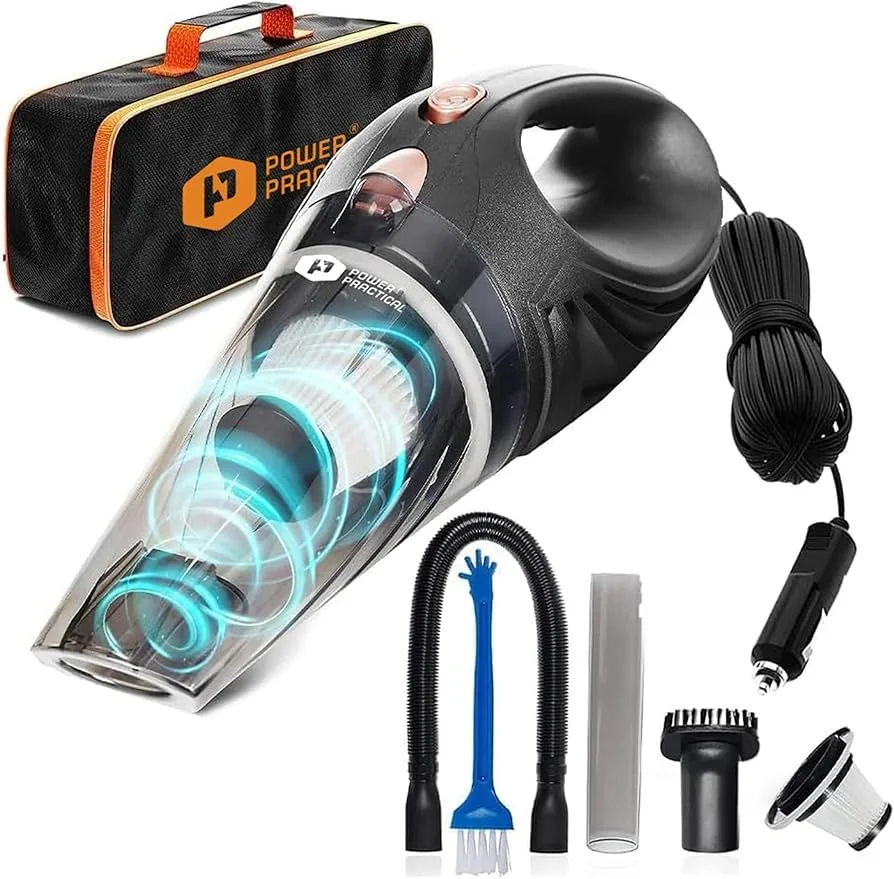
This is the first fork in the road, and it decides most of the rest. A corded 12V vacuum draws power straight from your car's accessory socket, so suction stays constant from the first minute to the last. The catch is reach: a 14-to-16-foot cord covers a sedan but gets awkward around a three-row SUV, and you can only clean where the car can supply power.
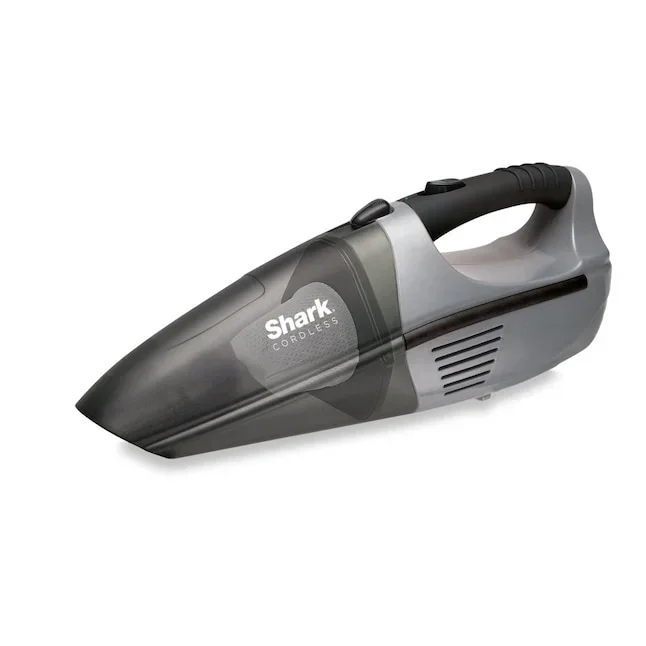
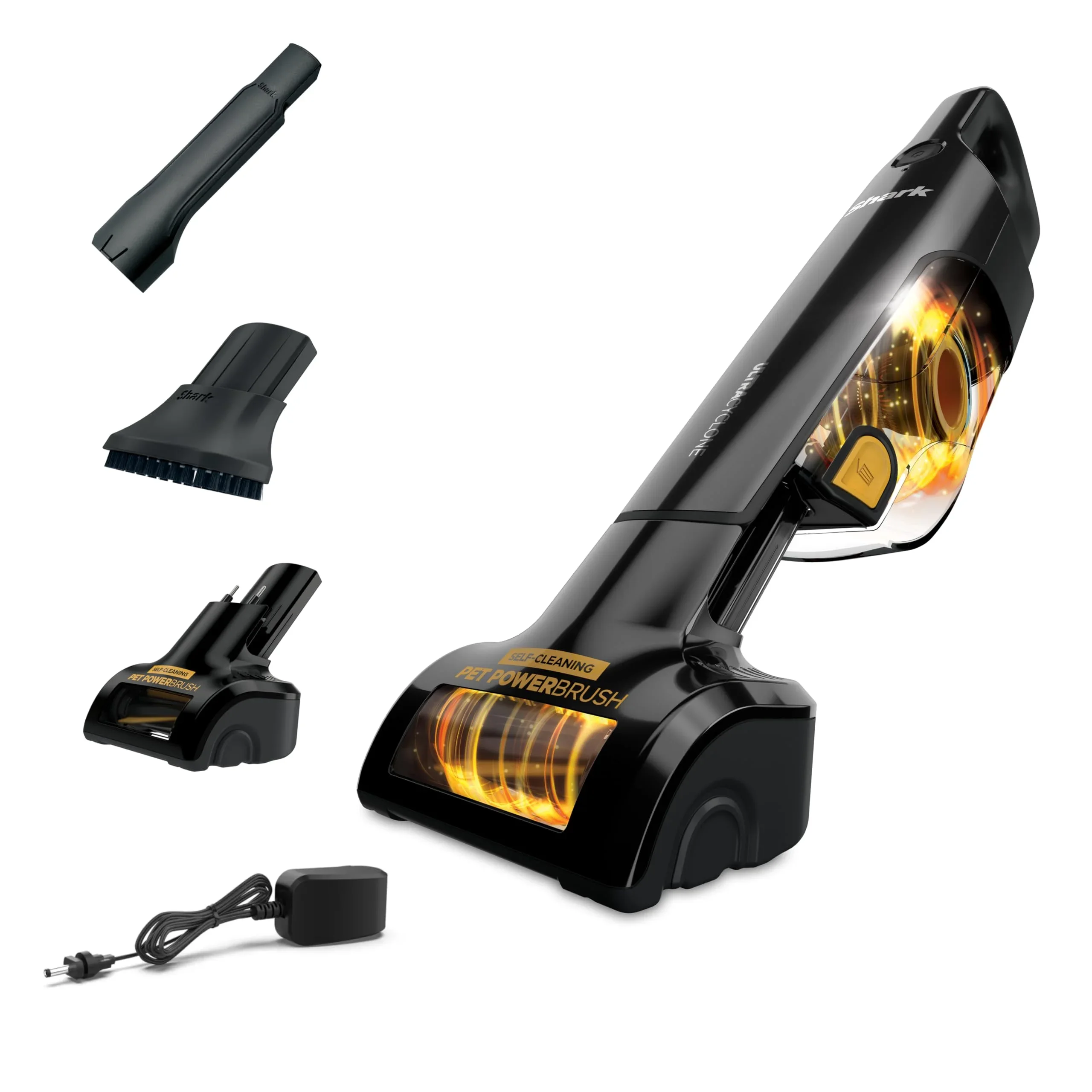
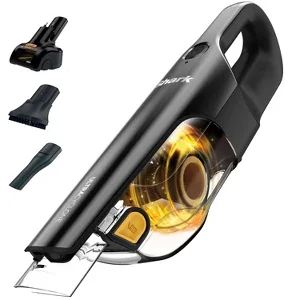
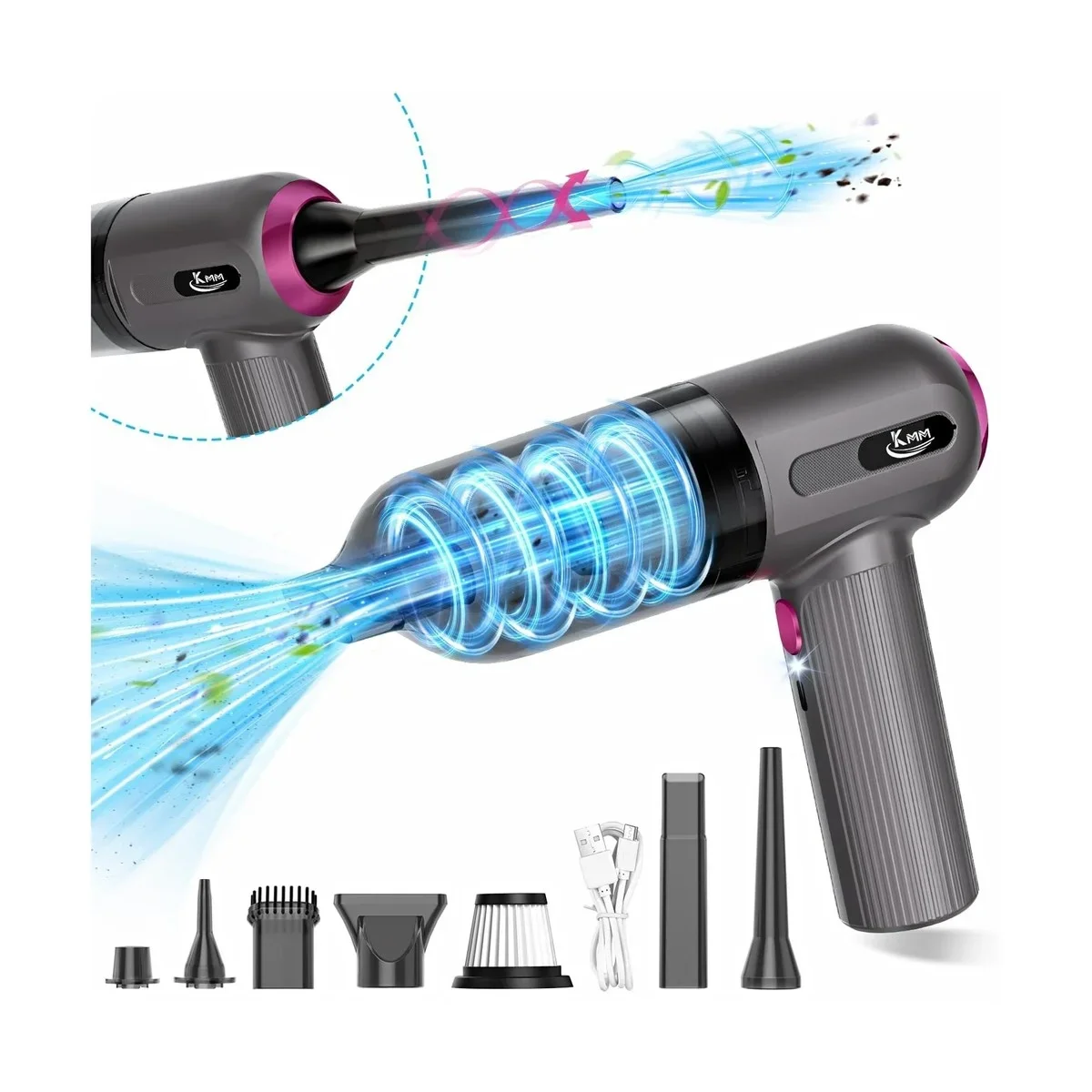
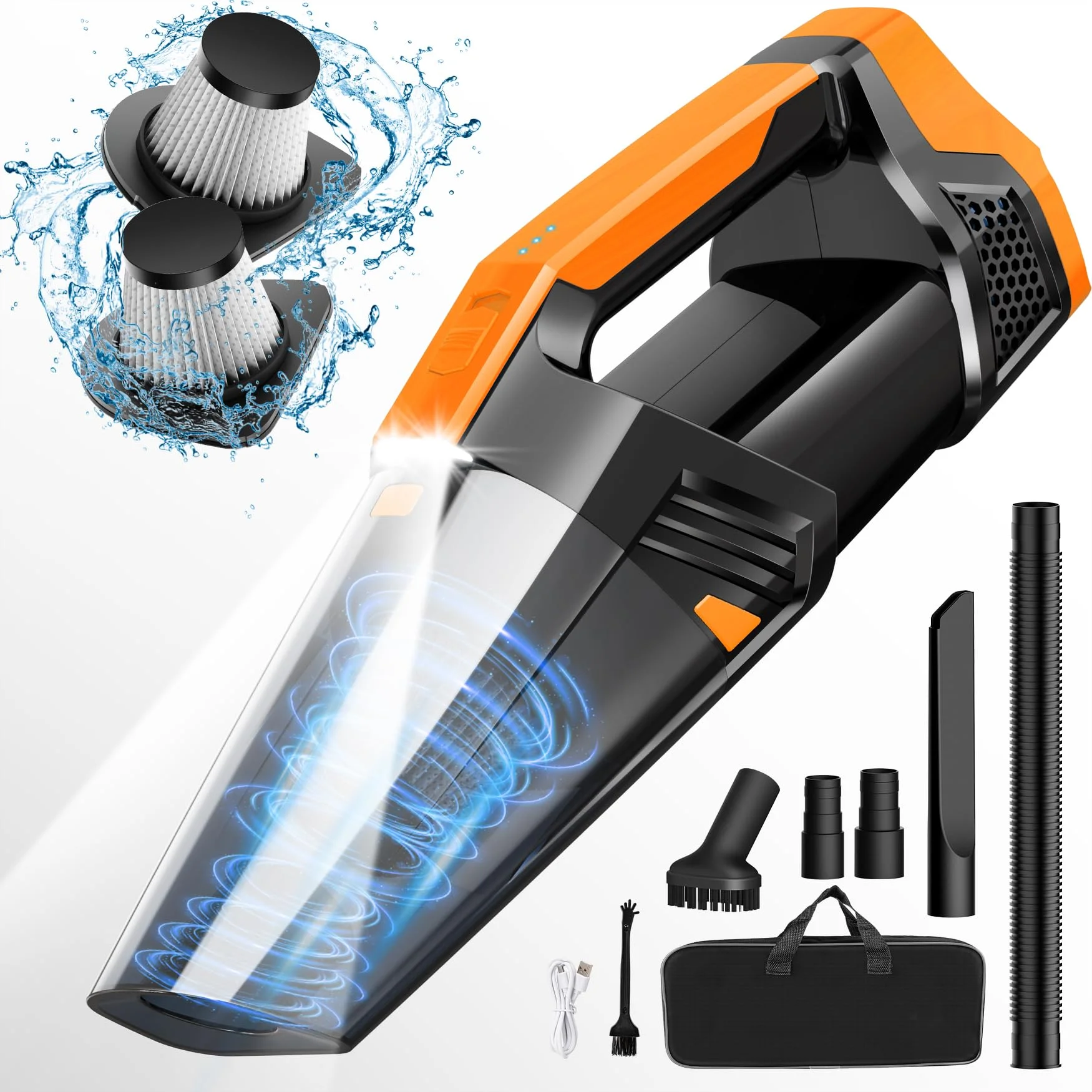
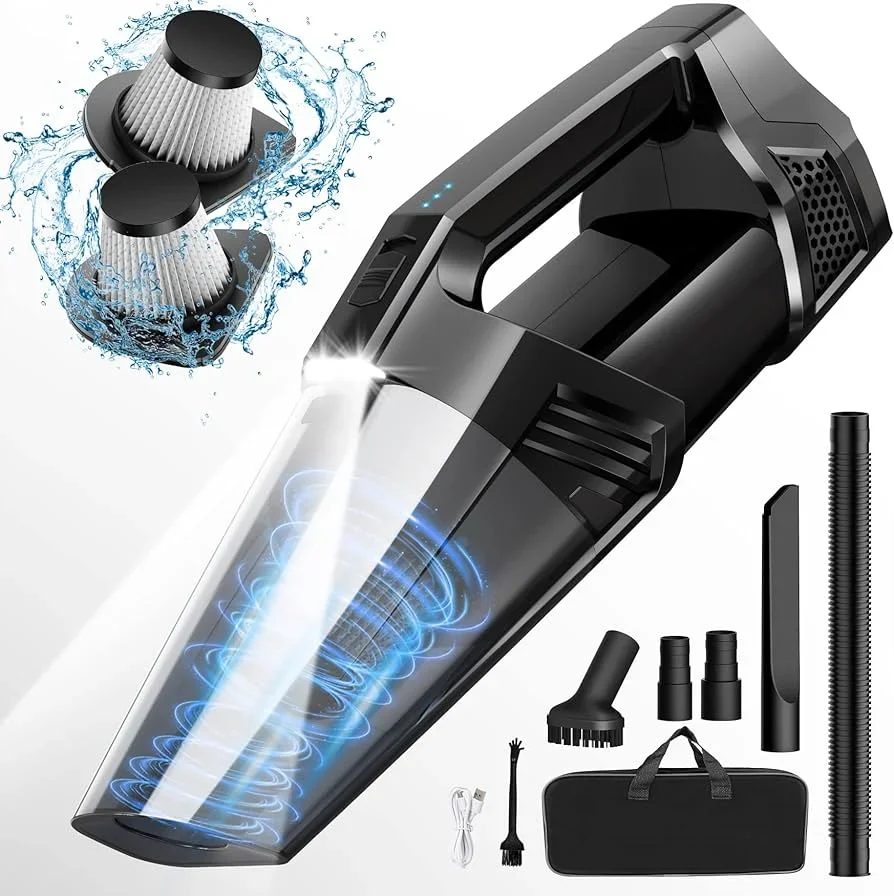
Cordless models such as the Shark UltraCyclone™ Pet Pro Plus Cordless Hand Vacuum and KMM Handheld Car Vacuum Cleaner go anywhere, including the trunk, the roof liner, or a tent floor on a camping trip. The honest downside is runtime and fade: lithium packs typically deliver 15 to 30 minutes, and suction can taper as the charge drops on cheaper units. If you do quick weekly tidy-ups, cordless wins on convenience; if you do deep, infrequent cleans, corded 12V keeps working as long as you do.
Rule of thumb: corded for sustained deep cleaning, cordless for grab-and-go convenience. Heavy detailers often keep one of each.
There is also a battery-health angle worth knowing. Cordless lithium packs lose capacity over a few years, so a cordless vacuum that runs 25 minutes today may give you 15 in its third season. Corded 12V units sidestep that aging entirely, which is part of why they're popular with people who keep gear for the long haul. If you go cordless, a model with a removable, replaceable battery beats one with a sealed pack you can't service when it inevitably weakens.
Suction in Pa and kPa: What the Numbers Mean
Suction is the spec that separates a vacuum that actually pulls sand out of floor mats from one that just pushes it around. It is quoted in pascals (Pa) or kilopascals (kPa, where 1 kPa = 1,000 Pa). For loose surface debris, 4,000-5,000 Pa is adequate. For embedded grit, pet hair worked into upholstery, or dense carpet, you want 6,000 Pa or more.
The THISWORX Car Vacuum Cleaner and Shark UltraCyclone™ Pet Pro Plus Cordless Hand Vacuum advertise figures in the upper part of that range, which is why they handle pet hair better than budget handhelds. Be skeptical of unbranded listings claiming 20,000 Pa with no third-party verification; those figures are usually measured at the motor, not at the nozzle where it counts. Pair strong suction with a motorized or stiff-bristle brush head and pet hair lifts far more easily, as covered in our guide to the best portable car vacuum for pet hair.
Wet/Dry Capability and Filtration
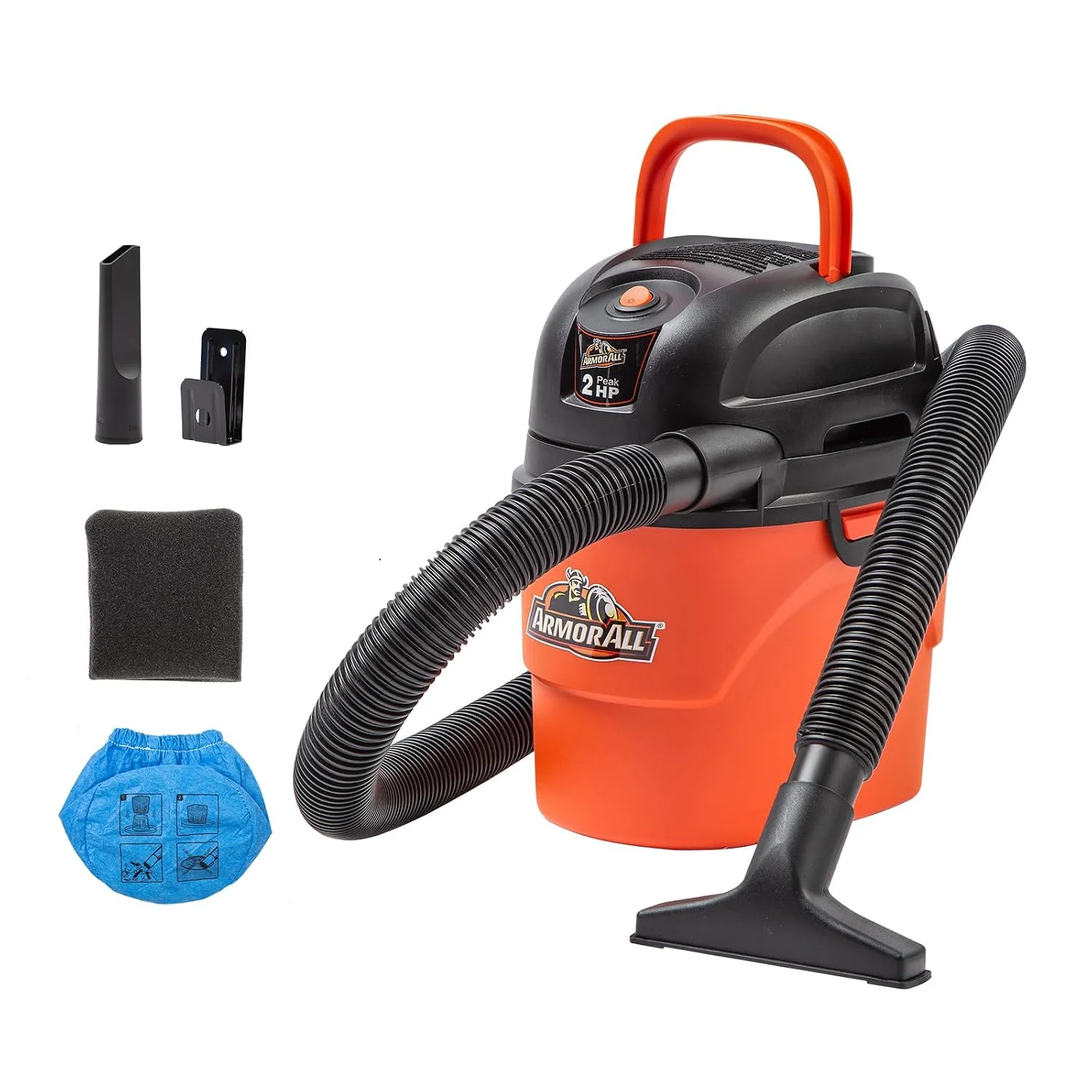
Not every car mess is dry. Spilled water bottles, melted slushies, and muddy boots are routine, and a dry-only vacuum can be damaged by liquid. Wet/dry units like the Armor All AA155 Portable Wet/Dry Vacuum keep the motor up in a powerhead above the liquid and use a tank you can rinse, so they handle both crumbs and spills. If you regularly haul kids, dogs, or sports gear, wet/dry capability is worth the modest premium.
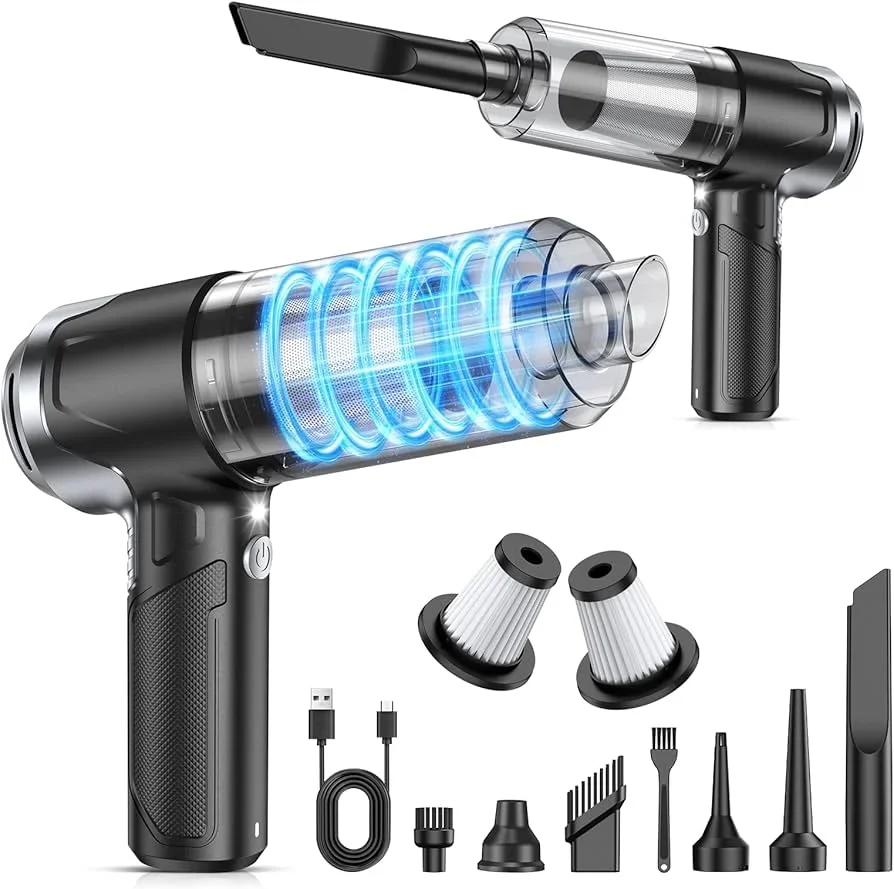
Filtration matters just as much for the air you breathe inside the cabin. Look for a washable HEPA-style filter rather than a flimsy foam screen; it traps fine dust instead of recirculating it. A washable filter also lowers running cost since you are not buying replacements every few months. The THISWORX Car Vacuum Cleaner and Blestan Handheld Vacuum Cordless Portable Car both use rinse-and-reuse filters, which keeps long-term ownership cheap.
Bin Capacity, Weight, and Attachments
Dust-bin size determines how often you stop to empty mid-clean. Compact handhelds hold roughly 0.3 to 0.6 liters, which is fine for a quick tidy but fills fast on a deep clean. If you detail an entire vehicle in one session, a real tank like the 1.5-gallon one on the Armor All AA155 Portable Wet/Dry Vacuum saves repeated trips to the trash.
Weight and attachments decide how comfortable the job is. Under three pounds is easy to hold overhead against a headliner; heavier units fatigue your wrist. The attachments that genuinely earn their keep are:
- Crevice tool for seat seams and the gap between console and seat.
- Brush head for dashboards, vents, and upholstery.
- Extension hose for reaching the far side of a wide cabin or third row.
The KMM Handheld Car Vacuum Cleaner ships with a full attachment set, which is part of why it is so flexible across different cleaning jobs.
Our Picks by Use Case
There is no single best vacuum for everyone, so match the model to your real-world use:
- Best overall: the THISWORX Car Vacuum Cleaner balances strong suction, a washable filter, and a sensible bin for most drivers.
- Best cordless reach: the Shark UltraCyclone™ Pet Pro Plus Cordless Hand Vacuum goes anywhere without a power source nearby.
- Most versatile: the KMM Handheld Car Vacuum Cleaner with its full attachment kit adapts to carpets, vents, and upholstery.
- Best for spills: the wet/dry Armor All AA155 Portable Wet/Dry Vacuum gives up cordless convenience for a 1.5-gallon tank and 2 peak HP, so it handles liquid messes no handheld can.
- Best low-maintenance: the Blestan Handheld Vacuum Cordless Portable Car keeps running costs down with a rinse-and-reuse filter.
For trip-specific gear, our road-trip vacuum guide and our roundup of car accessories for road trips pair well with any of these picks.
Using and Maintaining Your Car Vacuum
A vacuum only stays effective if you treat the filter as a consumable that needs care. Empty the bin when it reaches about three-quarters full; a packed bin chokes airflow and drops suction fast. Rinse a washable filter every few cleans and let it dry fully before reinstalling, or you'll trap mildew and lose performance.
For the cleaning itself, work top to bottom and back to front so debris falls onto surfaces you haven't done yet. Use the crevice tool first on seams and rails, then switch to the brush head for broad upholstery. For cordless units, start at full charge; for corded 12V, run the engine or accessory mode so you don't drain the starting battery. If you want a deeper detailing routine, our detailing vacuum guide walks through the full process.
What to Skip and Common Buying Mistakes
The most common mistake is chasing a single headline number. Unbranded listings shouting massive Pa figures with no third-party testing rarely match branded units like the THISWORX Car Vacuum Cleaner in real use. The second mistake is ignoring battery reality: a cordless vacuum rated for 30 minutes often delivers strong suction for only the first 15, so for deep cleans a corded 12V model that runs off the accessory socket is the safer bet.
Other avoidable errors:
- Buying a dry-only unit when you regularly deal with spills.
- Overlooking filter type, then paying for replacements forever.
- Choosing a heavy unit you won't comfortably hold overhead.
- Skipping the crevice tool, the single most useful attachment for a car interior.
- Assuming a more expensive vacuum is automatically better; a $60 model with the right attachments often out-cleans a pricier one missing a crevice tool.
It also pays to think about where the vacuum will live. A unit that ships with a storage bag or wall mount is far more likely to get used than one rattling loose in the trunk. Cord-management clips on corded 12V models and a dedicated charging dock on cordless ones keep the vacuum ready instead of tangled and dead. Convenience is what turns a one-time purchase into a habit, and a vacuum you actually reach for is worth more than a powerful one you never bother to dig out.
Spend on suction, filtration, and the right power source for your habits, keep the attachments that match your real messes, and any of the six models above will keep your cabin genuinely clean for years.