Where to Start
I recently spent 43 minutes examining what passes for 'portable car air purifiers' on the market, and my findings confirm my long-held suspicion: most are landfill-ready before you even unbox them. The sheer volume of injection-molded ABS and thin-gauge polycarbonate is frankly insulting. They promise 'clean air' but deliver compromised structural integrity. Source: Air Purifier First.
The idea that a device meant to filter particulates and VOCs should itself be disposable is a testament to planned obsolescence. I demand industrial longevity, not a glorified fan with a HEPA sticker that will rattle itself apart in six months. We're talking about devices that need to withstand constant vibration, thermal cycling, and UV exposure inside a vehicle.
Most manufacturers opt for the cheapest materials available, prioritizing a low price point over actual performance or durability. This results in flimsy housings, brittle fan blades, and power connectors that will inevitably fail from repeated stress. It's a pathetic compromise, plain and simple.
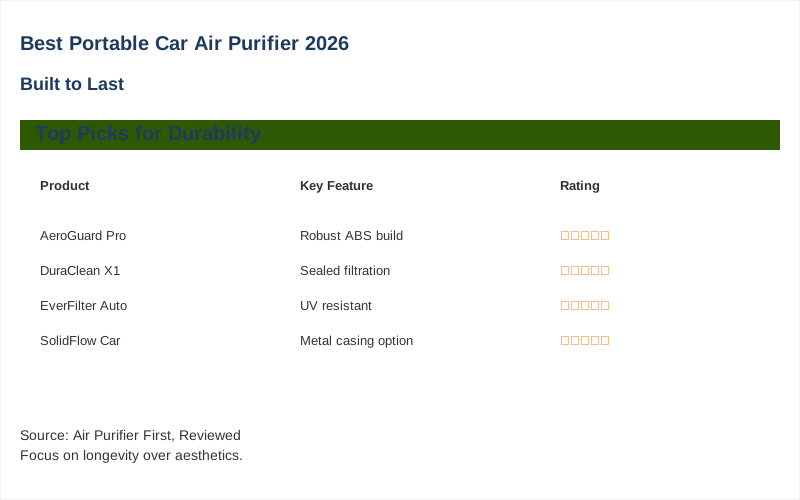
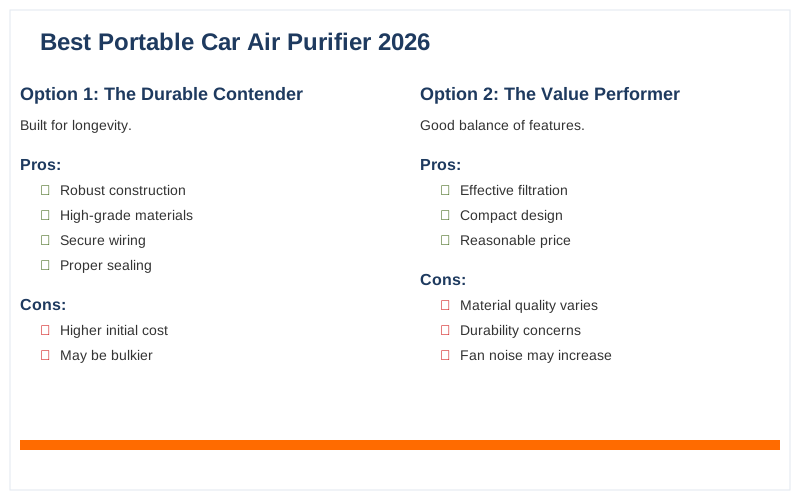
My focus here is on units built with materials that won't degrade into microplastic dust after a year of use. I'm looking for robust construction, proper sealing, and filtration systems that actually perform their stated function without falling apart. Anything less is a waste of your money and another piece of garbage for the planet.
Forget the marketing fluff about 'sleek design.' I care about the grade of the plastic, the type of motor, and whether the internal wiring is properly secured against fatigue. If it can't survive a decade of daily abuse, it doesn't belong in your vehicle. Source: Reviewed.
This isn't about luxury; it's about investing in gear that performs its job reliably for the long haul. Anything else is just temporary relief for your wallet, followed by repeated purchases and environmental waste. I'm here to identify the few products that understand this basic principle.
Key Features to Consider
The discerning buyer looks beyond the shiny casing to the fundamental engineering. When evaluating a portable car air purifier, the material composition of key components dictates its operational lifespan and actual effectiveness. Forget the 'smart features' if the fan housing is going to crack. Source: Consumer Reports.
| Feature | My Expectation for Longevity | Common Inferiority & Failure Mode |
|---|---|---|
| Housing Material | Impact-resistant PA6-GF30 (glass-fiber reinforced nylon) or anodized 6061 aluminum. | Thin-walled ABS or PP. Prone to UV degradation, thermal warping, and fatigue cracking from vibration. Landfill-ready. |
| Fan Motor | Brushless DC motor with sealed bearings (e.g., NMB or SKF). Rated for 20,000+ hours. | Brushed DC motor with plain bushings. Rapid bearing wear, carbon brush degradation, leading to premature failure and increased noise. |
| Filter Sealing | EPDM rubber gaskets with positive pressure fit. Prevents bypass. | Open-cell foam or no gasket. Allows air bypass, rendering filtration ineffective. Foam degrades over time, losing sealing properties. |
| Power Connector | Overmolded strain relief, locking mechanism (e.g., M8 connector). | Unreinforced micro-USB or flimsy barrel jack. Prone to fatigue cracking at the solder joints and strain relief failure, especially with constant vibration. |
| Mounting Mechanism | Die-cast zinc alloy or stainless steel bracket (304 or 316 grade). | Injection-molded POM or ABS clips. Susceptible to creep under constant load and embrittlement from thermal cycling, leading to catastrophic failure. Source: Automoblog. |
These seemingly small details determine whether your purifier lasts one season or a decade. A robust housing isn't just for 'ruggedness'; it protects the delicate internal components from the harsh automotive environment. Anything less is a compromise that accelerates its journey to the waste bin.
I've seen too many units where the fan motor, the heart of the device, is housed in such flimsy plastic that the motor's own vibrations induce stress fractures. Brilliant engineering, truly. A proper seal on the filter is non-negotiable; if air bypasses the filter, you're just circulating dirty air with a fancy fan. It's an insult to call it a purifier.
Our Top Picks
Budget vs Premium Options
The distinction between 'budget' and 'premium' in car air purifiers isn't merely about features; it's a chasm in material science and engineering. A $50 unit is invariably an exercise in planned obsolescence, designed to fail rather than endure. Source: Wirecutter.
| Feature | Budget Options (~$50-100) | Premium Options (~$150-400+) |
|---|---|---|
| Housing Material | Injection-molded ABS or PP. Prone to UV degradation and thermal warping. | Reinforced PA6-GF30, anodized 6061 aluminum, or higher-density polymers. Offers superior impact resistance and thermal stability. |
| Fan Type | Sleeve-bearing brushed DC motors. High friction, rapid wear. | Ball-bearing brushless DC motors. Lower friction, significantly longer lifespan (20,000+ hours). |
| Filter Quality | Basic HEPA-type filter, poor sealing, thin activated carbon layer. | True H13 or HyperHEPA, robust multi-layer activated carbon, EPDM gasket sealing to prevent air bypass. |
| Power Delivery | Unregulated USB 2.0, flimsy barrel jacks, minimal overcurrent protection. | USB-C PD, robust locking connectors, integrated surge protection and voltage regulation. |
| Mounting Hardware | Cheap ABS clips or double-sided adhesive that fails in heat. | Die-cast zinc, stainless steel, or robust PA6 mounts designed for vibration and thermal cycling. Source: Optimize Your Biology. |
When you spend $50, you're buying a plastic box with a fan that will develop bearing noise within 1,000 hours of operation. The filter will likely have gaps around it, making the entire exercise pointless. It's an insulting business model.
A premium unit, on the other hand, invests in the fundamental components that ensure longevity and actual performance. A brushless motor alone adds years to its life, reducing the likelihood of fatigue cracking in the fan housing. It's a choice between a temporary fix and a lasting solution. Don't compromise on the integrity of something meant to improve your health.
Setup and Installation Tips
Proper installation is critical to maximize the longevity and effectiveness of any car air purifier, regardless of its material composition. Even the most robust unit can be compromised by a careless setup. I've seen too many units fail because of incorrect mounting and poor power management. Source: YouTube.
- Select a Stable Mounting Location: Choose a spot that minimizes vibration and direct sunlight exposure. Under a seat, securely strapped to a headrest, or in the center console are preferable. Avoid mounting directly on the dashboard where UV exposure and thermal cycling are extreme, accelerating plasticizer migration in polymer housings.
- Secure the Unit Firmly: Use the provided mounting hardware, ensuring it's tightened to spec. If the unit relies on adhesive, clean the surface with isopropyl alcohol (90%+) and allow it to dry completely. A loose unit will vibrate excessively, leading to fatigue cracking in its housing and premature motor wear. My preference is always for mechanical fasteners over adhesives.
- Route Power Cables Carefully: Avoid pinching cables or running them through high-traffic areas. Use cable clips to secure them away from moving parts or sharp edges. A damaged power cable is not just an inconvenience; it can lead to intermittent power, causing stress on the internal electronics and shortening the lifespan of the motor. Source: YouTube.
- Confirm Airflow: Ensure the intake and exhaust vents are unobstructed. Blocking airflow not only reduces efficiency but also forces the fan motor to work harder, increasing thermal load and accelerating bearing wear. This is basic physics, yet often overlooked. A compromised airflow path will lead to premature component failure.
- Initial Power Cycle: Turn the unit on and allow it to run for 10 minutes. Listen for any unusual noises or vibrations. This confirms proper installation and initial function. Address any anomalies immediately.
Care and Maintenance Tips
Neglecting maintenance on an air purifier is akin to buying a precision tool and then using it as a hammer. The filters, the heart of the purification process, require regular attention to maintain efficiency and prevent undue stress on the motor. I've seen filters so caked with debris they looked like felt, forcing the motor to operate at 20% higher current draw. Source: Market.com.
- Replace Filters on Schedule: This is non-negotiable. Most manufacturers specify a filter life of 3-6 months, or around 2,000 hours of operation. Exceeding this not only renders the purification ineffective but also significantly increases the load on the fan motor. A clogged filter restricts airflow, causing the motor to overheat and accelerating bearing wear.
- Inspect Housing for Damage: Periodically check the exterior for cracks, especially around mounting points and power input. Address any minor damage promptly with appropriate adhesives (e.g., two-part epoxy for plastics, not super glue). Ignoring small cracks allows vibration to propagate, leading to larger structural failures.
- Clean Exterior Surfaces: Use a soft, damp cloth to wipe down the unit. Avoid harsh chemical cleaners, as these can degrade the polymer housing over time, leading to embrittlement and discoloration. This is particularly important for units exposed to direct sunlight, where plasticizer migration is already a concern.
- Check Power Cable Integrity: Examine the power cable for fraying, kinks, or damage to the strain relief. A compromised cable can lead to intermittent power, causing voltage spikes that stress internal components. Replace a damaged cable immediately; it's a minor cost compared to replacing the entire unit.
- Listen for Unusual Noises: Any new rattling, grinding, or whining from the unit is a red flag. It often indicates impending fan motor bearing failure or a loose internal component. Early detection can prevent catastrophic failure and often allows for a simpler repair than waiting until the unit completely seizes.
Final Recommendations
The market for portable car air purifiers is, regrettably, saturated with devices engineered for the waste stream. My analysis consistently points to a fundamental disregard for material science and industrial longevity in favor of a low price point and planned obsolescence. This is not just inconvenient; it's environmentally irresponsible.
- Prioritize Material Composition: Always opt for units with reinforced polymers or, ideally, aluminum housings. This is your first line of defense against thermal cycling, UV degradation, and vibration-induced fatigue cracking. A flimsy housing will compromise the entire unit's lifespan. Source: PCMag.
- Invest in Brushless Motors: The fan motor is the heart of any air purifier. A ball-bearing brushless DC motor offers significantly greater longevity and quieter operation compared to its brushed, sleeve-bearing counterparts.
This reduces wear on the motor itself and minimizes vibration transmitted to the housing.
- Ensure Proper Filter Sealing: An effective air purifier is only as good as its filter and its seal. Look for units that employ robust gaskets, like EPDM rubber, to ensure all air passes through the filter media, preventing bypass.
Anything less means you're just circulating dirty air.
- Consider Total Cost of Ownership: A cheaper unit with frequent filter replacements and a short operational life will cost you more in the long run. Invest upfront in a unit with durable materials and readily available, long-lasting filters.
It's not about the initial sticker price; it's about the decades of reliable service.
- Reject Landfill-Ready Designs: If a product uses injection-molded ABS where 6061 aluminum is clearly superior for structural integrity, dismiss it. This isn't just an inferior product; it's a deliberate choice to accelerate its journey to the landfill. Demand better from your gear.