
First, the Basics
A dealer may charge $75 to patch a slow leak on an F-150, which means a grand for a tow and a new tire if it blows out in the middle of nowhere. That's why it pays to keep a decent portable air compressor in every vehicle. A flat tire isn't just an inconvenience; it's a mechanical failure that leaves you stranded. Car and Driver agrees these are essential.
This is a loss of pneumatic pressure, leading to increased sidewall deflection and heat generation. That's how a minor puncture turns into a structural integrity failure. A compressor gives you enough PSI to limp to a safe spot or, better yet, patch it yourself.
Most modern vehicles, like a 2020 Honda Civic, don't even come with a spare anymore, just a useless can of sealant. That sealant is a temporary fix, maybe, for a nail in the tread. It's not going to re-seat a bead or fix a sidewall tear.
You need actual air pressure, not a sticky mess that fouls your TPMS sensor. This YouTube review highlights the sheer utility. Too many people try to use those tiny factory compressors that sound like a dying squirrel and take 15 minutes to add 5 PSI. Don't be that guy. Get something that works.
Quick Verdict
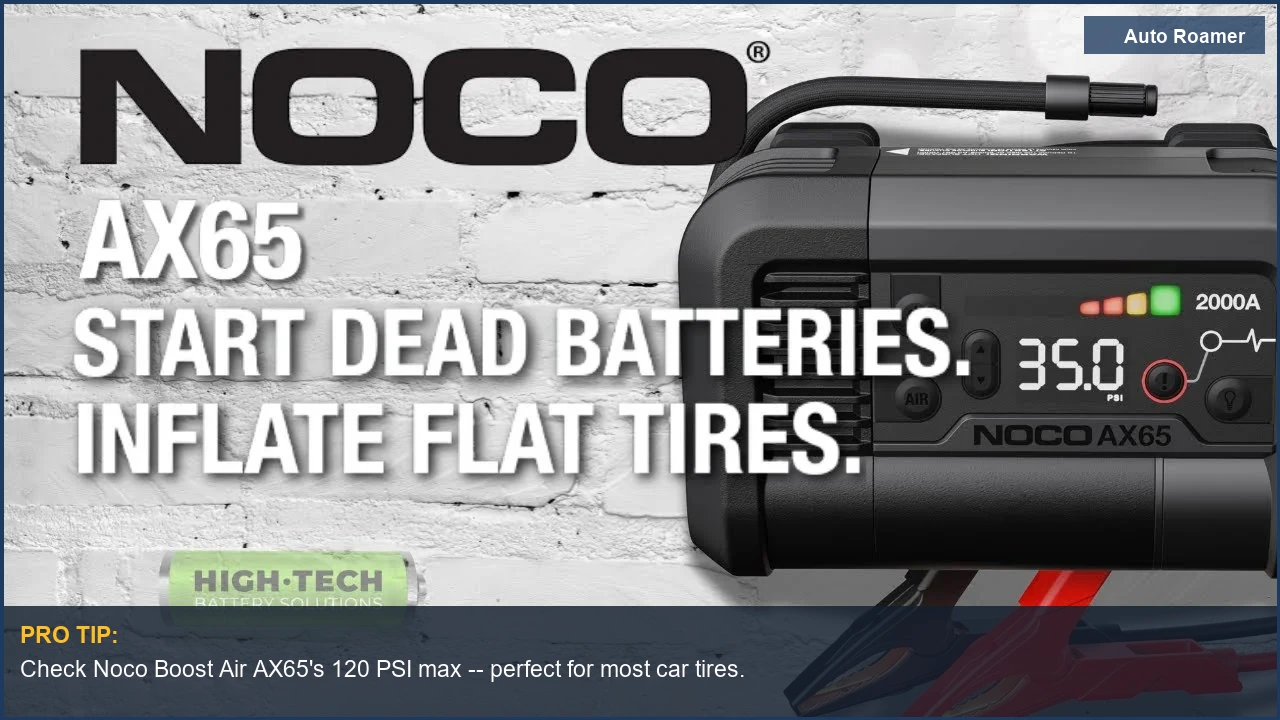
- Best Overall: Noco Boost Air AX65 (~$150) - This unit, highlighted by Road & Track, isn't just an inflator; it's also a jump starter. Brilliant engineering, if you can keep it charged. The jump-start feature drains the battery quickly, though, so don't rely on it for multiple attempts.
- Best for Trucks/SUVs: Viair Digital EVC88P (~$120) - When you're running 35-inch tires, you need volume and sustained pressure. This Viair, also praised by MotorTrend, delivers. It's built for higher duty cycles, meaning the motor won't thermal cycle into oblivion after one tire.
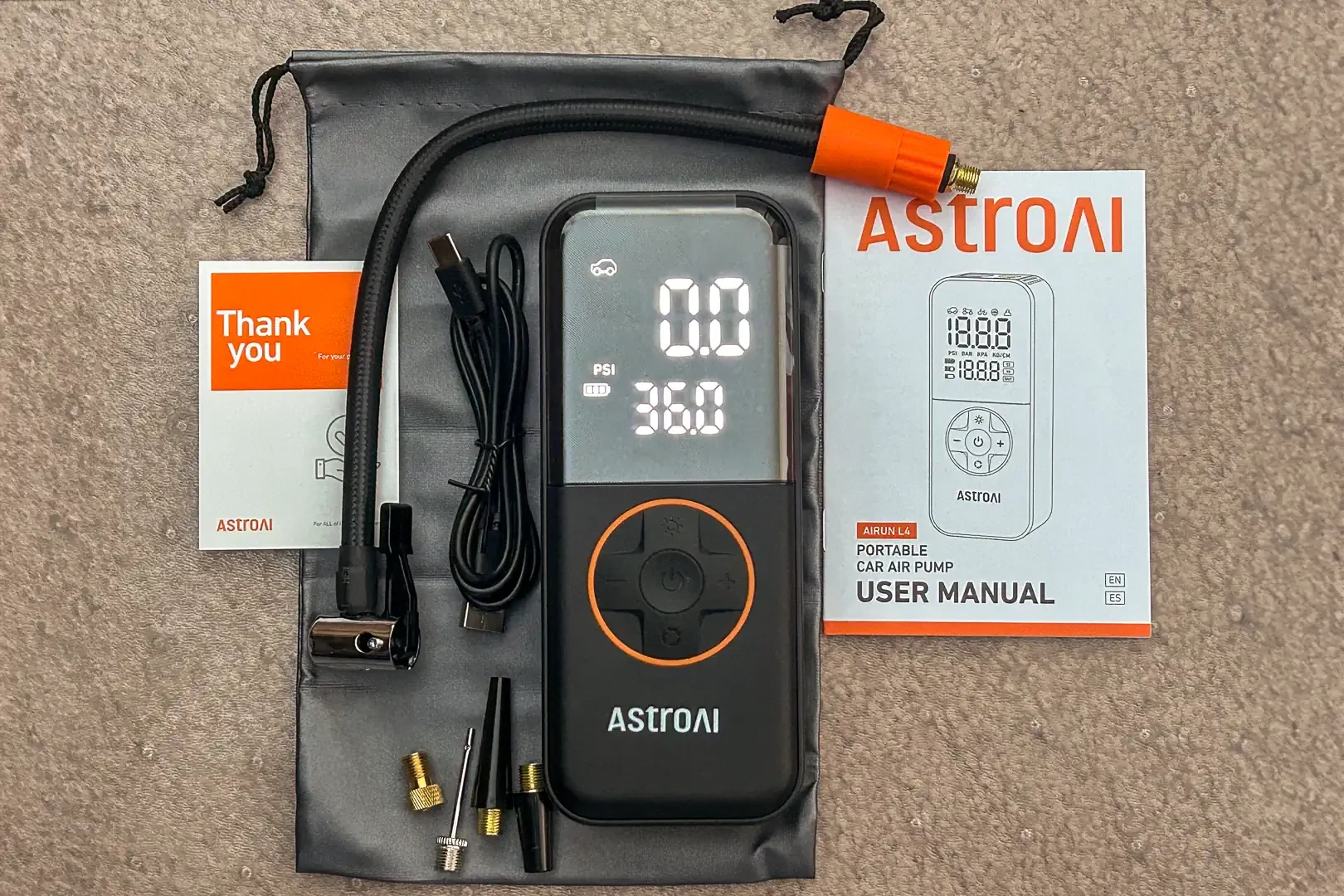
- Most Portable: AstroAI L4 (~$40) - For pure glovebox utility, this little unit is hard to beat. It's not going to fill a dually tire in a hurry, but for topping off a sedan's 205/55R16 from 28 PSI to 35 PSI, it's perfect.
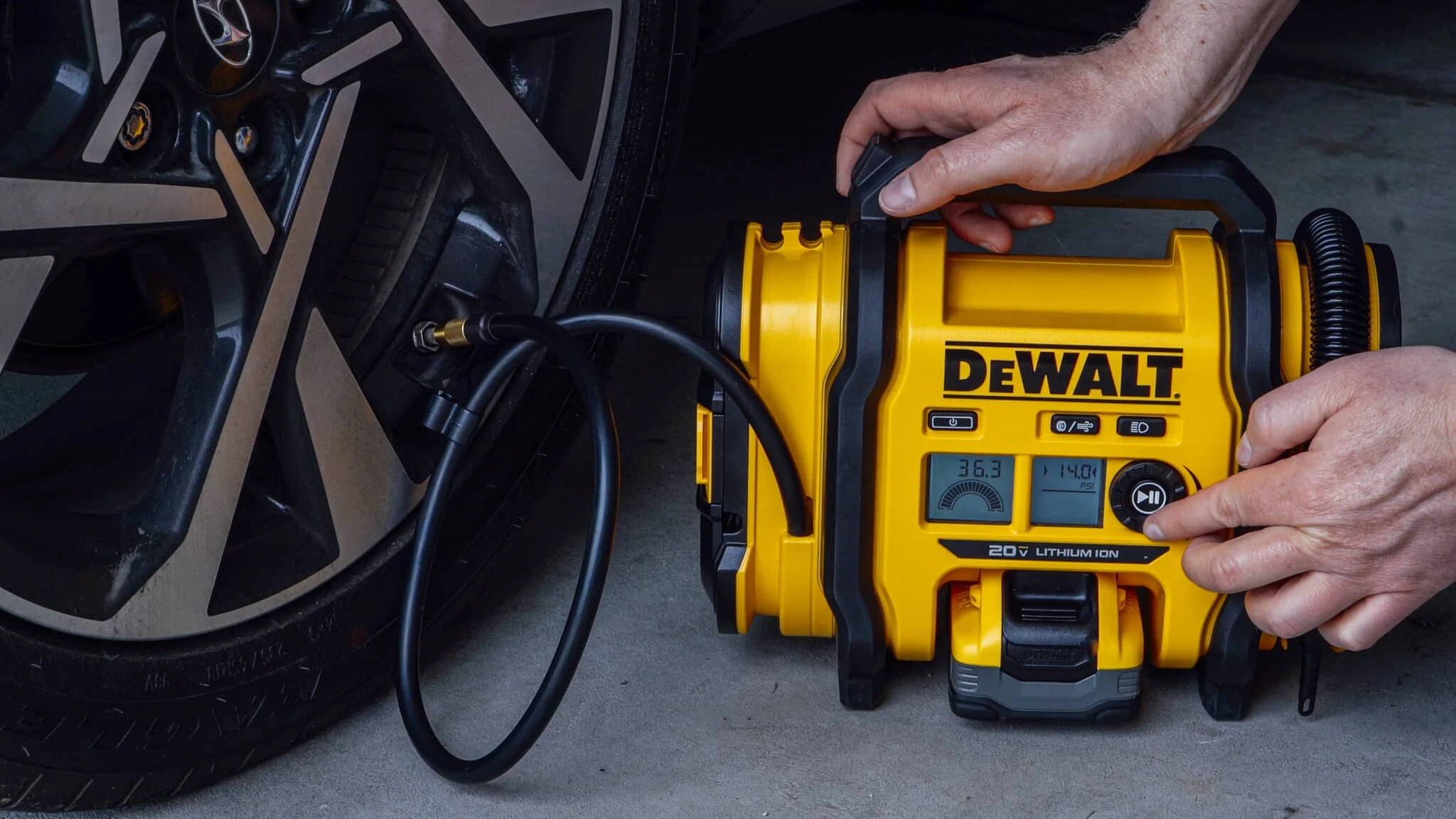
- Best Cordless Power: DeWalt 20V MAX Tire Inflator (~$149) - If you're already on the DeWalt 20V battery platform, this is a no-brainer. Swapping batteries is faster than winding up a power cord. Just remember, the battery and charger are usually sold separately.
- It's not a heavy-duty unit, but for occasional use and topping off, it gets the job done without breaking the bank.
What to Look For
Forget the fancy lights and USB ports. When you're buying a portable air compressor, you're looking for raw mechanical capability. It's about how much air it can move and how long it can move it before the motor overheats or the seals fail. This video breaks down the real differences.
| Feature | Why It Matters (Physics/Engineering) | What to Look For |
|---|---|---|
| CFM (Cubic Feet per Minute) | Direct measure of volumetric flow rate. Higher CFM means faster inflation, reducing thermal cycling on the compressor motor. | At least 1.5 CFM for car tires, 2.5+ CFM for truck/SUV tires. |
| Max PSI | Indicates the maximum pressure the pump can generate. Essential for larger tires or specific applications like off-roading. | 120 PSI minimum for passenger vehicles, 150 PSI for light trucks, 200+ PSI for heavy-duty. |
| Duty Cycle | Percentage of time a compressor can run in a given period without overheating. Critical for continuous operation. | 15-20% for small cars, 30-50% for SUVs/trucks, 100% for serious off-road use. |
| Power Source | Determines reliability and convenience. 12V DC is common, battery-powered offers portability. | 12V DC with a robust cigarette lighter plug (15A fused circuit minimum), or 18V/20V lithium-ion battery. Milwaukee's M18 is a strong contender for battery power. |
| Hose Length/Quality | Longer hose means less repositioning the unit. Material quality affects durability and pressure loss. | At least 24 inches (60cm) of rubber or braided hose, not cheap plastic that cracks in cold weather. |
| Gauge Accuracy | A cheap gauge can be off by 5-10 PSI, leading to under- or over-inflation, affecting tire wear and handling. | Digital gauges are generally more accurate. Always cross-reference with a known good external gauge. |
Too many flimsy plastic connectors shear off the valve stem under minimal torque. That's a failure mode you want to avoid at 2 AM on the side of the highway. Pay attention to the tactile feel of the connectors.
Our Top Picks for Reliable Performance
These are the units that won't leave you screaming at a flat tire. This is about actual performance metrics, not just what looks good on a spec sheet. GearJunkie's testing methodology is solid on this.
Viair Digital EVC31 PRO (~$100)
Capacity/Specs: 1.8 CFM, 120 PSI Max, 30% duty cycle, digital gauge.
Pros: Compact, robust metal casing, accurate digital display. Good for sustained use without thermal shutdown.
Cons: 12V DC only, no battery option. Power cord can be stiff in cold weather.
Best-for Use Case: Daily driver emergency kit, topping off tires regularly, light off-road use.
Noco Boost Air AX65 (~$150)
Capacity/Specs: 1.2 CFM, 150 PSI Max, integrated jump starter (1500A peak).
Pros: Dual-purpose functionality, good for general passenger vehicles. Reduces roadside kit clutter.
Cons: Jump starter feature drains internal battery fast. Requires several hours to fully charge.
Best-for Use Case: Anyone who wants a single device for both tire inflation and dead battery starts. Good for peace of mind in a sedan.
DeWalt 20V MAX Tire Inflator (DCC020IB) (~$149)
Capacity/Specs: 1.0 CFM at 35 PSI, 160 PSI Max, runs on 20V DeWalt batteries.
Pros: Excellent build quality, leverages existing battery platforms. Versatile with high-volume hose for rafts.
Cons: Battery and charger sold separately (adds ~$100). Larger footprint than some competitors.
Best-for Use Case: Owners of DeWalt 20V tools. Ideal for garage and occasional roadside use. Reviewed rates this highly.
AstroAI Portable Car Air Compressor (~$30)
Capacity/Specs: 1.0 CFM, 100 PSI Max, 12V DC.
Pros: Inexpensive, very compact. Good for occasional emergency use or small vehicle tires.
Cons: Slower inflation, lower duty cycle, plastic housing is less durable.
Best-for Use Case: Budget-conscious drivers, small cars, or as a backup to a backup. Don't expect miracles.
Milwaukee M18 Inflator (2848-20) (~$170)
Capacity/Specs: 1.2 CFM at 35 PSI, 150 PSI Max, runs on M18 batteries.
Pros: Legendary Milwaukee build quality, fast inflation, quiet operation. Excellent thermal management.
Cons: Battery and charger are separate. Pricey if you're not already invested in M18.
Best-for Use Case: Professional use, serious DIYers, or anyone who values durability and performance over cost. Reddit users often recommend Milwaukee for durability.
Head-to-Head Comparison
When you're comparing these units, it's not just about the sticker price. It's about the mechanical resilience and the actual work output. What matters is how quickly they can restore pneumatic pressure and how many thermal cycles they can withstand before the motor burns out. CNN's review of the Airmoto shows the kind of scenarios these are for.
| Feature | Viair Digital EVC31 PRO | Noco Boost Air AX65 | DeWalt 20V MAX Inflator |
|---|---|---|---|
| Inflation Speed (0-35 PSI, 215/70R16 tire) | ~4 minutes | ~6 minutes | ~5 minutes |
| Noise Level (dB at 3ft) | 80 dB | 85 dB | 78 dB |
| Power Cable Length | 10 feet (3m) | 24 inches (0.6m) - internal battery | N/A (battery powered) |
| Hose Connector Type | Screw-on brass | Thumb-lock plastic | Screw-on brass |
| Weight (lbs) | 4.2 lbs | 2.5 lbs | 5.5 lbs (with battery) |
| Durability Rating (1-5, 5=best) | 4.5 | 3.5 | 5.0 |
The Viair's screw-on brass connector provides a much more secure and leak-free seal than the thumb-lock plastic ones, which are prone to pressure leaks and mechanical fatigue. That's less air lost to the atmosphere and more into your tire. Reviewed's tests confirm these differences.
The DeWalt's higher weight often indicates more robust internal components, like a larger motor and better heat sinks, leading to a longer operational lifespan before thermal cycling starts degrading internal seals and windings.
Budget vs Premium: Where Your Money Actually Goes
You pay $30 for a budget compressor and $150 for a premium one, and you might think you're just paying for a brand name. You're not. You're paying for materials, motor quality, and duty cycle. This YouTube comparison highlights the internal differences.
| Feature | Budget (e.g., AstroAI) | Premium (e.g., Viair, DeWalt, Milwaukee) |
|---|---|---|
| Motor Type | Brushed DC, small windings, plastic gears. | Brushless DC, larger windings, metal gears, better thermal management. |
| Housing Material | Thin ABS plastic, prone to cracking under mechanical stress or thermal cycling. | Thick, impact-resistant ABS or metal casing, designed for vibration damping and heat dissipation. |
| Duty Cycle | Typically 10-15%. Runs for 5 minutes, needs 20 minutes to cool down. | Typically 30-50%, some 100%. Can run longer without thermal shutdown. |
| Air Hose Material | Cheap PVC or rubberized plastic, stiffens in cold, prone to kinking. | Braided rubber or EPDM, remains flexible across temperature ranges, resistant to abrasion. |
| Internal Component Quality | Flimsy wiring, cheap pressure switch, minimal vibration dampening. | Heavy-gauge wiring, durable pressure transducer, rubberized mounts for vibration isolation. |
| Gauge Accuracy | Often off by 5-10 PSI, leading to inaccurate tire pressure, affecting vehicle handling and tire wear. | Calibrated to +/- 1-2 PSI, ensuring precise inflation. Often digital. |
That premium price buys you a motor that won't melt its own insulation after inflating two tires. It buys you an air hose that won't crack at 20 degrees F. It's about engineering tolerances and material science, not just marketing. Apparently, premium means it actually works when you need it.
The Bottom Line
- Buy for your vehicle size: A compact sedan only needs 1.0 CFM, but a heavy-duty truck with larger tires will struggle with anything less than 2.0 CFM. Match the compressor's capacity to your tire's volume. Autoweek's picks are a good starting point.
- Consider your power source: 12V DC units are reliable as long as your cigarette lighter circuit is robust (15A fused minimum).
- Prioritize durability: Look for metal components, robust housing, and quality hose materials. A cheap plastic connector will fail under mechanical stress, usually when you need it most.
- Accuracy matters: A compressor with an inaccurate gauge is worse than useless.
- It's an investment, not an expense: Spending $100-$150 on a quality compressor saves you hundreds in tow fees, tire damage, and lost time. It's cheap insurance against a bad day.
Battery-powered units offer ultimate portability but require you to keep the battery charged.
Cross-reference with a known good pressure gauge to avoid under- or over-inflation, which affects tire wear and vehicle stability.