
Best Portable Tire Inflator for Cars
The dealer wanted $70 to patch a tire with a slow leak, then tried to upsell me on two new tires. This happens because most shops don't want to deal with the 30 minutes of labor for a proper patch, preferring the easy margin on new rubber.
The dealer wanted $70 to patch a tire with a slow leak, then tried to upsell me on two new tires. This happens because most shops don't want to deal with the 30 minutes of labor for a proper patch, preferring the easy margin on new rubber. A portable tire inflator keeps you rolling until you can get a proper fix, saving you a couple hundred bucks and a lot of aggravation.
Imagine this scenario: you're on a road trip, miles from the nearest town, and your tire pressure warning light suddenly illuminates. Or perhaps you wake up to a flat tire in your driveway on a Monday morning, with no time to spare. In these situations, a portable tire inflator isn't just a convenience; it's a lifesaver. Instead of calling for roadside assistance, which can cost upwards of $50-$100 and involve a lengthy wait, you can quickly reinflate your tire and be on your way. Most quality portable inflators can bring a standard car tire from 20 PSI to 35 PSI in under five minutes, giving you enough pressure to safely reach a repair shop.
Don't be that guy stranded on the shoulder, fumbling for quarters at a gas station air pump that's probably broken anyway. Many gas station pumps are poorly maintained, inaccurate, or require payment, adding to your stress. A good portable inflator, typically powered by your car's 12V outlet or a rechargeable battery, eliminates these hassles. It provides precise pressure readings, often with an auto-shutoff feature once the desired PSI is reached, preventing overinflation. This accuracy is crucial for tire longevity and safe driving. Investing in a portable inflator, which can range from $30 to $100, pays for itself after just one use, easily saving you the cost of a tow or an unnecessary new tire purchase.
Car and Driver agrees these are essential, highlighting their reliability and ease of use in real-world testing. They emphasize that these devices are not just for emergencies but also for routine tire maintenance, helping you maintain optimal tire pressure for better fuel economy and extended tire life.
⭐ Quick Picks
Top Picks
Picking the right portable air compressor isn't about bragging rights, it's about not being stuck with a tire slowly deflating at 1 PSI per month, especially when ambient temperatures drop. That thermal contraction will drop your pressure even faster. Don't cheap out on something that's going to seize up when you need it most. Road & Track notes how critical proper pressure is.
Here are the units that won't leave you wishing you'd bought the roadside assistance package.
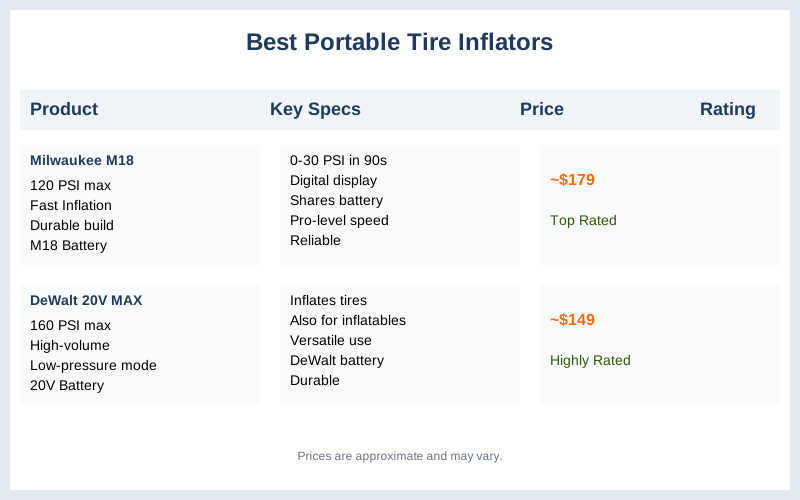
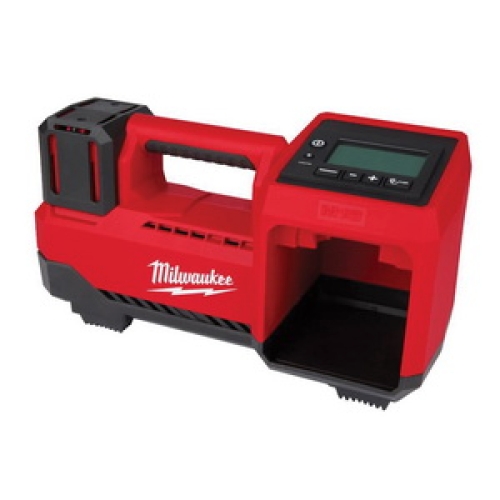
- Milwaukee M18 Inflator 2848-20 (~$179)
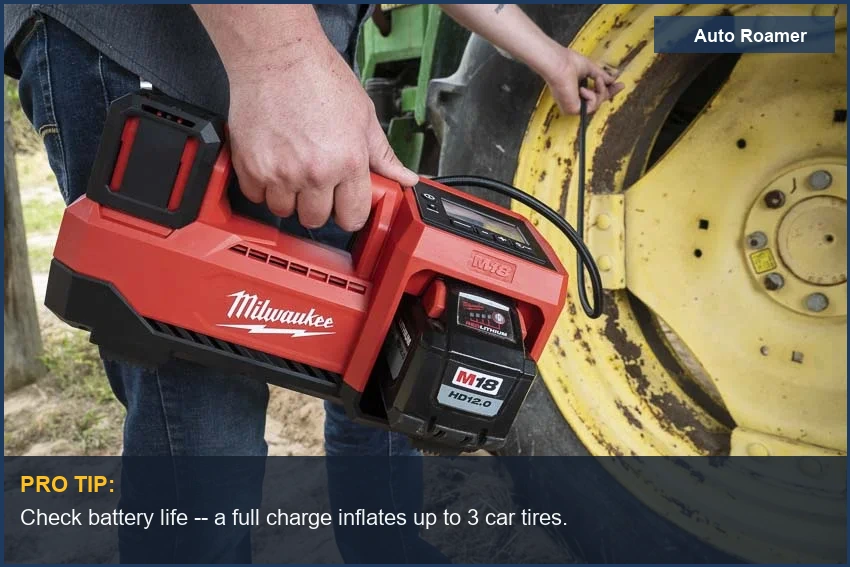
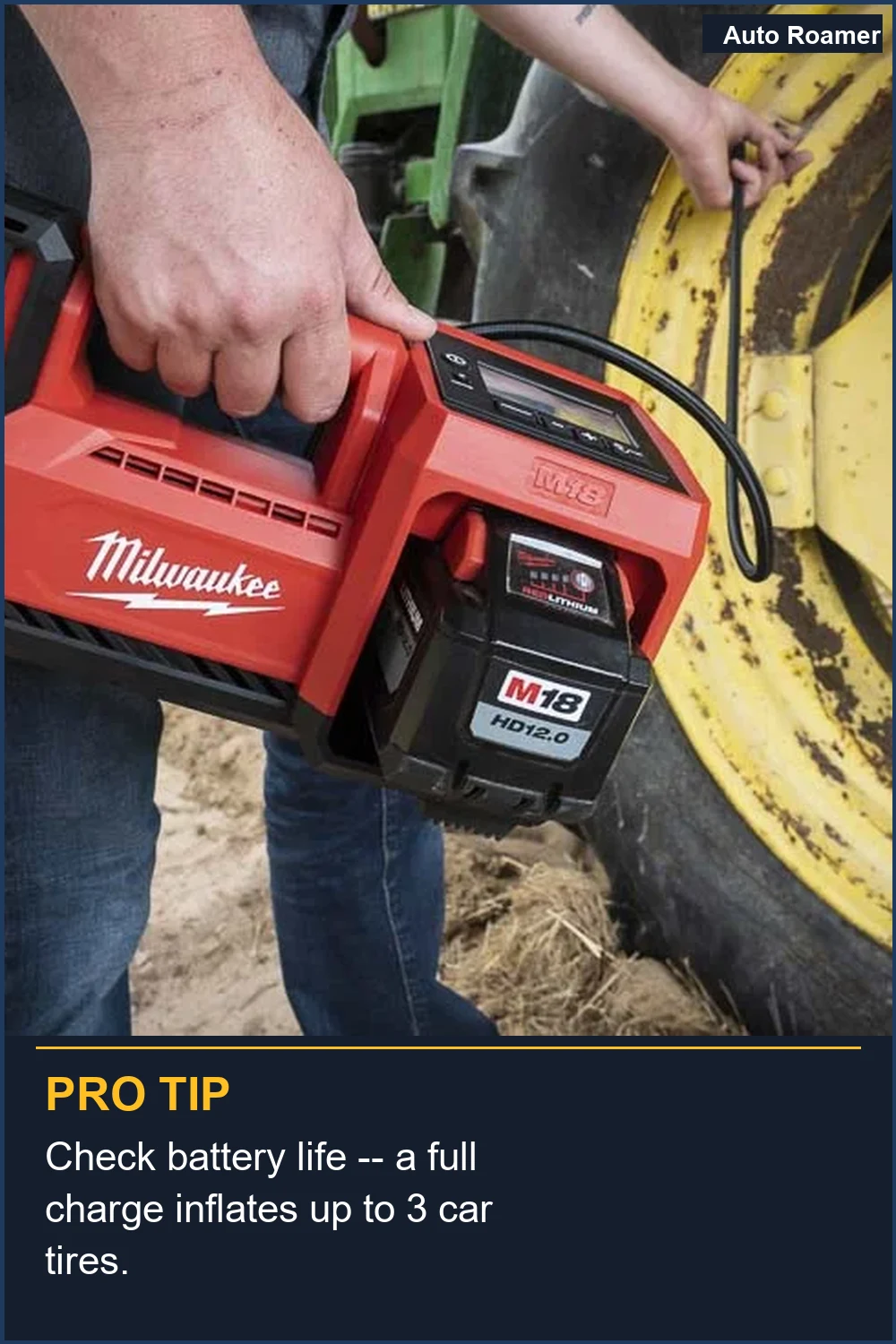
Capacity/Key Specs: 120 PSI max, 0-30 PSI in 90 seconds for a standard tire. Runs on Milwaukee M18 battery.
Pros: Fast, durable, shares battery platform with power tools. Digital display for precise pressure. Popular Mechanics raves about its speed.
Cons: Battery and charger sold separately, adds to cost. A bit bulky.
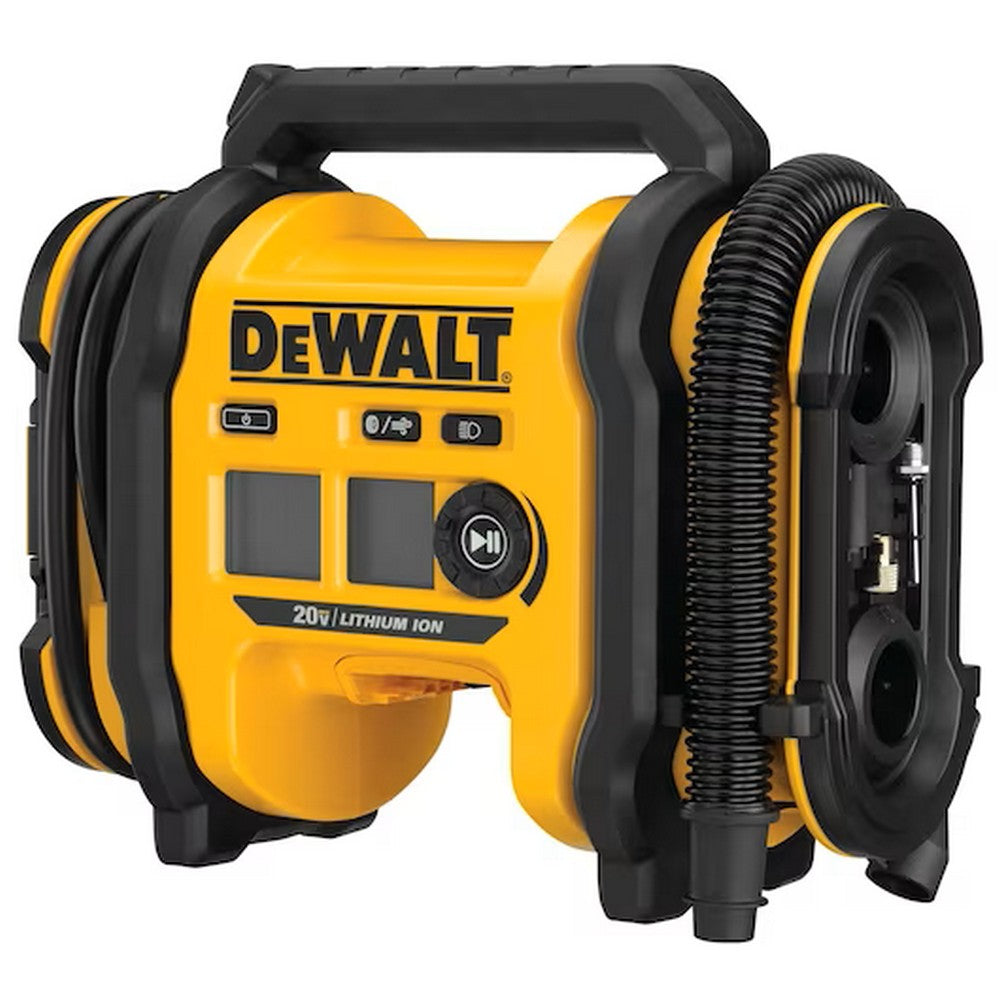
Best for: Anyone already in the Milwaukee M18 ecosystem, or those needing pro-level speed and reliability. - DeWalt 20V MAX Tire Inflator (~$149)
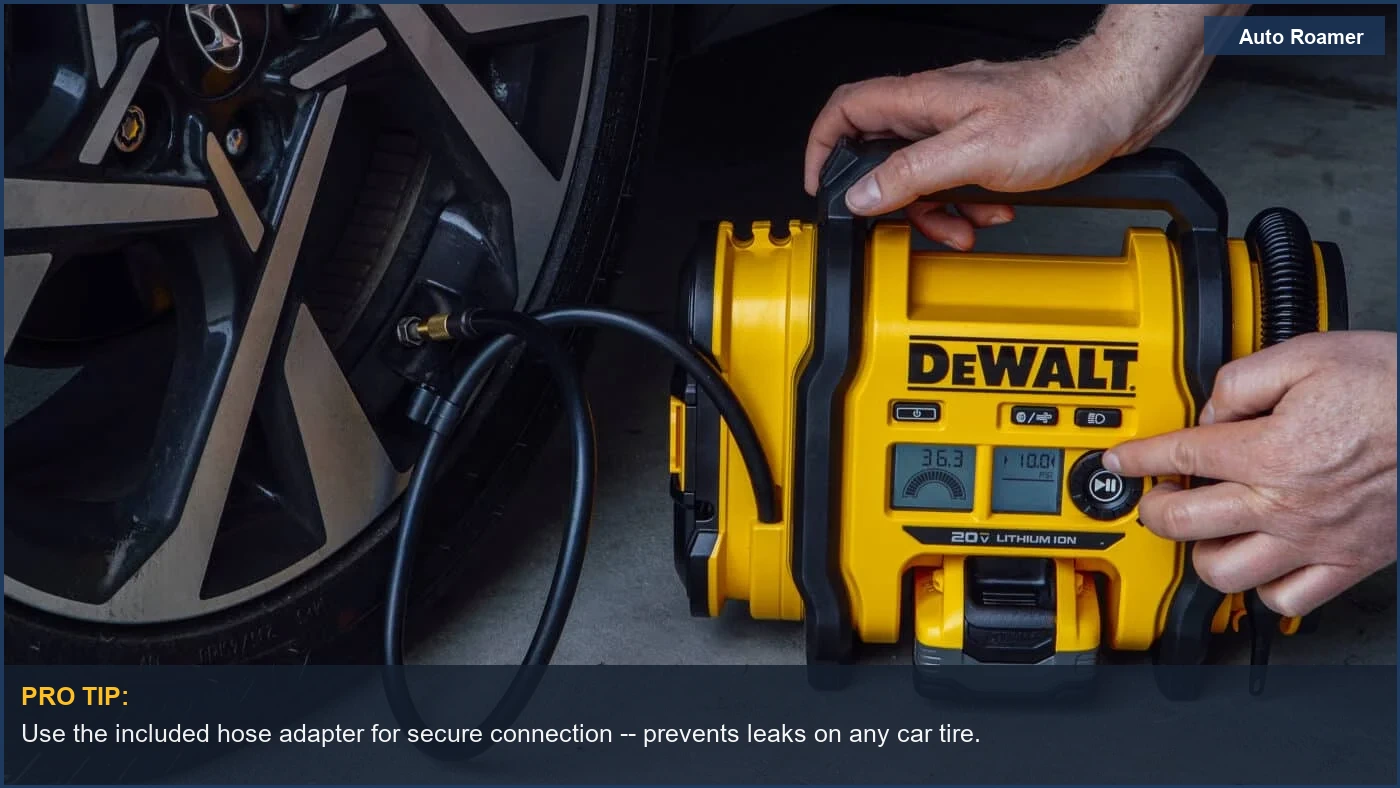
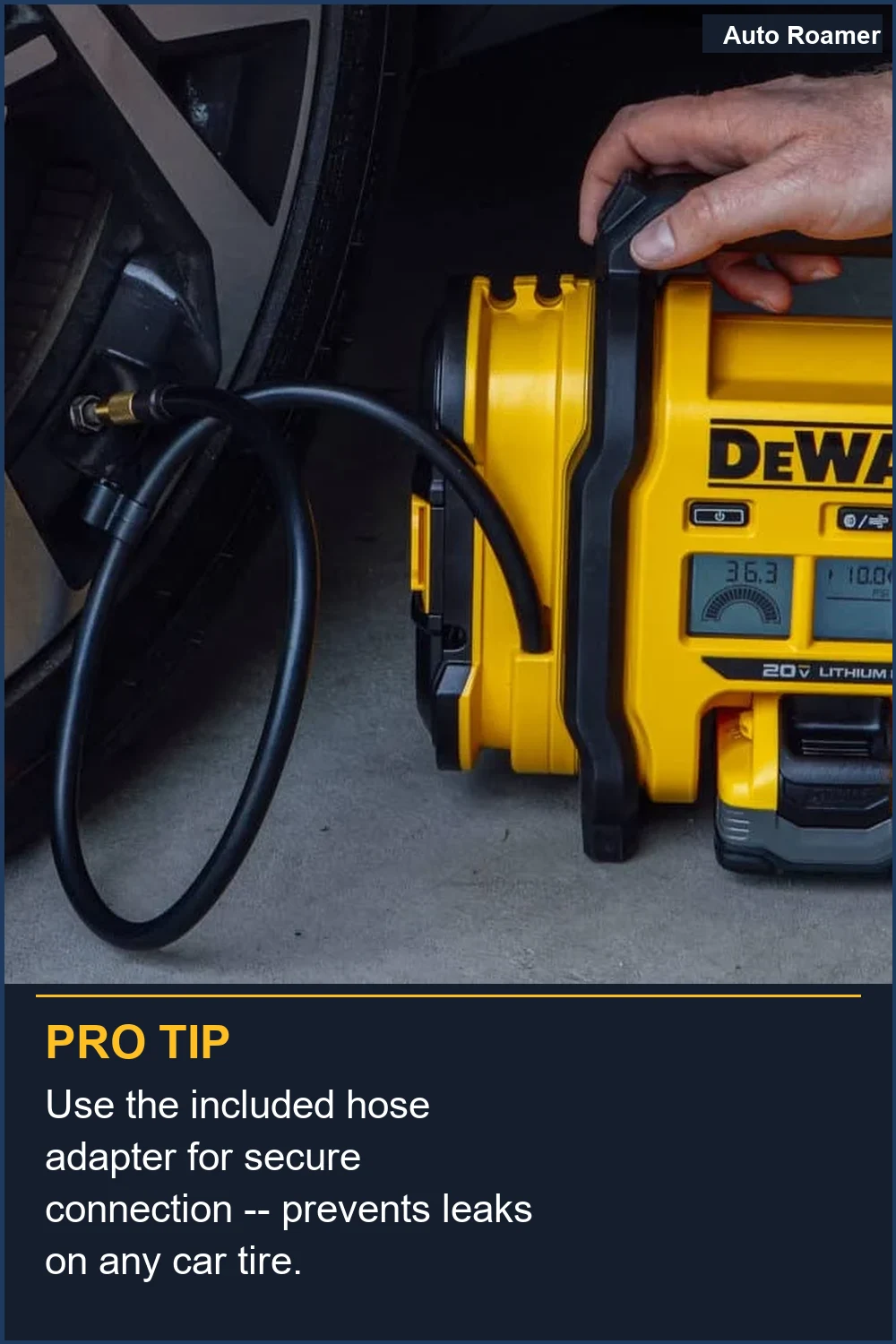
Capacity/Key Specs: 160 PSI max, high-volume/low-pressure mode for inflatables. Runs on DeWalt 20V MAX battery or 12V DC.
Pros: Extremely versatile with multiple power options, high-volume hose for air mattresses. Robust construction. GearJunkie calls it the best overall.
Cons: Battery and charger not included, can be expensive. Larger footprint than some.
Best for: DeWalt tool owners, off-roaders who air down, or anyone needing multi-purpose inflation. - Viair 88P Portable Air Compressor (~$80)
Capacity/Key Specs: 120 PSI max, 1.47 CFM. Clamps directly to 12V battery terminals.
Pros: Direct battery connection means no cigarette lighter fuse issues. Solid metal construction, good duty cycle for its price point. Popular Mechanics recommends it for off-roaders.
Cons: No internal battery, requires hood open. Gauge can be slightly off.
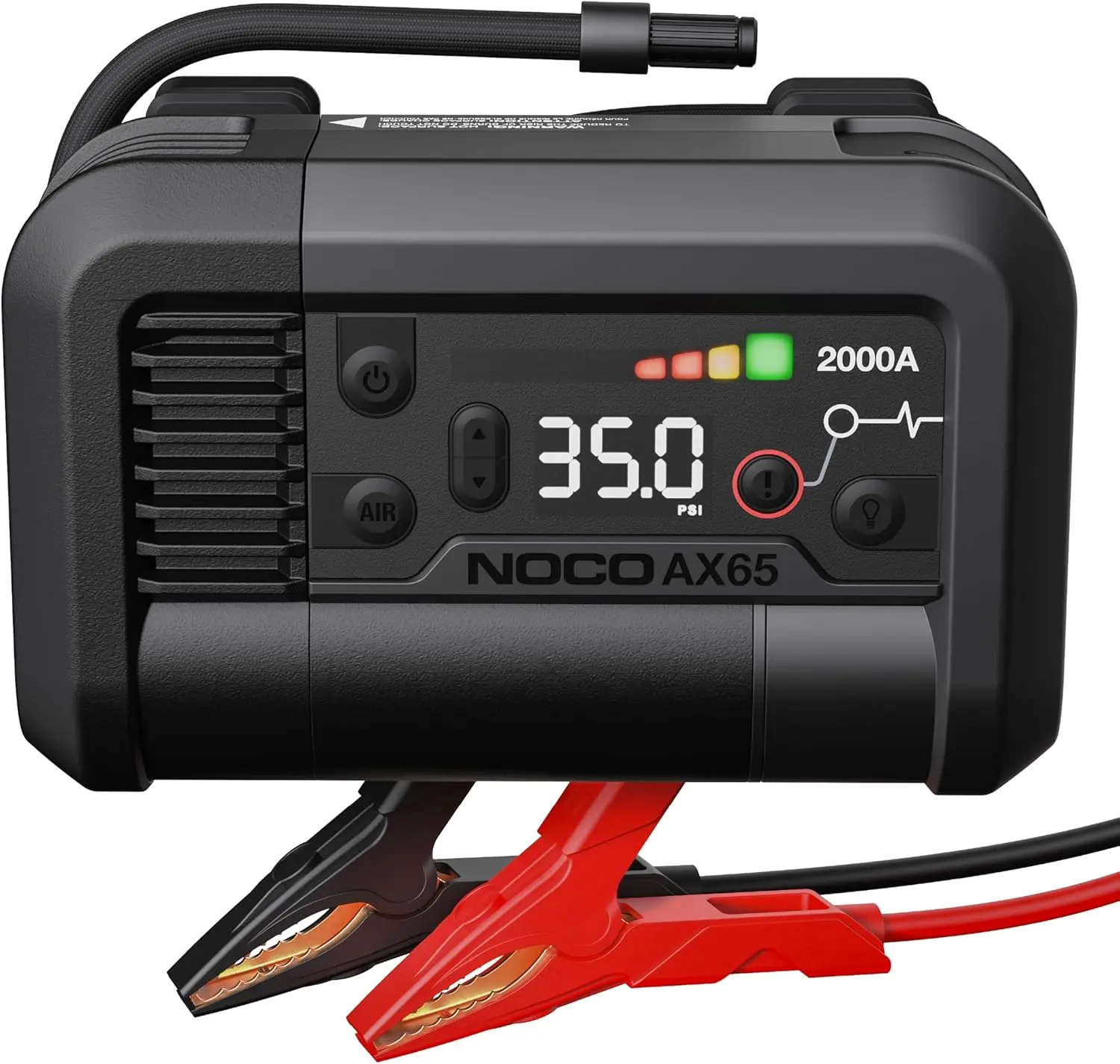
Best for: Truck owners, RVs, and anyone who wants reliable power without worrying about a weak 12V socket. - NOCO Boost Air AX65 (~$150)
Capacity/Key Specs: 65 PSI max (tire), integrated jump starter, power bank. 500A peak jump start.
Pros: Multi-function unit, compact. Less clutter in the trunk. Road & Track praises its additional features.
Cons: Jump-starting drains the battery quickly, requiring several hours to recharge. Inflation speed is decent, not blazing fast.
Best for: Someone who wants a single device for inflation and emergency jump starts, sacrificing a little raw inflation power for convenience. - AstroAI Portable Car Air Compressor (~$40)
Capacity/Key Specs: 100 PSI max, 12V DC cigarette lighter plug. Inflates a mid-size tire in about 3-4 minutes.
Pros: Extremely budget-friendly, compact, easy to store. Digital display.
Cons: Slower than battery-powered units, relies on vehicle's 12V socket. Plastic construction, questionable long-term durability if used frequently.
Best for: Emergency use, light-duty inflation, or those on a tight budget who just need a backup. - Slime 40088 12V Tire Inflator (~$35)
Capacity/Key Specs: 150 PSI max, 12V DC cigarette lighter plug. Integrated gauge.
Pros: Cheap, widely available, gets the job done for occasional top-offs. Outdoor Life calls it a best value.
Cons: Slow, noisy, gauge accuracy can be questionable. Not built for heavy use; the motor will likely burn out under sustained load. The plastic housing has a tendency to vibrate apart.
Best for: Someone who needs the absolute cheapest option for a rare emergency.
When a Compressor Won't Cut It: Roadside Assistance
Sometimes, a slow leak turns into a sidewall blowout. No portable inflator is fixing that. You've got two real options: your spare tire (if you have one, and if it's actually inflated) or professional help. Don't trust those flimsy donut spares for more than 50 miles at 50 MPH. The sidewall stiffness isn't designed for sustained shear forces.
Your roadside assistance options break down by cost and coverage. AAA Premier (~$120/year) gets you 200 miles of towing once, then 100 miles for the rest of the year. Standard AAA (~$60/year) is 7 miles. Most auto insurance policies offer roadside assistance for ~$10-30/year as an add-on, but often with limited towing mileage (e.g., 10-15 miles) and longer wait times. Read the fine print; that 'free' service might leave you stranded 100 miles from the nearest open shop.
If you're buying a plan, ask about towing distance, winching services (if you go off-road), and lockout assistance. Check the response times in your area. Some independent services like Urgently or Honk can dispatch local tow trucks on demand, often within 30-60 minutes, but you'll pay per service, typically $75-150 for a basic tow. It's a calculation of annual subscription cost versus potential single-incident payout. My rule: if you drive more than 10,000 miles a year, a robust plan pays for itself.
View on Amazon — Milwaukee M18 Inflator 2848-20
View on Amazon — DeWalt 20V MAX Tire Inflator
View on Amazon — Viair 88P Portable Air Compressor
View on Amazon — NOCO Boost Air AX65
Quick Verdict
- For sheer speed and durability, the Milwaukee M18 Inflator 2848-20 (~$179) is hard to beat. It'll air up a tire from 0 to 30 PSI in about 90 seconds, which is a solid 30% faster than most others. If you're already on their battery platform, it's a no-brainer. Car and Driver rated it top in inflation time.
- If you need versatility and already own power tools, the DeWalt 20V MAX Tire Inflator (~$149) is your pick. The option to run off battery, 12V, or even AC means you're never out of power. Plus, it has a high-volume output for rafts, which is a nice perk if you're into that sort of thing.
- For off-roaders or those who want a direct-to-battery connection without frying a cigarette lighter fuse, the Viair 88P Portable Air Compressor (~$80) is a solid, no-frills workhorse. It's built tough and won't disappoint when you're airing up after a trail run. Popular Mechanics recommends Viair for RVs and large vehicles.
- If you're on a budget and just need something for emergencies, the AstroAI Portable Car Air Compressor (~$40) or Slime 40088 12V Tire Inflator (~$35) will get you out of a bind, but don't expect them to last forever under heavy use. The motors on these cheap units burn out fast; thermal cycling is not their friend.
- The NOCO Boost Air AX65 (~$150) offers a good balance of inflation and jump-starting capability. It's a handy all-in-one unit for those who want to minimize trunk clutter. Just remember to keep it charged, or that jump-start feature is just dead weight.
My advice? Don't wait until you're on the side of the road at 2 AM to figure out your inflator sucks. Buy one, test it, and keep it charged. It's cheap insurance against a bad day.
View on Amazon — Milwaukee M18 Inflator 2848-20
View on Amazon — DeWalt 20V MAX Tire Inflator
View on Amazon — Viair 88P Portable Air Compressor
View on Amazon — AstroAI Portable Car Air Compressor
The Lineup
Milwaukee M18 Inflator 2848-20
Check on Amazon →
DeWalt 20V MAX Tire Inflator
Check on Amazon →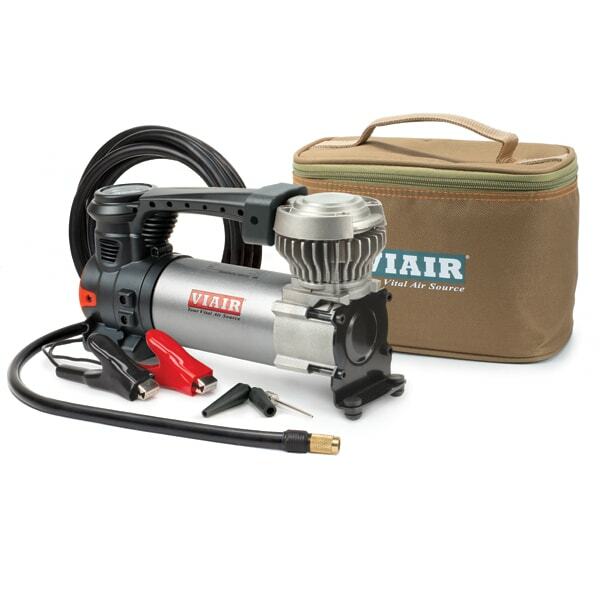
Viair 88P Portable Air Compressor
NOCO Boost Air AX65
Check on Amazon →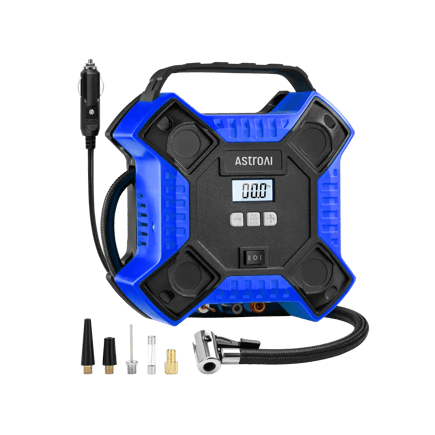
AstroAI Portable Car Air Compressor
Check on Amazon →Slime 40088 12V Tire Inflator
Frequently Asked Questions
My TPMS light is on. Can I just fill my tires at the gas station for free, or is a portable inflator really worth the $40-180?
Do I need a separate tire pressure gauge, or are the built-in gauges on these inflators accurate enough?
What if I use my portable inflator and the tire still goes flat within an hour?
Can over-inflating my tires with a portable inflator cause permanent damage?
I heard that filling tires with nitrogen is better than regular air. Is that true, and can these portable inflators use nitrogen?
🏅 Looking for Gear Recommendations?
Check out our tested gear guides for products that work with this setup:
Sources
- Best Portable Tire Inflators, Tested and Reviewed - Outdoor Life
- Tested: The Best Portable Tire Inflators - Car and Driver
- Best Portable Tire Inflators of 2026, Tested - RoadandTrack.com
- The Best Portable Tire Inflators of 2026 | GearJunkie Tested
- The Best Portable Tire Inflators of 2026 - Popular Mechanics