The Quick Answer for Road Trips
A flat or slow leak miles from the nearest gas station is exactly the moment a portable tire inflator earns its place in your trunk. For most road-trippers the right tool is a compact unit that reads pressure accurately, shuts off automatically at your target PSI, and tops a passenger tire from low to full in just a few minutes. You do not need a shop compressor — you need reliability, an honest digital gauge, and a power source that matches how you travel. If you are still deciding what else to pack, our guide to the best car emergency kit for road trips pairs naturally with a good inflator.
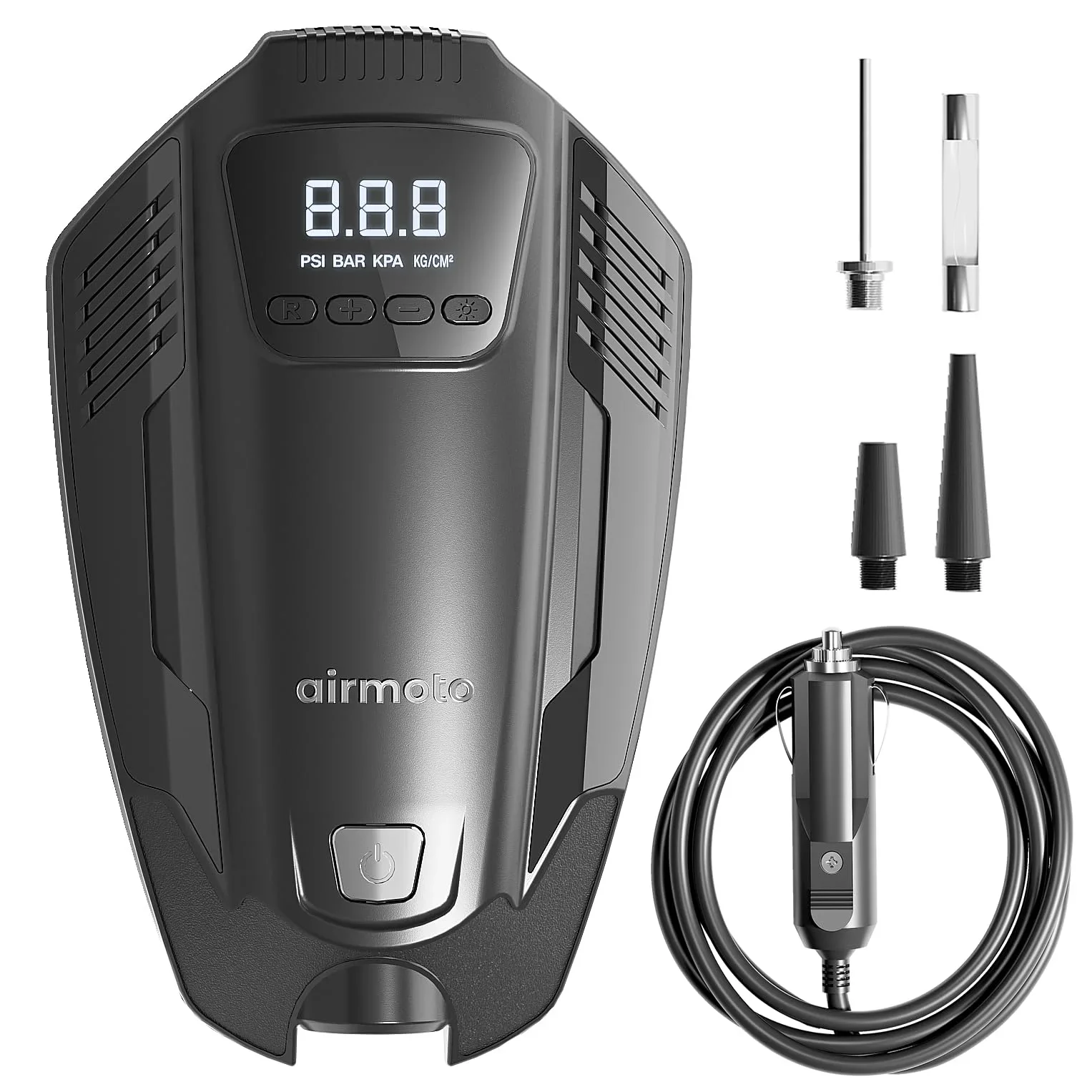
Our shortlist below differentiates the picks by the specs that actually matter on the road: maximum PSI, inflation speed, cordless versus 12-volt power, auto-shutoff, and whether the gauge is digital. The Airmoto (Airmoto Tire Inflator Portable Air Compressor) leads the list for everyday passenger-car use, pairing a digital preset gauge with auto-shutoff so you can set it and walk away. These recommendations are drawn from manufacturer specifications and the consensus of independent reviewers, not from staged first-hand claims.
- Best overall for cars: Airmoto Tire Inflator Portable Air Compressor
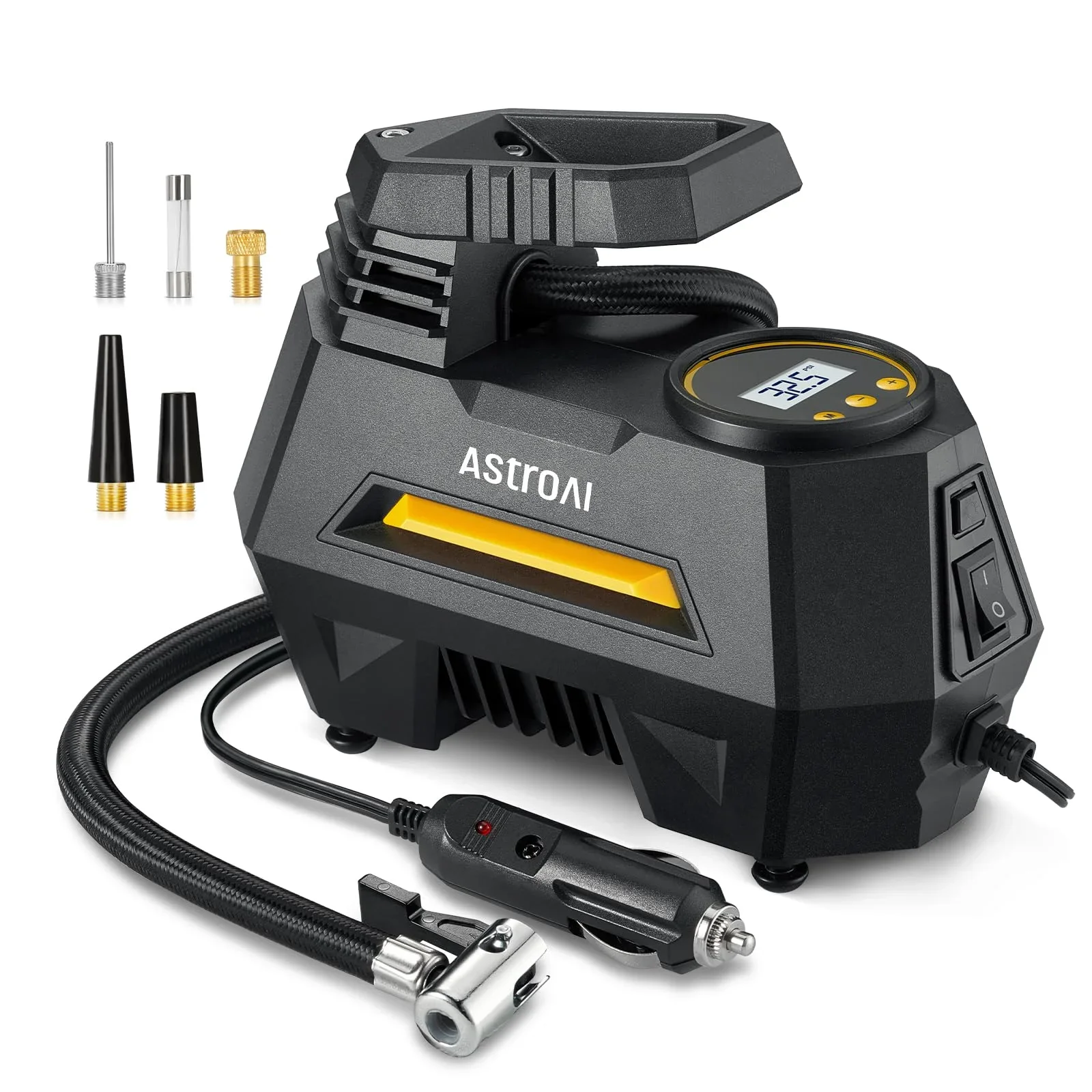
- Cordless convenience: AstroAI AIRUN H Tire Inflator Portable Air Compressor
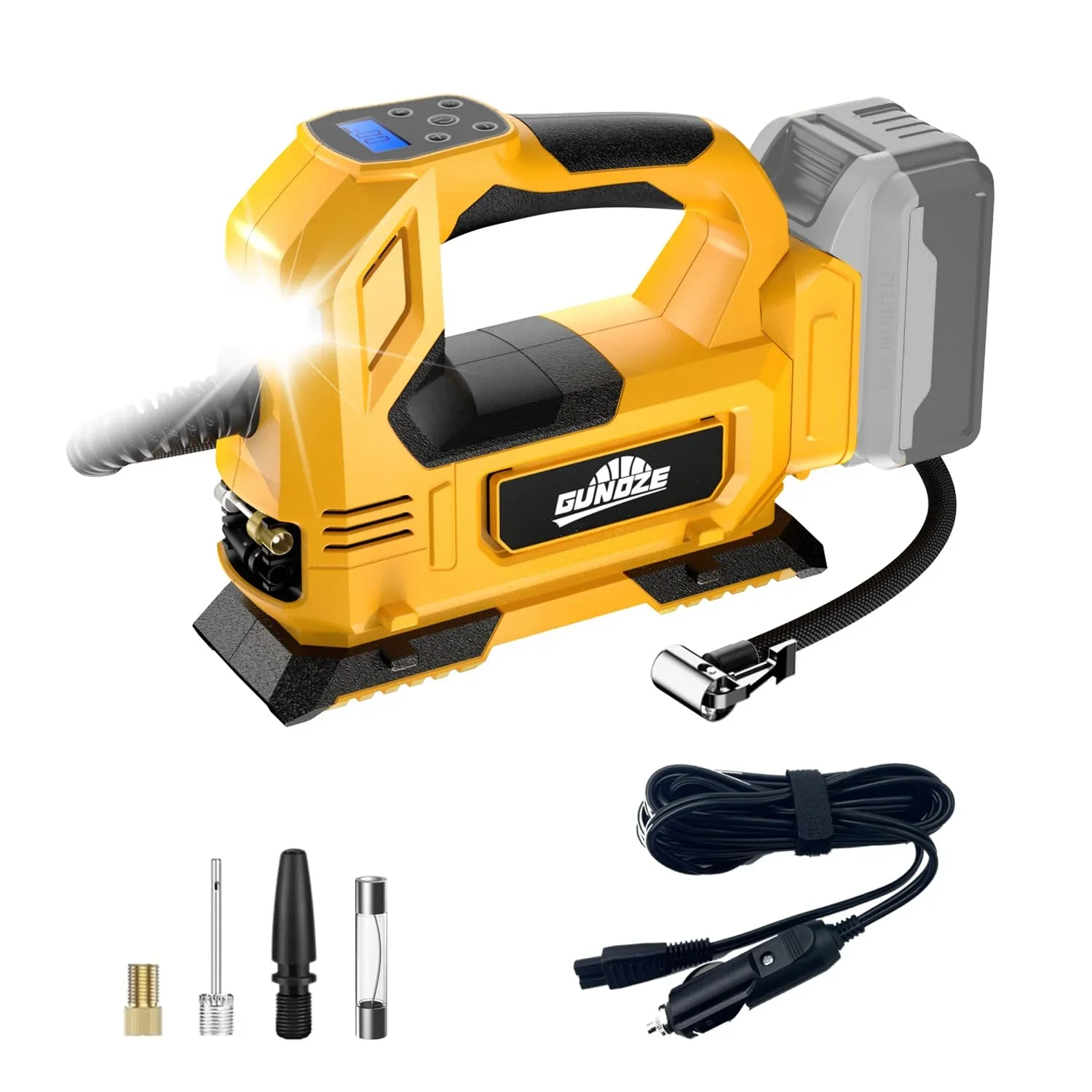
- Highest power for trucks/SUVs: DEWALT Tire Inflator Portable Air Compressor 20V MAX
The Specs That Actually Matter
Ignore the marketing and look at five numbers. Maximum PSI tells you whether a unit can even reach your tire's target pressure — passenger cars want 30–35 PSI, but light-truck and RV tires can need 50–80 PSI, so a unit rated to 100+ PSI gives headroom. Inflation speed (often quoted in liters per minute or as a fill time) decides whether you are stuck on the shoulder for three minutes or ten. Power source — cordless battery versus a 12-volt cigarette-lighter plug — shapes where and how you can use it.
The last two are about trust. Auto-shutoff lets you preset a PSI and stops the pump exactly there, which prevents over-inflation and frees your hands. A digital gauge removes the guesswork of a wobbly analog needle. The Airmoto (Airmoto Tire Inflator Portable Air Compressor) illustrates the combination most travelers want: a digital preset, auto-shutoff, and a PSI ceiling comfortably above passenger-car needs.
Two more practical details separate a good road-trip inflator from a frustrating one. Hose and cord length determine whether you can reach all four tires without repositioning the car, which is awkward on a narrow shoulder. And a built-in LED light turns a nighttime roadside fill from a fumble into a manageable task. None of these change the core job, but together they decide whether the tool feels reassuring or maddening at 11 p.m. in the rain.
Rule of thumb: buy the inflator whose maximum PSI clears your vehicle's door-jamb pressure by at least 30 percent. Headroom is what keeps fill times short and the motor cool.
Airmoto Tire Inflator Portable Air Compressor: The All-Around Pick
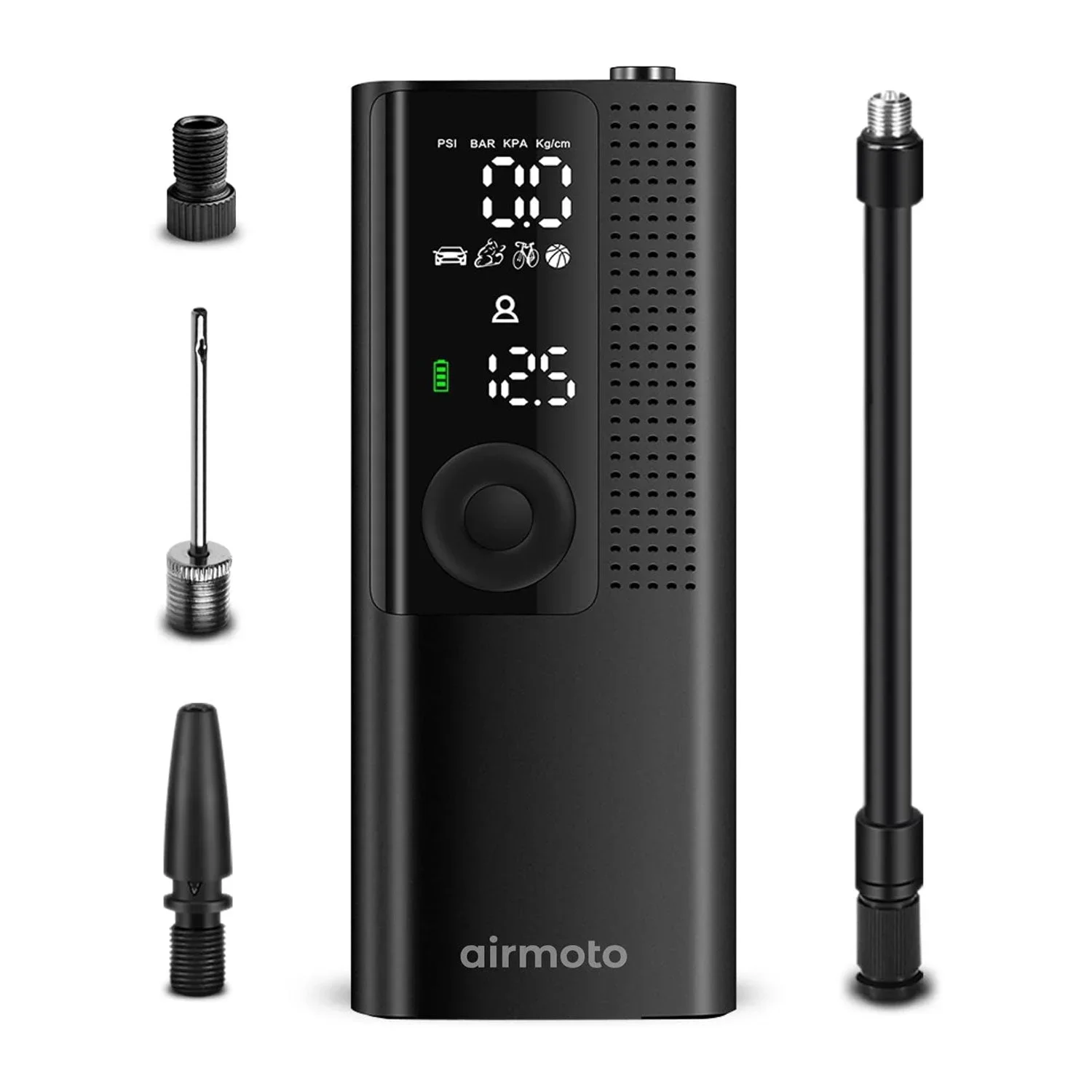
The Airmoto (Airmoto Tire Inflator Portable Air Compressor) is the inflator most road-trippers should start with. It is built around the features that matter for everyday passenger-car use: a clear digital readout, a preset target with auto-shutoff, and enough PSI ceiling to handle sedans, crossovers, and most SUVs without straining. For the common job — topping a tire that has drifted a few PSI low, or reinflating after a plug repair — it is fast, accurate, and simple enough to use one-handed at a dark rest stop.
Where it shines is the set-and-forget workflow. You dial in your door-jamb PSI, connect the chuck, and walk away while it works. That auto-shutoff is the single most useful feature in a roadside scenario, because it removes the risk of over-inflation when you are tired and distracted. If you own one inflator and want it to cover the widest range of situations, this is the sensible default.
AstroAI AIRUN H Tire Inflator Portable Air Compressor: Cordless Freedom Away From the Outlet
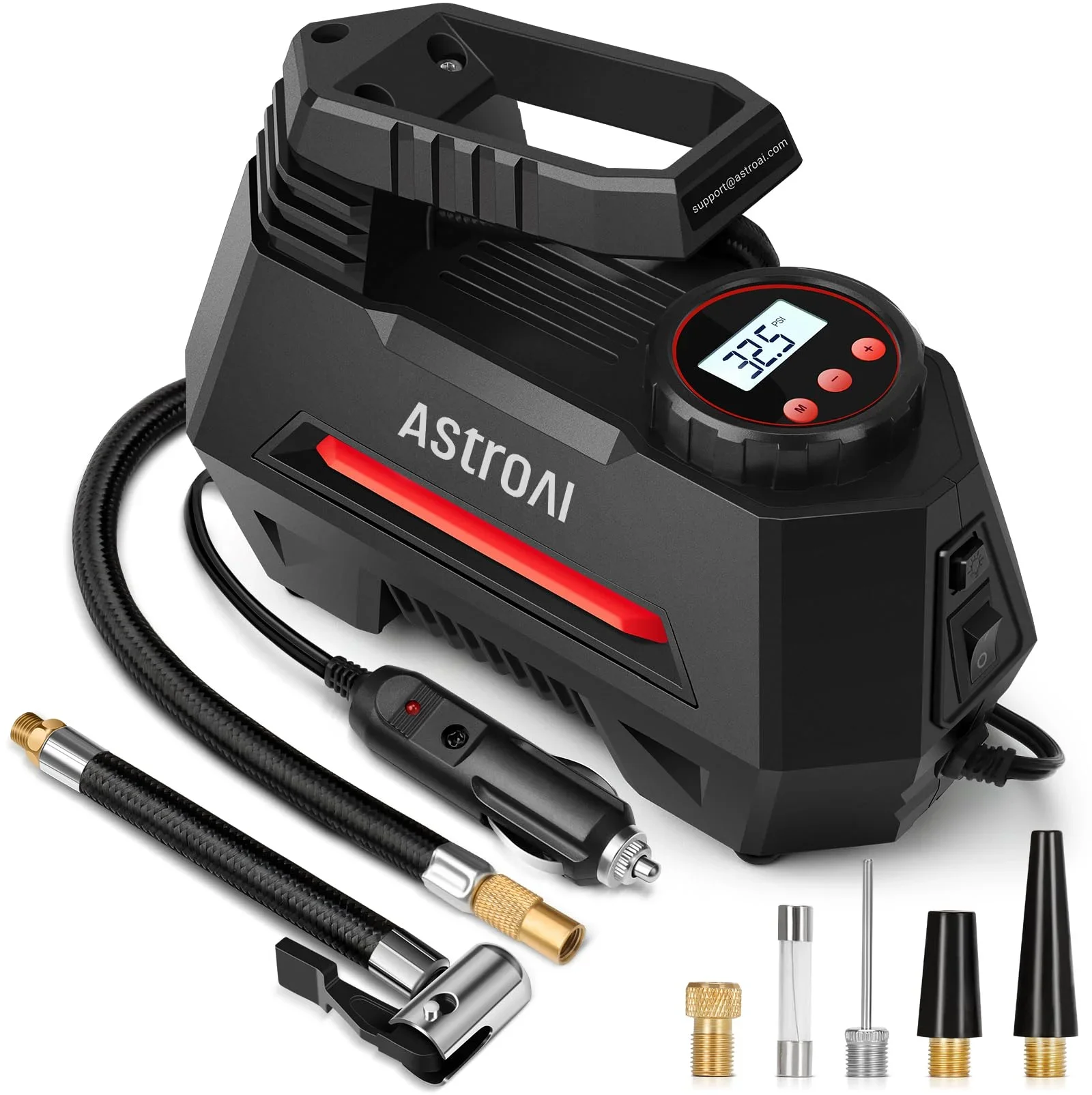
The AstroAI (AstroAI AIRUN H Tire Inflator Portable Air Compressor) trades the cord for a rechargeable battery, and that changes how and where you can use it. A cordless inflator does not depend on your car running or on a working 12-volt outlet, which matters for two reasons on the road: some newer vehicles cut power to the accessory socket when the engine is off, and you may be inflating a bike, a paddleboard, or a campsite air mattress well away from the car.
The tradeoff is battery life. A single charge is usually plenty for topping off a couple of passenger tires, but inflating from fully flat — or doing all four on a big SUV — can run a small battery down. Treat a cordless model as a convenience tool you keep charged before each trip, and you get genuine freedom from the outlet without surprises.
- Best for: quick top-offs, sports gear, away-from-car use
- Watch: recharge before long trips; battery fades on big fills
DEWALT Tire Inflator Portable Air Compressor 20V MAX: Power for Trucks, SUVs, and Overlanding
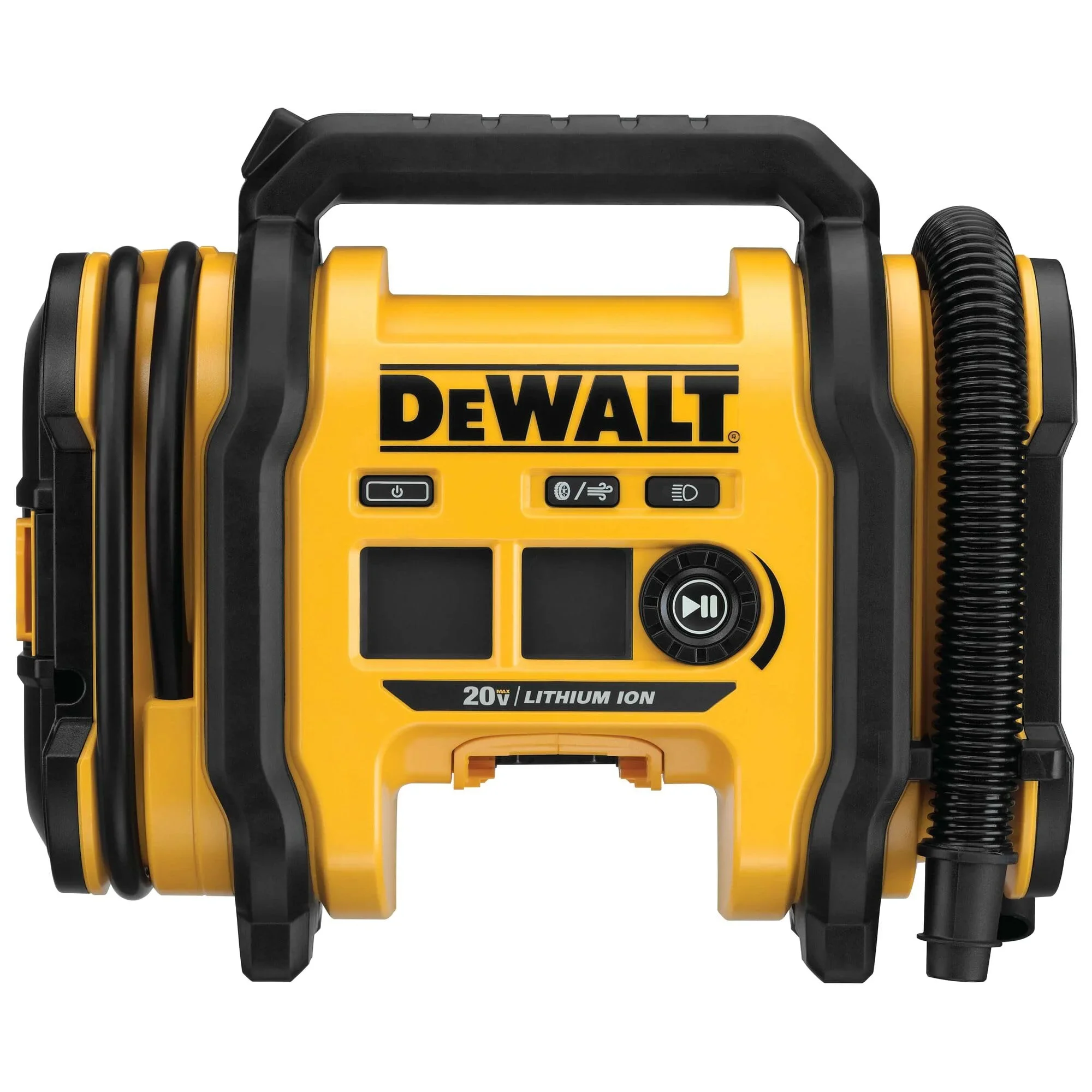
The DEWALT (DEWALT Tire Inflator Portable Air Compressor 20V MAX) is the choice when tire volume and pressure go up. Larger light-truck, off-road, and RV tires hold far more air and often run at higher pressures, which is exactly where a small battery unit struggles and overheats. A higher-output compressor — typically drawing 12-volt power directly or via heavy-duty clamps — moves more air per minute and sustains a long fill without bogging down.
This is also the category that suits overlanders who air down for sand or trails and need to air back up to highway pressure afterward. Look for a higher maximum PSI rating, a longer hose to reach all four corners, and a duty cycle that can handle multiple tires back to back. If your vehicle is bigger than a crossover, the extra power pays for itself the first time you reinflate from low. Serious overlanders often step up to a dedicated 12-volt unit; our overview of the best 12V portable air compressors for overlanding goes deeper on high-output options, and it is worth understanding how compressor duty cycle works before you push a small pump through several large tires.
Cordless vs 12-Volt: Choosing Your Power Source
The power-source decision drives most of the buying choice, so make it first. A cordless inflator wins on flexibility: no engine required, no socket required, and easy to hand to a friend at the next campsite. A 12-volt inflator wins on endurance: as long as your car runs it never runs out of power, which makes it the safer bet for big tires, multiple fills, or a from-flat emergency.
Many travelers end up wanting both behaviors, which is why some models pair a battery with a 12-volt cord. If you keep it simple, match the tool to your vehicle: a AstroAI AIRUN H Tire Inflator Portable Air Compressor-style cordless for a sedan or crossover used mostly for top-offs, and a DEWALT Tire Inflator Portable Air Compressor 20V MAX-style 12-volt workhorse if you drive a truck, SUV, or van. Below is a quick way to decide.
- Drive a car or crossover, mostly topping off? Choose a compact cordless or digital 12-volt like the Airmoto Tire Inflator Portable Air Compressor.
- Want to inflate gear away from the car? Choose cordless (AstroAI AIRUN H Tire Inflator Portable Air Compressor).
- Drive a truck, SUV, RV, or air down off-road? Choose a high-PSI 12-volt (DEWALT Tire Inflator Portable Air Compressor 20V MAX).
Mistakes That Leave People Stranded
The most common error is buying on advertised fill time alone. Those numbers assume a nearly-full tire and ideal conditions; a real roadside fill from low pressure, in the cold, on a bigger tire, takes meaningfully longer. Read the maximum PSI and airflow instead, and give yourself headroom.
The second trap is power. People assume any 12-volt unit is interchangeable, but airflow and PSI ceilings vary enormously — an underpowered compressor on a big tire simply overheats and quits. People also forget that some modern cars kill the accessory socket with the engine off, which strands a 12-volt-only inflator at the worst time. Finally, an inflator with no auto-shutoff invites over-inflation when you are tired. Choosing a unit with a digital gauge and auto-shutoff, like the Airmoto Tire Inflator Portable Air Compressor, removes most of these failure modes.
Test it before you leave. An inflator that has never been plugged in is a guess, not a safety net — run it once at home so a dead unit is a Tuesday annoyance, not a midnight emergency.
How to Use It Right When It Counts
Before any trip, charge a cordless unit fully or confirm your 12-volt socket works, and check that the chuck and nozzle adapters are in the case. When you need it, find your target pressure on the driver's door-jamb sticker — not the number molded on the tire, which is the tire's maximum, not your vehicle's recommendation. Set that PSI on a digital model so auto-shutoff can do the work.
Check pressure when tires are cold for the most accurate reading, since driving heats the air and raises the number. Reseat the chuck firmly to avoid a slow hiss of escaping air, and on a long fill let a small compressor rest if it gets hot. Keep your inflator where you can reach it without unpacking the trunk — a lifesaver you cannot get to is no lifesaver at all. For headier off-grid trips, think of the inflator as one piece of a kit alongside a portable jump starter and the rest of your long-road-trip accessories, so a single weak link never ends the journey.
- Use the door-jamb PSI, not the tire's max-pressure number.
- Check cold; expect a slightly higher reading once warm.
- Keep adapters and a 12-volt cord (if applicable) in the case.
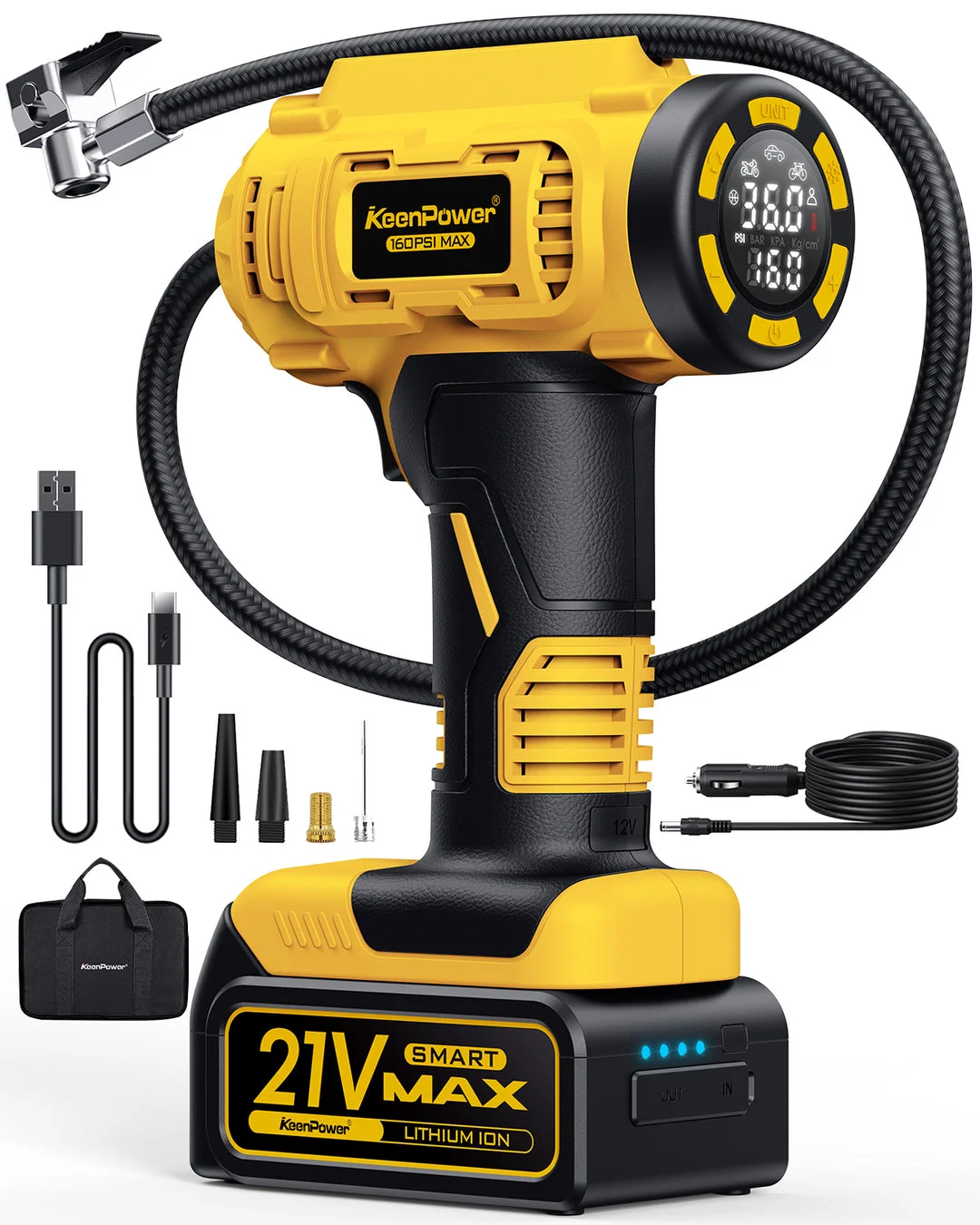
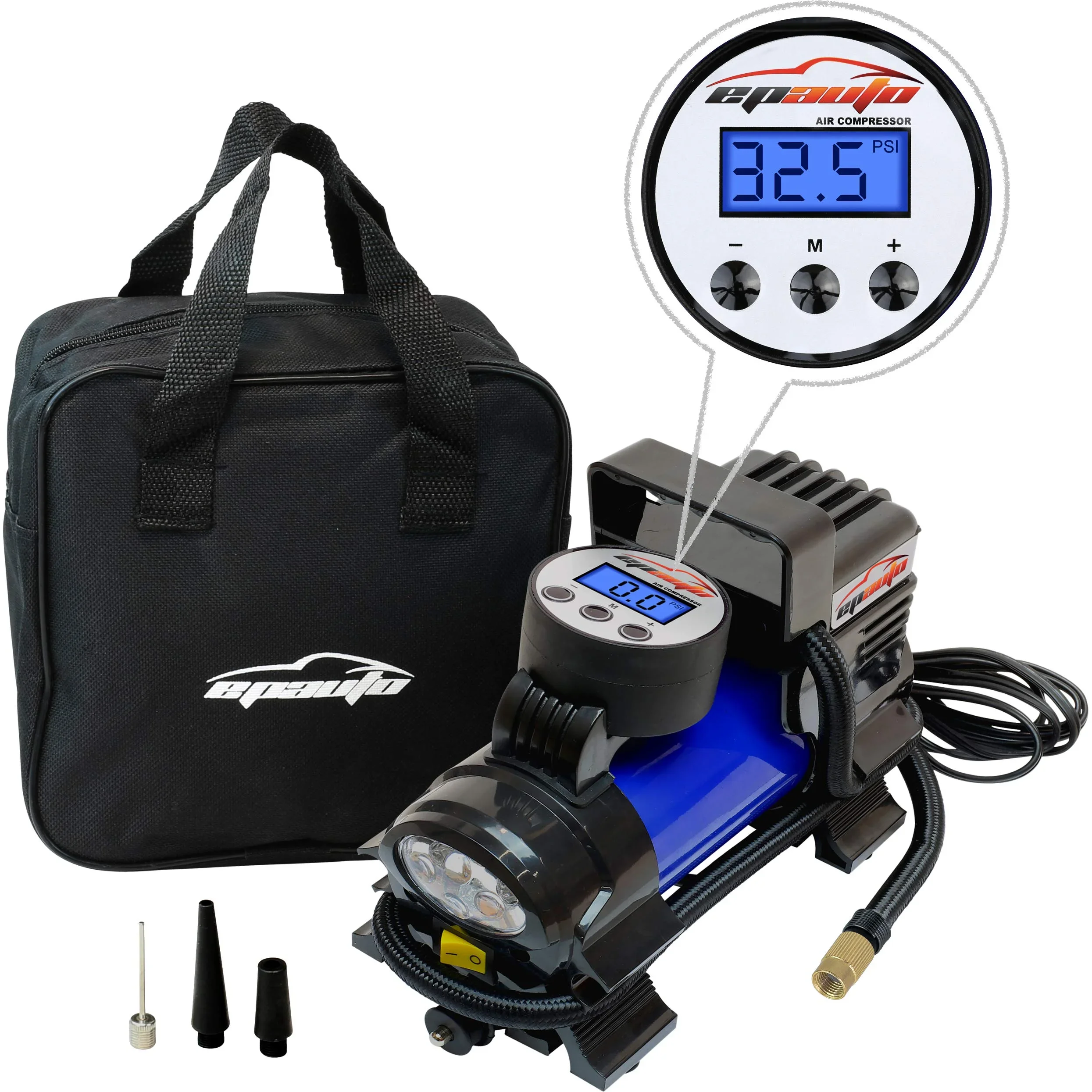
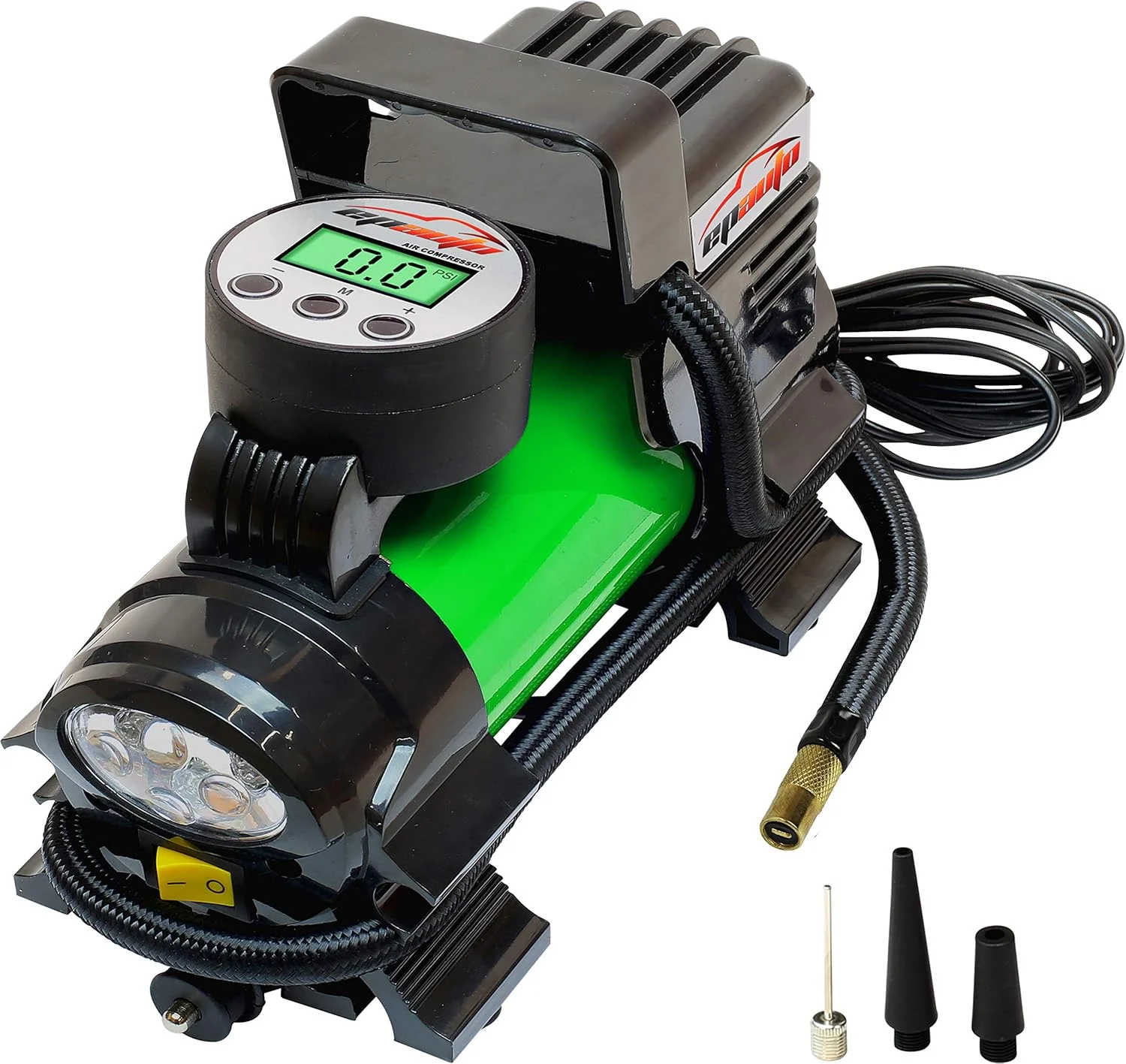
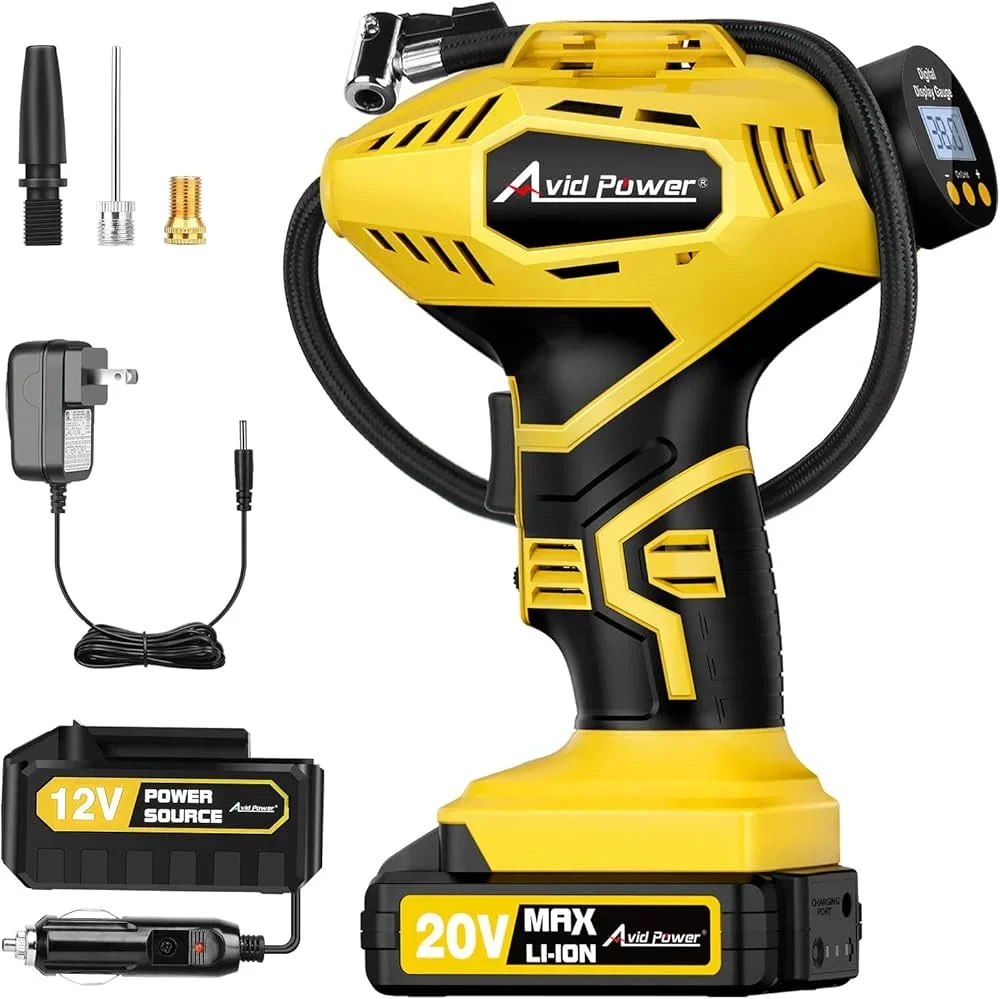
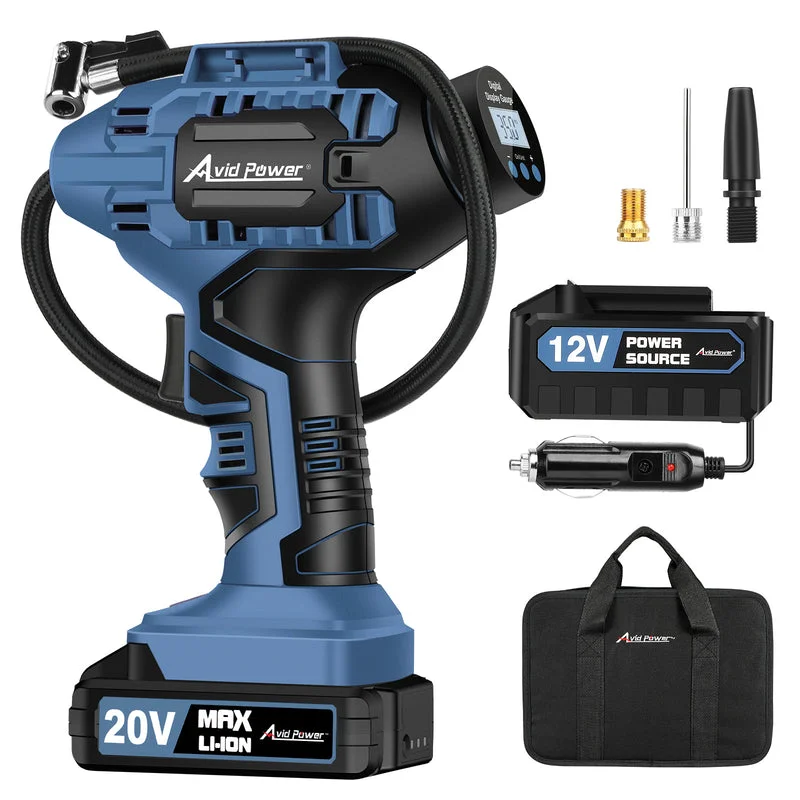
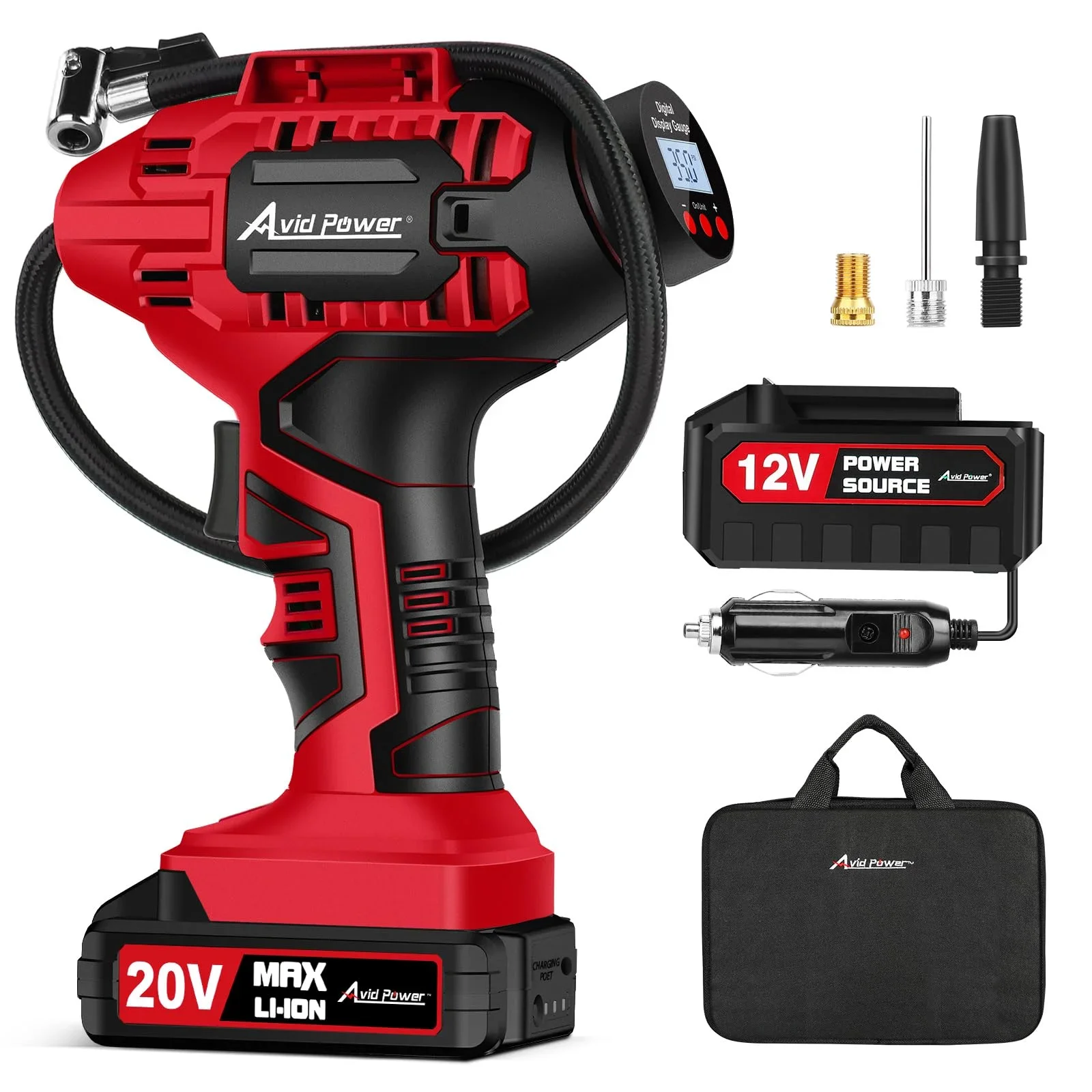
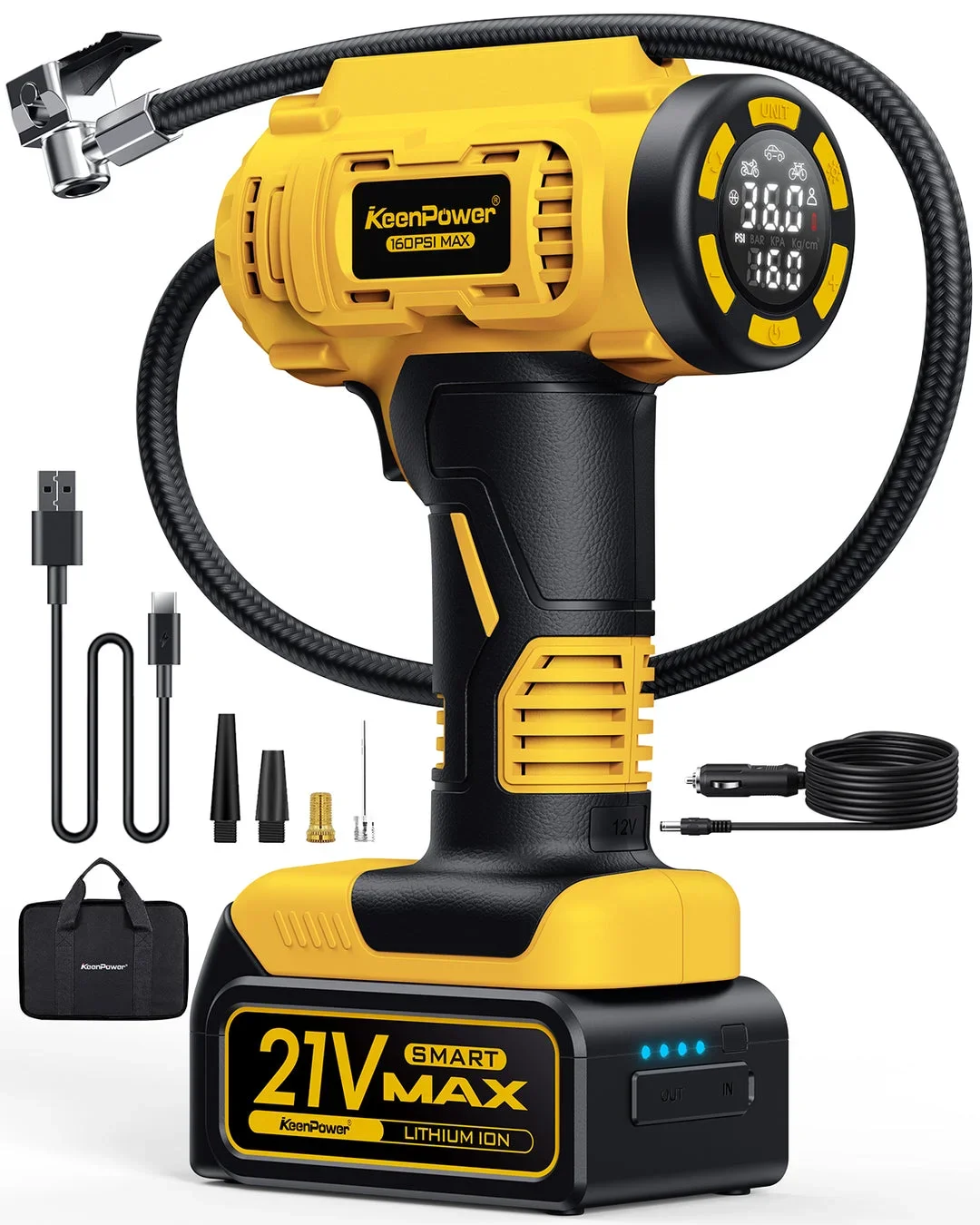
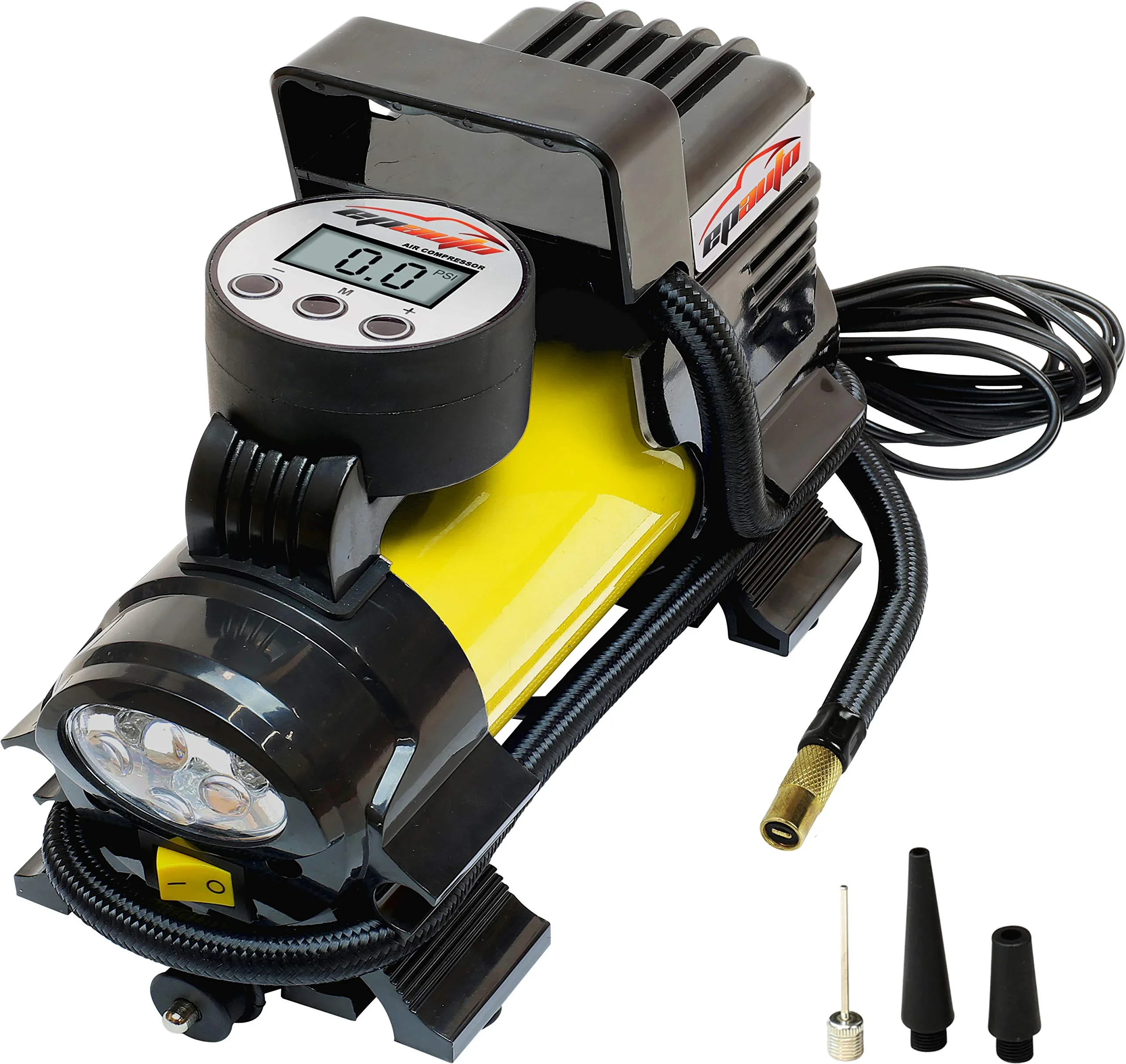
The complete lineup also includes KeenPower Tire Inflator Portable Air Compressor, EPAuto 12V DC Portable Air Compressor Pump, AVID POWER Tire Inflator Portable Air Compressor — each compared on the same specs and reviewer consensus.