Where to Start
The dealer wanted $120 to 'inspect' a slow leak on my buddy's F-150. Turns out, the factory TPMS sensor's internal CR2032 battery died after 7 years of thermal cycling. Total cost for a replacement sensor and programming tool? About $35. They just wanted to ding him for a full tire dismount and a new sensor at triple the price. Absolute racket. Car and Driver even points out how crucial these things are for basic maintenance.
Quick Verdict
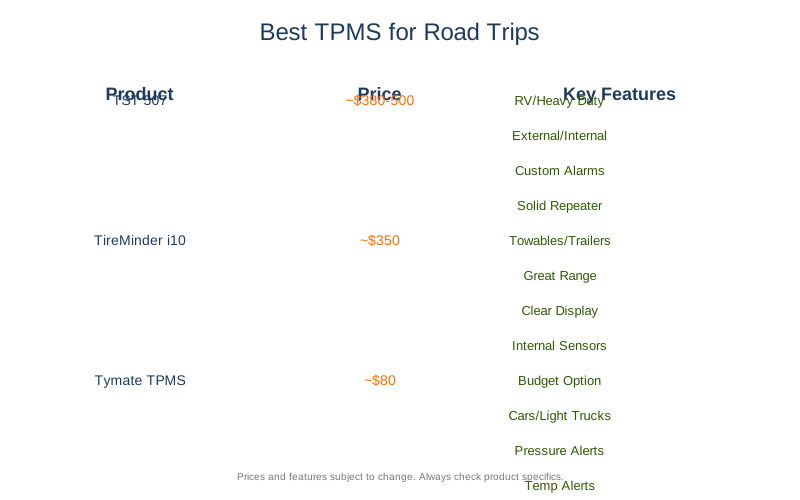
- Best Overall for RVs (and anything heavy): TST 507 (~$380-500). This is the gold standard for anything pulling serious weight. External or internal sensors, solid repeater, and alarms you can actually set. It's not cheap, but neither is a shredded tire on the side of I-80.
- Best for Towables (Trailers/5th Wheels): TireMinder i10 (~$350). Great range, easy setup, and the display is clear enough to see without squinting. The internal sensors are a pain to install but offer better mechanical integrity against road debris. For long rigs, you'll likely need the booster. TechnoRV confirms these systems are crucial for preventing blowouts.
- Best Budget Option (Cars/Light Trucks): Tymate TPMS (~$80). It's cheap, it works, and it's better than nothing. Don't expect commercial-grade durability, but for a daily driver or light towing, it'll give you those critical pressure and temperature alerts. Just keep an eye on those cap sensors for corrosion.
- Best for Off-Road/Air-Down Enthusiasts: Fobo Tire 2 (~$150). Bluetooth sensors link to your phone. Great for airing down and monitoring multiple vehicles. The app can be a bit clunky, but the sensor accuracy is good. Just remember your phone needs to be charged.
- Best for Commercial/Multi-Vehicle Fleets: HawksHead TPMS (~$500+). If you're running a whole convoy, this is the system. Robust, reliable, and designed for heavy-duty use. The initial investment is higher, but the failure-rate is lower, which means fewer roadside headaches. These are built to handle constant thermal cycling and vibration. iCheckTPMS details the benefits of direct TPMS for fleet monitoring.
What to Look For
I've seen too many guys drop $300 on a TPMS that's useless after the first rain. Your money, your choice. But if you want something that actually works, pay attention to these failure modes. Thor Forums is full of stories about systems that don't hold up.
| Feature | Why it Matters (Physics/Failure Mode) | Dirtbag Engineer's Take |
|---|---|---|
| Sensor Type (External vs. Internal) | External sensors (cap-style) are easy to install but exposed to road debris and shear forces. Internal sensors are protected but require tire dismounting. Cap sensors can also cause valve stem fatigue if not properly torqued, leading to stress fractures. | External for convenience, internal for durability. If you go external, use metal valve stems. Period. Plastic stems fail. The dynamic load from a spinning cap sensor will eventually fatigue the stem, leading to a catastrophic air loss. |
| Signal Range & Repeater | Radio frequency (RF) signal attenuation over distance and through metal structures (trailer frames, RV bodies) causes dropped readings. A repeater boosts the signal, mitigating this loss and ensuring circuit integrity. Without it, you're getting intermittent data. | For anything over 20 feet, assume you need a repeater. Your 30-foot fifth wheel has a Faraday cage effect. Don't cheap out here unless you enjoy staring at a blank screen. RV Outfitting warns about signal-hostile layouts. |
| Pressure Range & Accuracy | Sensors have a specified operating pressure range (e.g., 0-188 PSI). Exceeding this causes sensor failure due to overpressure, while low-range sensors won't read high-pressure RV tires accurately, giving false data. Accuracy is typically +/- 1-3 PSI. | Match the sensor's max PSI to your tire's max PSI + 20%. Don't put a 60 PSI sensor on a 110 PSI RV tire. It's a waste of money and a safety hazard. Calibration drift happens, so check with a reliable analog gauge occasionally. |
| Temperature Monitoring | Excessive tire temperature (over 180 degrees F) indicates severe underinflation, dragging brakes, or bearing failure. Thermal expansion of air increases pressure. An alarm threshold prevents thermal runaway. | This is a critical early warning for impending blowouts. A tire running 20 degrees F hotter than its neighbor is telling you something is wrong. Don't ignore it. It's a direct indicator of increased internal friction and material stress. |
| Battery Life & Replacement | Sensor batteries (CR1632, CR2032) degrade with thermal cycling and continuous transmission. Short battery life means frequent replacement, leading to potential seal compromise or sensor damage during service. | User-replaceable batteries are a blessing. If it's sealed, assume you're buying a new sensor every 1-2 years. The cost-per-fix on sealed sensors adds up fast. Pay attention to the IP rating for water ingress. |
| Display & Alarms | A clear, high-contrast display with adjustable brightness is essential for readability in varying light conditions. Customizable pressure/temperature thresholds prevent nuisance alarms but ensure critical alerts are heard. | You need to see the damn thing in direct sunlight. And the alarm better be loud enough to cut through road noise. If it's constantly beeping for a 2 PSI drop, you'll ignore it. Set your low-pressure threshold to 10-15% below spec. This YouTube video shows some of the better displays. |
Our Top Picks for Reliable Performance
Look, I'm not here to sell you snake oil. I'm here to tell you what generally works and what tends to fail. These systems have a track record of holding up to the brutal reality of the road. iRV2 forums constantly recommend TST and TireMinder for a reason.
TST 507 (~$380-500)
Capacity/Key Specs: Monitors up to 22 tires, pressure range up to 210 PSI, internal or external sensors, color monitor, includes signal repeater. Pros: Excellent signal range and reliability, robust sensors, customizable high/low pressure and temperature alarms, easy to add sensors for multiple vehicles/trailers. The repeater is usually included, which is a huge plus for long rigs. Truck Camper Adventure praises its ease of install and sensor locking.
Cons: Higher price point, external sensors can be stolen (though security nuts help), monitor can be bulky. Best-for Use Case: Heavy-duty RVs, fifth wheels, toy haulers, or anyone towing multiple trailers where signal integrity is non-negotiable. If you're running duals, this is your system.
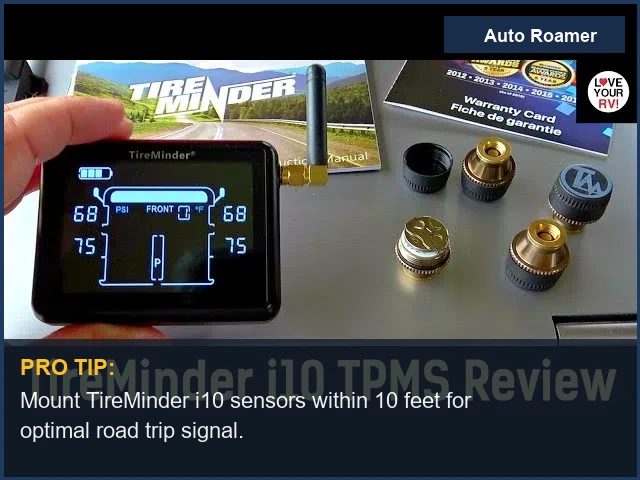
TireMinder i10 (~$350)
Capacity/Key Specs: Monitors up to 22 tires, pressure range up to 232 PSI, flow-through or screw-on sensors, large color display, includes signal booster. Pros: Very high pressure range, clear display, flow-through sensors simplify air checks, solid customer support. The booster is a standard inclusion, which is smart engineering for RVers. Cons: Flow-through sensors are larger and heavier, which can impact valve stem stability if not metal. Initial setup can be a bit finicky for some.
Best-for Use Case: Large motorhomes and fifth wheels with high tire pressures. The ability to air up without removing the sensor is a convenience that reduces wear on the sensor threads and valve stem.
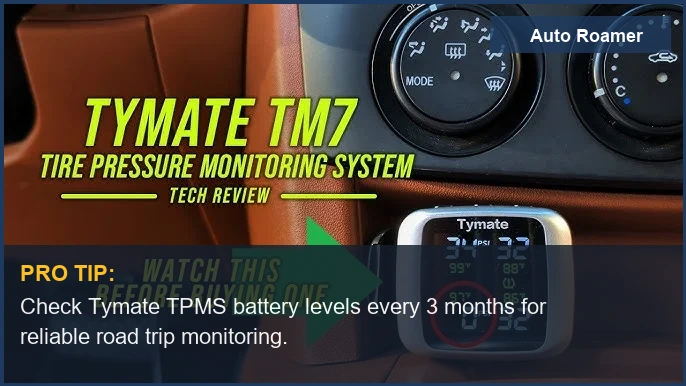
Tymate TPMS (~$80)
Capacity/Key Specs: Monitors 4-6 tires, pressure range up to 87 PSI, external cap sensors, solar-powered display. Pros: Very affordable, easy installation (screw on caps), solar charging means less wire clutter, provides basic pressure and temperature alerts. Cons: Lower pressure limit (not for RVs), external sensors are less durable and prone to theft, display can be hard to read in direct sun, battery life on sensors is shorter.
Best-for Use Case: Passenger cars, light trucks, small utility trailers. If you just need a basic warning system and don't want to spend much, this is a decent entry-level option. Just don't expect it to last forever.
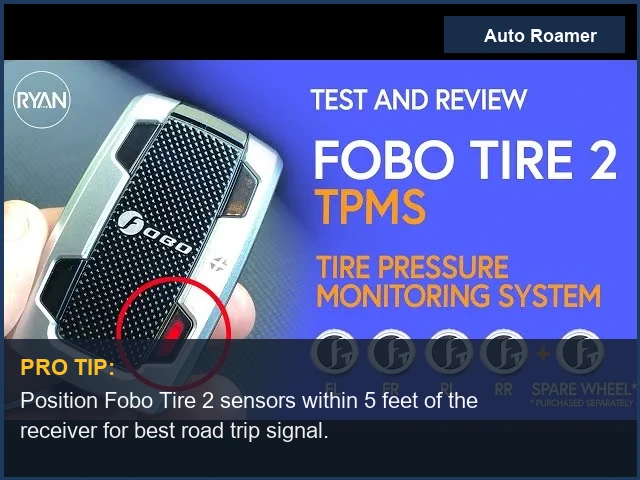
Fobo Tire 2 (~$150)
Capacity/Key Specs: Monitors up to 19 vehicles/100 tires, pressure range up to 120 PSI, Bluetooth sensors, smartphone app display. Pros: No dedicated monitor needed (uses your phone), great for managing multiple vehicles, easy to swap sensors between tires, excellent for off-roading where you frequently air down. The app gives granular data. Cons: Relies on your phone battery, app can have connectivity glitches, not ideal for those who prefer a dedicated display.
Bluetooth range can be limited compared to RF systems. Best-for Use Case: Off-roaders, those with multiple vehicles, or anyone who prefers a smartphone-centric interface. The ability to set multiple pressure profiles for different terrains is a significant advantage.
HawksHead TPMS (~$500+)
Capacity/Key Specs: Scalable for up to 36 tires, pressure range up to 217 PSI, heavy-duty internal or external sensors, industrial-grade monitor. Pros: Designed for commercial-grade durability and reliability, robust construction, extended range, advanced alarm settings. These are over-engineered for a reason. Cons: Very expensive, installation often requires professional help for internal sensors, overkill for most personal use.
Best-for Use Case: Commercial trucks, large fleets, serious expedition vehicles, or anyone who needs a no-compromise, ultra-reliable system for constant heavy use. The failure-rate on these is impressively low.
Head-to-Head Comparison
Let's cut through the marketing fluff. When you're comparing TPMS systems, it's about mechanical integrity and circuit reliability under dynamic load, not fancy graphics. Facebook groups are full of people complaining about false readings.
| Feature | TST 507 | TireMinder i10 | Tymate TPMS |
|---|---|---|---|
| Sensor Durability (Physical) | High. External sensors use metal bodies and security nuts. Internal options are best for shear resistance. Designed for heavy vibration. | High. Flow-through sensors are robust. Internal options offer superior protection. Less prone to impact damage. | Low. Plastic cap sensors are easily damaged by impact or overtightening. Threads wear out. |
| Signal Consistency (RF Reliability) | Excellent. Included repeater ensures strong signal over long distances, minimizing dropped packets. Very few dead zones. | Very Good. Included booster helps maintain signal. Some users report occasional momentary drops, but generally stable. | Fair. No repeater. Signal can be spotty on larger vehicles, especially with metal interference. Higher packet loss rate. |
| Battery Life (Sensor) | 1-2 years (user replaceable CR1632). Consistent life due to efficient transmission protocols. | 1-2 years (user replaceable CR1632). Similar performance to TST. | 6-12 months (non-replaceable or difficult to replace). Solar charging helps, but internal battery degrades fast. |
| Display Readability (Glare/Contrast) | Good. Color display with adjustable brightness. Clear icons. | Excellent. Large, high-contrast color display. Easy to read in direct sunlight. RVTravel praises its simultaneous display. | Fair. Small, often low-resolution display. Can be washed out in bright conditions. |
| Installation Complexity | Moderate. External sensors are easy. Internal require tire shop. Pairing is straightforward. | Moderate. Flow-through sensors are simple. Internal require tire shop. Pairing can be a bit more involved. | Easy. Screw-on cap sensors. No tools required beyond a valve cap wrench. |