Where to Start
Forget about being stranded with a flat tire 50 miles from pavement. The dealer charges $80 for a patch, or $250 for a new tire they 'found' on your inspection sheet. Most portable air compressors cost less than $100 and can air up a deflated 33-inch tire in under 5 minutes, saving your ass and your wallet.
I've seen too many guys limp into camp on a half-flat, risking bead separation or sidewall failure because they cheaped out on a compressor. That's a minimum 1.2 PSI drop every 24 hours from a slow leak, turning a minor issue into a shredded tire. Car and Driver even tests these things, so you know it's not just a toy. This isn't about convenience; it's about mechanical integrity.
Your tire's internal structure relies on proper inflation pressure to distribute load and prevent premature wear or failure. Running under-inflated increases sidewall flexion, generating heat through hysteresis. That thermal cycling degrades the rubber compounds and cord plies. You're basically cooking your tire from the inside out. A cheap portable compressor keeps you at spec, preventing those kinds of expensive mistakes. Don't be that guy. Get a compressor.
Quick Verdict
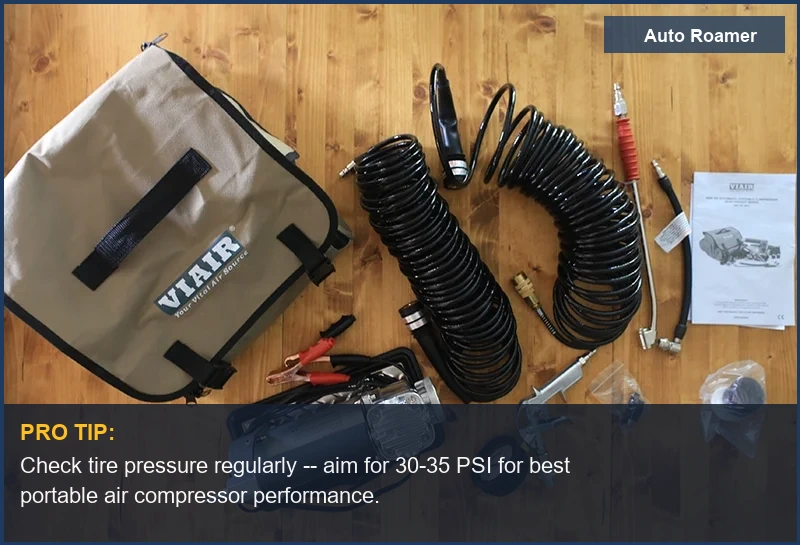
- Best Overall for Performance & Durability: The Viair 400P-RV (~$300). This thing is over-engineered. It'll inflate a 35-inch tire from 15 to 30 PSI in under 2 minutes. Its duty cycle is 30 minutes at 100 PSI, which means it won't melt down when you're airing up all four tires on a heavy rig. You pay for it, but it's a tool, not a toy.
- Best Cordless Convenience: The Milwaukee M18 2848-20 (~$200, tool only). If you're already on the M18 platform, this is a no-brainer. It's fast, pulls decent CFM, and has a 5-year warranty, which means they actually stand behind the design. No more fumbling with 12V cigarette lighter plugs that constantly lose connection and arc.
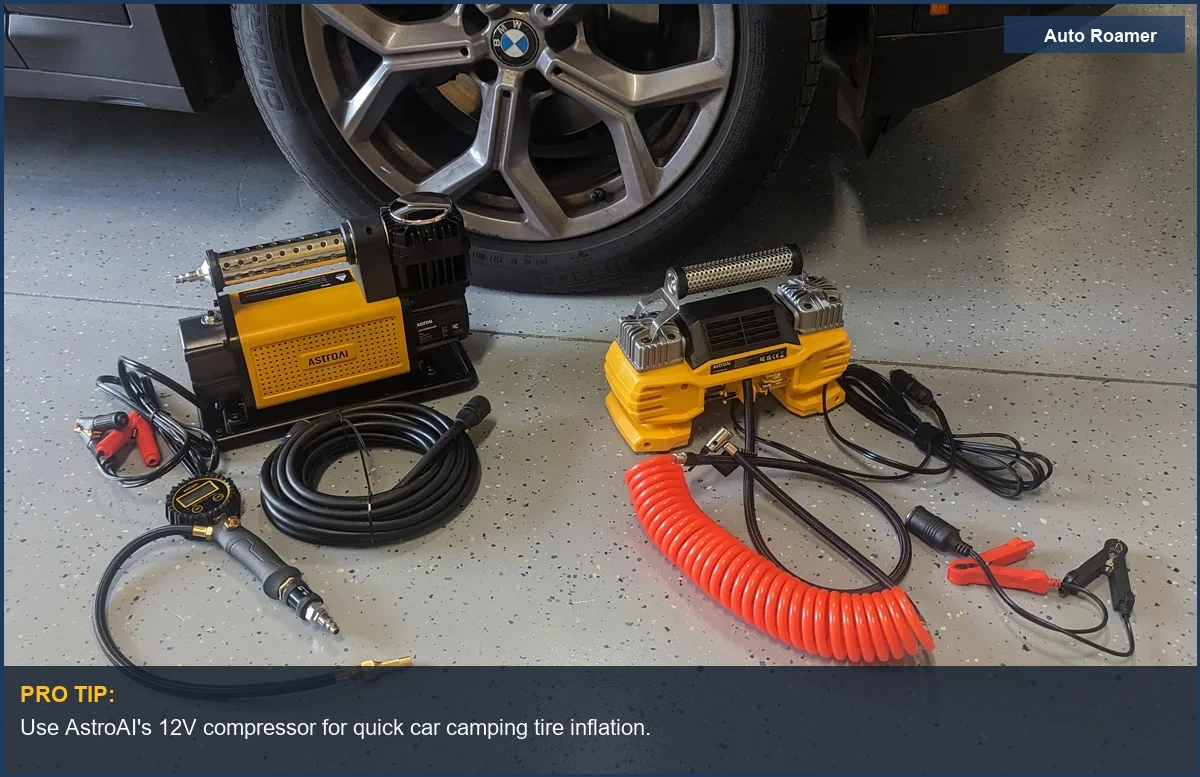
- Best Budget Option That Won't Die Immediately: The AstroAI Portable Car Air Compressor (~$40). Look, it's not a Viair. It's not going to air up a dually in 30 seconds. But for $40, it'll get your sedan tire from 20 to 35 PSI in about 4 minutes. It's better than nothing, and it's less likely to fuse its internals than the $20 no-name garbage you'll find on Amazon.
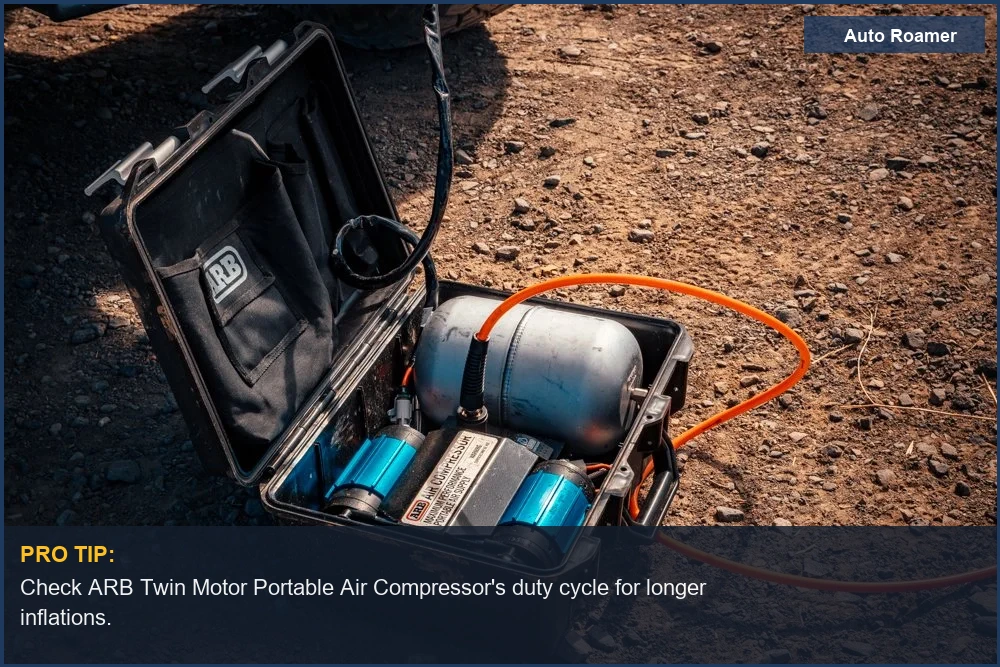
- For Heavy-Duty Off-Road Use (Dual Piston): The ARB Twin Motor Portable Air Compressor (~$600). This is for the serious overland rig, the guy who's airing down to 15 PSI on all four 37-inch tires. It's a beast, pulls serious amperage, and is built to withstand constant vibration and thermal cycling. It's not just a compressor; it's a commitment.
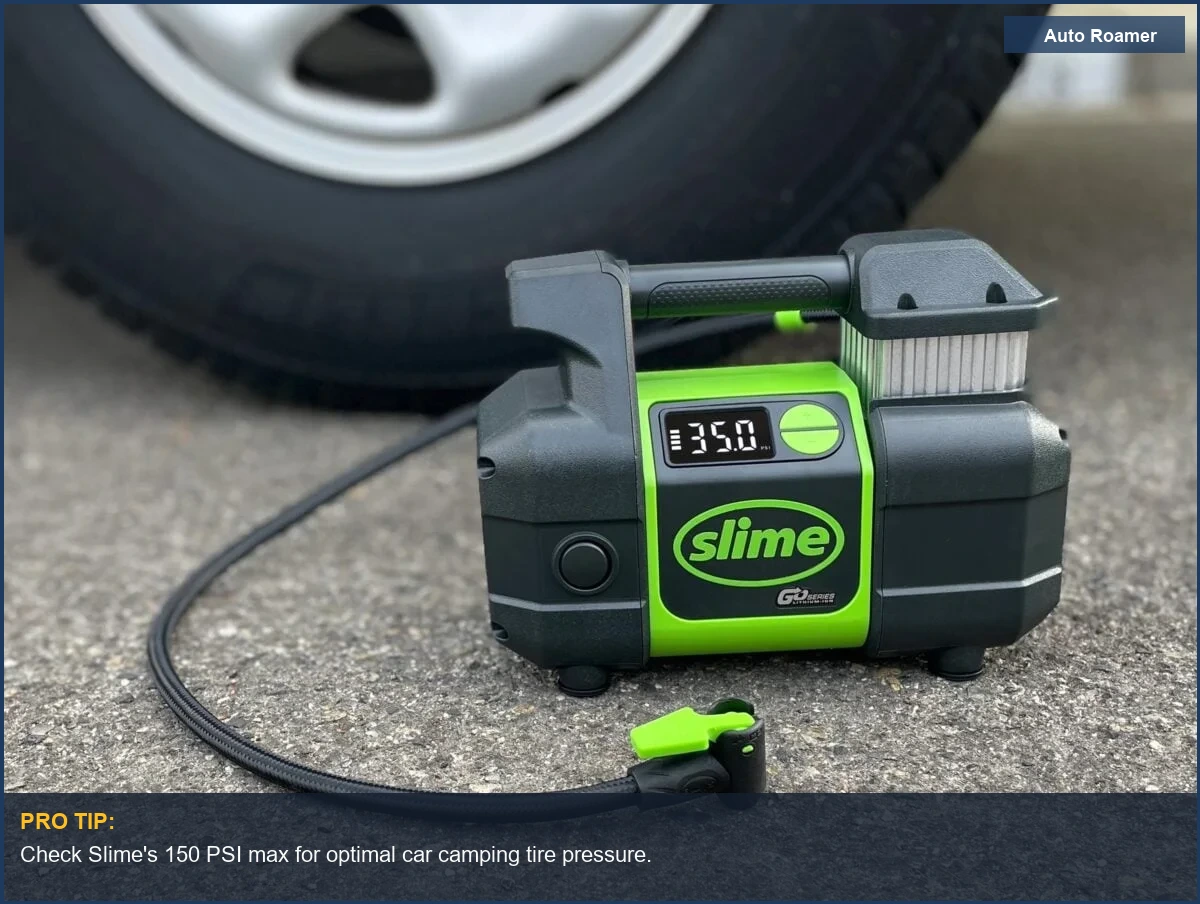
- Compact & Emergency Use: The Slime Cordless Pro Power Tire Inflator (~$80). It's small, rechargeable, and will get you out of a bind. Don't expect to air up four tires back-to-back, but for a slow leak or a single flat, it's a solid backup. Good for keeping in a commuter car where space is tight. Car and Driver picked it as best overall for inflators, so it's got some real-world cred.
What to Look For
| Feature | Why It Matters (Dirtbag Engineer's POV) |
|---|---|
| CFM (Cubic Feet per Minute) | This is your raw air volume. More CFM = faster inflation. For a 33-inch tire, you want at least 1.5 CFM at 0 PSI unloaded. Less than that, and you'll be waiting all day, risking thermal shutdown on the motor. |
| Max PSI | Don't just look at the number. Does it maintain that PSI under load?
A cheap unit might claim 150 PSI, but it'll take 10 minutes to get 40 PSI into your tire. Max PSI matters for larger truck tires that run 60-80 PSI. |
| Duty Cycle | This is critical. It's the percentage of time a compressor can run in a 10-minute period without overheating. A 30% duty cycle means 3 minutes on, 7 minutes off. Anything less than 20% is garbage for airing up multiple tires.
Look for 50% or more for serious use. |
| Power Source | 12V cigarette lighter plugs are fine for small cars, but they're limited to 15A or 20A, capping your CFM. Direct battery clamps (alligator clips) are better for high-draw units, preventing voltage drop and thermal cycling in your vehicle's wiring. Autoweek highlights this power source difference. |
| Hose Length & Type | A short hose means you're dragging the compressor around the vehicle. Look for at least 20 feet.
Rubber hoses are better than coiled plastic ones, which can kink, crack from UV exposure, and lose their tactile feel in cold weather. |
| Gauge Accuracy | A built-in gauge is convenient, but often inaccurate by +/- 5 PSI. Always verify with a separate, mechanical gauge. You're adjusting tire pressure for load distribution and contact patch, not just 'close enough.' |
| Thermal Overload Protection | A cheap unit will just burn itself out. A good unit will have a thermal cut-off switch that resets.
This prevents coil degradation and wiring insulation meltdown from excessive current draw and heat. |
| Noise Level | Not a performance spec, but some units scream like a banshee. If you're using it at 2 AM at a campsite, your neighbors will appreciate a quieter model. This is more of a human factor than a mechanical one. |
Our Top Picks for Reliable Performance
Capacity/Key Specs: 0.8 CFM, 150 PSI max, built-in rechargeable battery
Pros: Cordless, compact, easy to store, decent for emergency inflation of a single tire, includes a USB charging port for other devices.
Cons: Slower than 12V options, limited battery life for multiple inflations, not designed for large truck tires.
Best-for Use Case: Commuter car emergency kit, light use, topping off tires on the go without needing a vehicle power source. Good for the minimalist who wants a backup without clutter. Car and Driver liked its overall performance for typical inflator needs.
Head-to-Head Comparison
| Feature | Viair 400P-RV | Milwaukee M18 2848-20 | ARB Twin Motor | AstroAI Portable | Slime Cordless Pro Power |
|---|---|---|---|---|---|
| Power Source | 12V Battery Clamps | M18 Battery | 12V Battery Clamps | 12V Cigarette Lighter | Internal Li-Ion Battery |
| Max CFM (approx.) | 2.3 CFM | 1.2 CFM | 6.16 CFM | 1.06 CFM | 0.8 CFM |
| Duty Cycle | 30 min @ 100 PSI | Not specified, but battery limited | 100% @ 100 PSI | 10-15 min continuous | Battery limited, short bursts |
| Noise Level (Tactile) | Moderate vibration, noticeable hum | Moderate hum, low vibration | Significant noise, high vibration | High-pitched whine, light vibration | Quiet hum, minimal vibration |
| Hose Material | Braided Rubber | Rubber/Plastic Hybrid | Braided Rubber | Plastic Coil | Plastic Coil |
| Thermal Failure Mode | Motor overheat, automatic reset | Battery discharge/overheat | Motor overheat, automatic reset | Motor burn-out, no reset | Battery discharge, no reset |
| Cost-per-fix (DIY) | High part cost, but rare failure | Battery replacement, tool replacement | High part cost, but rare failure | Replace entire unit (cheap) | Replace entire unit (moderate) |