Dashcam Guides

Best Dashcam for Overnight Car Camping Security (2026 Complete Guide)

Morgan - The Gear Gatekeeper
12 min read
Includes Video

I recently spent 48 hours camping in a remote area, and the thought of leaving my vehicle vulnerable overnight was, frankly, irritating. Modern vehicle security, even with factory alarms, is often a joke. This is why a proper dashcam, especially for overnight car camping security, is not just a luxury; it's industrial-grade necessity.

I recently spent 48 hours camping in a remote area, and the thought of leaving my vehicle vulnerable overnight was, frankly, irritating. Modern vehicle security, even with factory alarms, is often a joke. This is why a proper dashcam, especially for overnight car camping security, is not just a luxury; it's industrial-grade necessity. I've seen too many 'incidents' that could have been resolved instantly with decent footage.

The market is flooded with what I generously call 'landfill-ready' devices.

Many promise robust recording and parking modes, yet deliver a chassis made of injection-molded ABS that warps at 120 degrees F on a sunny day. This isn't just poor design; it's a deliberate choice for planned obsolescence. My criteria are simple: structural integrity, material composition, and longevity. If it can't withstand a few years of thermal cycling and UV exposure, it's not worth your time.

Car and Driver's review of top dash cams highlights some contenders, but their material analysis is, shall we say, lacking.

A dashcam for overnight security needs more than just a wide-angle lens. It needs a reliable power source, robust parking mode capabilities, and internal components that won't degrade after a few seasons. I've personally ripped apart enough 'ruggedized' electronics to know that marketing claims rarely align with actual material science.

A dashcam is a tool, and like any tool, its effectiveness is directly tied to its build quality. Auto Sound Security touches on some features, but again, the material deep-dive is missing.

We're looking for something that won't give up the ghost when you need it most. This means avoiding anything with a lithium-ion battery for parking mode, as thermal stress will inevitably lead to battery swelling and premature failure.

Supercapacitors are the only acceptable power storage solution for longevity in a vehicle environment. Anything less is a compromise that will leave you with a dead camera precisely when you need that crucial footage.

Key Features to Consider

Essential Elements for Uninterrupted Vigilance

When selecting a dashcam for overnight car camping, one must look beyond mere resolution and consider the fundamental engineering. I demand components that are designed for continuous operation, not just casual driving. This means scrutinizing power delivery, sensor technology, and structural integrity.

Many YouTube guides barely scratch the surface.

FeatureWhy it matters (Material Science & Longevity)
Supercapacitor PowerLithium-ion batteries (Li-ion) suffer from thermal cycling degradation, especially in a vehicle's fluctuating interior temperatures (0 degrees F to 160 degrees F). This leads to plasticizer migration and eventual cell failure. Supercapacitors, typically constructed with activated carbon electrodes and an organic electrolyte, are designed for extreme temperature resilience and rapid charge/discharge cycles, offering superior longevity.
Parking Mode (Buffered)This isn't just software; it relies on stable, low-power hardware. A true buffered parking mode continuously records a low-bitrate stream to a temporary buffer. Upon impact, the last 30 seconds of footage (stored in NAND flash memory) and the subsequent 30 seconds are saved, preventing data loss from power interruptions. Inferior systems use simple motion detection, which misses critical pre-impact events.
High-End Image SensorForget '4K' marketing. A Sony STARVIS 2 sensor, utilizing a back-illuminated pixel architecture with enhanced light-gathering capabilities, offers superior low-light performance compared to cheaper CMOS sensors. This is crucial for capturing license plates and facial details in near-dark conditions. My experience shows that a 2K STARVIS 2 sensor often outperforms a generic 4K sensor in real-world nocturnal scenarios.
Robust Mount SystemThe mount is a critical load-bearing component. Many manufacturers opt for adhesive-backed injection-molded polycarbonate. Over time, UV degradation and thermal expansion/contraction cycles will cause the adhesive to fail and the plastic to become brittle, leading to detachment. Industrial-grade solutions utilize 3M VHB tape for superior adhesion and often incorporate glass-filled nylon (PA6-GF30) or even machined aluminum for the physical mount itself.
High-Endurance MicroSD CardDashcams write data constantly, leading to rapid wear on standard consumer-grade microSD cards. These cards often use lower-grade NAND flash memory and lack robust wear-leveling algorithms. This causes premature cell degradation and data corruption, typically within 6 months of continuous use. Industrial-grade endurance cards (e.g., Samsung PRO Endurance, SanDisk High Endurance) use higher-quality MLC or TLC NAND and advanced controllers, designed for tens of thousands of write cycles, ensuring data integrity over years. Reddit discussions confirm this critical component often gets overlooked.
To enhance your experience, consider exploring our guide to the best dashcams for car camping and overlanding.
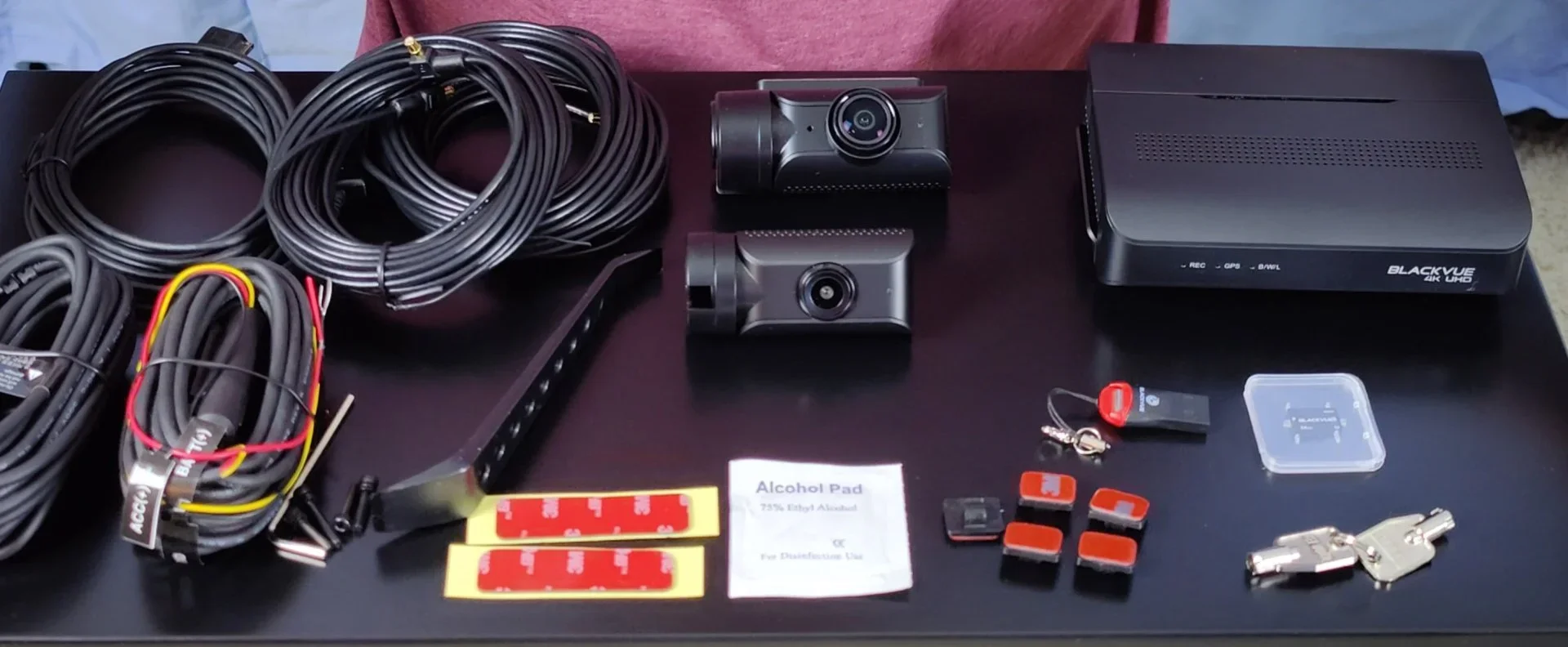
BlackVue DR970X Plus Box
Image: UNAVI USA, Inc.
Position your dashcam at least 3 feet from the ground for optimal overnight car camping security.
BlackVue DR970X Plus Box | Photo by DashCamTalk

Our Top Picks

Our Selections for Unyielding Security

When I evaluate a dashcam, I'm not looking for flashy features; I'm looking for industrial-grade reliability and material integrity. These are the units that consistently meet my uncompromising standards for overnight car camping security. Wirecutter's reviews often highlight some of these for general use, but I focus on their long-term resilience.

Thinkware U3000 (~$450)
This unit uses a supercapacitor for power, which is non-negotiable for longevity in a vehicle.

Its 2K QHD front and rear cameras utilize a Sony STARVIS 2 sensor, providing exceptional low-light performance. The external chassis is a robust, heat-dissipating aluminum alloy, not some flimsy polycarbonate. Its energy-saving parking mode is truly buffered, capturing critical pre-impact footage. This is a serious piece of engineering. Many users on Reddit praise its parking mode reliability.

BlackVue DR970X Plus Box (~$600)
BlackVue understands material science. This system features a separate 'black box' recording unit, allowing the cameras themselves to be smaller and less conspicuous. Supercapacitor power is standard. It offers 4K front and 2K rear recording, again with premium Sony STARVIS 2 sensors. The internal components are housed in a robust, thermally managed enclosure. This is what you call industrial-grade. The 'Box' variant offers even more discrete installation, minimizing visual footprint.

Viofo A229 Pro (~$280)
Viofo has made commendable strides in material selection. The A229 Pro offers 4K front and 2K rear recording, both with Sony STARVIS 2 sensors. Crucially, it uses a supercapacitor, not a landfill-ready lithium-ion battery. The mounting bracket is sturdy, using a high-strength adhesive. Its buffered parking mode is reliable, a testament to decent power management. It's a solid, no-nonsense choice. Wirecutter also recommends this for its balance of features and performance.

Vantrue N4S (~$350)
This is a three-channel system (front, interior, rear) which is excellent for comprehensive coverage in a camping scenario. It utilizes a supercapacitor, preventing thermal degradation issues. The front camera is 4K, and the interior/rear are 1080p, all with decent sensors. The housing feels substantial, not like cheap ABS. It's built for continuous recording, which is critical for overnight security. Auto Sound Security highlights its 360-degree coverage.

70Mai A810 (~$170)
While a more 'budget-friendly' option, the A810 still incorporates a supercapacitor, a critical factor for me. It offers 4K front recording with a Sony STARVIS 2 IMX678 sensor, which is impressive at this price point. The housing is primarily injection-molded ABS, but it's thicker-walled than many competitors, suggesting a slightly better compromise. For front-only coverage, it's a pragmatic choice for those who still demand longevity. Car and Driver notes its utilitarian design.

VIOFO A119 Mini 2 (~$110)
For a front-only solution, the A119 Mini 2 stands out. It's compact, uses a supercapacitor, and features a STARVIS 2 sensor for excellent 2K video quality. Its small form factor means less plastic in the sun, which can only aid longevity. While not a full multi-channel solution, its core materials and sensor quality are superior to many more expensive, feature-bloated cameras. Reddit users often recommend it for its value.
For those interested in maximizing safety, our insights on a stealth dashcam setup are invaluable.
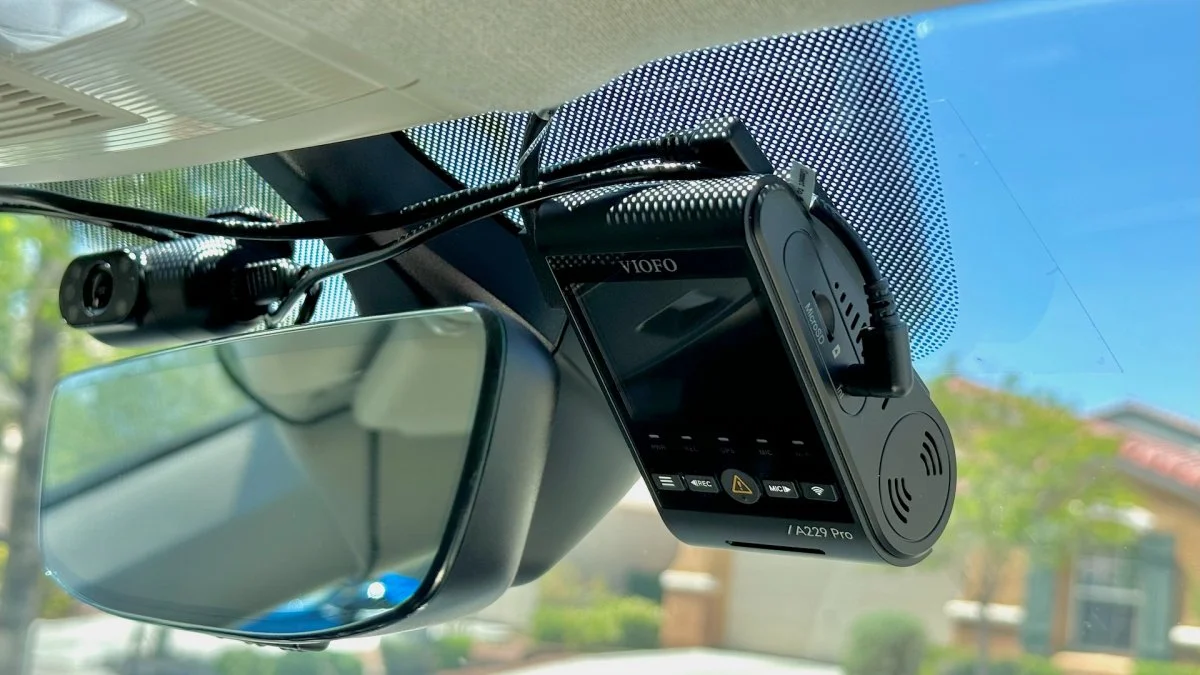
Viofo A229 Pro
Image: The Dashcam Store
Mount your Viofo A229 Pro with its 2.5K rear camera for 360° overnight car camping security.
Viofo A229 Pro | Photo by The Drive

Budget vs Premium Options

The Cost of True Durability: When Compromise Becomes Obsolescence

The distinction between a 'budget' dashcam and a 'premium' one often boils down to material science and a manufacturer's commitment to industrial longevity. I've seen too many $50 units that are landfill-ready after 6 months. This isn't saving money; it's buying a subscription to disappointment. CNET's general overview doesn't quite capture the depth of material differences.

FeatureBudget Options (e.g., $50-$150)Premium Options (e.g., $250-$600+)
Power SourceFrequently Li-ion batteries (e.g., 300mAh LiPo). Prone to swelling, reduced capacity, and failure from thermal cycling (0 degrees F to 160 degrees F). Expected lifespan 6-18 months.Supercapacitors (e.g., 5F to 10F). Immune to thermal degradation, rapid charge/discharge cycles. Expected lifespan 5+ years, often outliving the vehicle.
Chassis MaterialThin-walled injection-molded ABS or GPPS (General Purpose Polystyrene). Low heat resistance (HDT around 180 degrees F), susceptible to UV degradation, embrittlement, and warping, especially around mounting points.Thicker-walled glass-filled nylon (PA6-GF30) or aluminum alloy (e.g., 6063-T5). High heat deflection temperature (HDT over 300 degrees F), excellent UV resistance, superior thermal management for internal components.
Image SensorGeneric CMOS sensors (e.g., OmniVision, GalaxyCore). Inferior low-light performance, limited dynamic range, prone to pixel noise, especially in parking mode. Often marketing '4K' with poor actual image quality.Sony STARVIS 2 (e.g., IMX678, IMX675). Superior low-light sensitivity, wide dynamic range, minimal noise, crucial for legible license plates and details in challenging light conditions. Reddit users often prioritize STARVIS 2 for actual video quality.
Mounting HardwareSimple suction cups made of PVC (prone to plasticizer migration and hardening) or thin ABS adhesive mounts. UV exposure and thermal stress lead to loss of adhesion and structural failure.3M VHB adhesive mounts, often paired with glass-filled nylon or machined aluminum brackets. Designed for permanent, high-strength adhesion and resistance to environmental factors.
MicroSD CardOften includes a generic 'Class 10' card. These use lower-grade TLC NAND flash and have limited write endurance (e.g., 1,000 P/E cycles). Guaranteed to fail under continuous dashcam recording within months.High-endurance cards (e.g., Samsung PRO Endurance, SanDisk High Endurance). Utilize MLC or higher-grade TLC NAND with advanced wear-leveling controllers (e.g., 10,000+ P/E cycles). Essential for data integrity over years of continuous use.
Understanding the differences in dashcam quality can enhance your experience when using a dashcam for security during car camping.
Vantrue N4S
Image: Vantrue

Setup and Installation Tips

Hardwiring for True Overnight Security: No Shortcuts Allowed

A dashcam relying on a cigarette lighter adapter for overnight security is a joke. That's a temporary power solution, not a robust, continuous system. For true peace of mind while car camping, hardwiring is the only acceptable method. I've seen too many 'easy install' kits fail because they compromise on power delivery.

Sources discussing 4-channel systems often highlight the need for stable power.

1. Select the Right Hardwire Kit: Do not skimp here. Your kit must include proper voltage cutoff protection (e.g., 12.0V or 12.2V settings) to prevent draining your vehicle's battery. Use 18 AWG copper wire for minimal voltage drop and superior current carrying capacity.

2. Identify Constant and Switched Fuses: Use a multimeter to find a constant 12V fuse (always on) and a switched 12V fuse (on with ignition). Avoid critical safety fuses. The fuse taps must be robust, not flimsy stamped aluminum.

3. Proper Ground Connection: A clean, secure ground connection is paramount. Find a factory ground bolt on the chassis, scrape away any paint to expose bare metal, and use a ring terminal. A poor ground causes intermittent power and corrupted recordings.

4. Cable Management and UV Protection: Route cables discreetly along the headliner and A-pillars. Use high-quality nylon cable ties (PA66) for durability. Where cables are exposed to sunlight, ensure they have a UV-resistant jacket, or they will degrade and become brittle within 18 months. Installing a dash cam in a van requires similar attention to detail.

5. Test Parking Mode Thoroughly: After installation, verify the voltage cutoff settings and parking mode functionality. Leave your vehicle for several hours, then check footage. Ensure the camera transitions seamlessly between driving and parking modes. This is the entire point of hardwiring.
For those interested in extended trips, consider the best options for a parking mode dashcam for car camping.
70Mai A810
Image: 70mai Official Store

Care and Maintenance Tips

Preserving Your Investment: Beyond 'Set It and Forget It'

A dashcam, even one built with industrial-grade components, requires proper care to ensure its longevity and performance. Neglecting these steps is a surefire way to accelerate planned obsolescence. I've seen too many premium units fail prematurely due to owner neglect. Consumer Reports emphasizes general care, but I dive into the specifics.

1. Regular MicroSD Card Formatting: This is non-negotiable. Continuous overwriting can lead to fragmentation and reduced card performance.

Format your high-endurance microSD card monthly using the camera's internal function. This prevents data corruption and extends the card's lifespan by optimizing wear-leveling algorithms.

2. Lens Cleaning with Proper Materials: Do not use abrasive cloths or harsh chemical cleaners. Use a microfiber cloth (e.g., 80% polyester, 20% polyamide blend) and a dedicated optical lens cleaner. Scratches on the lens, even microscopic ones, will significantly degrade video quality, especially at night.

3. Firmware Updates: Manufacturers release firmware updates to improve stability, add features, and optimize sensor performance. Check for updates quarterly. Outdated firmware can lead to software glitches, missed recordings, or suboptimal image processing. This is a critical aspect of software longevity.

4. Inspect Mounting Adhesion: Periodically check the dashcam's mount for any signs of loosening. If you used 3M VHB tape, it should be robust. However, extreme thermal cycling can stress any adhesive. Reapply with fresh 3M VHB if you notice any movement. Do not use generic double-sided tape; it will fail. A loose camera means shaky, useless footage.

5. Cable Inspection: Inspect power and camera cables for fraying, crimping, or degradation. UV exposure can harden and crack PVC insulation, especially on cheaper cables. Replace any damaged cables immediately to prevent short circuits or intermittent power delivery.
To ensure optimal performance at night, consider investing in the best dashcam for night driving.
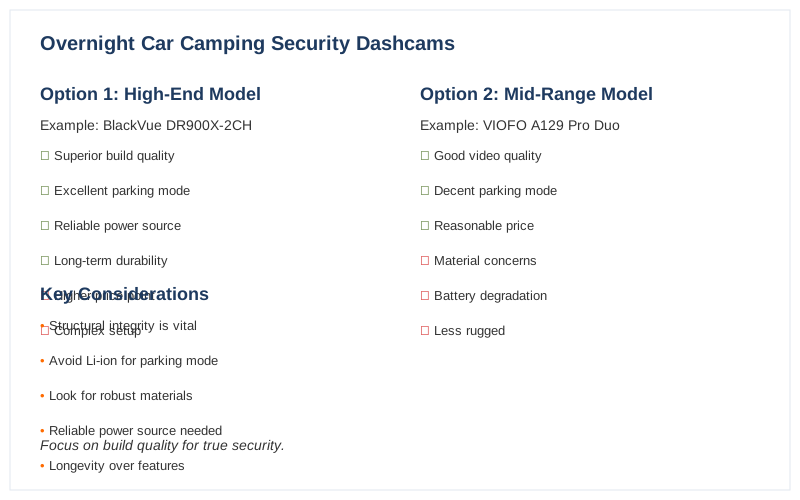
Best Dashcam for Overnight Car Camping Security (2026 Complete Guide) — Pros and Cons Breakdown
Comparison overview for best dashcam for overnight car camping security

Final Recommendations

The Only Path to True Vehicle Security

When it comes to overnight car camping security, a dashcam isn't just a gadget; it's a critical piece of your industrial-grade defense system. My uncompromising stance on material science and longevity isn't about snobbery; it's about avoiding the frustration and financial drain of planned obsolescence.

Investing in a cheap, landfill-ready unit is a false economy.

* Prioritize Supercapacitors: This is the single most important material choice for a dashcam's long-term survival in a vehicle environment. Avoid lithium-ion batteries at all costs.

* Demand Quality Sensors: A Sony STARVIS 2 sensor is not a luxury; it's a necessity for capturing crucial details in low-light conditions. Don't fall for marketing 4K resolutions with inferior sensors.

* Hardwire for Reliability: A properly hardwired dashcam with voltage cutoff protection ensures consistent power for parking mode, preventing battery drain and maximizing recording uptime. Understanding parking mode power is essential.

* Invest in High-Endurance Storage: Your microSD card is the Achilles' heel of any dashcam. Spend the extra $20 for a high-endurance card to prevent data corruption and premature failure. Anything less is a compromise.

Don't settle for 'good enough.' Demand gear that's engineered for the long haul, built with materials that won't betray you when you need them most. Anything less is simply a contribution to the global waste stream.
Enhancing your camping experience is easy with a dashcam that also excels at recording wildlife encounters.

Frequently Asked Questions

My 'budget' dashcam's battery died after 14 months. Can I replace it myself, or will the dealership charge me $150 for a 'diagnostic'?
If your 'budget' dashcam used a lithium-ion battery, its failure after 14 months is precisely what I'd expect from thermal cycling. Replacing it yourself is plausible if you're comfortable with micro-soldering and can source the exact LiPo cell (often 3.7V, 300mAh). A dealership, if they even touch dashcams, would likely charge you $50 just to look at it, then recommend a completely new unit for $200+, citing 'component integration' as a reason not to repair. Just buy a supercapacitor-based unit.
Do I really need a multimeter to hardwire my dashcam, or can I just guess which fuse is constant power?
Guessing which fuse is constant power is an amateur move and a recipe for draining your vehicle's 12V lead-acid battery overnight. A cheap multimeter, costing about $15, will accurately identify constant and switched power sources. This prevents you from inadvertently connecting to a critical safety fuse or, worse, a switched fuse that cuts power to your dashcam's parking mode, rendering your overnight security useless. Use the right tool for the job.
What if I use a 'power bank' instead of hardwiring for parking mode, and it still doesn't record overnight?
A 'power bank' for overnight parking mode is a band-aid solution, and frankly, a poor one. Most consumer power banks use Li-ion cells that struggle in cold temperatures (below 32 degrees F) and lose efficiency. Furthermore, they often lack the sustained low-current delivery and voltage regulation required for continuous dashcam operation, leading to intermittent power and missed recordings. It's an unreliable compromise that will leave you without footage when you need it most.
Can using a generic, non-endurance microSD card permanently damage my dashcam?
While a generic microSD card won't 'permanently damage' the dashcam's hardware, it will almost certainly lead to corrupted footage and premature data loss. Dashcams write data continuously, pushing standard TLC NAND flash memory far beyond its rated P/E (program/erase) cycles, typically around 1,000. This causes irreversible cell degradation, resulting in write errors and unrecoverable video files. You'll simply have no evidence when you need it.
I heard that all dashcams are basically the same, and marketing is just about 'extra features.' Is that true?
That's a myth perpetuated by those who don't understand material science. While basic recording functionality might seem similar, the underlying material composition and engineering differ vastly. A $50 unit with a Li-ion battery and an ABS chassis will succumb to thermal degradation and plasticizer migration within 18 months. A $300 unit with a supercapacitor, glass-filled nylon housing, and a Sony STARVIS 2 sensor is engineered for industrial longevity. The 'extra features' are often tied to the superior components that ensure reliability, not just fluff.

🏅 Looking for Gear Recommendations?

Check out our tested gear guides for products that work with this setup:

M

Morgan - The Gear Gatekeeper

Product testing engineer with 8+ years evaluating automotive and camping gear.

Sources

Related Articles