
The Short Answer: Yes, and Weight Is Not the Problem
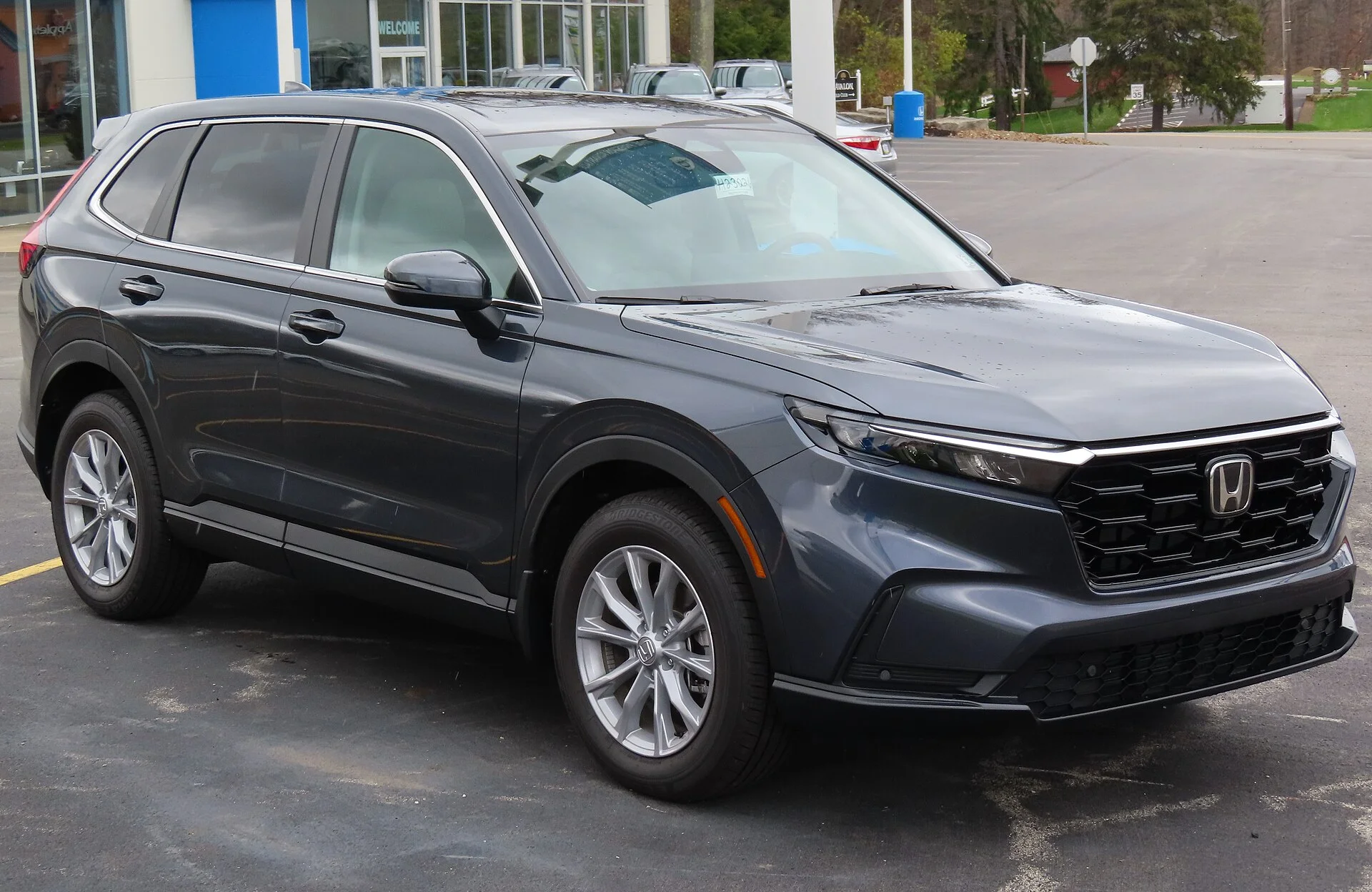
Marketing says a roof rack means you are ready to haul. Reality is more specific. Yes, a kayak fits on a Honda CR-V, and for a single boat the answer is an easy yes, because the number everyone worries about, roof weight, is the one that almost never binds. The Honda CR-V roof rack weight limit is 165 lbs for genuine factory racks, and that figure has held from the 1997 model year through the latest 2026.
A typical recreational kayak is 10 ft long and weighs about 35 to 50 lbs. Add J-cradles at roughly 10 to 15 lbs and you are nowhere near 165 lbs. So the weight question, the one the spec sheet answers loudest, is settled before you start.
The catch is the one the brochure is quieter about: the factory crossbars sit close together, so the real story on a CR-V is stability and tie-downs, not pounds. This guide runs the actual numbers, the dynamic-versus-static distinction, and the tie-down setup that keeps a long boat from pivoting on a short bar spread.
The Number That Governs: 165 lb Dynamic
Here is the figure that matters, and here is the fine print the word 'limit' hides. The CR-V's 165 lb roof rating is a dynamic limit, meaning the load a moving vehicle can carry. A parked, static load such as a rooftop tent can be higher, but Honda does not publish a separate static figure for the CR-V, so 165 lbs is the number you plan around whenever the vehicle is moving.
That 165 lb budget also has to include the crossbars and any kayak carrier hardware, not just the boat. It sounds like a catch, but the math still favors you. A single recreational or touring kayak at 35 to 70 lbs plus J-cradles at roughly 10 to 15 lbs sits well under 165 lbs, so weight is rarely the constraint for one boat.
Where it gets interesting is heavier boats. A 12 ft sit-on-top fishing kayak can weigh 75 to 90 lbs empty, and a plastic touring kayak runs 65 to 70 lbs. Even those clear 165 lbs with room for carriers. The point the skeptic makes: the weight limit is real, but on a CR-V it is almost never the number that stops you. Something else is.
The Real Constraint: A Roughly 26.75-Inch Bar Spread
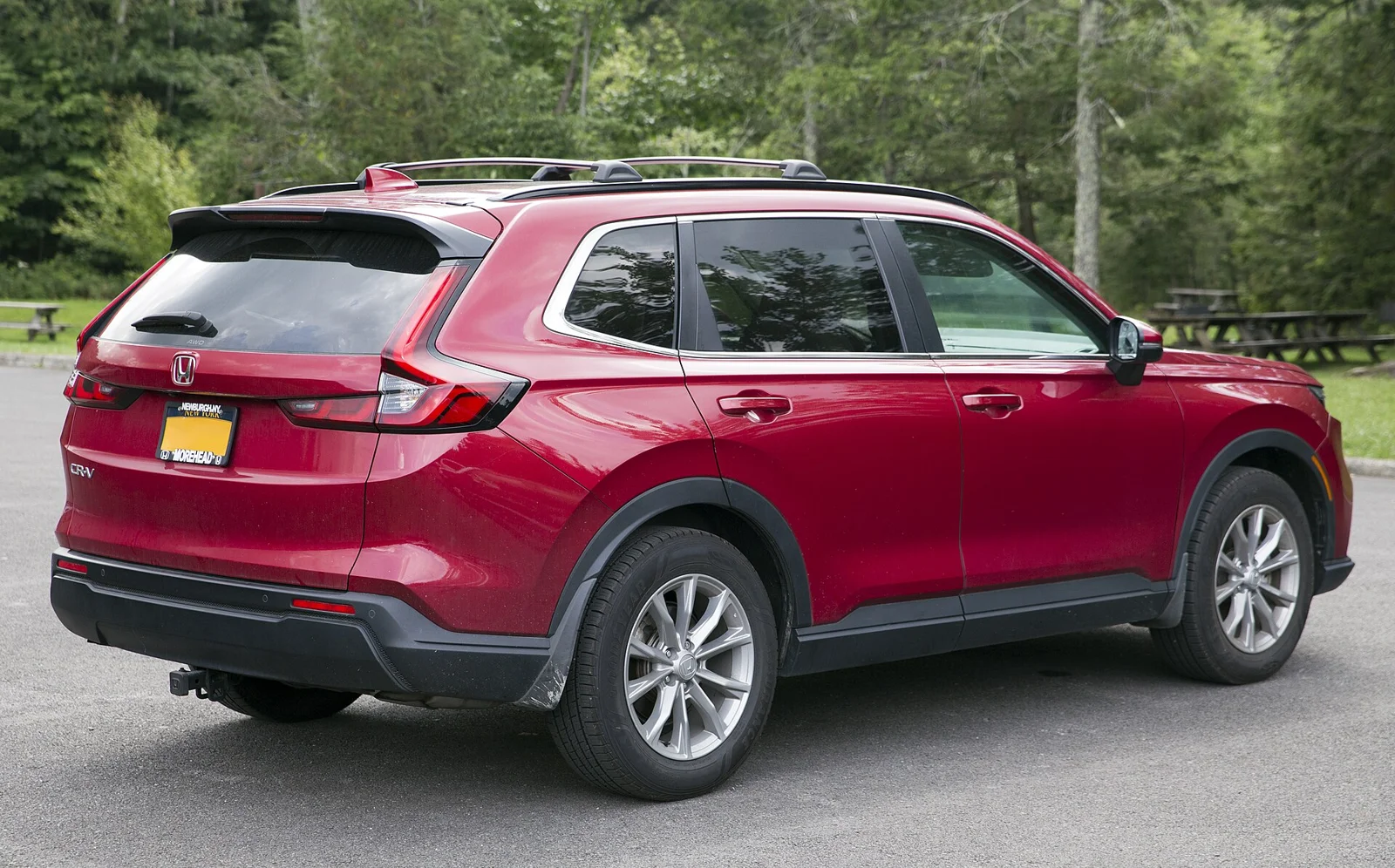
Here is what the reps do not lead with. Factory CR-V crossbars have a spread of roughly 26.75 inches between the front and rear bar mounting points. That is short relative to a 10-to-14-foot kayak, and it is the number that actually shapes how you carry a boat, far more than the 165 lb rating.
Why does spread matter? A kayak balanced on two bars only 26.75 inches apart pivots easily. The longer the boat, the more leverage the overhanging bow and stern have to twist the hull on the cradles, especially in crosswinds or when a truck passes. A wide spread resists that twist; a narrow one does not. The CR-V's bars are on the narrow end for a boat this long.
There is a second wrinkle the spec sheet buries. The CR-V crossbar mounting points are fixed, so unlike raised-rail systems you cannot slide the bars apart to widen the spread for a longer kayak. What you have is what you get. That fixed, narrow base is exactly why the next section, tie-downs, is not optional on this vehicle.
Bow and Stern Tie-Downs Are Not Optional Here
On a vehicle with a wide bar spread, bow and stern lines are good practice. On a CR-V with a roughly 26.75-inch spread, they are how you make up for the short base. Because that spread is short relative to a 10-to-14-foot kayak, bow and stern lines to the tow hooks and bumpers are strongly recommended for stability, and they become important above roughly 12 ft.
The lines do two jobs. They stop the boat sliding fore and aft, and more importantly they resist the pivot that a narrow bar spread allows. A bow line to a front tow point and a stern line to the rear turn a boat balanced on two close bars into a load anchored at four points spread the length of the vehicle. That is the stability the crossbars alone cannot give you.
Skip them and you are trusting two straps 26.75 inches apart to control a hull three or four times longer than that spread. It holds until it does not, usually at highway speed behind a semi. The tie-downs cost a few dollars and two minutes, which is the cheapest insurance on this entire setup.
Kayak Weights: What Actually Goes Up There
Since weight is rarely the constraint, it helps to see where common boats land against the 165 lb limit. A typical recreational kayak is 10 ft long and weighs about 35 to 50 lbs. A 12 ft sit-inside recreational kayak typically weighs about 45 to 55 lbs. Both are trivial for the CR-V roof to carry.
Heavier categories still clear the bar. A touring or day-touring kayak is typically 12 to 14 ft long and 24 to 28 inches wide; a plastic touring boat can weigh 65 to 70 lbs, while a fiberglass or composite one runs about 40 to 55 lbs. The heaviest common single boat, a 12 ft sit-on-top fishing kayak at 75 to 90 lbs empty, is the only one that eats a real chunk of the 165 lb budget, and even it leaves room for carriers.
Width deserves a mention too, because it decides how the boat sits on the cradles. A touring kayak is 24 to 28 inches wide, which sits comfortably in a J-cradle on edge, while a wide fishing hull is happier lying flat in saddles. Neither approach changes the weight math; both are about matching the carrier to the hull shape so the boat rides level rather than rocking. Get the carrier style wrong and even a light boat feels unstable, which reinforces the pattern on this vehicle: the pounds are easy, the geometry is what you plan around.
Loading is worth a thought too, because a CR-V is tall enough that a heavy boat is a real lift. A recreational boat at 35 to 50 lbs is manageable to hoist, but a 65-to-70 lb touring hull or a 75-to-90 lb fishing kayak is a two-person lift for most people, or a one-person lift only with a rear roller that lets you rest the bow and push the boat up rather than pressing the whole weight overhead. That does not change the 165 lb budget, but it changes whether the boat actually gets used.
The takeaway is consistent: for one boat, weight is a non-issue on a CR-V. The length and width of that boat, not its pounds, are what determine how hard it is to load and how much the bar spread and tie-downs matter. Buy the boat you want; plan the tie-downs around its length.
One Kayak or Two?
One boat is a clean yes. Two is where you have to think. By weight, two kayaks are entirely feasible: two 50 lb boats plus carriers come to about 115 lbs, comfortably under the 165 lb dynamic limit. The spec sheet says go for it.
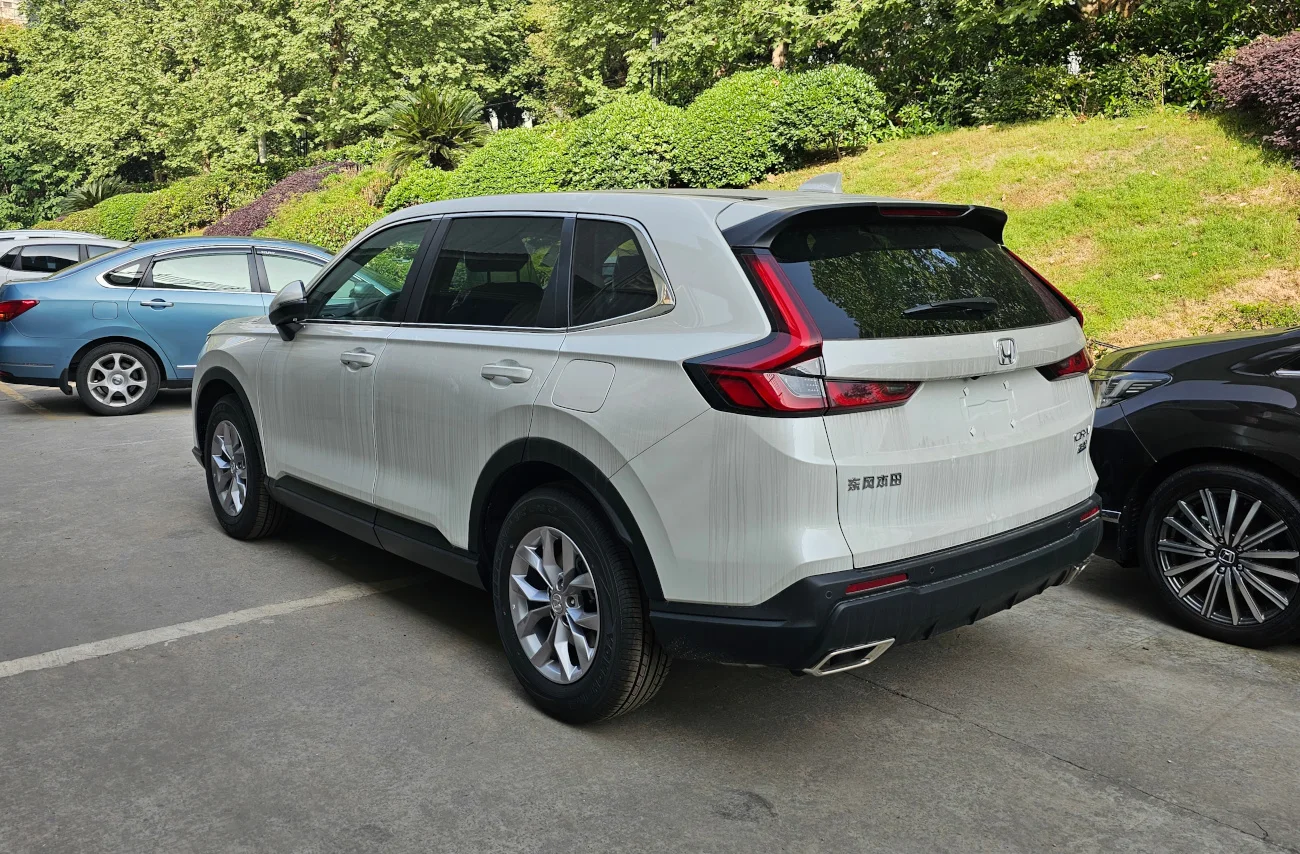
The reality check is width, not weight. The roughly 26.75-inch bar spread and the CR-V's roof width make two full-size boats a tight fit, best handled with stacker or J-cradles that stand the hulls on edge to save roof width. Lay two boats flat and they simply do not both fit across a compact SUV roof; on edge in J-cradles, they do.
So the honest answer on two kayaks is: yes by weight, tight by geometry, and manageable with the right carriers. If you regularly haul two, budget for stackers and plan on bow and stern lines for each hull. The 165 lb rating was never going to be your problem; fitting two boats across the roof is the part that takes actual setup.
Rails, Trims, and What Fits Your CR-V
Not every CR-V wears the same roof, and this is where buyers get tripped up. Trims vary: some model years and trims have raised side rails with a gap underneath, while others have flush rails. The 2023 to 2026 CR-Vs use a T-slot or C-channel rail design that accepts specialized crossbar feet, so the carrier that fits a neighbor's CR-V may not bolt to yours.
Honda does sell a genuine kayak attachment for the 2023 to 2026 CR-V, and J-style carriers are commonly sold in two-packs to carry two kayaks. If you have raised rails, aftermarket raised-rail systems are sold specifically for those CR-V trims to add a stronger, wider crossbar base for kayak carriers, which is one way to buy back some of the spread the factory bars lack.
The lesson is to verify your own vehicle before you buy anything. The roughly 26.75-inch crossbar spread is an owner and retailer reported value, not a Honda-published spec, and it varies by generation and trim, so confirm it on your car. Match the carrier to your exact rail type and model year, not to a generic 'CR-V' listing.
What Honda Does Not Publish
A skeptic reads the gaps as carefully as the numbers. Two things about the CR-V roof are not documented, and pretending otherwise is how people get in trouble. First, Honda does not publish a separate static roof load limit for the CR-V; only the roughly 165 lb dynamic figure is documented. If you are eyeing a rooftop tent for parked camping, there is no official higher number to lean on, so plan conservatively.
Second, the exact factory crossbar spread varies by generation and trim, and the roughly 26.75-inch figure is owner and retailer reported rather than Honda-published. It is close enough to plan tie-downs around, but confirm it on your specific vehicle with a tape before you assume a long boat sits stably.
Neither gap changes the bottom line for a single kayak, which fits easily. They matter when you push toward heavier static loads or longer boats, which is exactly when a buyer should stop trusting the brochure and start measuring. The 165 lb dynamic limit is documented and generous; treat everything beyond it as unverified until you check.
Setting It Up Right
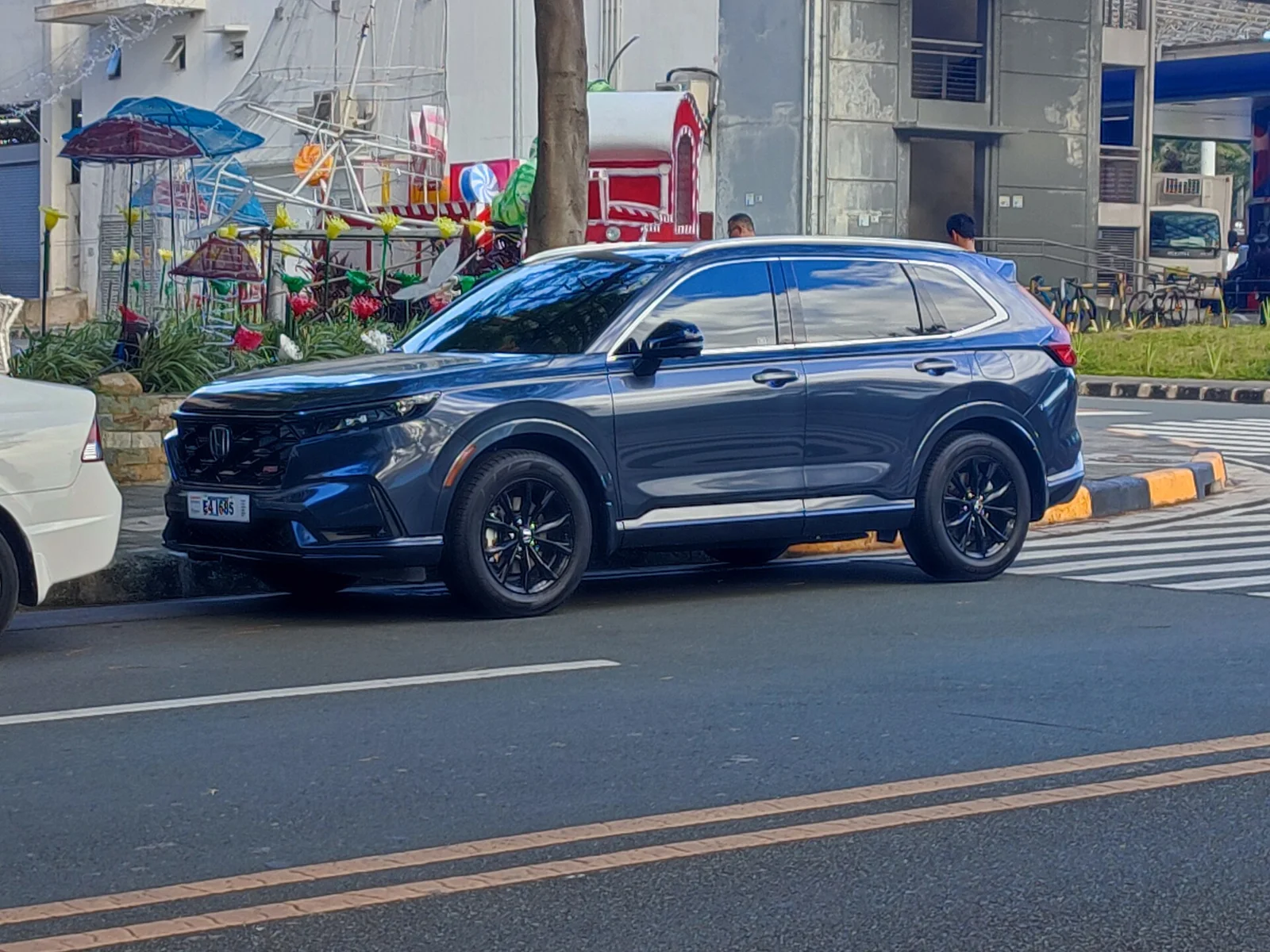
The clean setup on a CR-V is straightforward once you accept that the bars are the weak point and tie-downs are the fix. Mount carriers matched to your rail type, center the boat so its weight sits evenly over both bars, and strap the hull down at each crossbar. Then run a bow line to a front tow point and a stern line to the rear before you drive.
For the carriers themselves, a set of J-style kayak cradles is the standard match for a CR-V, and stackers if you plan to carry two boats on edge. Whatever you buy, confirm it fits the roughly 26.75-inch spread and your specific rails, because a carrier meant for a wide-spread SUV may not seat correctly on the CR-V's close bars.
For the full picture, the CR-V roof rack weight capacity guide details the 165 lb rating, while the CR-V cargo box fit and CR-V rooftop tent fit guides cover the other loads that share that same roof budget. For sleeping after the paddle, see the CR-V car camping guide.
The Verdict: An Easy Yes With One Real Caveat
Will a kayak fit on a Honda CR-V? Yes, and for one boat it is one of the easier yeses in the compact-SUV class, because the 165 lb dynamic roof limit carries any single kayak, from a 35 lb recreational boat to a 90 lb fishing hull, with room for carriers. Weight is simply not the number that stops you here.
The one real caveat is the roughly 26.75-inch factory crossbar spread. It is short for a 10-to-14-foot boat and fixed, so it cannot be widened. That makes bow and stern tie-downs essential rather than optional, and it is the difference between a boat that rides securely and one that pivots at speed.
Do not let the roof rack alone convince you the job is done. Match the carrier to your rails, run the tie-downs the length of the vehicle, and the CR-V carries a kayak safely for years. The spec that matters is not the 165 lb rating everyone quotes; it is the bar spread nobody mentions, and once you plan around it the CR-V becomes a genuinely reliable little kayak hauler.