
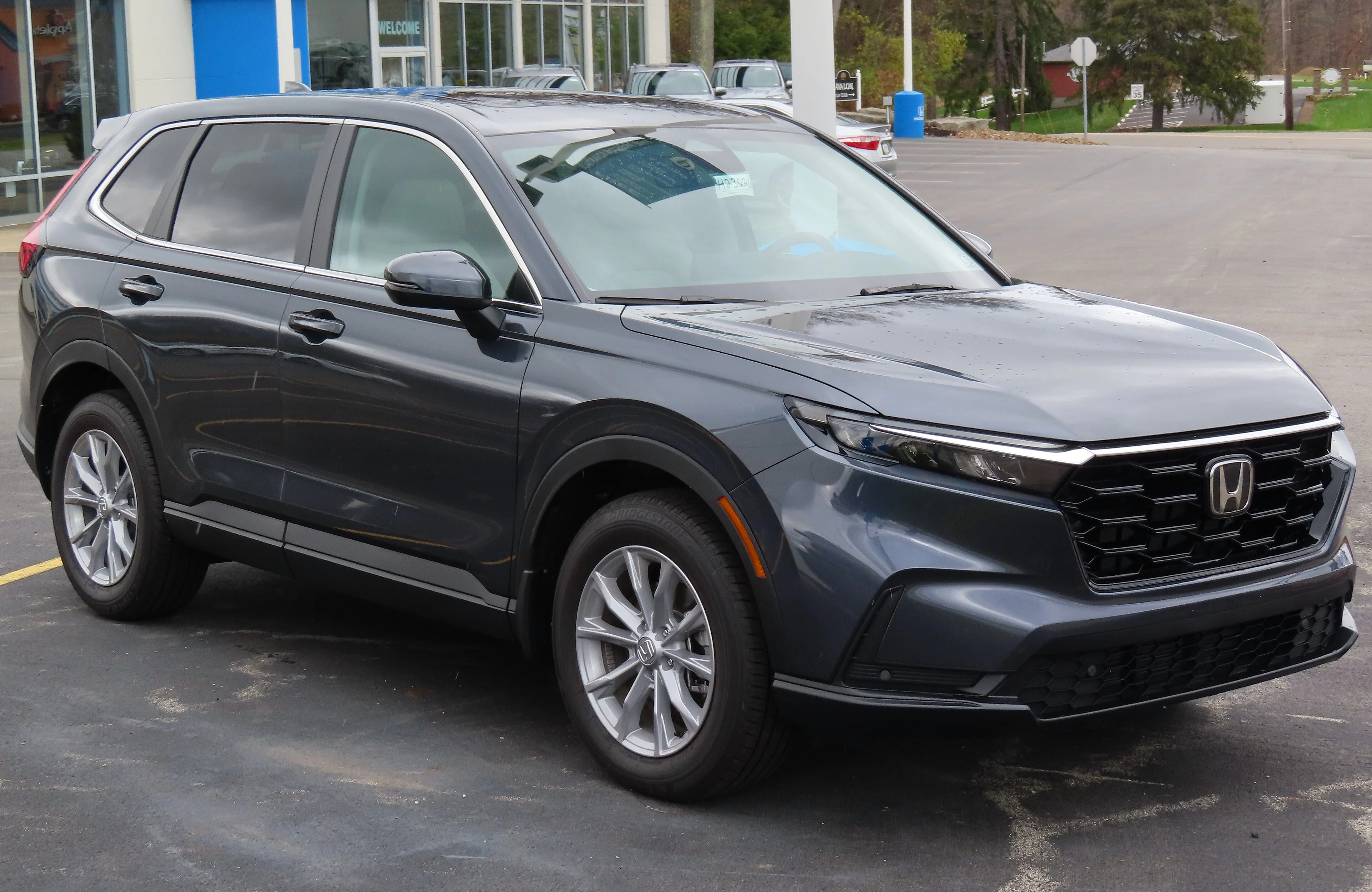
The number that governs everything: 165 pounds, combined
Bottom line: the 2017-2026 Honda CR-V roof is rated for 165 pounds (75 kg) of rack AND cargo combined while you drive - that is Honda's official owner's manual figure - and that number already includes the weight of the crossbars themselves. Treat it as a system budget, not a cargo shelf, and the roughest rooftop plans fall apart before you spend a dollar.
Most roof-load questions get answered with a single number and a shrug. That is exactly the mistake we want to avoid here, because the CR-V's 165-pound ceiling is not the weight of the stuff you strap up top - it is the weight of everything above the sheet metal, rack hardware included. Honda's manual states it plainly under the Maximum Load Limit precautions: never carry more than 165 lbs (75 kg) of cargo on the roof rack. When the manufacturer counts the rack inside the limit, you have to budget for it too.
Here is why the framing matters. If you think of 165 pounds as your cargo allowance and then bolt on a 40-pound crossbar-and-tower set, you have already overspent the budget the moment you tighten the last knob - before a single bag goes up. That is not a rounding error; on a small crossover it is a quarter of the entire allowance gone to hardware. Engineering a roof load means starting from the ceiling and subtracting downward, not stacking upward and hoping.
The rest of this page reasons the same way a spec sheet does. We fix the ceiling, itemize what counts against it, and find where the margin actually goes - the crossbars, the tent, the gear, the people. Every number is attributed to whoever published it, because on this topic the sources disagree with each other, and the disagreements are the whole story. For the broader cross-model picture, our SUV roof rack weight limits explainer lays out how these dynamic figures are set across brands.
What actually counts against your 165 pounds?
If the ceiling includes the rack, then the first question of any honest build is arithmetic: what is stacking up under that 165-pound cap? Line-item it the way you would a weight-and-balance sheet, and the answer stops being abstract.
- The crossbars and towers. A full aftermarket set - feet, towers, and two bars - commonly runs in the tens of pounds. Honda counts this inside the 165, per the manual's own wording, so it is the first subtraction, not a freebie.
- The carrier or tent. A cargo box, a basket, or a rooftop tent is the heaviest single item and the one people forget to weigh empty.
- The payload. Bags, bins, or bodies - whatever the carrier holds - is what is left of the budget after hardware and carrier are paid for.
Run a quick example with round numbers so the method is clear, not to invent a spec. Suppose a crossbar set weighs roughly 40 pounds. Subtract that from 165 and you have about 125 pounds of dynamic budget left for the carrier and everything in it. That is a generous allowance for a cargo box full of soft bags, and a very tight one for a hardshell tent - which is precisely the conflict we will hit later on rooftop tents.
The engineering discipline here is subtraction in the right order. Weigh the hardware first because it is fixed and unavoidable, then the carrier because it is a one-time choice, and only what remains is yours to fill. Most roof-load disappointment comes from doing that math backward - buying the tent first and discovering the hardware already ate the room. Honda gives you one number; your job is to spend it deliberately.
One more subtlety worth naming: this is the driving limit, so it is the one that has to hold while the vehicle is moving, cornering, and braking. That is the load case where the roof is working hardest, and it is why Honda sets the figure conservatively. We will separate that from the parked case next, because the difference is where a lot of internet advice quietly goes off the rails.
Dynamic versus static: the limit Honda gives you and the one it doesn't
Rack makers split roof loads into two ratings, and understanding the split is the difference between a safe plan and a hopeful one. The dynamic rating is the load allowed while driving, when the roof is absorbing bumps, sway, and braking forces. The static rating is the load allowed while parked, when the vehicle is still and the roof only has to hold weight straight down.
Front Runner and other rack makers explain the split clearly: a roof can safely hold far more sitting still than it can at highway speed, which is why a parked figure is always the larger one. As a VENDOR rule of thumb, Thule describes static capacity as roughly three times dynamic, and Yakima publishes a static maximum of 600 pounds on its bars. Those are rack-maker numbers about rack hardware - useful for sizing a tent you will sleep in while parked.
The trap to avoid: those 3x and 600-pound figures come from the rack manufacturers, describing their bars. They are NOT Honda numbers and they say nothing official about your CR-V's roof.
Because here is the honest, important gap: Honda publishes no static rating for the CR-V. None exists. The 165-pound figure in the manual is explicitly the driving limit, and the company simply does not print a parked-load number. So any CR-V static figure you find online - a tidy '495 pounds parked,' say - is somebody's inference from the 3x rule of thumb, not anything Honda stands behind. We will not print one here as if it were official, because it would not be.
What that means practically: for the driving leg of any trip, 165 pounds combined is the hard, sourced ceiling. For the parked, sleeping-in-a-tent case, you are reasoning from rack-maker static figures about the bars while Honda stays silent about the roof - so you verify against your own rack's published static number and accept that the vehicle side is unspecified. Our rooftop tent weight limits guide walks the same dynamic-versus-static logic across other SUVs.
Why the rack you bolt on can undercut the roof itself
Everything so far assumed the rack is at least as strong as the roof. On the CR-V, that assumption can fail - and it is the single most useful thing on this page. A load path is only as strong as its weakest link, and the crossbars are a link. If the bars are rated below the roof, the bars govern.
The concrete case comes from etrailer. According to an etrailer representative, the Thule crossbar setup for the CR-V carries a rating of about 110 pounds - which is lower than Honda's own 165-pound roof rating. On that basis the rep advised against putting a Thule rack on a CR-V for a heavy load. That is a VENDOR-via-aggregator data point, and we flag it as such, but the engineering lesson is airtight regardless of the exact figure.
The rule: when the rack's rating and the roof's rating disagree, the lower of the two governs. A 110-pound rack on a 165-pound roof gives you a 110-pound system, not a 165-pound one. Strength does not average - the weakest link wins.
Contrast that with the racks that match the roof. Yakima crossbar kits for the CR-V are cited at 165 pounds dynamic, and the Rhino-Rack Heavy Duty 2500 at 165 pounds dynamic as well - both AGGREGATOR-tier figures from fit listings. Those match Honda's number, so the roof is the governing link and you keep the full 165-pound budget. Same vehicle, different rack, materially different ceiling: that is why you cannot shop on price alone.
Note carefully what we are not claiming. You will see a figure floating around that a Rhino-Rack Backbone system yields 370 pounds dynamic and 660 pounds static on a CR-V. We could not confirm that number against a primary source, so we will not repeat it as fact - it may be a different vehicle's spec or a misread listing. When a claim would dramatically raise the ceiling, that is exactly when to demand the source, and we did not get one. To compare the two brands that do match the roof, see our Thule vs. Yakima comparison.
The factory path: rails first, then crossbars
Plenty of CR-V owners skip the aftermarket entirely and buy Honda's own crossbars. That is a clean choice, but it comes with a sequence and a caveat that trip people up, so let us lay the parts order out like a build.
The genuine Honda crossbar kit (part 08L04-3A0-100, fitting 2023-2026 CR-Vs) carries the same 165-pound ceiling as the rest of the roof - a DEALER/OFFICIAL figure that lines up with the manual. So going factory does not buy you extra capacity; it buys you a guaranteed fit and a rack that matches, rather than undercuts, the roof rating. In load-path terms, that is the ideal: no weak link introduced.
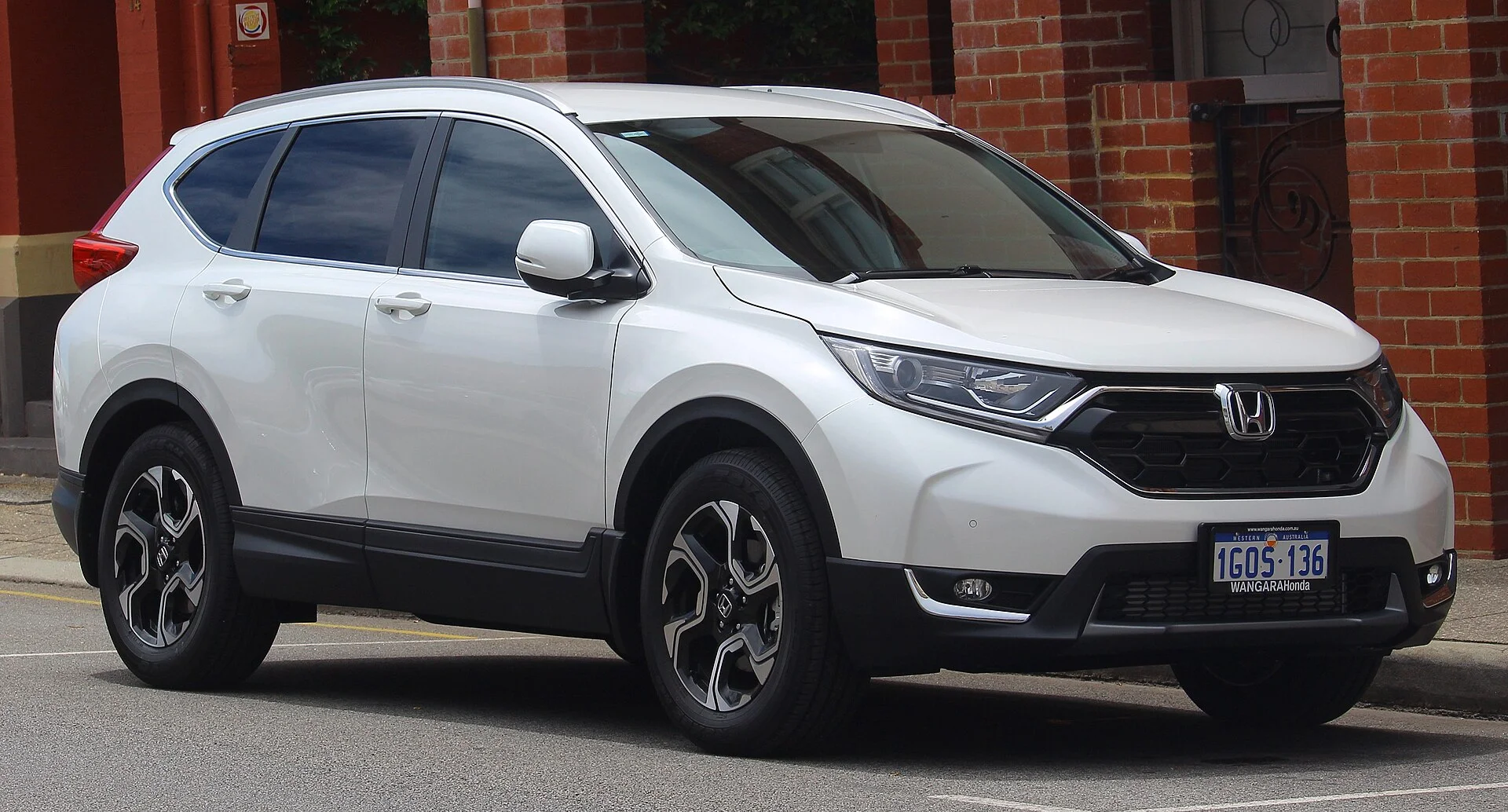
But those crossbars do not mount to bare metal. They clamp to roof rails that must already be installed, which means the real factory path is two purchases in order - rails first, crossbars second. Skip the rails and the crossbars have nothing to grab. This is the step most shoppers miss when they price 'a Honda roof rack' as one line item.
Honda's own manual caveat, worth reading twice: if you use an accessory roof rack, the roof rack weight limit may be lower. The factory matches 165 pounds; an add-on rack can come in under it - so always check the rack's own rating, not just the roof's.
That caveat is Honda telling you, in writing, the same thing the Thule case showed in practice: the accessory can be the limiting factor. It is a rare bit of manufacturer honesty, and it is the reason 'what does the CR-V roof hold' is the wrong question. The right question is 'what does this specific rack, on this roof, hold' - and the answer is the smaller of the two published numbers.
Where does your weight margin actually go?
We have a ceiling (165 pounds, driving), a governing link (the lower of roof and rack), and a silent static case. Now trace where a real load spends the budget, because that is where plans succeed or collapse. Think of it as a margin account you draw down in order.
- Hardware draws first. The crossbar-and-tower set is a fixed cost against the 165, paid before any cargo. On a factory-matched rack that is still real weight inside the limit.
- The carrier draws second. A cargo box, basket, or tent is the big line item, and its empty weight matters as much as what it holds.
- Payload gets the remainder. Whatever is left after hardware and carrier is the only weight you actually get to choose freely.
For light, high-volume loads - sleeping bags, tents, camp chairs, an empty duffel run - the CR-V roof is genuinely useful. Those items are bulky but light, so they eat volume, not budget, and 165 pounds is plenty. This is the roof's sweet spot, and it is a real one: get the frequently-used bulk up top and free the cabin for people and the dense gear.
The margin evaporates the moment the carrier itself is heavy. A steel basket plus a full load, or a hardshell tent plus its hardware, can consume the entire budget with the crossbars alone - leaving you at or over the driving limit before you have loaded anything you came to carry. That is not a reason to avoid the roof; it is a reason to weigh the carrier empty and do the subtraction honestly. If the remainder is negative, the plan is wrong, not the scale.
The engineer's move is to keep dense weight low and in the cabin, and reserve the roof for the light, bulky things that would otherwise crowd the passengers. That single habit keeps you under 165 without a spreadsheet, and it is why the smartest CR-V loads put the heavy comfort gear inside, not overhead - the subject of a later section.
Reading aftermarket ratings without getting burned
Shopping aftermarket racks for the CR-V means reading numbers that come from different tiers of reliability, and treating them as equal is how people end up over the limit. Sort the sources the way you would sort measurements by instrument quality.
- Manufacturer spec sheets (VENDOR) are the gold standard - Thule's and Yakima's own rated loads for a named fit. Trust these first.
- Retailer fit listings (AGGREGATOR) - the Yakima-at-165 and Rhino-Rack-HD-2500-at-165 figures - are usually reliable but are one step removed, so confirm against the maker where a load is marginal.
- Forum and blog numbers are the weakest tier. The unconfirmed 370/660-pound Backbone claim lives here, which is exactly why we would not print it as fact.
The Thule case is the cautionary tale for tier-mixing. The 110-pound figure reached us through an etrailer representative - VENDOR knowledge relayed by an AGGREGATOR - and it disagrees sharply with the assumption that any name-brand rack must clear the roof's 165. Had we taken 'it is Thule, it is fine' on faith, we would have planned a heavier load than the bars allow. The number that surprised us is the one worth checking, not ignoring.
So build a habit: for any rack you are seriously considering, find the maker's own rated dynamic load for the exact CR-V fitment, and compare it to Honda's 165. If they match, the roof governs and you have the full budget. If the rack is lower - as Thule reportedly is - the rack governs and you plan around the smaller number. Never assume the rack is the strong link.
The reason this matters more on a CR-V than on a body-on-frame truck is that the whole budget is small to begin with. On a 165-pound ceiling, a rack that comes in at 110 is not a rounding difference - it is a third of your capacity gone to a spec you could have read before buying. Precision is cheap here; guessing is not.
Sizing a rooftop tent against a near-zero margin
Now the question everyone actually came for: can a CR-V wear a rooftop tent? The honest engineering answer is marginal-to-not-recommended for a hardshell, and it falls straight out of the budget we have been building - no new number required.
Do the driving-case math. A hardshell rooftop tent commonly weighs 120 to 130 pounds empty. Add the crossbars' own weight, which Honda counts inside the 165, and you are already near or at the dynamic ceiling with the tent empty - no occupants, no bedding, no gear. There is essentially no driving margin left to spare. That is not a marketing objection; it is subtraction from a sourced limit.
The uncomfortable fact: no rack brand publishes a number that RAISES the CR-V's ceiling. Thule's rating is lower than the roof, Yakima and Rhino-Rack match it at 165 - none exceed it. So the 165-pound driving limit is the wall, and a heavy hardshell tent puts you against it empty.
The parked case is where tents are actually occupied, and here Honda's silence bites. Rack makers cite large static figures - the 3x rule of thumb, Yakima's 600-pound static bar rating - but those describe the bars, not the CR-V's roof, and Honda publishes nothing about parked or occupied load. So you are trusting the rack's static number while the vehicle's is unspecified. That is a real gap, and the only honest instruction is to verify your own rack's published static rating and accept that the roof side is unknown.
Put together: a heavy hardshell is a poor match for a CR-V, a light softshell is a maybe you must weigh item by item, and either way you are reasoning past the edge of what Honda will state. If a rooftop tent is the goal, our roundup of the best rooftop tents for SUVs flags the lightest models - and honestly, a small crossover is a case where sleeping inside often beats sleeping on top.
The trim lottery most CR-V shoppers miss
Before any of this load math applies, you need something to bolt to - and a surprising number of CR-Vs arrive without it. Whether your roof even has rails is a trim question, and it is easy to assume wrong from a photo.
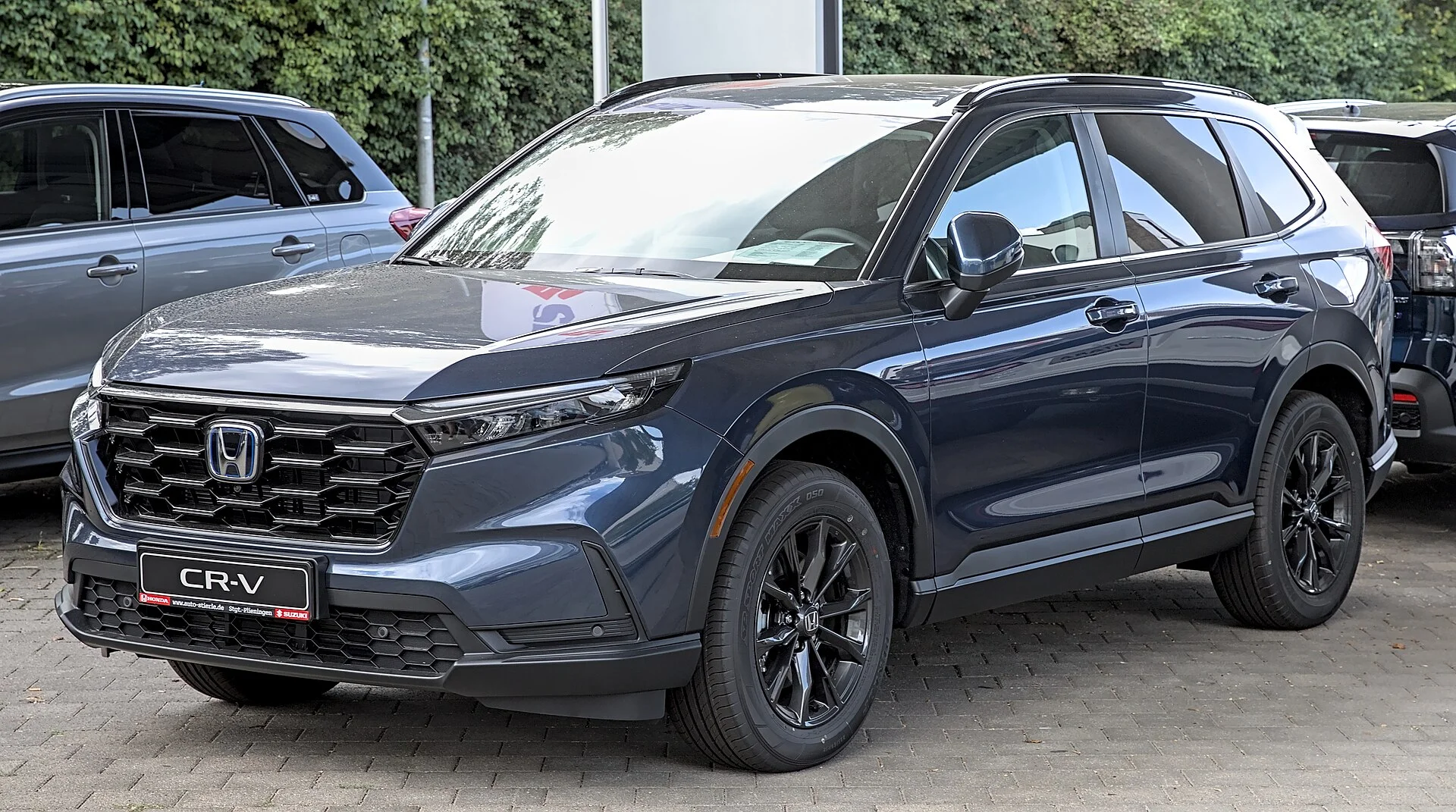
Per parts-catalog data (AGGREGATOR tier), factory roof rails are standard only on certain Hybrid trims of the CR-V. The majority of CR-Vs ship bare-roofed - smooth metal with no rails - which means the rails themselves are a dealer accessory you add before crossbars are even possible. The build order we saw earlier (rails first, then crossbars) starts one step further back than most shoppers plan for.
Check your actual roof, not the brochure. Rails standard on some Hybrid trims does not mean rails on your trim. A bare-roofed CR-V needs rails installed first - an extra purchase and an extra step before you carry a single pound up top.
We flag the trim detail as aggregator-tier because it comes from parts catalogs rather than a single official trim chart, and equipment can shift model year to model year. The safe move is to look at the specific vehicle: rails present, or bare roof? That one glance changes your parts list and your budget before the weight math even begins.
It also changes the honest answer to 'what does the CR-V roof hold.' On a bare roof, the answer is zero until you add rails and a rack - there is nothing to attach to. The 165-pound figure describes a roof that has been equipped, not the naked sheet metal you may be looking at in the driveway. Sequence first, capacity second.
Packing the cabin instead of the crossbars
Here is the engineer's contrarian take on the whole roof-load problem: the best way to respect a 165-pound ceiling is to put your heaviest comfort gear inside the CR-V, where it counts against payload rather than the roof budget. Dense weight belongs low and in the cabin, not overhead.
The pattern generalizes. Anything dense - water, tools, batteries, the sleep system - rides inside; anything light and bulky - empty duffels, chairs, a soft rooftop bag on a short trip - can go up top without threatening the 165. Load a CR-V that way and you rarely have to do the roof math at all, because the heavy things were never up there to begin with. That is the cheapest capacity upgrade available: better packing, zero dollars.
A build worksheet for the CR-V roof
Let us turn all of this into a repeatable procedure - the short checklist an engineer would run before loading a single pound. It is subtraction in the right order, and it protects you from every trap on this page.
- Confirm you have rails. Bare roof means rails first (AGGREGATOR: standard only on some Hybrid trims). No rails, no rack, no capacity.
- Read the rack's own dynamic rating. Compare it to Honda's 165. Thule reportedly comes in at 110 (VENDOR via etrailer); Yakima and Rhino-Rack HD 2500 match at 165 (AGGREGATOR). The lower number governs.
- Subtract the hardware. The crossbar-and-tower weight is inside the 165 (OFFICIAL, per the manual). Pay it first.
- Weigh the carrier empty. Box, basket, or tent - its bare weight is the next subtraction before any payload.
- Whatever remains is your driving payload. If it is negative, the plan exceeds the roof; fix the plan, not the scale.
Two guardrails sit around that checklist. First, the 165-pound figure is the driving number, so it must hold at speed, not just parked - it is the conservative case for a reason. Second, Honda publishes no static rating, so for any parked, occupied load you are reasoning from your rack's static spec while the vehicle side stays blank. Verify your own rack's number; do not borrow a static figure from the internet and treat it as Honda's.
Notice what the worksheet never does: it never invents a bigger ceiling. There is no rack in these facts that raises the CR-V above 165 pounds dynamic, so the honest output of the procedure is always a number at or below 165. If a build needs more than that up top, the answer is not a cleverer rack - it is a different vehicle or a load that moves inside.
Keep this worksheet next to the spec table at the top of the page. Between the two, you can price and plan any CR-V roof load in about five minutes, and every step is anchored to a number somebody actually published rather than a figure we wished into being.
The bottom line on loading a CR-V roof
Strip it to the load-bearing facts and the CR-V roof is simpler than the internet makes it - as long as you engineer it as a system instead of chasing a single hero number. One ceiling, one governing link, one silent gap, and a clear order of operations.
- 165 pounds, rack plus cargo, while driving - Honda's official manual figure, and it already counts the crossbars.
- The lower of roof and rack governs - Thule reportedly 110 (below the roof), Yakima and Rhino-Rack HD 2500 matching at 165. Read the rack's own spec before you buy.
- No official static rating exists - any parked number is an inference, so verify your rack's static figure and treat the roof side as unstated.
- Rails first on most trims - a bare CR-V needs rails before crossbars are even possible.
On rooftop tents specifically, the honest verdict stands: a heavy hardshell is marginal-to-not-recommended, because 120-130 pounds plus crossbar weight leaves near-zero driving margin, and nothing in these facts raises the ceiling. For a small crossover, the stronger play is dense weight low and inside, with the roof reserved for the light, bulky things that free up the cabin.
Do the subtraction in order, attribute every number to whoever published it, and refuse to print a figure you cannot source - that is the whole method. It will not get you a bigger roof, but it will keep you honestly under the one you have, which on a CR-V is the only capacity that actually exists. For how these dynamic limits compare across the segment, our SUV roof rack weight limits guide is the next stop.