
Gear

Roof Top Tent Weight Limits: How Much Can Your SUV Handle?

Casey - The Weekend Warrior
3 min read
Includes Video

Your SUV's roof isn't just for carrying groceries or that questionable thrift store couch. When you're thinking about a rooftop tent, you're talking about putting a whole lot of weight up there. The real question is, how much is *too much*?

Your SUV's roof isn't just for carrying groceries or that questionable thrift store couch. When you're thinking about a rooftop tent, you're talking about putting a whole lot of weight up there. The real question is, how much is too much? Most passenger vehicles are rated for dynamic loads between 100-165 pounds 23Zero. That's the weight your roof can handle while you're actually driving, factoring in bumps, wind, and your questionable speeding habits.

It's not just about the tent itself, but everything else you strap to it. Knowing these limits is the first step before you even look at a tent. This isn't the place for guesswork.

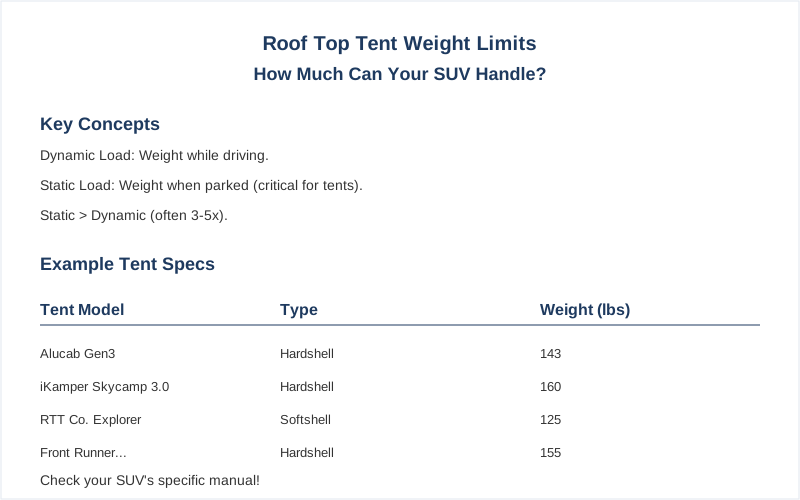
Roof Top Tent Weight Limits: How Much Can Your SUV Handle? — Key Specifications Compared
Key specifications for Roof Top Tent Weight Limits: How Much Can Your SUV Handle?

The Core Answer

The core of this whole roof weight thing boils down to two numbers: dynamic and static load ratings. Dynamic is what your roof can handle when the wheels are turning. Think of it as the weight of the tent plus the forces of driving - acceleration, braking, wind, the whole nine yards. Most cars are rated somewhere between 100 to 165 pounds for this 23Zero. This is usually listed in your owner's manual, if you can find it buried under that pile of expired coupons. The real move is to then figure out your static load rating, which is what your roof can handle when the vehicle is parked. This is the critical number for rooftop tents, because that's when you and your gear are actually *in* the tent. Your static load limit is generally much higher, often 3 to 5 times the dynamic limit TentBox. So, if your dynamic is 100 pounds, your static could be anywhere from 300 to 500 pounds, or even more. This is why you see people with massive tents on smaller SUVs; the static rating is way more forgiving. The tent itself might weigh 100 pounds, but then you've got you, your partner, your dog, and that extra cooler full of questionable snacks. That's where static weight capacity becomes game-time.
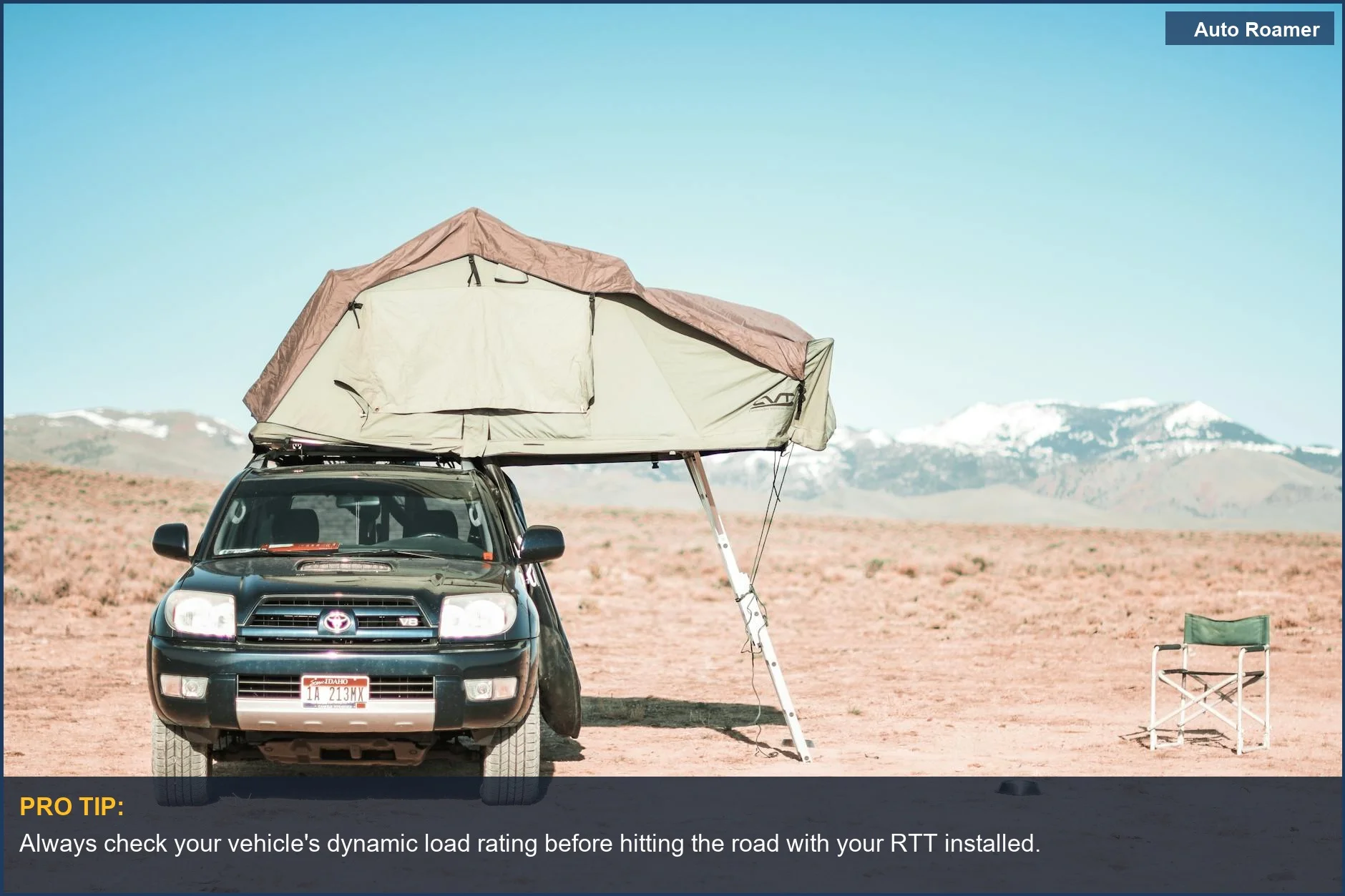
Once you've determined the right size, it's crucial to understand the weight limits for your roof rack.
Always check your vehicle's dynamic load rating before hitting the road with your RTT installed.
Adventure awaits with this SUV and rooftop tent setup in the Oreana Desert. Remember, your SUV's roof load limit is crucial for safe travels. | Photo by Jenny Uhling

Why This Matters for Your Setup

So, why should you care about these numbers beyond not wanting your roof to cave in? Because this is the difference between a great weekend and a roadside disaster. I learned this the hard way on a trip to Moab. I thought my Outback could handle anything. I strapped on a tent that weighed about 120 pounds, plus myself and my gear. On a bumpy trail, I heard this awful creaking sound. Turns out, I was way over the dynamic limit for my specific roof rack setup. Rookie mistake. The honest version is, you need to know your vehicle's rating. If your dynamic limit is only 100 pounds, and your tent is 120 pounds, you're already in trouble before you even add people Reddit. It's about distributing that weight properly. A good, solid platform rack that bolts directly to your car's frame can help significantly. It's not just about the roof, but the whole system holding it up. My next trip, I did my homework and the ride was so much smoother. You don't need a physics degree, just a little common sense and a look at your manual. It's the $50 version of avoiding a $5,000 repair bill.
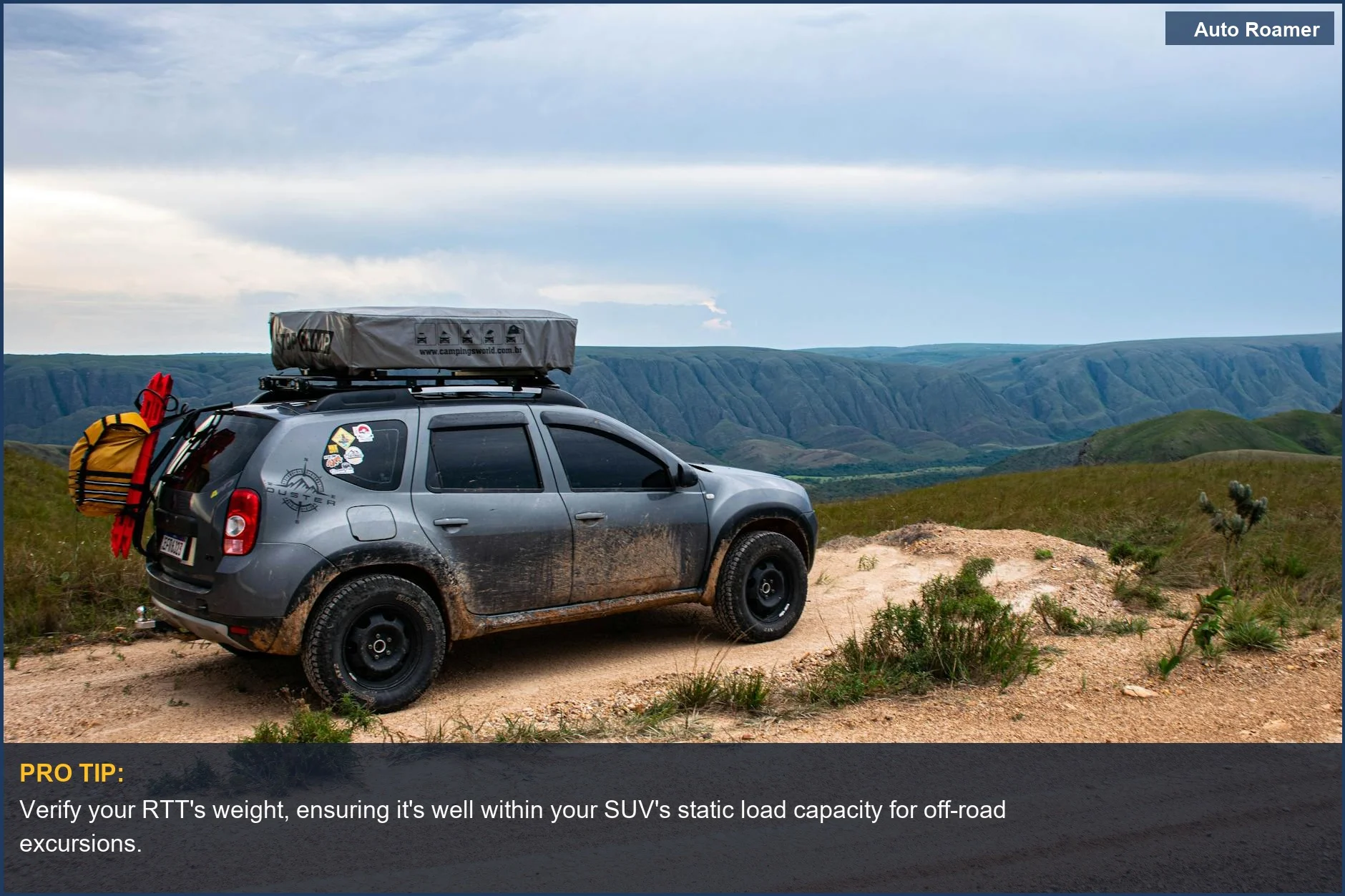
To ensure your SUV can handle the weight, understanding the roof rack weight capacity is essential.
Verify your RTT's weight, ensuring it's well within your SUV's static load capacity for off-road excursions.
Conquering rough terrain in Serra da Canastra, this 4x4 showcases the need to understand RTT weight capacity for demanding adventures. | Photo by Nicholas Shirazawa

Making the Right Choice

Making the right choice starts with knowing your vehicle's limitations. Don't just eyeball it and hope for the best. Your owner's manual is your first stop, but don't be surprised if the exact number for static load isn't listed. You might have to do some digging online or even call the dealership. Remember, the tent is just one piece of the puzzle. You also have to factor in the weight of your roof rack system, sleeping bags, food, and any extra gear you decide is 'essential.' It's a balancing act. A common misconception is that if the tent fits, it's fine, but that's not how physics works. Your vehicle's roof structure has limits. Understanding these limits keeps you safe and your car in one piece. It's the real move for any serious car camper.
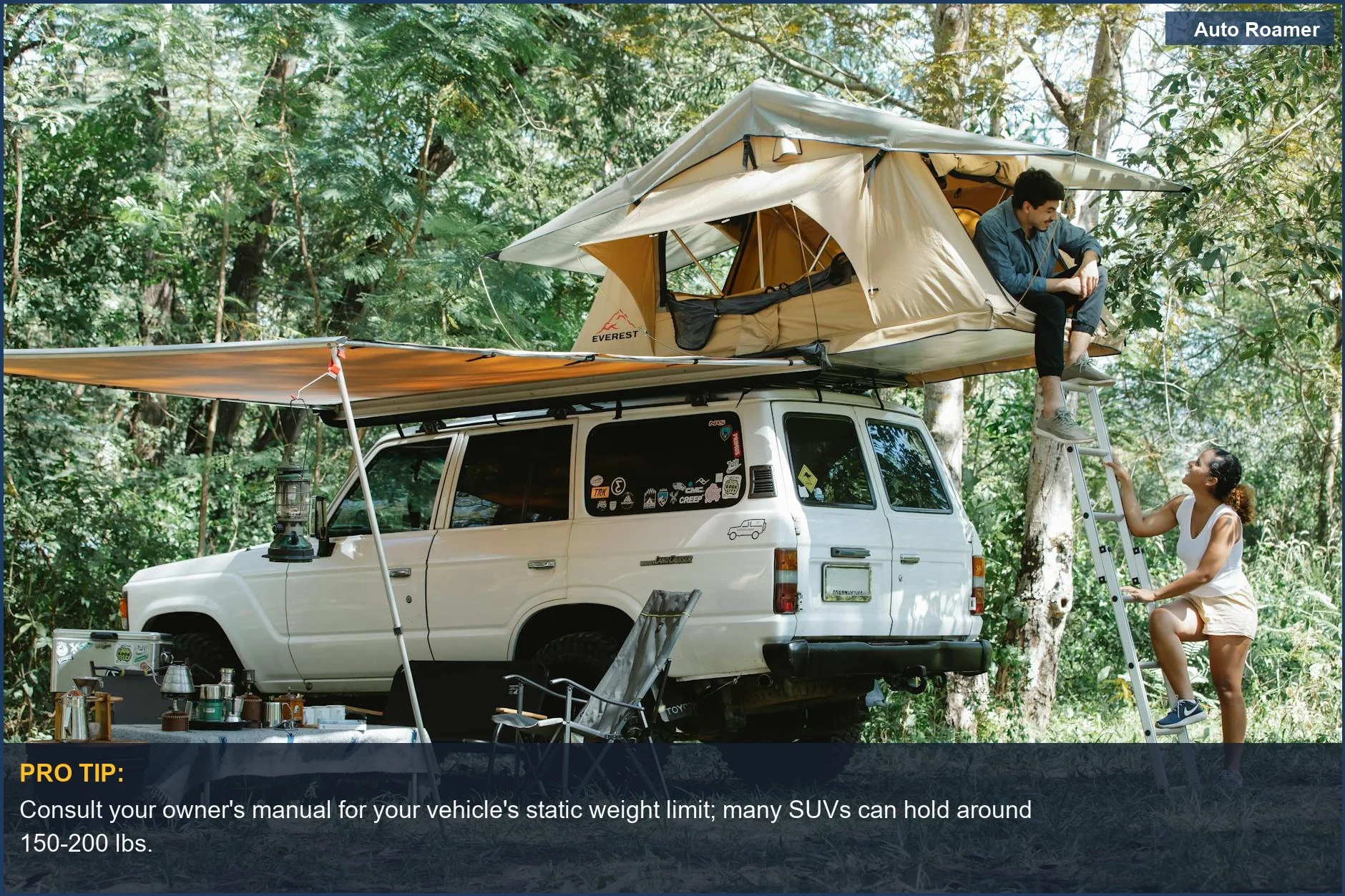
To ensure a safe journey, it's crucial to understand roof rack weight limits for your car camping adventures.
Consult your owner's manual for your vehicle's static weight limit; many SUVs can hold around 150-200 lbs.
This couple is embracing nature with their rooftop tent. Knowing how much weight your SUV can handle is key for safe and enjoyable camping. | Photo by Uriel Mont

Frequently Asked Questions

Okay, so I need a new roof rack to handle my tent. Is it cheaper to buy a cheap one online and install it myself or pay a shop to do it?
Look, the $100 rack you found on a discount site is probably not going to hold up to a 150-pound tent plus two people. You're talking about a significant investment. A decent platform rack that bolts directly to your vehicle's frame can run $500-$1000. DIY installation might save you a few hundred bucks in labor, but if you mess it up, you're looking at potential damage to your roof, which is way more expensive than installation fees. Stick to reputable brands and get it installed by someone who knows what they're doing. It’s the $500 version of peace of mind.
Do I really need a special torque wrench to install my roof rack or will my regular socket set do?
You absolutely do not want to guess on torque settings for something holding up a tent full of people. Over-tightening can strip bolts or damage your roof; under-tightening means it could loosen up on the highway. A basic torque wrench that covers the range specified by the rack manufacturer will cost you around $30-$50. It’s a small price to pay to avoid having your tent become a projectile. Your regular socket set is for changing your oil, not for critical structural components.
What if I accidentally overload my roof weight limit for a short drive, like just to the trailhead?
Even a short drive with too much weight can cause significant stress on your vehicle's roof structure and mounting points. You might not see immediate damage, but you're weakening the integrity over time. Think of it like repeatedly stepping on a weak branch – eventually, it's going to snap. It's not worth the risk of causing permanent damage or a dangerous failure for a few miles.
Can regularly exceeding the dynamic roof load limit permanently damage my SUV's roof or frame?
Yes, absolutely. Constantly exceeding the dynamic load limit puts undue stress on your roof rack mounting points, the vehicle's gutters (if it has them), and the roof panel itself. Over time, this can lead to cracks, leaks, and even structural deformation of the roof. It's like running your car constantly in too low a gear; you're going to wear out components prematurely and cause expensive damage.
I heard you can just multiply your dynamic roof load limit by 10 to get the static load limit. Is that true?
That's a common myth, and a dangerous one. While the static load limit is generally higher than the dynamic limit, it's typically around 3 to 5 times higher, not 10. Some sources suggest using that multiplier as a rough estimate, but it's far from a scientific rule. Always try to find the manufacturer's specified static load rating for your specific vehicle for the most accurate and safest figure.

🏅 Looking for Gear Recommendations?

Check out our tested gear guides for products that work with this setup:

C

Casey - The Weekend Warrior

Weekend car camper and road trip enthusiast. Focuses on practical, budget-friendly solutions for families and first-time campers.

Sources

Related Articles