
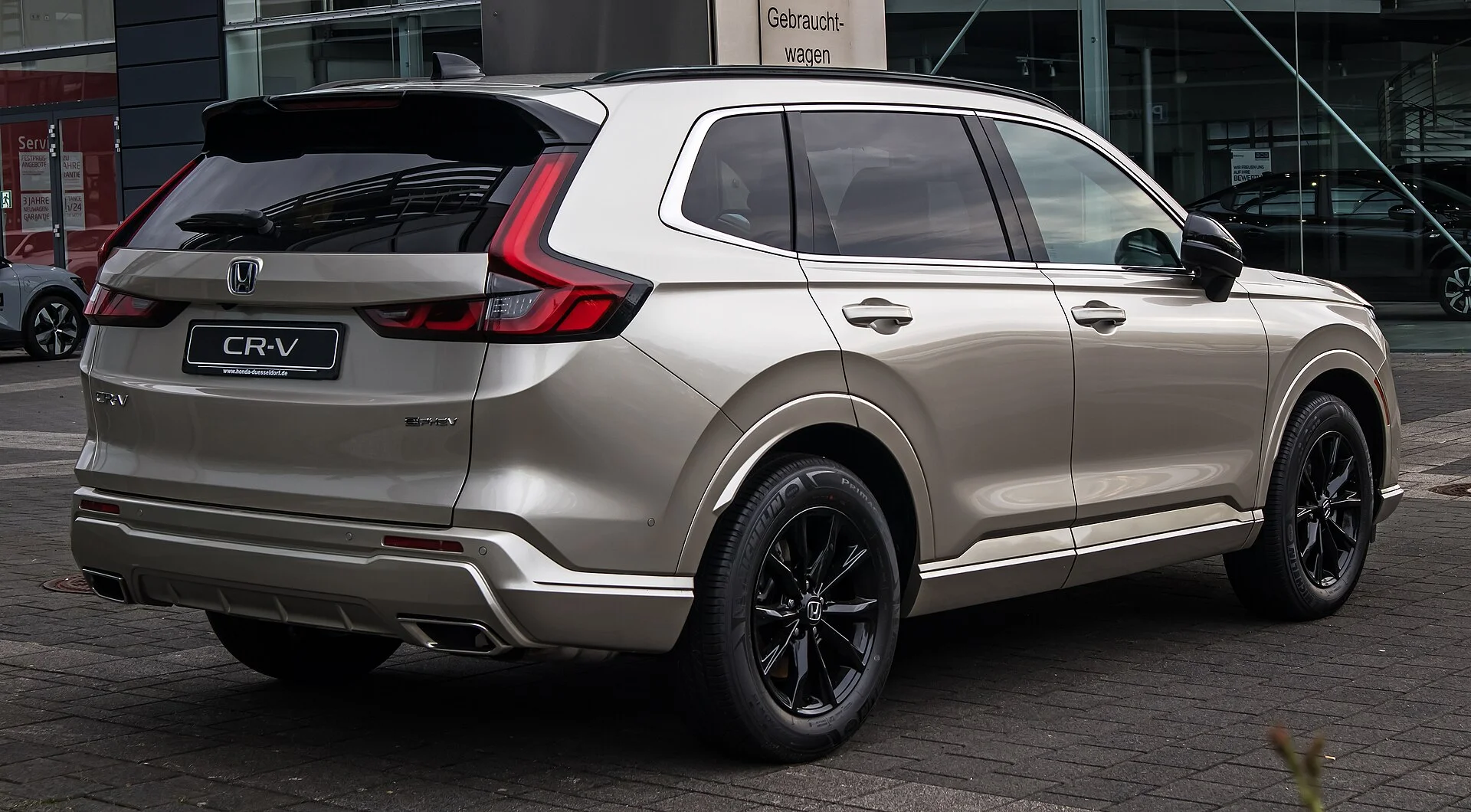
The Short Answer: It Fits - Now Check the Number on the Roof, Not the Box
A rooftop cargo box goes on a Honda CR-V, and it goes on cleanly once the mounting hardware is in place. So the honest answer to whether it fits is yes. But the more useful question - the one the glossy box photo never answers - is how much you can safely put in it, and that is decided by a roof rating, not by the box's advertised volume.
Treat the box's spec sheet with a little skepticism. A 16-cubic-foot box implies you can fill 16 cubic feet, and physically you can. What the box packaging leaves out is that the CR-V's roof is rated to carry only so much weight while you drive, and that ceiling is reached long before the box is physically full of anything heavy.
That ceiling is the 165-pound dynamic roof rating - the weight the roof is rated to hold in motion, hardware and box and cargo combined. It is a firm number, it has not moved in decades, and it is the figure this whole decision turns on. Everything below is the arithmetic the marketing skips, so you buy the right box and load it honestly.
165 Pounds - and It Hasn't Moved Since 1997
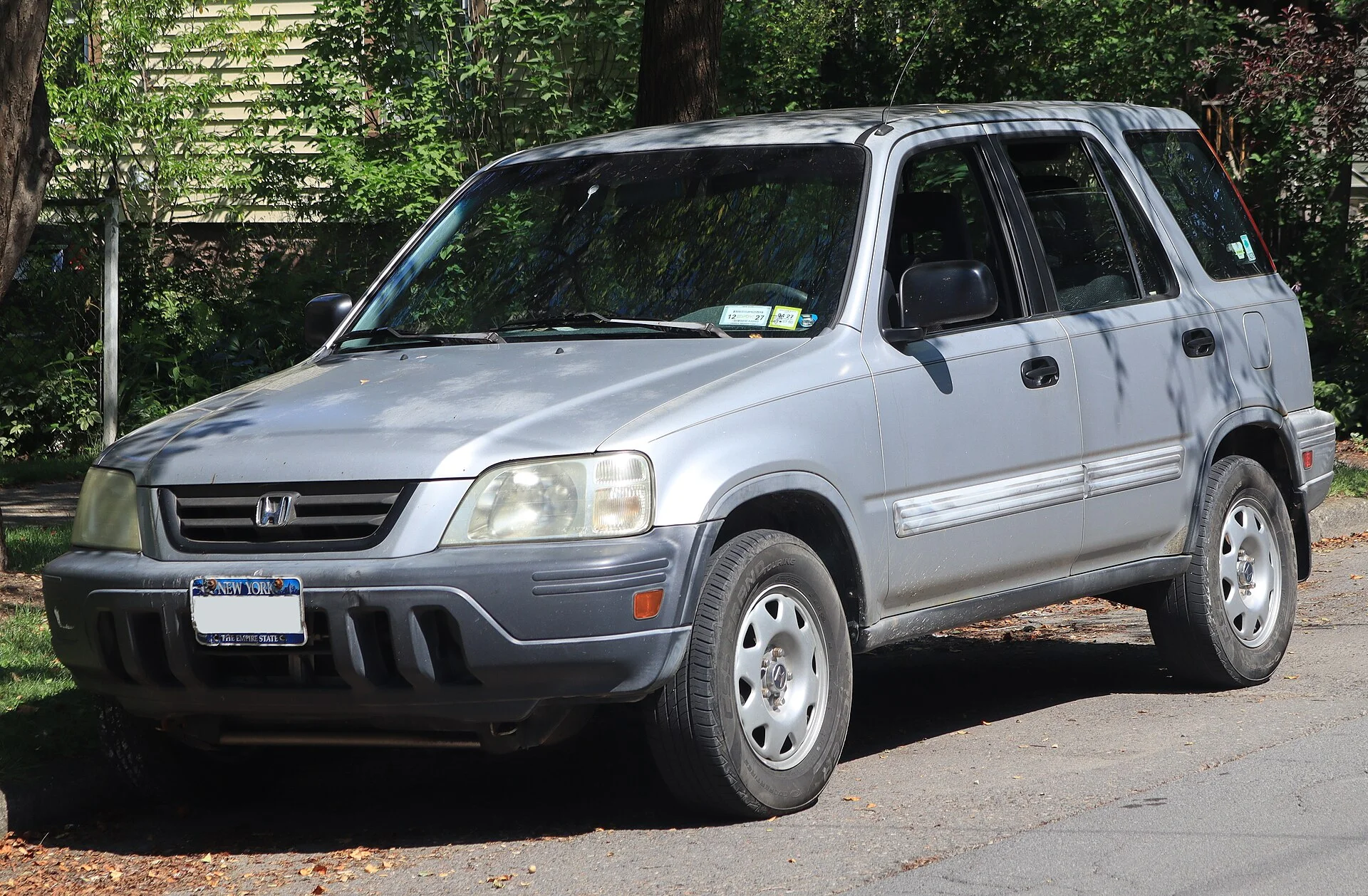
Here is the number worth memorizing before you shop: every Honda CR-V from the 1997 model year through 2026 carries a roof rack weight limit of 165 pounds. That is the dynamic rating, the one that governs a loaded box on the highway. Nearly three decades of CR-Vs, one consistent roof budget - Honda has not quietly raised it as the vehicle grew.
The skeptic's footnote matters here. That 165-pound limit applies to the complete factory roof rack system and includes the weight of the rack hardware itself. So the usable cargo weight is somewhat less than 165 pounds from the start - the number on paper already has the rack baked into it, which is not how most buyers read it.
Honda backs it up in the parts catalog. The genuine CR-V crossbars for 2023 through 2026 are rated to the same 165-pound load capacity, so the hardware and the roof agree on the ceiling. What Honda does not publish is a separate static (parked) rating - only the 165-pound dynamic figure is specified. For a cargo box that is fine, because a box is a driving load, not something you park weight on. The lesson for a shopper is to stop treating the CR-V's growth over the years as extra roof capacity - the vehicle got bigger and heavier, but the roof budget held flat, so a newer CR-V is no more forgiving up top than an older one.
The Two-Part Mounting Stack Most CR-V Buyers Miss
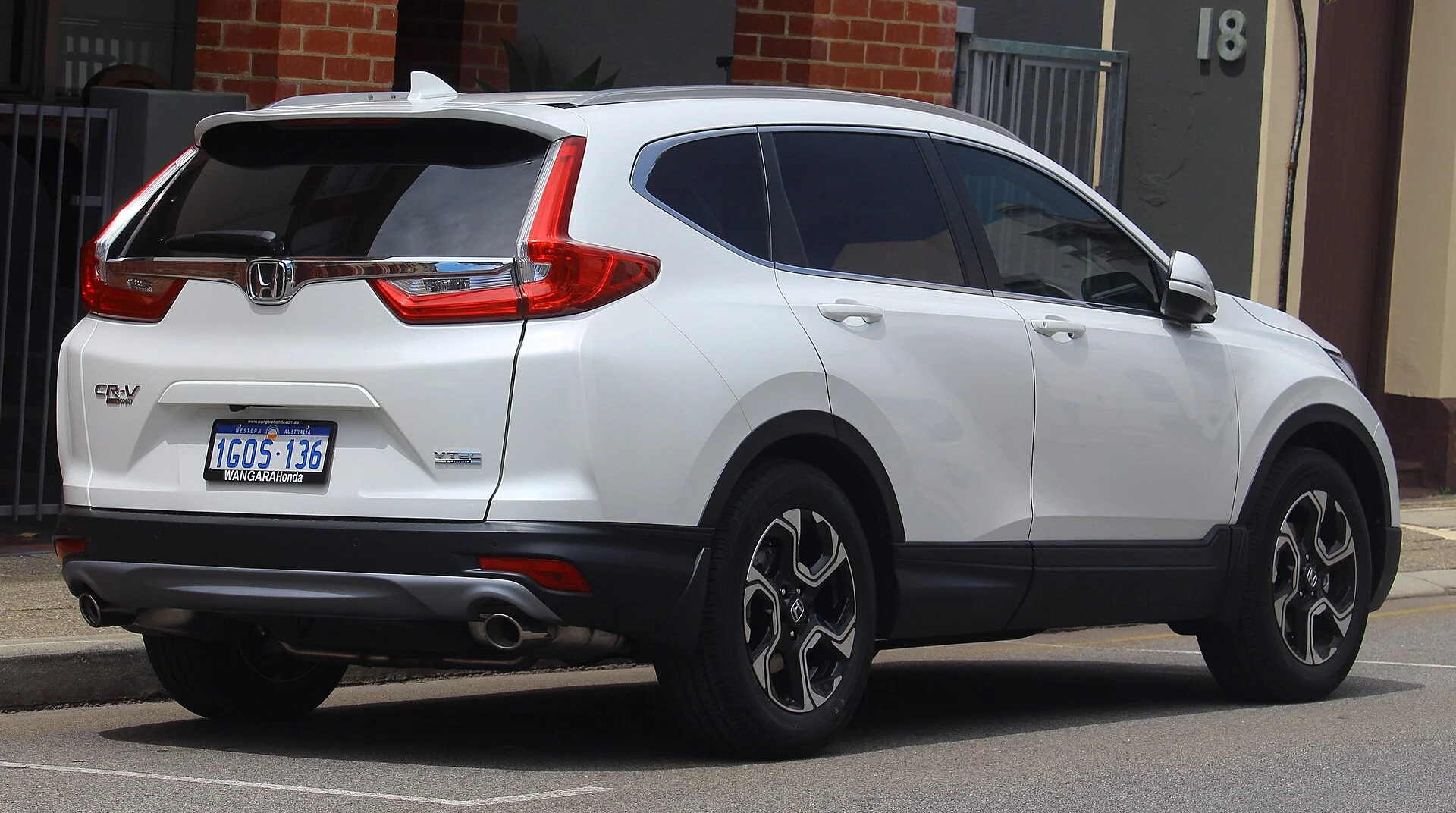
This is where a CR-V trips people up, and it is worth checking before you spend a dollar on a box. Lower CR-V trims ship with a bare roof - no factory rails at all. You cannot clamp a cargo box to a bare roof. The mounting is a two-part stack, and both parts have to be bought and installed before a box has anywhere to go.
Part one is the roof rails. On a bare-roof CR-V, the factory roof rails (Honda part 08L02-3A0-100) must be installed first, bolting to fixed points in the roof. Part two is the crossbars. The crossbars (Honda part 08L04-3A0-100) then attach to those rails, spanning the roof left to right, and only then is there a surface a box can clamp onto.
So the real shopping list for a bare-roof CR-V is rails, then crossbars, then the box - three purchases, not one. Owners who see a picture of a CR-V with a box and assume theirs is ready for one are often two parts short. Confirm what your specific trim already has on the roof before you order, or the box arrives with nothing to mount to.

The Box Shell Tax the Marketing Leaves Off
Now the number the box front never prints in big type: how much the empty box weighs. A Thule Motion XT L weighs 42 pounds empty. A Thule Force XT L weighs 41 pounds. A Yakima SkyBox 16 Carbonite weighs 47 pounds. Popular hard boxes run roughly 40 to 55 pounds before a single item goes inside - and every one of those pounds counts against the 165-pound roof limit.
Then the crossbars take their cut. The OEM CR-V crossbars mount to the factory rails and add their own weight to the system, so figure roughly 15 pounds of hardware on top of the box. Between the empty box and the bars, the roof is carrying a meaningful chunk of its 165-pound budget before you have packed a sleeping bag.
The subtraction is sobering. Take the 165-pound limit, remove a 42-pound box and about 15 pounds of crossbars, and only about 108 pounds is left for actual cargo. That is the honest working number - not 165, but roughly 108 pounds - and a skeptic plans around 108, not the headline figure the box's marketing wants you fixated on.
What 108 Pounds Actually Holds
About 108 pounds of usable cargo sounds limiting until you match it to the right kind of gear. The CR-V's roof is best suited to bulky-but-light loads - the stuff that hogs interior space without weighing much. Sleeping bags, tents, sleeping pads, camp chairs, jackets, and empty duffels are exactly that: voluminous and nearly weightless, and a 16-cubic-foot box swallows them well inside 108 pounds.
What does not belong up there is dense weight. Water jugs, canned food, tools, firewood, and recovery gear stack up pounds quickly and are far better kept low in the cargo area. Because a hard box empty already spends roughly a quarter to a third of the 165-pound rating on its own shell, there is not much budget left for heavy items even if you wanted to put them up top.
Frame it the way a skeptic frames any capacity claim: 108 pounds is plenty for what a box should carry, and useless for what it should not. Load light and bulky, keep heavy and dense inside and low, and the CR-V's roof does exactly the job it is good at - freeing cabin space - without ever approaching its limit. The payoff is real on a camping trip: everything soft and awkward goes overhead, the cabin opens up for a flat sleeping platform and the people using it, and the roof never becomes the reason you had to leave something behind. That is the whole point of a box on a vehicle this size.
Fit Is Not the Problem - Weight Is
Give the CR-V credit where it is due: physical fitment is not the constraint. The OEM crossbars mount to the factory rails and provide a spread compatible with the 24-inch minimum most cargo boxes require, so a box's mounting channels have bar to clamp onto. Nothing about the CR-V's roof geometry rejects a mainstream box.
Length is the only physical detail worth eyeballing. A Thule Motion XT L is 77 inches long, a Thule Force XT L is 74 inches, and a Yakima SkyBox 16 is 81 inches - all reasonable on a CR-V roof. Step up to a Yakima SkyBox 18 at about 92 inches, roughly 7 feet 8 inches, and it will overhang the CR-V's roofline, which is a clearance annoyance more than a safety issue.
So set fitment aside as the easy part and keep the focus where it belongs. The limiting factor on a CR-V cargo-box build is not whether the box mounts - it does - but whether the loaded weight stays under 165 pounds while driving. Weight is the ceiling; fit is a footnote. Any buyer who obsesses over box dimensions and ignores the roof rating has the priorities backward.

Picking a Box Without Overpaying in Weight
With the budget clear, the box choice is straightforward, and the skeptic's angle is to not pay for weight you cannot use. The three common mid-size boxes cluster tightly: the Thule Force XT L at 41 pounds and 16 cubic feet, the Thule Motion XT L at 42 pounds and 16 cubic feet, and the Yakima SkyBox 16 Carbonite at 47 pounds and 16 cubic feet. All three hold the same volume.
Since they match on capacity, pick the lighter shell. Choosing a 41-pound box over a 47-pound one hands back a few pounds of usable cargo budget for free - a small edge, but it costs nothing except reading the spec. The box's own rated load capacity is a separate reassurance: the Motion XT L is rated to 165 pounds on the box itself, far more than the CR-V's roof will ever allow you to load.
Buy the mounting hardware to match, and confirm the printed rating on the crossbars you actually order. A properly rated rooftop cargo box sized to the CR-V, on crossbars that clear the roof's own limit, is the setup that stays quiet and secure at highway speed. The cheapest mistake to avoid is a heavy box that spends your weight budget on its own shell.
3 Percent Heavier, but Higher and Tippier
Weight against the roof rating is the hard limit, but there is a subtler effect a skeptic flags. A CR-V weighing about 3,591 pounds carrying a roughly 110-pound loaded box adds only about 3 percent to gross vehicle weight. In pure mass terms, that is trivial - the CR-V is not going to feel bogged down by a loaded box.
The catch is where that weight sits. A loaded box rides high on the roof, which raises the vehicle's center of gravity. Even a modest load up top makes the CR-V a little more top-heavy and more sensitive to crosswinds and hard cornering than the same weight carried low inside. The 3 percent extra mass is a non-issue; the higher center of gravity is the part worth respecting.
That is one more reason the loading rule holds: light and bulky on the roof, heavy and dense inside and low. Keeping the mass distribution sane matters more than the small weight increase. The roof is for volume, not for ballast - put the heavy items where they lower the center of gravity, not where they raise it.

The Costs That Never Show Up on the Weight Sheet
A box costs you more than pounds, and none of these show up on the roof rating. Height is the first. A Thule Motion XT L stands about 15.5 inches tall off the crossbar. That adds nothing to the weight budget, but it adds to your total vehicle height and matters at garages and parking structures. Measure your clearance before the first drive home with a box mounted.
Fuel is the second, and it is the recurring one. A tall box raises aerodynamic drag and wind noise and trims fuel economy every mile it is up there, full or empty. There is no weight penalty for leaving an empty box mounted, but there is a fuel penalty, which is why plenty of CR-V owners pull the box between trips rather than run it year-round as a permanent fixture.
Add it up and the skeptic's verdict on the ongoing costs is simple: a box earns its keep on a trip and quietly taxes you between trips. Mount it when you need the space, take it off when you do not, and the CR-V gives you the extra volume without paying the drag penalty fifty-two weeks a year. The weight sheet is only part of the true cost, and a buyer who prices only the box has underestimated what running one actually costs over a season.
The Verdict: Yes - Buy to 165, Not to the Box Photo
A cargo box fits a Honda CR-V, and it does the job well. The OEM crossbars clear the spread boxes need, the common 16-cubic-foot boxes sit fine on the roof, and mounting is a solved problem. Fit was never in doubt - the real decision was always how much you can safely carry, set by the roof rating and not by the box's advertised size.
That rating is 165 pounds, unchanged from 1997 through 2026, and the honest usable figure is closer to 108 pounds after a 42-pound box and about 15 pounds of crossbars. Confirm your trim actually has the roof rails and crossbars first - the two-part mounting stack catches bare-roof owners off guard. Then load light and bulky up top, keep dense weight low inside, and stay under the limit.
Do that and the box becomes what it should be: overflow room that frees the cabin for people and a place to sleep. Pick a box around 41 to 47 pounds, match the crossbars to the rails, watch the height for garages, and pull the box between trips to save fuel. The CR-V carries a cargo box comfortably - just buy to the 165-pound number, not to how much the box photo promises.