
Why Cheap Car Accessories Break in 6 Months (2026 Complete Guide)
I've seen enough $15 phone mounts fail within 43 minutes of leaving the Amazon warehouse to know that 'cheap' is just a euphemism for 'landfill-ready.' The market is flooded with car accessories that promise convenience but deliver only frustration. You think you're saving money, but you're just buying the same garbage twice.
I've seen enough $15 phone mounts fail within 43 minutes of leaving the Amazon warehouse to know that 'cheap' is just a euphemism for 'landfill-ready.' The market is flooded with car accessories that promise convenience but deliver only frustration. You think you're saving money, but you're just buying the same garbage twice. This YouTube video highlights the pitfalls of uninformed purchases, and I couldn't agree more. Ignore the marketing fluff. Focus on the material science.
That's where the truth lies.
The Short Answer
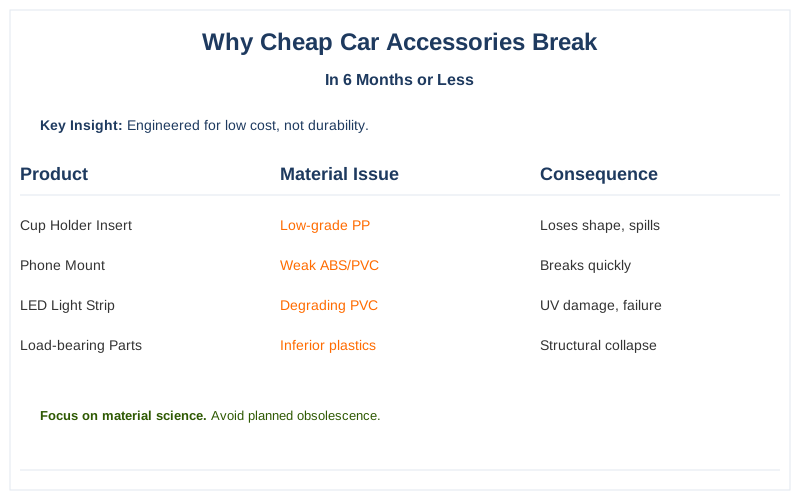
Manufacturers of these bargain-bin items prioritize profit margins over performance. They select materials like low-grade ABS or PVC for load-bearing components where 6061-T6 aluminum or PA6-GF30 nylon should be used. The result is a product designed for planned obsolescence. Reddit discussions confirm the short lifespan of these parts.
Take a 'universal fit' cup holder insert. It's often injection-molded from general-purpose polypropylene (PP) with a wall thickness of maybe 1.5mm. This material has a low heat deflection temperature, around 100 degrees C. Your car interior can easily hit 70 degrees C in direct sunlight. The PP creeps, loses its shape, and your 20-ounce soda is now decorating your console.
Many LED light strips, advertised as 'brightest ever,' use a thin, flexible PCB with exposed 28 AWG copper traces and a PVC coating. This PVC degrades rapidly under UV exposure, turning yellow and brittle. The solder joints, often lead-free and poorly executed, are prone to fatigue cracking from vibrations. So much for that 'custom' interior.
The 'savings' of a $10 USB charger are quickly negated when its internal components, often using low-grade electrolytic capacitors with a 2,000-hour lifespan, fail after six months. This is compared to industrial-grade capacitors rated for 10,000 hours at 105 degrees C. You're not saving money; you're just paying for more frequent replacements. Some blogs still try to push these accessories, but I wouldn't trust them.
The Reality Check
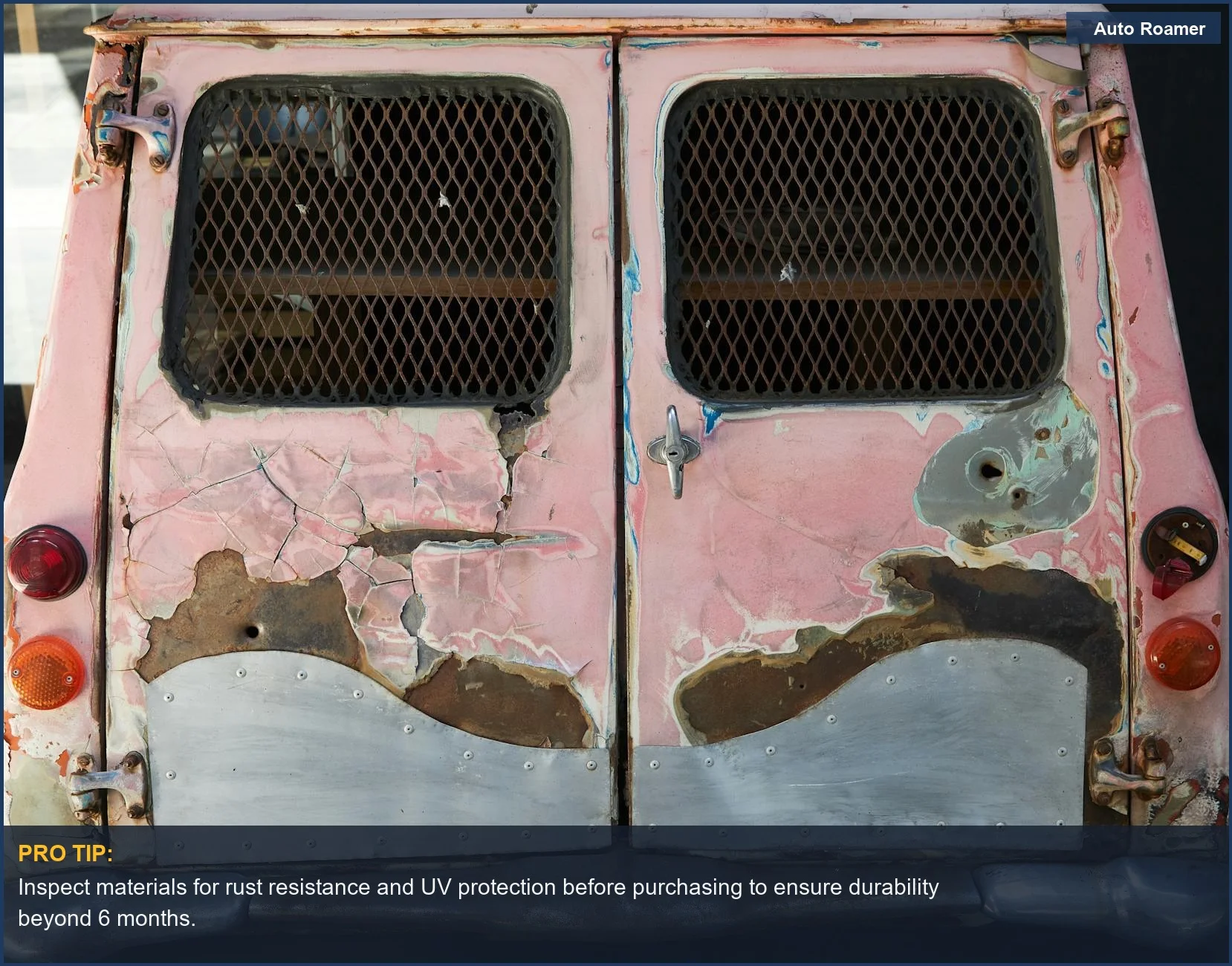
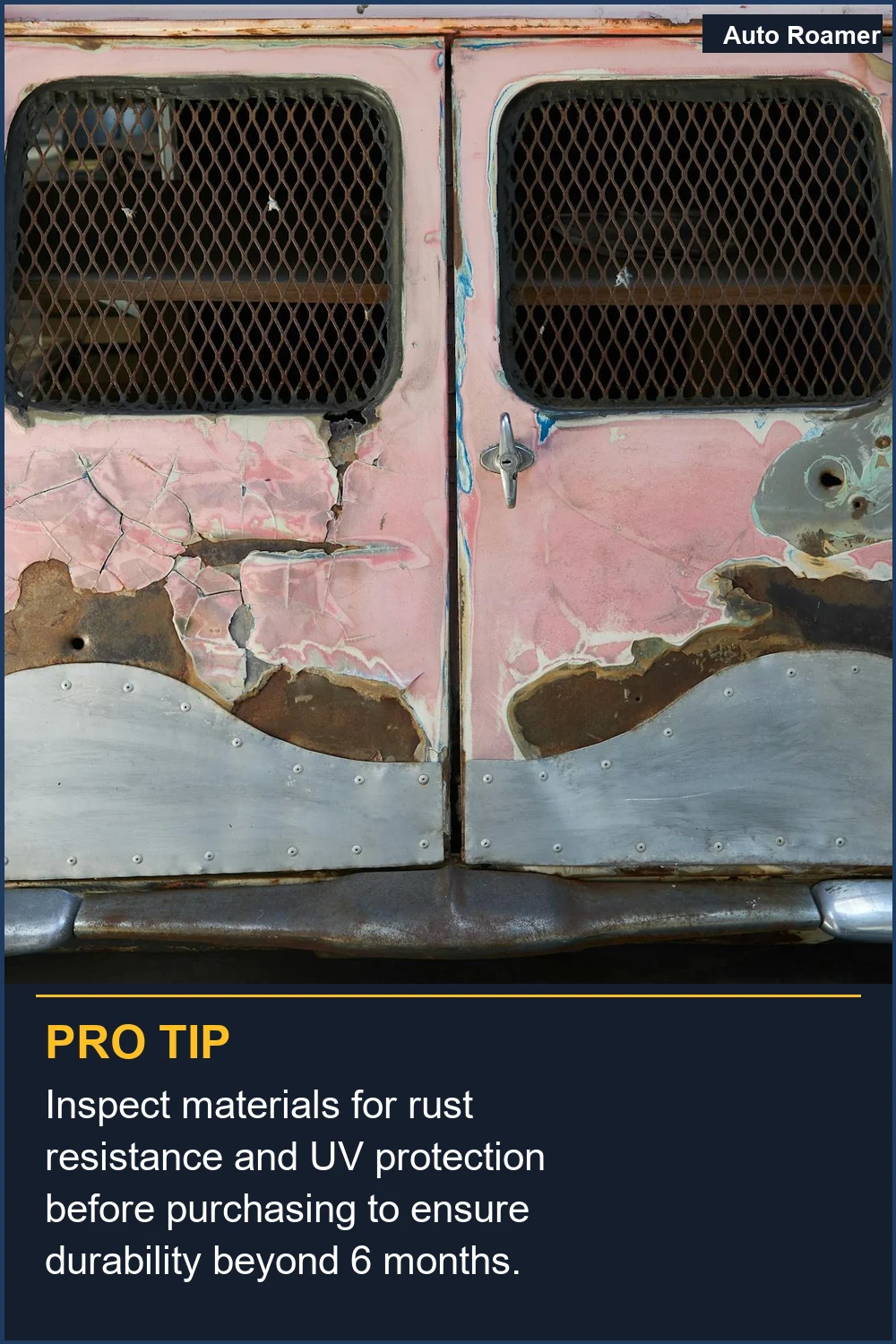
The reality is that every material choice has implications for longevity and performance. When a manufacturer cuts corners on material composition, you, the consumer, pay the price in endless replacements. Mechanics know these parts never last.Consider the ubiquitous car phone mount. A $12 unit from an online retailer typically uses a ball joint made of injection-molded ABS, maybe 8mm in diameter. ABS has a glass transition temperature around 105 degrees C. On a dashboard, direct sunlight can easily push the surface temperature to 80 degrees C. This thermal cycling causes plasticizer migration, leading to a loose, wobbly joint within weeks. Your phone is now a projectile.
Dashboard cameras are another prime example. A $30 dash cam often uses a lens housing and mounting bracket made from low-cost general-purpose polystyrene (GPPS). GPPS is brittle and highly susceptible to UV degradation. After one summer, the housing becomes chalky and cracks, obscuring the lens. The suction cup, often PVC, hardens and loses adhesion within months. Even new car purchases can be plagued by cheap accessories.
Here's a breakdown of common failure points and their true costs:
| Component | How It Fails | Symptoms | Fix Cost |
|---|---|---|---|
| Phone Mount Ball Joint | Plasticizer migration, thermal creep (ABS) | Loose, wobbly phone; drops phone | $15-$50 (for a decent mount) |
| Dash Cam Housing | UV degradation, embrittlement (GPPS) | Cracked casing, obscured lens | $50-$200 (for a reliable cam) |
| USB Charger Case | Low heat deflection, thermal deformation (PP) | Melted plastic, exposed circuits | $10-$30 (for a safe charger) |
| Floor Mat Edges | Plasticizer migration, cold embrittlement (PVC) | Curling, cracking, trip hazard | $100-$200 (for TPE mats) |
| Cargo Net Hooks | Stress cracking, low tensile strength (PP) | Hooks break under tension | $20-$40 (for metal hooks) |
The 'fix cost' isn't just the price of a replacement. It's the cost of your time, the potential damage to your phone, or the distraction of a failing accessory. It's always more than the initial 'bargain' price. You're paying for peace of mind, or the lack thereof.
How to Handle This
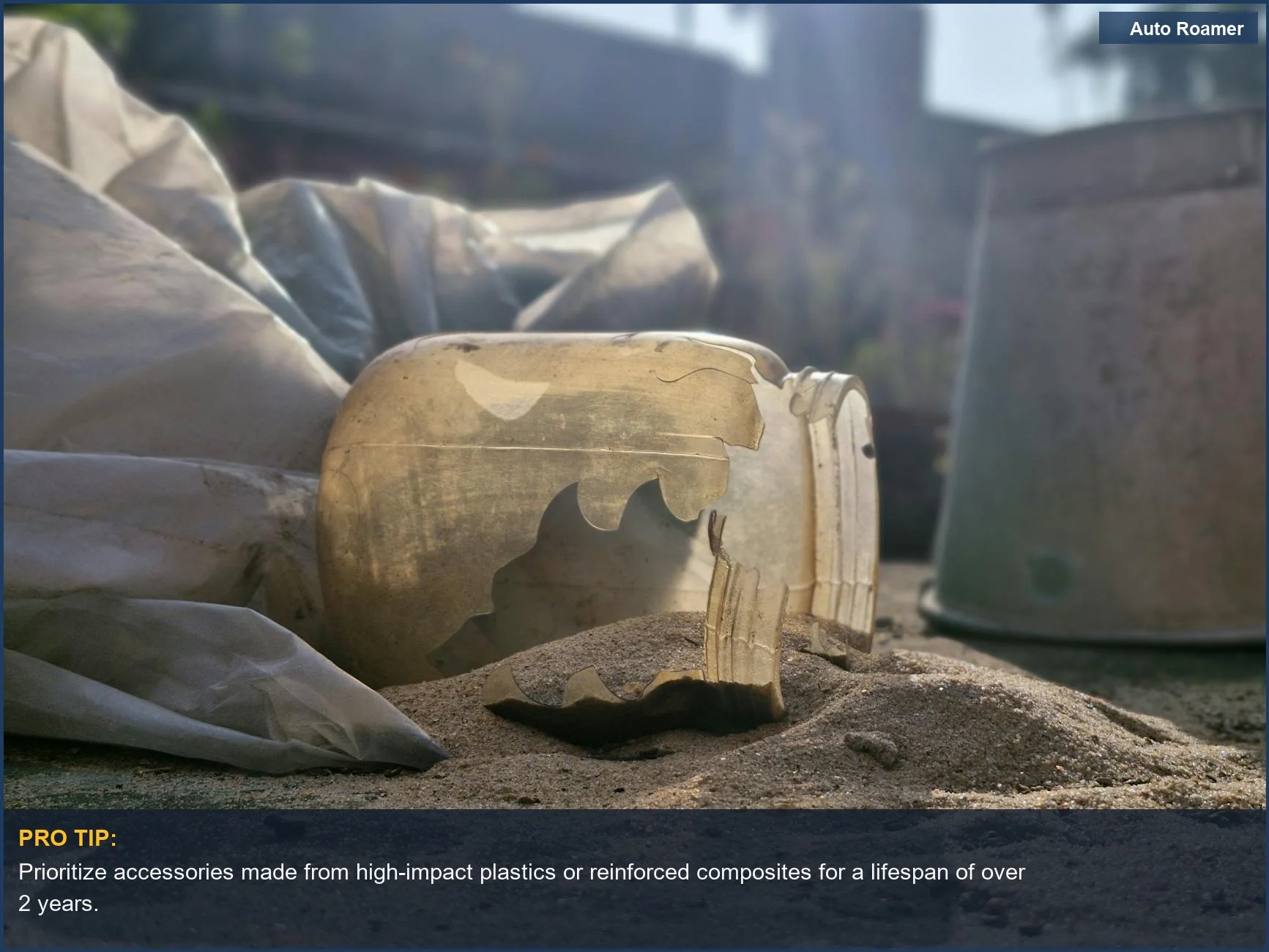
To avoid the constant cycle of buying and replacing landfill-ready accessories, you must adopt an uncompromising approach to material science. This isn't about brand names; it's about specifications. Ebay parts are a gamble.1. Inspect Material Callouts: Before purchasing, identify the specific material composition. If a phone mount simply says 'plastic,' assume it's low-grade ABS or PP. Look for engineering plastics like PA6-GF30 (glass-filled nylon) or metals like 6061-T6 aluminum. If the product description is vague, move on. Some YouTube reviews might point out materials, but often they don't.
2. Verify Temperature Ratings: Car interiors experience extreme thermal cycling. Ensure any accessory intended for the dashboard or console has a stated operating temperature range that covers -20 degrees C to at least 85 degrees C. Most cheap plastics fail well before 70 degrees C.
3. Examine Load-Bearing Components: For items like phone mounts or cargo hooks, scrutinize the load-bearing elements. Is the ball joint solid aluminum or a hollow plastic molding? Are the hooks stamped mild steel or injection-molded PP? A 3mm thick PP hook will invariably fail under 5 lbs of tension.
4. Prioritize Metal over Plastic for Structure: Where possible, choose accessories with structural components made from aluminum alloys (e.g., 6063-T5, 7075-T6) or stainless steel (e.g., 304, 316). These materials offer superior fatigue resistance and dimensional stability compared to even high-grade plastics.
5. Assess Fasteners and Adhesives: A robust accessory can be undermined by cheap fasteners. Look for stainless steel screws, not zinc-plated mild steel that will rust. If adhesive is used, ensure it's a 3M VHB tape, not a generic foam adhesive that delaminates at 50 degrees C.
6. Consider UV Resistance: Any exterior or dashboard-mounted accessory needs UV-stabilized materials. Polycarbonate (PC) or specific grades of ABS with UV inhibitors are acceptable. Generic plastics will chalk, crack, and fail within a year.
What This Looks Like in Practice
The consequences of neglecting material science manifest in predictable, frustrating ways. I've seen these failures countless times, costing owners more than they ever 'saved.'1. The $25 Magnetic Phone Mount: After two months, the adhesive backing, a generic foam tape, delaminates from the dashboard due to thermal cycling. Your phone, a $1000 device, slides onto the floor during an abrupt stop. Congratulations, you've traded $25 for potential screen damage. Splurging here is a wise investment.
2. The $10 USB Charger: The cheap, unbranded charger, housed in low-grade PP, overheats during a 3-hour drive, reaching 90 degrees C. The plastic housing deforms, exposing internal wiring. Now you have a fire hazard in your 12V socket. Brilliant engineering.
3. The $30 Car Vacuum: The motor housing, injection-molded ABS with insufficient wall thickness, cracks at the seams after 6 months of use due to vibration fatigue. The internal motor mount fails, causing excessive noise and reduced suction. You effectively bought a 6-month rental.
4. The $15 Seat Gap Filler: Made from unsupported PVC, it curls and hardens after a winter of sub-zero temperatures. The plasticizer migrates, making it brittle and useless for preventing items from falling into the abyss. It becomes another piece of car clutter, landfill-ready. This video explains why I stopped buying cheap parts.
5. The $20 Trunk Cargo Net: The hooks, injection-molded PP, snap off when you attempt to secure a 15-lb grocery bag. The tensile strength of PP is inadequate for dynamic loads. Your groceries are now a free-range mess across the trunk floor. You saved $5 compared to a net with metal hooks.

Mistakes That Cost People
People consistently make the same errors, lured by a low price tag and ignoring the fundamental principles of industrial longevity. These mistakes always result in higher long-term costs. Wirecutter advises against cheap tie-downs.| Mistake | Why It Fails | Consequence |
|---|---|---|
| Ignoring material specs (e.g., 'plastic' vs. PA6-GF30) | Generic plastics lack strength, thermal stability, UV resistance. | Premature brittle fracture, thermal deformation, adhesive failure. |
| Prioritizing price over material composition | Inferior materials chosen for cost, not performance or safety. | Repeated purchases, potential damage to other components or property. |
| Assuming 'universal fit' means 'good fit' | Designed for broad applicability, not specific vehicle dimensions. | Poor retention, rattles, potential damage to vehicle interior surfaces. |
| Overlooking temperature ratings for interior items | Plastics soften, creep, or embrittle outside their narrow operating range. | Component deformation, loss of function (e.g., loose phone mounts). |
| Disregarding fastening methods (glue vs. mechanical) | Adhesives fail under thermal cycling, vibration, or shear force. | Detached accessories, risk of projectile objects in a collision. |
| Believing 'heavy duty' marketing without material evidence | Marketing terms are meaningless without specific material grades. | False sense of security, eventual failure under expected loads. |
The greatest mistake is believing the initial savings are real. They are an illusion, a deferral of cost that will inevitably return, often compounded by additional damages or the sheer inconvenience of constant replacement.
Key Takeaways
The cycle of buying cheap car accessories is a direct contribution to planned obsolescence and a waste of your hard-earned money. It's not about being 'frugal'; it's about being ignorant of material science.- Material composition is paramount: Always scrutinize the specific material grades. ABS, PVC, and generic PP are landfill-ready for most load-bearing or high-thermal applications.
- Prioritize industrial longevity: Look for engineering plastics like glass-filled nylon, high-grade polycarbonates, or aluminum alloys for structural components. These materials resist thermal cycling, UV degradation, and fatigue cracking.
- Understand the true cost: A $10 accessory that fails in three months costs more than a $50 accessory that lasts five years. The hidden costs of replacement, frustration, and potential damage are substantial.
- Reject vague marketing: If a product description lacks specific material callouts or temperature ratings, it's a red flag. Assume the worst.
- Invest in quality, once: Spend the money upfront on accessories engineered for durability. It's the only way to break free from the disposable culture. Top selling Amazon items are not always the best option.
Frequently Asked Questions
Is it really worth paying $150 for WeatherTech mats when I can get a 'custom fit' set for $40 online?
Do I really need to check the specific aluminum alloy for something like roof rack crossbars?
What if I buy a 'heavy-duty' charger, and it still fails after a year?
Can a cheap phone mount permanently damage my dashboard or phone?
I heard that all plastics are essentially the same, so why pay more for a 'fancy' one?
🏅 Looking for Gear Recommendations?
Check out our tested gear guides for products that work with this setup:
Sources
- Why I Stopped Buying Cheap Car Parts (and How It ... - YouTube
- If You're Buying a Car in 2026, You NEED to Watch This - YouTube
- The Best Gear for Your Road Trips
- What Mechanics Know About Cheap Parts That Drivers Refuse to ...
- Top 23 New Car Gadgets Under $25 Every Driver Needs in 2026!
- 7 Times To Avoid Cheap Car Accessories and Splurge Instead
- why-should-you-avoid-ebay-parts-at-all-costs-c366f394c59
- Top 21 Best Car Accessories Every Driver Needs in 2026
- Are cheap parts worth it if I'm willing to replace them as needed?
- Is buying a new car in 2026 a mistake? : r/personalfinance - Reddit
- Top 6 Best Selling Car Accessories On Amazon 2026! - YouTube