Where to Start
Figuring out the right size dog carrier for your small dog is less about fancy specs and more about making sure your pup doesn't feel like they're crammed into a sardine can. An airline-approved carrier can still be too small, leaving a 10-pound dog panting and miserable.
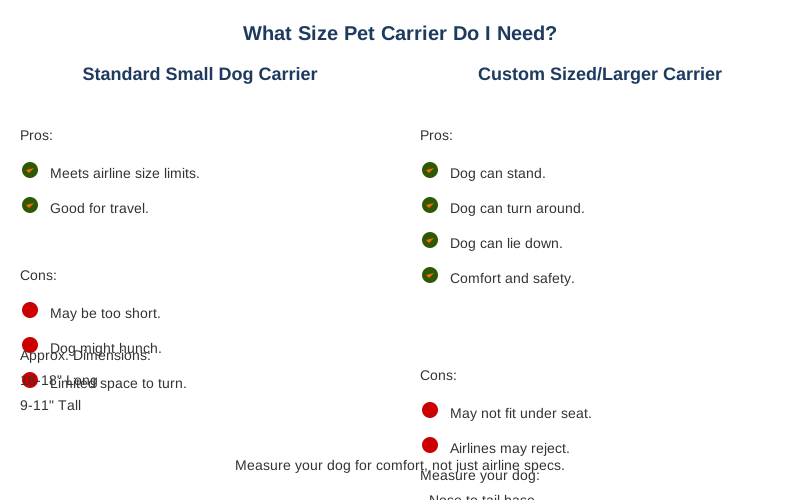
The key isn't just meeting the airline's minimums; it's about giving your dog enough room to actually be comfortable. It's about comfort and safety. Too small and they can't stand or turn. Too big, and some airlines won't allow it under the seat. A common mistake is focusing only on the airline's dimensions, not the dog's actual needs.
The honest version: you need to measure your dog and understand their basic comfort needs before you even look at a carrier. It's not rocket science, but it does require a tape measure and a bit of common sense.
The Core Answer
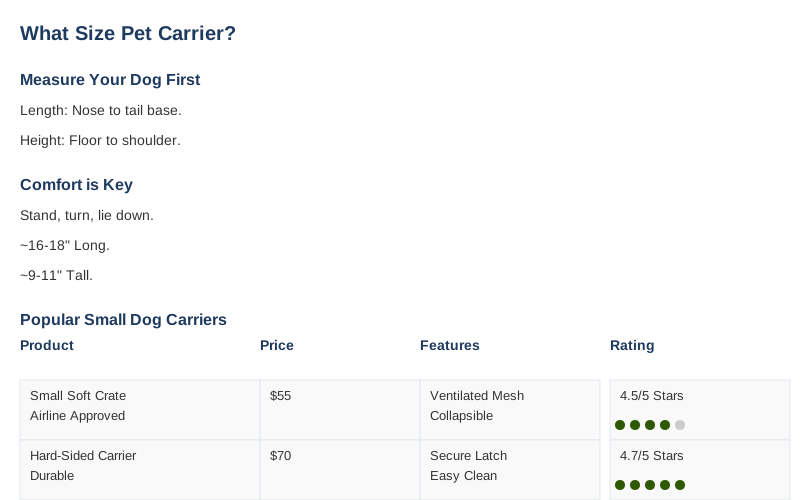
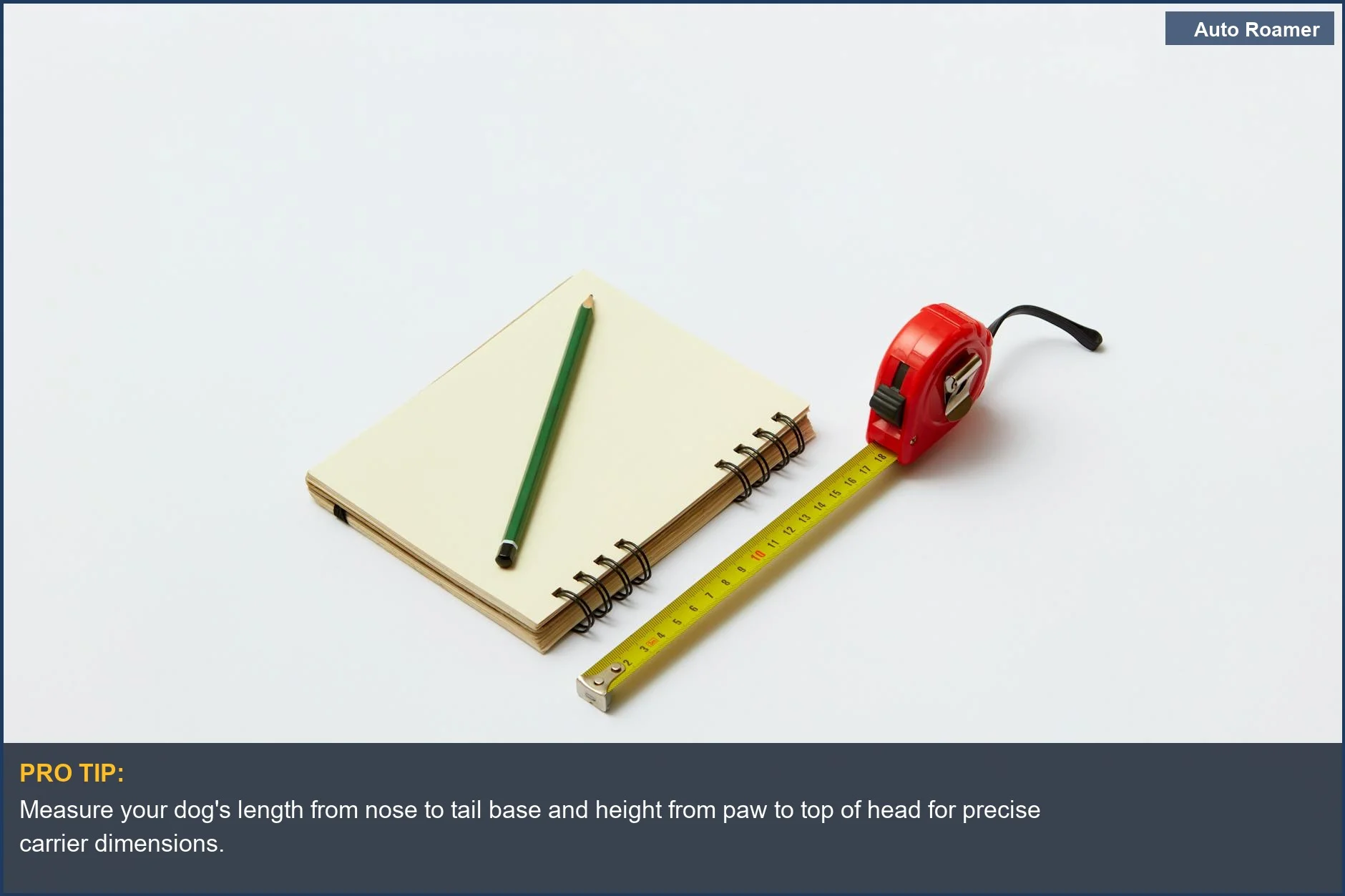
The real move here is to get out a tape measure and actually size up your dog. Don't just guess based on their weight, because a long dachshund and a chunky pug can weigh the same but have wildly different body shapes. You need to know their length and height. Measure from the tip of their nose to the base of their tail for length.
For height, measure from the floor to the top of their shoulder blades, not their head. A carrier that's too short forces a dog to hunch the whole time. Rookie mistake. He should be able to stand up, turn around, and lie down comfortably. That's the golden rule. For most small dogs, this means a carrier that's around 16 to 18 inches long and 9 to 11 inches tall.
For example, a carrier with dimensions like 17 inches long by 8 inches wide by 11 inches high is often cited as a good starting point for dogs around 10-15 pounds if you're thinking about flying. If your dog is on the longer side, like a beagle or a mini dachshund, you'll want to lean towards the longer dimensions. If they're more compact, like a pug, the height might be more important.
Remember, it's better to have a little extra room than not enough. My second carrier was slightly larger than the first, and my dog immediately relaxed. Brilliant engineering, that. Some sources even suggest that for travel, a carrier that's at least 12 inches tall is a good baseline for different positions.
Just don't go overboard; if it's too big, you might not be able to fit it under the seat in front of you on a plane, which is a whole other headache. Not the game-time decision you want to make.

Why This Matters for Your Setup
This isn't just about comfort; it's about making your life easier. If your carrier is too small, your dog will be stressed. That means a stressed dog, which usually translates to a stressed owner. I've seen people at the airport wrestling with unhappy pups because the carrier was clearly a torture device. A comfortable dog is a quiet dog, and a quiet dog means a peaceful journey, whether that's to the vet or across the country.
With a properly sized carrier, a dog will often sleep through most of a flight. It was glorious. Also, if you're driving, a carrier that's the right size can actually be secured more easily. Awkwardly shaped or oversized carriers slide around the back seat. The $50 version of a carrier that fits your dog perfectly is infinitely better than a $200 one that makes them miserable.
Think about it: if your dog can't even stand up straight, they're going to be miserable. Too small means a bad time for everyone involved.

Making the Right Choice
So, the honest version is simple: measure your dog. Get their length and height. Then, find a carrier that allows them to stand, turn, and lie down comfortably. Don't just rely on weight or breed charts alone, though they can be a starting point. Always double-check airline dimensions if you're flying, but prioritize your dog's well-being first. My biggest field notes from years of hauling dogs around: a happy dog makes for a happy trip.
It's not about the fanciest carrier, it's about the right-sized carrier. My second trip with the right size carrier was twice as comfortable for both of us. You don't need a degree in canine ergonomics to get this right.