Pet Travel

Choosing the Right Size Pet Barrier for Your SUV

Casey - The Weekend Warrior
5 min read
Includes Video

My first real road trip with my dog, Buster, a 75-pound mutt with zero chill, involved him trying to become one with my passenger seat. That was a rookie mistake. I learned fast that just tossing him in the back of my old Honda CR-V wasn't cutting it.

My first real road trip with my dog, Buster, a 75-pound mutt with zero chill, involved him trying to become one with my passenger seat. That was a rookie mistake. I learned fast that just tossing him in the back of my old Honda CR-V wasn't cutting it. We needed a barrier. Specifically, we needed one that fit my SUV without making me want to throw my wallet into a lake.

After a lot of trial and error, I figured out the real move is measuring your cargo area like you're building a tiny fort for your best friend.
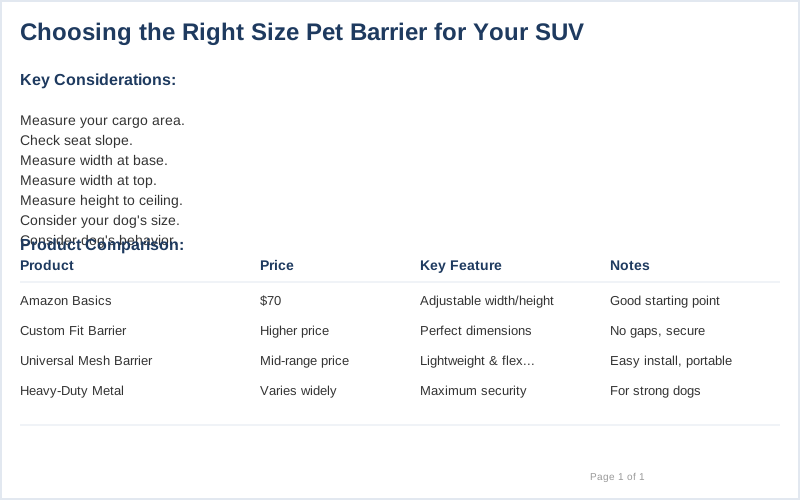
Choosing the Right Size Pet Barrier for Your SUV — Key Specifications Compared
Key specifications for Choosing the Right Size Pet Barrier for Your SUV

The Core Answer

The biggest hurdle for first-timers when it comes to SUV pet barriers is the sheer 'what size?' question. Nobody wants to drop $150 on something that ends up being too short, too wide, or just generally useless. I learned this the hard way at a campsite in the Adirondacks when my first barrier, bought online without measuring, left a gap big enough for Buster to stick his entire head through. What nobody tells beginners is that your SUV's cargo area isn't a perfect rectangle. You've got sloping rear seats, wheel wells, and weird little nooks. The real move is to grab a tape measure and get specific. You need to measure the width at the base of your seats, the width at the top where the barrier will meet the roof, and the height from the floor to the ceiling. Measure your vehicle's dimensions before purchasing anything. Most adjustable barriers, like the Amazon Basics one I eventually settled on, can handle some variation, but you still need a ballpark. Think about your dog too. Is he a lean, mean, Houdini machine, or a chill dude who just needs a gentle reminder? For my 75-pound Lab mix, I needed something sturdy. The Amazon Basics Adjustable Dog Car Barrier was a good $70 starting point. It was wide enough and tall enough for my CR-V's cargo area. Adjustability is key. Some barriers have telescoping bars, others rely on tension. If you've got a narrower SUV like a RAV4, you might need something with a smaller minimum width. I saw a post on Reddit where someone was looking for a specific barrier for their RAV4, highlighting that universal doesn't always mean perfect. Then there are the fixed barriers. These are usually more robust and designed for specific vehicles or truck beds. They often cost more, sometimes upwards of $200, but they offer a more permanent, secure solution. If your dog is a certified escape artist or you have a large breed, this might be the game-time move, but for most weekend warriors, an adjustable option is the way to go. Don't forget about the gaps. Some barriers leave small openings at the sides. If your dog is a master of squeezing through tiny spaces, look for barriers that offer side panels or dividers to close those off. The honest version: a barrier that leaves a gap is just a suggestion to your dog, not a real blockade.
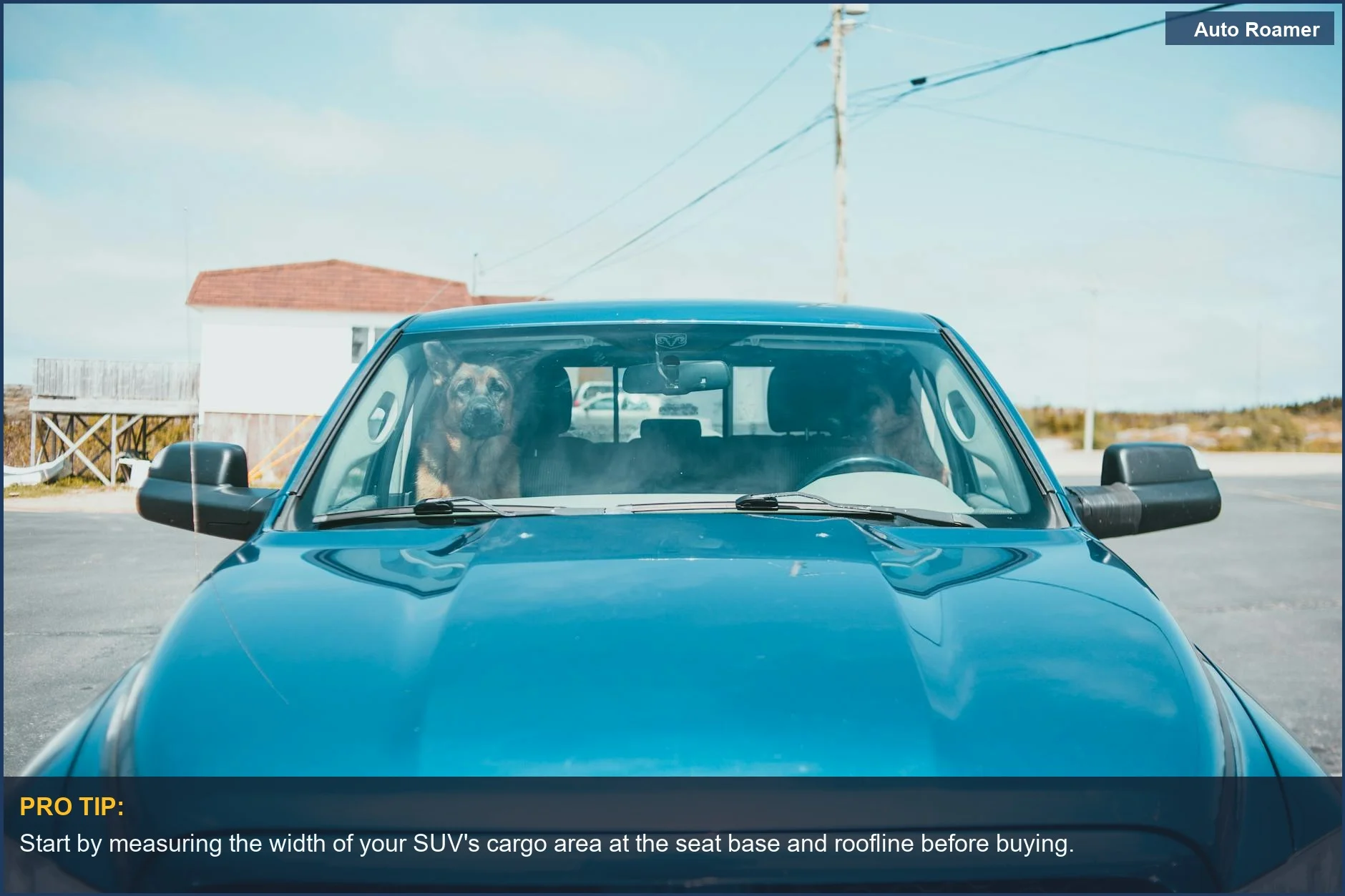
Once you’ve chosen the right size, consider these essential installation tips for a secure fit.
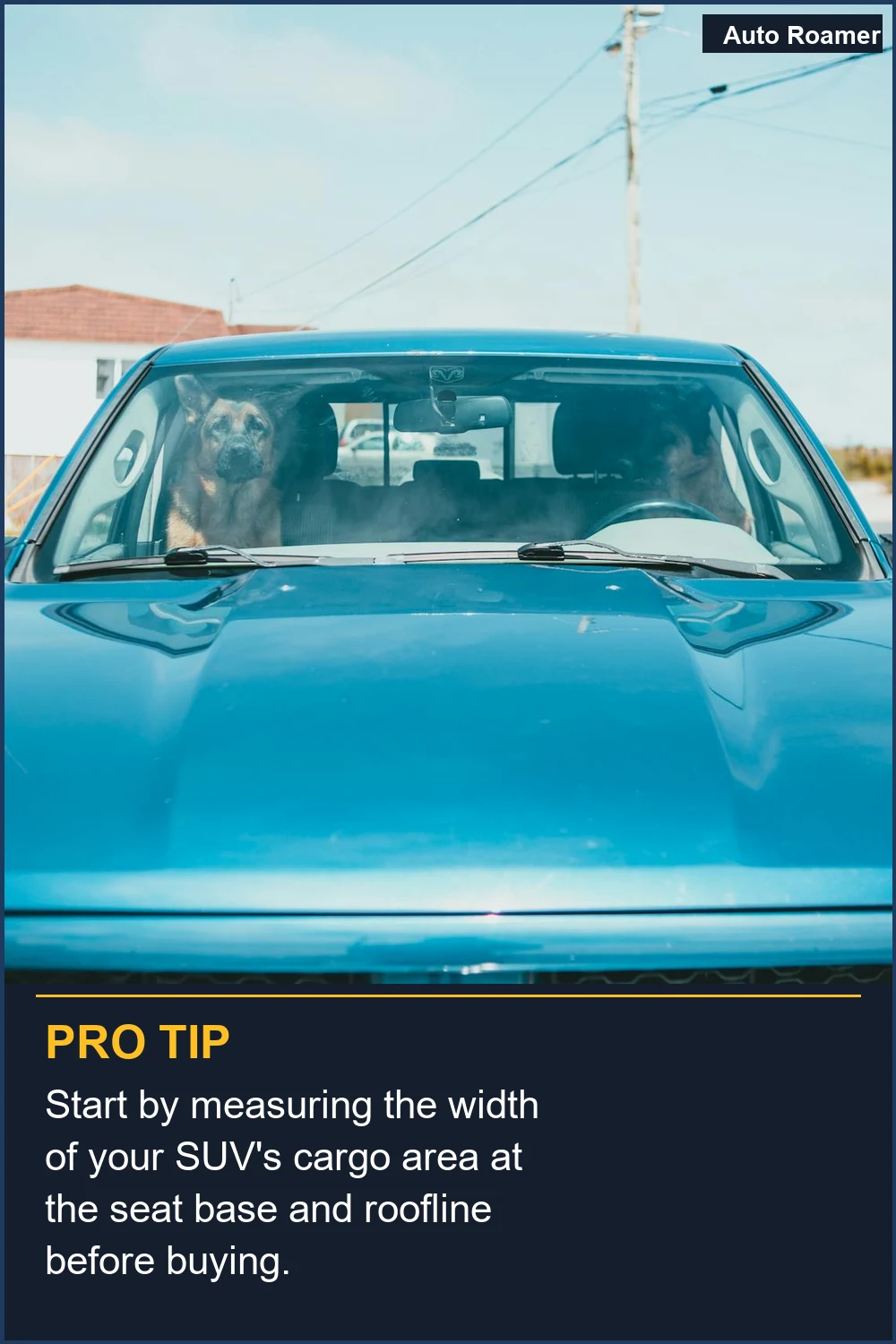
Start by measuring the width of your SUV's cargo area at the seat base and roofline before buying.
Ensuring the right suv pet barrier size is crucial for a safe and enjoyable road trip. Measure carefully to avoid costly mistakes. | Photo by Erik Mclean

Why This Matters for Your Setup

  • No Head Out the Window Syndrome: My dog, Buster, used to try and climb into the front seat every time I hit a bump. It was terrifying. A properly sized barrier keeps him safely in the cargo area, where he belongs. These barriers are designed to prevent that exact distraction.
  • Cargo Space Security: When I went camping at Shenandoah last fall, I had my cooler, tent, and all my gear in the back. Without a barrier, Buster would have had a field day exploring my meticulously packed car. The WeatherTech Pet Barrier is known for being heavy-duty and secure, which would have been ideal, though it costs a pretty penny.
  • Dog Comfort: This sounds weird, but a barrier that fits well actually makes the ride *better* for your dog. They have their own designated space. It's not just about keeping them out of the front seat; it's about giving them a secure zone. Dog's comfort is paramount. A barrier that's too small makes them feel cramped and anxious.
  • Vehicle Protection: My back seats have seen better days thanks to Buster's excited paws. A barrier prevents him from scratching up the seats or chewing on things he shouldn't. It's an investment in keeping your SUV looking decent, even with a furry co-pilot.
  • To ensure your setup is both safe and comfortable, understanding how to select the right size dog car seat is essential; here’s how to choose the right size.
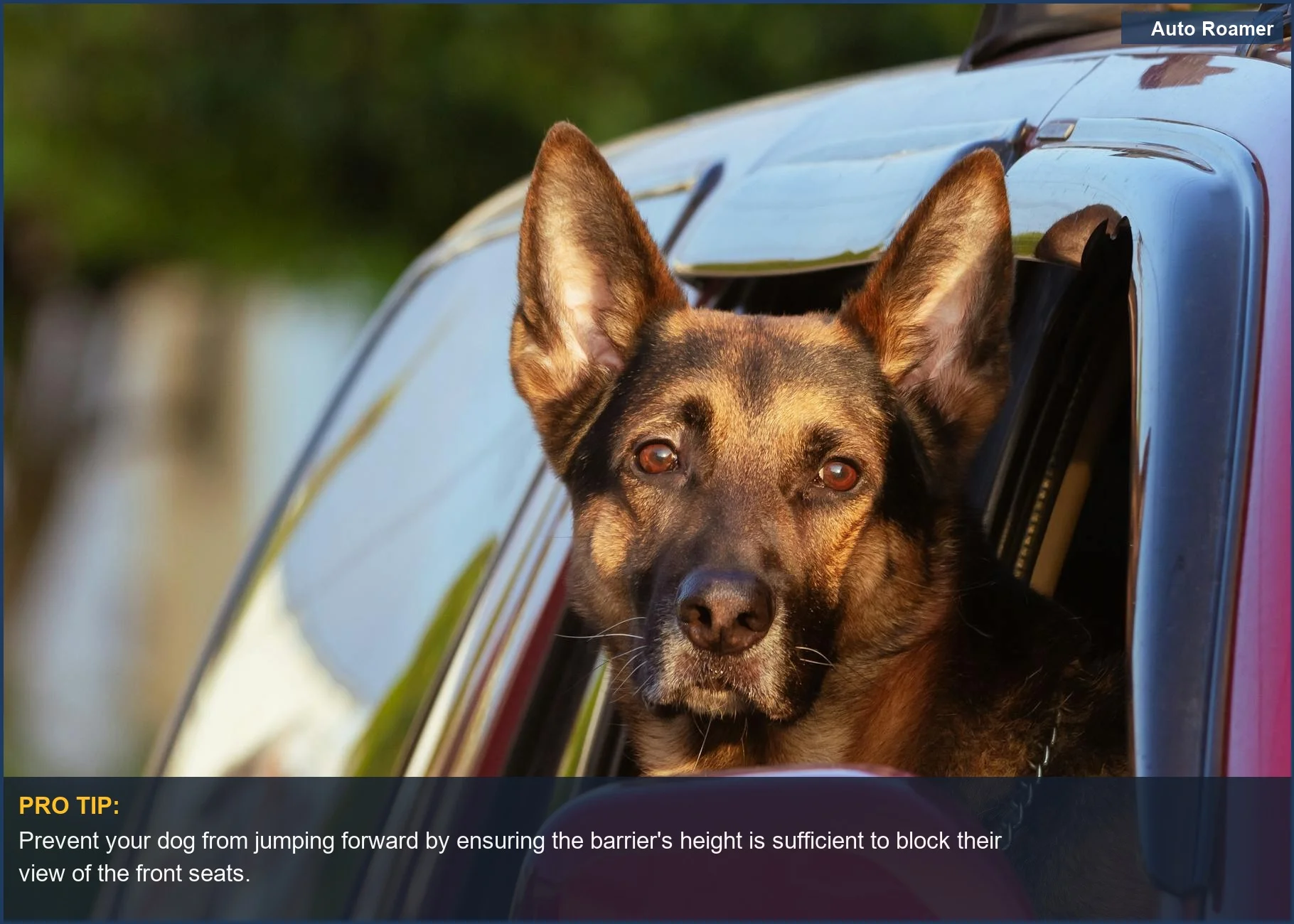
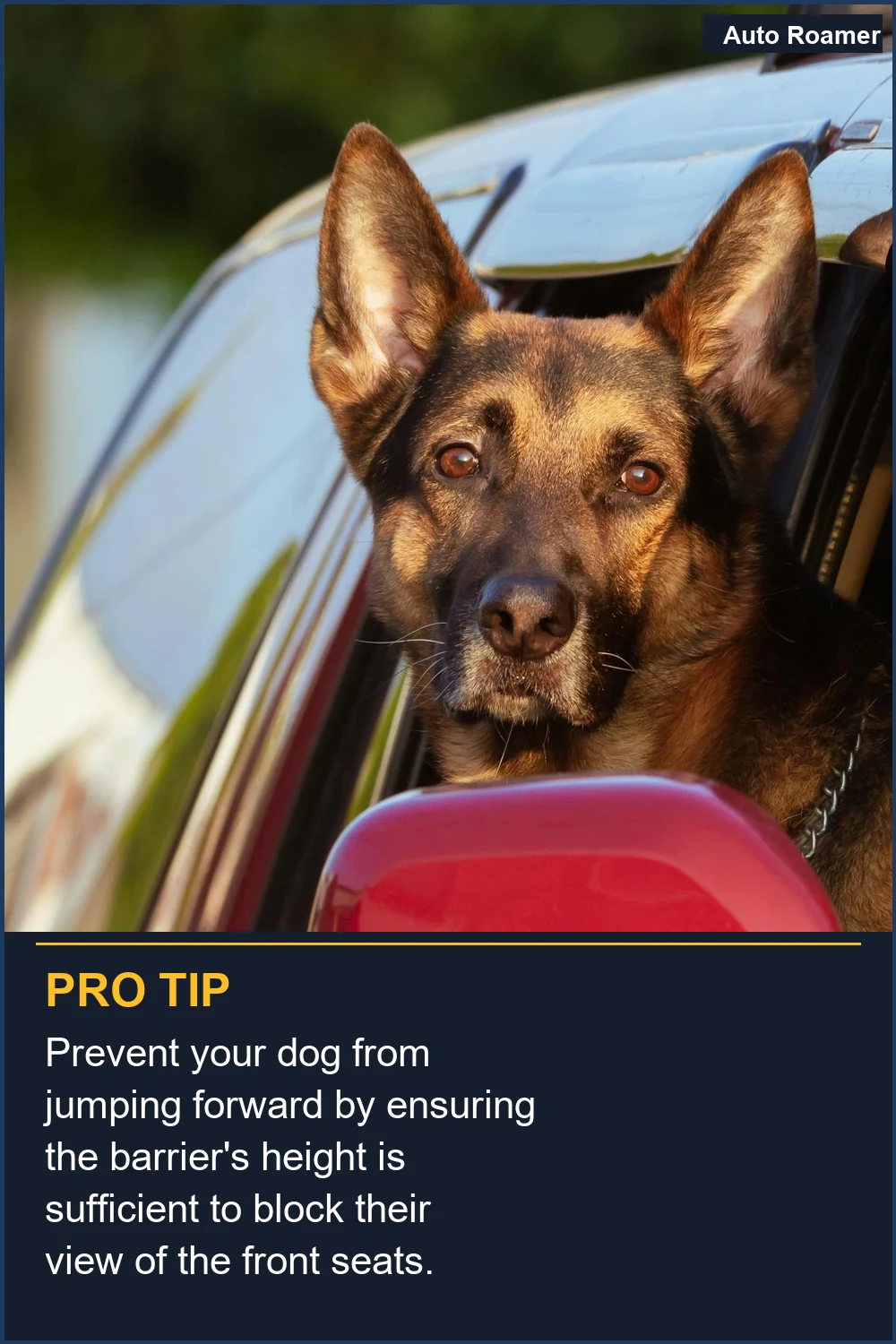
    Prevent your dog from jumping forward by ensuring the barrier's height is sufficient to block their view of the front seats.
    A well-fitting dog car barrier dimensions keep your pet secure and prevent distractions. This Belgian Shepherd looks content in the back. | Photo by Eduardo Escalante

    Making the Right Choice

  • Measure Twice, Buy Once: This isn't rocket science, but it's not guesswork either. Grab that tape measure. Measure the width at the seat base, the width at the roofline, and the height. This is the most critical step to avoid a $100 paperweight. Specific vehicle forums can also offer insights into what works for your exact model.
  • Adjustable is Usually Your Friend: For most weekend warriors with typical SUVs, an adjustable barrier is the most cost-effective and flexible option. Look for one that can expand and contract. I found a solid option for around $70, which felt like a steal compared to some of the pricier, vehicle-specific models. Amazon Basics has a decent, affordable adjustable model.
  • Consider Your Dog's Shenanigans: Is your dog a jumper? A digger? A master escape artist? If they're particularly determined, you might need to look at more robust, fixed barriers or even ones with side panels. For a chill dog, a simple mesh barrier might suffice. Online communities are great for seeing what others use for similar breeds.
  • Installation Simplicity: If you're like me and would rather wrestle a bear than read an instruction manual, look for barriers that install easily. Most adjustable ones use tension rods or simple hooks that require no tools. The adjustable dog car barrier from Winworld claims universal fit and easy install, which is exactly what I look for.
  • For those considering longer journeys, understanding the benefits of a dog car seat for long trips can enhance your travel experience; learn more here.
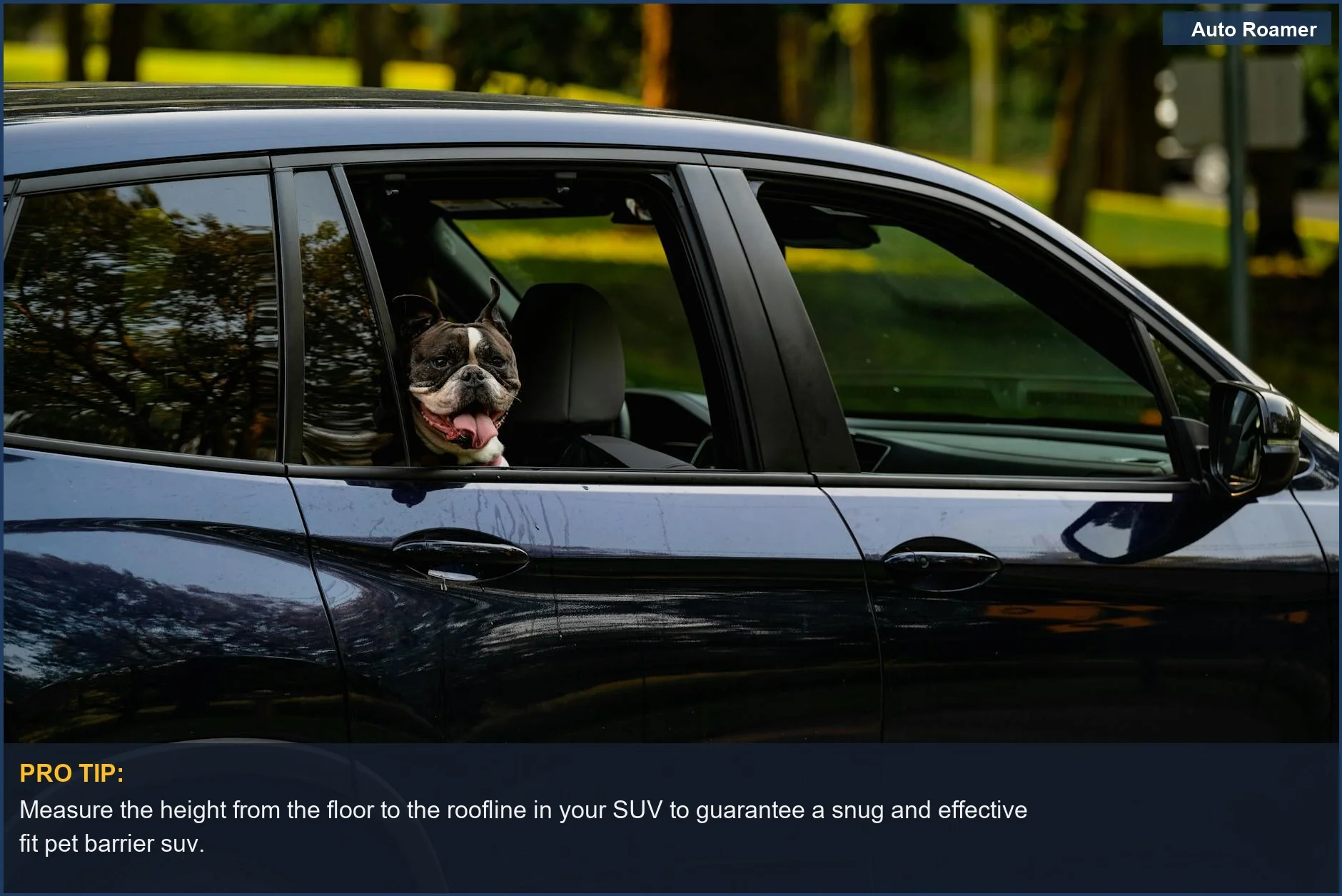
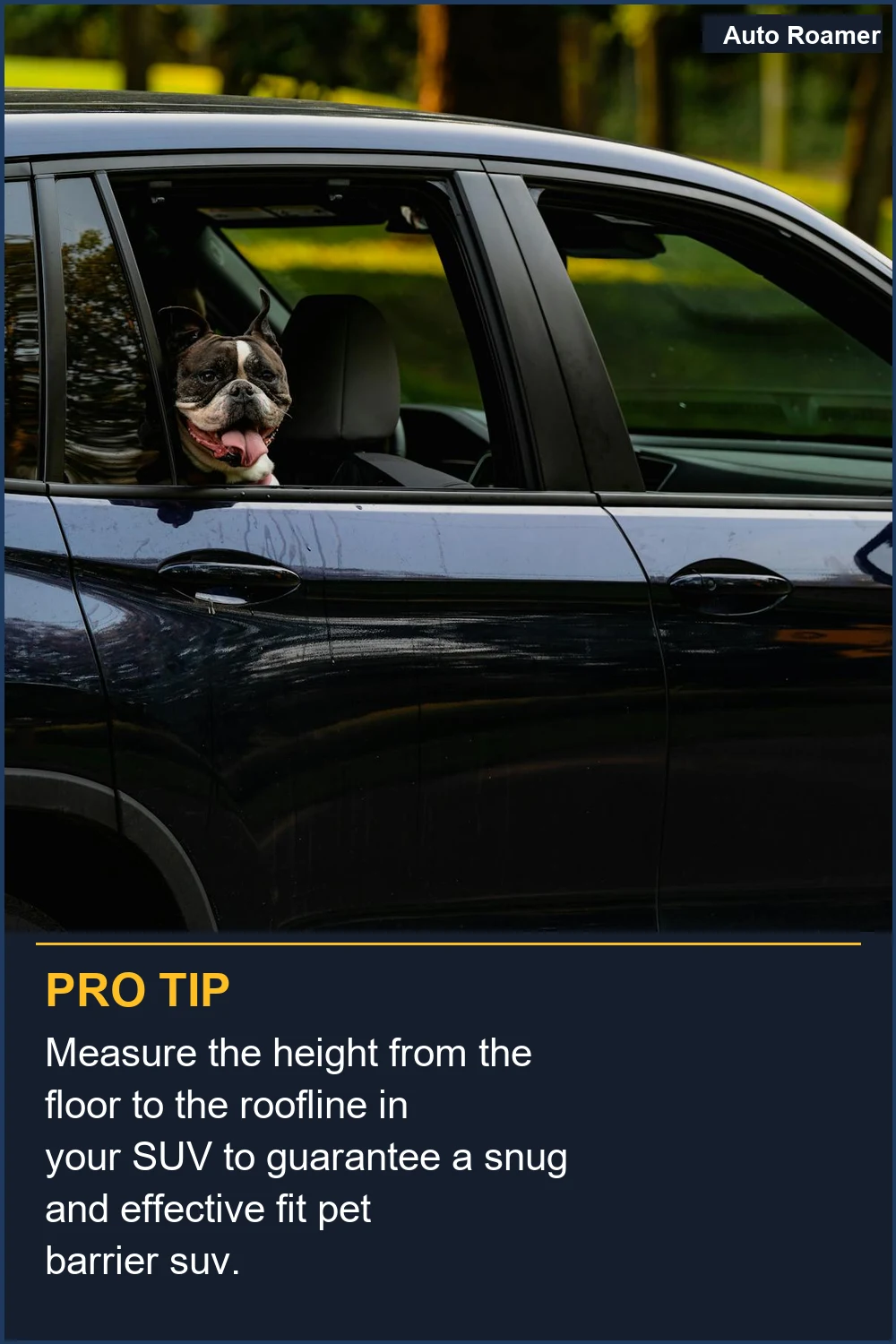
    Measure the height from the floor to the roofline in your SUV to guarantee a snug and effective fit pet barrier suv.
    This Boston Terrier shows how a clear view can still be maintained if you correctly fit pet barrier suv. Measure all dimensions for success. | Photo by Chris F

    Frequently Asked Questions

    Okay, so I saw a professionally installed divider at a truck accessory shop that cost $500. Can I really get away with a $70 adjustable one, or am I just asking for trouble?
    For most weekend warrior situations, yeah, the $70 adjustable barrier is the real move. I've been using one in my SUV for three years, and it's held up fine. The $500 installed ones are built like tanks, sure, but they're usually for commercial use or if you're hauling something more valuable than a golden retriever. You're not asking for trouble, you're just choosing the $50 version of a solution.
    Do I need any special tools to install this thing, or can I just wing it with whatever's in my glove box?
    Most adjustable pet barriers, the kind you'd get for a weekend camping trip, don't require any tools at all. They usually use tension rods that you twist to fit snugly between your car's headrests or the cargo area walls. I've never needed anything more than my own two hands, and maybe a little bit of brute force if my dog decided to 'help' me install it.
    What if I buy one, install it, and my dog just bulldozes right through it anyway?
    That's a classic 'what if' scenario, and honestly, it happens. If your dog is a determined escape artist, the barrier might just be a suggestion. The real move is to make sure you've measured correctly and bought the sturdiest adjustable barrier you can afford. If it still fails, you might need to look into more permanent, bolted-in solutions, but start with the basic barrier first.
    Will having a pet barrier permanently scratch up the inside of my SUV?
    It's possible, especially if you have a really aggressive barrier or your dog is constantly pushing against it. Most adjustable barriers come with rubber feet or padding to prevent scratching. I always recommend putting a cheap moving blanket or old towel down where the barrier contacts the car just to be safe. It's a $5 insurance policy against a $500 repair bill.
    I heard that dog barriers can actually make your car less safe in an accident. Is that true?
    That's a bit of a myth, or at least an overblown concern for most weekend trips. The main safety issue with pets in cars is distraction. A barrier keeps your dog from becoming a projectile or a distraction. If you're worried about extreme impact scenarios, that's a whole different conversation, but for normal driving, a well-fitted barrier actually *increases* safety by keeping your dog contained.

    🏅 Looking for Gear Recommendations?

    Check out our tested gear guides for products that work with this setup:

    C

    Casey - The Weekend Warrior

    Weekend car camper and road trip enthusiast. Focuses on practical, budget-friendly solutions for families and first-time campers.

    Sources

    Related Articles