

Can You Sleep in a VW Touran? Yes — the floor runs about 190 cm
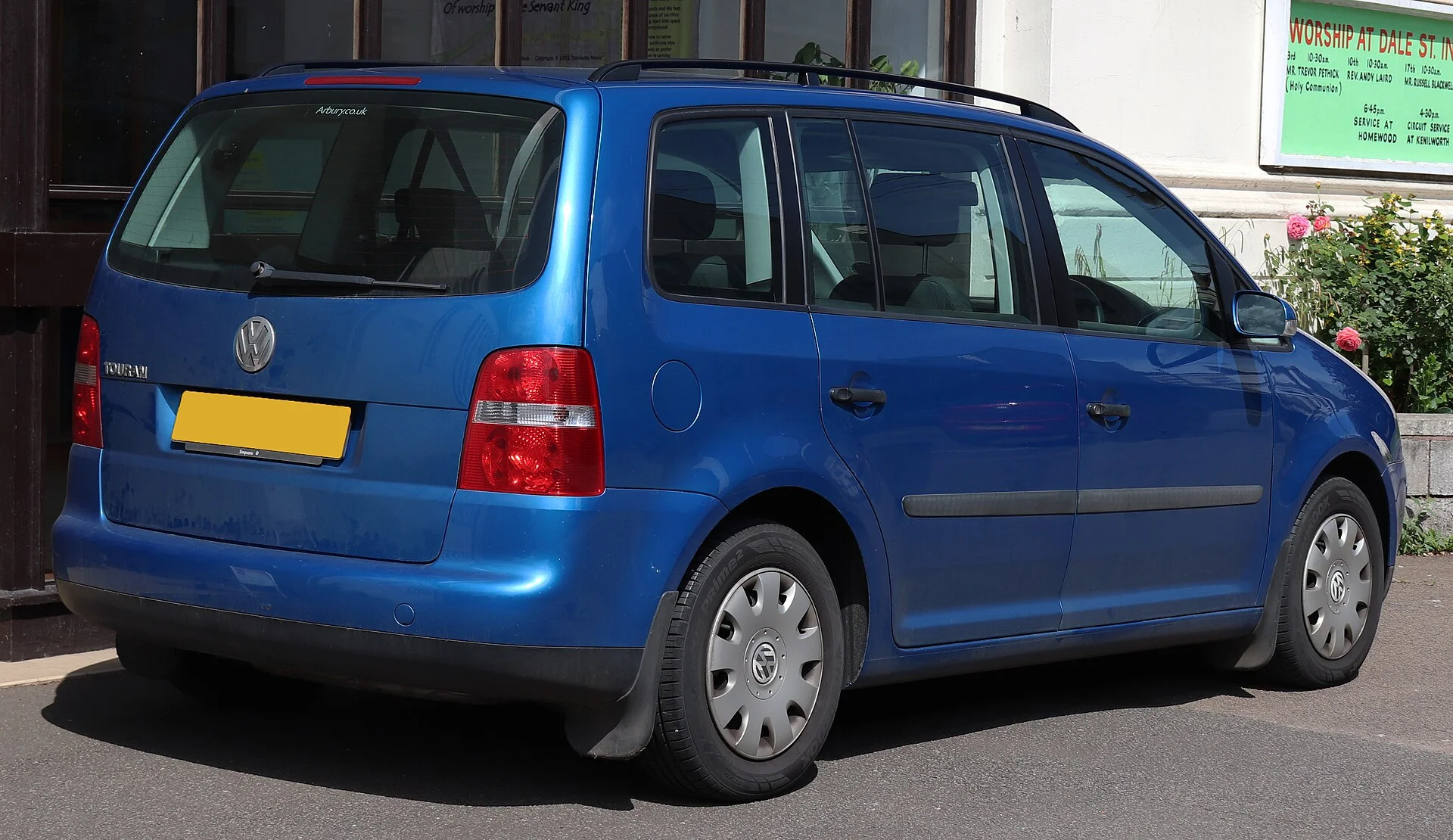
Yes, you can sleep in a Volkswagen Touran, and it does it better than most cars its size. Fold the second and third rows and the load floor opens up to roughly 190 cm — about 75 inches — which is long enough for most adults to stretch out flat and straight rather than sleeping curled up. That single number is the whole story: the Touran gives you a bed-length floor in a vehicle that still parks like a family car and returns something around 7.5 L/100km (roughly 41 mpg on the UK cycle).
What makes the Touran special is how it gets that flat floor. This is a seven-seat compact MPV, and its five rear seats don't just tip forward — they sink down into wells in the floor, so you end up with a long, near-level platform instead of a mountain of folded seatbacks. That is the difference between a car you can technically lie down in and one you can actually plan a trip around.
Where these numbers come from (and where they don't)
Before we go further, a straight word on sourcing. Nobody here has slept in a Touran or crawled through one with a tape measure. The figures below come from Volkswagen's published dimensions, boot-space data from outlets like Carbuyer, Parkers and Carwow, aftermarket sleeping-system makers who build to the exact floor, and the accounts of owners who have actually spent nights in theirs. Where owners and spec sheets disagree — and on load length they sometimes do, because a folded floor can be measured to the front seats or just to the tailgate — we tell you so rather than picking the flattering number.
Treat every measurement as a planning figure, not a promise.
Touran trim, model year and whether you have the adjustable boot floor fitted all move the numbers by a few centimetres. The honest way to use this guide is to get close on paper, then lie down in the actual car before you buy a mattress. That is the one test we can't do for you.
The Touran's real trick: seven seats that sink into the floor
Most cars force a compromise when you fold the seats: the backrests tip down but sit proud of the boot floor, leaving a raised, angled shelf you have to fight. The Touran plays a different game. The three individual seats in the second row and the two in the third row fold flat and drop into recesses, so the seatbacks finish roughly level with the luggage floor. The result is one continuous load platform running from the tailgate toward the front seats.
That is why the Touran punches so far above its footprint. With everything folded, the official cargo volume climbs to about 1,857 litres on the current car — van-like space in something only 4,527 mm long. For sleeping, volume matters less than shape, and the shape here is exactly what you want: long and low rather than tall and stepped. You are laying your body along the length of the car, and the length is genuinely there.
The third-row seats in particular are the unsung heroes. In many seven-seaters the rearmost pair are an afterthought that ruins the flat floor when stowed. In the Touran they tuck away cleanly, which is precisely why the load bay ends up bed-shaped instead of lumpy. If you have wrestled a folded floor in a crossover, the contrast is obvious the first time you drop a Touran's seats.
The dimensions explain why the floor comes out bed-shaped. The current car rides on a 2,790 mm wheelbase inside that 4,527 mm body, and the long wheelbase is what puts a genuinely straight run of floor between the tailgate and the front seatbacks. Width helps too: the body measures 1,829 mm across — about 2,087 mm including the door mirrors — so the folded platform is a broad bay rather than a narrow channel. Even the height works in your favour, with a roofline near 1,660 mm that leaves real sitting-up room over the bed.
The fold itself is a sequence rather than a single lever, and it is worth knowing before you buy:
- Drop the three second-row seats individually — each tumbles forward and settles into its own recess.
- Fold the two third-row seats down flat into the boot-floor wells.
- Slide, and if needed tip, the front passenger seat to reclaim the last stretch of length.
Because each seat moves on its own, you can leave one second-row seat upright for a dog or a crate and still keep a single-sleeper bed on the other side — flexibility a fixed folding bench simply cannot offer.
Mk1 vs Mk2: which Touran sleeps better
There are two generations you'll meet on the used market, and the difference matters for camping. The first-generation Touran ran from 2003 to 2015; the second generation arrived in 2015 and is around 130 mm longer overall. That extra length isn't just badge inflation — it shows up in the load bay.
The boot figures track that size difference:
- Mk2 (2015 on): about 137 litres with all seven seats up, roughly 633 litres in five-seat mode, and 1,857 litres with both rear rows folded.
- Mk1 (2003–2015): about 121 litres with seven seats in use, near 695 litres with the third row down, and up to 1,913 litres once the middle seats are folded or removed.
Don't over-read the headline maximum — the Mk1's big number comes from a slightly different measuring method, and in practice both generations give you a similar sleeping length.
For a camper, the practical takeaway is simple. Both generations sleep an adult flat. The Mk2's longer body buys a little more breathing room and a slightly more refined fold, so if you're choosing purely for nights away and the budget allows, the newer car is the safer bet. But a tidy Mk1 with seats that fold cleanly is a perfectly good bed, and it will save you money that's better spent on a decent mattress and a set of window covers.
The flat floor is long — but is it truly flat?
"Flat" deserves an asterisk. The folded Touran floor is near level, not billiard-table perfect. Where the folded seatbacks meet, and along the seams between the individual seats, there are firm ridges and shallow gaps. Lie straight on the bare floor and you'll feel them under a hip or a shoulder. This isn't a Touran flaw — it's true of almost every fold-flat car — but it's the reason a thin picnic mat won't cut it here.
There's also a step to know about at the front of the bed. If you fold the front passenger seat forward to squeeze out maximum length — the trick that lets the Touran swallow items up to 2.7 metres (270 cm) long — that folded seat sits noticeably higher than the rear floor, by something in the region of 30 cm, or about 12 inches. Useful for cargo, awkward for a head or feet. Most people sleeping solo simply keep their body on the long rear platform and use the footwells and gaps for soft kit rather than trying to bridge that step.
The fix owners reach for is the same one that works in any car: a supportive pad that spans the ridges. A firmer self-inflating mat or a foam topper turns the near-flat floor into a properly flat bed, where an air mattress can bridge the gaps but telegraphs every cold ridge underneath. If you're weighing pad types, our guide to car-camping mattresses for SUVs and sedans walks through the trade-offs that apply directly to a floor like this.
Leveling is the other half of a flat bed, because a lay-by or a verge is rarely dead level and the Touran's long floor telegraphs any slope from head to foot. A simple, repeatable routine keeps you off a downhill slide:
- Point the car so any incline runs across it, not head-to-toe — being level side-to-side matters far more than front-to-back.
- Check with a phone level app or a marble on the floor; anything past a couple of degrees is worth correcting.
- Drive the low-side wheels onto a pair of stacked leveling ramps or a stout plank until the floor reads flat.
- Set the handbrake firmly, leave it in gear, and re-check before you lay the pad down.
Written out it sounds fussy, but owners who camp regularly turn it into a two-minute habit, and it is the single biggest comfort upgrade after the mattress itself. A floor that is dead level also stops a self-inflating pad from sliding overnight, which is the small annoyance that wakes people at three in the morning.
How tall can you be and still fit?
This is where the Touran quietly outperforms its rivals. With a folded length around 190 cm — close to 75 inches — the load bay comfortably takes an average adult lying fully extended. One owner who kept a Touran for years and slept in it many times is 6'4" (about 193 cm) and reports being able to lie flat and straight, with room left over for bikes and gear. That's an unusually generous account, and it depends on angling slightly or letting your feet find the space toward the front seats, but it tells you the ceiling is high.
As a rule of thumb, if you're up to around 6'3" you should fit the main platform without games. Taller than that and you'll want to slide the front seats forward and let your feet run into the footwell space, which the Touran has because it was built to carry long loads. Compare that to a hatchback, where a tall sleeper is negotiating for every centimetre — the difference in stress is real. If you're cross-shopping smaller options, our Mazda CX-5 sleeping guide shows how a mid-size crossover floor compares for the same body.
One person or two: palace vs snug double
Solo, the Touran is close to luxurious. You get the full 190 cm length to yourself and the entire width for rolling over, plus the footwells and passenger side as nightstand and gear dump. For one person who wants to travel light and sleep long, this is one of the best beds you'll find in a car this cheap to run and easy to park.
For two, it's workable but honest about it. Aftermarket sleeping systems built for the Touran lay a double mattress around 120 cm wide (about 47 inches) — close to a small double, tighter than a UK double bed. That's fine for a couple who are comfortable sleeping close and don't thrash around; it's snug for two adults who each want their own space. The load bay's usable width sits around 105 cm (roughly 41 inches) between the wheel arches, which is the real constraint on shoulders.
Two people fit; two people who both starfish do not.
If you're a family, the honest framing is one adult plus one child sleeping inside, or two adults inside with kids in a small ground tent or a roof setup. The Touran's genius is that it carries the whole family and their stuff by day and converts to a real bed by night — not that it sleeps four across the floor.
The mattress reality: what actually fits the floor
Because the floor is long, low and slightly ridged, your mattress choice does more work here than your choice of Touran. The commercial sleeping systems built specifically for the car use a mattress around 189 cm long (about 74 inches) by 120 cm wide, typically on a support board sized to the folded seats. Those numbers are a useful template even if you go DIY: aim for a pad in that length-and-width envelope and you'll cover the sleeping surface without overhanging into the tailgate.
You have three sensible routes. A single wide self-inflating pad or a bi-fold foam mattress laid straight on the floor is the simplest and warmest, spanning the seams and insulating you from the cold metal below. A purpose-built board-and-foam system gives the most level result and doubles as a storage deck, at the cost of money and setup time. An air mattress is the cheapest and most compact to stow, but it bridges the ridges rather than absorbing them and gives up ground warmth on cold nights.
Whatever you pick, prioritise insulation as much as comfort — a folded car floor pulls heat out of you from below. The general pad-versus-air trade-offs are the same across every small vehicle; our breakdown for the Prius floor covers the same decision on a comparable platform, and the logic transfers cleanly to the Touran. A self-inflating pad such as the Therm-a-Rest MondoKing 3D smooths the seam-and-ridge floor, while a Milliard tri-fold foam mattress is a cheaper way to bridge the gaps if you have the boot depth to store it.
What fits around you: gear, storage and the seats-up compromise
Sleeping is only half the job; the other half is where your stuff goes. Fully folded, the Touran is generous enough that a solo sleeper can keep bags and a stove in the passenger footwell and still have a clear bed. For a couple, the smarter move is a storage layer — low bins under a raised board, or simply packing the front seats and passenger footwell — so the sleeping surface stays clear.
The catch is that you can't sleep and keep passengers' seats up at the same time. With all seven seats in place you have only about 137 litres behind the third row — enough for soft bags, not for a bed. This is a convert-and-reconvert vehicle: seats down for the night, seats up for the drive. Owners who camp regularly get the fold-and-restore routine down to a couple of minutes, but if you want a permanent bed platform that never moves, an MPV that reconfigures daily isn't the natural pick.
One genuinely useful detail is the 12V socket in the boot area on many trims, handy for a small fan or charging without cracking a door. It's a minor thing that makes overnight electronics simpler than in cars that only power the cabin.
A useful way to think about packing is by zone, because the folded Touran hands you several distinct spaces rather than one big box:
- Under-bed: low bins slid beneath a raised board hold food, tools and the cooking kit out of the sleeping zone.
- Front footwells and seats: the natural home for bags, boots and anything you don't want near your face overnight.
- Tailgate lip: the last few centimetres by the boot opening are handy for a head-torch, water and whatever you want to grab without moving.
Keep the heavy items low and forward so the car isn't nose-light on a slope, and the reconfiguration back to seven seats stays a two-minute job rather than an unpacking ordeal the next morning.
Condensation and ventilation in a boxy MPV
The Touran's tall, upright glasshouse is great for headroom and terrible for condensation if you seal yourself in. A parked cabin this size fogs quickly — one or two people breathing overnight will fur every window with moisture by morning, and that damp ends up in your bedding. The MPV shape actually works against you a little here, because there's a lot of cold glass for warm breath to hit.
The remedy is airflow, and it's simple. Crack a window slightly on each side of the car so a slow cross-breeze can carry moisture out, and a small battery fan keeps the air moving on still nights. Purpose-cut window covers or reflective screens do double duty: privacy, a little insulation, and they let you leave the glass open a touch without broadcasting that someone's inside. Keep wet gear — boots, jackets — out of the sleeping zone, because every damp item is a humidifier you have to breathe past all night.
Cold is the other MPV tax. That big cabin takes longer to warm with body heat than a small hatch, so insulation from below (your pad) and a sleeping bag rated a little warmer than the forecast matter more here than in a tight car. Get ventilation and ground insulation right and the Touran is a dry, comfortable place to wake up; get them wrong and the space that felt roomy at dusk feels clammy by dawn.
It helps to picture where the water comes from. Warm breath is loaded with moisture, and in an upright MPV it drifts to the coldest surfaces first — the tall side and rear glass — then cools, beads, and drips back into your bedding by morning. The generous glasshouse that feels so airy at dusk is a large cold radiator once the engine is off.
The rule owners repeat is simple: if the glass is streaming when you wake, you didn't have enough airflow overnight.
Two finger-widths of open window on each side is usually enough to clear that load without chilling the bed, and a small fan aimed at the glass rather than at you pushes the damp air where it needs to go. On cold nights, insulation under the pad matters as much as the fan — a warm body on a cold floor is a condensation engine, so a foam or self-inflating layer earns its place twice over.
The honest verdict: who the Touran is for
The Volkswagen Touran is one of the most quietly capable car-campers you can buy for the money. Its seats-into-the-floor design gives a near-flat platform around 190 cm long, which is the rare combination of genuinely bed-length and genuinely level — something most hatchbacks and plenty of crossovers can't match. Add sensible running costs near 7.5 L/100km, easy parking in a 4,527 mm footprint, and the flexibility to carry seven people by day, and you have a do-everything family car that happens to sleep an adult in comfort.
It's the right buy if you're a solo traveller who wants to lie out fully, a close couple who'll accept a snug 120 cm-wide double, or a family who wants one vehicle that hauls the kids and converts to a bed for the parents.
It's the wrong buy if you need a permanent, always-ready bed platform, or if two adults both want to spread out — for that you're looking at a van, not an MPV. If you're still weighing body styles, our Honda CR-V guide and the Subaru Forester camping guide cover two crossovers that trade the Touran's seven-seat flexibility for a more permanently open floor. Measure your own body against the numbers, lie down in the actual car, and the Touran will tell you honestly whether it's your camper.