The Default Answer Gets the Skeptic Treatment
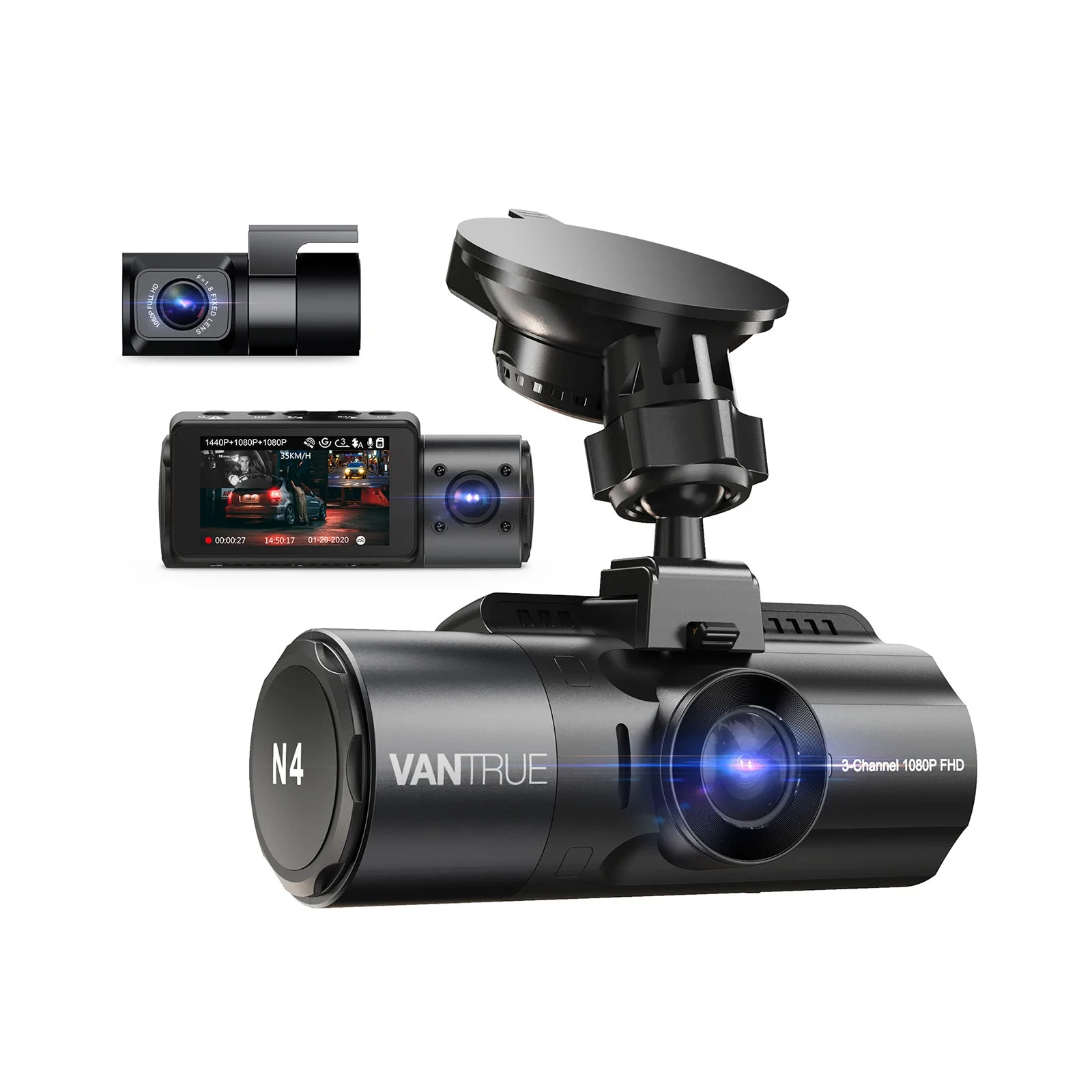
Ask any rideshare forum which dash cam to buy and the thread converges fast: the Vantrue N4. Three cameras in one unit, an infrared cabin lens, a supercapacitor instead of a battery, no subscription attached. When a product becomes the default answer, that is exactly when it has earned a harder look.
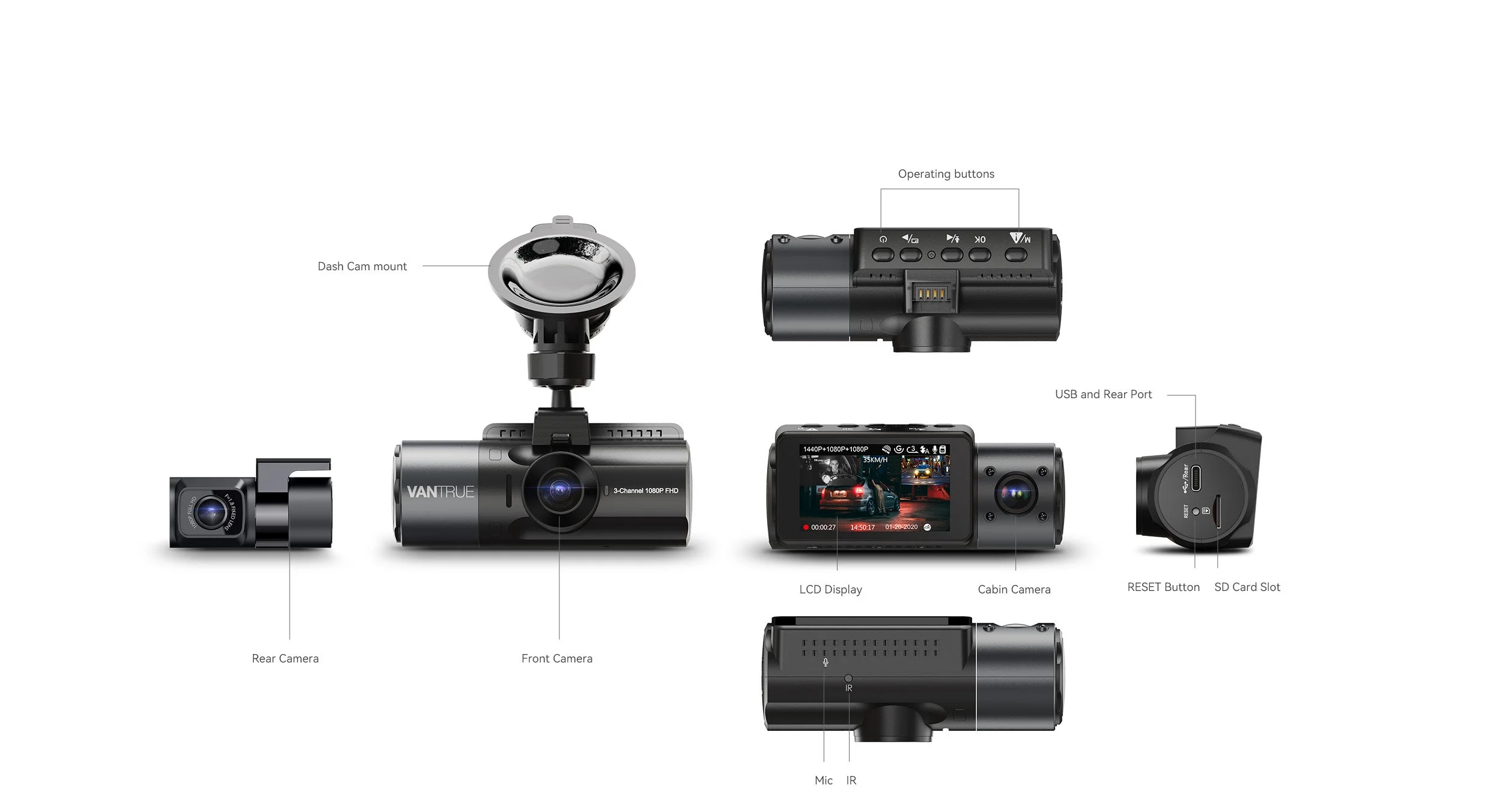
The pitch is simple enough. One windshield unit records the road at 1440p, the cabin at 1080p, and the rear window at 1080p — all three at once, per the spec sheet. For anyone with strangers in the back seat, that cabin lens is the entire purchase.
Does the consensus hold? Mostly, yes — and that is the interesting part. The N4 keeps its default status across owner reviews and enthusiast boards not because it is flawless, but because the things it gets right are the things that decide disputes.
It also has flags nobody puts in the listing photos. It is a brick on the glass. The accessories you actually need are sold separately. And the base model has no app at all. Marketing says complete protection; the cart total says some assembly required.
So this review does three jobs: read the claimed specs like an opening offer, run the N4-versus-N4-Pro math, and price the real total with the mount, card, and hardwire kit included. No invented test bench here — published specs and attributed owner consensus, flagged as such throughout.
One scope note. This is the standalone N4 verdict. If you are cross-shopping brands, that argument lives in our Vantrue vs VIOFO comparison. The question here is narrower: is the camera everybody tells you to buy actually the one you should?
What the Spec Sheet Actually Claims
Vantrue's claim sheet reads like it was written by someone who lurked the forums first: 2560x1440 up front, 1080p in the cabin, 1080p out the rear window, all recording simultaneously. That word — simultaneously — is load-bearing. It separates true three-channel cams from budget units that quietly drop a feed under load.
The power source is the quietly important line. Instead of a lithium battery, the N4 runs a supercapacitor, which tolerates the kind of windshield heat that swells cheaper cells into pillows. Heat is the leading killer of dash cams; designing for it is not glamorous, just correct.
The cabin lens carries infrared LEDs, which means it records usable faces in a pitch-dark car. Enthusiast consensus on the N4's night cabin footage has been consistently positive, and that matters more than any front-camera number — a cabin camera that only works at noon is decoration.
GPS is real but optional, and it lives in a separate mount rather than the camera body. Want speed and coordinates stamped onto your footage? That is an add-on purchase. Marketing calls it flexibility; the receipt calls it an upsell.
Storage tops out at a 256GB microSD, not included. Run the math before you skimp: three streams fill a card roughly three times faster than one, so a small card loops over the clip you needed sooner than you expect. High-endurance cards exist for exactly this duty cycle.
What is absent matters as much: no WiFi on the base unit, no companion app, no cloud. Retrieving a clip means pulling the card or scrubbing on the small built-in screen. Quaint in 2026 — and also one less thing to fail.
The Cabin Camera Is the Whole Sale
Strip the cabin lens away and the N4 is a competent, slightly bulky front-and-rear cam in a crowded field. With it, the N4 becomes the default recommendation for rideshare and delivery drivers — a status earned in forum threads, not bought in ads.
The reason is unglamorous: disputes. A passenger claims misconduct, a rider contests a route, somebody's door meets your panel at 2 a.m. Your word against theirs is a coin flip. Your word plus time-stamped infrared cabin footage is a much shorter conversation.
Night performance is where the attributed consensus is strongest. Infrared works whether the dome light is on or not, and owner-posted N4 cabin clips consistently show identifiable faces rather than silhouettes. For the underlying tech argument, our guide to IR versus Starlight night vision explains why IR is the right tool inside a cabin.
Parents of new drivers are the quiet second market. The cabin lens answers what the car was doing and what the driver was doing — and the second question is usually the more expensive one.
Insurance adjusters do not award points for video resolution; they respond to whether the footage answers the disputed question. Inside a car at night, only an infrared cabin lens answers it.
Worth saying plainly: most private commuters do not need an interior camera. An empty back seat generates no disputes, and a third lens adds cost, bulk, and one more thing pointed at your face.
But for the drivers the N4 was built for — strangers in the car, night shifts, airport runs — the cabin channel is not a luxury spec. It is the difference between owning the relevant evidence and hoping the other party is honest. For once, the marketing undersells how binary that is.
N4 or N4 Pro: Run the Math
Vantrue will happily sell you the same idea at a higher number. The N4 Pro S takes the front camera to 4K with a Sony STARVIS 2 sensor, upgrades night handling across the board, and adds WiFi with voice control. List prices run $259.99 for the N4 against $379.99 for the Pro S. Is the $120 gap value, or spec-sheet gravity?
Run it like a buyer, not a fan. The question is never which camera is better — the Pro is, obviously — but which one is better per dollar for your particular nights and miles.
Stay with the base N4 if…
…your footage job is documentation. Daytime plates, cabin faces at night, parking-lot incidents — the 1440p front and IR cabin handle all of it, and the $120 you keep covers the GPS mount, a 256GB card, and a hardwire kit with change. That is a complete system versus a nicer camera.
Pay for the Pro S if…
…night plate capture is your actual requirement. A 4K STARVIS 2 front sensor pulls readable plates out of low light where 1440p smears, and if your risk lives on dark highways, that delta is the whole case. The WiFi and app are conveniences riding along, not reasons.
The skeptic's framing: a 4K front camera is a better witness, but it is not a fifty-percent-better witness, and fifty percent is what the price asks. Owner forums largely land the same way — the Pro earns its premium for night-heavy drivers and stays optional for everyone else. Still undecided after that sentence? Buy the base model. Indecision means the upgrade case is not yours.
Where Owners Push Back: Bulk, Add-Ons, and the App Gap
Now the flags — because a default recommendation is worth nothing if it reads like a fan letter, and the N4's asterisks are real ones the listing photos crop out.
First, size. The N4 is a chunky unit, and the cabin lens housing makes it deeper than a typical front cam. On a small or steeply raked windshield it does not vanish behind the mirror; it announces itself. Owners of compact cars raise this more than any other complaint. Measure your glass before you assume stealth.
Second, the add-on economy. GPS requires the separate mount. Parking mode requires the hardwire kit. The high-endurance card is on you. None of these are scandals individually — half the industry plays the same game — but Vantrue's marketing leans on features that only exist after a second purchase. The numbers don't lie; the listing price just declines to mention them.
Third, the app gap. The base N4 has no WiFi, so there is no app, period — footage leaves the camera on the card. The Pro S adds WiFi, but Vantrue's companion app draws mixed owner reviews, with pairing hiccups and slow clip transfers the recurring gripes. If phone-first clip sharing is a daily need, that is a genuine reason to shop elsewhere, not a quirk to forgive.
A pattern worth naming: nearly every recurring N4 complaint is about what surrounds the camera — the housing, the accessories, the app — and almost none are about the footage. As complaint lists go, that is the right kind to have.
How much should any of this flag you off? Depends which one lands on your use. A garage-parked sedan never misses the hardwire kit. A rideshare driver in a Civic notices the bulk every shift. None of these are dealbreakers in general; each is a dealbreaker for somebody.
The Real Total: Mount, Card, and Hardwire Kit
Price the system, not the box. The N4's listing price buys a camera; three accessories turn it into the kit the forums are actually describing when they say "just get the N4."
The GPS receiver mount (about $26) stamps speed and coordinates onto footage. In an insurance dispute that metadata carries weight — an impact clip with a speed readout is harder to argue against than the clip alone. Treat it as part of the purchase, not an option. One catch: Vantrue has revised connectors across production runs, so match the mount to your unit before ordering.
A 256GB high-endurance microSD (about $28) is the right card, and "high endurance" is not marketing fluff — three channels rewriting a card continuously is exactly the duty cycle that kills standard cards early. Cheap out here and the failure shows up precisely when you need the footage.
The hardwire kit (about $20) unlocks parking mode, the feature half of N4 buyers are actually shopping for. It wires the camera to the fuse box with a low-voltage cutoff so your battery survives. Our hardwire kit guide covers the install — an hour with a trim tool, not a shop visit — and if parking mode itself is new to you, here is how it actually works.
Cart math: $259.99 plus roughly $74 in accessories lands near $334 before tax. Still cheaper than the Pro S body alone — but go in knowing the $260 camera is a $334 system. Budgets that pretend otherwise end up with a GPS-less cam looping on a dying card.
If $334 stings, run the comparison that matters: a single at-fault claim you could not contest costs more than the whole kit, several times over. The accessories are not the place to economize — the system fails at its cheapest part.
Who It Fits — and Who Should Skip It
Buy the N4 if strangers ride in your car. Rideshare and taxi work are the core case: the IR cabin lens at night, three simultaneous channels, and a supercapacitor surviving long shifts on hot glass were all chosen for exactly this duty. The default-recommendation status exists because the fit is that clean.
Parents of teen drivers are the second fit. The cabin channel answers what was happening inside the car before the incident — the question that insurance adjusters, and dinner-table arbitration, actually turn on.
Overlanders and car campers get an underrated version of the same value: an infrared camera watching the cabin while you sleep at a trailhead is cheap security, and the supercapacitor does not mind the overnight temperature swings.
Skip it if you commute alone. A two-channel cam covers crash and parking evidence with a smaller footprint and a smaller invoice — our front-and-rear dash cam guide covers that field. Paying for a cabin lens to film an empty seat is the most polite way to waste eighty dollars.
Small-fleet owners sit in the same bucket as rideshare. The N4's no-subscription model is the entire pitch against cloud-first fleet cams that bill monthly forever — you own the footage and the hardware outright.
Skip it too if phone-first clip sharing is non-negotiable (the base model has no app), or if your windshield is small enough that a brick behind the mirror becomes a sightline argument at every inspection.
And if you are deciding between three-channel models rather than whether to go three-channel at all, our 3-channel dash cam guide ranks the N4 family against the VIOFO and WOLFBOX units it usually shares a shortlist with.
The Verdict on the Vantrue N4
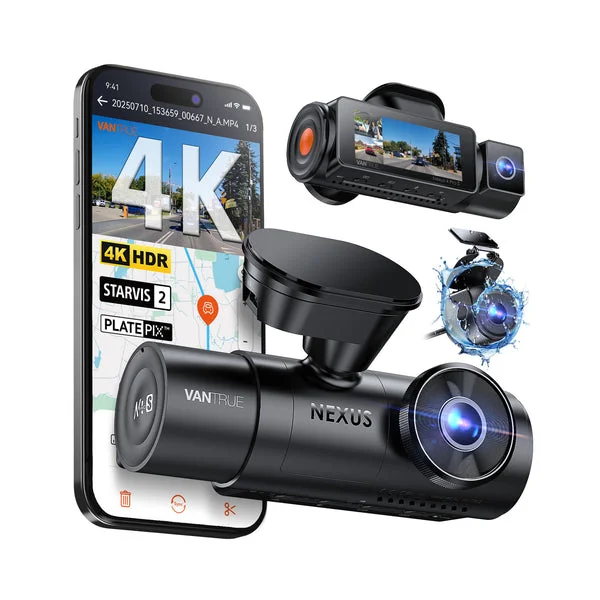
The default recommendation survives the skeptic treatment. The Vantrue N4 earns its status the boring way: the spec sheet's load-bearing claims — three simultaneous channels, infrared cabin capture, supercapacitor heat tolerance — are the same things the owner consensus keeps confirming, and they map exactly onto what rideshare and family-car buyers need footage for.
It is not the best camera Vantrue makes; it is the best per-dollar answer for the job most three-channel buyers actually have. The Pro S exists for night-plate hunters with $380. Everyone else would be buying resolution they will never replay.
Cross-shopping brands? The Vantrue-versus-VIOFO question is close and genuinely contested — the comparison linked up top covers it. This verdict claims the narrower thing: within Vantrue's lineup, the base N4 is the value pick.
Go in with the full invoice. The honest price is about $334 with the GPS mount, a high-endurance card, and the hardwire kit, and the honest size is a unit your windshield will notice. The missing app on the base model is either a dealbreaker or a blessing — you already know which buyer you are.
Marketing says complete three-channel protection. Reviews say: true, once you finish the kit yourself. For once the gap between those two is a shipping delay, not a scandal.
The buyer takeaway: if your car carries strangers, the Vantrue N4 is the rare default answer that deserves to be one. Buy it with the mount, the right card, and the hardwire kit, and the open question stops being whether you will have evidence — only whether you will ever need it.