Where to Start
Night vision on a dashcam isn't some magical fairy dust that makes everything crystal clear after dark. It's a specific technology, and understanding the difference between IR LEDs and starlight sensors is key to not getting ripped off. My first dashcam, a $50 special from Amazon, claimed 'night vision' and showed nothing but a blurry mess in the dark. Turns out, it was just a basic sensor with some software tricks. You need to know what you're actually buying.
This whole night vision thing boils down to how the camera sees in the dark. It's not about having headlights on your dashcam, but how it captures what little light is there, or adds its own.
The Core Answer
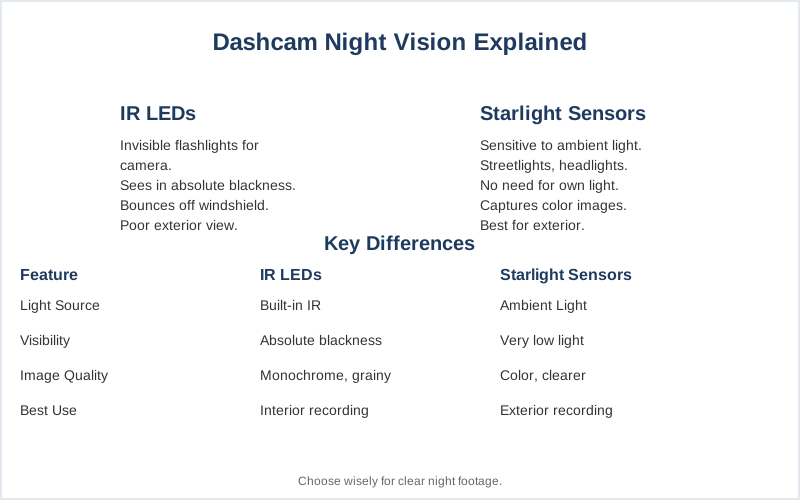
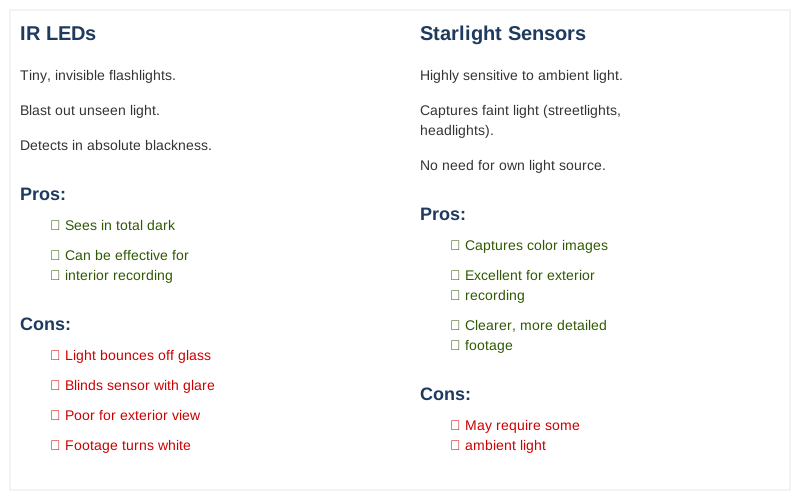
The core difference between how dashcams handle the dark comes down to two main approaches: Infrared (IR) LEDs and starlight sensors. Think of IR LEDs like tiny, invisible flashlights built into the camera. They blast out light that we can't see, but the camera sensor can detect it, allowing it to see in absolute blackness. The catch? This light doesn't travel well through glass, especially your windshield.
IR light bounces off the glass and blinds the sensor, turning your footage into a glowing white mess. I learned this the hard way trying to record my interior on a late-night drive - total failure. The real move for exterior recording is a good starlight sensor. These sensors are designed to be incredibly sensitive to even the tiniest bits of ambient light, like distant streetlights or headlights. They don't need to blast their own light source.
Starlight sensors are built to capture color images in very low light, which is way more useful for identifying details like license plates or road signs than a black-and-white IR image. Some cameras might use a combination, but for seeing outside your car, you want that low-light sensitivity. IR is great for recording the inside of your car, like if you're a rideshare driver, because you can see passengers clearly without distracting them with visible light.
It's like having a secret spy mode for your car's interior. But outside, it's a rookie mistake to rely on IR through the windshield. You'll end up with no usable footage and a story about why your dashcam is useless at night.
Why This Matters for Your Setup
Why does this even matter for your setup? Because understanding these differences can save you money and a whole lot of frustration. If you're just looking to record the inside of your Uber or Lyft, an IR-equipped dashcam might be your $50 version of effective. You can get decent interior footage without bothering your passengers. For most people driving around town, a camera with a good starlight sensor is the way to go for exterior recording.
It means you'll actually capture clear footage of that deer that jumps out, or that car that runs a red light. Don't get caught by marketing hype. If a camera claims 'super night vision' but doesn't mention a specific sensor type like Sony STARVIS, you might be looking at software tricks, not real low-light performance. My first dashcam was all marketing, zero results when the sun went down.
It's the difference between having a usable recording for insurance and just a dark blob. It's not about the cheapest option, it's about the right tool for the job.
Making the Right Choice
So, how do you pick the right dashcam for your needs? If you're primarily concerned with recording the inside of your vehicle, especially for rideshare or fleet use, an IR-equipped camera might be sufficient and more budget-friendly. IR cameras are generally cheaper. For external recording, where you need to capture details like license plates and road conditions, a dashcam with a high-quality starlight sensor is the game-time move.
Look for cameras that boast advanced low-light sensitivity without relying solely on IR illumination for exterior views. Don't be afraid to dig into specs or look for reviews that specifically test night performance. My second dashcam, which had a better sensor, cost me $120, but the footage was night and day compared to my first $50 blunder. It's about getting what you pay for when it comes to seeing clearly in the dark.