Dashcam Guides

Understanding Dashcam Night Vision Technology: What to Look For

Casey - The Weekend Warrior
5 min read
Includes Video

Night vision technology in dash cams isn't magic, it's just clever engineering to make sure you can actually see what's happening when the streetlights decide to take a nap. For anyone who drives after sunset, whether it's a daily commute through dimly lit suburbs or a late-night highway haul, understanding how these cameras work is key to not getting blindsided.

Night vision technology in dash cams isn't magic, it's just clever engineering to make sure you can actually see what's happening when the streetlights decide to take a nap. For anyone who drives after sunset, whether it's a daily commute through dimly lit suburbs or a late-night highway haul, understanding how these cameras work is key to not getting blindsided.

It's about turning a fuzzy mess into something you can actually use as evidence, or just to see that deer before it's too late. My first dash cam was basically useless after dark; I learned that lesson the hard way, staring at a black screen during a crucial moment. Texas Diamond Garage lays out why this tech matters for anyone on the road after dark.

It's not just about catching accidents; it's about seeing clearly when you need it most. Red Tiger Cam also highlights how it amplifies ambient light and reduces noise. This is game-time for your car's eyes. You need to know what you're looking for to avoid buying a paperweight that only works in sunshine.

Understanding Dashcam Night Vision Technology: What to Look For — Key Specifications Compared
Key specifications for Understanding Dashcam Night Vision Technology: What to Look For

The Core Answer

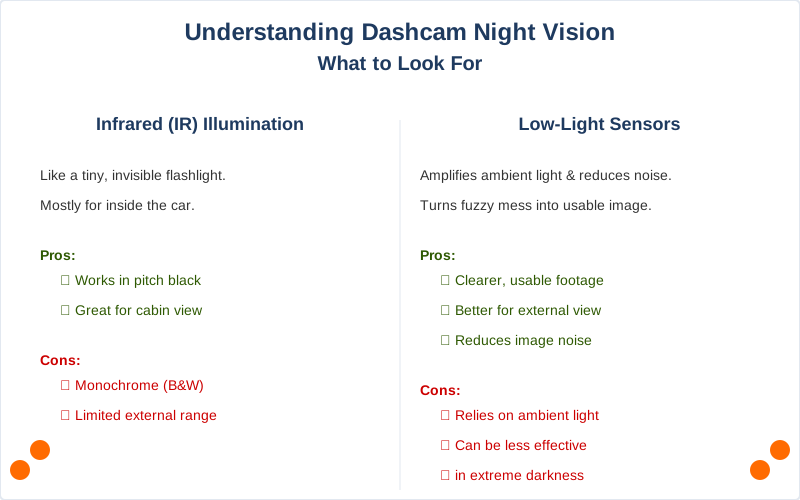
Dash cams use a couple of tricks to see in the dark, and it's not like those fancy military goggles. The main players are infrared (IR) illumination and what they call low-light sensors. Think of IR like a tiny, invisible flashlight built into the camera. IROAD explains this is mostly for inside the car, like for cabin-facing cameras. It bounces IR light off stuff and turns it into a black-and-white picture. It works even if your car is pitch black inside, which is great for watching your back seat or just seeing if someone left a rogue french fry under the seat. The downside? It's monochrome, and the range isn't great for the outside world. My first cabin cam used IR and it was okay for seeing if my dog was chewing the upholstery, but useless for anything outside. AKEEYO points out that for exterior cameras, you want the other kind: low-light sensors. These are basically super-sensitive eyes that grab onto any available light - streetlights, headlights, even moonlight. They're designed to pull in more light and make the image brighter and clearer, often in full color. This is the stuff that actually helps you see license plates or identify that shadowy figure crossing the street. My current front dash cam uses a sensor like this, and it's a night-and-day difference from my old one. Zetronix mentions these often have wide aperture lenses (like f/1.8 or lower) and Wide Dynamic Range (WDR) or High Dynamic Range (HDR) processing to handle bright headlights and dark shadows at the same time. It's like your eyes adjusting super fast. Some high-end cameras even combine both IR and low-light sensors, giving you the best of both worlds. But for most people just trying to catch a fender bender or a hit-and-run in the dark, a good low-light sensor is the real move. Don't get fooled by just 'night vision' slapped on a box; look for details about the sensor and image processing. Wolfbox says these sensors amplify ambient light to reduce noise and maintain balance. This is crucial for getting usable footage, not just a grainy mess. The honest version is, without this tech, your dash cam is just a very expensive paperweight after sunset. Nextbase reminds us they work with visible light, not infrared like goggles. So, it's about maximizing what's already there.
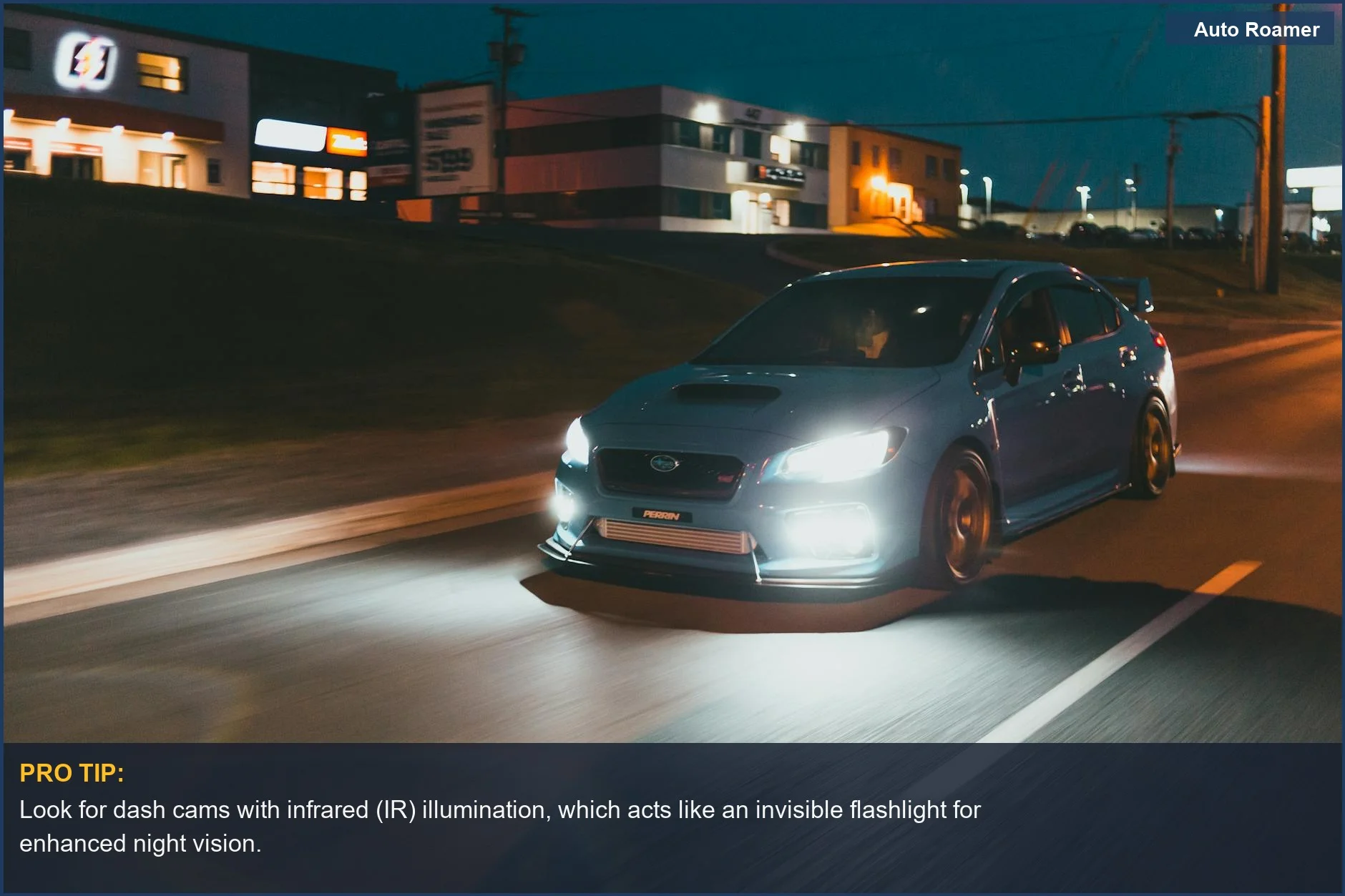
To enhance your understanding, explore the key features in dash cam night vision technology.
Look for dash cams with infrared (IR) illumination, which acts like an invisible flashlight for enhanced night vision.
As dusk settles, a car's headlights cut through the fading light. Understanding dashcam night vision means recognizing technologies like IR that improve clarity in low light. | Photo by Erik Mclean

Why This Matters for Your Setup

Why does this matter? Because driving at night is basically asking for trouble if your camera can't see. I remember one time, driving home on a country road near my parents' place in Ohio, it was pitch black. My old dash cam just showed a black void. Then, BAM, a deer jumps out. If I hadn't slammed on the brakes, it would have been bad. My dash cam caught nothing. That was a rookie mistake, thinking any dash cam would be good enough in the dark. AKEEYO says these cameras enhance visibility and help detect hazards. That's not just marketing fluff; it's survival. You need clear footage to identify license plates, recognize faces, or just prove you weren't the one who ran the red light. Nextbase highlights that it's about capturing clear footage in low light. It's the difference between having evidence and having nothing. Plus, when you're talking about ridesharing or commercial driving, this is your professional liability. You can't afford to have a camera that goes blind when the sun goes down. Nexar mentions infrared lights and high-quality image sensors are key. It's about making sure your camera is a reliable witness, 24/7. My second dash cam, the one with better night vision, caught a fender bender in a poorly lit parking lot that my first one would have completely missed. That footage was gold for insurance.
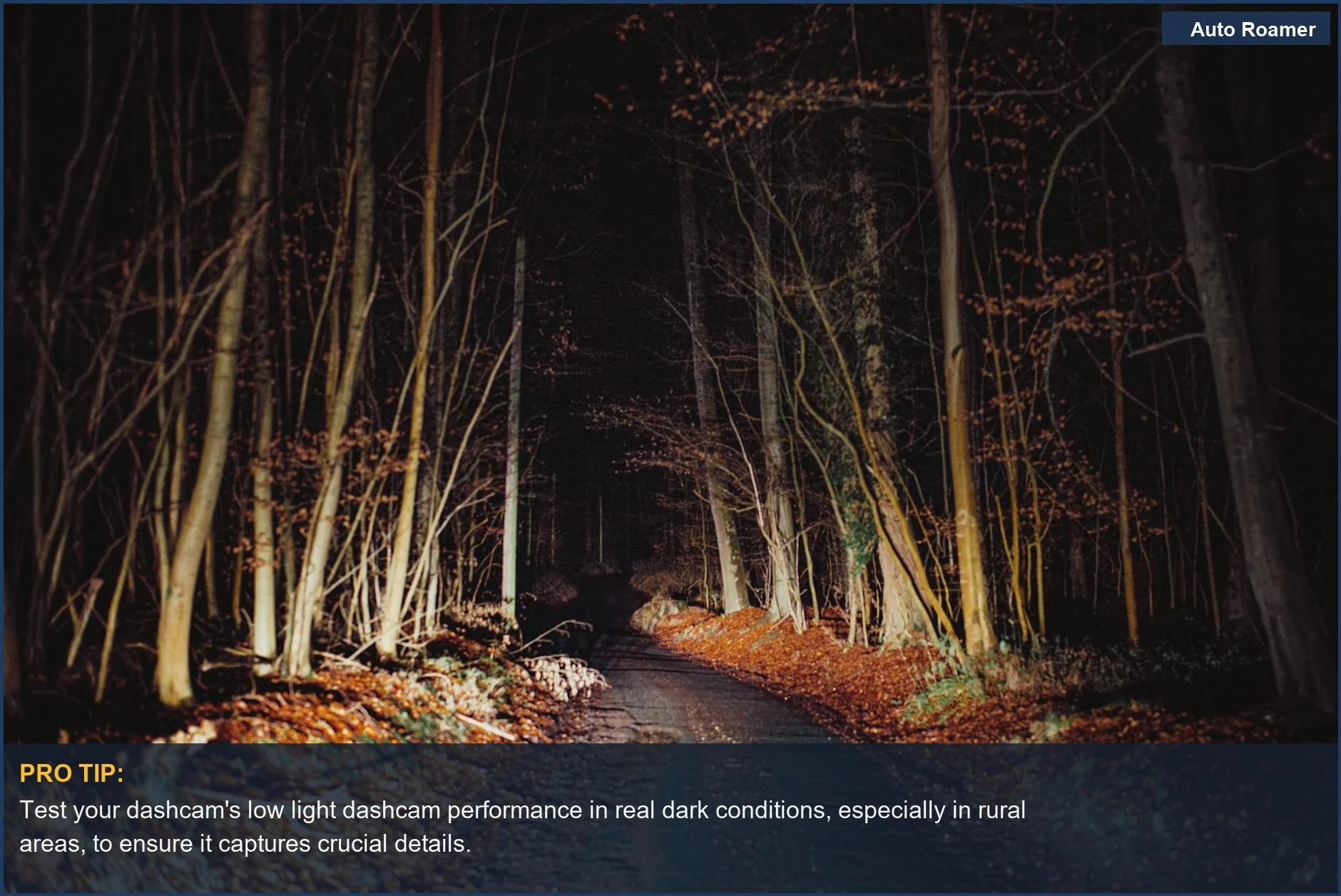
To enhance your nighttime driving experience, understanding dash cam night vision features is essential.
Test your dashcam's low light dashcam performance in real dark conditions, especially in rural areas, to ensure it captures crucial details.
Leafless trees line a dark forest road, their eerie glow amplified by headlights. This scene emphasizes why robust night vision technology is vital for safe driving. | Photo by Aleks Marinkovic

Making the Right Choice

So, when you're looking at dash cams, don't just grab the cheapest thing. Night vision isn't an afterthought; it's crucial. Texas Diamond Garage reminds us that reliable night vision is essential for anyone driving after dark. Look for cameras that specifically mention their low-light performance and the type of sensor they use. Zetronix suggests looking for wide aperture lenses and WDR/HDR processing. These are the technical bits that translate into real-world visibility. Nexar emphasizes looking for features like infrared lights and high-quality image sensors. It's about getting a camera that can actually perform when you need it most. My own field notes tell me that spending a little extra on a dash cam with good night vision is worth every penny. IROAD breaks down the two main technologies: IR for interiors and low-light sensors for exteriors. Understanding this difference will help you choose the right one. Don't be like me on my first trip and end up with a camera that's useless in the dark.
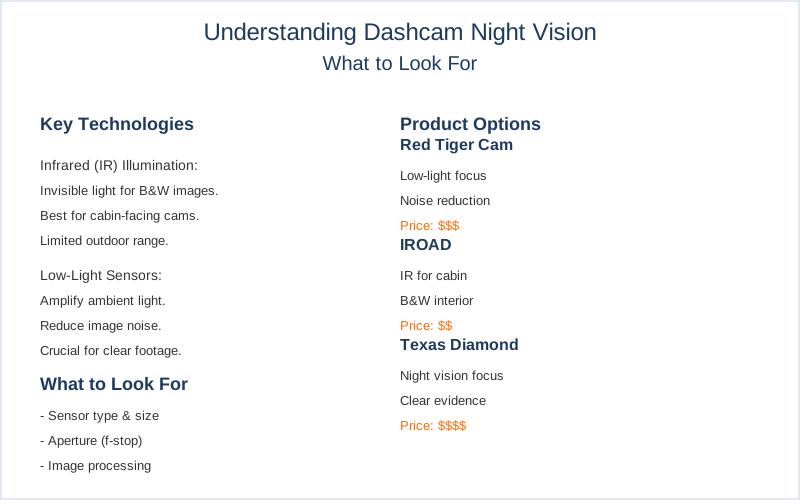
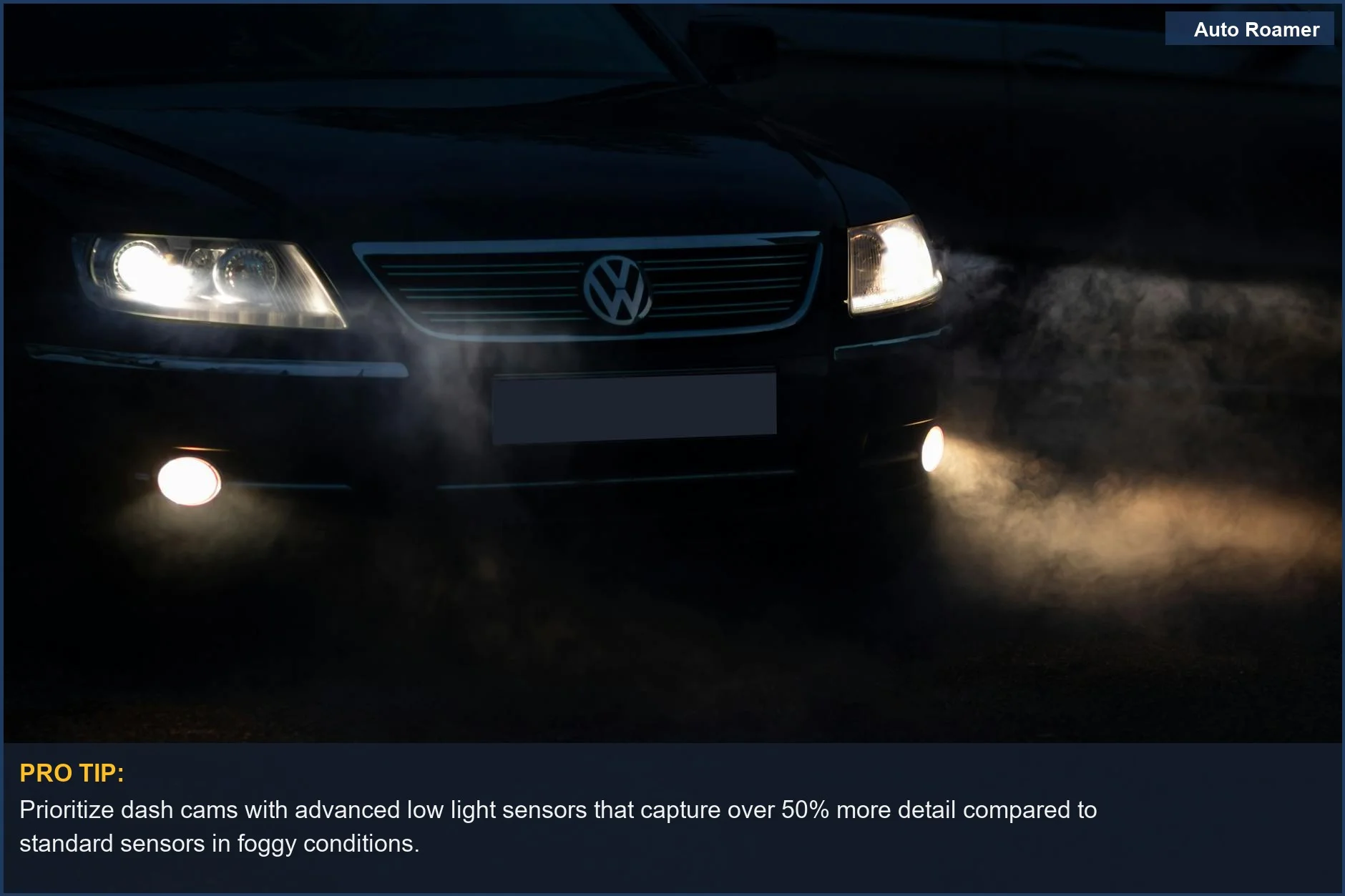
To enhance your decision-making, it’s helpful to understand the differences between IR LEDs and starlight sensors.
Prioritize dash cams with advanced low light sensors that capture over 50% more detail compared to standard sensors in foggy conditions.
Moody fog swirls around car headlights on a dark night. For reliable driving after dark, ensure your dashcam boasts superior night vision technology. | Photo by Patrick

Frequently Asked Questions

Okay, so if I just want to record the inside of my car at night, can I get away with a super cheap dash cam that only has IR lights, or is that a total waste of money?
For just the interior, an IR-only camera might be 'good enough' if you're only concerned with seeing general shapes in total darkness, like a basic cabin monitor. You can find these for under $50. However, if you need to identify faces or read anything inside the car, the image will be black and white and likely grainy. My first cabin cam was like that, and while it showed me my dog was indeed chewing the seatbelt, I couldn't tell what brand of mischief he was up to. For anything beyond basic presence detection, you'll want something better.
Do I really need some fancy Wi-Fi connection or GPS for night vision to work, or can a basic dash cam without those features still have good night vision?
No, you absolutely do not need Wi-Fi or GPS for the night vision technology itself to function. Those are separate features. A basic dash cam with a good low-light sensor will capture clear footage at night regardless of its connectivity. My first dash cam, which had terrible night vision, didn't have Wi-Fi either. The core night vision capability comes from the lens, sensor, and image processing. The $150 version of a dash cam might have all the bells and whistles, but if the sensor is garbage, it's still going to be garbage in the dark.
What if my dash cam claims to have great night vision, but the footage still looks like a grainy mess after I install it?
If your footage is still a grainy mess despite claims of good night vision, the most likely culprit is ambient light. Even low-light sensors need *some* light to work with. If you're driving in absolute pitch blackness with no streetlights, headlights, or moon, even the best camera will struggle. Also, check your camera's settings; sometimes there are options to adjust exposure or sensitivity that can help. My first mistake was assuming the camera would magically create light; it doesn't, it just uses what's there better. IROAD explains that total darkness can reduce effectiveness for exterior cameras.
Can using a dash cam with really strong infrared lights for interior monitoring damage my car's electronics or the upholstery over time?
No, using a dash cam with infrared (IR) lights for interior monitoring won't damage your car's electronics or upholstery. Infrared light is invisible to the human eye and is a very low-power form of electromagnetic radiation. It's not strong enough to cause heat damage or degrade materials. The primary concern with IR cameras is the quality of the image (black and white, limited detail), not physical damage. Think of it like a tiny, weak flashlight that only sees in infrared.
Is it true that all dash cams with 'night vision' just use a really bright LED light that blinds other drivers?
That's a common misconception, and thankfully, not true for most decent dash cams. True night vision technology, especially the low-light sensor type, doesn't blast a bright visible light that blinds others. Instead, it enhances the camera's ability to capture existing light. Some dash cams *do* have auxiliary LED lights, but these are usually designed for very specific, short-range illumination and are often not visible or blinding to other drivers. The IR lights used for interior monitoring are completely invisible. The $50 version might be more questionable, but reputable brands focus on enhancing the sensor, not blinding the world.

🏅 Looking for Gear Recommendations?

Check out our tested gear guides for products that work with this setup:

C

Casey - The Weekend Warrior

Weekend car camper and road trip enthusiast. Focuses on practical, budget-friendly solutions for families and first-time campers.

Sources

Related Articles