
Marketing Says 360. The Camera Says Otherwise
A 360 degree dash cam with parking mode sounds like the whole problem solved: every side of the car watched, all night, every night. That is the promise printed on the box. The spec sheet tells a quieter story.
Here is the question that decides whether your money was well spent: when something hits your parked car, does the camera capture footage you can actually use? Because “360” on a product page can mean a single lens on a motorized mount, a fisheye dome stretching one sensor around a full circle, or a multi-camera rig recording real coverage from dedicated lenses. Those are three different machines at three different prices, and only the spec sheet — never the headline — tells you which one you are holding.
Parking mode muddies it further. Recording while parked is a power problem first and a camera problem second, and no listing leads with the power problem.
So this guide does what the listings will not. It separates the three things sellers call 360, explains why an honest multi-channel rig often beats a true 360 lens for evidence, walks through the power math that parked surveillance forces on you — hardwire kit or battery pack, there is no third option that works — and sorts buffered from motion-triggered recording so you know in advance what your footage will actually show.
None of that requires a bigger budget. It requires reading the three lines of the spec sheet most buyers skip.
One promise before we start: nothing here comes from a lab I do not have. Every claim below traces to a manufacturer-rated spec, to owner reports from people running these cameras through real winters and real parking garages, or to the long-running owner threads where marketing gloss goes to die. Where a number matters, its source rides in the same sentence.
Read the next section before you spend anything. The word 360 is doing more work in these listings than some of the cameras are.
One Rotating Lens Is Not All-Around Coverage
Start with the most popular trick in the category: the rotating lens. One camera, one sensor, mounted on a motorized base that swings toward whatever its software finds interesting. The listings call that 360 coverage. It is 360 access — a different thing.
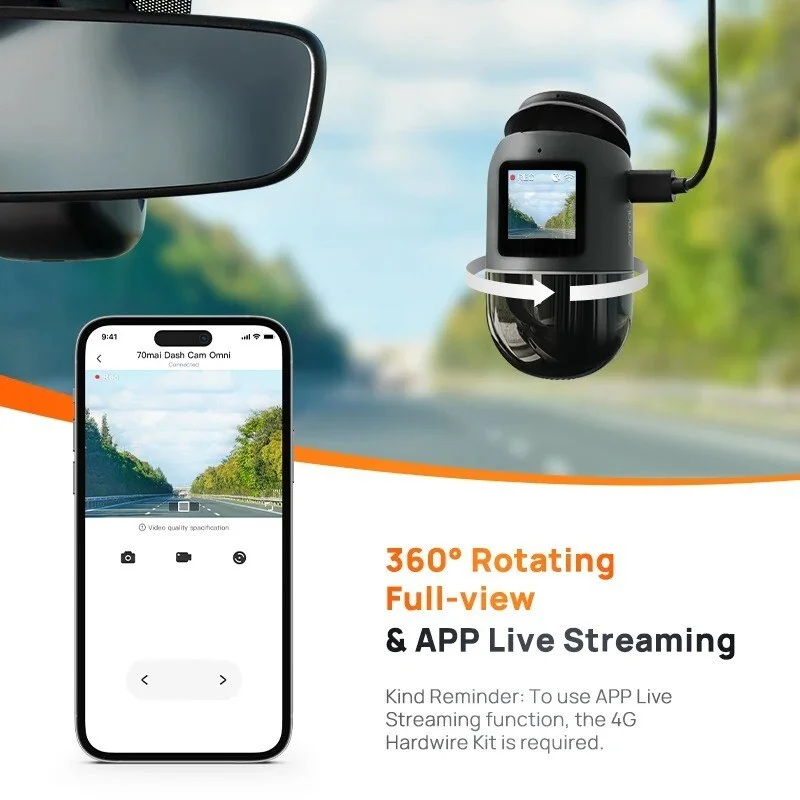
The difference matters at 2 a.m. in a parking lot. A rotating single lens points one direction at a time — 70mai rates the Omni's motorized sweep at 340 degrees, and owners consistently report the motor swings toward motion quickly. But if the camera is watching your hood when a door dings your rear quarter panel, the swing happens after the contact. You get footage of someone walking away. The plate that mattered was behind the lens at the moment it mattered.
That is not a defect. It is geometry. One lens cannot look in two directions at once, and no firmware update changes that.
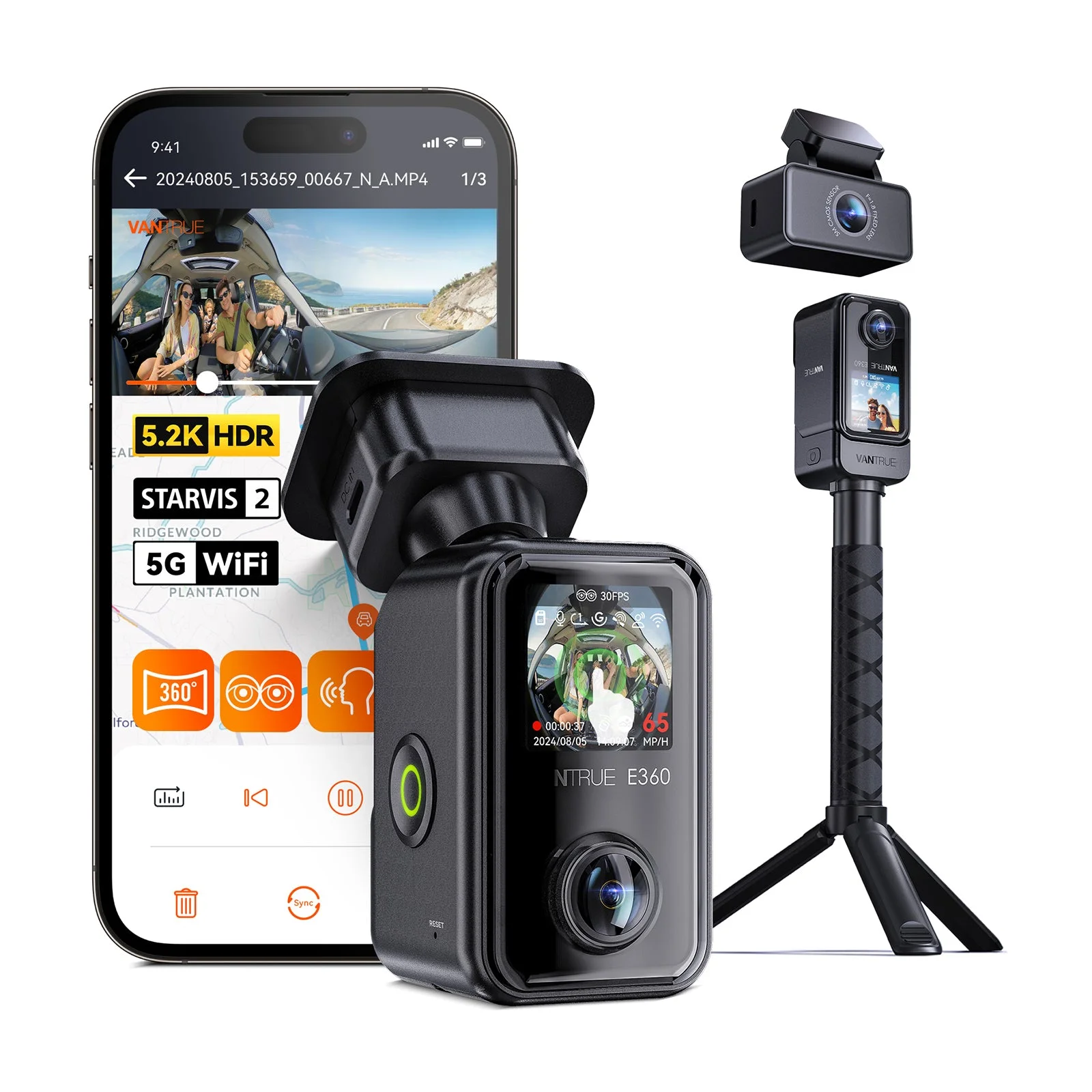
The second flavor is the true panorama: two wide lenses back to back, their views stitched into one wraparound file. The Vantrue E360 takes this approach — Vantrue's listing rates the stitched output at 5.2K across the combined view, which sounds enormous until you spread those pixels over a full circle. Per degree of view, a stitched panorama carries noticeably less detail than a dedicated front camera at half its price. Owners post the proof regularly: smooth, watchable wraparound video in which the plate twenty feet away dissolves into smudge.
The rotating 70mai Omni X200 earns its keep in a different job: interiors. Rideshare drivers keep recommending it because one unit covers windshield and cabin without a second camera on the glass.
So before you pay for the word, ask what the seller means by it:
- A motorized single lens — a clever interior-and-sometimes camera.
- A stitched panorama — genuine all-around video at reduced per-direction detail.
- Dedicated lenses on every side — the only build actually watching every direction simultaneously.
Neither of the first two is the same machine as the third — and the listings that blur those three into one buzzword are not blurring it by accident.
Marketing says 360. Owner reviews say: ask which direction it was pointing when it counted.
The Honest Answer Is Usually a Multi-Channel Rig
Now the part the category does not want you to hear: most people searching for a 360 degree dash cam with parking mode do not need a 360 lens. They need every side of the car on file at the same moment. Different product.
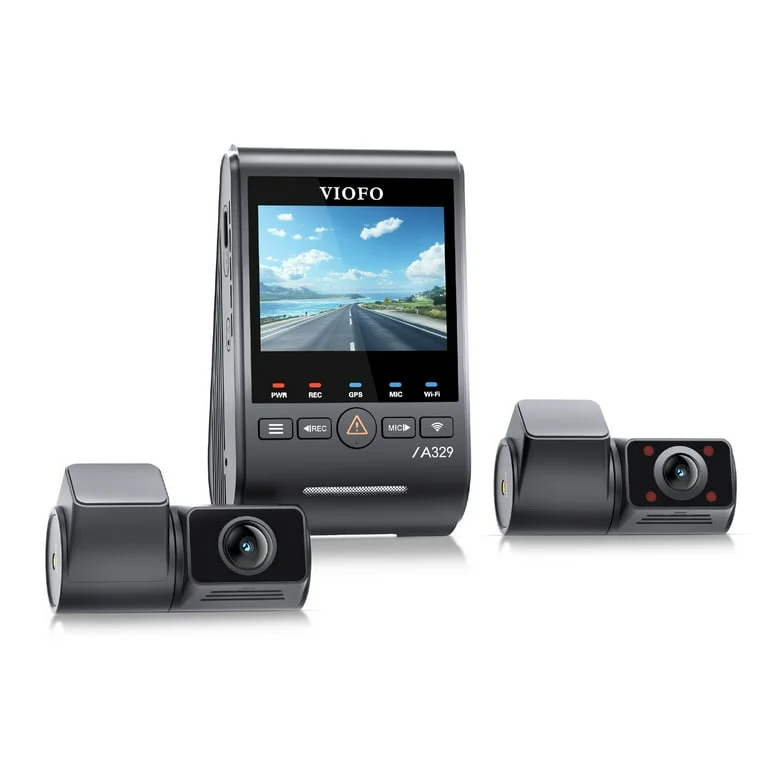
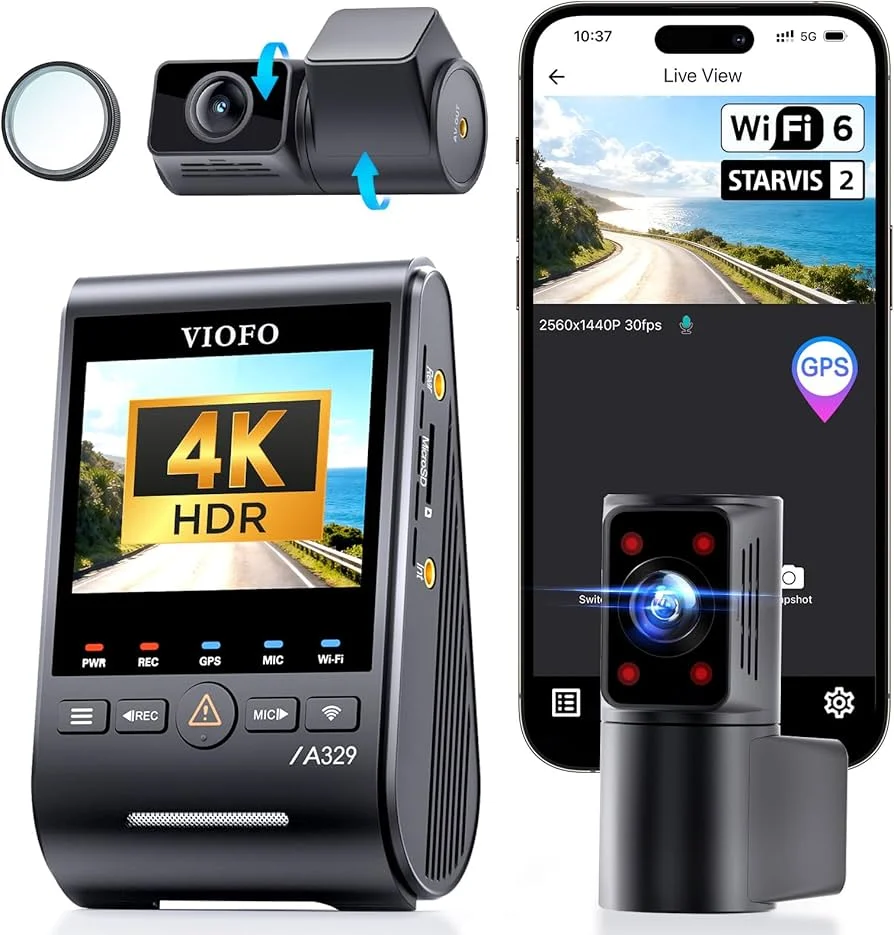
That job has an existing, boring, proven answer: the multi-channel rig. Three dedicated cameras — windshield, cabin, rear glass — each with its own sensor, all writing simultaneously to one card. The VIOFO A329S runs a named 4K sensor up front with cabin and rear units that hold their own at night, and owner threads consistently rank VIOFO's parking-mode implementation among the most dependable in the class. Nothing rotates. Nothing decides where to look. Every direction that matters is already being recorded before anything happens.
Notice what disappeared in that sentence: the gamble. A dedicated lens per direction means the question “where was it pointing?” stops existing.
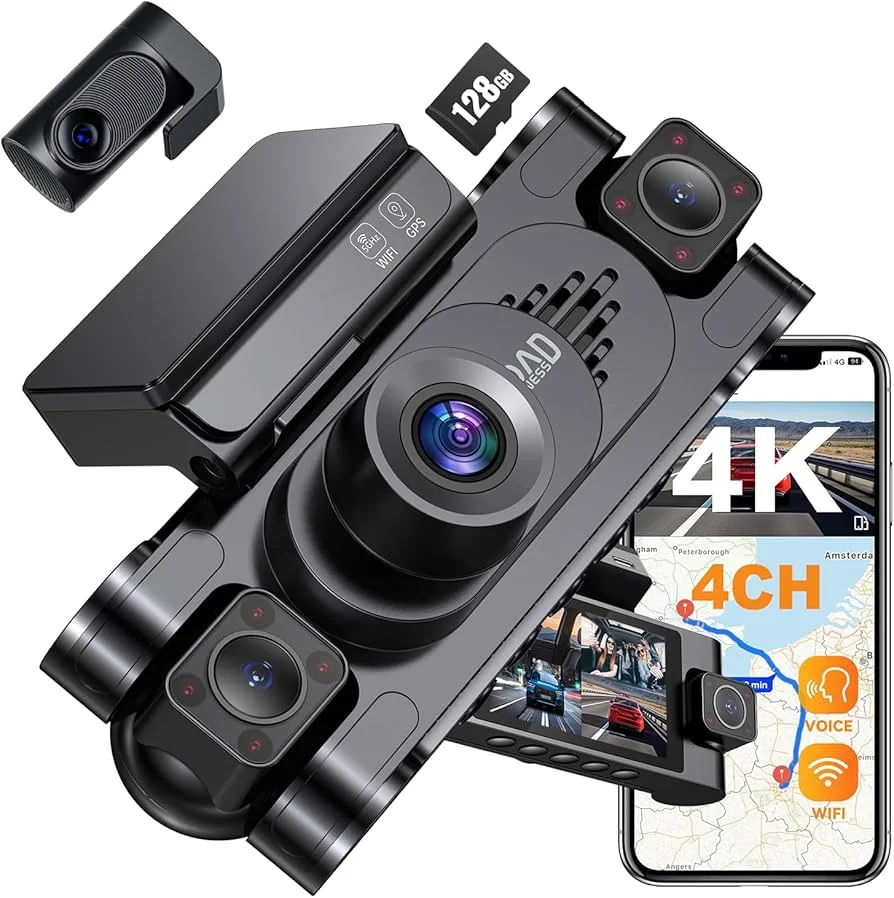
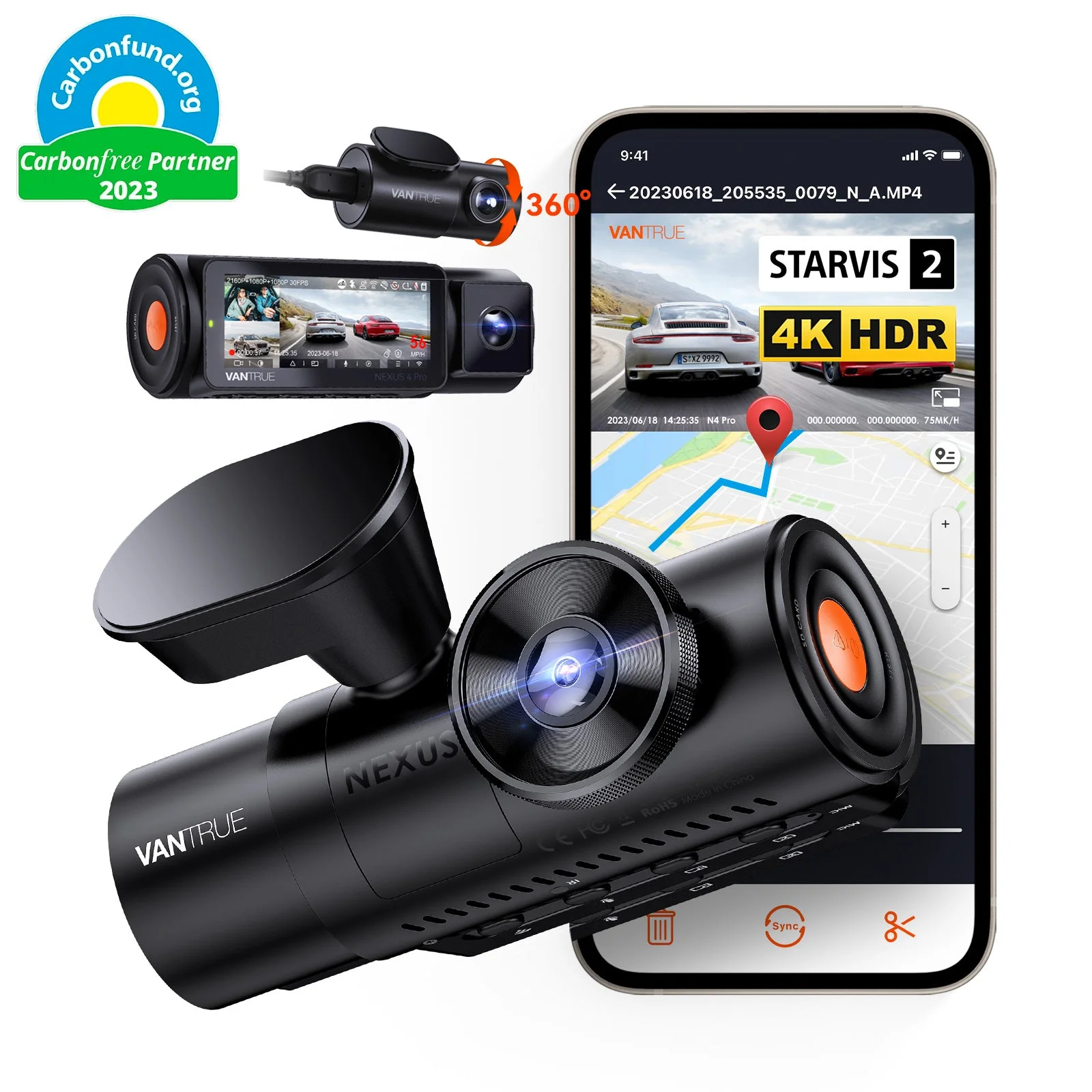
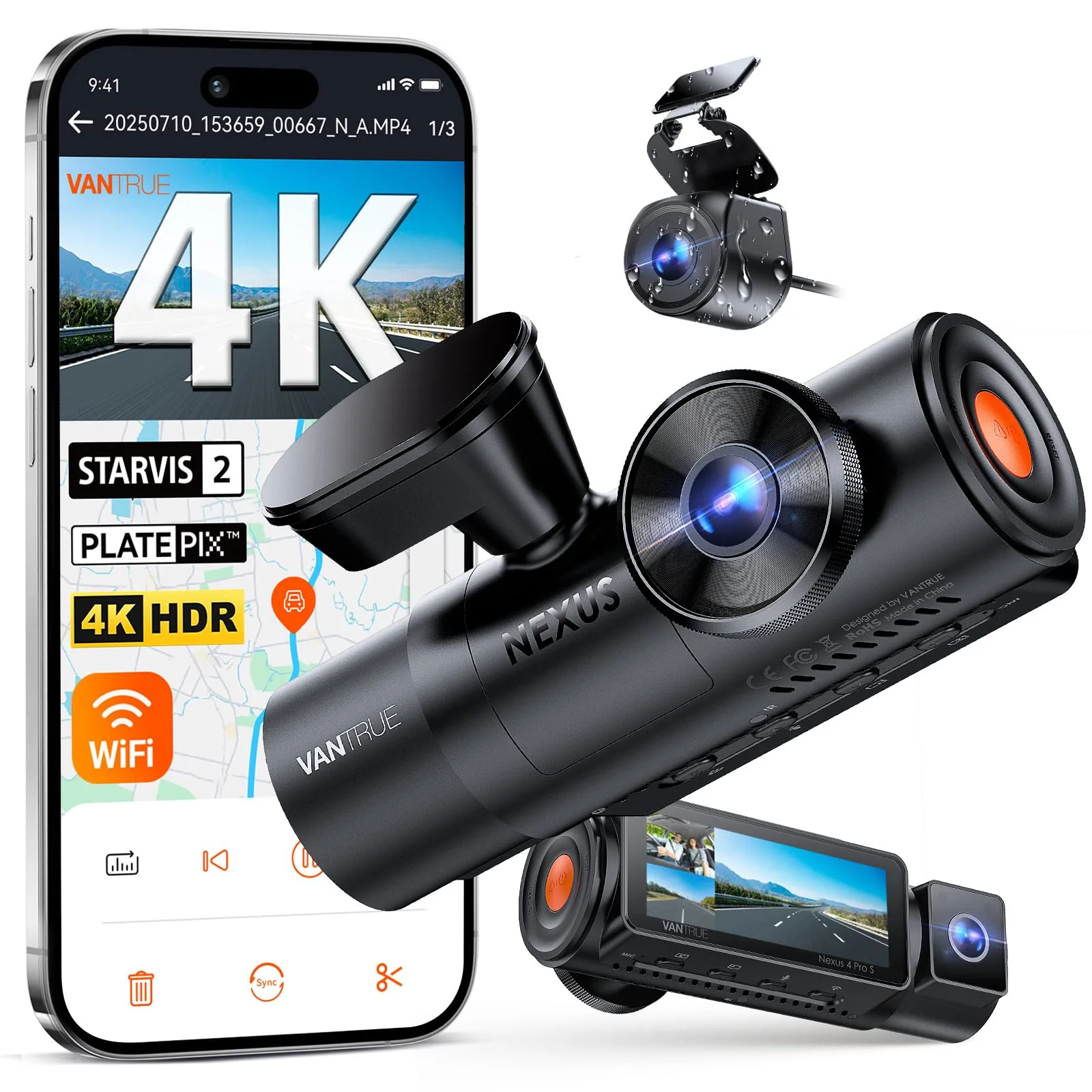
The Vantrue N4 Pro S takes the same architecture upmarket — Vantrue pairs STARVIS-class sensors with an infrared cabin view, which is the difference between a silhouette and a face in a dark car. And if side impacts are your worry, four-channel rigs add flank coverage for less than most stitched panoramas cost. The geometry is unglamorous, and it works.
Blind spots? Fair challenge. A three-channel setup leaves slivers at the rear quarters that a true panorama covers. The honest question is whether a readable plate in the three directions that produce claims beats an unreadable smudge in all of them.
I have gone deeper on that field in the three-channel buyer's guide and the front-and-rear comparison, including which models survive heat soak and which quietly drop a channel under load. For this guide the takeaway is narrower: when a listing says 360, check whether one sensor is being asked to do the work of three. The numbers don't lie, even when the headline does.
Parking Mode Rewrites the Power Math
Parking mode is where the budget meets reality, because a parked car offers a camera exactly nothing. The ignition is off. On most cars the 12-volt socket dies with it. Whatever records overnight needs its own plan for power, and the camera box almost never includes one.
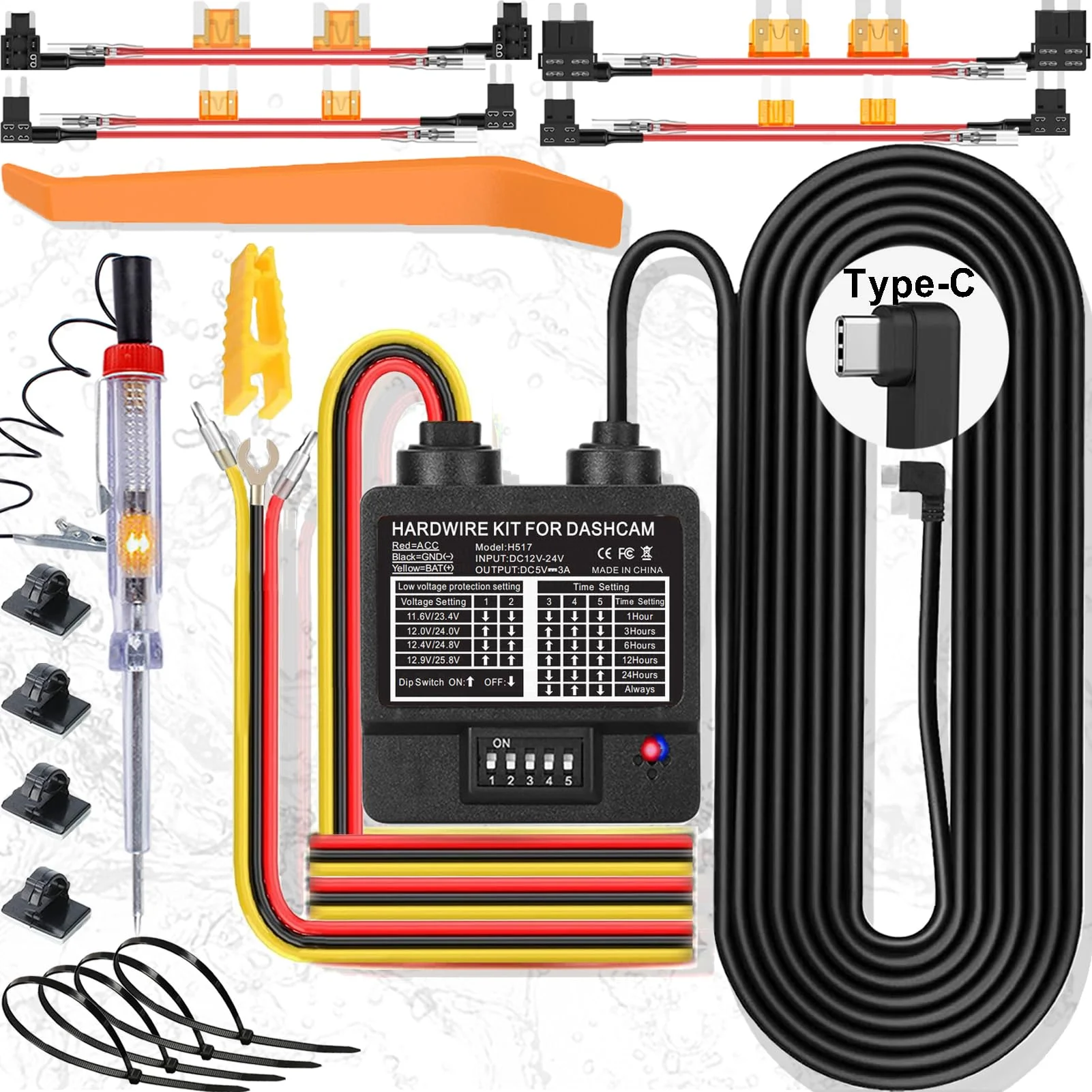
- Plan one: the hardwire kit. Three wires into the fuse box, giving the camera constant power plus an ignition-sense line so it knows when you have left. The good kits carry a low-voltage cutoff — typically selectable around 11.8 to 12.4 volts — that kills the camera before the camera kills your starter battery. That cutoff is not a luxury feature. An all-around rig pulling power through a winter night will walk a weak battery right down to the no-start line, and the camera will sleep straight through the morning you find that out.
- Plan two: the dedicated battery pack. A separate cell that charges while you drive and runs the camera while you are parked, leaving the starter battery untouched. It costs more than the hardwire kit — often more than the camera — but owners running multi-lens rigs in hot climates favor it for a second reason: it moves the round-the-clock electrical load off a battery that summer heat is already shortening.
On the hardwire side, the real price comparison is a thirty-dollar kit with a cutoff, or a tow and a new battery because the camera drank the old one overnight. That is the actual choice on the table.
And here is the multi-lens catch: every extra sensor raises the parked draw. A three- or four-channel rig watching all night consumes meaningfully more than a single lens, which shortens hardwire runtime and shrinks pack endurance. The more coverage you buy, the bigger the power plan it needs.
I have laid out the full decision — hardwire versus OBD plug versus battery pack, with the failure modes of each — in the parking-mode power guide, and the kit-by-kit detail lives in the hardwire roundup. The short version: budget for power at purchase time. A 360 camera with no power plan is a hood ornament after sundown.
Buffered vs Motion-Triggered: What Your Footage Will Show
Two cameras can both print “parking mode” on the box and behave nothing alike at the moment of contact. The split that decides what your clip shows is buffered versus motion-triggered recording, and listings bury it in the fine print when they print it at all.
Buffered parking mode keeps the camera awake the whole time, recording into a rolling memory buffer at reduced power. When the G-sensor feels a hit or the lens sees motion, the camera saves the seconds already sitting in that buffer — VIOFO's implementation, for one, is rated to keep fifteen seconds of pre-event video — plus the aftermath. You get the car approaching, the contact, and the exit. The lead-up is the part with the license plate in it.
Motion-triggered mode sleeps until something moves, then wakes and starts recording. Waking takes a beat. The beat is where the plate was.
| Parking mode type | How it behaves while parked | What your clip shows after a hit |
|---|---|---|
| Buffered | Always recording into a rolling buffer at reduced power | The approach, the contact, and the exit — lead-up included |
| Motion-triggered | Sleeps until motion, then wakes and records | Footage starting a beat after the moment that mattered |
| Impact-only (G-sensor) | Saves only after a registered impact | Aftermath only — your damage, nobody's plate |
Owners learn the distinction the expensive way: a clip that begins one second after the bumper crunch, starring a wall. Impact-only G-sensor modes are worse still — they capture the aftermath exclusively, which documents your damage beautifully and identifies nobody. For evidence, buffered recording is the only mode that reliably contains the moment that matters, and it is the first spec to verify on any camera sold for parking duty — 360 badge or not.
The trade is power. Holding a buffer draws more than sleep-and-wake, which is why the buffered rigs are exactly the ones that genuinely require the hardwire kit or battery pack from the previous section. The two specs are a package deal, whatever the listing implies.
So tie them together before you buy: buffered recording plus a real power plan, or accept that your parking mode is a motion-activated lottery ticket. Does that actually matter for a car parked in a locked garage? Probably not. On a street, under a tree you do not own? Every single night.
The Resolution Tax on Wraparound Video
Resolution numbers on 360 listings deserve their own skeptical paragraph, because the arithmetic works differently than buyers assume. A 5.2K panorama sounds like more camera than a 4K front cam. Spread across a full circle, it is less.
The spec that predicts whether you can read a plate is not total pixels but pixels per degree of view. A dedicated front camera concentrates its sensor budget on roughly 140 degrees of road; a stitched panorama spends a similar budget covering all 360. Divide honestly and the panorama is carrying a fraction of the detail in any one direction — that is manufacturer-rated resolution doing arithmetic, not opinion. It is why owner footage from wraparound cams looks gorgeous in motion and falls apart the moment you pause and zoom on the one frame you actually need.
Night makes the tax steeper. Wide stitched optics gather less light per direction than a bright dedicated lens, and parking-lot incidents have a strong preference for 2 a.m. over noon.
Storage pays the tax too. Wraparound and multi-channel files are large, and a camera recording all night fills cards fast. The high-endurance card guide covers why ordinary cards wear out under a surveillance duty cycle and which capacities give buffered parking mode room to work — budget the card with the camera, because the bundled one, when there is a bundled one, is almost never sized for all-night duty.
None of this says wraparound video is useless. It says the headline number is measuring the wrong thing. A camera that sees everything at half detail can lose, as evidence, to two cameras that see what matters at full detail.
You are paying for pixels either way. The only question is whether they get parked where the evidence happens — on the plate, on the face at the window — or get spent painting the empty sky above your roofline.
The Models the Consensus Actually Backs
Filter the category through everything above and the field thins fast. Three machines keep surviving the owner threads and reviewer roundups, each winning a different job. None of them wins all three jobs, which is the detail the listings omit.
For the rotating-lens approach, the consensus pick is the 70mai Omni X200: the motorized gimbal swings a 2K HDR lens toward motion, AI detection drives the tracking, and owners consistently report the swivel stays quick and quiet after months on the glass. Its real strength is the windshield-plus-cabin job — one unit, no second camera — which is exactly why rideshare drivers keep it on their shortlists. Treat its parking coverage as smart single-direction surveillance with its hardwire kit attached, and its roughly $170 street price is honest money.
One dry note from the owner threads: a motor that swings all night is a wear item. Reported failures are rare. They are not mythical.
For a true panorama, the Vantrue E360 is the one the threads back: two lenses stitched to a rated 5.2K, buffered parking support inside Vantrue's hardwire ecosystem, and no motor anywhere — nothing rotates, so nothing wears. Accept the per-degree resolution trade from the last section and it is the most honest actual-360 currently sold.
And for the evidence-first buyer, the multi-channel rigs remain the adults in the room: VIOFO's A329S and Vantrue's N4 line from the three-channel guide, with four-channel kits such as the FREEXAR adding flank coverage and bundling the hardwire kit in the box. Marketing files them under plain dash cams rather than 360 cams. The footage does not care what marketing files them under.
Three jobs, three machines:
- Windshield plus cabin from one unit — the rotating Omni X200.
- True wraparound video, per-degree resolution trade accepted — the Vantrue E360.
- Simultaneous evidence in the directions that produce claims — the multi-channel rigs.
The mistake this category invites is buying the second one to do the third one's work — wraparound access where you needed simultaneous evidence.
What Each Price Tier Actually Buys
Price tiers in this category sort by honesty as much as hardware, so map them before checkout. Under a hundred dollars, the word 360 is almost always a single fisheye dome or a badge stuck on a low-bitrate multi-cam kit.
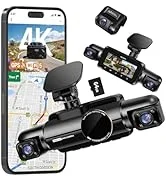
Owner reports on that sub-$100 tier repeat the same three failures: motion-only parking that misses the lead-up, infrared too weak to render a face in a dark cabin, and heat tolerance that quits the first July afternoon the car sits in sun. Budget multi-channel units like the N300Pro four-channel can be serviceable starter rigs — four lenses, real simultaneous recording — but read the parking-mode line letter by letter, because buffered support at this price is the exception, not the rule.
The $130-to-$220 tier is where the genuine machines start: the Omni X200's gimbal, the better mirror-style multi-cams, and the first parking implementations that hold a real buffer instead of napping until impact.
From $250 up you are buying the evidence tier: dedicated multi-channel rigs with named sensors, infrared cabin views, supercapacitors in place of heat-swollen batteries, and buffered parking that is rated in the manual rather than rumored in the reviews. Four-channel kits like the FREEXAR all-sides bundle ship the hardwire kit in the box, which quietly solves the power-plan line item most listings leave for the parking lot to teach you.
Then add the invisible tier on top of whichever you pick: the high-endurance card, the hardwire kit or battery pack where it is not bundled, maybe a polarizer for windshield glare. Call it twenty to two hundred dollars the box price never mentions, and the cheaper the camera, the larger that hidden line tends to run.
Spend where failure hurts: power plan and pre-event buffer first, pixels second, the printed word 360 a distant third. That ordering is the entire buying strategy in one sentence.
The Verdict: Buy Coverage, Not the Word
Strip the marketing off and the decision is three sentences long.
- If your job is windshield plus cabin — rideshare, deliveries, a new driver — the rotating 70mai Omni X200 covers it with one unit and earns its price. That is the narrow case where a 360 badge buys something real.
- If you genuinely want wraparound video and accept the per-degree resolution tax, the Vantrue E360 is the honest version of the promise — stitched, buffered, nothing rotating to wear out. Pair it with a hardwire kit on a conservative cutoff and it will mind the whole perimeter.
- And if what you actually need is evidence — readable plates, faces, the lead-up to the contact — skip the badge entirely and build the boring rig: a three-channel camera from the three-channel guide, buffered parking mode, a hardwire kit set to a conservative voltage cutoff, and a card sized for all-night duty. Nothing about that stack is exciting. Every part of it delivers the thing the 360 listings were promising.
Run the money honestly, too. By the time a cheap 360 dome gets the battery pack and the card it needs to do its job, you have spent mid-tier money for entry-tier coverage. The rig built from parts that each do one job tends to land within fifty dollars of the badge that does none of them well.
Whichever door you take, the two non-negotiables travel with you: buffered recording and a power plan. Skip either and everything else — resolution, badge, app — is decoration on a camera that slept through the event.
Marketing says 360 degrees of protection. The spec sheet, read honestly, says protection is a system: lenses, power, pre-roll. The word on the box is the least load-bearing part of it. Buy the system. — Tom Reyes