What You Need to Know
Car camping can start cheap: a foam pad and a sleeping bag in a compact hatchback. Mid-October. But a basic setup like a foam pad and a sleeping bag rated to 40F can fall short once the temperature drops about 15 degrees after midnight in the mountains. By 2AM I was wearing every piece of clothing in my bag and still shivering. The fix was a $12 fleece liner from Amazon that turned my 40F bag into a 25F bag.
Three years later I still use that same liner on every trip.
Now, let's talk about when your car is the only thing between you and a whole lot of nothing. We're talking about staying connected when your phone shows a big fat 'No Service.' This is where satellite communication devices come in, and yeah, they sound fancy, but they're actually pretty straightforward for us weekend warriors. Outdoor Gear Lab has tested a bunch of them, so we know what works.
The Core Answer
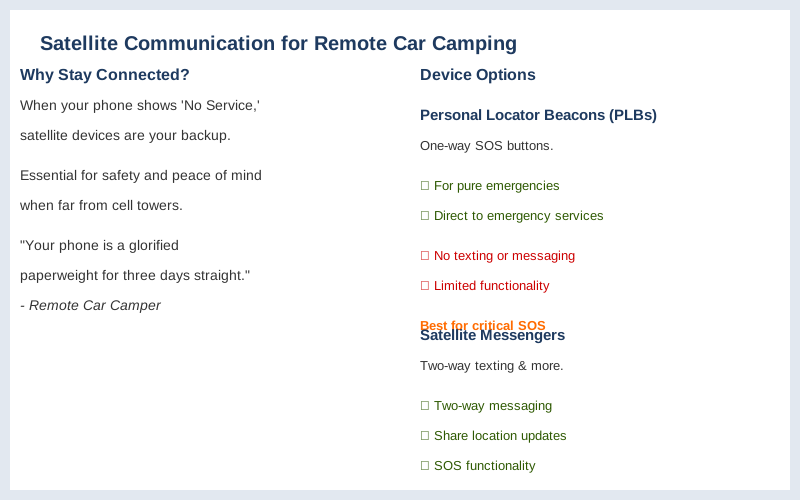
Forget the fancy jargon. Satellite communication for remote car camping boils down to one thing: not being completely cut off when you're miles from a cell tower. It's about safety, plain and simple. Venture deep into remote country and a phone becomes a glorified paperweight for days. Reddit threads are full of people asking the same thing.
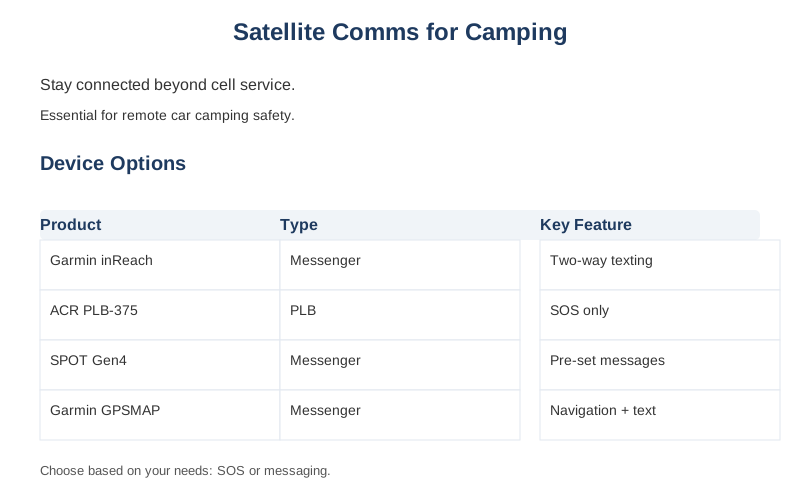
There are two main types of devices you'll see: Personal Locator Beacons (PLBs) and satellite messengers. PLBs are basically one-way SOS buttons. You press it, and a signal goes out to emergency services with your location. They're great for pure emergencies, but you can't text your buddy to say you found the perfect fishing spot. REI breaks down the differences clearly.
Satellite messengers, on the other hand, are the real game-time players for us. They let you send and receive texts, share your location, and still have that SOS button. This is a common choice. It means someone at home knows you're okay if you're late back to the campsite. The Garmin inReach series is popular, and for good reason.
A Garmin inReach Mini runs about $350 and is worth its weight in gold on remote trips where cell service is a myth. Outdoor Gear Lab even ranks the Garmin inReach Messenger Plus as a top pick.
What nobody tells beginners is that these devices usually come with a monthly subscription fee, on top of the device cost. It's not a one-and-done purchase. Plans can range from $15 to $50 a month, depending on how many messages you want to send and if you need unlimited SOS. The honest version: factor that into your budget before you buy. For me, the peace of mind is worth the $30 a month I pay for my plan.
So, the real move is to get a satellite messenger. It's more versatile than a PLB and lets you communicate non-emergencies too, which is surprisingly useful. Think of it as your lifeline and your way to brag about the epic sunset you're witnessing, all from a place with zero bars. Adventure Gear Tech explains how these work off-grid.
Why This Matters for Your Setup
- No more 'Are you alive?' texts: When you're car camping deep in the woods, your phone is useless. A satellite messenger lets you send 'Got here safe' texts. It can put worried family members' minds at ease. It's a $30/month subscription fee that buys a lot of peace. Facebook groups often discuss these safety aspects.
- Emergency Button: This is the big one.
If you break an axle miles from anywhere or have a medical emergency, that SOS button is your direct line to help. This matters most when a tire blows out on a remote logging road. Took me 4 hours to hike to a spot with a signal. With a satellite messenger, it would have been minutes.
Wilderness Medical Society reports on SOS activations.
- Location Sharing: Most messengers let you send a link to a map so people can track your progress. This is great for letting folks know your ETA or just following along on your adventure. Family back home can watch your progress on the map during a long solo trip. It's a small feature, but it adds to the overall safety net.
YouTube channels often showcase this feature.
- The $50 Version vs. the $400 Version: You can get basic satellite messengers for around $200, and the fancier ones with more features (like photo sending) can push $400. The subscription plans are where the real cost adds up, so compare those carefully. Don't just buy the cheapest device; look at the ongoing costs. Outdoor Gear Lab compares these costs.
Making the Right Choice
Choosing a satellite communicator isn't rocket science, but it does require a little thought. Don't just grab the first shiny thing you see. Think about where you're going and what you'll actually use it for. GearJunkie has a good rundown of the different types.
If you're mostly worried about a true emergency and want a no-frills SOS button, a PLB might work. But for car camping and general remote travel, a two-way satellite messenger is the way to go. It offers more flexibility and peace of mind. The Garmin inReach series is widely regarded as reliable, and the $350 Mini is a solid investment.
Consider the subscription costs. They vary wildly, from $15 a month for basic plans to $50 for unlimited messaging and premium features. My $30 monthly plan for my Garmin messenger covers my needs without breaking the bank. Compare these plans before you commit. Outdoor Gear Lab does a great job breaking down these plans.
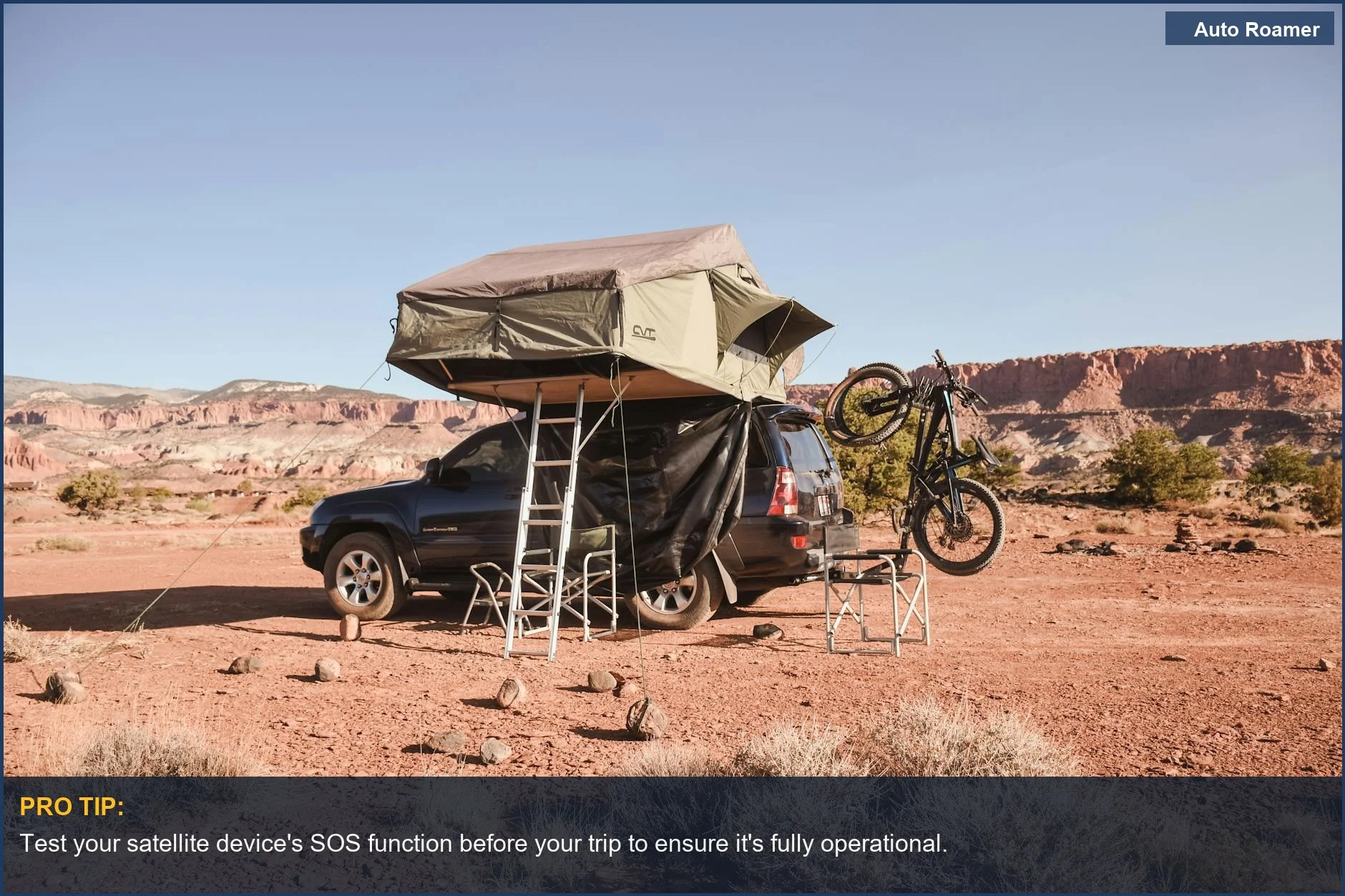
Ultimately, the best device is the one you'll actually carry and know how to use. Don't overcomplicate it. A simple device that works is infinitely better than a feature-packed one that stays in your glove box. Get out there and test it before your big trip!